Having been lead prosecutor
in cases involving healthcare fraud, corporate fraud,
environmental violations, public corruption,
drug trafficking conspiracy ...
... public corruption and
criminal environmental enforcement. ...
In addition to his extensive trial experience as a prosecutor
and in private practice, ...
... Gary R. Trombley, a former
federal prosecutor in the Middle District of
Florida. ... Mail Fraud, Public Corruption,
Bank Fraud, Environmental Crimes, ...
File Format: Microsoft Word - Quick
View ... the Foreign Corrupt
Practices Act, securities fraud, environmental
crimes, ... Mr. Vandevelde served as a prosecutor
in the United States Attorney's ...
Former Federal Prosecutor Richard
Rice – Atlanta, Georgia Criminal Defense in all ...
Foreign Corrupt Practices Act violations; Environmental
criminal and ...
File Format: PDF/Adobe Acrobat - Quick
View Corruption and the Environment.
Appendices. 70 government staff and officials in return
for not prosecuting illegal logging. It has even
been ...
Corrupt officials prosecuting
corrupt officials ~ like having the fox guard the
hens ...prosecutors who were part of
the broader Alaska corruption.....Environment
& Conservation, Human Rights, Other Political Issues ...
The Office of the Public Prosecutor
has several divisions, within which prosecutors... Insider Trading, Corruption,
Bribery and Environmental violations. ...
Mar 1, 2011 – Michigan
gives us two spectacularly egregious cases of corrupt
policing, one of which included prosecutors
and a judge, and we throw in the ...
Aug 15, 2008 – Cyclist
Slam Renews Calls For Special Prosecutor...
attorneys in corruption cases or appoint special
prosecutors to individual cases. ...
Aug 15, 2008 – Cyclist
Slam Renews Calls For Special Prosecutor...
attorneys in corruption cases or appoint special
prosecutors to individual cases. ...
Migratory bird rule
From Wikipedia, the free encyclopedia
The migratory bird rule, adopted by the United
States Army Corps of Engineers and the Environmental Protection Agency
(EPA) asserted that the Clean Water Act covers
regulation of isolated waters "which are or would be used
as habitat by... migratory birds that cross state lines."
The rule was overturned by the Supreme Court in 2001.
Inspector General Report:
Serious Safety and Quality Flaws at Hanford Waste Plant
published Tuesday, May 01, 2012
Hanford Challenge Decries Appalling Lack of Oversight, demands
Immediate Stand Down and Complete Investigation
Immediate
Release - April 30, 2012
Contact: Tom Carpenter (206) 419-5829
Richland,
WA: The Department of Energy’s Office of Inspector General released a
report today that revealed a disturbing breakdown in Hanford’s quality
program that allowed radioactive waste processing vessels to be
installed without required documentation proving their integrity. This
means that the Department of Energy is unable to prove the safety of the
Waste Treatment Plant (WTP).
The IG also found a
critical lack of oversight on the DOE’s part, and a failure to collect
the repayment of a $15 million assessment against Bechtel, the
contractor, when DOE discovered a defective vessel.
Tom Carpenter, Executive Director of the public interest group Hanford Challenge stated:
The
Hanford WTP plant continues to be designed and built despite the tidal
wave of allegations and findings on the lack of safety by key engineers
and managers, who have sacrificed their careers to do so. Now we have
the findings of the Inspector General which reveal an appalling pattern
of failing to design and construct a facility that safeguards the public
-- a situation that we won’t tolerate here in Washington State.
Hanford Challenge calls for a stand-down of design and construction at
the WTP and reconsideration of how to get this plant back on track.
Carpenter pointed out that a 2006 60 Minutes show
revealed the same allegations, when it was discovered that Hanford
waste vessels called “scrubber tanks” were installed defectively and
without proper quality assurance documentation and inspection.
“Six
years ago, the Department was put on notice of this problem in a 60
Minutes feature yet failed to act. The GAO testified about this issue
in April 2006. When will Congress realize that this agency cannot
juggle safety considerations against cost and schedule pressures?”
stated Carpenter.
The DOE Inspector General report,
entitled, “Audit Report on "The Department of Energy's $12.2 Billion
Waste Treatment and Immobilization Plant – Quality Assurance Issues –
Black Cell Vessels," was released on April 30, 2012. According to the
report -
“[T]he Department had procured and installed
vessels in WTP that did not always meet quality assurance and/or
contract requirements . . .we identified multiple instances where
quality assurance records were either missing or were not traceable to
the specific area or part of the vessel.”
“We also found that
the Department paid the WTP contractor a $15 million incentive fee for
production of a vessel that was later determined to be defective.
Although the Department demanded return of the fee, it did not follow up
on the matter and the fee was never reimbursed. Weaknesses in quality
assurance records associated with black cell and hard-to-reach
processing vessels occurred because of deficiencies in Bechtel's
implementation of its quality assurance program and a lack of Department
oversight."
“The importance of black cells and hard-to-reach
components cannot be over stated. Premature failure of these components
could potentially impact safety, contaminate large portions of a
multi-billion dollar facility and interrupt waste processing for an
unknown period of time. For these reasons, we have made several
recommendations designed to strengthen quality assurance controls at
WTP. We have also recommended a more intense effort to recover
contractor fee for the nonconforming vessel.”
Hanford Challenge has been urging Congress to give another federal agency, the Defense Nuclear Safety Board (DNFSB),
more authority and resources to oversee the Hanford Waste Treatment
Plant. So far, there has been no action. Similarly, the Department of
Energy has not taken meaningful steps to beef up its inspection or
enforcement function, or otherwise show that it is willing or capable of
conducting the proper oversight.
“The WTP is a
decade behind schedule, 240% over its projected costs, and is able to
treat only a fraction of the high-level waste that we were told it
would. So we are spending more and waiting longer for a facility that
will do less. And it is riddled with safety issues that appear
irresolvable. The stark truth is that the Nuclear Regulatory
Commission, if it had jurisdiction here, would probably not license this
facility given its “quality indeterminate” state," said Carpenter.
The
consequences of a vessel failure inside the Waste Treatment Plant could
be catastrophic. Like Fukushima, the radioactive waste generates large
amounts of explosive hydrogen gas. The current design is under attack
by Hanford engineer whistleblowers over the failure of the design to
prevent or mitigate the possible release of radioactive materials to the
environment in the case of an explosion or fire. That is why the
quality of the equipment inside the plant is key to safety.
New Hanford water treatment plant first to receive LEED gold for being green
By Annette Cary— Tri-City Herald
Posted: 12:25pm on May 9, 2012;Modified: 1:25pm on May 9, 2012
A view from the top of the 200 West Ground
Water Treatment Facility, with the LEED Gold-certified process building
shown, left. DEPARTMENT OF ENERGY
A sophisticated new water treatment plant in central Hanford
is the first plant in the Department of Energy’s defense environmental
cleanup complex to win LEED gold certification for being green.
The
Leadership for Energy and Environmental Design, or LEED, program,
recognizes sustainable design. Gold is its second highest ranking.
“Achieving
LEED certification required diligence on the part of the entire project
team because the focus is on energy use and recycling goals for both
construction and operation,” said Kent Dorr, CH2M Hill Plateau
Remediation Co. vice president, in a statement.
DOE and CH2M Hill
worked together to use 420 tons of recycled concrete to build the 200
West Ground Water Treatment Facility. About half of the steel used also
was recycled.
Translucent panels will reduce the need for interior lighting.
The
building’s efficient design is expected to result in an energy cost
savings of more than 70 percent over the life of the facility, according
to CH2M Hill.
Construction of the ground water treatment plant was finished in 2011 and work is under way to start operations this summer.
It
will remove contamination from ground water in a five-square-mile area
contaminated from the past production of weapons plutonium at Hanford.
The
plant is expected to be capable of removing more types of radioactive
and chemical contaminants than any other facility of its type in the DOE
complex.
military whistleblowers
McCain, Levin want more information from defense secretary Panetta
Senators Carl Levin (D-Mich.) and John McCain (R-Ariz.) want more
information from Defense Secretary Leon Panetta about an inspector
general's report criticizing the Pentagon's treatment of whistleblowers —
a report first disclosed by the Center and the Project on Government Oversight.
Levin, chairman of the Senate Armed Services Committee, and McCain, the panel's ranking member, made their feelings known Tuesday in a letter to Panetta.
"Last Sunday, the Washington Post
reported on an 'internal Pentagon report' finding that the Department
of Defense Inspector General unit responsible for protecting military
whistleblowers had failed to do its job," wrote the Senators, referring
to the Center story that was reprinted in the Post. "According
to the article, the May 2011 report found 'persistent sloppiness and a
systematic disregard for Pentagon rules meant to protect those who
report fraud, abuses, and the waste of taxpayer funds.'
"We
understand that this report was initiated and conducted by the Inspector
General, and that the Inspector General has made a number of changes in
an effort to address the problems identified in the report," the letter
concludes. "Nonetheless, the systematic failure of the Department to
protect military whistleblowers from reprisal is a matter of grave
concern. Accordingly, we ask that you provide us with a copy of the
report and advise us of the actions that have been taken and will be
taken to address the problems identified in the report - including steps
to re-open any reprisal cases that were inadequately investigated or
erroneously dismissed."
press release
May 8, 2012, 1:18 p.m. EDT
NRCS Invests $2.5 Million to Protect Watersheds of Concern
DAVIS, Calif., May 8, 2012 /PRNewswire via COMTEX/ --
Landowners in five watersheds will receive targeted funding to improve water quality
In conjunction with a national water quality initiative, The USDA
Natural Resources Conservation Service (NRCS) in California will invest
$2.5 million in targeted funds to improve water quality in five high
priority watersheds in California.
"NRCS California is proud to participate in this national campaign to
add on-farm water quality improvements within targeted watersheds," said
Ed Burton, NRCS California state conservationist. "These additional
funds will help landowners to voluntarily address issues related to
Clean Water Act compliance and keep their farms and ranches healthy and
productive."
Using funds through the Environmental Quality Incentives Program (EQIP),
NRCS will provide financial and technical assistance to farmers and
ranchers to install conservation practices that help to stabilize soil
and reduce the transport of sediments and other pollutants into public
waters. This assistance will help landowners address high priority
water resource concerns in small watersheds with streams or water bodies
that are impacted by agricultural runoff and under increased regulatory
scrutiny.
Applications will be batched and evaluated on May 18 and again on June
15, 2012; those received by the earlier date will have a higher chance
of being funded.
Through this effort, eligible farmers and ranchers will partner with
NRCS to invest in voluntary conservation actions to help provide cleaner
water for their neighbors and communities. The selected watersheds were
identified with help from state and federal agencies, and other
conservation partners.
The following five watersheds are eligible for assistance:
Calleguas Creek: Revlon Slough, Ventura County
Calleguas Creek: Town of Nyland - Frontal Pacific Ocean, Ventura County
Big-Navarro-Garcia: Upper Garcia River, Mendocino County
Big-Navarro-Garcia: Middle Garcia River, Mendocino County
Lower Eel: Salt River, Humboldt County
This effort helps landowners in eligible watersheds to qualify for
financial assistance by competing for targeted funds with a smaller pool
of applicants. Typically, NRCS receives a large number of applications
for EQIP funding each fiscal year and only about 30 percent of farmers
and ranchers are successful.
Eligible farmers and ranchers should visit
http://www.ca.nrcs.usda.gov/programs/ or contact their local NRCS
office for additional information on eligible practices and to submit an
application.
NRCS has provided leadership in a partnership effort to help America's
private land owners and managers conserve their soil, water and other
natural resources since 1935. For more information on NRCS, visit
www.nrcs.usda.gov .
SOURCE USDA - Natural Resources Conservation Service
This sign near the entrance of Talking Water Gardens doesn't mention smoking. (Hasso Hering/Democrat-Herald)
Albany, Millersburg officials want no butts getting into the river
Dogs on leashes are OK at the Talking Water Gardens, but smoking tobacco is not.
Albany Councilman Floyd Collins told the city council
Monday that the joint Albany-Millersburg committee managing the area had
made that decision in March.
The Water Gardens are the 50-acre constructed wetlands
where treated wastewater from the cities and the Wah Chang industrial
plant gets additional filtering in a series of ponds and waterfalls
before being discharged to the Willamette River.
The area at the north end of Waverly Drive, laced with
two miles of walkways, has become a haven for wildlife. The area is now
open to the public. A grand opening is scheduled for June 20.
At Monday’s council work session, Collins just wanted to
let his colleagues know what the management committee had decided. But
an extended discussion ensued.
Signs have already been put up regarding the smoking ban, the council was told. But the D-H could not find any Monday night.
The joint management committee decided on the smoking ban
because essentially the area is part of a treatment facility, Collins
said, and the committee did not want cigarette butts and filters to get
into the water and then the river.
The question of enforcement came up. It’s complicated
because Talking Water Gardens is not an Albany park, so park regulations
would not apply even if parks restricted smoking, which only Monteith
Riverpark does during River Rhythms concerts.
Also, the Water Gardens are in Millersburg, where Albany
ordinances have no sway. But Millersburg lacks a city court, so if it
wanted to ban smoking, it could not back it up.
City Attorney Jim Delapoer said nobody wants to be
heavy-handed about this, but any ban will inevitably be tested. He
suggested writing up a regulation against smoking at Talking Water
Gardens plus an intergovernmental agreement in which Millersburg would
ask Albany to enforce the prohibition.
Mayor Sharon Konopa and City Manager Wes Hare said they
would ask the city attorney to draft an agreement, for council action
later.
Councilor Bessie Johnson said it would be an
unenforceable law. But Councilor Bill Coburn said the issue should be
taken seriously because elsewhere, a corporate property owner had been
penalized for violating the Clean Water Act when construction workers
tossed away paper cups that found their way into a waterway.
Hare said that even before rules are written, he was sure most people would simply observe no-smoking signs.
Copyright (C) 2012 PR Newswire. All rights reserved
Fishing for answers
The Corps of Engineers is studying how steelhead and chinook salmon fare when they pass through the turbines at Foster Dam
FOSTER — For the next few weeks, biologist Robert
McDonald’s job will be to stand near the spillway at Foster Dam and herd
5- to 6-inch steelhead and chinook salmon smolt into a basket attached
to a long rope.
It’s not an easy task.
But brightly colored balloons attached to the smolt make the job a bit easier for McDonald and co-worker Matthew Williams.
“We hope to collect 150 fish today,” McDonald said
Friday, as Williams collected a bright silver smolt from the basket and
removed the balloon.
Their work is part of a month-long study to improve the
survival rate of steelhead and chinook salmon passing through the dam
that was built and has been operated since the mid-1960s by the U.S.
Army Corps of Engineers.
Their research is looking at the survival rates of smolt
that pass through two electricity-producing turbines in the dam and over
a temporary weir in one of the four steel spillway gates.
Corps of Engineers spokesman Scott Clemans said the
project is based in part on the July 2008 biological opinion concerning
the effect of the dams on threatened and endangered fish species issued
by the National Marine Fisheries Service and the U.S. Fish and Wildlife
Service.
“The 13 Willamette Valley Project dams were constructed
from the 1940s through the 1960s,” Clemans said. “They were designed for
flood control, irrigation and recreation. But to fish, they are a big
stop sign.”
Ed Moreen, a project manger for
EPA, working on the clean-up of the Silver Valley, is a nice guy. So is
Terry Harwood, an employee of the Idaho Department of Ecology.
Sincerity oozes from both as
they explain what government is doing to protect human health, and the
flora, fauna and wildlife within a mammoth basin-wide Superfund site
covering the full drainages of the South Fork and North Forks of the
Coeur d’Alene River.
Both men, however, reflect the arrogance so many
bureaucrats display----that smugness that comes from feeling they have
the facts and all the answers. .
The ancient Greeks called it “hubris.” It was on full
display last week when the agency conducted an informational meeting at
the Medimont Grange Hall. Twenty of my neighbors and I showed up to
listen and ask questions.
Like all the “chain lakes” that lie on either side of
the Coeur d’Alene River between Cataldo and Harrison, nearby Cave and
Medicine were swollen with water from the spring mountain run-off and
unusually heavy rains. Adjacent fields in the flood plain were mostly
underwater.
Therein lies the problem. Each year this seasonal
flow brings new amounts of lead and zinc from historic waste dumps
throughout one of the most mineralized and mined areas in the nation.
EPA, under the Superfund Law and the Clean Water Act, is the lead agency
in overseeing removal of the most contaminated soils and then
remediation.
Funding this effort is $750 million extracted from
Asarco, HECLA and other mining companies who historically contributed to
the creation of the waste. By law the money can only be expended for
clean-up in the basin.
But how clean is clean? And how much sense does it
make to remove and remediate areas in the flood-plain that just a year
later are flooded again with contaminated water? How thorough are
studies on human health impacts in the area as opposed to studies about
the white swans several of which die each year from ingesting excessive
zinc and lead in the plants they eat.
EPA has divided the basin into an upper and a lower
portion. Most work so far has been done in the upper basin, cleaning up
in the 21 square mile “box” surrounding the old Bunker Hill site in
Kellogg,. Now attention is turning to the lower basin and there are
significant differences EPA best take note of.
Utilizing its traditional methods of public
participation, EPA is forming “collaboratives” of interested parties.
They claim these advisory groups will have real input into their
“adaptive management” approach to clean up solutions.
People are justifiably skeptical. What they see is an
agency hell bent on spending $750 million on clean up whether it is
justified or not. Despite having been in the Silver Valley 20 years, the
agency has no real time-line nor any real cost numbers for its plans in
the lower basin, or so it claims.
Despite federal law clearly defining EPA’s authority
to be limited to just navigable waters with ground water management left
to the states, they see and read about an agency that proposes
legislation to do away with that distinction and give them control over
ground water also. Just to the north, in Bonner County, they see where
EPA tried to deny property owners the right of judicial review of EPA’s
decisions to decide what is and is not a wetland.
They also see an agency whose subcontractors tell
property owners if they don’t submit to soil sampling they’ll never be
able to sell their property because while they of course won’t inform
title companies which properties are clean and/or remediated, they will
of course have to answer questions that lenders inevitably will pose.
That of course is not a threat.
What Ed and Terry don’t get is folks around here
don’t like the sense of money being spent just because it is there to
spend. They want to know just what goes into the cost benefit formulas
and whether the models constructed allow for empirical data, or just
some bureaucrat’s calculation of what the variables are.
Ed and Terry’s arrogance really showed at the end
when they dismissed as a “pipe dream” a question regarding Congress
possibly accessing the settlement funds since federal appropriations for
NPL clean-ups are declining under other pressures. “Never will happen,”
Ed said.
Ed and his agency ignore at their peril this flag.
The suggestion that their “storebox” might be raided came from none
other than Idaho Second District congressman Mike Simpson, the chairman
of the appropriation subcommittee over-seeing the EPA budget.
Yes, EPA is offering short-term jobs without benefits
to those contracted with locally to undertake clean-up activities. My
neighbors are trying to tell EPA you have created such a stigma by
over-playing the health threat that it is going to be impossible for the
current mining operations, which offer long-term jobs with benefits, to
ever again flourish despite there being plenty of minerals left to be
extracted compatibly with the environment.
Especially noteworthy and sad to this observer was
the meeting had no moment of silence or any mention that the day, May
2nd, was the 40th anniversary of the Sunshine Mining disaster that took
91 lives from the valley.
Believe me, the people of my home valley understand
risk as well as reward, productive work as opposed to make work,
benefits that outweigh costs, humility as opposed to arrogance, respect
as opposed to benign tolerance. EPA still doesn’t get it.
Today's
environmental tip: Play it safe! Children are curious but they are also
more sensitive to substances in the environment. Protect children from
accidental poisoning by locking up your household cleaners, pesticides,
paint thinners, and other substances. Household products are safe and
effective when used properly. Remember to read the label.
en
español: ¡Juegue a lo seguro! Los niños son curiosos, pero también
pueden ser susceptibles a sustancias en el medio ambiente. Protéjalos de
los envenenamientos accidentales. Ponga los productos de limpieza
caseros, solventes de pintura y otras sustancias fuera del alcance de
los niños y siempre lea la etiqueta. Las sustancias químicas caseras son
seguras y eficaces cuando se usan de manera responsable.
NOTE
- This is the last Earth Month daily tip email message. To receive
monthly "what you can do" information, subscribe to the GoGreen!
newsletter with information and activities you can use in your home,
community, or office. Go to http://www.epa.gov/gogreen
And there are still things you can do online such as -"Six Words for the Environment" - contribute yours -"Expand the Conversation" - discussion forum -"State of the Environment" Photo Project - submit yours ...go to http://www.epa.gov/earthday for more info!
Thanks!
Coming like a beggar to the back door. No references, please, to “cutting greenhouse emissions” or
“sustainability” or “carbon reduction” except as bi-products of
“improving military security” and “factoring in true costs of energy for
equipment, purchases, and operations.” "Energy security and cost", according to Admiral
Mike Mullen, "can no longer be ignored. Half the casualties in Iraq and
Afghanistan have been related to fuel convoys. Dependence on oil equals
vulnerability, everywhere and always". -6
MENTAL illness, associated with isolation
and overwork, looms as a threat to the mining boom and affects up to
10,000 workers each year in the sector in NSW alone.
Illnesses such as depression and anxiety disorder are costing
the state's mining industry between $320 million and $450m in reduced
productivity, according to a new report.
Iron Mountain Mine Co-founder Charles Camden celebrated
In
February 1863 Charles Camden built a new road from the Tower House to
Shasta (the first road was a wagon road built by Levi Tower in the
1850s). He also purchased the section of road over the Shasta Divide
from the Shasta Turnpike Road Company for $6,500. Camden changed the
name of the road to the Camden Turnpike Company and announced he would
charge a toll from Shasta to the Tower House. The toll keepers house
(see photo) at the Shasta end still stands and is still occupied on
Tollkeepers Road a short distance west of Shasta. He also extended the
road north around the foot of the hill at the Tower House to connect
with the Yreka Road (now the road to French Gulch).
Dottie Smith is the former Curator of the Shasta College Museum and
former Instructor of Shasta County History at Shasta College. She has
written 12 local history books.
Subject: Scattering Long Range Population Trapping Forces
Constant decay
sets the scale for mass perturbation. (and in the pursuit of fulfillment & a Grant from the
Private Industry Council).
The Defense Department has inadequately
protected from reprisals whistleblowers who have reported wrongdoing,
according to an internal Pentagon report, and critics are calling for
action to be taken against those who have been negligent.
The report,
dated May 2011, accuses the officials, who work in the Defense
Department’s Office of Inspector General, of persistent sloppiness and a
systematic disregard for Pentagon rules meant to protect those who
report fraud, abuses, and the waste of taxpayer funds, according to a
previously-undisclosed copy. The report was obtained by the Project on
Government Oversight, a nonprofit watchdog group.
South Shore, Ky., one of 12 national winners of conservation challenge
Challenge sponsored by Wyland Foundation and Toyota
One
of the murals by the artist and environmentalist Wyland, who created
the Wyland Foundation, in honor of the 40th anniversary of the Clean
Water Act.
MIAMI (May 7, 2012) — A Kentucky city has been named a winner of the
2012 National Mayor’s Challenge for Water Conservation, an online
competition conducted throughout April that encouraged residents in all
50 states to conserve water, save energy and reduce pollution.
South Shore, Ky., was among 12 winning cities, including:
• Laguna Beach, Calif.
• Victoria, Minn.
• Charlestown, N.H.
• Manhattan Beach, Calif.
• Eden Prairie, Minn.
• Fort Pierce, Fla.
• Quakertown, Pa.
• Greeley, Colo.
• Madison, Wis.
• Charlottesville, Va.
• Toms River, N.J.
The Wyland Foundation, founded by environmental artist Wyland,
created the Challenge with Toyota in honor of the 40th anniversary of
the Clean Water Act, the primary federal law protecting water resources
in the United States. Organizations spearheading the effort also include
the U.S. Environmental Protection Agency Office of Water, U.S. Forest
Service, National Oceanic and Atmospheric Administration, WaterPik, Rain
Bird, Lowe’s, STERLING Plumbing, PADI and Project AWARE.
“We had two goals for the National Mayor’s Challenge,” Wyland said.
“It brings communities together and gets people thinking about simple
ways to take their commitment to conservation even further.”
The challenge divided cities into four regions (West, Midwest, South
and Northeast) and categorized them by population according to ZIP Codes
(5,000 to 30,000 residents, 30,001 to 100,000 residents, 100,000+
residents). Cities with the highest percentage of residents within the
city’s ZIP code boundaries who made online pledges at
www.mywaterpledge.com to reduce their water use were recognized as the
winners. Participants in the winning cities will now be entered into a
drawing to win more than $50,000 in prizes, including the grand prize of
a Toyota Prius c Hybrid, as well as custom-designed sprinkler systems
from Rain Bird, Eco-Flow Showerheads from WaterPik, water-saving toilets
from STERLING Plumbing, and 1,000 gift cards for Lowe’s Home
Improvement Stores.
“Conserving water is one of the most important actions we can take to
protect this irreplaceable resource, and small actions that people take
in their homes can add up to make a big difference,” said U.S. EPA
Acting Assistant Administrator for Water Nancy Stoner. “EPA was proud to
partner with the Wyland Foundation and Toyota on this challenge and
congratulates the winning cities, and everyone who participated.”
To celebrate the winners of the National Mayor’s Challenge for Water
Conservation, the Wyland Foundation and Toyota hosted an event on May 3
in Miami Beach where Wyland joined members of the community to paint a
400-square-foot marine life mural celebrating South Florida marine life.
Toyota’s support of the Wyland Foundation is part of the automobile
company’s long-standing commitment to sustainability.
Join The Discussion
What is the National Water Quality Monitoring Council?
The Council was created in 1997 as a vehicle for bringing together
diverse expertise needed to develop collaborative, comparable, and
cost-effective approaches for monitoring and assessing our Nation’s
water quality. The approaches are fundamental to the successful
management and sustainability of our waters, and are increasingly
important because water issues are becoming more complex, resources are
tighter, and the demand for high-quality water continues to grow in
order to support a complex web of human activities and aquatic ecosystem
needs.
The National Water Quality Monitoring Council (Council)
provides a national forum for coordination of comparable and
scientifically defensible methods and strategies to improve water
quality monitoring, assessment and reporting, and promotes partnerships
to foster collaboration, advance the science, and improve management
within all elements of the water quality monitoring community. Vital to
this role, the Council provides a voice for monitoring practitioners
across the Nation and fosters increased understanding and stewardship of
our water resources.
What is the Advisory Committee on Water Information?
Federal activities and funding for water resources
information are integrally tied to partnerships with
non-Federal entities. Therefore, the Secretary of the
Interior established an advisory committee under the Federal Advisory Committee Act (FACA) to help implement the program at the national level. The purposes of the Advisory Committee on Water Information
(ACWI) are to identify water information needs, evaluate
their effectiveness of water information programs and recommend
improvements. The member organizations represent all levels of
government, tribal interests, and the private sector. The
Chair of the ACWI is Interior's Deputy Assistant Secretary
for Water and Science. The Alternate Chair is the Associate
Director for Water of the USGS.
The Advisory Committee on Water Information (ACWI)
represents the interests of water-information users and professionals
in advising the Federal Government on Federal
water-information programs and their effectiveness in
meeting the Nation's water-information needs.
The Office of Management and Budget (OMB)
originally established the Water Information Coordination
Program (WICP) in the 1960's. In 1991 OMB updated the
authority and established the Water Information
Coordination Program by issuing Memorandum No. 92-01.
The overall purpose of the program is to improve
water information for decision making about
natural resources management and environmental
protection. The memorandum designates the Department of the
Interior, through the U.S. Geological Survey (USGS), as the
lead agency. Other Federal organizations that
fund, collect, or use water resources information
work together with the USGS to implement program
recommendations.
EPA Co-Chair: Susan Holdsworth (holdsworth.susan@epa.gov), Chief of the Monitoring Branch, EPA Office of Wetlands, Oceans, and Watersheds, Washington, DC
USGS Co-Chair: Michael Yurewicz (mcyurewi@usgs.gov), Council Co-Chair (NAWQA), Reston, VA
A study published this week in Nature
by researchers at Rice University, two Max Planck Institutes in
Dresden, Germany, and University of California, Los Angeles, finds that
"quantum critical points" (QCP) in exotic electronic materials can act
much like polarizing "hot button issues" in an election. On either side
of the QCP, electrons fall into line and behave as traditionally
expected.
You
are subscribed to All NSF Program Announcements and Information for
National Science Foundation Update. This information has recently been
updated, and is now available.
Core Techniques and Technologies for Advancing Big Data Science & Engineering (BIGDATA)
May 8, 2012 11:00 AM
to May 8, 2012 12:00 PM
NSF
The National Science Foundation and the National
Institutes of Health invite you to attend a webinar to learn more about
their joint Core Techniques and Technologies for Advancing Big Data Science & Engineering (BIGDATA) solicitation -- NSF 12-499: http://www.nsf.gov/pubs/2012/nsf12499/nsf12499.htm.
The
BIGDATA solicitation aims to advance the core scientific and
technological means of managing, analyzing, visualizing, and extracting
useful information from large, diverse, distributed and heterogeneous
data sets so as to: accelerate the progress of scientific discovery and
innovation; lead to new fields of inquiry that would not otherwise be
possible; encourage the development of new data analytic tools and
algorithms; facilitate scalable, accessible, and sustainable data
infrastructure; increase understanding of human and social processes and
interactions; and promote economic growth and improved health and
quality of life.
The phrase "big data" in this solicitation does
not refer just to the volume of data, but also to its variety and
velocity. Big data includes large, diverse, complex, longitudinal,
and/or distributed data sets generated from instruments, sensors,
Internet transactions, email, video, click streams, and/or all other
digital sources.
The focus is on core scientific and
technological advances (e.g., in computer science, mathematics,
computational science and statistics). Proposals that focus primarily on
the application of existing methods (e.g., machine learning algorithms,
statistical analysis) to data sets in a specific science domain or on
implementation of software tools or databases based on existing
techniques are not appropriate for this solicitation.
This
webinar is designed to describe the goals and focus of the BIGDATA
solicitation, help investigators understand its scope, and answer any
questions potential Principal Investigators (PIs) may have.
The
Webinar will be held from 11am to noon EST on May 8, 2012. Questions
about the solicitation can be submitted in advance or during the webinar
to bigdata@nsf.gov.
After
your registration is accepted, you will get an email with a URL to join
the meeting. Please be sure to join a few minutes before the start of
the webinar. This system does not establish a voice connection on your
computer; instead, your acceptance message will have a toll-free phone
number that you will be prompted to call after joining. Please note
that this registration is a manual process; therefore, do not expect an
immediate acceptance. In the event the number of requests exceeds the
capacity, some requests may have to be denied.
The webinar will be archived for later viewing and linked to the BIGDATA program web page at: http://www.nsf.gov/funding/pgm_summ.jsp?pims_id=504767. The archived version will be available within a few days after the webinar.
If you have any additional questions or concerns, please contact bigdata@nsf.gov .
Submissions are now being acceptedthrough July 15, 2012
on the latest research and developments in diverse areas of materials
science and engineering technology. TMS2013 authors will represent
numerous levels of industry, academia, and governmental labs and hail
from more than 68 countries.
TMS2013will feature more than 65 symposia covering these technical themes:
Advanced Characterization, Modeling, and Performance
High Performance Materials
Light Metals: Aluminum, Magnesium, and Titanium
Materials and Society:Energy Technology, Policy, and Education
More
than 4,300 professionals attended TMS2012 in Orlando, Florida in March.
Join this outstanding exchange of technical knowledge at TMS2013! Submit your abstract now!
News From the Field Nature Gives Long Look at Who Benefits From Tourist Research
Using nature out of poverty draws automatic conservation ticket The National Science Foundation (NSF) is an independent federal
agency that supports fundamental research and education across all
fields of science and engineering. In fiscal year (FY) 2012, its budget
is $7.0 billion. NSF funds reach all 50 states through grants to nearly
2,000 colleges, universities and other institutions. Each year, NSF
receives over 50,000 competitive requests for funding, and makes about
11,000 new funding awards. NSF also awards nearly $420 million in
professional and service contracts yearly.
In 2009 alone, ocean-related tourism and recreation generated more than 1.8 million jobs and contributed more than $61 billion to the nation’s GDP. That same year, the commercial fishing industry supported more than 1 million jobs. In fact, the U.S. ocean economy is larger than the entire U.S. farm sector.
Protect yourself from drinking America's 6000 water toxins
Americans have been ingesting them for years—perchlorate, hexavalent
chromium, volatile organic compounds—not because they’re safe, but
because they are among 6,000 suspected toxins the EPA has not gotten around to
regulating in municipal drinking water systems.
But after a scathing review by the General Accounting Office, the EPA has begun to develop regulations of these chemicals in drinking water.
"The Agency is considering eight currently regulated
compounds (benzene; carbon tetrachloride; 1,2- dichloroethane;
1,2-dichloropropane; dichloromethane; tetrachloroethylene;
trichloroethylene; vinyl chloride) and eight unregulated compounds
(aniline; benzyl chloride; 1,3-butadiene; 1,1-dichloroethane;
nitrobenzene; oxirane methyl; 1,2,3-trichloropropane and urethane). All
of these VOCs are known or suspected to cause cancer.”
"Say anything that you like about me except that I drink water".
"I never drink water. I'm afraid it will become habit-forming".
"Never cry over spilt milk, because it may have been poisoned".
Is this a game of chance? Not the way I play it, no.- W.C. Fields
According to the National Sanitation Foundation, reverse osmosis won’t help you get volatile organic compounds out of
your water, but carbon filtration will.
Measure to Stop Clean Water Act Manipulation
The legislation introduced Friday to prevent the EPA and the Army
Corps of Engineers from using clean water guidance to expand the
regulatory regime under the Clean Water Act has the support of the
National Cattlemen’s Beef Association and the Public Lands Council.
According to NCBA President J.D. Alexander – the Administration has used
guidance documents as opposed to going through the rulemaking process to bypass the consideration of legal,
economic and unintended consequences. While the guidance claims to
provide clarity and certainty to landowners – but PLC President John Falen
says the only thing clear and certain is more federal regulation and costly
permits.
Despite three Supreme Court rulings and a letter from 170 members of
Congress opposing the guidance – Alexander says EPA and the Corps have
crowned themselves kings of every drop of water in the country. He says
the bill introduced by the leaders of the Transportation and
Infrastructure Committee and the Agriculture Committee is the best path
forward.
Transportation and Infrastructure Committee Chair John Mica says the Obama Administration and its agencies
are ignoring law and rulemaking procedures. According to Senator Mica –
"the Administration needs to realize it’s not above the law".
Also this week, the House Appropriations Committee added a policy rider
to their energy and water FY 2013 spending bill that would – in a
similar fashion – bar the agencies from implementing their final
guidance. The amendment, introduced by Rep. Dennis Rehberg (R-Mont.)
and passed by a vote of 29-20, prohibits using funds to “develop, adopt,
implement, administer, or enforce” guidance that purports to clarify
which waters of the United States fall under federal protection.
showing
that the roman generals were never severely punished for any faults they
committed, not even when by their ignorance and unfortunate operations
they occasioned serious losses to the republic.
The
government has promulgated legislation and directives in recognition of
the increased need to protect the nation's water supply and utilities
from terrorist attacks. The Homeland Security Presidential Directives
(HSPDs) and the Public Health Security and Bioterrorism Preparedness and
Response Act (Bioterrorism Act) of 2002 specifically denote the
responsibilities of EPA and the water sector in:
Assessing vulnerabilities of water utilities
Developing strategies for responding to and preparing for emergencies and incidents
Promoting information exchange among stakeholders
Developing and using technological advances in water security
These directives and laws supplement existing legislation, such as
the Safe Drinking Water Act and the Clean Water Act, which have always
had the goals of promoting a clean and safe supply of water for the
nation's population and protecting the integrity of the nation's
waterways. These directives and laws affect the actions and obligations
of EPA, the Water Security Division, and water utilities, and they are
described below.
HSPD 7: Critical Infrastructure Identification, Prioritization, and Protection
HSPD
7 designates EPA as the sector specific agency responsible for
infrastructure protection activities for the nation's drinking water and
wastewater systems. As such, EPA is responsible for:
Identifying, prioritizing, and coordinating infrastructure
protection activities for the nation's drinking water and water
treatment systems;
Working with federal departments and agencies, state and local
governments, and the private sector to facilitate vulnerability
assessments;
Encouraging the development of risk management strategies to protect
against and mitigate the effects of potential attacks on critical
resources; and
Developing mechanisms for information sharing and analysis.
Under HSPD 7, the Water Security Division has been tasked with
developing a water sector specific plan as input to the National
Infrastructure Protection Plan that the Department of Homeland Security
must produce. The sector specific plan must address processes for:
Identifying assets within the sector;
Identifying and assessing vulnerabilities, and prioritizing assets within the sector;
Developing sector specific strategic protective programs; and
Measuring the effectiveness of the sector specific critical infrastructure protection program.
HSPD
8 establishes policies to strengthen the preparedness to prevent and
respond to threatened or actual domestic terrorist attacks, major
disasters, and other emergencies by establishing mechanisms for improved
delivery of federal preparedness assistance to state and local
governments.
HSPD 9: Defense of United States Agriculture and Food
Under
HSPD 9, EPA is to develop a robust, comprehensive surveillance and
monitoring program to provide early warning in the event of a terrorist
attack using biological, chemical, or radiological contaminants. HSPD 9
also directs EPA to develop a nationwide laboratory network to support
the routine monitoring and response requirements of the surveillance
program. HSPD 10, which is currently a classified document, basically
reaffirms EPA's responsibilities under HSPD 9 while adding a clear
directive on the Agency's responsibilities in decontamination efforts.
The following programs have been developed by EPA in response to HSPD 9:
Water Security Initiative
EPA is is implementing a demonstration project program to design,
deploy, and evaluate a model contamination warning system for drinking
water security. The program, which is being developed in partnership
with select cities and laboratories, responds to a Homeland Security
Presidential Directive that charges EPA to develop surveillance and
monitoring systems to provide early detection of water contamination.
Water Laboratory Alliance
The purpose of the WLA is to provide the drinking water sector with an
integrated nationwide network of laboratories with the analytical
capabilities and capacity to support monitoring and surveillance,
response, and remediation of intentional and unintentional drinking
water supply contamination events involving chemical, biological, and
radiochemical contaminants.
HSPD 10: Biodefense for the 21st Century
HSPD 10 provides directives to further strengthen the Biodefense
Program through threat awareness, prevention and protection,
surveillance and detection, and response and recovery.
Congress
authorizes EPA and other federal agencies to write rules and
regulations that explain the critical details necessary to implement
environmental laws. Below are some of the key rules and regulations that
the Office of Water employs to implement key statutes and programs.
Rules and Regulations Implemented under the Clean Water Act:
Analytical Methods(Sections 301(a), 304(h), and 501(a))
- EPA publishes laboratory analytical methods (test procedures) that
are used by industries and municipalities to analyze the chemical,
physical and biological components of wastewater and other environmental
samples that are required by regulations under the CWA. Most of these
methods are published as regulations in the Code of Federal Regulations
(CFR) at Title 40 Part 136. Some methods may also be found at 40 CFR
Parts 401–503 (these methods are sometimes referred to as wastewater,
Part 136, or 304(h) methods).
Cooling Water Intakes (Section 316(b)) -
Section 306(b) of the Clean Water Act requires that the location,
design, construction and capacity of cooling water intake structures
reflect the best technology available for minimizing adverse
environmental impact.
Effluent Limitations Guidelines -
Existing regulations and regulations under development regarding
national standards for industrial wastewater discharges to surface
waters and publicly owned treatment works. (Current and proposed ELGs.)
Section 304(m)(1)(B) and (C) - Requires EPA to promulgate effluent guidelines for new categories of dischargers under certain circumstances
Sections 301(d), 304(b), 304(g)(1), 306(b)(1)(B) -
Requires that EPA periodically review existing effluent guidelines,
pretreatment standards, and standards of performance for new sources and
to revise them "if appropriate" or, in the case of new source
performance standards, "as technology and alternatives change"
National Pollutant Discharge Elimination System (NPDES) Rules and Regulations (Section 402) - Section
402 of the Clean Water Act prohibits the discharge of pollutants into
waters of the United States without a National Pollutant Discharge
Elimination System (NPDES) permit issued by EPA, a state, or, where
authorized, a tribal government on an Indian reservation. To help
implement this provision of the Clean Water Act, EPA has proposed new or
revised NPDES rules, which have included:
Concentrated Animal Feeding Operation (CAFO) Final Rule–
The CAFO Rule requires concentrated animal feeding operations to safely
manage manure. Manure contains the nutrients nitrogen and phosphorus,
which, when not managed properly on agricultural land, can pollute
nearby streams, lakes, and other waters. The rule requires that an owner
or operator of a CAFO that actually discharges to streams, lakes, and
other waters must apply for a NPDES permit under the Clean Water Act and
that nutrient management plans for manure be submitted as part of the
permit application.
Pretreatment Streamlining Rule –
The Pretreatment Streamlining Rule makes final changes to EPA’s General
Pretreatment Regulations, which requires publicly owned treatment works
that meet certain criteria to develop pretreatment programs to control
industrial discharges into their sewage collection systems. These
programs must be approved by either EPA or states acting as the
Pretreatment “Approval Authority.” The Pretreatment Streamlining Rule,
promulgated in 2005, streamlined and clarified various provisions of the
General Pretreatment Regulations for existing and new sources of
pollution codified at 40 CFR Part 403.
NPDES Permit Program (Section 402) - As
authorized by Section 402 of the Clean Water Act, the NPDES permit
program controls water pollution by regulating point sources that
discharge pollutants into waters of the United States. Point sources are
discrete conveyances such as pipes or man-made ditches. Individual
homes that are connected to a municipal system, use a septic system, or
do not have a surface discharge do not need an NPDES permit; however,
industrial, municipal, and other facilities that discharge to waters of
the U.S. must obtain permits. There are two categories of NPDES permits:
individual permits and general permits.
Individual permits are issued to individual
dischargers and are specifically tailored to the specific facility to
regulate its discharge of pollutants.
Section 404 Regulations - Section 404 of the Clean Water Act establishes a program to regulate the discharge of dredged or fill material into waters of the United States,
including wetlands. EPA and the U.S. Army Corps of Engineers have
promulgated a number of regulations to implement the permitting program.
Sewage Sludge (Biosolids) Rule (Section 405) - The
Standards for the Use or Disposal of Sewage Sludge rule (40 CFR Part
503) establishes requirements for the final use or disposal of sewage
sludge (i.e., biosolids) when biosolids are: applied to land to
condition the soil or fertilize crops or other vegetation grown in the
soil; placed on a surface disposal site for final disposal; or fired in a
biosolids incinerator. The Agency is required to conduct a review of
the 503 standards at least every two years.
Total Maximum Daily Load (TMDL) and Impaired Waters Rules (Section 303(d))
- As authorized by Section 303(d) of the Clean Water Act, states,
territories, and authorized tribes are required to develop lists of
impaired waters. These are waters that are too polluted or otherwise
degraded to meet the water quality standards set by states, territories,
or authorized tribes. The law requires that these jurisdictions
establish priority rankings for waters on the lists and develop TMDLs
for these waters. A Total Maximum Daily Load, or TMDL, is a calculation
of the maximum amount of a pollutant that a waterbody can receive and
still safely meet water quality standards. Visit the TMDL regulations page to view regulations for the TMDL program, including specific regulations for Great Lakes TMDLs.
Water Quality Standards define the goals for a
water body by designating its uses, setting criteria to measure
attainment of those uses, and establishing policies to protect water
quality from pollutants.
Effluent guidelines are national standards for wastewater discharges
to surface waters and publicly owned treatment works (sometimes called
municipal sewage treatment plants). We issue effluent guidelines for
categories of existing sources and new sources under Title III of the
Clean Water Act. The standards are technology-based (i.e. they are based
on the performance of treatment and control technologies); they are not
based on risk or impacts upon receiving waters.
The table below lists the effluent guidelines promulgated by EPA,
sorted alphabetically by industry category. The links in the 'Industry
Category' column provide an overview of the regulation and available EPA
publications for the category. The links under '40 CFR' go directly to
the Code of Federal Regulations (CFR).
For many of the newer guidelines (especially those promulgated after
1995), we provide individual industry pp. with the Federal Register
notices of proposed and final rules, supplemental notices, fact sheets
and other background information. For older guidelines, individual pp.
are being developed. We provide an interim link to an EPA staff contact.
Preliminary Studies provide recent technical and economic information
on a category of dischargers. The findings are published as
"Preliminary Data Summaries", and are not used directly as a basis for
rulemaking, but are used by EPA management to help select new rulemaking
projects.
Hazardous
material spills are a frequent occurrence in any EH&S professional
realm of responsibility, regardless of the size of your corporation.
With state regulations enforcing the reporting of spills with
significant fines, it is imperative that organizations streamline their
processes for recording and reporting spills.
By
leveraging workflow capabilities in your Environmental Management
Information System (EMIS), you can easily develop an effective process
flow that ensures accountability and meets inspection requirements.
Take
a look at how a utility company with a large number of spills has
overcome spill management recording and reporting obstacles to achieve
zero fines to-date.
You will learn more about:
Designing an effective spill incident workflow process and recording system
Automating a spill management process with EMIS capabilities
Improving the decision making process with a spill incident management system
Don’t
let spills and their reporting requirements be a common source of
frustration in your organization. Learn new ways to streamline and
automate your spill management process, reducing headaches and fines.
Today's
environmental tip: Get the lead out! If you're doing work on an older
home or school building, be sure to follow lead-safe work practices.
Contain the work area and keep kids and pets away. Minimize dust. And
clean up thoroughly. Lead is harmful to adults and children, and common
renovation jobs like sanding, cutting, or demolition can create lead
dust and chips.
en
español: ¡Elimine el plomo! Si está realizando trabajo en una casa o
edificio escolar antiguo, asegúrese de que se utilicen prácticas
laborales seguras para el plomo. Contenga el área de trabajo y deje los
niños y mascotas alejados. Minimice el polvo. Y limpie cabalmente. El
plomo es dañino para adultos y niños. Las actividades de remodelación
comunes como lijado, recortes, y demoliciones pueden crear polvo o
cáscaras de plomo.
Want
more tips? Visit EPA's Earth Day site to learn more about Earth Day,
the US Environmental Protection Agency, and what you can do to help
protect human health and the environment. http://www.epa.gov/earthday/tips.htm
Subject:
Earth Month Tip of the Day: Don't trash it - reuse it!
Today's
environmental tip: Don't trash it - reuse it! Be creative as you look
for new ways to reduce the amount or kinds of household waste. Give
cardboard tubes to pet hamsters or gerbils. Plant seeds in an egg
carton. Make a flower pot out of a plastic ice cream tub. By thinking
creatively, you will often find new uses for common items and new ways
to recycle and reduce waste.
en
español: ¡No lo tire a la basura, reutilícelo! Sea creativo en
encontrar nuevas maneras de reducir la cantidad y variedades de desechos
caseros. Por ejemplo, dé los tubos de cartón a mascotas como hámsters
para jugar. Siembre semillas en un cartón de huevos. Haga un tiesto de
un envase plástico de helados. Si piensa de manera creativa, podrá
encontrar nuevos usos para artículos comunes y nuevas maneras de
reciclar y reducir los desechos.
Want
more tips? Visit EPA's Earth Day site to learn more about Earth Day,
the US Environmental Protection Agency, and what you can do to help
protect human health and the environment. http://www.epa.gov/earthday/tips.htm
Topics
Science
Forests, oceans, air, species, land use and the climate debate.
MEE 2012
is your opportunity to meet global leaders from the metals and rare
earths industry and learn how demand impacts on green energy and the
protection of the environment.
Last year over 250 delegates attended from companies including:
As
metals play an increasingly important and essential role in people's
lives, particularly in technology and the generation of clean energy, we
can no longer take their supply for granted. MEE will focus on and
review the supply of these metals, their current demand, potential new
uses, recycling, current production and future supply projections to
assess whether there will be enough material to meet demand.
Who should attend?
Mining Companies
Producers & recyclers of strategic metals & rare earths
Metal traders
Buyers of strategic metals and rare earths
Banks and financial institutions
Service providers to the strategic metals and rare earth industries
Government agencies
Industry analysts and consultants
The full speaker programme can be viewed here. I look forward to welcoming you to the conference in Las Vegas!
Kind regards,
Nigel Tunna
Managing Director
Energy Recap: Celebrating Earth Day!
President
Barack Obama signs a proclamation regarding the establishment of the
Fort Ord National Monument, in the Oval Office, April 20, 2012.
(Official White House Photo by Sonya N. Herbert)
On
April 22nd, more than 1 billion people in 192 countries participated in
the 42nd Earth Day. The President celebrated by designating a new
National Monument at Fort Ord, a former military base in California. By
protecting Ford Ord, President Obama has ensured that the area's vast
canyons and grasslands will provide enjoyment and recreation to
generations of Americans.
Earlier in the week, the President
spoke in the White House rose garden about increasing energy market
oversight to make sure that excess speculation is not impacting gas
prices. While reiterating that there are no silver bullets to increased
gas prices, the President urged Congress to further strengthen market
oversight and detailed the steps he has taken to protect consumers.
These
actions represent just a snapshot of the Administration's efforts to
promote American-made energy. For more information, check out the
highlights below and read the blog posts by Heather Zichal, the Deputy
Assistant to the President on Energy and Climate Change, about natural gas production and building efficiency.
Events
President Obama announces new steps to strengthen oversight of energy markets
On April 16th, President Obama spoke in the White House rose garden,
announcing that the Administration is taking new executive actions to
analyze trading activities in energy markets and implement consumer
protections. During his remarks, the President called on Congress to
provide increased funding for market surveillance and enforcement, to
increase the civil and criminal penalties for illegal market
manipulation, and to grant new authority to the Commodity Futures
Trading Commission to protect against excess speculation. Read the President's speech and check out this White House blog post.
Secretary Salazar travels to North Dakota, unveiling new energy development initiatives
Concluding his two-day visit to North Dakota on April 3rd, Secretary
Salazar unveiled new initiatives to expedite safe and responsible
development of domestic energy resources on U.S. public lands and Indian
trust lands. As part of the Bureau of Land Management's (BLM) ongoing
efforts to ensure efficient processing of oil and gas permit
applications, the agency will implement new automated tracking systems
that could reduce the review period for drilling permits by two-thirds. Learn more about the Secretary's visit and the Agency's new initiatives.
The Clean Energy Ministerial announce new commitments for energy sustainability
On April 26th, the 23-government Clean Energy Ministerial (CEM)
concluded its two-day meeting in London and, together with the UN
Secretary-General's Sustainable Energy for All initiative (SE4All),
outlined specific commitments by participating countries and private
sector leaders which will promote improved energy efficiency, renewable
energy technologies, and increased energy access around the world. Read more about these important commitments.
News
President Obama designates Fort Ord a National Monument
On April 20th, President Obama signed a Proclamation to designate
federal lands within the former Fort Ord as a National Monument under
the Antiquities Act. Fort Ord, a former military base located on
California's Central Coast, is a world-class destination for hikers,
mountain bikers, and outdoor enthusiasts who come to enjoy the area's
history and scenic landscapes. Read the full proclamation and learn more about Ford Ord.
The Energy Department announces the first-ever "Apps for Energy" Competition
On April 5th, the Department of Energy's launched the first-ever "Apps
for Energy" competition, offering $100,000 in cash prizes. "Apps for
Energy" challenges innovative software developers to build new apps –
for mobile phones, computers, tablets, software programs and more – that
utilize data from major utility companies to help consumers and
businesses use less energy and save money. Learn more about the competition and then take up the challenge.
Secretary Chu announces $30 million for next generation energy storage technologies
On April 11th, U.S. Energy Secretary Steven Chu announced a $30 million
research competition that will engage our country's brightest
scientists, engineers and entrepreneurs in improving the performance and
safety of energy storage devices, including hybrid energy storage
modules being developed by the Department of Defense for military
applications. Learn more about this announcement.
Army announces "Green Warrior Convoy"
On April 11th, the Army announced plans for a "Green Warrior Convoy" to
demonstrate and educate the value of science and technology in Army
vehicles. The announcement was made during the opening of the Army's new
Ground Systems Power and Energy Laboratory, or GSPEL, at the Detroit
Arsenal, Warren, Mich. The "Green Warrior Convoy" will launch next year
and will travel from Detroit to Washington as part of the road testing
of technologies and systems developed at the Tank Automotive Research,
Development and Engineering Center, or TARDEC. Learn more about the
"Green Warrior Convoy" here and read more about the military's commitment to advanced energy technologies at this White House blog post.
Get Updates
To learn more about the President’s vision for a more secure energy future and sign up to get updates, please visit: WhiteHouse.gov/energy.
Stay Connected
May 07, 2012
Patent Malpractice Jurisdiction
by Dennis Crouch
Minkin v. Gibbons P.C (Fed. Cir. 2012)
In yet another malpractice action, the Federal Circuit has granted
itself jurisdiction and ruled in favor of the law firm defendant (here,
Gibbons). Attorney malpractice is normally a state-law cause of action
brought in state court. However, the Federal Circuit has increasingly
claimed appellate jurisdiction over these cases based upon its arising under jurisdiction.
Federal Circuit Appellate Jurisdiction. As amended
in the AIA, 28 U.S.C. § 1295 defines the Federal Circuit's appellate
jurisdiction to include “exclusive jurisdiction” over “an appeal from a
final decision” in “a civil action arising under . . . any Act of
Congress relating to patents.”
The new statute overrules Holmes Group, Inc., v. Vornado Air Circulation Systems, Inc.
535 U.S. 826 (2002). In that decision, the Supreme Court held that the
existence of a patent law issue in a counterclaim is insufficient to
create Federal Circuit jurisdiction. The revised statute makes clear
that the Federal Circuit has exclusive jurisdiction over appeals that
only raise patent issues in “a compulsory counterclaim.”
The new statute does not change the “arising under” language itself. The Supreme Court interpreted that language in Christianson v. Colt Industries Operating Corp.,
486 U.S. 800 (1988). In Christianson, the court wrote that the
Federal Circuit's jurisdiction extended only to those cases in which
a well-pleaded complaint established either (1) that the federal patent
law created the cause of action or (2) that the plaintiff's right to
relief necessarily depended upon resolution of a “substantial question
of federal patent law.” (New statute is no longer bound by a
“complaint.”).
In non-patent cases, the Supreme Court has placed some limitations on
the exercise of arising under jurisdiction when the underlying cause
of action is – as here – a state law claim. In Grable & Sons Metal Products v. Darue Eng'g,
545 U.S. 308 (2005), the court explained that the exercise of
jurisdiction over state-law claims with an embedded issue of federal law
should occur only when the state-law claim contains a federal issue
that is “disputed” and “substantial,” and when the exercise of federal
jurisdiction is “consistent with congressional judgment about the sound
division of labor between state and federal courts.” Grable
made clear that the mere presence of a disputed federal question is
insufficient to create federal jurisdiction. Rather, a court must also
assess “any disruptive portent in exercising federal jurisdiction.” This
sentiment was repeated by the Court in the later case of Empire
Healthchoice Assur., Inc. v. McVeigh, 547 U.S. 677, 701 (2006) (“it
takes more than a federal element ‘to open the ‘arising under’ door”).
In this case, the Gibbons firm handled prosecution
of Minkin's U.S. Patent No. 6,012,363 (Extended Reach Pliers). Soon
after Minkin went to market, one of his customers designed its own
version of the device that avoided Minkin's patent claim. Minkin then
sued Gibbons for negligence – arguing that the claims offered no
meaningful protection for Minkin's invention. At trial expert witness
Richard Gearhart presented an alternative claim that was arguably
patentable. Because Gearhart did not present a patentability analysis
under Section 103(a), the district court rejected the evidence as
insufficient and awarded summary judgment for the law firm. On appeal,
the Federal Circuit affirmed that finding. “We find that the 37-page
Gearhart report contains nothing to assist the trier of fact with
respect to the unique tests and proofs of § 103(a), and provides no
insight into the question of whether the alternate claims would
ultimately have been allowed by the PTO.”
Regarding Jurisdiction, the Federal Circuit noted
that the malpractice claim (under N.J. Law) requires that the plaintiff
prove that better representation would have resulted in a better
outcome. Here, that proof requires analysis of patentability of a
hypothetical claim and thus raises substantial a question of Patent Law
and therefore the case falls within the exclusive jurisdiction of the
Federal Circuit.
Writing in concurrence, Judge O'Malley again repeated her call for an en banc rehearing on the issue of jurisdiction.
Fed Rules: E.P.A. bills for uncapped category that covers preparation of the action plan commonly known as the "Rest of River" & workshops held at "Shakespeare & Company" enforcement above and beyond oversight costs dead balls Null. In games played under the Official Baseball Rules, a balk results in a dead ball
or delayed dead ball. In certain other circumstances, a balk may be
wholly or partially disregarded. Under other rule sets, notably in the United States under the National Federation of High Schools (Fed or Federation) Baseball Rules, a balk results in an immediate dead ball.
In the event a balk is enforced, the pitch is generally (but not
always) nullified, each runner is awarded one base, and the batter
(generally) remains at bat, and with the previous count. The balk rule
in Major League Baseball was introduced in 1898.[1]
Some septic systems are regulated by EPA as Class V underground injection wells (UIC) if they receive industrial or commercial wastes and/or they have the capacity to serve 20 or more people.
On 12 January 2005 the U.S. EPA entered into a Memorandum of Understanding (MOU
with the National Association of Towns and Townships (NATaT); National
Association of Wastewater Transporters, Inc. (NAWT); National
Environmental Health Association (NEHA); National Environmental Services
Center (NESC); National Onsite Wastewater Recycling Association, Inc.
(NOWRA); Rural Community Assistance Partnership, Inc. (RCAP); Water
Environment Federation (WEF); and Consortium of Institutes for
Decentralized Wastewater Treatment (CIDWT)). This memorandum focuses on
better planning, septic system design, and long-term operation and
maintenance of septic systems.
Summary of State Requirements
The definition for large capacity may vary from State to State,
but should be comparable to the Federal definition. Some examples of
alternative definitions include use waste flow rates or cesspool volume
capacity to classify a cesspool as large-capacity. Check with the
appropriate State UIC Program for more information.
There are a number of federal statutes passed by Congress and signed
into law by the President that are central to the Office of Water’s
mission. In addition, Presidential Executive Orders (EOs) play a central
role in a number of Office of Water activities. EOs are legally binding
orders that direct EPA and other federal agencies in their execution of
Congressionally established laws and policies.
Executive Order 13547 -summary-Stewardship
To use science and the best available understanding and awareness from Regional Advisory Committees in
consultation with their nonfederal co-lead agencies and membership and
Coordinating Committee officials from State, tribal, and local
governments to improve our knowledge and to inform decisions by the National Ocean Council affecting the respect of rights and the protection of freedoms preserving our Nation's treasured maritime heritage of safe, secure, and productive access while performing duties bolstering communities and to provide jobs, food, energy resources, ecological services, recreation,
and tourism opportunities, and promoting our Nation's
transportation, economy, and trade,improved sustainable uses of land and building a foundation and framework for the collaborative and cooperating participation of federal, State, tribal, and local authorities, regional
governance structures, and nongovernmental organizations ensuring a cohesive policy of promoting actions for the beneficial public and
the private sectors stewardship.and comprehensive adaptive
management to enable sustainability, human health and well-being,
national prosperity,
adaptation, social justice,
international diplomacy, security, and a more integrated, comprehensive,
flexible, and
proactive approach to planning and managing sustainable multiple uses
across sectors pursuing the United States' accession to the Law of the
Sea Convention and improve ocean conservation in a fiscally responsible ecosystem-based transparent manner to promote the well-being, prosperity, and security that present and future generations of Americans can rely on .
Congress authorizes EPA and other federal agencies to write rules and
regulations that explain the critical details necessary to implement
environmental laws. Below are some of the key rules and regulations that
the Office of Water employs to implement key statutes and programs.
Inspector General looks for roots, finds
systemic collapse, seismic disturbance, orders clear relief &
watershed change from the longstanding obstruction.
The time may soon come for chemists to throw away all their
old glass reaction vessels. UK and Norwegian scientists have now shown
that far better and more effective vessels can be fabricated on a 3D
printer.
Not only do 3D printers offer the possibility of
producing vessels with much more complex architectures, but the vessels
can be designed to influence the course of the reaction or even to take
part in it. And if that's not enough, 3D printers also offer a
convenient way to introduce reactant chemicals into the vessels.
'I
have always been interested in new ways of doing complex chemistry and
exploring new reaction spaces,' explains lead researcher Lee Cronin at
the University of Glasgow. 'I had never used a 3D printer before but met
a researcher interested in designing new objects for 3D printed
architecture and got to asking them about combining it with chemistry.'
Printing different reaction vessels can actually change the final product of a chemical reaction
So
after building a low-cost 3D printer in his laboratory, following
instructions provided by the Fab@Home open-source project, Cronin set
about using it to produce a reaction vessel.1 Guided by a
computer-generated design, the printer fabricated the vessel using 'ink'
made from a quick-drying silicone polymer usually used as a bathroom
sealant to build the vessel up layer by layer. The end result was a
plastic vessel comprising two separate solution-holding chambers both
leading to a larger mixing and reaction chamber.
Next, Cronin
used the printer to introduce different chemical solutions into the two
chambers. The two solutions are sucked into the reaction chambers at a
controlled rate by poking a needle attached to a vacuum source through
the walls of the vessel. Once in the reaction chamber, the chemicals
react together, while the hole made by the needle automatically closes
up, leaving the vessel water-tight.
Tip of the iceberg
Cronin
and his team tried this process with both organic and inorganic
chemicals, finding that they were able to produce an organic heterocycle
and two inorganic nanoclusters that had never been seen before. By
inserting electrodes into the reaction vessel, they were also able to
perform electrochemical reactions and even turn the vessel into a
working electrochemical cell. But that proved to be just the tip of the
iceberg.
Cronin then showed that they could alter the progress of
a reaction by simply changing the architecture of the reaction vessel.
Using the same basic design, they produced two versions of the vessel
with different size reaction chambers: one had a volume of 9.5ml, while
the other had a volume of just 2ml.
They then added two
different chemical solutions into the solution-holding chambers of each
vessel, adding three times more of one solution than the other. The
vessel with the large chamber could hold the entirety of both solutions,
which thus mixed together in a ratio of three to one, reacting to
produce a specific heterocycle. The vessel with the small chamber, on
the other hand, could only hold 1ml of each solution, which thus mixed
together in an equal ratio, producing a completely different heterocycle
(see figure).
Finally, Cronin and his team showed that they
could produce reaction vessels that play an active role in a chemical
reaction. To do this, they simply added catalytic particles of palladium
on carbon (Pd/C) to the polymer 'ink'. Pd/C is very good at catalysing
hydrogenation reactions and the reaction vessel fabricated with this
Pd/C-containing ink was able to convert styrene into ethylbenzene within
around 30 minutes at room temperature.
The potential scope of
this novel approach to chemical synthesis is huge, says Cronin, because
3D printing allows you to create reaction vessels with a vast array of
different architectures and capabilities. 'This is a fundamentally new
way of thinking, blurring the distinction between the reactor and the
reaction,' he tells Chemistry World. 'This is a key aspect because chemists can use CAD (computer-aided design) and reaction design together.'
Daniel
Johnson, a chemist at Murray State University in Kentucky, US,
certainly thinks the idea will catch on. In an associated News &
Views article in Nature Chemistry,2 he says: 'It is
likely that 3D printing will be attractive to a range of groups because
of the customisation aspect, that is, the inherent control over size,
shape and integrated function.'
To this end, Cronin is now busy
developing 'apps' to make it easy for others to print their own reaction
vessels. Good news for chemists, but perhaps not such good news for
glassblowers.
There are a number of federal statutes passed by Congress and signed
into law by the President that are central to the Office of Water’s
mission. In addition, Presidential Executive Orders (EOs) play a central
role in a number of Office of Water activities. EOs are legally binding
orders that direct EPA and other federal agencies in their execution of
Congressionally established laws and policies.
Congress authorizes EPA and other federal agencies to write rules and
regulations that explain the critical details necessary to implement
environmental laws. Below are some of the key rules and regulations that
the Office of Water employs to implement key statutes and programs.
A pH indicator is a halochromic
chemical compound that is added in small amounts to a solution so
that the pH (acidity or basicity) of the solution can be determined
visually. Hence a pH indicator is a chemical
detector for hydronium
ions (H3O+) or hydrogen ions (H+) in the Arrhenius model. Normally, the
indicator causes the colour of the solution to change depending on the pH. At
25 °C, considered the standard temperature, the pH value of a neutral
solution is 7.0. Solutions with a pH value below 7.0 are considered acidic,
whereas solutions with pH value above 7.0 are basic. As most naturally occurring
organic compounds are weak protolytes, carboxylic
acids and amines,
pH indicators find many applications in biology and analytical chemistry.
Moreover, pH indicators form one of the three main types of indicator compounds
used in chemical analysis. For the quantitative analysis of metal cations, the
use of complexometric indicators is preferred,
whereas the third compound class, the redox
indicators, are used in titrations involving a redox reaction as the basis
of the analysis.
In and of themselves, pH
indicators are frequently weak acids or weak bases. The general reaction scheme
of a pH indicator can be formulated as follows:
HInd + H2O ⇌ H3O+
+ Ind-
Here HInd stands for the acid
form and Ind-
for the conjugate base of the indicator. It is the ratio of these that
determines the color of the solution and that connects the color to the pH
value. For pH indicators that are weak protolytes, we can write the Henderson-Hasselbalch equation for
them:
The equation, derived from the acidity
constant, states that when pH equals the pKa value of the indicator, both
species are present in 1:1 ratio. If pH is above the pKa value, the
concentration of the conjugate base is greater than the concentration of the
acid, and the color associated with the conjugate base dominates. If pH is
below the pKa value, the converse is true.
Usually, the color change is not
instantaneous at the pKa value, but there is a pH range where a mixture of
colors is present. This pH range varies between indicators, but as a rule of
thumb, it falls between the pKa value plus or minus one. This assumes that solutions
retain their color as long as at least 10% of the other species persists. For
example, if the concentration of the conjugate base is ten times greater than
the concentration of the acid, their ratio is 10:1, and consequently the pH is
pKa + 1. Conversely, if there is a tenfold excess of the acid with
respect to the base, the ratio is 1:10 and the pH is pKa – 1.
For optimal accuracy, the color
difference between the two species should be as clear as possible, and the
narrower the pH range of the color change the better. In some indicators, such
as phenolphthalein, one of the species is colorless,
whereas in other indicators, such as methyl red,
both species confer a color. While pH indicators work efficiently at their
designated pH range, they are usually destroyed at the extreme ends of the pH
scale due to undesired side-reactions.
Application
pH indicators are frequently
employed in titrations
in analytical chemistry and biology to determine
the extent of a chemical reaction. Because of the subjective
choice (determination) of color, pH indicators are susceptible to imprecise
readings. For applications requiring precise measurement of pH, a pH meter is
frequently used. Sometimes a blend of different indicators is used to achieve
several smooth color changes over a wide range of pH values. These commercial
indicators (e.g., universal indicator and Hydrion
papers) are used when only rough knowledge of pH is necessary.
Tabulated below are several
common laboratory pH indicators. Indicators usually exhibit intermediate colors
at pH values inside the listed transition range. For example, phenol red
exhibits an orange color between pH 6.8 and pH 8.4. The transition range may
shift slightly depending on the concentration of the indicator in the solution
and on the temperature at which it is used.
In acid-base titrations, an
unfitting pH indicator may induce a color change in the indicator-containing
solution before or after the actual equivalence point. As a result, different
equivalence points for a solution can be concluded based on the pH indicator
used. This is because the slightest color change of the indicator-containing
solution suggests the equivalence point has been reached. Therefore, the most
suitable pH indicator has an effective pH range, where the change in color is
apparent, that encompasses the pH of the equivalence point of the solution
being titrated. [1]
Litmus is a water-soluble mixture
of different dyesextracted from lichens,
especially Roccella tinctoria. It is often absorbed
onto filter
paper to produce one of the oldest forms of pH
indicator, used to test materials for acidity. Blue litmus paper turns red under acidic conditions and
red litmus paper turns blue
under basic (i.e. alkaline) conditions, with the color
change occurring over the pH
range 4.5-8.3 at 25 °C. Neutral litmus paper is purple.[1] Litmus can
also be prepared as an aqueous solution that functions similarly. Under acidic
conditions the solution is red, and under basic conditions the solution is
blue.
The litmus mixture has the CAS number
1393-92-6 and contains 10 to 15 different dyes. Most of the chemical components
of litmus are likely to be the same as those of the related mixture known as orcein, but in
different proportions. In contrast with orcein, the principal constituent of
litmus has average molecular weight of 3300.[2] Acid-base
indicators on litmus owe their properties to a 7-hydroxyphenoxazone chromophore.[3] Some fractions of litmus were given specific names
including erythrolitmin (or erythrolein), azolitmin,
spaniolitmin, leucoorcein and leucazolitmin. Azolitmin shows nearly the same
effect as litmus.[4]
Litmus was used for the first
time about 1300 AD by Spanish alchemist Arnaldus de Villa Nova. From the 16th
century on, the blue dye was extracted from some lichens, especially
in the Netherlands.
The main use of litmus is to test
whether a solution is acidic or basic. Wet litmus paper can also be used to
test water-soluble gases; the gas dissolves in the water and the resulting
solution colors the litmus paper. For instance, ammonia gas,
which is alkaline, colors the red litmus paper blue.
Chemical reactions other than
acid-base reaction can also cause a color-change to litmus paper. For instance,
chlorine gas
turns blue litmus paper white – the litmus paper is bleached[5], due to
presence of hypochlorite ions. This reaction is irreversible and therefore the
litmus is not acting as an indicator in this situation.
A litmus test is a
question asked of a potential candidate for high office, the answer to which
would determine whether the nominating official would proceed with the
appointment or nomination. (The expression is a metaphor based on the litmus test in chemistry.) Those who must
approve a nominee, such as a justice of the Supreme Court of the United States,
may also be said to apply a litmus test to determine whether the nominee will
receive their vote. In these contexts, the phrase comes up most often with
respect to nominations to the judiciary.
Usage
During United States presidential election
campaigns, litmus tests the nominees might use are more fervently discussed
when vacancies for the U.S. Supreme Court appear
likely. Advocates for various social ideas or policies often wrangle heatedly
over what litmus test, if any, the president ought to apply when nominating a
new candidate for a spot on the Supreme Court. Support for, or opposition to, abortion is one example of a common
decisive factor in single-issue politics; another might be
support of strict constructionism. Defenders of litmus
tests argue that some issues are so important that it overwhelms other concerns
(especially if there are other qualified candidates that pass the test).
The political litmus test is
often used when appointing judges. However, this test to determine the
political attitude of a nominee is not without error. Supreme Court Chief
Justice Earl
Warren was appointed under the impression that he was conservative but his
tenure was marked by liberal dissents. Today, the litmus test is used along
with other methods such as past voting records when selecting political
candidates.
The Republican Liberty Caucus is
opposed to litmus tests for judges. "We oppose ‘litmus tests’ for judicial
nominees who are qualified and recognize that the sole function of the courts
is to interpret the Constitution. We oppose judicial amendments or the crafting
of new law by any court."[1]
Professor Eugene
Volokh believes that the legitimacy of such tests is a "tough
question", and argues that they may undermine the fairness of the judiciary:
Imagine a justice testifies under oath before the Senate about his views on
(say) abortion, and later reaches a contrary decision [after carefully
examining the arguments]. "Perjury!" partisans on the relevant side
will likely cry: They'll assume the statement made with an eye towards
confirmation was a lie, rather than that the justice has genuinely changed his
mind. Even if no calls for impeachment follow, the rancor and contempt towards
the justice would be much greater than if he had simply disappointed his
backers' expectations.
Faced with that danger, a justice may well feel pressured into deciding the
way that he testified, and rejecting attempts at persuasion. Yet that would be
a violation of the judge's duty to sincerely consider the parties' arguments.[2]
Mar 30, 1999 – Negative pH,
efflorescent mineralogy, and consequences for environmental restoration at the Iron
Mountain Superfund site, California ...
Jan 20, 2011 – The
copper mines at IronMountain, a Superfund site since 1983, ... mass balance studies,
measurements of negative pH, and modeling to ...
Negative pH and Extremely Acidic Mine Waters from Iron
Mountain, California. Darrell Kirk Nordstrom. U.S.
Geological Survey, dkn@usgs.gov. Charles N. Alpers ...
books.google.com/books?isbn=0750678887...Daniel
A. Vallero - 2006 - Science - 563 pages
Case of the Negative pH: IronMountain,
California3 The acidity is so strong in some waters receiving runoff from
mining activities that the calculated pH values ...
Negative pH, Efflorescent
Mineralogy, and Consequences for Environmental Restoration at the Iron
Mountain Superfund Site, California. Retrieved May 4, 2007, ...
125. Negative pH, Efflorescent
Mineralogy, and the Challenge of Environmental Restoration at the IronMountain Superfund
site or why not to plug a Mine ...
To put the hydrology of the IronMountain site in
context, the drip rate of the negative pH waters
found in the Richmond Mine is on the order of less than one ...
May 10, 2005 – But few are as notorious as Iron Mountain Mine -- and Arman has become ... The acidic runoff ate workers' shovel heads and turned nearby ...
Lisa Jackson, head of the U.S. Environmental Protection Agency
(EPA), announced today that she has picked Glenn Paulson to be her
science adviser.
Paulson will replace Paul Anastas, who returned to Yale
University in February. "I'm very positive about Glenn; he's superb,"
says public health expert
Bernard Goldstein of the University of Pittsburgh Graduate
School of Public Health in Pennsylvania.
Paulson received a Ph.D. in environmental science in 1971 before
joining the Natural Resources Defense Council to work on air and water
pollution
issues. He spent several years at the New Jersey Department of
Environmental Protection, where he was the primary author of the state's
Superfund law.
Most recently, Paulson was associate dean for research and
professor of environmental and occupational health at the University of
Medicine and
Dentistry of New Jersey, a position he left about a year ago to
return home to Wyoming.
Jackson's memo to her staff members says that Paulson will begin
the job soon. Anastas, in contrast, had to cool his heels for several
months because
of a hold that was placed on his Senate confirmation to lead
EPA's Office of Research and Development (ORD). Paulson will wear only
the hat of science
adviser, with Lek Kadeli remaining as acting head of ORD.
That division of duties makes sense to Goldstein, a former ORD
administrator. He says it will allow the science advisor to focus on
providing input on
policy issues demanding Jackson's attention. "The administrator
should have someone sitting at her elbow listening to what she needs."
The
Washington Legal Foundation (WLF) filed a federal lawsuit today in U.S.
District Court for the Western District of Louisiana in Lafayette
against the United States for maliciously prosecuting Hubert P. Vidrine,
Jr. of Opelousas, LA, for allegedly storing a hazardous substance
without a permit from the Environmental Protection Agency (EPA).
After
four years of prosecution, felony charges were suddenly dropped on the
eve of trial in September 2003 after Vidrine discovered that the only
witness for the government was addicted to cocaine causing
hallucinations.
Even after putting their witness under hypnosis
in vain, the EPA could not produce the allegedly hazardous substance or
any test results.
The suit, filed under the Federal Tort Claims
Act (FTCA) seeks a total of $5 million in damages. Mr. Vidrine, a plant
manager at Canal Refining Co. in Church Point, LA, was indicted in 1999
in federal court for allegedly violating the Resource Conservation and
Recovery Act (RCRA) for the improper storage of hazardous waste without a
permit.
A few years before Vidrine was indicted, a "SWAT Team"
consisting of almost two dozen armed Special EPA Agents from EPA's
Criminal Investigation Division (CID), FBI, and other law enforcement
officers raided Canal Refining with M-16 rifles and police dogs; falsely
accused Mr. Vidrine of storing hazardous waste and lying about it;
prevented employees from using the restrooms for several hours;
prevented those same employees from calling their homes and daycare
centers to make plans to have children picked up; falsely told the
employees that Mr. Vidrine had been poisoning them and giving them
cancer; and threatened them with imprisonment if they did not provide
damaging evidence against Mr. Vidrine.
It appears that the EPA's
chief witness in the case, Mike Franklin, claimed that he had taken
samples of the alleged hazardous waste and had it tested. However,
neither the EPA nor federal prosecutors could produce the test results
allegedly proving RCRA violations.
Mr. Vidrine later discovered
that Mr. Franklin was addicted to cocaine. Nevertheless, federal
prosecutors and the EPA insisted on using Mr. Franklin as their key
witness, even though subpoenas issued by the prosecutors to chemical
testing laboratories in the area failed to turn up any lab results of
the alleged hazardous waste in question.
To no avail, the
government went so far as to place Mr. Franklin under hypnosis in a
desperate attempt to obtain information about the alleged testing
samples.
The trial judge ruled that Mr. Franklin could not be
used as a witness. At the urging of EPA agents, federal prosecutors
continued to insist that the government should be able to use Mr.
Franklin as their key witness and appealed the judge's decision to
exclude Mr. Franklin's testimony to the Fifth Circuit.
They
reluctantly withdrew the appeal when the U.S. Solicitor General's Office
decided not to approve it. On September 17, 2003, on the eve of trial,
federal prosecutors filed a motion to dismiss the indictment against Mr.
Vidrine and two other defendants, which was granted the next day.
Mr.
Vidrine was forced to spend over $180,000, his entire retirement
savings, to defend himself against the bogus charges. After the charges
were dropped, Mr. Vidrine stated, "I didn't think that this could happen
in America."
Mr. Vidrine contacted WLF for legal assistance
because of WLF's work on behalf of another small business in Worcester,
Massachusetts, which was raided by armed EPA agents and where EPA
misconduct led to charges being dropped on the eve of trial against the
company (Riverdale Mills Corp.) and its owner (James M. Knott, Sr.).
WLF
filed complaints in November 2003 with EPA's Inspector General and the
Office of Professional Responsibility of the Department of Justice to
investigate the misconduct.
In September 2005, Vidrine filed a
claim for damages against the EPA and the Department of Justice under
the FTCA for compensation for malicious prosecution and other
misconduct. Both agencies have failed to respond to Vidrine's claim,
thus necessitating the filing of today's lawsuit.
"This is an
outrageous case of malicious prosecution and misconduct by the EPA and
the U.S. Attorney's Office in Louisiana," said Paul Kamenar, WLF's
Senior Executive Counsel. "The EPA and the Department of Justice has a
sad history of using heavy-handed tactics and criminalizing business
activities where administrative or civil remedies would be more
appropriate," Kamenar added.
The
legal might of the U.S. government is usually enough to roll right over
someone like Opelousas, La. plant manager Hubert Vidrine Jr. But last
week the underdog had his day: a federal court awarded Vidrine $1.7
million for having been maliciously prosecuted by the federal
Environmental Protection Agency. Our friends at the Washington Legal
Foundation, who helped represent Vidrine, give details:
"The
just-resolved case started in 1996 when the Environmental Protection
Agency (EPA) ordered its SWAT-like special operations team (equipped
with M-16 rifles and police dogs) to raid the Canal Refinery, Mr.
Vidrine’s workplace. The raid led to a criminal investigation against
Mr. Vidrine for allegedly unlawful storage and disposal of hazardous
wastes under the Resource Conservation and Recovery Act (RCRA).
When
it discovered that evidence of the alleged offense was lacking, the
feds refused to back off and in fact redoubled their zeal. In a scathing
142-page ruling, Judge Rebecca Doherty wrote that federal prosecutor
Keith Phillips “set out with intent and reckless and callous disregard
for anyone’s rights other than his own, and reckless disregard for the
processes and power which had been bestowed on him, to effectively
destroy another man’s life.”
A Greenwire dispatch published in
the New York Times is at pains to present the Vidrine case (quoting a
former enforcement official) an “isolated situation” arising from the
actions of a “rogue” agent. As a local paper reported, “Phillips was
accused of targeting Vidrine because of his outspokenness and choosing
an investigation in Louisiana to be close to a woman with whom he was
having a sexual affair.” The second of these motives, at least,
presumably doesn’t figure very often in decisions to pursue federal
criminal charges.
Cato readers have reason to be less than
surprised when federal enforcers abuse their powers, especially at an
agency as convinced of its own righteousness as the EPA. Nine years ago,
Cato published James V. DeLong’s “Out of Bounds, Out of Control:
Regulatory Enforcement at the EPA.” In 2009 congressional testimony,
Cato’s Tim Lynch discussed troubling cases like that of Alaska railroad
employee Edward Hanousek (“prosecuted under the Clean Water Act even
though he was off duty and at home when the accident occurred”).
Yesterday,
incidentally, brought another setback in court for the EPA: a federal
judge slapped it down for flagrantly overstepping its legal charter by
usurping the Army Corps of Engineers’s statutory role as part of its
efforts to restrict coal mining in Appalachia. How many times do the
agency and its enforcers have to overstep their authority before those
incidents cease to be just ”isolated situation[s]“?
A key EPA agent in the case, Keith Phillips, has just been convicted of lying during the civil trial.
The Court concludes:
[T]his court finds Agent Phillips testimony, conduct and
documentation illustrate a deliberate patten of disregard for oaths
taken, truth of the matter involved, wholly lacking in intellectual
honesty, and exhibiting a deliberate intent to mislead all involved,
particularly the prosecutors with whom he worked and who were relying
upon his investigation and technical expertise in order to evaluate
their case. Agent Phillips has displayed the very worst example of abuse
and misuse of the power and trust bestowed upon a governmental agent,
and has brought great shame upon the agency which had entrusted him with
that power, responsibility, and authority.
Wow again. Kudos to the Washington Legal Foundation for its pro bono work representing Vidrine.
UPDATE: I see that Agent Phillips received his due in the case. According to a DOJ press release dated October 4, Phillips recent pled guilty to perjury and obstruction:
A former special agent with the Environmental Protection
Agency (EPA), Criminal Investigation Division (CID) in Dallas has
pleaded guilty to lying under oath and obstructing justice, announced
Assistant Attorney General Lanny A. Breuer of the Justice Department’s
Criminal Division and Inspector General Arthur A. Elkins Jr. of the
EPA’s Office of the Inspector General (OIG).
Keith Phillips, 61, of Kent, Texas, pleaded guilty yesterday before
U.S. District Judge Richard T. Haik Sr. in the Western District of
Louisiana to a two-count indictment charging him with obstruction of
justice and perjury. The charges stemmed from his sworn testimony in
relation to a case that was pending in the Western District of
Louisiana.
. . . Phillips faces a maximum of 10 years in prison and a fine of
$250,000 on the obstruction of justice count, and five years in prison
and a fine of $250,000 on the perjury count. A sentencing date has not
yet been scheduled by the court.
This is an isolated situation because it is rare — freakishly rare,
struck-twice-by-lightening rare — for federal law enforcement agents or
federal prosecutors to be held accountable in any meaningful way for
even serious misconduct against the Americans they accuse and pursue.
Even in the relatively rare cases where deferential courts find
government misconduct, those findings rarely yield consequences more
than dismissals of prosecutions or reversals of convictions. A recent USA Today study found
that over 12 years courts found misconduct by federal prosecutors in
201 cases — yet only one of those instances of misconduct resulted in
state bar action against the government miscreant. Other studies
produce similar results — take, for instance, this study by the Northern California Innocence Project,
which found that (1) prosecutorial misconduct was found in hundreds of
surveyed cases, but only found to be material — that is, only yielded
some sort of relief to the defendant — in 20% of those cases, and (2) of
the 600 cases of prosecutorial misconduct found, only 1% resulted in
California State Bar action.
The fault lies not just in law enforcement or courts, but in
ourselves — we have bought the law-enforcement-as-unquestionable-heroes
concept uncritically, have re-embraced it after the noble sacrifices of
law enforcement on 9/11, and have convinced ourselves that it is
rational to mistrust government but trust law enforcement at the same time.
We need a society-wide change in the way we view law enforcement. We
need to begin to look with skepticism at 40 years of insipid "law and
order" rhetoric. Some conservatives need to stop their senseless habit
of viewing the agent with the raid jacket and the gun as somehow more
reliable or trustworthy than the regulator with the clipboard. Some
liberals need to stop suspending their appropriate suspicion of law
enforcement when cops are on the trail of something ideologically
important to them, like environmental crime or sexual assault. We need,
as a society, to reject the servile concept that questioning law
enforcement is "setting criminals free" or "looney liberal" or the like.
If we don't, then the small measure of justice that Hubert Vidrine
Jr. obtained will remain isolated and elusive. Government misconduct
will continue.
CALIFORNIA - COPPER,
CADMIUM, AND ZINC; QAPP Information: QA Info Missing; Not one biota, not
one iota; No further evidence required to facially apparent facts
05/01/ 1986 P R C Environmental Management, Inc.
Environmental Protection Agency - Office of Waste Programs Enforcement
Endangerment assessment draft final rpt, w/TL to T Mix fr T Brisbin
51189
12/15/2000 C H 2 M Hill Environmental Protection
Agency - Region 6FSP, QAPP, Health & Safety Plan for surface-water
sampling 103636
03/17/1997 Charles Alpers / US Geological Survey
Richard Sugarek / Environmental Protection Agency - Region 9Ltr:
Transmits QAPP, draft workplan, & draft FSP, w/attchs
08/01/2001C H 2 M HillEnvironmental Protection
Agency - Region 9Amended QAPP for air & surface-water sampling (QAPP
& amendment 1)165834
Keswick dam to Cottonwood Creek; Final Listing Decision: Delist from 303(d) list. JUNE 15, 2010;
The powers reserved to the
several States will extend to all the objects which in the ordinary
course of affairs, concern the lives, liberties, and properties of the
people, and the internal order, improvement, and prosperity of the
State.” (James Madison, Federalist 45 )
PROCLAMATION TERMINATING THE NATIONAL EMERGENCY, 2010-0021996 Shasta County Court
See also Madison 's explanation of the purpose of the 9 th Amendment in response to Hamilton 's objection in Federalist 84 :
1. “It has been objected also against a bill of
rights, that, by enumerating particular exceptions to the grant of
power, it would disparage those rights which were not placed in that
enumeration, and it might follow by implication, that those rights which
were not singled out, were intended to be assigned into the hands of
the general (i.e. Federal) government, and were consequently insecure.
This is one of the most plausible arguments I have ever heard urged
against the admission of a bill of rights into this system; but, I
conceive, that may be guarded against. I have attempted it, as
gentlemen may see by turning to the last clause of the 4 th resolution
(i.e. the original draft of the 9 th amendment)” (James Madison, U.S.
House of Representatives, June 8, 1789)
2. “The exceptions here or elsewhere in the
constitution, made in favor of particular rights, shall not be construed
as to diminish the just importance of other rights retained by the
people; or as to enlarge the powers delegated by the constitution; but
either as actual limitations of such powers, or as inserted merely for
greater caution” (An early version of the 9 th amendment—the last clause
of the 4 th resolution—as submitted by James Madison, June 8, 1789).
"The Billion Dollar Settlement" Cashout Advance, Iron Mountain Mine Superfund Cashout Advances are funds received by EPA, a state, or PRP under the terms of a
settlement agreement (e.g., consent decree) to finance response action costs at a specified
Superfund site. Under CERCLA Section 122(b)(3), cashout funds received by EPA are
placed in site-specific, interest bearing accounts known as special accounts and are used for
potential future work at such sites in accordance with the terms of the settlement agreement.
Funds placed in special accounts may be disbursed to PRPs, to states that take responsibility
for the site, or to other Federal agencies to conduct or finance response actions in lieu of EPA
without further appropriation by Congress. As of September 30, 2009 and 2008, cashout
advances are $572 million and $489 million as restated, respectively.
a. “Right of the People.” The first salient feature of
the operative clause is that it codifies a “right of the people.”
The unamended Constitution and the Bill of Rights
use the phrase “right of the people” two other times, in the
First Amendment’s Assembly-and-Petition Clause and in
the Fourth Amendment’s Search-and-Seizure Clause. The
Ninth Amendment uses very similar terminology (“The
enumeration in the Constitution, of certain rights, shall
not be construed to deny or disparage others retained by
the people”). All three of these instances unambiguously
refer to individual rights, not “collective” rights, or rights
that may be exercised only through participation in some
corporate body.5
in a context other than “rights”—the famous preamble
(“We the people”), §2 of Article I (providing that “the people”
will choose members of the House), and the Tenth
Amendment (providing that those powers not given the
Federal Government remain with “the States” or “the
people”). Those provisions arguably refer to “the people”
acting collectively—but they deal with the exercise or
reservation of powers, not rights. Nowhere else in the
Constitution does a “right” attributed to “the people” refer
to anything other than an individual right.6
What is more, in all six other provisions of the Constitution
that mention “the people,” the term unambiguously
refers to all members of the political community, not an
unspecified subset. As we said in United States v. Verdugo-Urquidez, 494 U. S. 259, 265 (1990):
April 25, 2012, 12:02 a.m. EDT
Taxpayers still on hook for $119 bln in TARP funds
Community banks face uphill battle to exit government program: report
WASHINGTON (MarketWatch) — Taxpayers are still owed $119 billion in
outstanding Troubled Asset Relief Program funds, a watchdog for the
government crisis response program said Wednesday in a quarterly report
to Congress.
That number is down from $133 billion in TARP funds owed as of January,
according to the author of the report, the Office of the Special
Inspector General for the TARP. The government expects TARP to lose $60
billion.
The program was set up during the height of the financial crisis of 2008
to stem a growing credit contagion by providing taxpayer-funded capital
injections into big and smaller banks.
Most of the remaining costs come from investments including taxpayer-funded stakes in American International Group Inc. AIG+0.97%
, General Motors Co. GM-0.26%
and Ally Financial, as well as $18 billion from banks that still must
repay their TARP injections, and another $15 billion in costs come from
the public-private investment program, in which the government matched
private investment into mortgage securities.
The reduction in money owed to taxpayers comes partly from banks
repaying their TARP and exiting the program. Regions Financial Corp.
RF+5.91%
repaid TARP $3.5 billion on April 4 and exited the program. Until it
paid back the Treasury, Regions was the largest bank remaining in the
TARP program, the report noted.
AIG, through a combination of buy-backs from Treasury and Treasury sales
of the troubled insurer’s shares on the open market, repaid about $7
billion. Treasury still has a 70% stake in AIG following the
transactions, according to the report.
The report added that a key reason for the costs is that many community
banks have an uphill battle to exit TARP because they cannot find new
capital. It noted that community banks with less than $1.5 billion in
assets typically don’t have access to capital from private equity firms,
mutual funds, foundations, and other institutional investors.
The report said that of 351 banks remaining in the TARP program as of
March 31, 163 were not current on dividend payments they are obliged to
make to the Treasury Department. Over a hundred banks have missed five
or more dividend payments and dozens more face formal enforcement
actions by their federal regulator, the report added.
However, the report notes that Treasury has already written off or realized losses of $14 billion in TARP investments.
The report noted that most regional mid-sized banks remaining in TARP
have taken steps to issue new stock or debt or selling assets as part of
plans to repay the government.
Ten regional banks remained in the program as of April, including Cathay General Bancorp. CATY+1.28%
, First Bancorp. FNLC+1.05%
, Flagstar Bancorp, Inc. FBC+4.28%
, International Bancshares Corp. IBOC+2.25%
, M&T Bank Corp. MTB+0.96%
, New York Private Bank & Trust Corporation, Popular Inc. BPOP+1.10%
, PrivateBancorp Inc. PVTB+7.00%
, Synovus Financial Corp. SNV+2.90%
, and Zions Bancorp. ZION-3.58%
.
New costs are expected to hit banks beginning in late 2013, when banks
still in the program will face a significant rise in dividend payments
they are obliged to make to the government from 5% to 9%.
“Getting the community banks left in TARP back on their feet without
government assistance must be a high priority for Treasury and the
federal banking regulators,” said Special Inspector General Christy
Romero.
Banks receiving TARP capital injections must initially pay a 5% dividend
per year, with payment to Treasury due four times a year. Five years
after signing a contract to receive those funds, TARP recipients must
pay dividends of 9%, based on a provision to encourage banks to pay back
the funds they have received.
Ronald D. Orol is a MarketWatch reporter, based in Washington.
BY VICTORIA MCGRANE,ROBIN SIDEL AND JEFFREY SPARSHOTT
Hundreds of small banks can't afford to repay
federal bailout loans, a top watchdog will warn Wednesday in a report
that challenges the government's upbeat assessment of its
financial-system rescue.
Christy Romero, special inspector general for the
Troubled Asset Relief Program, said 351 small banks with some $15
billion in outstanding TARP loans face a "significant challenge" in
raising new funds to repay the government.
Ms. Romero made the
comments in her quarterly report to Congress, the first since the Senate
approved her appointment in March as special inspector general for the
program. She urged the government and regulators to ...
“Whenever the legislators
endeavor to take away and destroy the property of the people, . . . they
put themselves into a state of war with the people who are thereupon
absolved from any further obedience . . . .” Id. 222, at 233 (emphasis
added). Locke
[$ 542] 5. Effect of
Possession by Tenant. Within the rule that actual possession of part of a
tract of land under color of title gives constructive possession to the
extent of the boundaries designated in the conveyance, the possession
of part of a tract of land by a tenant of the holder of color of title,
who has been put into possession under a lease which does not restrict
the possession to any definite part of the tract, will give the lessor
constructive posses sion coextensive with the boundaries of his deed,* 4
since the possession of the tenant inures to the benefit of the lessor;
35 and it is not material that only a small part of the land is
actually occupied. 38 It has also been held in a number of decisions
that even though the lease restricts the possession of the tenant to a
definite portion of the tract, his possession will, by construction, be
extended to the boundaries of the deed under which the lessor claims, 37
provided of course no one else is in actual possession of the balance
of the tract. 38 And in other decisions, where the opinion does not show
definitely whether the lease contained such a restriction, the rule is
broadly otherwise expressed, if one claiming under an assurance of title
defining boundaries places a tenant in possession without limiting him
to any definite part, the tenant's possession will extend to the
landlord's boundaries, although the land actually occupied is but a
small part of the whole Bell v. North American Coal, etc Co., 155 Fed.
712, 84 CCA 60.
Possession by one's tenant is his own possession. State v. Harmon, 57 W. Va. 447, 50 SK 828
"U.S. Marshall McKeough explained the object of the meeting in a few
pertinent remarks. He said that Mr. Hutchens told him on
yesterday that unless they give up the water in the
creek aforesaid, that he, Hutchens, would take a body of
men and take the water by force of arms and hold the same
until he and his men were whipped off the ground.
His party
as above mentioned claim right of possession of the water, and
are suing for breach of Close and holding over by deceit.
In this dilemma Mr. Arman
calls upon all his fellow-miners and countrymen to assist him in defending his
rights, agreeable to the old miners' laws.
They said that this
was a serious affair, they are willing to defend the old
established miners' laws and the right."
TAKING, UNJUST - When the government acquires
private property and fails to compensate an owner fairly. A taking can
occur even without the actual physical seizure of property, such as when
a government regulation has substantially devalued a property.
An otherwise valid exercise of the police power constitutes a taking for
which compensation is due if the owner suffers a permanent, physical
occupation of the property. Yee v. Escondido, 112 S. Ct. 1522 (1992);
Lucas v. South Carolina Coastal Council, 112 S. Ct. 2886, 2900 (1992);
Loretto v. Teleprompter Manhattan CATV Corp., 458 U.S. 419, 427-28
(1982); Pumpelly v. Green Bay Co., 80 U.S. (13 Wall.) 166 (1871);
Ferguson, 852 P.2d at 207. Physical invasions have been found where the
government interferes with the owner's "right to exclude." See, e.g.,
Kaiser Aetna v. United States, 444 U.S. 164 (1979) (public access to
pond); Nollan v. California Coastal Comm'n, 483 U.S. 825 (1987) (public
easement to beach); Loretto, 458 U.S. at 427-28 (installation of cable);
Pumpelly, 80 U.S. at 166 (flooding); Hawkins v. City of La Grande, 843
P.2d 400 (Or. 1992) (one-time flooding).
However, the state may enter property to enforce a valid land use
regulation and destroy the offending property. This does not amount to a
physical occupation even where the government's activity has a
permanent effect. See Miller v. Schoene, 276 U.S. 272, 278 (1928)
(permitting state entomologist to enter property and destroy diseased
trees without affecting a taking); see also Bowditch v. Boston, 101 U.S.
16, 18-19 (1880) (denying compensation to owners whose houses were
destroyed to prevent spread of fire); Shaffer, 576 P.2d at 824-25
(finding that city may enter to demolish substandard vacant building
without compensating owner). "[T]he government affects a physical taking
only when it requires the land owner to submit to the physical
occupation of his land." Ferguson, 852 P.2d at 207.
"There is, of course, no federal Constitutional right to be free from
changes in the land use laws." Lakeview Dev. Corp. v. City of South Lake
Tahoe, 915 F.2d 1290 (9th Cir. 1990), cert. denied, 501 U.S. 1251
(1991); see also William C. Haas & Co. v. City & County of San
Francisco, 605 F.2d 1117 (9th Cir. 1979), cert. denied, 445 U.S. 928
(1980). To establish a violation of their right to substantive due
process, the Dodds must prove that the County's actions were "clearly
arbitrary and unreasonable, having no substantial relation to the public
health, safety, morals, or general welfare." Euclid v. Ambler Realty
Co., 272 U.S. 365, 395 (1926); see also Sinaloa Lake, 882 F.2d at 1407. A
substantive due process claim requires proof that the interference with
property rights was irrational and arbitrary. Usery v. Turner Elkhorn
Mining Co., 428 U.S. 1, 15 (1976). Federal judicial interference with a
local government zoning decision is proper only where the government
body could have no legitimate reason for its decision. Minnesota v.
Clover Leaf Creamery Co., 449 U.S. 456, 464 (1981); Herrington, 834 F.2d
at 1498 n. 7. There is no denial of substantive due process if the
question as to whether the government acted arbitrarily or capriciously
is "at least debatable." Clover Leaf Creamery Co., 449 U.S. at 469.
According to the Supreme Court, an unconstitutional taking consists of
two components: taking of property and subsequent denial of just
compensation. If a property owner receives just compensation through the
process the government provides, the property owner does not have a
taking claim. Id. at 194-95. Williamson County Regional Planning Comm'n
v. Hamilton Bank of Johnson City, 473 U.S. 172, 194 (1985).
Inverse condemnation suits do not provide only the just compensation
required under state law. Rather, such suits are a method of obtaining
the just compensation required by the Fifth and Fourteenth Amendments.
"A landowner is entitled to bring an action in inverse condemnation as a
result of the self-executing character of the constitutional provision
with respect to compensation." First English Evangelical Lutheran Church
v. County of Los Angeles, 482 U.S. 304, 315 (1987). "Claims for just
compensation are grounded in the Constitution itself." Id. The state
procedure Williamson County references is the procedure necessary to
raise a federal taking claim in state court. Thus, under Williamson
County, a taking claimant must litigate the federal constitutional claim
through the processes the state provides.
The Supreme Court compared the process for making a claim against state
or local governments to the process for making a claim against the
federal government. A taking claim against the federal government is
"premature until the property owner has availed itself of the process
provided by the Tucker Act, 28 U.S.C. S 1491." Williamson County, 473
U.S. at 195 (citing Ruckelshaus v. Monsanto Co., 467 U.S. 986, 1016-1020
(1984)). The Tucker Act grants the U.S. Claims Court " `jurisdiction to
render judgment upon any claim against the United States founded . . .
upon the Constitution.' " Monsanto, 467 U.S. at 1017 (citing 28 U.S.C. S
1491). Thus, a Tucker Act taking claim is a claim for the just
compensation required by the Fifth Amendment. The Supreme Court
indicated that the Tucker Act procedure is analogous to the state
proceedings claimants must follow to obtain just compensation from state
and local governments. Williamson County, 473 U.S. at 195. Therefore,
claimants following state procedures, like those utilizing the procedure
established under the Tucker Act, should raise the federal just
compensation requirement.
The decision in Williamson County, 473 U.S. 172 (1985), established two
distinct requirements for taking claims under the rubric of ripeness:
First, "the government entity charged with implementing the regulations
[must have] reached a final decision regarding the application of the
regulations to the property at issue." 473 U.S. at 186.
Second, plaintiffs must have sought "compensation through the procedures
provided by the State for obtaining such compensation." 473 U.S. at
195.
Both the final decision and compensation elements must be ripe before the claim is justiciable.
The final decision element is well-developed. Beginning with Penn Cent.
Transp. Co. v. City of New York, 438 U.S. 104 (1978), Agins v. City of
Tiburon, 447 U.S. 255 (1980), and Hodel v. Virginia Surface Min. &
Reclamation Ass'n. Inc., 452 U.S. 264 (1981), the Court has declined to
rule on taking claims when it believed the property owner had not
received a final and definitive decision from a land use regulatory body
on development of the property at issue. In Williamson County, the
taking claim was unripe because there remained the "potential for . . .
administrative solutions." 473 U.S. at 187 (landowner failed to seek
variances that could have allowed development).
In applying the final decision requirement, we have emphasized that
local decision-makers must be given the opportunity to review at least
one reasonable development proposal before we will consider ripe an
as-applied challenge to a land use regulation. See, e.g., Southern
Pacific Transp. Co. v. City of Los Angeles, 922 F.2d 498, 503 (9th Cir.
1990), cert. denied, 502 U.S. 943 (1991); Kinzli v. City of Santa Cruz,
818 F.2d 1449, 1454 (9th Cir.), modified, 830 F.2d 968 (1987), cert.
denied, 484 U.S. 1043 (1988). Finality also requires the local
government to determine the type and intensity of development that land
use regulations will allow on the subject property; this determination
helps the court evaluate whether regulation of the subject property is
excessive by identifying the extent of the regulation. See Herrington v.
County of Sonoma, 857 F.2d at 570; Lai v. City and County of Honolulu,
841 F.2d 301, 303 (9th Cir.), cert. denied, 488 U.S. 994 (1988). Thus, a
landowner may need to submit modified development proposals that
satisfy the local government's objections to the development as
initially proposed. Del Monte Dunes at Monterey, Ltd. v. City of
Monterey, 920 F.2d 1496, 1501 (9th Cir. 1990); MacDonald, Sommer &
Frates v. Yolo County, 477 U.S. 340, 351-53 (1986).
Once the appropriate state agency reaches a final decision, the second
ripeness requirement of Williamson County, the compensation element, is
triggered. A federal court lacks jurisdiction to consider an as-applied
regulatory taking claim until a determination is reached that "just
compensation" has been denied by the state: [B]ecause the Fifth
Amendment proscribes taking without just compensation, no constitutional
violation occurs until just compensation has been denied. The nature of
the constitutional right therefore requires that a property owner
utilize procedures for obtaining compensation before bringing a Section
1983 action. 473 U.S. at 194 n. 13 (emphasis added).
In Williamson County, the Court concluded that Hamilton Bank's taking
claim was not ripe because the Bank failed to utilize available state
procedures: Under Tennessee law, a property owner may bring an inverse
condemnation action to obtain just compensation for an alleged taking of
property under certain circumstances . . . [U]ntil it has utilized that
procedure, its taking claim is premature. Id. at 196-97. See also Jama
Const. v. City of Los Angeles, 938 F.2d 1045, 1047-48 (9th Cir. 1991)
(Dismissed as unripe where plaintiff "did not seek compensation through
California procedures before bringing its federal action."), cert.
denied, 503 U.S. 919 (1992); Bateson v. Geisse, 857 F.2d 1300, 1306 (9th
Cir. 1988) (Because Montana recognizes inverse condemnation under the
State Constitution, plaintiff must "pursue [that claim] before he can
state a [federal ] taking claim.").
[I]f a state provides an adequate procedure for seeking just
compensation, the property owner cannot claim a violation of the Just
Compensation Clause until it has used the procedure and been denied just
compensation. 473 U.S. at 195.
The central concern of ripeness is whether the case involves uncertain
or contingent future events that may not occur as anticipated, or indeed
may not occur at all. 13A Charles A. Wright & Arthur R. Miller,
Federal Practice and Procedure S 3532 at 126 (citing Thomas v. Union
Carbide Agr. Prods. Co., 473 U.S. 568, 580 (1985)). If an issue can be
illuminated by the development of a better factual record, a challenge
may be unripe. See Pacific Legal Found. v. State Energy Resources
Conservation and Dev. Comm'n, 659 F.2d 903, 915 (9th Cir. 1981), aff'd
on other grounds, 461 U.S. 190 (1983); Hoehne, 870 F.2d at 532. The
Fifth Amendment action is not more "developed" or "ripened " through
presentation of the ultimate issue -- the failure of a state to provide
adequate compensation for a taking -- to the state court. Indeed, such a
requirement would not ripen the claim, rather it would extinguish the
claim. See Palomar Mobilehome Park v. City of San Marcos, 989 F.2d 362
(9th Cir. 1993). Declining to hear a case on ripeness grounds is
appropriate in situations where there is a reasonable prospect that the
state courts may adjust state law to avoid or alter the constitutional
question. 13A Charles A. Wright & Arthur R. Miller, Federal Practice
and Procedure S 3532.5 at 126. But where deference rests instead "on
the prospect that the state courts may entertain and decide the
constitutional question, the issue of comity should be addressed
directly without reliance on ripeness." Id.
The case law is clear that with the exception of federal habeas corpus
review of state convictions under 28 U.S.C. S 2254, the determination of
federal constitutional questions in state court systems may not be
reviewed or repeated in the federal systems. The Court in Allen v.
McCurry, 449 U.S. 90, 94, 104 (1980) said that"[t]he federal courts have
traditionally adhered to the related doctrines of res judicata and
collateral estoppel," excepting only "a federal writ of habeas corpus,
the purpose of which is not to redress civil injury but to release the
applicant from unlawful physical confinement."
[I]t has been established at least since Jacobs v. United States, 290
U.S. 13 (1933), that claims for just compensation are grounded in the
Constitution itself. [The claim] rested upon the Fifth Amendment.
Statutory recognition [by the state] was not necessary. [I]n the event
of a taking, the compensation remedy is required by the Constitution.
First English Evangelical Lutheran Church of Glendale v. County of Los
Angeles, 482 U.S. 304, 315-16 (1987) (citations omitted).
Courts routinely have held that state procedures are considered
inadequate only when state law provides no postdeprivation remedy for a
taking. See Austin, 840 F.2d at 681 (Hawaiian courts and legislature had
neither accepted nor rejected inverse condemnation action under Article
I, Section 20 of the Hawaiian Constitution); Levald Inc. v. City of
Palm Desert, 998 F.2d 680, 688 (9th Cir. 1993) ("the unavailability of
state remedies is the functional equivalent of the denial of just
compensation"), cert. denied, 114 S. Ct. 924 (1994); see also New Port
Largo, Inc. v. Monroe County, 985 F.2d 1488, 1493-94 (11th Cir.)
("Florida law . . . provided no post-deprivation remedy."), cert.
denied, 114 S. Ct. 439 (1993).
The powers of all governments are almost universally conceded
to be: legislative, executive and judicial and law is either written or
unwritten law, so in the United States of America, where government is
without equivocation believed to be tripartite, written law controls
government. The surprise is that written law is limited to the territory
owned by the United States of America, which is a simple definition of
territorial jurisdiction.
The Constitution of September 17, 1787 and the Constitution of
the United States are the two Constitutions that control the government
of the United States, which is composed of territory belonging to the
United States of America. The oft forgotten and erroneously reported as a
dead Constitution, the Articles of Confederation of November 15, 1777,
still guides and controls the federal government and Senate of the
United States of America.
A word search of the Organic Laws of the United States of
America for a clear connection of territorial jurisdiction with anyone
of the three government powers reveals the obvious difference between
the Articles of Confederation of November 15, 1777 and the Constitution
of September 17, 1787. The subject of territorial jurisdiction in the
Articles of Confederation of November 15, 1777 is purely a matter of the
sovereign States involved in territorial disputes. This is consistent
with the Articles of Confederation's purpose as an establishment of a
defensive Union, without powers other than those expressly delegated.
The Constitution of September 17, 1787 would, when ratified by nine
States of the first Union create another Union of States composed of
States primarily owned by the United States of America.
Both the kind of government and the territorial jurisdiction of
a Government of the United States headed by a President of the United
States is revealed in the Northwest Ordinance of July 13, 1787, which
provides a temporary government for the federal district then known as
the Northwest Territory. The temporary government for the Northwest
Territory federal district became the permanent government for the
District of Columbia and other territory and other property belonging to
the United States of America, when nine States of the first Union
ratified the Constitution of September 17, 1787. Ratification of this
Constitution made the temporary territorial jurisdiction of the
Northwest Ordinance of July 13, 1787 permanent.
Does the Constitution of September 17, 1787 expand the
territorial jurisdiction of the permanent form of government proposed
for the Northwest Territory? The answer has to be an unqualified no.
Article IV Section 3 Clause 2 of that Constitution secures the
proprietary power over “Territory or other Property belonging to the
United States” meaning, of course, the United States of America.
Territorial jurisdiction is rooted in the proprietary power of the
Congress of the United States under the authority of the Articles of
Confederation. The Constitution of September 17, 1787 only confers
legislative power when ratified by nine States. Proprietary power can
only be transferred by the conveyance of the territory or property.
What's the importance of knowing the difference between the
territorial jurisdiction of the Articles of Confederation of November
15, 1777 and the Article IV Section 3 Clause 2 territorial jurisdiction
of the Constitution of September 17, 1787? The Constitution of September
17, 1787 allows the States of the first and second Unions to draw the
lines of a Congressional district even if there's no territory owned by
the United States of America within the territory making up the
district. Territory owned by the United States of America doesn't get
the Representative a vote in the House of Representatives. Only
Representatives with districts made up of territory not owned by the
United States of America can vote on federal taxation legislation on
settlers and inhabitants of territory owned by and ceded to the United
States of America.
§ 409. b. New assignment.—Yet in many actions tha
plaintiff, who has alleged in his declaration a general wrong, may in
his replication, after an evasive plea by the defendant, reduce that
them in the defamatory sense imputed by the innuendo, or in any
defamatory or actionable sense which the words themselves imported,
asserted that the occasion was privileged, and also denied that the
words were spoken of the plaintiff in the way of his profession or
trade, whenever they were alleged to have been so spoken. But now this
compendious mode of pleading is abolished. "Not Guilty" can no longer be
pleaded in a civil action. The defendant must deal specifically with
every allegation of which he docs not admit the truth.
(iv) Demurrers were abolished. It is true that either party is still allowed to place on the record an objection in point of law, which
is very similar to the former demurrer. But there is this important
difference. The party demurring could formerly insist on having his
demurrer separately argued, which caused delay. But now such points of
law are argued at the trial of the action; it is only by consent of the
parties, or by order of the court or a judge, that the party objecting
can have the point set down for argument and disposed of before the
trial. And, as a rule, such an order will only be made where the
decision of the point of law will practically render any trial of the
action unnecessary.
(v) Pleas in abatement were abolished. If cither party
desires to add or strike out a party, he must apply by summons (see
Kendall v. Hamilton, [1879] 4 App. Cas. 504; Pilley v. Robinson, [1887]
20 Q. B. D. 155; Wilson v. Balcarres Brook Steamship Co., [1893] 1 Q. B.
422). No cause or matter now "shall be defeated by reason of the
misjoinder or nonjoinder of parties."
(vi) Equitable relief is now granted, and equitable
claims and defenses are now recognized, in all actions in the high court
of justice.
(vii) Payment into court was for the first time allowed generally in all actions.
(viii) The right of setoff was preserved unchanged; but
a very large power was given to a defendant to counterclaim. He can
raise any kind of crossclaim against the plaintiff, and in some cases
even against the plaintiff with others, subject only to the power of a
master or judge to order the claim
fraud."—(1) The word "fraud," as used
in the statute providing that possession, to be the foundation of
prescription, cannot originate in fraud, the fraud meant is actual
fraud—a moral fraud, a wrongful act, and not a legal act which the law
denominates a fraud regardless of the bona fides of the parties. Dixon
v. Patterson, 135 Ga. 183, 69 SE 21: Floyd v. Ricketson, 129 Ga. 668, 59
SE 909; Bower v. Cohen, 126 Ga. 35, 54 SE 918: Arnold v. Limeburger,
122 Ga. 72, 49 SE 812; Street v. Collier, 118 Ga. 470, 45 SE 294;
Connell v. Culpepper, 111 Ga. 805, 35 SE 667; Lee v. Ogden, 83 Ga. 325,
10 SE 349 [disappr Hunt v. Dunn, 74 Ga. 120]; Ware v. Barlow, 81 Ga. 1, 6
SE 465; Wingfleld v. Virgin, 51 Ga. 139. (2) "To defeat prescriptive
title the fraud of the party claiming thereunder must be such as to
charge his conscience. He must be cognizant of the fraud, not by
constructive, but by actual notice." Shingler v. Bailey, 135 Ga. 666,
668, 70 SE 563 (per Atkinson, J.). (3) An honest mistake of law as to
the effect of the writing cannot of course, amount to a moral fraud as
against the true owner. Bower v. Cohen, supra.
The video
conveys the full force of the petty, self-satisfied bureaucrat who
conceives in grandiose terms of his job in a war on the industries he
regulates:
Al Almendariz apologized for his remarks.
This also sheds additional light on President Obama’s energy policy,
such as it is. We know the highlights by now: Impose 10 of 14 new taxes
on oil and gas companies, block the XL Pipeline, make development of
natural gas and oil fields as difficult as possible and give sweetheart
deals to donors to promote ”green jobs.” (Americans for Prosperity is
out with a new ad highlighting some of the administration’s energy
boondoggles.) The administration distanced itself from the EPA
official’s remarks, but it’s hard to escape the conclusion that he
perfectly embodies the ethos of his agency.
Senator John Cornyn (R-Tex.) excoriated the EPA for“burdensome regulatory overreach.”
Verb
1.
excoriate - express strong disapproval of; "We condemn the racism in South Africa"; "These ideas were reprobated"
CLEVELAND, April 19 (UPI) -- The
Environmental Protection Agency and state regulators knew of lead
contamination in hundreds of U.S. towns but did not notify the residents.
The federal government had been warned a decade ago about the poison
likely left behind by more than 400 companies operating lead smelters in
American cities, but failed to take any action to protect citizens or
compel cleanups.. The Federal EPA & state regulators tested for and
found high levels of lead in many cities including New York City,
Minneapolis, Philadelphia, Cleveland and
Chicago, but they neglected to notify the residents of the probable
risks or order
any cleanups, said the newspaper USA Today. A 14-month investigation found government officials
failed to disclose the dangers of exposure or ingestion from the soil contamination in neighborhoods
surrounding many of more than 400 lead smelter locations operating in
the 1930s to 1960s.
The sites tested came from a list of more than
400 potential lead smelters believed to be unknown to federal regulators
because they operated before the creation of the EPA. The list was
developed by environmental scientist William Eckel, who published a 2001
article in the American Journal of Public Health warning that the forgotten factories might have contaminated surrounding properties.
Because
most of the old smelters had operated for decades without any
regulatory oversight and are now gone, little was known about the size
of each factory, where they were located, how much lead they processed
and how much pollution they left behind.
Under natural conditions, lead is found only in very small amounts in soil. The average in U.S. surface soils is just 19 parts per million (ppm), according to the U.S. Geological Survey.
The
soil samples tested using the XRF devices showed several neighborhoods
had lead levels greater than 2,000 ppm, topping 3,400 ppm in Cleveland,
Portland, Ore., and Carteret, N.J. Mielke's lab often found higher
levels in samples than what the devices showed in the field.
The
EPA considers soil a potential hazard in children's play areas at
levels above 400 ppm. Soil below the EPA threshold isn't necessarily
safe: California has set a much lower standard, 80 ppm, using computer
models to find a level they say is more protective of children. Of the
21 smelter neighborhoods, 80% had median soil lead levels above
California's benchmark in the XRF tests.
"EPA does not notify residents of potential
contamination based solely on the possibility that past industrial
activities may have occurred. This type of approach would unnecessarily
alarm residents and community members," the agency's Philadelphia
regional office said in a written response to USA TODAY's questions.
The
EPA noted it is not uncommon to find high levels of lead in soil in
large urban areas because of decades of pollution from sources including
flaking lead-based paint and dust from vehicles burning leaded
gasoline, as well as by lead smelters and other factories. The EPA is
authorized to clean up soil only if it can prove the lead came from a
specific industrial release.
Director of assessment and remediation for the
EPA's Superfund program Elizabeth Southerland said the investigation alarmed
the government and it will now take a look at the soil contamination from lead smelters.
"I am convinced we have addressed the highest-risk sites," she said, but;
"Absolutely and positively, we are open to reassessing sites that we now
feel, based on your information, need another look."
A remainder-man, after entering upon a party in
possession by intrusion, may maintain trespass against the intruders,
though he retains possession. 1 M. & R. 220 ; 7 B. & C. 399.
By virtue of the office of
general conservator of the peace throughout the whole kingdom, the High
Warden may commit all violators of the peace, or bind them in
recognizances to keep it; but other Judges are only so in their own
Courts.
Terris, bonis et calallis rehabendis post purgationem. A
writ for a clerk to recover his lands, goods, and chattels formerly
seized, after he had cleared himself of the felony of which he was
accused, and delivered to his ordinary to be purged. Reg. Orig. 68.
Perhaps the best way to eliminate bad climate science is to discredit bad lead poisoning scientists... starting with Dr. Schoen
Submitted by Norm Roulet on Thu, 01/20/2011 - 03:46.
Dr. Edgar J. Schoen
As the son of a physician, who grew up socializing with physicians
and their families, I've always seen doctors - scientists - as regular
human beings, who burn hot dogs, crash cars, fall down, make mistakes,
and fade away. This makes me very aware of the fallibility of doctors
and their diagnoses, to the core.
Lessons learned - not all scientists are created equal - all
scientists are flawed - be an informed consumer and make certain all
your science decisions are based on the best scientific data and
scientists possible - always get a second opinion... more if the
decision in truly important.
Having spent several years studying and addressing the lead poisoning
crisis in Northeast Ohio and worldwide, as a subcommittee co-chair of
the Greater Cleveland Lead Advisory Council,
and seeing lead poisoning from inside the healthcare and human services
industries, as the parent of lead poisoning victims, I have become
informed about the poor quality of healthcare industry attention to lead
poisoning in America - historically and now - nationwide and especially
in highest incidence regions like Northeast Ohio. The poor quality of
healthcare response to lead poisoning is intentional and designed into
government by the healthcare industry through corruption of scientists
who are bad.
Bad—Synonyms: Depraved, corrupt, base, sinful, criminal, atrocious.
Bad, evil, ill, wicked are closest in meaning in reference to that
which is lacking in moral qualities or is actually vicious and
reprehensible. Bad is the broadest and simplest term: a bad man; bad
habits. Evil applies to that which violates or leads to the violation
of moral law: evil practices. Ill now appears mainly in certain fixed
expressions, with a milder implication than that in evil: ill will;
ill-natured. Wicked implies willful and determined doing of what is
very wrong: a wicked plan.
As all scientists are human, and so some significant percentage are
bad, it is not a problem for industry to hire scientists who are
corruptible and use science wrong. Tobacco, lead poisoning and now
climate change are all areas of science where industry has hired bad
scientists to use bad science wrong, to mislead government, the media
and the public, killing beyond measure.
As the informed world watches global industrial interests corrupt
environmental science concerning climate change - paying bad scientists
to promote bad climate change-denier science, and attack good science
and good scientists - leading to flawed decisions in government, leading
to excessive industrial harm in the world, pushing human life to the precipice... consider the suffering caused as a result of unnecessary lead poisoning,
as a result of over a century of corruption of science, government and
media by industry, causing an avoidable crisis still destroying the
lives of 1,000,000s of Americans and the American economy today.
As the father of lead poisoned children, furious about bad lead
poisoning-denier science in America, I get furious whenever I come
across evidence of industrial operations to discredit good science and
prevent good government from protecting citizens from the crisis of lead
poisoning in America. As many of the bad scientists responsible for
this are still alive and impacting public health today, I'm inclined to
"out" them and challenge them on their competency, now that they are
proven wrong about lead poisoning.
Perhaps the best way to eliminate bad climate science is to discredit bad lead poisoning scientists personally - show bad climate scientists how badly they will be treated when they are exposed.
Make examples of bad lead poisoning-denier scientists to scare bad climate change-denier scientists straight.
One disturbing lead poisoning-denier "scientist", who helped cause
the unnecessary lead poisoning of 100s millions of children and adults
in America, is Dr. Edgar J. Schoen, still practicing medicine in
California today. Doctor Schoen... from Wikipedia:
Dr. Edgar J. Schoen - (born 1925 in New York) is an
American physician, who works as a Clinical Professor in Pediatrics at
the University of California, San Francisco, and held the position of
Chair of the 1989 American Academy of Pediatrics Task Force on
Circumcision. Dr. Schoen holds positions at Children's Hospital of the
East Bay in Oakland, CA, and the University of California Medical Center
in San Francisco, CA and is Board-certified in Pediatrics and Pediatric
Endocrinology, and has practiced Pediatrics and Pediatric Endocrinology
in Oakland, CA for 46 years. Dr. Schoen was Chief of Pediatrics at
Kaiser Permanente in Oakland for 24 years.
Government agencies are telling people that childhood lead poisoning
is often named as the leading environmental threat to our children. This
conclusion is not accepted by most practicing physicians, who almost
never see a case of symptomatic lead poisoning. Most pediatricians who
practice in a large medical group in an urban area see environmental
threats daily. These include poverty, violence, homelessness, family
dysfunction, abuse, teenage pregnancy, drugs, and alcohol--but they have
not included symptomatic lead poisoning. Most physicians do not accept
current proclamations about the importance of childhood lead poisoning:
the nation's pediatricians did not comply with 1991 recommendations of
the Centers for Disease Control and Prevention (CDC) for annual,
universal childhood BPb screening
Re-read this passage published by Schoen - literally gloating about
committing medical malpractice - from as recently as 1998 - "Most
physicians do not accept current proclamations about the importance of
childhood lead poisoning: the nation's pediatricians did not comply with
1991 recommendations of the Centers for Disease Control and Prevention
(CDC) for annual, universal childhood BPb screening".
In 1995, around 25% of Cleveland children had confirmed blood lead levels greater than 15 μg/dl... showing how great our lead burden was here, in the days Schoen wrote those words.
Dr. Schoen's JOB - his responsibility as a physician in America - was
to comply with and enforce the 1991 recommendations of the Centers for
Disease Control and Prevention (CDC) for annual, universal childhood BPb
screening. He is admitting and reporting crimes against children by
himself and "most physicians" in America of his time.
The US Government requires doctors to protect society and protect
children from lead poisoning through simple, inexpensive testing, which
doctors routinely fail to do, because of conditioning from lead
poisoning-denier "doctors" like Schoen.
Unfortunately, doctors in Northeast Ohio learned medicine from doctors like Shoen, who claimed, in 1998: "Since
the early 1970s, when regulations were promulgated eliminating lead
from gasoline, paint, and other sources, mean BPb levels have rapidly
and continuously fallen, and the threat of lead encephalopathy (Encephalopathy literally means disorder or disease of the brain) and related death has essentially disappeared in the United States."
So foolish, considering reality, as of 2008, from Environmental Health Watch:
Cleveland and Cuyahoga County Childhood Lead Poisoning Rates - 2008 (children under 6 years of age)
Based on the CDC blood-lead level-of-concern (10 mcg/dl), 6.3% (956 children) in Cleveland were identified as lead-poisoned
Based on the Cleveland/Cuyahoga County blood-lead level-of-awareness (5 mcg/dl), 21.7% (3,298 children) in Cleveland were identified as lead-poisoned,
Of the 25,351 children in Cuyahoga County that were tested in 2008, 16.2% (3,951 children) were tested at levels of 5 mcg/dl and above.
Of the 25,351 children in Cuyahoga County that were tested in 2008, 4.8% (1,174 children) were tested at levels of 10 mcg/dl and above.
Lead poisoning and increased blood lead levels have permanent
affects on the well-being and health of a child, regardless of the
current blood lead level.
Prevalence history of Cleveland including charts and maps dating back to 1995.
Making lead poisoning in Cleveland the worst in the nation.
In "Dr." Schoen's mind, influencing the minds in the American medical
community, the threat of lead poisoning had disappeard by 1998:
Paradoxically. in the past decade as symptomatic lead poisoning has
disappeared, the attention and expenditures devoted to childhood lead
poisoning have multiplied. In 1991, the CDC issued a report decreasing
the threshold of concern about BPb levels in children from 25 μg/dL to
10 μg/dL, thus increasing the number of children considered to be at
risk from childhood lead poisoning from 250,000 to over 3 million,
creating an "epidemic by edict". The CDC also recommended that all U.S.
children should first have lead testing done during the second half of
their first year and then annually until age 5 y. These recommendations
would have required testing for as many as 8-16 million U.S. children
annually at a mean cost of about $20 per test, or $320 million annually
for laboratory costs alone. Further regulations by the U.S.
Environmental Protection Agency (EPA) and the U.S. Department of Housing
and Urban Development (HUD) brought the total cost of lead testing and
abatement programs to billions of dollars annually. The CDC issued a
report referring to childhood lead poisoning as "the leading
environmental threat to U.S. children".
Here we see the real basis of this Doctor's science - he is trying to
protect his employer at the time, Kaiser Permanente, from the cost of
testing children in their health system for lead poisoning, and from the
costly reality that a high percentage of their child-patients are
permanently disabled.
An important part of the CDC’s leadership is its dominant role in
setting standards: how to set up a screening program, best practices for
laboratories, standards of care in case-management. And since the
1980s, the CDC’s standards for risk-assessment and case management have
in effect defined the level of lead absorption considered to constitute a
case of lead poisoning in the first place. Setting these standards is
often highly politically charged. For example, lowering the blood-lead
level that triggers medical or public health agency interventions (which
for most of the medical community and the public comes to define the
boundary between a “normal” and “lead-poisoned” child) dramatically
increases the population of at-risk children, a function critics refer
to as “epidemic by edict.” Favoring one screening
technology over another has huge ramifications for medical technology
companies hoping to cash in on enlarged screening programs. Establishing
health standards in such a setting requires a mixture of good science,
political and marketing savvy, and political will.
It should have been no surprise, then, that as average blood lead
levels fell sharply as a consequence of successes in removing lead from
the general environment, advocates
for universal screening within CDC had increasing difficulty making
their case. By the mid-1990s, lead poisoning appeared to be far from the
pandemic it had seemed ten years earlier. In 1995, the CDC began
reviewing its 1991 recommendations for screening and abatement. At least
three related factors pushed CDC toward capitulation. First, the lead
industry was successful in manufacturing controversy around the dangers
of “low-level” lead exposure through industry-sponsored research and
highly public professional and legal attacks on prominent researchers.
Second, there arose strong opposition from health care providers
unwilling to be saddled with screening for lead poisoning in regions
with low prevalence rates—especially in western states where
housing stock was predominantly low-lead. In this setting, consensus
within the CDC shifted considerably on the question of whether universal
screening was a realistic goal.
Dr. Warren just defined Dr. Schoen: "there arose strong
opposition from health care providers unwilling to be saddled with
screening for lead poisoning in regions with low prevalence
rates—especially in western states".
As a result of Schoen's global corruption of science - for his former
employer Kaiser Permanente - and Schoen's misuse of his medical
standing and the media, Cleveland suffers.
It may come as no surprise Schoen's Kaiser Permanente has a huge
customer base in Ohio - it would be interesting to see what percentage
of their child-patients in Ohio have been lead tested as the law
requires.
My observation has been that, in Northeast, Ohio, "most physicians do not accept current proclamations about the importance of childhood lead poisoning". They learned the wrong lessons well.
As a result of bad lead science in America, America remains in lead poisoned crisis... meaning "most physicians" and the "nation's pediatricians"
are/were wrong about the seriousness of lead poisoning - especially at
low levels - and have been generally criminal in their treatment of
patients, which cost America our future.
The 21st Century that Dr. Schoen and his fellow doctors gave us and
our children is one of 1,000,000s more toxified citizens than necessary,
and the harm they cause others, as best reflected in growing
acknowledgement in the academic and legal systems that lead poisoning
leads to murder, and lead poisoned murderers are mentally incompetent,
and should be treated as such.
Meaning, America needs a Guide to Mental Health Mitigation
(5 MB .PDF) - prepared by David Freedman and the Capital Resource
Counsel Project and the Federal Death Penalty Resource Counsel (May,
2004) - to help defense lawyers ensure that their "clients’ disabilities and impairments are accurately identified and understandably explained"....
guides to help defenders explain to courts how and why clients' mental
disabilities, like lead poisoning, were fectors in crimes. Regarding
lead poisoning, from the Guide to Mental Health Mitigation:
Lead: Recent research indicates that there is no safe level of lead
exposure, with even the smallest amounts, at 1 microgram per deciliter
of blood, ingestion in childhood results in lifelong decreases in IQ and
increases in behavior problems.
Lead has been recognized as causing neurological damage for at least
150 years, yet industry was slow to remove lead from places which
exposed people to lead’s dangers.
Even at exceptionally low levels of exposure, lead causes:
decreased IQ and cognitive functioning
heightened distractibility and shortened attention span
impulsivity
inability to inhibit inappropriate responses to stimuli
poor vigilance
inability to follow simple and complex sequences of directions
deficits in changing response strategy
Symptoms Associated with Metal Exposure Acute Exposure Symptoms Chronic Exposure Symptoms
abdominal
colic
Persistent cognitive deficit
constipation
Decline in IQ score
vomiting
Impaired Attention
headache
Decline in
visuo-spatial functioning
lightheadedness
Impaired Memory
dizziness
Reduced Reaction time
forgetfulness
Impaired
Executive Functioning
anxiety
Mood Alterations
depression
irritability
muscle and joint pain
seizure
coma
increased intra-cranial pressure
parathesia
nightmares
confusion
emotional lability
mood swings
Do you believe lawyers and judges in the courts in Northeast Ohio consider a Guide to Mental Health Mitigation when determining the sentences lead poisoned criminals face?
Do you think the criminal justice system in Cleveland - with the
highest lead poisoning levels in America - provides appropriate
treatment for inmates who are lead poisoned, or even knows who they are?
Why aren't we exploring such issues in the lead poisoning capital of America?
Rosaniathe introduces the real reality of lead poisoning in America
in 2005, denied by most American physicians and courts still today:
This thesis explores whether the functional behavioral effects of the
brain damage caused by exposure to environmental toxins, such as lead,
may be considered by the American culture, and therefore by the American
legal system, as mitigation of the culpability of criminal defendants
who suffer from such exposure sufficient to prohibit the imposition of
the death penalty in capital cases as cruel and unusual punishment.
The neurological deficits of individuals who exhibit criminal
behavior that will be discussed are those caused by the lead poisoning
of children. Lead poisoning has been discovered to cause a range of
social problems for exposed children due to the damage lead inflicts on
developing brains. These social problems can include behavioral
problems, learning disabilities, lack of impulse control, and mental
retardation, all of which can lead to delinquency and are predictors of
crime.
Rosaniathe concludes:
The justice system has the means and authority to administer and
enforce sentencing in the spirit of rehabilitation as well as
punishment, particularly when crime can be proved to be a disease in
need of a cure. This culture has the flexibility to accept that crime
can be a symptom of disease rather than of the notion of inherent evil
based on biblical and consequently cultural conceptions of free will and
morality, and can evolve to discern the difference between the two
sources in terms of managing deviance from culture. As in the cases of
mental retardation and juvenility, there will still be penalties for
crimes committed by brain-damaged offenders. Capital punishment cannot
be an appropriate penalty for offenders who have demonstrably been brain
damaged by lead exposure as this would be cruel and unusual punishment
as well as inconsistent with the norms of a cognizant culture which
marks an enlightened society.
It is evident that the American medical community's approach to lead
poisoning is inconsistent with the norms of a cognizant culture which
marks an enlightened society, and those who are clearly inherently evil,
"based on biblical and consequently cultural conceptions of free will
and morality", are Dr. Schoen and his followers in the medical
profession who have denied real lead poisoning science and so caused
1,000,000s of Americans to be unecesssarily harmed by lead poisoning in
our society today.
Especially disturbing and revealing, in Dr. Schoen's shocking pursuit
to save Kaiser money by lead poisoning children, was his use of his
publication ability to personally attack Dr. Herbert Needleman, who is a
much more significant physician and researcher on the effects of lead
poisoning on children, still respected today - from Wikipedia:
Herbert Needleman, MD, known for research studies on the
neurodevelopmental damage caused by lead poisoning, is a pediatrician,
child psychiatrist, researcher and professor at the University of
Pittsburgh Medical Center, an elected member of the Institute of
Medicine, and the founder of the Alliance to End Childhood Lead
Poisoning (now known as the Alliance for Healthy Homes). Dr. Needleman
played a key role in securing some of the most significant environmental
health protections achieved during the 20th century, which resulted in a
fivefold reduction in the prevalence of lead poisoning among children
in the United States by the early 1990s. Despite engendering strong
resistance from related industries, which made him the target of
frequent attacks, Needleman persisted in campaigning to educate
stakeholders, including parents and government panels, about the dangers
of lead poisoning. Needleman has been credited with having played the
key role in triggering environmental safety measures that have reduced
average blood lead levels by an estimated 78 percent between 1976 and
1991.
Dr. Schoen's "CHILDHOOD LEAD POISONING AND TAINTED SCIENCE" is a direct attack on Needleman. Here is why, from Schoen:
What caused this flurry of expenditures and concern despite
rapidly-diminishing childhood BPb levels? The answer: controversial
studies showing that BPb levels far lower than those causing symptoms
were responsible for subtle neurobehavioral defects in children,
including decreased IQ and learning disabilities.
Concern about these supposed defects was largely the result of a
study by Herbert Needleman and colleagues, who published an article in
1979, which showed diminished 1Q in children who had elevated lead
levels in dentine. Further work by Needleman and other investigators
indicated a possible decrease of 4-8 IQ points for every 10 μg/dL rise
in BPb level.
Dr. Schoen goes on to reveal his core fear, regarding the work of Dr. Needleman:
This advocacy has prompted recommendations for a multibillion-dollar
screening and abatement program which, according to Needleman, would
have a societal as well as a medical benefit by helping to alleviate
homelessness and joblessness. Being acknowledged as heroic initiator of
such a program can be quite a stimulus for researchers to find
detrimental effects of low BPb levels.
Doctor Schoen literally attacked universal lead screening and remediation because it has "a societal as well as a medical benefit by helping to alleviate homelessness and joblessness"... and he attacked Needleman for initiating such a program because that is "heroic".
What Schoen didn't attack is childhood lead poisoning, as was his job.
A disproportionate percentage of lead poisoning victims are people of color... environmental racism victims....
Dr. Schoen's perspective on society and lead poisoning is ignorant,
corrupt and/or elitist, if not racist - he concludes his article:
Elevated BPb level is a marker of a disadvantaged child and
is associated with poverty, low parental IQ, dysfunctional families,
violence, and other confounders. For example, abused children
seen in an emergency department were shown to be 27 times more likely to
have elevated BPb levels as controls.
Acknowledgment--The Medical Editing Departrnent Kaiser Foundation Research Institute, provided editorial assistance.
Dr. Schoen was a Kaiser Foundation production - of course big business is behind corrupting lead poisoning science.
In Little Pamphlets and Big Lies: Federal Authorities Respond to Childhood Lead Poisoning, 1935–2003, Christian Warren wrote:
Without the expansive notion of social responsibility that drove
Great Society programs, health agencies, no matter how well-funded, will
be subject to undue influence from industries (not only lead
manufacturers and landlords seeking shelter from liability, but health providers seeking shelter from costly measures such as lead screening).
On the other hand, with that enlarged sense of moral purpose, the
leadership of federal efforts to combat childhood lead poisoning could
return to 1991’s statement of principle—that universal screening is the
gold standard. CDC should insist that targeted screening be considered a
compromise—perhaps a necessary capitulation, but a costly one—and work
to perfect cheap and effective screening technology and help lower
barriers to their adaptation in all lead prevention programs. The “poor
may always be with us,” as that lead poisoning researcher concluded in
1940, but our leaders can shape our response to that sad fact, and
insist that lead poisoning need not be, even among the least of these.
Warren also offers excellent observations on what works in lead poisoning eradication:
What works is a shared sense of the universality of lead’s threat, or
at least the “paternalistic” commitment among those in power to protect
those most afflicted. What works is regulatory bodies, health providers
and communities enlisting the broadest possible coalition of forces to
move toward eliminating lead poisoning. This coalition should include
industry, whether its participation comes at the point of new
restrictions or litigation, or through more voluntary means. All parties
in such a coalition must fully acknowledge their competing interests
even as they share the same goal. Industry should contribute to, but
never be allowed to dominate the field, as it did for much of the
twentieth century. And the driving force in this complex process is an
empowered and well-funded government regulatory apparatus as
science-driven and politically detached as possible.
What works is the opposite of what Dr. Schoen prescribed.
What works for addressing lead poisoning will work for addressing
climate change, as well.... including attacking bad climate scientists
and their bad science, and defending good science in public.
Consider an account of Dr. Needleman's battle with industry-funded
bad lead poisoning-denier science and realize this is not the first time
society has had to deal with this cursed problem:
Herbert
Needleman is no stranger to the smear tactics of industry. Needleman, a
professor of psychiatry and pediatrics at the University of Pittsburgh,
began to document the health effects of low lead exposure in the early
1970s. His groundbreaking work—which industry fought tooth and
nail—clearly demonstrated lead's toxic effects on children, providing
critical evidence for regulations to eliminate lead from gasoline and
interior paints, and to lower the blood lead standard for children.
Concerned
that blood lead levels in an older child would not reflect early
exposures, Needleman developed a method to evaluate discarded baby teeth
(both teeth and bone accumulate lead) for a more accurate history of
past lead exposure. He found that inner-city children had higher lead
levels than children living in the suburbs, even though none of the
children showed signs of lead poisoning [5].
When Needleman presented his findings at a 1972 meeting of lead
researchers, he was surprised by the venomous nature of attacks by
industry scientists leveled at any researcher who dared present evidence
that lead could cause harm at low doses.
Needleman
continued his work and found that children with elevated tooth lead
levels scored lower on a suite of cognitive tests measuring IQ, speech,
and language skills. He published his results in a 1979 landmark study
showing that early childhood exposure to low levels of lead could
compromise a child's intellectual performance and behavior, again,
without evidence of lead poisoning [6,7].
Six months later, Needleman received a call from a representative at
the International Lead Zinc Research Organization, a nonprofit trade
organization that conducts research on behalf of the lead and zinc
industry, asking for his data. He declined.
The attacks began soon after, starting with a Pediatrics paper criticizing Needleman's 1979 study [8], followed by charges that the work was flawed in testimony before the EPA [9]. After reviewing the charges and original work, the EPA confirmed Needleman's findings [10].
Then, in 1991, two psychologists who provided expert testimony on
behalf of the tetraethyl lead industry accused Needleman of scientific
misconduct. One of the psychologists, Claire Ernhart, had written the
critical Pediatrics paper and testified against his study
before the EPA. The attorney who filed the complaint with the NIH Office
of Research Integrity worked for a firm with links to the Ethyl
Corporation of America, the major manufacturer of tetraethyl lead.
The
University of Pittsburgh Medical School began a preliminary
investigation of the charges, but denied Needleman's request for open
hearings. Needleman sought the support of the faculty assembly, which
unanimously voted for open hearings, filed a complaint in federal court,
and had the support of 400 independent scientists calling on the
chancellor to open the hearings. The university acceded. After a 2-day
hearing, and months of deliberation, the committee released a unanimous
decision: there was no evidence of scientific misconduct [11]. Thanks to Needleman's pioneering efforts to reduce the hazards of lead [7], average blood lead levels of children in the United States dropped an estimated 78% from 1976 to 1991 (http://www.hhs.gov/asl/testify/t960501b.html).
Whether other defenders of public health will be spared a similar path
may ultimately depend on stronger laws to safeguard scientific
integrity—and public health—from the undue influence of industry.
For now, climate science is full of Dr. Schoens who are using
credentials and positions they clearly don't deserve to promote science
that is wrong, and to wrongfully attack good science and scientists,
like Dr. Needleman.
This is a topic of considerable concern among environmentalists and
climate scientists... especially as the new Republican leadership in
Congress has promised a challenge to climate science and climate
scientists in coming months and years. I recommend the good science
community become as aggressive against the bad science community as the
bad have been against the good.
Know the enemy is flawed, expose them, and make matters direct and personal.
Expose the enemies by name, as Dr. Schoen is exposed here, and make the truth as public and global as possible.
Make examples of bad lead poisoning-denier scientists to scare bad climate change-denier scientists straight.
Evelyn Fox Keller, emeritus professor of the history and philosophy
of science at the Massachusetts Institute of Technology, offers further
advice for Climate Scientists who find themselves under attack, from NewScientist (registration required):
Stick to your guns, climate scientists
Researchers should not be apologising for their errors when they could win hearts and minds by patient explanation, argues Evelyn Fox Keller
IF NOTHING else, December's Cancún climate conference
demonstrated, once again, just how dependent international negotiations
are on the American political process. In this respect, the US Senate's
failure to pass a climate bill last summer was a colossal setback, and
we need to understand how this could have happened.
One major factor is that public confidence in climate
scientists and their science is at an all-time low. This loss of
confidence is a direct result of a long-standing campaign to discredit
them, initially mounted and funded by business interests and
libertarian-conservative organisations.
The campaign made good use of strategies honed by the
tobacco industry and soon recruited an army of "sceptics": some opposed
to government regulation per se, some resistant to claims to
intellectual authority (especially scientific), and some mobilised by a
version of everyone's right to an opinion.
The upshot is that internet sites, radio and TV
channels now transmit "contrarian" attacks on climate scientists on a
daily basis. Even responsible newspapers seeking "balance" contribute to
the false impression that climate scientists are deeply divided about
the danger and relevance of human activity to global warming. Not
knowing who or what to believe, the natural response of the public is to
do nothing.
"Climategate" may well have brought tensions to a
breaking point. The term was coined to describe the scandals erupting,
first, from the theft and release of some scientists' private emails,
and second, from the exposure of an error in a report by a subcommittee
of the Intergovernmental Panel on Climate Change. Climate scientists
were charged with mounting a "hoax" and engaging in "fraud" and
"conspiracy", and bombarded with threats. The researchers were - and are
- thunderstruck: nothing in their training prepares them for the
vitriol of such attacks.
Until recently, the main response has been to take
refuge in peer review and to blame scientific illiteracy. But with the
escalation of attacks, some now feel the need to engage with their
critics, admit mistakes, and open up their data. As a result, the media
reports that researchers have been learning a little humility and trying
harder to stay clear of policy advocacy. This response, they claimed,
indicated a new willingness to engage with critics, as if this was a
step towards more democratic relations between science and society.
I am not sure. I am all in favour of greater
engagement with the public, but propitiation is not engagement, and
self-criticism must not obscure the fact that these "revelations" are
not evidence of misconduct but of the human nature of scientific
inquiry. Nor must it obscure the fact that their own confidence in their
findings on climate remains unshaken.
If they are to be blamed at all it is for adhering to
an image of science as capable of delivering absolute (and value-free)
truth: an image most scholars recognise as indefensible, and one that,
among themselves, most researchers accept as unrealistic. They well
recognise that, however rigorous their practice, the knowledge they
produce falls short of infallibility, certainty, and value-neutrality.
Furthermore, confidence in their findings does not depend on such
unattainable ideals, but on the constant scrutiny, mutual criticism, and
peer review to which they are subject.
Climate science is especially prone to uncertainty,
but what mainly distinguishes it from other sciences is the gravity of
its social implications. That this science has become so politicised is
probably inevitable. Because its findings so conspicuously affect the
body politic, climate science might be said to be inherently political.
Yet the notion that scientific knowledge should be
politically neutral persists, posing a deep dilemma by suggesting that
engaging in public controversy could compromise their claim to
scientific objectivity and undermine their credibility.
On the contrary, I say that researchers have a
responsibility to so engage. Discussions of scientific responsibility
often centre on questions of scientific integrity. But researchers are
also under an obligation to the public who have placed their trust in
them - by their implicit contract with the state, which by funding them
makes the product of their labour a public good.
For as long as the scientific knowledge they produce
remains under their control, they are its custodians, responsible for
its safe delivery into public hands. They have an obligation to convey
the results of their expertise to those likely to be affected by the
implications of those results.
They need to redouble their efforts to make their
arguments, their doubts, and the reasons for both their confidence and
their concerns intelligible to the non-specialist citizen. They need to
combat, piece by piece, the misrepresentations brought in support of
attacks on their scientific integrity, and to show readers why the
popular accounts and even the naming of "Climategate" are so misleading.
And they need to explain why the expectations of science on which these
accounts are based are similarly misleading. Doing so is rarely as
difficult as they assume: disagreement, uncertainty and distortion are
familiar territory to most readers who, even without specialist
technical expertise, are capable of the discrimination needed to
establish trust.
What I am proposing is far from a solution. But if it
encourages climate scientists to take the lead in breaking the current
impasse, both because they are best equipped to take on the task, and
because their responsibility as scientists obliges them to do so, it is
at least a start.
Scientists also have obligations incurred by the trust the public has invested in them
Evelyn Fox Keller is emeritus professor of the history and philosophy of science at the Massachusetts Institute of Technology
In Chicago last week, among the many arrested NATO protesters with
whom the State Department does not stand are three young white americans
arrested for "domestic terrorism" in what Dave Lindorff
reports was "a warrantless house invasion reminiscent of what US
military forces are doing on a daily [and nightly] basis in
Afghanistan." If the US government, which stands with protesters
everywhere except in America, Bahrain, Saudi Arabia, Yemen and
Palestine, can make this into a terrorism case, the three americans can
be convicted on the basis of secret evidence or simply be incarcerated
for the rest of their lives without a trial.
By What Warrant he claims to have, use, and enjoy the liberties, privileges, and franchises aforesaid.
A writ which lies against any person or corporation that
usurps any franchise or liberty against the king without good title, and
is brought against the usurpers to show by what right or title they
hold or claim such franchise or liberty. It also lies for misuser or
nonuser of privileges granted ; and, by Bracton, it may be brought
against one who intrudes himself as heir into land, ftc. Old Nat. Br. 149.
takes possession without institution or induction. 2 Rol. Abr. 356.
In all actions upon the case
and other pleadings, wherein the party claiming may now by law allege
his right generally, without averring the existence of such right from
time immemorial, such general allegation shall still be sufficient, and
if the same shall be denied, all the matters in the act mentioned and
provided, applicable to the case, shall be admissible in evidence to
sustain or rebut such allegation; and in all pleadings to actions of
trespass, and in all other pleadings wherein before the act it would
have been necessary to allege the right to have existed from time
immemorial, it shall be sufficient to allege the enjoyment thereof as of
right by the occupiers of the tenement in respect whereof the same is
claimed for such of the periods mentioned in the act as may be
applicable to the case, and without claiming in the name or right of the
owner of the fee, as is now usually done ; and if the other party shall
intend to rely on any proviso, exception, incapacity, disability,
contract, agreement, or other matter therein-before mentioned, or on any
cause or matter of fact or of law not inconsistent with the simple fact
of enjoyment, the same shall be specially alleged and set forth in
answer to the allegation of the party claiming, and shall not be
received in evidence on any general traverse or denial of such
allegation.
“Whenever
the Federal Government assumes
undelegated powers, its acts are
authoritative, void, and of no
force.” Thomas
Jefferson
IRON MOUNTAIN MINE CONSTRUCTION COMPLETE 2005
Special Agent in Charge Anthony S.
Costakis
San Bruno, California - United States
epaoigsf@gmail.com
415-878-3882
Special Agent Peter Jackson, FBI,
Redding Field Office
NATION: Whither liberty?
THE PRESS-ENTERPRISE
Published: 28 May 2012 01:00 AM
AText Size
All Americans who have perished in combat did so to accomplish a
mission — to win freedom from tyranny, to defend their families, to
vanquish fascism and totalitarianism, to defeat the enemies of the
United States. More broadly, they fought to bequeath a free nation to
future generations. As the living memorialize the fallen today,
Americans should also take time to think about that cause as it relates
to the prerogatives of Washington, D.C.
Since the Revolutionary
War, nearly 850,000 men and women under arms have died to preserve the
“unalienable Rights … of Life, Liberty and the pursuit of Happiness.” To
ensure that people with power would not encroach on those rights,
defined in the Declaration of Independence, the Founders limited the
scope of their new central government. James Madison, author of the
Constitution, wrote in Federalist No. 45:
“The powers reserved to
the several States will extend to all the objects which, in the ordinary
course of affairs, concern the lives, liberties, and properties of the
people, and the internal order, improvement, and prosperity of the
State. The operations of the federal government will be most extensive
and important in times of war and danger; those of the State
governments, in times of peace and security.”
In practice, though,
Madison’s vision of central government powerful in war and weak in
peace has not held up well. Power flows to Washington and rarely
reverses course. And with every power granted the federal government,
Americans give up more of the freedom so many have died to defend.
Many
of Washington’s claims on power originate with the clause in the
Constitution that lets the federal government regulate commerce between
the states. Ironically, Madison dismissed concerns about the commerce
clause in the same paragraph of Federalist No. 45: “The regulation of
commerce, it is true, is a new power; but that seems to be an addition
few oppose, and from which no apprehensions are entertained.”
If
only he knew! In 1942, the Supreme Court would rule that the federal
government could prohibit Roscoe Filburn of Montgomery County, Ohio,
from growing wheat on his own farm to feed his own family. In doing so,
Filburn violated the Agricultural Adjustment Act of 1938, which
controlled wheat production and which the court found to be within
Congress’ commerce clause powers.
Wickard v. Filburn has become
the basis for much congressional usurpation in the decades since. The
commerce clause is at issue once again in litigation involving the Obama
administration’s health care law.
The nation will soon find out
if, as Justice Anthony Kennedy put it in March, Congress “can create
commerce in order to regulate it” by requiring that all Americans buy
health insurance. Court observers expect a decision before the court’s
term ends June 25.
The Constitution of 1787 is not the revealed
word of the Almighty, of course, and not every departure from it,
whether by amendment or court order, is a step backward for freedom.
However, accumulating federal power comes at a price.
The question
is whether a particular new government power is worth that price. To
answer, Americans might ask themselves what someone who died in the
cause of freedom might say about the trade-off.
Above is the 2012 Presidential Election Map. You can see
President Obama will likely lose the South…no surprise there. LBJ knew
the South was lost for Democrats for generations after Civil Rights
passed in the 1960′s. We remain a very much divided country. We always
have been. From the very beginning the argument has been [...]
EPA Awarding $69.3 Million in Grants to Clean and Redevelop Contaminated Properties
May 29, 2012
The Environmental Protection Agency (EPA) is giving out $69.3 million
grants for new investments to provide communities with funding
necessary to clean and redevelop contaminated properties, boost local
economies and create jobs while protecting public health.
"Restored Brownfield properties can serve as cornerstones for
rebuilding struggling communities. These grants will be the first step
in getting pollution out and putting jobs back into neighborhoods across
the country,” said EPA Administrator Lisa P. Jackson. “Clean, healthy
communities are places where people want to live, work and start
businesses. We're providing targeted resources to help local partners
transform blighted, contaminated areas into centers of economic growth."
The 245 grantees include tribes and communities in 39 states across
the country, funded by EPA’s Brownfields Assessment, Revolving Loan
Fund, and Cleanup (ARC) grants, and Revolving Loan Fund Supplemental
grants. The grants awarded will assess and clean up abandoned industrial
and commercial properties. Nearly half of the grantees this year are
new awardees who demonstrate a high level of commitment for undertaking
specific projects and leveraging the funding to move those projects
forward.
EPA waste
chief Mathy Stanislaus is reiterating the agency's position that residual
pesticides left in soil, once they no longer serve their "intended use," may be
regulated as a hazardous waste but in a recent letter, he told a top Army
official, who is concerned that the stance may trigger new cleanups, that the
agency will consider site-specific factors, such as future land use, to
determine which sites will actually require cleanups.1240 words
EPA's Office
of Inspector General (IG) is resuming work on an audit of the Superfund
program's remedial action contracts, examining whether the agency has
implemented recommendations from a 2004 IG audit that called on EPA to improve
the structure and administration of its cleanup support contracts.521 words
The outcome
of a high-profile bankruptcy trial underway in New York could provide a warning
that companies buying or selling assets with existing environmental cleanup
liabilities must take steps to ensure their disclosure of liabilities is well
documented and that everyone involved in a sale is acting in their own
company's best interests, according to a lawyer familiar with the case.806 words
The Justice
Department (DOJ) is reiterating its arguments that an appellate court should
overturn a precedent-setting trial court ruling that allows a liable California
county to renegotiate a Superfund cleanup agreement, with DOJ underscoring its
charge that the pact should not be treated as a fixed-price contract that is
held to a different legal review standard than cleanup decrees.1610 words
The
electronics and recycling industries are charging that EPA's proposal to
tighten reporting requirements for the export of cathode ray tubes (CRTs) for
recycling and reuse is an unlawful expansion of regulatory powers over products
that are still functioning and would ensnare innocent parties in liability,
potentially discouraging responsible recycling and reuse.1164 words
A draft
report by California's waste department to the state legislature recommending a
variety of new waste diversion and recycling strategies to reach a 75 percent
waste-diversion goal is raising initial concerns from industry officials over
how the agency is defining waste "disposal," which could limit the types of
recycling or diversion activities used to meet a 75 percent goal, sources say.867 words
House defense
authorizers are pressing the Energy Department (DOE) to seriously consider
calls by its Inspector General (IG) to reprioritize its environmental nuclear
waste cleanup efforts on a national, complex-wide risk basis, though the
lawmakers say that adopting the approach wholesale may not be possible.864 words
The Treasury
Department is denying it has a significant role in determining when the
so-called Judgment Fund can be used to pay third parties for the Army Corps of
Engineers' share of cleanup liability at multi-party Formerly Used Defense
Sites (FUDS), deflecting an Illinois congressman's inquiry into the propriety
of using the fund over to the Justice Department (DOJ).1262 words
State
regulators are urging congressional appropriators to reject the Obama
administration's proposed 15 percent cut to the Defense Department's (DOD)
formerly used defense sites (FUDS) cleanup program budget in fiscal year 2013,
arguing such a reduction would halt "most" pending cleanups and site
investigations.478 words
Federal
health officials are planning to meet with EPA and other agencies tasked with
addressing lead exposure issues as part of a slew of recommendations to better
protect children from the neurotoxin, including eliminating a standard blood
lead level of concern in recognition that there is no safe level of exposure.661 words
EPA's
children's health office is seeking to ensure that several pediatric experts
are selected for the Science Advisory Board (SAB) panel that will review the
agency's proposed health goal for perchlorate, a move that could bolster the
agency's approach, which sought to protect children and pregnant women from the
chemical's harmful effects.893 words
North
Carolina's Science Advisory Board (NCSAB) is recommending that the state
strengthen its drinking water cleanup standard for (PFOA), the persistent
chemical used to makes products stain resistant and waterproof, despite
uncertainty with new data from EPA and other federal scientists that presented
a "murky" picture of the substance's risks.696 words
EPA is
entering negotiations to gain more data on certain siloxane chemicals -- data
which could be used in crafting risk assessments for the chemicals -- the
latest move by the agency as it attempts to better regulate the plastics
ingredient that has proven problematic because of its potential benefits in
medical devices and other applications.930 words
EPA has sent
its highly anticipated package of revised boiler and incinerator combustion air
rules for White House Office of Management & Budget (OMB) pre-publication
review, which may help EPA meet its goal of issuing the rules this spring --
though the rules could face fresh industry and activist legal challenges
depending on their final content.682 words
EPA is increasingly
using settlements in oil and gas enforcement cases to secure monitoring,
permitting and other measures, in what industry sources say could be a strategy
for shaping the agency's upcoming hydraulic fracturing policies given statutory
and resource limitations that are making it difficult for EPA to craft formal
regulatory policies.1321 words
EPA is
dropping plans to significantly reduce funding and resources for hazardous
chemical safety enforcement in fiscal year 2013, after state and local
officials raised concerns that the reduced enforcement could discourage
compliance by industry, leading to outdated information on hazardous chemicals
and increased risks to communities.735 words
The
House-Senate highway bill conference committee is facing competing calls from
House members on whether to include a provision in the pending legislation to
curb EPA's ability to regulate coal ash, with Democrats appearing to be split
on the issue.639 words
Key
Democratic senators say they are unlikely to hold votes on pending legislation
to reform the Toxic Substances Control Act (TSCA) until they gain backing from
at least one Republican senator, though they say they plan to use a recent
Chicago Tribune series that raises questions about chemical industry marketing
and political tactics to win GOP support for the bill.593 words
Legislation
to exempt lead bullets from EPA regulation under toxics law passed the House
May 18 as part of the massive fiscal year 2013 defense authorization bill, H.R.
4310.455 words
House
lawmakers are calling on the White House to return EPA's long-delayed proposed
rule seeking greater public disclosure of chemical data so the agency can
assess whether the rule will cause job losses as manufacturers move research
and development (R&D) to countries with better protections for confidential
business information (CBI).720 words
State
underground tank regulators are working to more clearly define what constitutes
an "emergency response" in order to ensure that state regulators report
emergencies to EPA in a consistent and accurate manner, which would ensure
fairness in federal funding.344 words
The
California water board recently adopted an underground storage tank (UST)
cleanup policy intended to accelerate the cleanup and closure of UST sites
throughout the state, but attorneys for some UST stakeholders are threatening
to sue the board over its California Environmental Quality Act (CEQA) review of
the policy because it downplays potential impacts on water quality.997 words
Connecticut
is asking EPA to hold off on possibly decertifying the state's underground
storage tank (UST) cleanup program until after a special session of the
Connecticut legislature this summer, when legislators intend to pass a plan to
fund existing cleanup claims before encouraging tank owners to shift to private
insurance.584 words
In a policy
reversal, EPA is now calculating lifetime non-cancer risk levels for all
drinking water contaminants, even if the chemical has a cancer risk level,
effectively widening the choices risk managers have when deciding which level
to use to best reduce risk for a specific situation, such as a cleanup.1255 words
Industry is
urging EPA to move ahead with adopting a weight-of-evidence guidance to address
data quality concerns in its risk assessment program and not wait for the
National Academy of Sciences (NAS) to address the issue in its recently
announced review of the Integrated Risk Information System (IRIS) program.630 words
May 24, 2012
Feinstein Letter to California Fish and Game on Drakes Bay Oyster Co.
November 2011 – Given the repeated allegations of scientific misconduct,
Congress included, at my request, report language in its Fiscal Year
2012 appropriations omnibus that directed the National Academy of
Sciences to conduct another review of the Park Service’s work on the
draft EIS which was released in September 2011. The Academy and the Park
Service are in discussions about the study.
the Department of the Interior’s Inspector General has opened a new investigation into the Park Service’s conduct.
The Park Service’s repeated misrepresentations of the scientific
record have damaged its trust with the local community, and stained its
reputation for even-handed treatment of competing uses of public
resources.
LINCOLN — A spy in the sky over Nebraska and Iowa has gotten under
the hides of some livestock producers and their representatives in
Washington.
The Environmental Protection Agency’s aerial photo
surveillance of livestock feeding operations in both states flew under
the radar for nearly two years.
But now the flyover program,
conducted to help enforce the Clean Water Act, has prompted a demand for
answers from all five members of Nebraska’s congressional delegation.
The
delegation delivered a joint letter Tuesday to EPA Administrator Lisa
Jackson, listing 25 questions about the legality of the surveillance and
the privacy rights of business owners. Although the letter stopped
short of calling for an end to the flyovers, the two senators and three
representatives want to know more about their purpose.
“Nebraskans
are rightfully skeptical of an agency which continues to unilaterally
insert itself into the affairs of rural America,” Rep. Adrian Smith,
R-Neb., said in a statement.
EPA representatives in Washington,
D.C., did not immediately return messages seeking reaction. A spokesman
for the agency’s Region 7 office in Kansas City said he was not
authorized to comment.
As EPA
continues to struggle to advance its Endocrine Disruptor Screening Program
(EDSP), key policymakers are grappling with ways to speed scientific research
showing the harmful endocrine disrupting effects of chemicals and use the data
in regulatory decisions.1323 words
Uniform guidance to focus federal investigations and prosecution...on core federal enforcement priorities committed to making efficient and rational use of its limited investigative and prosecutorial resources. As a general matter, pursuit of these priorities should not focus
federal resources in your States on individuals whose actions are in
clear and unambiguous compliance with existing state laws. Prosecution of individuals...who use...is unlikely to be an efficient use of limited federal resources.
On the other hand, prosecution of commercial enterprises that unlawfully
market and sell marijuana for profit continues to be an enforcement
priority of the Department. To be sure, claims of compliance with state
or local law may mask operations inconsistent with the terms,
conditions, or purposes of those laws, and federal law enforcement
should not be deterred by such assertions when otherwise pursuing the
Department’s core enforcement priorities.
PSC Provides Direct Link from Galaxy to the XSEDE Backbone
PITTSBURGH —Mountains of genomics data that had to
work their way through a bottleneck of network connections now have a
direct, high-speed link to the world’s most powerful data-processing
resources — thanks to network engineering at the Three Rivers Optical Exchange (3ROX).
3ROX, a high-performance Internet hub operated and managed by the
Pittsburgh Supercomputing Center (PSC), has put into place a
high-bandwidth link from Galaxy, a data-intensive bioinformatics program at Penn State, to the network backbone of the National Science Foundation’s XSEDE
(Extreme Science and Engineering Discovery Environment) program. This
link opens the high-performance computing (HPC) resources of XSEDE to a
research community that has not traditionally been a big user of HPC
but, with emerging genomics technologies, will benefit greatly from
using it.
This is the first dedicated link from a site that’s not an XSEDE
“service provider” to the XSEDE network backbone, said Wendy Huntoon,
PSC director of networking, and Penn State is a pilot site to do this
because of Galaxy. “This link,” she added, “enables a much more
efficient capability for Galaxy to get its work done.”
Galaxy, an open, web-based platform for biomedical research, allows
biologists, who traditionally have not had the need to use HPC
technologies in their research, to do complex data analyses in easy,
web-based protocols. Galaxy has more than 10,000 users who run 4-5,000
analyses daily. Genomics data, in particular, has exploded over the last
few years as a result of “next-generation sequencing” — which makes it
possible to read DNA sequences at dramatically improved speeds compared
to prior technologies.
Genomics researchers, however, need to assemble the sequences
accurately into complete genomes and analyze them, and the skyrocketing
quantities of data pose a research bottleneck, to which 3ROX and XSEDE
now offer a solution. The new link to XSEDE, facilitated by 3ROX, is a
10-gigabit per second (10 billion bits per second) fiber-optic based
link that greatly improves Galaxy’s connectivity to XSEDE sites.
“Next-generation sequencing is the biological version of the radio
telescope,” says Anton Nekrutenko, associate professor of biochemistry
and molecular biology at Penn State, who co-developed Galaxy. “These
emerging technologies place huge demands on data analysis and storage.”
“The network connection to XSEDE through PSC is a huge breakthrough,”
adds Nekrutenko. “It provides us with the ability to run up to 150,000
jobs per month, and we expect to quadruple that as this link gets fully
up and running. It allows biologists to take advantage of HPC resources
in ways they otherwise could not, not only the computing, but the
storage resources at XSEDE sites. It democratizes research by making
XSEDE useful for a scientific community that traditionally has not been a
heavy user of high-performance computing.”
A four-year grant of $1.5-million to 3ROX in 2010 through NSF’s
Academic Research Infrastructure (ARI) program provided support for the
new high-bandwidth link. “This ARI grant is intended to advance
‘meritorious scientific research,’” said Huntoon, “and we were able to
provide the equipment from this funding.”
Through XSEDE’s Extended Collaborative Support Service (ECSS), XSEDE
staff are working with Galaxy scientists to develop capability that will
allow biologists to transparently use XSEDE data analysis and storage
resources as needed. Led by ECSS “Science Gateways” manager Suresh Marru
(Indiana University), ECSS consultants Terri Schwartz (San Diego
Supercomputer Center) and Josephine Palencia (PSC) are collaborating
with Galaxy staff to incorporate distributed data analysis and
management capabilities into future versions of Galaxy software.
The Pittsburgh Supercomputing Center is a joint effort of Carnegie
Mellon University and the University of Pittsburgh together with
Westinghouse Electric Company.
Governor Sean Parnell says the overall problem is “federal overreach.”
“Basically, it takes one EPA employee - that's what we had - one EPA
employee that walked on that property, uninvited, with no credentials,
and had no evidence that that property was a wetlands, and with that
opinion, and her opinion only, she turned our life into a five-year
nightmare," said Mike Sackett.
"The Sackett case is an example of all us working together to protect
all our individual rights - rights that a heavy-handed government would
trample, whether you're from Idaho, Alaska or any other state,” Parnell
said. “That's why we joined in as a state."
Comprehensive Environmental Response, Compensation, and Liability;
Federal Register: Damages for injury to Party, destruction of, or loss
of natural resources,
including the reasonable cost of assessing such injury, destruction, or
loss...reimburse recipient party assessment costs as natural resource
trustees to implement natural resource restoration.
The U.S. Department of Energy's National Energy Technology Laboratory issued the following news release:
Two Department of Energy (DOE)-supported programs are helping the Crow
Tribe in Montana produce energy with minimal environmental impact,
educate future generations, and prepare its community for future jobs in
energy fields.
At the heart of the Work Readiness Program and the Cultivation and
Characterization of Oil Producing Algae Internship are 6-week intensive
courses of study that teach real-world skills and provide opportunities
for academic and industrial advancement in science, math, and energy.
The programs are supported in part by the Office of Fossil Energy's
National Energy Technology Laboratory (NETL), as well as the Many Stars
Project, Accelergy Inc., the University of North Dakota's Energy &
Environmental Research Center, Little Big Horn College, and Montana
State University. Ultimately, the two programs are helping the Crow
Tribe take steps toward preserving local resources and jobs, and
ultimately improving their reservation.
States Rights of Sovereign Immunity to federal prosecution for a violation of the Controlled Substances Act.
Equal protection of the law makes CSA unenforceable in
practice, State's Rights and equal protection of rights, privileges, and
immunities guaranteed by the U.S. Constitution and the several states,
and all treaties made thereby.
Habeas Corpus Petition for release of hostages, emancipation of
all prisoners of the federal intrusion, comprehensive annulment,
deforcement and debarment.of state or federal prosecutions of
individuals...who use...controlled substances. FREE THE PEOPLE!
Regional Haze
The United
States protects the right of adult Americans
to use and smoke tobacco.
Prohibition of alcohol was tried in the United States
from 1920 to 1933, it nearly destroyed the fabric of the nation, created organized
crime syndicates that still plague the country, and was roundly decried as an
abject failure that cost the nation dearly.
The federal government recognizes no therapeutic value for
marijuana, however, it does recognize the therapeutic value of the phenylethylamines
amphetamine and methamphetamine, (dexadrine, desoxyn) (for ADHD, endocrine
disorders, obesity, etc.) and for the protected religious uses by native
Americans (tri-methoxy-phenylethylamine, i.e. mescaline, peyote.) and the
medicinal value of opiates, (codeine, cough syrups, etc.) morphine, (pain killer,
etc.) and numerous other derivatives and synthetic analogs.
Drugs such as the
stimulant Ritalin and the tranquilizer Prozac are effectively designer drugs
fabricated to mimic some of the effects of cocaine (methyl-tropane phenyl
ester).
The first padres in the California
empire, (the missionaries), having established relations with the indigenous tribes,
(savages), with such enticements as cloth and iron, persuaded the natives to
dwell at the Mission(s)
and accept Christ in exchange for their gifts. Upon the consent to this contract the Chiefs
produced their calumets, (peace pipes) to confirm the agreement by their
customary manner, and as they said “To celebrate their mutual warm feelings”.
The chief padre,
alarmed by the practice, suggested that it was an abomination or “sin” and even
perhaps “devil worship”.
The native’s chief informed
the padre that such an insult would be considered a declaration of war.
The chief padre wrote
to the Bishop in Mexico
to explain the situation and get advice.
The Bishop replied:
The heathen practice of sharing the calumet is not much different from the
ancient practice of making burnt offerings at the temple, it is a form of
oblation, or sacrifice. Therefore, you are instructed to inform the chiefs and
savages of the California empire that it is the order of the Bishop of Mexico, in
the name of the King of Spain, and the Pope of Rome, that henceforth and
forever after, the natives of California shall be protected in their practices
of oblation, and no objection shall be made to their celebration of mutual warm
feelings by the passing of the calumet.
This was the first treaty between Europeans and the native
tribes of California.
The treaty of Guadalupe Hidalgo requires the United States to honor all treaties made by the
nations of Mexico or Spain with the native tribes of California.
Mine Camp.
Rollback to 1862, when the chariot of
the democratic government’s wheels of justice in motion are in a quagmire of
uncertainty on the trail of constitutional safety.
EPA Partner on Green Initiatives"...support the growing green economy,”
said Jim Jones, EPA’s acting assistant administrator for the Office of
Chemical Safety and Pollution Prevention (OCSPP).
BAR HARBOR — Keith Salazar, an Environmental Protection Agency
biologist, will be speaking about the history of the agency and its
Integrated Risk Information System, or IRIS Program. The talk, “From the
lab to policy: the role of EPA’s IRIS program in risk assessment,” will
be at College of the Atlantic’s McCormick Lecture Hall from 4 to 5:30
p.m. on Tuesday, May 29. It is the last in the spring series of the
college’s human ecology forum.
The EPA was established in 1970 in the wake of elevated concern about
environmental pollution. It consolidates in one agency a variety of
federal research, monitoring, standard-setting, and enforcement
activities to ensure environmental protection. Since its inception, the
EPA has been working for a cleaner, healthier environment for the
nation, a COA spokesman said. IRIS was created in 1985 as a human health
assessment program to evaluate scientific data on the toxic effects
that may result from exposure to environmental contaminants.
The IRIS Program develops science-based, rigorously peer-reviewed
assessments that include an analysis of the health effects resulting
from extensive exposure to various environmental substances. These
assessments, which are on a searchable database, describe the health
effects of more than 540 chemicals. By analyzing cancer incidence
information for both humans and animals, the risk of cancer for a given
level of chemical exposure is calculated. Regulatory programs and
regional offices within the EPA utilize this information in combination
with exposure data to determine the potential risk to public health. In
this way, IRIS research contributes to regulatory activities and other
decisions aimed at protecting public health.
Dr. Salazar has a Ph.D. in immunology from West Virginia
University. The author of numerous publications on immunology and
toxicology, Dr. Salazar has been working at the EPA since 2008. His talk
at COA’s McCormick Lecture Hall is free and open to the public. For
more, contact John Visvader at
jvisvader@coa.edu or 288-5105.
locus standi
Citizen's initiative for 'smart and streamlined' regulations, Stewardship.
Under the influence of innovativeness strategy conducted jointly by the University of San Diego, USA, the University of Muenster, Germany, and the University of Amsterdam,
The Netherlands. Our objective is to examine which strategic
orientations and organizational capabilities lead to innovation and
subsequent competitive advantage.
Besides raffling off an iPad 3, we will donate $ 3 for
every participant to the “Susan G. Komen Breast Cancer Foundation”. To
fill out the questionnaire, please click on the following link:
If you have any further questions please do not hesitate to contact us.
Carsten Gelhard
Institute of Business Administration at the Department of Chemistry and Pharmacy,
University of Muenster, Germany Gelhard@sandiego.edu
Prof. Dr. Sebastian Kortmann
Assistant Professor for Strategy and Innovation,
Amsterdam Business School, The Netherlands
Prof. Dr. Carsten Zimmermann
Assistant Professor of Management
School of Business Administration
University of San Diego, USA
innovativeness? Up in smoke, OR ON THE ROCKS?
The doctrine of nullification,
used against both the partisan Alien and Sedition Acts of 1798 and the
Fugitive Slave Act of 1850, is alive and well. A-List founding fathers
like Thomas Jefferson and James Madison considered absurd the viewpoint
that the Federal Government was the exclusive or final judge of the
limits of its own power. The states, after a Rip Van Winkle snooze, are
awaking to the idea that ‘no’ can be an answer. Nullification laws
opposing the NDAA, REAL ID, marijuana laws, Obamacare and the Food
Safety and Modernization Act have passed or are pending in a dozen
states.. Our Constitution
is in distress and the 2.7 million federal civilian employees might not
be inclined to help.
GOP leadership in the House of Representatives announced
that legislation to thoroughly audit the secretive Federal Reserve, a
wildly popular measure pushed by Rep. Ron Paul (R-Texas) for decades,
will come up for a floor vote in July. Honest-money advocates and
pro-transparency activists celebrated the news as a historic opportunity
to rein in the central bank, which has come under heavy fire —
especially in recent years — for debasing the U.S. dollar, manipulating
markets, and showering big banks with trillions in bailouts.
The legislation, H.R. 459,
already has over 225 co-sponsors in the House including an impressive
roster of senior Democrats and Republicans, some of whom chair important
committees. In the Senate, however, a similar bill has only about 20
co-sponsors so far, forcing Audit-the-Fed activists to wage a massive
campaign aimed at exposing Senators who refuse to support transparency
at the shadowy central bank. Polls in recent years revealed that four
out of five Americans support auditing the Fed.
“The Fed has
proven it cannot be trusted and must be audited. While the banksters’
dangerous schemes have been going on for years, the bailouts exposed the
trillions being stolen from the American people,” noted Sen. Rand Paul
(R-Ky.), a sponsor of the Senate legislation and the son of Congressman
Ron Paul. “It is time to Audit the Fed. Time to shine a bright spotlight
on the largest theft in American history.”
But victory in what
Sen. Paul called this “vital effort to rein in the Federal Reserve” will
not be easy, he noted. The establishment is already fighting back hard
against the plan in an effort to shield the controversial institution
from public scrutiny. And as the battle heats up, the Fed and its
supporters will not give up easily.
“As we enter this critical
time, we have an unprecedented chance to finish this fight and finally
hold the Fed accountable for all it has done to wreck our economy and
endanger our nation,” Sen. Paul concluded. “Don’t let this opportunity
slip away.”
Experts and economic analysts have long said that if
citizens understood what was really going on behind closed doors at the
privately owned central bank, a tsunami of outrage would almost
certainly force politicians to shut down the Fed and restore honest
money once and for all. Even a watered-down audit,
passed as part of the broader Dodd-Frank financial-reform bill, exposed
blatant conflicts of interest among top Fed officials as well as some
$16 trillion in Fed bailouts to big banks around the world.
Public
outrage was unprecedented. Millions of Americans who had never even
seriously contemplated the institution or its functions demanded reform.
And lawmakers, political candidates, and grassroots organizations —
realizing that there was no way the cat was going back in the bag —
eventually jumped on the bandwagon, too.
“This historic moment
is only possible thanks to your relentless pressure. Now we must turn
up the heat to secure victory — first in the House and then in Harry
Reid’s U.S. Senate,” wrote Vice-President Matt Hawes of the
freedom-promoting Campaign for Liberty, one of the organizations leading
the public battle for an audit that is planning a huge operation to
make sure the legislation becomes law. “Now, we just need to show
Congress the American people demand action on the Audit the Fed bill.”
With
the looming vote, officials will soon have the chance to demonstrate
whether their loyalty lies with the American people or with the
mega-banks that literally own and control the Fed system. “You see, with
the piling up of trillions of dollars in reckless bailouts of Wall
Street and international bankers, even many politicians in Washington,
D.C. want to show you they’re ‘being responsible,’ ” Hawes explained.
“What better way for Congress to do this than by auditing the Federal
Reserve to account for the trillions stolen from the U.S. taxpayers?”
The
Fed, of course, has fiendishly resisted an audit — going so far as to
hire a lobbyist to defend its interests on Capitol Hill while producing
pro-central bank propaganda aimed at children — all under the guise of
maintaining its supposed “independence.” But activists and
monetary-policy experts suspect something far more sinister is going
on.
“They know coming clean with Congress and the American
people on what they’ve done to our money would result in an anti-Fed
firestorm,” noted Hawes, echoing comments made by a vast array of
experts and policy makers who support sound money. “So can you imagine
the impact of a full-scale audit?”
According to Hawes, the
Campaign for Liberty, and numerous economists, auditing the Fed would
expose the destructive economic consequences of centrally planning
interest rates and manipulating the supply of currency. It would also
show that the central banking system leads to the destruction of the
middle class, the destruction of the currency, and eventually, chaos.
“You
and I have seen the damage the out-of-control Fed can cause, especially
during a time of crisis. As you know, the Federal Reserve, the Treasury
Department, and their cronies on Wall Street have for nearly four years
been engaged in the worst plundering of a country’s wealth in the
history of civilization,” Hawes explained in a letter to supporters
soliciting help for the battle ahead.
“Americans are crushed
under a mountain of debt, yet the Fed continues to print more money —
backed by nothing but the whims of Ben Bernanke and international
bankers,” he added. “If you and I don’t put an end to it all, it will
clearly be the ruin of our entire way of life.” The next crisis, experts
believe, could be just around the corner.
Other commentators
backing the legislation also emphasized that the time to move on this
crucial measure is now — for more than one reason. “As the global
financial system teeters on the cusp of another recession, and nations
throughout the Eurozone fall to economic insolvency, the time appears
right for Congress to finally address the issue of the Federal Reserve,
especially before their original 100-year charter expires,” wrote
finance analyst Kenneth Schortgen Jr with the Examiner.
Even
the debate will have a big impact, too. “[House Majority Leader] Eric
Cantor's decision as a prime leader in the Republican party to bring the
bill before Congress in July will have staggering effects on what the
Fed may have to reveal in subpoenaed testimony, and what efforts they
may be handcuffed from doing going forward if the economy continues to
decline,” Schortgen explained. But actually passing the full bill, its supporters say, is more crucial than ever.
While
Rep. Paul has been a longtime leader in the movement to expose, rein
in, and eventually abolish the Fed, the public outcry about the issue
has become so loud that lawmakers in both parties have taken up the call
as well. During a recent hearing in Paul’s subcommittee on monetary
policy, a bipartisan collection of legislators and experts discussed
whether the Fed should be reformed or simply dismantled. Progress in addressing the problems, while slow, is expected to speed up.
Andy
Caffrey smokes cannabis in Fairfax as fellow CA-2 House candidate John
Lewallen watches. John Storey / San Francisco Chronicle
Andy
Caffrey, a candidate for US Congress in California’s 2nd Congressional
District, made an unusual campaign promise in a recent interview with The Politico:
if he’s elected to Congress by the people of the second district, he’ll
smoke a marijuana cigarette right on the steps of the Capitol Building
in Washington as an act of civil disobedience against marijuana
prohibition.
“I’m willing to get arrested to fight for
our rights, to defend our rights as Californians to consume medicine.
If I have to do it, I’ll smoke a joint on the Capitol steps and get
arrested to draw national attention to what’s going on.”
Caffrey is running for Congress as a Democrat in the crowded CA-2 race for the open seat left by retiring Rep. Wally Herger (R-CA). Although multiple sources, including The Huffington Post, San Francisco Chronicle, and Outside the Beltway are saying that retiring Rep. Lynn Woolsey (D-CA) represents the 2nd District,
which covers a vast stretch of Northern California, she in fact
represents the nearby 6th District, while Herger represents CA-2.
A Shasta Nation
Press Release 12-096 Relationship Between Social Status and Wound-Healing in Wild Baboons
Turns out it's not bad being top dog, or in this case, top baboon.
Results
of a study by University of Notre Dame biologist Beth Archie and
colleagues from Princeton University and Duke University finds that male
baboons that have a high rank within their society recover more quickly
from injuries, and are less likely to become ill than other males.
U.S. Department Of Agriculture: Assistant General Counsel, General Law and Research (Washington, DC)
Job Title:Assistant General Counsel, General Law and Research
Applications will be accepted from all groups of qualified individuals.
JOB SUMMARY:
The
Senior Executive Service (SES) is comprised of the men and women
charged with leading the continuing transformation of government. These
leaders possess well-honed executive skills and share a broad
perspective of government and a public service commitment which is
grounded in the Constitution. This position is SES, General. Positions
in the SES are not graded. SES employees are also eligible for bonuses
and awards based on performance. Veteran’s preference is not applicable
to the SES. Selectee is subject to a one-year probationary period,
unless currently serving under an SES appointment. Visit http://www.opm.gov/ses/ for additional information regarding SES employees.
Dissolution of the integrated Departments under the disguise
of “Homeland Security”.
Annulment for breach of federalism, unconstitutional
regulations, forbidden union.
Creation of Agency for
Reconstruction, Piece by Piece Department, Rush Job.
“Come in Peace, or go in Pieces”
SWA/AML PROGRAM TRANSITION (SNOTE)
SOL: NA
POC: Matthew Burns, mburns@blm.gov.
NAICS: 541690. The Bureau of Land Management,
Cheyenne, Wyoming, intends to award on a sole source basis with Fumble
Recovery, Cheyenne, Wyoming. The contractor will provide professional
services in support of the Wyoming BLM soil and water resources program
management. The work includes assisting in: soil and water quality data
acquisition and preparation for incorporation in WY BLMs and other
related data storage/management systems; subsequent preparation or
review of these data for use in surface and groundwater modeling and
impact analysis; review of soil and water resources sections of EISs and
RMPs; water quality impact model review and critique; audit and quality
control oversight of BLMs water quality database maintenance and
operation; review of new and revised water resources related regulations
and policies as they pertain to WY BLM activities, with subsequent
advise to BLM Management and Resource Specialist; technical assistance
with data analysis and/or compilation; and attending/facilitating
internal or external soil and water related technical meetings in
Wyoming. Fumble Recovery possesses unique qualifications and will draw
on years of knowledge and management experience gained as a Soil and
Water Specialist/Program Leader with the BLM to complete the required
tasks in a manner that best meets the needs of the WY BLM. A
determination by the Government not to compete this proposed contract
based on this notice is solely within the discretion of the Government.
Detailed capabilities must be submitted no later than May 18, 2012. The
North American Industry Classification for this procurement is 541690.
CITE: https://www.fbo.gov/index?s=opportunity&mode=form&tab=core&id=aba2dddde5b64591cf1c2b429efb5692 Posted: 05/15/12
SPONSOR: Department of the Interior, Bureau of Land Management, Wyoming Region, 5353 Yellowstone Rd., Cheyenne, WY 82009
PUBLICATION DATE: May 17, 2012
ISSUE: FBO-3827
AstraZeneca doubles down in CNS with “Neuroscience iMed”
May 21st, 2012
While the drug development industry has seen a
retrenchment of big pharma in CNS, AstraZeneca continues to provide a
steady presence in the space. With the recent launch of their
Neuroscience Innovative Medicines Unit (iMed), AstraZeneca aims to
foment innovation in CNS by leveraging a “virtual” approach to drug
discovery.
In this interview with partneringNEWS™, Frank D.
Yocca, PhD, VP Strategy and Externalization for AstraZeneca’s
Neuroscience iMed, explained how they will tap into the best available
external science while sharing cost, risk and reward with other
research partners active in this field.
Lab Execution and Analysis (LEA) integrated software for pharmaceutical, chemical, and energy solutions
Biomass A Mile High
The 2012 International Biomass Conference &
Expo in the Mile High City drew attendees from around the world, eager
to learn and meet others who share their passion
By Lisa Gibson, Anna Simet and Luke Geiver | May 23, 2012
The
U.S. Department of Defense has many needs, but electricity tops them
all, according to Dan Nolan, a 26-year U.S. Army veteran and current CEO
of energy and military consulting firm Sabot 6. He authors the DoD
energy blog and captivated his audience as the keynote speaker of the
International Biomass Conference & Expo, held April 16-19 in Denver,
Colo.
Congress sits idly by while whistleblowers bravely go public to
explain the continuing erosion of rights and liberties through dragnet
electronic surveillance:
(One of two Democracy Now! segments)
(Segment two)
Despite the fact that government secrecy and surveillance are
continuing to expand, the channels for whistleblowers, which we need
now more than ever, remain closed. Not only are intelligence community
whistleblowers exempted from the protections under the Whistleblower
Protection Act, but far too many Inspector General positions remain
vacant. Even the conservative Washington Post editorial board criticized the number of long-standing Inspector General vacancies:
INSPECTORS GENERAL serve an invaluable
purpose in government, ferreting out waste and corruption and exposing
internal wrongdoing. According to a September report by the Government
Accountability Office, audits by inspectors general saved $43.3 billion
in public funds in 2009. But 10 of the 73 federal inspectors’ posts are
vacant — eight at Cabinet-level departments, including State and
Interior. Four of the positions have been vacant for the entirety of the
Obama administration.
The responsibility lies both with Congress and the President, neither
of which - judging from the quick approval of expanded NSA spy powers -
have been keen on oversight. WaPo writes:
These vacancies are the result of
presidential lassitude in filling the spots and, to a significantly
lesser extent, of congressional failure to act on the few nominees that
have been sent to the Senate for confirmation. . . . The president has a
responsibility, which he has not fulfilled, to nominate candidates for
those inspector general jobs that require Senate confirmation and to
ensure that the posts are filled in agencies whose inspectors general do
not have to go through the confirmation process. The Senate has a
responsibility, on which it too has fallen short, to swiftly act on
those nominees that are sent its way. The current morass does not serve
the public well.
While Inspectors General can be problematic options of intelligence
community whistleblowers, - just ask Binney, Drake, and Wiebe who were
targeted for criminal investigation after bringing concerns to the IG -
the IGs are an existing channel where intelligence whistleblowers can
report waste, fraud, abuse, mismanagement, illegality, or dangers to
health and public safety. Without Inspectors General, the only other
place intelligence whistleblowers can go is Congress, and as we can see
from yesterday's approval of the FAA re-authorization, most of Congress
is deaf.
Since Congress is deaf, you can contact your Congressperson and yell
at them. The ACLU has a form for writing to Congress about the FAA
re-authorization here.
Jesselyn Radack is National Security & Human Rights Director
for the Government Accountability Project, the nation's leading whistleblower protection and advocacy organization.
Victorious Life Sign Language and Signing Choir. We want to invite you to learn sign language and be involved in our Signing Choir. We will be starting classes ...
Learning sign language
online using a free ASL dictionary online, fingerspelling, Baby Talk in
ASL, grammar, and ASL storytelling by qualified ASL natives.
Signing Online provides interactive web-based instruction in American Sign Language (ASL). It allows you to learn ASL at your own pace, anywhere, anytime.
Fraudsters Exploit Hotel Internet Connections to Spread Malware
By Information Security Media Group, May 22, 2012.
The U.S. Federal Bureau of Investigation warns of fraudsters
who are targeting travelers through hotel Internet connections. The
scheme involves pop-up windows through which fraudsters trick travelers
into installing bogus software updates on their computer. The "updates"
are really malware installations.
In a May 21 memo, the FBI describes recent incidents of travelers'
laptops being infected with malicious software while using hotel
Internet connections.
"In these instances, the traveler was attempting to set up the hotel
room Internet connection and was presented with a pop-up window
notifying the user to update a widely used software product," the FBI memo
says. "If the user clicked to accept and install the update, malicious
software was installed on the laptop. The pop-up window appeared to be
offering a routine update to a legitimate software product for which
updates are frequently available."
‘Family Talk’ guest: EPA run by ‘militant’ Earth-worshipers who hate America
The U.S. Environmental Protection Agency (EPA) is run by “militant”
environmentalists who’ve created a cult of Earth-worship, and their
hatred of America has led them to become, knowingly or not, a key
element of the global Muslim conspiracy, according to a guest on Dr.
James Dobson’s “Family Talk” radio show this week.
Michael Youssef, an Egyptian-born man who came to the U.S. as a child and authored numerous books
about how Muslims plan to take over the world, told religious right
figure James Dobson on Tuesday that in order to see his full conspiracy
theory, one must “follow the money.”
“So there’s a lot of stuff going on behind the scenes,
unfortunately,” he explained. “Not many people reporting on it. When
some do, all of the sudden, their voice is gone. They disappear and you
don’t know what happened to them.”
Mother Earth and Father Sky aren't going to be too happy when they see the Mystic River's most recent report card.
The Environmental Protection Agency released its annual report card
for the river's water quality at an event in Somerville Sunday. The
river received a grade of a D, with slight improvements over last year,
but worse than 2008 and 2009, when it received a C-, according to an EPA
press release.
“Although our grade is not where we would like it to be, we are
continuing to focus on problem areas and apply all our available tools
to improving water quality in the Mystic River,” said region EPA
administrator Curt Spalding in a written statement. “We need to
redouble our efforts and stay the course over the next several years to
ensure the water quality in the Mystic River Watershed improves.”
The EPA and the state's environmental protection department have put
in place enforcement efforts recently aimed at removing harmfal
discharges from sewage and storm drains throughout the watershed, the
press release said.
Storm drains in the Mystic River Watershed that produce of estimated
14,000 gallons per year in sewage are scheduled to be removed this
year, the press release said.
The report card results were announced Sunday in Somerville during the annual Mystic River Herring Run and Paddle.
The Post’s View
Where are the inspectors general?
By Editorial Board, Published: May 22
INSPECTORS GENERAL serve an
invaluable purpose in government, ferreting out waste and corruption and
exposing internal wrongdoing. According to a September report by the
Government Accountability Office, audits by inspectors general saved
$43.3 billion in public funds in 2009. But 10 of the 73 federal
inspectors’ posts are vacant — eight at Cabinet-level departments,
including State and Interior. Four of the positions have been vacant for
the entirety of the Obama administration. These vacancies are the
result of presidential lassitude
in filling the spots and, to a significantly lesser extent, of
congressional failure to act on the few nominees that have been sent to
the Senate for confirmation.
The critical role of inspectors general was underscored in a
recent report by the inspector general of the Government Services
Administration (GSA). The report exposed the agency’s profligate
spending on employee training conferences. As a result, GSA
Administrator Martha N. Johnson resigned
and her two deputies were fired. Meanwhile, more than 30 GSA employee
conferences have been canceled, and other federal agencies are
reexamining their expenditures.
Implications of concept of drinking recycled water hard to swallow, more when dubbed toilet-to-tap. Opposition softens as
ongoing demonstration project by San
Diego assesses technical feasibility of recycled water satisfying health regulators.
“What we now have is a blueprint that … will hopefully change the way we
view sewage and water in our region,” said Marco Gonzalez, an
environmental lawyer in Encinitas who pushed for the study in 2009.
Mmmmmm... Tastes Great, or Less Filling?
PUSHERS AND FLUSHERS UNITED
Epidemic of "bipolar NIH psychotic Big Pharma mental mood disorders disease"
Uneasy psychiatrists pool “sophisticated” psychiatric medicines for anxiety and combat-related nightmares on the Big Pharma battlefield.
National Institutes of Health and Big Pharma “at risk” for
psychosis or depression or bipolar disorder; treat drug addiction and
alcoholism on the basis of “biological and environmental factors,”
rationalize and justify as alcoholics and drug addicts. Models of
powerlessness on the basis of their family histories; symptoms evidence
abuse of treatments not approved, relapse on delusions
of vaccines to “cure” them. Co-dependents resolve to pathologize
healthy people, blame National Institute on Drug Abuse and the American
Psychiatric Association
The
Environmental Protection Agency will issue a rule to specify that
logging roads do not need discharge permits for stormwater runoff from
logging roads, according to a notice released May 21.
The
rule is intended to protect the status quo on logging roads--on both
public and private land--by specifying that they should be operated
under best management practices, often developed by states, rather than
regulated with National Pollutant Discharge Elimination System (NPDES)
permits under Section 402 of the Clean Water Act.
The EPA notice is to be published in the May 23 Federal Register.
EPA
said it will use its authority under Section 402(p) to specify that
stormwater runoff from logging roads are not discharges “associated with
industrial activity.”
The agency said that section of the law
“allows EPA to consider a range of regulatory and non-regulatory
approaches and determine which forest road discharges (if any) should be
regulated under 402(p)(6).”
EPA's action is a response to a
ruling by the U.S. Court of Appeals for the Ninth Circuit that said
NPDES permits are required for logging roads wherever water runoff is
channeled in some fashion, because ditches, culverts or other channels
create pollution “point sources” requiring NPDES permits. That 2010
ruling, reaffirmed in 2011, upended a couple decades of EPA policy in
which the agency has not required permits (Northwest Environmental Defense Center v. Brown, 640 F.3d 1063, 72 ERC 1897 (9th Cir. 2011); 158 DER A-29, 8/18/10).
Q. Do Bears and Loggers shit & piss in the woods?
A. Not if they're on the road, as a rule.
77 FR 30280 - Clean Water Act Section 303(d): Withdrawal of Nine Total Maximum Daily Loads (TMDLs)
Federal Register Volume
77, Issue 99
(May 22, 2012)
Category
Regulatory Information
Collection
Federal Register
SuDoc Class Number
AE 2.7: GS 4.107: AE 2.106:
Publisher
Office of the Federal Register, National Archives and Records Administration
Section
Notices
Action
Notice of Withdrawal of Nine TMDLs.
Contact
Diane
Smith, Environmental Protection Specialist, Water Quality Protection
Division, U.S. EPA Region 6, 1445 Ross Avenue, Dallas, TX 75202-2733,
(214) 665-2145.
Summary
The
EPA hereby withdraws nine final Total Maximum Daily Loads (TMDLs) for
Chloride, Sulfate, and Total Dissolved Solids (TDS) for the Bayou de
L'Outre Watershed in Arkansas. The EPA withdraws the Bayou de L'Outre
TMDLs due to the discovery of inconsistencies in the values used to
derive the flow and load duration curves, resulting in the calculation
of TMDLs which do not accurately reflect the loading capacity of the
segments. This action does not affect seven other final TMDLs published
under the same Federal Register notice (see 76 FR 52947) which pertain
to segments 08040203-010, 08040204-006, and 08040206-015, -016, -716,
-816, -916. The Agency hereby withdraws the final TMDLs pertaining to
segments 08040202-006, -007, and -008 with respect to Chlorides,
Sulfates and TDS. Public Participation: EPA received five comment
letters from representatives of Clean Harbors Environmental Services,
Clean Harbors Environmental Services--El Dorado, El Dorado Water
Utility, Great Lakes Chemical Corporation--Chemtura, and Lion Oil
Company in support of the withdrawal of nine TMDLs pertaining to Bayou
de L'Outre. The Agency did not receive any adverse comments relating to
the withdrawal action.
Agency Name
ENVIRONMENTAL PROTECTION AGENCY
Page Number Range
30280-30280
Federal Register Citation
77
FR
30280
Docket Numbers
FRL9675-2
FR Doc Number
2012-12360
The
reply to the petition for the writ admits the act of the state engineer in
filing his orders of determination with the clerk
of the district court. Hence that order of determination, the
manner in which it was brought about, its force and effect, are the subjects of
inquiry. For this purpose we review and set up certain sections of the statute,
some of which, although disconnected or having intervening!; sections, must be
considered together inasmuch as they operate jointly. Section 29 provides:
"Should any person claiming any interest in the stream system involved in the determination of relative rights to the use of water,
whether claiming prior vested title or under permit from the state engineer,
desire to contest any of the statements and proof of claims filed with the
state engineer by any claimant to the waters of such stream system, as herein
provided, he shall, within twenty days after said evidence and proofs, аs
herein provided, shall have been opened to public inspection, or within such further
time as for good cause shown may be allowed by stream ; provided, however, that
within sixty days after the entry of an order establishing water rights, the
state engineer may, for good cause shown, reopen the proceedings and grant a
rehearing. Such order of determination shall be
certified to by the state engineer, and as many copies as required printed in
the state printing office. A copy of said order of determination
shall be sent by registered mail, or delivered in person, to each person who has
filed proof of claim, and to each person who has become interested through
intervention or as a contestant under the provisions of section 2u or section
29 of this act."
Section 34, as amended by the act of 1915, has to do
with the filing of the order of determination made
by the state engineer. It is as follows:
"As soon
as practicable thereafter a certified copy of the order of determination, together with the original evidence and
transcript of testimony filed with, or taken before, the state engineer, as
aforesaid, duly certified by him, shall be filed with the clerk of the county,
as ex officio clerk of the district court, in which said stream system is
situated, or if in more the state engineer upon application made prior thanonecountybutallwithinonejudicial di trict to the expiration of said twenty (20) days, in trict>&тwith&esni(]clerkofthecounty
writing notify the state engineer .stating with , wnereinreside the largest
number of parties in reasonable certainty the grounds of the proposed ; interest. But if such stream system shall be in contest,
which statement shall be verified by the twoormore juij¡c¡ai
districts, then the state
affidavit
of the contestant, his agent or attorney. * * * "
Section 30, as amended by the act of 1915, is as
follows:
"The state engineer shall fix a time and place
for the hearing of said contest, which date shall not be less than thirty (30)
days nor more than sixty (60) days from the date the notice is served on the
persons who are parties to the contest. Said notice may be sent by registered
mail to the person, and the receipt thereof shall constitute valid and legal
service. Said notice may also be served by the state engineer, or by any person
qualified and competent to serve subpoenas as in civil actions, appointed by
him, and returns thereof made in the same manner as in civil actions in the
district courts of the state. The state engineer shall have power to adjourn
hearings from time to time upon reasonable notice to all parties interested,
and to issue subpoenas and compel the attendance of witnesses to testify at
such hearings, which shall be served in the same manner as subpoenas issued out
of the district courts of the state. He shall have the power to administer
oaths to witnesses. In the case of neglect or refusal on the part of any person
to comply with any order of the state engineer or any subpoena, or on the
refusal of any witness to testify to any matter regarding which he may be
lawfully interrogated, it shall be the duty of the district court of any
county, or any judge thereof, on application of the state engineer, to issue attachment
proceedings for contempt, as in the case of disobedience of a subpoena issued
from such court, or a refusal to testify therein. Said witnesses shall receive
fees as in civil cases, the costs to be taxed in the same manner as in civil
actions in this state. The evidence in such proceedings shall be confined to
the subjects enumerated in the notice of contest and answer and reply, when the
same are permitted to be filed. All testimony taken at such hear- in Its shall be reported and transcribed in
its entirety."
Section 33, as amended by the act of 1915, provides:
"As soon аs practicable after the hearing of
contests, it shall be the duty of the state engineer to make, and cause to be
entered of record in his office, an order determining and establishing the
several rights to the waters of said engineer
shall notify the district judge of each of such judicial districts of his intent to file such order of determination, whereupon, within ten days after receipt
of such notice, such judges shall confer and agree where the court proceedings
under this act shall be held and upon the judge who shall preside, and on
notification thereof the state engineer shall file said order of determination, evidence, and transcripts with the clerk
of the court so designated ; provided, that if such district judges fail to
notify the state engineer of their agreement, as aforesaid, within five days
after the expiration of such ten days, then, and in that event the state
engineer may file such order of determination, evidence,
and transcript with the clerk of any county he may elect, and the district
judge of such county shall have jurisdiction over the proceedings in relation
thereto. In all instances a certified copy of the order of determination shall be filed with the county clerk of
each county in which such stream system, or any part thereof, is situated. Upon
the filing of the certified copy of said order, evidence, and transcript with
the clerk of the court in which the proceedings are to be had, the state
engineer shall procure an order from said court setting the time for hearing.
The clerk of such court shall immediately furnish the state engineer with a
certified copy thereof. It shall be the duty of the state engineer immediately
thereupon to mail a copy of such certified order of the court, by registered
mail, addressed to each such party in interest at his last known place of
residence, and to cause the same to be published at least once a week for four
consecutive weeks in some newspaper of general circulation published in each
county in which such stream system or any part thereof is located, and the state
engineer shall file with the clerk of the court proof of such service by
registered mail and by publication. And such service by registered mail and by
publication shall be deemed full and sufficient notice to all parties in
interest of the date and purpose of such hearing."
Section 35, as amended by the act of 1915, provides:
"At least five days prior to the day set for
hearing all parties in interest who are aggrieved or dissatisfied with the
order of determination of the state engineer shall
file with the clerk of said court notice of exceptions to the order of determination of the state engineer, which notice shall state briefly the exceptions taken, and . the
prayer for relief, and a copy thereof shall be served upon or transmitted to
the state engineer by registered mail. The order of determination by the state
engineer and the statements or claims of claimants and exceptions made to the
order of determination shall constitute the pleadings and there shall be no other
pleadings in the cause. If no exceptions shall have been found with the clerk
of the court as aforesaid, then on the day set for the hearing, on motion of
the state engineer, or his attorney, the court shall enter a decree affirming
said order of determination. On the day set for hearing all parties in interest who have
filed notices of exceptions as aforesaid shall appear in person or by counsel,
and it shall be the duty of the court to hear the same or set the time for
hearing, until such exceptions are disposed of, and all proceedings thereunder
shall be as nearly as may be in accordance with the rules governing civil
actions."
Section 30, as amended by the act of 1915, provides:
"For further information on any subject in
controversy the court may employ one or more qualified persons to investigate
and report thereon under oath, subject to examination by any party in interest
as to his competency to give expert testimony thereon. The court, may, if
necessary, refer the case or any part thereof for such further evidence to be
taken by the state engineer as it may direct, and may require a further determination by him, subject to the court's
instructions. After the hearing, the court shall enter a decree affirming or
modifying the order of the state engineer. Upon the hearing the court may assess
and adjudge against any party such costs as it may deem just and equitable, or
may assess the costs in proportion to the amount of water right
allotted. Appeals from such decree may be taken to the supreme court by
the state engineer or any party in interest, in the same manner and with the same
effect as in civil cases."
Section 38, as amended by the act of 1915, provides:
"From and after the filing of the order of determination, evidence, and transcript with the county
clerk as aforesaid, and during the time the hearing of said order is pending in
the district court, the division of water from the stream involved in such determination shall be made by the state engineer in
accordance with said order of determination."
Section 39, as amended by the act of 1915, provides:
"At any time after the order of determination, evidence and transcript has been filed
with the clerk of the court, as aforesaid, the operation of said order of determination may be stayed in whole or in part by any
party upon filing a bond in the court wherein such determination
is pending in such amount as the judge thereof may prescribe, conditioned that
such party will pay all damage that may accrue by reason of such determination not being enforced, pending decree by said
court. Immediately upon the filing and approval of such bond, the clerk of the
court shall transmit to the state engineer a certified copy of such bond, which
shall be recorded in the records of his office, and he shall act in accordance
with such stay."
Section 45 of the act is as follows: "In any
suit which may be brought in any district court in the state for the determination of a right or
rights to the use of water of any stream, all persons who claim the right to use the waters of such stream and the stream system
of which it is a part shall be made parties.
shall
by its order duly entered, direct the state engineer to furnish a complete
hydrographic survey of such stream system, which survey shall be made as
provided in section 20 of this act, in order to obtain all physical data
necessary to the determination of the rights
involved. The cost of such suit, including the costs on behalf of the state and
of such surveys, shall be charged against each of the private parties thereto
in proportion to the amount of water right allotted.
In the case of any such suit now pending or hereafter commenced the same may at
any time after its inception, in the discretion of the court,
be transferred to the state engineer for determination
as in this act provided."
Section 84 declares:
"Nothing in this act
contained shall impair the vested right of any
person to the use of water, nor shall the right of
any person to take and use water be impaired or affected by any of the
provisions of this act where appropriations have been initiated in accordance
with law prior to the approval of this act. Any and all appropriations based
upon applications and permits now on file in the state engineer's office, shall
be perfected in accordance with the laws in force at the time of their filing."
Stat. 1913, p. 192; Stat 1915, p. 378.
Dwelling now on these statutory provisions as we find
them, and especially these sections. Inasmuch as they are the sections directly
involved, we may inquire, with what does this statute deal? It deals with that
vested estate which one may acquire by diverting water from a public stream and
applying the same to a beneficial use. This is commonly termed a water right.
By reason of the nature of the soil and the climatic
conditions attendant in western arid and semiarid states, it has been
recognized, and rightfully so, that the waters of the public streams are
indispensable to the land, the productiveness of the whole depending entirely,
as it does, upon the beneficial application of the former. This being true, the
land and the water as beneficially applied thereto must be, and indeed have
been by courts and text- writers, regarded as one by reason of their
correlation. Property in land acquires its value and importance, its very life
in regions such as that encompassed by this state, from the application of
water. A vested right to divert the waters from a
public stream and apply them to a beneficial use in the way of irrigation
applies to and is of the very nature of the realty itself. A deprivation of the
land made valuable by the application of water diverted from a public stream
would no more affect the property rights of the individual than would the
deprivation of the water itself by reason of which the value of the estate was
acquired and without which it would be worthless.
In the case of Conant v. Deep Creek & C.
Valley Irrigation Co., 23 Utah, 627, 66 Рас. ISS, 90 Am. St. Uep. 721, the
Supreme Court of that state declared in effect that an action to ascertain,
determine, and decree the extent and priority of water rights partakes of the
nature of an action to quiet title to real estate. The same court, in the case
of Taylor v. (N. S.) 535, held that a water right
appurtenant to irrigated land was real property.
The right to the flow and
use of- water, being a right In a natural resource,
was held by the Supreme Court of Colorado, in the case of Travelers' Insurance
Co. v. Childs, 25 Colo. 360, 54 Рас. 1020, to be real estate; and to the same
effect will be found Davis v. Randall, 44 Colo. 488, 99 Рас. 322, and Bates v.
Hall, 44 Colo. 360, 98 Раc. 3.
In the case of Hill v. Newman, 5 Cal. 445, 63 Am.
Dec. 140, the Supreme Court of California held that a justice of the peace,
although conferred with Jurisdiction to try and determine actions for damages
for taking, detaining and injuring personal property, had no jurisdiction over
an action for diversion of water because it was an action concerning title to
real estate. Holding to the same conclusion, we find the case of Griseza v.
Terwilliger, 144 Cal.
456, 77 Рас. 1034.
In the case of Yankee Jim's Union Water Co. v. Crary,
25 Cal. 504, 85 Am. Dec. 145, the Supreme Court of California held thnt water
rights may be held, granted, abandoned, or lost by the same means as a right of the same character issuing out of lands to which
a private title exists, saying that:
"The right of the first appropriator may be
lost, in whole or in some limited portions, by the adverse possession of another. And when such person has had the
continued, uninterrupted, and adverse enjoyment of the water course, or of some
certain portion of it, during the period limited by the statute of limitations
for entry upon lands, the law will presume a grant of the right
so held and enjoyed by him."
Supporting this general proposition of law may be
found the cases of Lower Kings River Water Ditch Co. т. Kings River & F. C.
Co., 60 Cal. 410, and Last Chance Co. v. Emigrant Ditch Co., 129 Cal. 278, 61
Рас. 960. See, also, Hayes т. Fine, 91 Cal. 398, 27 Рас. 772; Stanislaus Water
Co. v. Bachman, 152 Cal. 716, 93 Рас. 858, 115 L. R. A. (N. S.) 359.
Mr. Klnney, in his work on Irrigation and Water
Rights/ summing up the subject, puts It thus:
"It is generally conceded by all the authorities
that a water right, or an interest in a water right, is real property, and it is so treated under all
the rules of law appertaining to such property." Kinney on Irrigation and
Water Rights (2d Ed.) vol. 2, p. 1328.
The assertion of the author In this respect Is
supported by a line of authorities wherein the question has been discussed and
determined in nearly every phase.
To the same effect will be found the holding of the
courts in the cases of Hough v. Porter, 51 Or. 318, 95 Рас. 732, 98 Рас. 1083,
102 Рас. 728; Town of Sterling et al. v. Pawnee Ditch Extension Co., 42 Colo.
421, 94 Рас. 339, 15 L. B. A. (N. S.) 238 ; Fisher et al. v. Bountiful City, 21
Utah, 29, 59 Рас. 620.
Mr. Well, In his work on Water Rights in the Western
States (vol. 1) asserts the same general principle.
Our Legislature has In but one Instance, 171 P.-12
so
far as we are able to ascertain, attempted to define the term "real
property," and In that Instance they declared that:
"The term 'real property' shall include every
estate, interest and right in lands, tenements and
hereditaments, corporeal or incorporeal." Section 6294, sub. 10, Rev.
Laws.
In the case of Rickey Land & Cattle Co. v. Miller
& Lux, 152 Fed. 11, 81 С. С. A. 207, Judge Wolverton, speaking for
the Circuit Court of Appeals for the Ninth Circuit, analyzed the question at
hand with a finesse which is to our mind unanswerable, and there the court,
after a complete analysis in which he referred to numerous cases supporting the
position, held that an appropriation of water from a public stream put to a
beneficial use "savors of and is a part of the real estate." Speaking
of the nature of the suit, which was in that Instance one to determine water
rights on the Walker
river, the court said:
"The suit * * * in its purpose and effect, is
one to quiet title to realty."
This court, speaking through Mr. Justice Hawley, has
declared to the same effect, holding that a right to
the use of water diverted from a public stream should be regarded and protected
as property. Dalton v. Bow- ker, 8 Nev. 190.
Hence, it may be asserted as the first and major
premise of the position which we here take that the subject-matter dealt with
by the sections of the act referred to Is real property.
The validity of this act Is challenged under the
several sections of our Constitution, as well as under the Fourteenth
Amendment. Article 1, § 8, of our Constitution provides, inter alia:
"No person shall be subject to be twice put in
jeopardy for the same offense * * nor be deprived of life, liberty, or
property, without due process of law. * » » »
Article 3, § 1, provides:
"The powers of the government of the state of Nevada shall be divided
into three separate departments—the legislative, the executive and the judicial; and no persons charged with, the exercise of
powers properly belonging to one of these departments shall exercise any
functions appertaining to either of the others, except in the cases herein
expressly directed or permitted."
Article 4, §f 1 and 6, provide:
"Sec. 1. The judicial power
of this state shall be vested in a supreme court, district courts, and in
justices of the peace. The Legislature may also establish courts, for municipal
purposes only, in incorporated cities and towns.
"Sec. 6. The district courts in the several judicial districts of this state shall have original
jurisdiction in all cases in equity; also in ail cases at law which involve the
title or the right of possession
to, or the possession of real property, or
mining claims, or the legality of any tax, impost, assessment, toll or
municipal fine, and in all other cases in which the demand (exclusive of
interest) or the value of the property in controversy exceeds three hundred
dollars. * They shall also have final appellate jurisdiction in cases arising
in justices courts, and such other inferior tribunals as may be established by
law. The district courts, and the judges thereof shall have power to issue writs of mandamus, injunction, quo warranto, certiorari, and
all other writs proper and necessary to the complete exercise of their
jurisdiction. * * "
The framers of our Constitution, judging from the
report of debates upon the subject, appear to have been most zealous and
careful In the language selected and the terms used in each particular section
and article. It was no haphazard selection of provisions thrown together for
the purpose of forming the fundamental law for the government of a new state.
Words were selected with regard to their true, usual, and ordinary acceptation
and meaning; and we, in construing and applying these provisions, now may well
give these terms the very broadest meaning of which they are susceptible, but
none such as would lie inconsistent with the spirit and Intent of the framers
of that organic law.
Mr. Chief Justice Marshall, in the case of Gibbons v.
Ogden, 9 Wheat.
1, 6 L. Ed. 23, at page 188, expresses the idea when he says that the framers
of the Constitution must be understood to have employed words in their natural
sense and to have intended what they have said. The application of this rule
would forbid forced or unnatural construction to be put upon the language found
In the constitutional provisions. "This," says Mr. Cooley,
"seems so obvious a truism that one expects to see it universally accepted
without question ; but the attempt Is made so often by Interested subtlety and
ingenious refinement to induce the courts to force from these instruments a
meaning which their framers never held, that it frequently becomes necessary to
redeclare this fundamental maxim." Cooley, Constitutional Limitations, p.
93.
In so far as the sections of the water law of this
state directly involved in the proceedings in the district court are concerned,
and in our attempt to test them under the constitutional provisions, we may be
mindful of the rule that we are bound to Indulge in the presumption of the
validity of the statute, and we should so construe unless we find In the
Constitution some specific inhibition which has been disregarded or some
express command which has been disobeyed.
Reluctant as we may be to accept a responsibility
wherein by reason of the nature of our duties we may be called upon to nullify
the enactment of the legislative branch of the government, the seriousness of
that responsibility Impresses us all the more with the necessity that we should
speak plainly and emphatically, and when we find some specific inhibition of
the Constitution which has been disregarded or some express command thereof which
has been disobeyed, we should adopt no apologetic language, but declare the
condition, that the future may be benefited thereby.
Sections 25, 30, 33, 34, 35, 36, 37, 38, and 39 of
the water law as amended seek to deal with real property. In this and in the results
accomplished pursuant to these statutory provisions, has a specific inhibition
of the Constitution been disregarded, has some express command of the
Constitution been disobeyed? This is the scope and limit of our inquiry. The
identical question here presented was up for consideration before the federal
District Court of the District of Nevada but a short time since (Bergman v.
Kearney [D. C.] 241 Fed. 884), and inasmuch as the views expressed there by the
learned judge is the apparent inspiration of the prevailing opinion, here, we
deem both most eminently worthy of review.
Certain sections of this act—and to these sections we
confine ourselves entirely—would confer upon the state engineer the power to
determine in the first Instance the title to and the right
to possession of real property as such is
founded in the use and beneficial application of water diverted from the public
streams.
The framers of our Constitution, recognizing that
some tribunal or arbiter was necessary for the settlement of disputes and
controversies having to do with the title to or possession
of real property, designated in no uncertain language the district court
as created by the Constitution to be the tribunal that should have jurisdiction
over such matters. The district court by the express provisions of the
Constitution (article 6, § 6) is conferred with original jurisdiction of cases
In equity, and cases at law "which involve the title or right of possession to or possession of real property."
Sections 29, 30, 33, and 34 of the act provide for
the institution, hearing, and determination of a
contest, the subject of which is the right of the
contestants to a stated appropriation of water. Under these sections the state
engineer assumes functions of equal significance to a constituted court. The
pleadings are provided for and the issues of fact and law are thereby made.
Witnesses are required to testify before the state engineer. The subject-matter
of the action is the independent, usufructuary estate in the use of water. Vested
rights are set up and their validity passed upon by the state engineer. An
order is made and caused to be entered of record by the engineer
"determining and establishing" these rights, vested or otherwise. The
order of the state engineer thus made becomes effective against the property of
the parties contestant immediately on its being filed with the clerk of the
district court. This is the original or initial proceeding involving property
of the highest order. Is the function judicial? Is
it "the exercise of that portion of judicial authority
appertaining to or belonging to the judicial department?"
Bergman v. Kearney,
supra. It is not necessary for this court to answer this query. The organic law
(section C, art. C) answers for exercise of that
portion of Judicial authority
belonging originally to the district court.
By section 35 the district court, the constituted
court of original jurisdiction, is made a court of review only. The order of determination having already been made and filed by the
state engineer pursuant to sections 129, 30, 33, and 34, and the establishment
having been already set up and put Into effect, the district court reviews the
orders and establishments already made by the state engineer, and this review
Is limited to the orders of determination made, and
is circumscribed as to those orders by the scope of the exceptions filed as
provided in section 35. We say this because the pleadings as fixed by section
35 being "the order of determination of the
state engineer and the statements or claims of claimants and exceptions made to
the order of determination" limit and fix the
-scope of the review that may be conducted by the district court. Finally, the
district court may, pursuant to section 36, do but one of two prescribed acts:
"Affirm or modify the order of the state engineer." So by these
sections It Is sought to transfer the court of original Jurisdiction into a
court of review, where its field of review Is limited and Its powers or relief
are fixed, and where the greatest function that It can perform with reference
to a subject-matter over which it was by the organic law given original
jurisdiction is to affirm or modify orders made originally by another tribunal.
If this statute is to be upheld, the district court ceases to be a court of
first Instance as to these matters and becomes a court invested with limited
powers of review and yet more limited powers as to the making of orders
therein. Instead of being a proceeding the initial stages of which are before
the engineer and the final stages before the district court, the reverse Is the
fact, for it is the order of determination as
initially and- finally made by the state engineer that is dealt with by the
district court. Such order by the language of section 36 is final, subject only
to modification by the district court. Modification has to do rather with
degree of effectiveness than with final- ity. If that court affirms, it merely
reasserts (Standard Diet.) an order in the making of which it had no part.
Certainly, It will not be seriously contended that this is the original
jurisdiction prescribed by section 6 of article 6 of the Constitution as
belonging to the district court.
The Supreme Court of the United
States, in Pacific Live Stock Co. v. Lewis, referring to
the Oregon law
under the Oregon Constitution, said:
"That the state, consistently with due process
of law, may thus commit the preliminary proceedings to the board and the final
hearing and adjudication to the court is not debatable." Pacific Live
Stock Co. v. Lewis, 241 U.
S. 440, 36 Sup. Ct 637, 60 L. Ed. 1084.
Such observations might, under the peculiar language
of the Oregon Constitution, making no mention of the matter of original
jurisdiction over real property, be pertinent Again, it might apply by reason
of the peculiar reviewing powers conferred on the circuit court of Oregon by their
Constitution. But under our Constitution, which of itself "commits the
preliminary proceedings" In matters involving title to real property
specifically to the district court and limits the power of review by such court
to certain matters arising in the justice's court only (Anderson v. Kearney, 37
Nev. 314, 142 Раc. 803), such an observation as that made in the Lewis Case is
not to be anticipated.
It is asserted that the proceeding following the acts
of the state engineer in making his determination and
establishment is a special proceeding; that the transfer from the ¡ state
engineer's office to the district court is not an appeal.
Taking the first assertion as to special proceeding,
it must be admitted that If It is a special proceeding, it Is one originating
before a ministerial officer; and If it is a special proceeding, it is one
Involving title to real property, a subject constitutionally assigned to the judicial branch of the government. If It is a special
proceeding, its culmination is an order establishing rights to the possession of real property, an order, the finality of
which can, by the terms of section 36, be disturbed by the district court to
the extent only of modification.
Taking the second assertion, that the proceeding In
the district court is not an appeal, the language of the statute (section 30)
precludes the idea of a trial de novo. The lat- ter term implies complete power
to try and determine as of the first instance. The language of the statute here
studiously avoids such, and makes the power of determination
of the district court limited to affirmance or modification of an order
of establishment already made and entered by a subordinate authority. Can it be
seriously contended that this is the original jurisdiction reposed in
the district court by the framers of article 6, § 6, of the Constitution?
However minutely the district court may review the pax codings under the
exceptions taken (section 35), whatever evidence may be produced before the
district court within the scope of the exceptions, however erroneous or
unfounded the court may find the determination of
the state engineer, such determination must stand
in that court subject only to modification. The determination
of the state engineer when filed in the district court under our statute
(section 34) Is not there as a matter of evidence (Pacific Live Stock Co. v.
Lewis, supra ; In re Willow Creek, 74 Or. 592, 144 Рас. 505, 146 Рас. 475). It
has passed beyond the realm of the evidentiary. It cannot be excluded. The
rules of materiality, relevancy, competency, and general admlssibility are
inoperative, because the statute confirms it as a fixity which must be affirmed, or at most can be but modified. How in seriousness can
It be said that this order of determination, made
originally by the state engineer, the finality of which cannot be disturbed,
but at most can be but modified, Is not of the very essence of that which is
the sine qua non of that judicial power vested in
the original Jurisdiction of the district court? True, the form of the
procedure whereby the determination of the state
engineer goes to the district court is not such as we are accustomed to
recognize as an appeal, but the substance of the whole proceeding in the district
court is that of review only, review looking only to affirmance or
modification. An appeal or review, except where it is provided for hearing de
novo, is not to be regarded as a trial. People v. Mc- Кеrrу, 108 Cal. 531, 143 Рас. 752.
Hence the trial, if there be one, in which is involved the title or right to possession of real
property in so far as the same is involved in a vested water right is, under this statute, originally conducted, and
the original order of determination is entered by
the state engineer. A review of that trial looking only to affirmance or
modification of that order is conducted in the district court; and, whether
this review be termed an appeal or a special proceeding, the substance and
result are the same. Due process of law as affecting real property under our
Constitution (article 6, § Ъ) placed the power of original trial and final determination in the district court; the whole matter was
one for the judicial branch of the government only.
This was a constitutional guaranty under section 8, art. 1. The judicial authority of the state "may," says the
Supreme Court of the United States, "keep within the letter of the statute
prescribing forms of procedure in the courts and giving the parties interested
the fullest opportunity to be heard, and yet it might be that its final action
would be inconsistent with the amendment (Fourteenth Amendment, United States
Constitution). In determining what is due process of law, regard must be had to
substance, not to form." Chicago, Burlington & Quiucy R. R. Co.
v. City of Chicago, ICO U. S. 2^0, 17
Sup. Ct. 581,
41 L. Ed. 079.
And again in the case of Davidson v. New
Orleans, 06 U.
S. 97, 24 L. Ed. C1Ü, that court made the
pertinent observation:
"Can a state make anything due process of law which,
by its own legislation, it chooses to declare such? To allow this is to hold
that the prohibition to the states is of no avail, or of no application where
the invasion of private rights is effected under the forma of state
legislation."
By this statute and under the sections providing for
the trial and determination by the state engineer
of property rights in the contest proceeding (sections 29, 30, 33, 34, 35, and
30) that officer Is made to assume the powers properly belonging to the judicial
These sections of the water statute were taken
largely from a similar statute found in the state of Oregon. In passing upon these sections of
the act as they are now amended by our statute of 1915, the federal court, in
Bergman v. Kearney, adopted the conclusion announced by the Supreme Court of
the United States in the case of Pacific Live Stock Co. v. Lewis, supra, where
like provisions of the Oregon statute were challenged. The Constitution of
Oregon (article 7, § 9) provides:
"All judicial power,
authority, and jurisdiction not vested by this Constitution; or by laws
consistent therewith, exclusively in some other court, shall belong to the
circuit courts; and they shall have appellate jurisdiction and supervisory
control over the county courts, and all other inferior courts, officers, and
tribunals."
In the Lewis Case the appellant concluded, as does
petitioner here, that the proceeding in the circuit court constituted an appeal
and was therefore a proceeding, the nature of which was not properly belonging to
the circuit court. The Supreme Court of the United
States, reviewing this provision of the water law of Oregon, in response to
the argument of appellant said:
"A serious fault in this contention is that it
does not recognize the true relation of the proceceeding before the board to
that before the court. They are not independent or unrelated, but parts of a
single statutory proceeding, the earlier stages of which are before the board
and the later stages before the court. In notifying claimants, taking statements
of claim, receiving evidence, and making an advisory report, the board merely
paves the way for adjudication by the court of all the rights involved. As the
Supreme Court of the state has said, the board's duties are much like those of
a referee." Pacific Live Stock Co. v. Lewis, supra.
'Speaking of this phase of our water law, Judge
Farrington, In his opinion In the case of Hergman v. Kearney, said:
"There is no appeal from the determination of the engineer to the district court, but
rather a continuation in that court of proceedings commenced by and before the
state engineer."
The decision of the Supreme Court of the United
States in the case of Pacific Live Stock Co. v. Lewis, while it appears to have
afforded the thought which guided the learned judge of the federal court in the
assertion just quoted, appears to our mind to afford no assistance in deciding
the question as to the nature of the proceedings before the state engineer and
as to the validity of sections .'10, 33, 34, 35, 30, and 38 of the statute
under the sections of our Constitution. In that case the court was, as It
expressly declares, guided by the decision of the Supreme Court of Oregon in the
case of In re Willow Creek, supra. This latter decision of the Supreme Court of
Oregon was construing the statute of that state In the light of their
Constitution, wherein the jurisdiction of the circuit court is as stated. Under
their constitutional provision the way was made clear for matters such as the
Investigation by the circuit court of the findings and determination
of stages" of a statutory proceeding, the
"later stages" of which might be before the circuit court under Its
constitutional grant of "appellate jurisdiction and supervisory control
over * * officers and tribunals."
It Is said In the prevailing opinion that neither the
Constitution of Nebraska nor Nevada
"has a word to say about Irrigation." Hence the decision of the
Supreme Court of Nebraska In the cases of Crawford v. Hathaway, 60 Neb. 754, 84
N. W. 271, and Enterprise Irrigation District v. Tri-State Land Co., 92 Neb.
121, 138 N. W. 171, should be guiding authorities here. True, neither the
Constitution of Nevada nor that of Nebraska
mentions irrigation; in both, however, property rights are protected. But,
singularly, in Nevada
real property Is a subject over which a given tribunal, the district court, is
vested with original jurisdiction. No such provision is found in the
Constitution of Nebraska. This same distinction may be noted In comparing the
Constitution oí Nevada with those of Wyoming and Oregon, and this distinction
differentiates the effect of the water statute of those states from that of
ours under our constitutional provisions. This differentiation takes from the
force and effect of the decisions rendered in the states named.
The function exercised by the state engineer under
sections 29, 30, 33, and 34 being an original "determination
and establishment" of the right to possession and enjoyment of property arrived at after a
trial conducted with all the formality with which such would be conducted in a
court of established jurisdiction, attended with all the seriousness and
responsibility that is always attendant where title and right
to possession of property is Involved, is
one which by the express command of the Constitution is placed in the district
court, which by the specific inhibition of that organic law is denied to any
other authority.
Keeping always in mind the nature of the proceeding
contemplated by our water law and the character and future of the subject-
matter, and realizing that our water law was largely drafted from the Oregon
statute, we may dwell with more than usual seriousness on a comparison of the
constitutional grant of jurisdiction of our district court with that of the
circuit court of Oregon. The Constitution of Oregon (article 7, § 1) vests the judicial power of the state in the Supreme Court, circuit
court, and county court. To the circuit court is granted general jurisdiction
to be limited, regulated, and defined by law. Section 9 of article 7 makes
clear the placing of all judicial power not
otherwise vested by the Constitution or by laws in the circuit court. The term
"jurisdiction" as applied to courts has been variously defined. It
is:
"The power conferred on a court by Constitution
or statute to take cognizance of the subject-matter of a litigation and the
parties brought before it, tried to legal certainty, and determine the issues
joined by them, either of law or of fact." Brown on Jurisdiction, § 2.
Western Union Tel. Co. v. Arnold, 33 Tes. Civ. App. 30C, 77 S. W. 240.
"Jurisdiction is the right to
put the wheels of justice in motion and to proceed to the final determination of a cause upon the pleadings and
evidence." ' Illinois Central R. Co. v. Adams, ISOU.
S. 2S, 21 Sup. Ct. 251, 45 L. Ed. 410 ; Venner
v. Groat Northern Ry., 209 U.
S. 24, 28 Sup. Ct 328, 52 L. Ed. 666.
Jurisdiction is not only the power to hear and
determine, but also the power to render a particular judgment In a particular
case. Charles v. White, 214 Mo. 187, 112 S. W. 545, 21 L. R. A. (N. S.) 481,
127 Am. St Rep. 674.
Turning to our Constitution (article 6, | 6), we find
specific conference of jurisdiction placed in the district court with reference
to a given and specific subject-matter, to wit, title to real property and the right of possession thereto,
so the right to put the wheels of justice In motion
and proceed to final determination as to these
specific subjects is vested in our district court. Moreover, the section of the
organic law referred to gives the district court original jurisdiction.
The word "original" Is defined as:
"Of or belonging to the beginning; the first
stage or existence of a thing." . Standard Dictionary.
"Of or pertaining to the origin or beginning;
first in order or existence ; belonging to or being the origin or source."
Webster.
"Pertaining to or characteristic of the first or
earliest stages or state of anything. Century.
"Proceeding immediately from its source; not
arising from or dependent on any other thing; independent ; underivative."
Oxford.
Our Constitution not only specifies the branch of the
state government in which that particular subject, to wit, title to and possession of real property, shall be determined, and
specifically provides the forum in which such matters may be heard and
determined, but with equal emphasis it declares that forum to be the site of
the first stage or existence of a case involving matters of this general
character. It is a well-established doctrine that the extent, character, and
completeness of jurisdiction of a court is ordinarily to be determined by the
provisions of the organic law or by such statutory provisions as may be enacted
thereunder. To give sanction to the expression found In the prevailing opinion,
and taken from the opinion of the federal district court in the case of Bergman
v. Kearney, wherein is declared that the proceedings provided for by sections
36, 37, and 38 are but a continuation in the district court of proceedings
commenced by and before the state engineer, we must close our eyes not only to
the technical but to the ordinary acceptation and meaning of the term
"original jurisdiction" as found in section 6 of article 6 of our
Constitution applicable to our district court. The term permits of no such interpretation
as signifying the continuation of a something commenced before any other
authority. This term is applied to a specific forum which is empowered to deal originally with specific subjects; It limits the place of
first existence of actions with reference to the matters named. Actions
commenced In a court endowed with original Jurisdiction must, by reason pf the
very terms used, giving the words their very broadest scope and significance,
be independent and unrelated to any primary or Inferior authorities. Original
Jurisdiction Is a vested power which bears no relation to prior proceedings. It
Is a power independent and unrelated ; hence the view taken by the Supreme
Court of the united States in the case of Pacific Live Stock Co. v. Lewis,
supra, as to the validity of the Oregon law in the light of the Oregon
Constitution, cannot be binding or applicable, and we regret (hat It can be of
no assistance, In view of the vested power and emphatic exclusiveness thereof
placed specifically In the district court by the Constitution of this state as
to the subject of real property, Its title and possession.
Addressing himself to this phase of the question and
to the same contention as that of petitioner here, the learned Judge of the
federal court In the case of Bergman v. Kearney,
says:
"The insistence that the proceedings provided in
the statute as amended are tantamount to an appeal to the district court, as
authorized in the act of 1913, is not well founded. At no stage does the determination possess any of the characteristics of
finality ; it cannot be regarded as terminating between the parties litigation
on the merits .of the case."
We dwell on the words of the learned Judge, because
they give force to our position both as to section 38 and also as to the effect
of sections 34, 35, 36, and 37.
The very thing prescribed against by section 6 of
article 6 of the Constitution Is here presented, to wit, a proceeding involving
title to or possession of real property brought
before the district court, the initial stage or existence of which was before
another jurisdiction or officer. Moreover, by the operation of these sections
in conjunction with section 38, not only are the initial stages and existence
of the proceedings brought before an authority other than that prescribed by
section 6 of article 6 of the Constitution, but the Initial order of determination is before another authority, and more, the
Initial power of execution of such orders of determination
(section 38), which execution lays hold on real property, divests of or confers
possession, declares the right
of possession to, and would deliver possession thereof; all of which powers are by the
constitutional prescription placed originally In the district court.
In reference to this proceeding, the court, in
Bergman v. Kearney,
further comments:
"It [the order of determination]
operates, not as a judgment, but as a pleading, or the findings of a
referee."
Again we dwell on the words of the learned federal
court, for we may emphasize our
Section 33 requires the state engineer to "make,
and cause to be entered of record in his office, an order determining and
establishing the several rights to the waters of said stream. * * "
Section 34 provides for the filing of this order of determination
and establishment in the office of the clerk of the court. This is made
and entered prior to any court action.
A pleading is a statement of causes of action or
grounds of defense; allegations of what is affirmed on one side or denied on
the other, disclosing to the tribunal of trial the matter In dispute between
the parties. It seems to us we are going far afield when we try to apply this
definition to an order of determination filed in a
court, subject to attack only within the scope of exceptions filed thereto, and
which order of determination can only be affected
in that court to the extent of modification or affirmance.
Section 38 commands the state engineer, after filing
his order of determination with the clerk of the
district court, to immediately assume the role of executioner, and without let
or hindrance, as though clothed with all the equitable writs, enter upon
private property, close and open headgates, confer or divest possession of property. Let us view section 38 under the
theory of respondent that the state engineer might exercise the powers there
sought to be conferred because his action In this respect was but temporary at
most and was not final. If this ministerial officer can confer or divest title
to property for the period of an hour, If he can for a day oust of or instate
to possession of real property, what Is there to
limit the time during which his> order conferring or divesting title or
ousting of or instating to possession may be
enforced? If the determination and order and the
execution thereof made by the state engineer affecting the title to and right to possession of real
property can, under our Constitution, be effective for the shortest period of
time, can it not with equal sanction be made to be effective at the pleasure of
that officer? When the Constitution declared that where a controversy arose
Involving the title or right to possession of real property It should originate in the
district court, did It Infer there that any other power than that tribunal
could even temporarily oust of possession or divest
of ownership? Was not _the jurisdiction conferred on the district 'court by
article: 6, § 6, original and exclusively so? If so, then by what other means
than the power and process of the district court may title to real property or
the right to possession thereof
be even temporarily determined? The prevailing opinion in dealing with section
38 waives It aside by alluding to the provision of section 39, wherein it
declares that the operation of the order of determination "may
be stayed in whole or In part by any party determination is pending." We deem It sufficient observation to say
that we are here required to determine whether a law is contrary to
constitutional prescription, rather than as to how the effect of the law may be
avoided. Section 38 is before us in this proceeding more effectually than any
other section of the statute. It is no answer to the question of
constitutionality to say that the effect of the law may be stayed by the giving
of a bond by the party against whom the operation of the law may be enforced.
Such does not operate to make a void law valid, nor does the fact that by this
means there Is offered a simple way of avoiding the force of the law resolve
the question of its constitutionality. This section deals with property of the
highest order and of which no man may be deprived without due process of law.
Section 8, art. 1, Const. The question is not, may the force of this statute be
avoided by some court order such as the issuance of an extraordinary writ, but
rather, does the statute when enforced place in the bands of some ministerial
officer, power and privilege which by the organic law may only be exercised by
the judicial branch
of the government? We have declared that where the means for the exercise of a
grant of power are given, no other or different means can be employed as being
more effectual or convenient. State v. Hal- lock, 14 Nev.
202, 33 Am. Rep. 559; Fletcher v. Oliver, 25 Ark. 289.
Let us suppose that a statute was enacted authorizing
the state engineer to inquire as to the title and right to
possession of all lands contiguous to the natural
water courses in this state, and that as to a strip of land for one mile on
each side of such water courses he was empowered to Inquire as to the ownership
or right to possession and
to "determine and establish" the same, and, after filing his determination and establishment In the office of the
clerk of the district court, he was empowered by the statute to issue his
orders, putting his determination and establishment
into effect. Let us suppose that pursuant to such statute the state engineer,
having determined and established title and right to
possession of the lands adjacent and contiguous to
the Carson river system, sought to exercise his orders, and In furtherance
thereof directed that certain parties vacate a given tract, and that the same
be turned over to another ; that certain gates be thrown open and others
permanently closed; that certain titles were good and sufficient and others
were void; would such a statute be constitutional? Under section 6 of article 7
of our organic law, would such titles be recognized? Manifestly not. A writ of
injunction would no doubt be to prevent the acts of the state engineer in this
respect, but If the statute be challenged as to its constitutionality, would it
be a sufficient answer for this court to say not, inasmuch as a remedy was
available by way of injunction, the question of constitutionality might be
overlooked? Would this court be warranted, when called upon to declare as to
the constitutionality of the statute, in saying: "Assuming that this
statute Is unconstitutional, the parties are protected in their property
rights, inasmuch as they may seek relief by injunction," or would it
.suffice to say that, inasmuch as injunction might be sought to prevent the
acts of the engineer, therefore the act was not in contravention of the organic
law?
But there is another observation that might be made
as to the availability of a remedy by injunction against the order determining
and establishing water rights under section 33 of the statute under
consideration and against the enforcement of such orders as provided for by
section 38 of the statute. The learned Judge of the federal court In the
Bergman Case, like the prevailing opinion In this case, passed lightly over
sections 33 and 38 and laid emphasis on the so-called remedy offered by section
39. The prevailing opinion contents itself with the assumptive hypothesis that
section 38 is unconstitutional. In order to typify the remedy suggested by
section 39, relied upon in the prevailing opinion, let us assume that an appropriator
on the upper waters of the North fork of the Humboldt (a tributary of the
Humboldt river system) finding his vested rights impaired by the state engineer,
seeks the remedy of injunction to prevent his being deprived of his property by
the acts of that officer. For immediate relief he must act under section 39 of
the statute, which provides:
"At any time after the order of determination, evidence and transcript is when filed with
the clerk of the court, as aforesaid, the operation of said order of determination may be stayed in whole or in part by any party upon filing a bond in the court wherein such determination is pending in such amount as the judge
thereof may prescribe, conditioned that such party will pay all damage that
may accrue by reason of such determination not
being enforced, pending decree by said court. * * * " (We italicize.)
To whom may damage accrue by reason of such determination not being enforced? All the appropriators
on a stream system affected by the order of détermination made by i the state engineer
whose order of determination the appropriator seeks
to stay. The injunction proceedings must be and are none other than a
proceeding for the determination of a water right and to relieve such water right
of an order unjustly and illegally made. That being true, the party
seeking injunctive relief, unless he brings in. all the appropriators on the
stream, will be met with the objection of defect of parties defendant, because
by section 45 of the original act of 1913 it is provided that :
"In any suit which may be brought in any
district court in the state for the determination
of a right or rights to the use of water of any stream, all persons ho claim the right to use the waters of such
stream and the stream by term of which it is a part shall be made
parties." etc. Stat. 1913, p. 204.
So our appropriator on the North fork seeking injunctive
relief from the order affecting his property must bring in as parties
defendant, under the authority of sections 39 and 45, not alone the state
engineer, but "all persons who claim the right to
use the waters of such stream and the stream system of which it is a
part." The stream system of which the North fork Is a part is the Humboldt
river system, extending from Northern Elko county to Western Humboldt county,
affecting a culture watered area of approximately 300,000 acres, with more than
400 water users and appropriators. The court in fixing the bond before the
issuance of the injunction must do so with a view to the "damage that may
accrue by reason of such determination not being
enforced," and the condition must run accordingly. Injunctive relief under
such conditions is the adequate protection suggested by the prevailing opinion,
afforded by way of staying the order of determination. To
him whose property has been taken, whose vested rights have been ' divested,
whose possession has been ousted, whose title may
have been set aside, an injunction under such conditions is said to be
available. Section 39, taken, as it must be, in connection with section 45 of
the act of 1913, makes injunctive relief a useless and impossible thing.
However just may be the approprlator's cause, however secure and well founded
may be his vested right, Immediate relief from the
effects of an order, however unjust or unauthorized, is a thing impossible. A
more effective plan of making the determination and
order of the state engineer entered and put forth under sections 33 and 38 free
from interference by court action could scarcely be conceived. By these
sections a condition, and not a theory, is presented. The Injunctive relief
offered by section 39, when sought for, will, in the light of section 45, be
found to be a remedy that does not relieve, a function without substance, a camouflage
which serves the purpose of covering the hidden sting in section 38.
Respondents contend that section 38 is put in force
only by the properly constituted authority, and In furtherance of this they
argue that not until the final order and decree of the state engineer axe filed
with the clerk of the district court may such order become operative In this
they say is due process.
The contention of respondents In this respect finds
sanction only in the fact that the order of determination,
evidence, and transcript are filed with the clerk of that tribunal
wherein is vested the original power to determine matters of that nature. If we
read the section correctly, it calls for no judicial
investigation or sanction to put it in files the orders of determination which he made, affecting certain property
rights, he might set about under the sanction of section 38 and from thence
exercise all the Jurisdiction and powers that by the organic law were reposed
in the district court. The judge of the district court, that constituted
officer whose Judgment and decision Is presumed to be exercised and in whom is
reposed the powers and duties under the law of determining title, possession, and right to possession of real property, might be in the remote ends
of the state, yet by the mere act of filing his determination
the state engineer becomes clothed with powers to fix, limit, regulate,
establish, and set up the title or the right of possession or the possession of
real property within that judicial district. This
statute may give evidence of a studied effort to clothe the proceedings with
the outward form of due process of law, but with that Ingenious refinement of
which Mr. Cooley makes mention, it Is mode devoid of the substance. Chicago,
Burlington & Q. R. R. Co. v. City of Chicago,
supra.
Section 38 ousts the district court of its
constitutional function and seeks to repose in a ministerial officer powers which
belong exclusively in that court. It is in contravention of the letter and
spirit of the Constitution, as expressed in section в, article в, аs well as in
article 3, § 1.
In the ease of Bergman v. Kearney, supra, plaintiff contended, as does
petitioner here, that these sections of the act were void as conferring judicial powers on a nonjudicial officer. In the opinion
in that case, the court took occasion to remark :
"Apparently it is not the exercise of all judicial authority, but the exercise of that portion of
the judicial authority pertaining or belonging to
the judicial department, which is forbidden."
We would search in vain for an expression more cogent
to the furtherance of our views. Real property, the title thereof, and
questions Involving the possession or right of possession thereof,
are all matters which the Constitution ordained should be originally dealt
with, pertain to, and belong to the Judicial
department. These matters are exclusively and originally within the jurisdictional
authority pertaining and belonging to the district court The exercise of judicial authority to the extent of ousting from or
conferring possession of real property is not only
ultimately, but originally, In the district court, and any act which seeks to
place this power to any extent In any other tribunal, board, body, or officer
must fall by the force of the organic law, and especially under the view
thereof as expressed by the learned judge of the federal court
It is the exception found in section 1 of article 3
of our Constitution that adds emphasis to the application of the expression of
the learned Judge of the federal court:
"No persons charged with the exercise of pertinents shall exercise any functions appertaining to either
of the others, except in cases herein expressly directed or
permitted.."
There are exceptions expressly directed and permitted
by the organic law itself. These exceptions furnished the basis for the
assertion in the Bergman-Kearney Case that "a complete and perfect
separation of powers is not made by the Constitution itself." The veto
power of the Governor is authorized by the Constitution; likewise the
Lieutenant Governor is made the presiding officer of the Senate. It is by
constitutional provision that the Legislature is made the judge of the
qualifications of its own members, and the Senate, the high court of
impeachment By section 6, art. 6, the original jurisdiction over the subject of
real property, title thereto, and possession thereof,
was specifically vested in the judicial branch, and
no exception is expressly directed or permitted, nor can such exception be
inferred from the language employed. The power of originally putting in motion
the wheels of justice applicable to the title or right to
possession of real property is seated in a
designated branch of the government, and that without the remotest inference of
exception :
"When the Constitution defines the circumstances
under which a right may be exercised or a penalty
imposed, the specification is an implied prohibition against legislative
interference to add to the condition." Cooley, Constitutional Limitations,
p. 99.
It is seriously contended here that the powers sought
to be conferred on the state engineer by section 29 and those sections
following are not such as belong to judicial officers;
and in furtherance of this argument It is said that all acts judicial in their nature are not within the exclusive
province of the judicial department of the
government We are referred to instances where nonjudicial officers have been
required to exercise functions which in a sense are judicial
and courts have held statutes imposing such duties or powers to be
constitutional. Perhaps the most striking Illustration of this is found in the
statutes creating our Railroad Commission, the constitutionality of which was
passed upon in the case of Southern Pacific т. Bartine (O. C.) 170 Fed. 725.
But there it was held that the power exercised by this commission, as by other
boards similarly created, is, in a constitutional sense, legislative rather
than judicial. "Judicial power in the
constitutional sense," says the court In the Bergman Case, supra, "is
something more than authority to hear and determine; it Includes the power to
decide finally and conclusively." We would add to this expression by
saying that when by constitutional mandate the power to hear originally and
decide finally as to a specific thing, as in this instance the right to possession of real
property, is placed in the judicial branch of the
government, then a statute which seeks to confer these powers, either in the
Initial stage of determination or finally, in some other
branch of the government, la void as against the constitutional mandate. If the
original Jurisdiction to determine reasonable rates to be charged for freights
and fares by common carrier was a function which by the constitutional mandate
could be exercised originally and finally only by the district court, would not
the fixing of freights and fares by a board or officer other than the district
court be a usurpation of judicial function?
It is absurd to argue that in the proceeding before
the state engineer nothing is involved which belongs to the function of the
district court under Its constitutional grant of jurisdiction. A mere analysis
of the matter dispels such a contention. From the very moment that the state
engineer attempts to establish (sections 29, 30, and 33), title and right to possession are
Involved. By reason of the force and effect of section 38, the immediate possession of and right of possession of a usufructuary estate is to be determined.
When the proceeding before the state engineer passes out of the realm of
investigation into that of establishment or determination,
the nature of the proceedings changes; and the constitutional prescription,
establishing the specific functions of the several branches of the state
government, as a traffic officer on the avenue of governmental guarantees,
calls a halt and points the way. Up to a given point the proceedings are
ministerial ; when they assume to establish or determine (sections 25 to 38)
they take on the nature of an action to quiet title (Rickey Land & Cattle
Co. v. Miller & Lux, supra), and that function belongs from the very
Initial step to the district court.
It has been suggested that the statute here under
consideration is enacted under the police power of the state and for regulation;
hence the observations as to the application of the several sections of the
Constitution are not well taken. No authority of which we are aware has ever
held that police regulation took the place of or superseded specific
constitutional provision. Determination and
establishment of individual or relative property rights is one thing; police
regulation after determination and establishment is
another. Where by the organic law itself the way is made and the machinery
furnished for the carrying out of a given policy, that is final and police
regulation can only follow.
To those who, believing In organized government,
would adhere to a democracy, the Constitution is looked to as the instrument of
guaranty, and its specific inhibitions and commands are to be enforced and
carried out. We are referred to the learned words coming by way of an excerpt
from an address of Mr. George B. Rose, of the Arkansas bar. The language and thought
therein expressed, in the midst of the prevailing opinion, la most refreshing
and enlightening. In our bumble way we might
Interpolate the words of the learned author by saying that the Constitution Is
never a "dam to stem the tide of human progress," when It points the
way and paves the avenue by which that progress may be accomplished. It Is the
avoidance of that "broad channel" furnished, by the organic law for
human progress, and evasive constructions sanctioning such avoidance, that
Imperils the existence of constitutional government by making the same a
"mere scrap of paper" rather than a guaranty. It Is the
"Constitution be damned" theory that wrecks the chariot of democratic
government and makes the road of constitutional safety a quagmire of
uncertainty.
In the proceeding before us it is sought to prohibit
the district court from assuming jurisdiction of a matter involving title and right to possession of real
property where a determination and establishment of
that title has been already made by a ministerial officer and where,
notwithstanding the constitutional direction that such was the original
function of the district court, the determination
and establishment as originally made by the ministerial officer can only be
affected to the extent of modiflcation.
The order of determination was
originally and finally made by a ministerial officer, and In this he exercised
functions belonging to the district court.
The district court assumes to take jurisdiction of
this matter after determination by a ministerial
officer, and can only review to ultimately affirm or modify that determination. In this it permits itself to be divested
of original Jurisdiction and assumes an appellate jurisdiction forbidden by the
Constitution.
The order of determination which
the lower court will act upon and which it will modify or affirm, Is a decree
by which it Is bound, and not of Its own making. It is not due process of law.
The writ should have Issued,
(87 Or. 476)
Tuesday, May 22, 2012
US science integrity move devolving into mosh pit
WASHINGTON -- A vaunted
initiative to restore public confidence in the scientific work of the
federal agency with the most tarnished record is foundering, according
to Public Employees for Environmental Responsibility (PEER).
The U.S. Department of Interior has failed to deliver on its promises
to conduct independent investigations of reports of scientific
misconduct, prevent political interference or develop protocols to
prevent duplicative and conflicting investigations, leaving an opaque
jumble of irresolution.
One of the highest profile complaints
under Interior’s scientific integrity process (launched in February
2011) involves Arctic researcher Dr. Charles Monnett
who charged that his own agency and the Interior Office of Inspector
General (OIG) had improperly disrupted his work in a “witch hunt”
involving his paper on polar bears drowning after storms. On August 8,
2011, Interior Scientific Integrity Officer Ralph Morganweck wrote that he was “conducting an inquiry into these allegations.” Yet, in a letter to Representative Edward Markey
three weeks after pledging to investigate the complaint against OIG
(which letter PEER obtained recently under the Freedom of Information
Act), Morganweck stated that he had already met with the OIG twice
about the. Monnett case and –
“…I will be assisting the OIG in reviewing the scientific integrity claims that have been raised in this matter.”
“This
is beyond screwy. How in the name of objectivity can the integrity
officer work to assist the subject of a complaint without telling the
complainant?” asked PEER Executive Director Jeff Ruch,
who is asking Morganweck to recuse himself from the case but has
gotten no reply. “If there is no independence in these reviews,
Interior’s scientific integrity process is simply an elaborate exercise
in damage control.”
At the same time, the complaint sits in
limbo. On April 2, 2012, nearly eight months after accepting the
Monnett case, Morganweck wrote to PEER (which represents Dr. Monnett)
asking for basic information indicating that he had barely begun a
review. Nor has he ever asked to interview Dr. Monnett. Similarly,
five months after PEER filed a complaint about improper exclusion of
livestock grazing from a massive Bureau of Land Management landscape
study there has been little movement. Indeed, the assigned science
integrity officer never asked for the list of witnesses PEER had
offered.
The conflicting investigations by the OIG and Scientific
Integrity Office also prompted promises last summer to develop a
protocol to sort out who does what and to insure that OIG probes do not
extend into scientific issues for which it has no expertise. Thus, in
an August 25, 2011 letter about the Monnett case to Senator James Inhofe, Acting Inspector General Mary Kendall wrote:
“We
are, however, in contact with the Department’s Office of Scientific
Integrity on this matter and are developing protocols for coordination
on such matters in the future.”
Yet, in response to a recent
Freedom of Information Act request by PEER for any “protocol, guidance
or memorandum of understanding” between the two entities or adopted
unilaterally by the OIG on handling scientific misconduct issues, the
OIG declared that it had “no documents responsive to your request.”
“Consistent
and considered treatment of allegations are among the stated goals of
Interior’s Scientific Integrity policy, yet this failure to coordinate
makes every scientific controversy into a bureaucratic jump ball,” Ruch
added, noting that PEER is preparing a series of reforms it will file
as rule-making petitions this summer to fix holes in the procedures.
“Interior’s scientific integrity program has broken down coming out of
the gate and needs to be retooled.”
Narcokleptocracy
A narcokleptocracy is a society ruled by "thieves" involved in the trade of narcotics.
ANNULMENT, DEFORCEMENT AND DEBARMENT FOR INEFFICIENT AND IRRATIONAL USE
OF THE COMMERCE CLAUSE, OVERREACHING ABUSE OF OFFICE, ABUSE OF
RESOURCES, INTRUSIONS OF THE PEOPLE'S SOVEREIGN IMMUNITY & STATES
RIGHTS, NATURAL RESOURCE RESTORATION TO GUARANTEES OF PROTECTED RIGHTS,
LIBERTY, CONSTITUTIONALLY PROTECTED FREEDOMS, LOCAL RULE, AND THE
RESERVED RIGHTS OF THE PEOPLE . RESTRICTIONS OF USURPATION; FOR
CONSPIRACY TO IMPOSE PHARMACEUTICAL DICTATORSHIP, MEDICINAL TYRANNY,
PIRACY BY A DESPOTIC INTRUSION UNDER COLOR OF LAW.
SLAVERY AND PEONAGE ABOLISHED.
RIGHTS
OF SELF DETERMINATION PROTECTED BY PRIORITY OF POSSESSION, RIGHTS
VESTED AND ACCRUED; WASTE AND CONVERSION BY JOINTLY AND SEVERALLY
LIABLE ARBITRARY AND CAPRICIOUS TRESPASSERS; QUIET TITLE
EJECTMENT; FALSE CLAIMS AND ILLEGITIMATE ANIMUS; ULTERIOR MOTIVES AND
NEGLIGENCE.
SEDITION. AIDING THE ENEMIES OF DEMOCRACY
& CONSTITUTIONALLY ELECTED GOVERNMENT IN AND OF THE AMERICAN PEOPLE'S REPUBLIC.
EMANCIPATION PROCLAMATION OF AMNESTY.
SUIT FOR TRUCE & TERMINATION OF HOSTILITIES PETITION TO EXCHANGE PRISONERS OF WAR &
SAFE CONDUCT RANSOM OF SPIES & HOSTAGES.
RE-CONFEDERATION OF THE UNION OF STATES.
RECONSTRUCTION OF HABEAS CORPUS.
CREATION OF THE SACRED VANGUARD IN PLANETARIUM & SOLARIUM CHAMBERS
(FULLVIEW AND BROAD DAYLIGHT, SEE i.e. TRANSPARENCY) to aid the nation's vigilance,
THAT GOVERNMENT OF THE PEOPLE, FOR THE PEOPLE, BY THE PEOPLE, SHALL NOT PERISH.
(B)Prohibition
(i)In general No
part of a grant or loan under this subsection may be used for the payment of—
(I)a penalty or
fine;
(II)a Federal cost-share
requirement;
(III)an administrative cost;
(IV)a response cost at a brownfield site for which the recipient of the grant or loan
is potentially liable under section 9607
of this title; or
(V)a cost of compliance with any Federal law (including a Federal law specified in
section 9601(39)(B)
of this title), excluding the cost of compliance with laws applicable to the
cleanup.
(ii)Exclusions For the purposes of clause
(i)(III), the term “administrative cost” does not include the cost of—
(I)investigation and identification of the
extent of contamination;
(II)design and performance of a response action;
or
(III)monitoring of a natural resource.
(iii)Exception Notwithstanding clause (i)(IV), the
Administrator may use up to 25 percent of the funds made available to carry out
this subsection to make a grant or loan under this subsection to eligible
entities that satisfy all of the elements set forth in section 9601(40)
of this title to qualify as a bona fide prospective purchaser, except that the
date of acquisition of the property was on or before January 11, 2002.
(C)Assistance for development of local government site remediation
programs
A local government that
receives a grant under this subsection may use not to exceed 10 percent of the
grant funds to develop and implement a brownfields program that may include—
(i)monitoring the health of populations exposed to one or more hazardous substances from a brownfield site; and
(ii)monitoring and enforcement of any
institutional control used to
prevent human exposure to any hazardous substance from a brownfield site.
(D)Insurance
HOTLINE BUZZ
Real-time comments on legal news by newsmakers, activists, legal experts and special guests...
Monday, October 26, 2009
Non-enforcement of Controlled Substances Act leaves medical marijuana issue unresolved
2:10 PM ET
Mark Kleiman [Professor of Public Policy, UCLA]: "The Justice Department will not pursue
people using or selling cannabis in compliance with state "medical
marijuana" laws, even though those activities remain forbidden by the
Controlled Substances Act. That policy
ends more than a decade of federal efforts to overturn state efforts to
make cannabis available to patients. In effect, the Attorney General
has decided that although the Federal government has the power (affirmed
by the Supreme Court in Gonzales v. Raich) to enforce the CSA in such cases, prudence and comity argue that it should not use that power.
Angel Raich's physician has stated that, without marijuana, Angel's
life is threatened by excruciating pain. California was one of fourteen
states that allowed medicinal use of marijuana. California's
Compassionate Use Act allows limited use of marijuana for medicinal
purposes.
Justice Scalia wrote a separate concurrence that had the effect of differentiating the decision from the previous results of United States v. Lopez and United States v. Morrison. Although Scalia voted in favor of limits on the Commerce Clause in the Lopez and Morrison decisions, he said that his understanding of the Necessary and Proper Clause caused him to vote for the Commerce Clause with Raich for the following reason:
Unlike the power to regulate activities that have a
substantial effect on interstate commerce, the power to enact laws
enabling effective regulation of interstate commerce can only be
exercised in conjunction with congressional regulation of an interstate
market, and it extends only to those measures necessary to make the
interstate regulation effective. As Lopez itself states, and the Court
affirms today, Congress may regulate noneconomic intrastate activities
only where the failure to do so “could … undercut” its regulation of
interstate commerce. ... This is not a power that threatens to
obliterate the line between “what is truly national and what is truly
local.”[8]
Federalism
promotes innovation by allowing for the possibility that "a single
courageous State may, if its citizens choose, serve as a laboratory; and
try novel social and economic experiments without risk to the rest of
the country..."[9]
O'Connor concluded:
Relying on Congress’ abstract assertions, the Court
has endorsed making it a federal crime to grow small amounts of
marijuana in one’s own home for one’s own medicinal use. This
overreaching stifles an express choice by some States, concerned for the
lives and liberties of their people, to regulate medical marijuana
differently. If I were a California citizen, I would not have voted for
the medical marijuana ballot initiative; if I were a California
legislator I would not have supported the Compassionate Use Act. But
whatever the wisdom of California’s experiment with medical marijuana,
the federalism principles that have driven our Commerce Clause cases
require that room for experiment be protected in this case.
Justice Thomas also wrote a separate dissent, stating in part:
Respondent's local cultivation and consumption of
marijuana is not "Commerce ... among the several States." Certainly no
evidence from the founding suggests that "commerce" included the mere
possession of a good or some personal activity that did not involve
trade or exchange for value. In the early days of the Republic, it would
have been unthinkable that Congress could prohibit the local
cultivation, possession, and consumption of marijuana.
and
If the Federal Government can regulate growing a
half-dozen cannabis plants for personal consumption (not because it is
interstate commerce, but because it is inextricably bound up with
interstate commerce), then Congress' Article I powers -- as expanded by
the Necessary and Proper Clause -- have no meaningful limits. Whether
Congress aims at the possession of drugs, guns, or any number of other
items, it may continue to "appropria[te] state police powers under the
guise of regulating commerce."
and further:
If the majority is to be taken seriously, the
Federal Government may now regulate quilting bees, clothes drives, and
potluck suppers throughout the 50 States. This makes a mockery of
Madison's assurance to the people of New York that the "powers
delegated" to the Federal Government are "few and defined", while those
of the States are "numerous and indefinite."[10]
Both Raich and Monson have indicated their intention to continue using marijuana for medical use in spite of the ruling.
Two days after the ruling, the International Narcotics Control Board
issued a statement indicating that the Board "welcomes the decision of
the United States Supreme Court, made on 6 June, reaffirming that the
cultivation and use of cannabis, even if it is for 'medical' use, should
be prohibited." INCB President Hamid Ghodse
noted, "Cannabis is classified under international conventions as a
drug with a number of personal and public health problems," referring to
the drug's Schedule I status under the Single Convention on Narcotic Drugs.[11]
Not long after the decision in Raich, the Court vacated a lower court decision in United States v. Stewart and remanded it to the court of appeals for reconsideration in light of Raich. In Stewart,
the Ninth Circuit had held that Congress lacked the Commerce Clause
power to criminalize the possession of homemade machine guns.
In 2007, the Ninth Circuit decided against Angel Raich, when she renewed her litigation on substantive due process grounds. Judge Harry Pregerson,
the author of the opinion, noted that only a minority of states
legalized medical marijuana and it is not a recognized "fundamental
right" under the due process clause. However, Pregerson also wrote that
she could use medical necessity individually if she is ever arrested for using medical marijuana.
In 2009, the Department of Justice under Attorney General Eric Holder issued new guidelines allowing for non-enforcement of the federal ban in some situations:
“
It will not be a priority to use federal resources to prosecute
patients with serious illnesses or their caregivers who are complying
with state laws on medical marijuana, but we will not tolerate drug
traffickers who hide behind claims of compliance with state law to mask
activities that are clearly illegal.[14][15][16]
”
When C-SPAN's Brian Lamb interviewed former Justice John Paul Stevens about Stevens' book, Five Chiefs, Stevens cited Gonzales as a case in which he upheld the law while deploring the policy.[17]
. A vested right to
divert the waters from a public stream and apply them to a beneficial use in
the way of irrigation applies to and is of the very nature of the realty
itself. A deprivation of the land made valuable by the application of water
diverted from a public stream would no more affect the property rights of the
individual than would the deprivation of the water itself by reason of which
the value of the estate was acquired and without which it would be worthless.
In the case of Conant v. Deep Creek & C.
Valley Irrigation Co., 23 Utah, 627, 66 Рас. ISS, 90 Am. St. Uep. 721, the
Supreme Court of that state declared in effect that an action to ascertain,
determine, and decree the extent and priority of water rights partakes of the
nature of an action to quiet title to real estate. The same court, in the case
of Taylor v. (N. S.) 535, held that a water right
appurtenant to irrigated land was real property.
The right to the flow and
use of- water, being a right In a natural resource,
was held by the Supreme Court of Colorado, in the case of Travelers' Insurance
Co. v. Childs, 25 Colo. 360, 54 Рас. 1020, to be real estate; and to the same
effect will be found Davis v. Randall, 44 Colo. 488, 99 Рас. 322, and Bates v.
Hall, 44 Colo. 360, 98 Рае. 3.
In the case of Hill v. Newman, 5 Cal. 445, 63 Am.
Dec. 140, the Supreme Court of California held that a justice of the peace,
although conferred with Jurisdiction to try and determine actions for damages
for taking, detaining and injuring personal property, had no jurisdiction over
an action for diversion of water because it was an action concerning title to
real estate. Holding to the same conclusion, we find the case of Griseza v.
Terwil- llger, 144 Cal.
456, 77 Рас. 1034.
In the case of Yankee Jim's Union Water Co. v. Crary,
25 Cal. 504, 85 Am. Dec. 145, the Supreme Court of California held that water
rights may be held, granted, abandoned, or lost by the same means as a right of the same character issuing out of lands to which
a private title exists, saying that:
"The right of the first appropriator may be
lost, in whole or in some limited portions, by the adverse possession of another. And when such person has had the
continued, uninterrupted, and adverse enjoyment of the water course, or of some
certain portion of it, during the period limited by the statute of limitations
for entry upon lands, the law will presume a grant of the right
so held and enjoyed by him."
Supporting this general proposition of law may be
found the cases of Lower Kings River Water Ditch Co. т. Kings River & F. C.
Co., 60 Cal. 410, and Last Chance Co. v. Emigrant Ditch Co., 129 Cal. 278, 61
Рас. 960. See, also, Hayes т. Fine, 91 Cal. 398, 27 Рас. 772; Stanislaus Water
Co. v. Bachman, 152 Cal. 716, 93 Рас. 858, 115 L. R. A. (N. S.) 359.
Mr. Klnney, in his work on Irrigation and Water
Rights/ summing up the subject, puts It thus:
"It is generally conceded by all the authorities
that a water right, or an interest in a water right, is real property, and it is so treated under all
the rules of law appertaining to such property." Kiuney on Irrigation and
Water Rights (2d Ed.) vol. 2, p. 1328.
The assertion of the author In this respect Is
supported by a line of authorities wherein the question has been discussed and
determined in nearly every phase.
To the same effect will be found the holding of the
courts in the cases of Hough v. Porter, 51 Or. 318, 95 Рас. 732, 98 Рас. 1083,
102 Рас. 728; Town of Sterling et al. v. Pawnee Ditch Extension Co., 42 Colo.
421, 94 Рас. 339, 15 L. B. A. (N. S.) 238 ; Fisher et al. v. Bountiful City, 21
Utah, 29, 59 Рас. 620.
Mr. Well, In his work on Water Rights in the Western
States (vol. 1) asserts the same general principle.
Our Legislature has In but one Instance, 171 P.-12
so
far as we are able to ascertain, attempted to define the term "real
property," and In that Instance they declared that:
"The term 'real property' shall include every
estate, interest and right in lands, tenements and
hereditaments, corporeal or incorporeal." Section 6294, sub. 10, Rev.
Laws.
In the case of Rickey Land & Cattle Co. v. Miller
& Lux, 152 Fed. 11, 81 С. С. A. 207, Judge Wolverton, speaking for
the Circuit Court of Appeals for the Ninth Circuit, analyzed the question at
hand with a finesse which is to our mind unanswerable, and there the court,
after a complete analysis in which he referred to numerous cases supporting the
position, held that an appropriation of water from a public stream put to a
beneficial use "savors of and is a part of the real estate." Speaking
of the nature of the suit, which was in that Instance one to determine water
rights on the Walker
river, the court said:
"The suit * * * in its purpose and effect, is
one to quiet title to realty."
A.
Expert Witness Testimony to Assist the Court in Interpreting Legislative
History and Intent Is Permitted by the Evidence Code and Recognized as
Appropriate by the Appellate Courts.
1. Legislative
history is a proper subject for judicial notice for both trial and appellate
courts. (Evid. Code 452, subd. (c), and 459; People v. Superior Court
(1996) 13 Cal.4th 497, 504, fn.1 [53 Cal.Rptr.2d 789, 917 P.2d
628].) The court may judicially notice legislative history on its own motion or
on the motion of a party. (People v. Cruz (1996) 13 Cal.4th
764, 780, fn. 9 [55 Cal.Rptr.2d 117, 919 P.2d 731]; Grubb & Ellis Co. v.
Bello (1993) 19 Cal.App.4th 231, 240 [23 Cal.Rptr.2d 281].)
2. A court has
broad discretion to take information, including expert opinion, to determine
the propriety of judicially noticing legislative history and its meaning.
(Evid. Code Section 454 subd. (a)(1) & (2).) Additionally, an appellate
court has the same power to take judicial notice of a matter as the trial court
has under Evidence Code Section 454. (Evid. Code 459 subd. (b).) In this
regard, Evidence Code Section 454 in part states:
“In
determining the propriety of taking judicial notice of a matter or the tenor
thereof: (1) Any source of pertinent information, including the advice of
persons learned in the subject matter may be consulted or used, whether or not
furnished by a party. (2) Exclusionary rules of evidence do not apply except
for Section 352 and rules of privilege. (Evid. Code 454 subd. (a)(1) &
(2).)”
3. Additionally,
Evidence Code Section 460 specifically provides that the court, in taking
judicial notice of a subject, may hear the opinion of an expert.
“Where
the advice of persons learned in the subject matter is required in order to
enable the court to take judicial notice of a matter, the court on its own
motion or on motion of any party may appoint one or more such persons to
provide such advice. If the court determines to appoint such a person, he shall
be appointed and compensated in the manner provided in Article 2 (commencing
with Section 730) of Chapter 3 of Division 6. (Evid. Code, 460).
4. Evidence Code
Section 730 supplements Evidence Code Section 460, and concerns the general
circumstances of using experts to assist the court:
“When it
appears to the court, at any time before or during the trial of an action, that
expert evidence is or may be required by the court or by any party to the
action, the court on its own motion or on motion of any party may appoint one
or more experts to investigate, to render a report as may be ordered by the
court, and to testify as an expert at the trial of the action relative to the
fact or matter as to which the expert evidence is or may be required.” (Evid.
Code 730.)
5. Court
acceptance of an expert does not preclude any other party from offering its own
information on the propriety of taking judicial notice of the legislative
history and its tenor, or prevent a party from offering its own expert witness
testimony on the same matter. (Evid. Code, 455 subd. (a), and 733.)
6. Expert
opinion on the meaning of judicially noticed legislative documents offered by
one or more parties is taken by the court “before the jury is instructed or
before the cause is submitted for decision by the courts “ (Evid. Code 455
subd. (a).) The expert opinion need not be received in open court, and in the
case of a jury trial, it generally is not.
7. In the
context of Evidence Code Sections 454, 455, 460 and 730, the “matter” before
the court when it examines legislative history is the obligation of the court
to construe a statute consistent with the intent of the Legislature, as
provided for in Code of Civil Procedure Section 1859, which reads:
“In the
construction of a statute the intention of the Legislature, and in the
construction of the instrument the intention of the parties, is to be pursued
if possible; and when a general and particular provision are inconsistent, the
latter is paramount to the former. So a particular intent will control a
general one that is inconsistent with it. (Code of Civ. Proc., 1859.)
8. A vast body
of case law supports the common practice of examining legislative history as a
method of ascertaining legislative intent and satisfying the obligations that
Code of Civil Procedure 1859 imposes on the courts (See e.g. Watts v. Crawford
(1995)10 Cal.4th 743, 753-54 [42 Cal.Rptr.2d 81, 896 P.2d 807].)
9. Several
appellate court cases have recognized that expert witness testimony on
legislative intent as evidenced by the legislative history is helpful to the
court and admissible. In Fallbrook Sanitary District v. San Diego Local
Agency Formation Commission (1989) 208 Cal.App.3d 753, 759 [256 Cal.Rptr.
590], the Court of Appeal addressed a question of legislative intent in
construing a statute. The court, in examining the statute and its legislative
purpose, noted that “expert evidence of an act’s legislative history.... is an
appropriate means of assisting courts in understanding and interpreting
statutes.” (208 Cal.App.3d 753, 764; see also Roberts v. Gulf Oil Corp.
(1983) 147 Cal.App.3d 770, 781-82 [195 Cal.Rptr. 393](noting that the statutory
history fully supports the testimony of a qualified expert analyst of
legislative intent).)
B.
William H Keller has the Special Knowledge, Skill and Training to Qualify Him
as an Expert and Assist the Court in Evaluating Legislative History and Intent
10. Evidence
Code Sections 454, 460 and 730 give the courts great discretion in determining
when expert evidence is required to assist the court. Once the court
determines, on its own motion or the motion of a party, that expert testimony
is appropriate, Evidence Code Section 720 (a) establishes the qualifications
necessary to testify as an expert witness:
“A
person is qualified to testify as an expert if he has special knowledge, skill,
experience, training, or education sufficient to qualify him as an expert on
the subject to which his testimony relates.” (Evid. Code 720 subd. (a).)
11. Mr. Keller’s
background clearly qualifies him as an expert. His education includes
graduation Cum Laude from UCLA with a degree in Political Science and a Juris
Doctor degree from the University of California at Davis.
Following law school, Mr. Keller was selected through competition to be an
Assembly Fellow. At the Legislature, Mr. Keller served as Legislative Assistant
to Assemblyman William T. Bagley, and later as an Associate Consultant to the
Assembly Welfare Committee.
12. After
leaving the legislative staff, Mr. Keller founded Legislative Intent Service.
Under his direction over the past 26 years, his firm has researched the
Historical background of over 20,000 California,
federal and sister state code sections. Legislative Intent Service currently
produces about 1,500 legislative histories yearly for courts and attorneys
across the country. As part of this work, Legislative Intent Service prepares
each year numerous analyses directly for the California District Courts of Appeal.Legislative Intent Service has been cited by
name in over 40 California
appellate cases.
13. Mr. Keller
gives 10 to 12 classes a year to law firms and local bar associations on
legislative history and statutory construction. These lectures have been
certified by the California State Bar Association as approved MCLE activities.
Mr. Keller has also lectured to numerous other groups, including law school
classes, legal secretaries and law librarians. Mr. Keller co-authored an
article entitled “Finding Legislative Intent in California” published in the January, 1986
issue of the California State Library Foundation Bulletin.
14. On the basis
of this special knowledge, experience and education, the California Courts have
recognized Mr. Keller as an expert and have allowed him to give opinion
testimony in approximately 35 instances. Mr. Keller has submitted written
declarations in numerous other cases.
15. Mr. Keller
has been cited by name in three published California Appellate Court Opinions,
in addition to several unpublished opinions. (See Roberts v. Gulf on
Corporation (1983) 147 Cal.App.3d 770, 781-83 82 [195 Cal. Rptr. 393]; Lynch
v. State Board of Equalization (1985) 164 Cal.App.3d 94,112 [210 Cal. Rptr.
335]; Jimenez v. WCAB (1991) 1 Cal.App.4th 61, 67 fn. 3 [1
Cal.Rptr.2d 660].)
16. In the case
of Roberts v. Gulf Oil Corporation, the court specifically describes Mr.
Keller’s testimony as that of a “qualified expert analyst” of legislative
intent. (Id.
At 781.) The decision goes on to acknowledge Mr. Keller’s testimony regarding
the Legislature’s intent in enacting the statue at issue, and his study of the
legislative history, including what the materials did not reveal as well as
what they did. (Id.
at 782-83.)
17. Mr. Keller’s
expertise has also been explicitly acknowledged in cases outside the state
court system. (Judd v. United States (S.D.Cal. 1987) 650 F. Supp.
1503,1511 fn.10.)
C.
Expert Witness Testimony on Legislative History and Intent Does Not Usurp the
Role of the Court to Determine What the Law Is.
18.Axiomatic to
our legal system is the role of the court to say what the law is.(Downer v.
Bramet (1984) 152 Cal.App.3d 837, 842 [199 Cal. Rptr. 830].) Testimony on
legislative history and legislative intent does not violate this tenet.
Examining legislative history is only one aspect of interpreting legislative
intent. The plain meaning rule is also an element of this inquiry. (Petaluma
v. Sonoma (1993) 12 Cal.App.4th 1239, 1244, 1247 [15 Cal.Rptr.2d
617].) Additionally, interpretation of legislative intent is only one aspect of
statutory construction, and functions only in conjunction with the maxims of
statutory construction and case law precedent. (Harris v. Capital Growth
Investors XlV (1991) 52 Cal.3d 1142,1156-60 [278 Cal.
Rptr. 614, 805 P.2d 873]; 7 Witkin, Summary of Cal. Law (9th Ed. 1988)
Constitutional Law, 92-100, pp. 145-153.Furthermore, expert witness testimony is not inadmissible simply because
it approaches an ultimate issue in the case. (Evid. Code, 805.) Finally, the directive
of Code of Civil Procedure Section 1859 requiring the court to pursue
legislative intent when construing a statute says to do so only “if possible.”
19. As noted
above, courts construing statutes rely on a variety of methods in addition to
analysis of legislative history and legislative intent. Courts routinely
examine the “plain meaning” of a statute to determine the law’s import. The
court may make this examination as part of a synthesis of the elements of
statutory construction. (People v. King (1993) 5 Cal.4th 59,
69 [19 Cal.Rptr.2d 233, 851 P.2d 27].) Alternatively, the court may also make
this examination of “plain meaning” as a separate analytical step prior to
reaching external indicia of intent. (DaFonte v. Upright, Inc. (1992) 2
Cal.4th 593, 601 [7 Cal.Rptr.2d 238, 828 P.2d 140].) In neither case
does testimony on legislative history and intent subvert the court’s ability to
establish the meaning of the law independently of historical evidence of
intent.
20.In addition to the Plain meanings rule,
courts also adhere to interpreting statutes consistent with various maxims of
statutory construction. For example, courts routinely conduct in pari materia analysis when construing
statutory language. (Mercer v. Department of Motor Vehicles (1991) 53
Cal.3d 753, 763 [280 Cal.Rptr. 745, 809 P.2d 404].) As a further example,
courts usually afford the construction of a statute by a state agency great
weight, and will not overturn it absent a showing that the construction is
clearly erroneous or unauthorized (Rizzo v. Board of Trustees (1994) 27
Cal.App.4th 853, 861 [32 Cal.Rptr.2d 892].) Given that maxims of
statutory construction form a distinct aspect of the courts’ statutory
analysis, testimony on legislative history and intent cannot, in itself, displace
the courts’ from their customary role of establishing the law.
21.The courts also routinely examine prior
case law interpretations of a statute in an effort to establish coherent
meaning in the law. (California School Employees Assn. v. Governing Board
(1994) 8 Cal.4th 333, 343 [33 Cal.Rptr.2d 109, 878 P.2d 1321].)Where a court has previously construed a
statute, case law precedent ensures that any testimony on legislative history
and intent does not unduly influence a court’s reading of the law.
22.The distinction between appropriate
testimony about the history and framework of a law and inappropriate testimony
on the proper judicial interpretation of a law was recognized in Western
Medical Enterprises, Inc. v. Albers (1985) 166 Cal.App.3d 383, 392 [212
Cal.Rptr. 434]. In this instance, the Court of Appeal ruled that expert
testimony on the interpretation of Medi-Cal rules and regulations was properly
received by the trial court. This decision is consistent with the cases
allowing expert witnessing on legislative intent noted in Paragraph 9 above.
(Cf. American Home Assurance v. Hagadorn (1996) 48 Cal.App.4th
1898, 1902-3 [56 Cal.Rptr.2d 536](allowing expert testimony on the intent of an
amendment to the workers’ compensation law).)
23.These cases are easily distinguished from
another line of cases disallowing testimony on pure legal opinions. In the
leading case on this issue, Communications Satellite Corporations v.
Franchise Tax Board (1984) 156 Cal.App.3d 726, 747 [203 Cal.Rptr. 779], the
Court of Appeal correctly rejected expert testimony on the proper
interpretation of a tax statute as applied to uncontroverted facts, which
effectively directed a verdict. In this case, the expert testified on
conclusions of law based on his interpretations of a uniform act.
24.Similarly in Downer v. Bramet (1984)
152 Cal.App.3d 837, 841-2, one party sought to introduce evidence first from
her own attorney, and then from independent counsel, on the legal test for
determining whether a transfer was a gift or compensation. The appellate court
upheld a trial court decision to exclude this proffered testimony as within its
discretion. The court noted that calling witnesses “to give opinions as to the
application of the law to particular facts usurps the duty of the trial court
to instruct the jury...” (Id.
at 842.)
25.In sharp distinction, expert witness
testimony on legislative history and intent is based on expert evaluation of
historical documents, and not simply an opinion on the meaning of law.
Moreover, testimony on legislative history and intent does not lead the court
inexorably to any particular conclusion as to the proper judicial
interpretation of the law. Legislative history and intent are elements of a
court’s statutory construction analysis, and expert testimony is accepted to
assist the court in one part of that process.
26.Furthermore, given that expert witness
testimony on legislative history is designed to assist the court in
interpreting legislative intent, it does not usurp the role of the court to
instruct the jury. This point is recognized in Evidence Code 455 which notes
that such expert opinion is usually not given before a jury because it is ‘not
received in open court”. Evid. Code, Section 455.) Neither does expert witness
testimony on legislative history impose on the province of the jury to apply
the facts to the law.
"Unless we put medical freedom into the Constitution,
the time will come when medicine will organize into an undercover dictatorship...To
restrict the art of healing to one class of men and deny equal privileges
to others will constitute the Bastille of medical science. All such laws
are un-American and despotic..., and have no place in a republic...The
Constitution of this Republic should make special provisions for medical
freedom as well as religious freedom." - Dr. Benjamin Rush,
signer of Declaration of Independence; member, Continental Congress
"Nearly all men die of their medicines, not
of their diseases." - Moliere, (1622-1672).
"He's the best physician that knows the worthlessness
of most medicines."- Benjamin Franklin
"...This large and expensive stock of drugs
will be unnecessary. By ...doses of ...medicines ...multiplying ...combining
them properly, 20 to 30 articles, aided by the common resources of the
lancet, a garden, a kitchen, fresh air, cool water, exercise, will be
sufficient to cure all the diseases that are at present under the power
of medicine." - Dr. Benjamin Rush
Hazard Circular
(allegedly circulated by British banking interests among their American banking counterparts in July 1862)
Slavery is but the owning of labor and carries with it the care of
the laborers, while the European plan, led by England, is that capital
shall control labor by controlling wages. This can be done by
controlling the money. The great debt that capitalists will see to it is
made out of the war, must be used as a means to control the volume of
money.... It will not do to allow the greenback, as it is called, to
circulate as money any length of time, as we cannot control that.
[Quoted in Charles Lindburgh, "Banking and Currency and the Money Trust"
(Washington, DC: National Capital Press, 1913), page 102.
This morning, we look at the JPM debacle: Has the Economy been made safe from Wall Street? The short answer is not very.
In law, standing or locus standi is the term for the ability of a party to demonstrate to the court
sufficient connection to and harm from the law or action challenged to
support that party's participation in the case. In the United States,
the current doctrine is that a person cannot bring a suit challenging
the constitutionality of a law unless the plaintiff can demonstrate that the plaintiff is (or will imminently
be) harmed by the law. Otherwise, the court will rule that the
plaintiff "lacks standing" to bring the suit, and will dismiss the case
without considering the merits of the claim of unconstitutionality. To
have a court declare a law unconstitutional, there must be a valid
reason for the lawsuit. The party suing must have something to lose in
order to sue unless it has automatic standing by action of law."The Judicial Power shall extend to all Cases . . .[and] to
Controversies . . ." The requirement that a plaintiff have standing to
sue is a limit on the role of the judiciary and the law of Article III
standing is built on the idea of separation of powers.[12] Federal courts may exercise power only "in the last resort, and as a necessity".[13]
The American doctrine of standing is assumed as having begun with the case of Frothingham v. Mellon, 262 U.S. 447 (1923). But, legal standing truly rests its first prudential origins in Fairchild v. Hughes, (1922) which was authored by Justice Brandeis. In Fairchild, a citizen sued the Secretary of State and the Attorney General to challenge the procedures by which the Nineteenth Amendment was ratified. Prior to it the doctrine was that all persons had a right to pursue a private prosecution of a public right.[14] Since then the doctrine has been embedded in judicial rules and some statutes.
In 2011, in Bond v. United States,
the U.S. Supreme Court held a criminal defendant has standing to
challenge the federal statute that he or she is charged with violating
as being unconstitutional under the Tenth Amendment.
Standing requirements
There are three standing requirements:
Injury: The plaintiff must have suffered or imminently will
suffer injury—an invasion of a legally protected interest that is
concrete and particularized. The injury must be actual or imminent,
distinct and palpable, not abstract. This injury could be economic as
well as non-economic.
Causation: There must be a causal connection between the
injury and the conduct complained of, so that the injury is fairly
traceable to the challenged action of the defendant and not the result
of the independent action of some third party who is not before the
court.[15]
Redressability: It must be likely, as opposed to merely speculative, that a favorable court decision will redress the injury.[16]
Prudential limitations
Additionally, there are three major prudential (judicially created)
standing principles. Congress can override these principles via statute:
Prohibition of Third Party Standing:
A party may only assert his or her own rights and cannot raise the
claims of a third party who is not before the court; exceptions exist
where the third party has interchangeable economic interests with the
injured party, or a person unprotected by a particular law sues to
challenge the oversweeping of the law into the rights of others. For
example, a party suing over a law prohibiting certain types of visual
material, may sue because the 1st Amendment rights of theirs, and others engaged in similar displays, might be damaged.
Additionally, third parties who don't have standing may be able to sue under the next friend
doctrine if the third party is an infant, mentally handicapped, or not a
party to a contract. One example of a statutory exception to the
prohibition of third party standing exists in the qui tam provision of the Civil False Claims Act.[17]
Prohibition of Generalized Grievances: A plaintiff cannot sue
if the injury is widely shared in an undifferentiated way with many
people. For example, the general rule is that there is no federal
taxpayer standing, as complaints about the spending of federal funds are
too remote from the process of acquiring them. Such grievances are
ordinarily more appropriately addressed in the representative branches.
Zone of Interest Test: There are in fact two tests used by the United States Supreme Court for the Zone of Interest
Zone of Injury - The injury is the kind of injury that Congress expected might be addressed under the statute.[18]
Zone of Interests - The party is arguably within the zone of interest protected by the statute or constitutional provision.[19]
Recent development of the doctrine
In 1984, the Supreme Court reviewed and further outlined the standing
requirements in a major ruling concerning the meaning of the three
standing requirements of injury, causation, and redressability.[20]
In the suit, parents of black public school children alleged that the
Internal Revenue Service was not enforcing standards and procedures
that would deny tax-exempt status to racially discriminatory private
schools. The Court found that the plaintiffs did not have the standing
necessary to bring suit.[21]
Although the Court established a significant injury for one of the
claims, it found the causation of the injury (the nexus between the
defendant’s actions and the plaintiff’s injuries) to be too attenuated.[21] "The injury alleged was not fairly traceable to the Government conduct respondents challenge as unlawful".[22]
In another major standing case, the Supreme Court elaborated on the redressability requirement for standing.[16] The case involved a challenge to a rule promulgated by the Secretary of the Interior interpreting §7 of the Endangered Species Act of 1973
(ESA). The rule rendered §7 of the ESA applicable only to actions
within the United States or on the high seas. The Court found that the
plaintiffs did not have the standing necessary to bring suit, because no
injury had been established.[23]
The injury claimed by the plaintiffs was that damage would be caused to
certain species of animals and that this in turn injures the plaintiffs
by the reduced likelihood that the plaintiffs would see the species in
the future. The court insisted though that the plaintiffs had to show
how damage to the species would produce imminent injury to the
plaintiffs.[24]
The Court found that the plaintiffs did not sustain this burden of
proof. "The 'injury in fact' test requires more than an injury to a
cognizable interest. It requires that the party seeking review be
himself among the injured".[25] The injury must be imminent and not hypothetical.
Beyond failing to show injury, the Court found that the plaintiffs
failed to demonstrate the standing requirement of redressability.[26]
The Court pointed out that the respondents chose to challenge a more
generalized level of Government action, "the invalidation of which would
affect all overseas projects". This programmatic approach has "obvious
difficulties insofar as proof of causation or redressability is
concerned".
The initial case that established the doctrine of standing, Frothingham v. Mellon, was a taxpayer standing case.
Taxpayer standing is the concept that any person who pays taxes should have standing to file a lawsuit against the taxing body if that body allocates funds in a way that the taxpayer feels is improper. The United States Supreme Court has held that taxpayer standing is not a sufficient basis for standing against the United States government,
unless the government has allocated funds in a way that violates the
Establishment Clause found in the First Amendment of the Constitution.[29]
The Court has consistently found that the conduct of the federal
government is too far removed from individual taxpayer returns for any
injury to the taxpayer to be traced to the use of tax revenues.
States are also protected against lawsuits by their sovereign immunity.
Even where states waive their sovereign immunity, they may nonetheless
have their own rules limiting standing against simple taxpayer standing
against the state. Furthermore, states have the power to determine what
will constitute standing for a litigant to be heard in a state court,
and may deny access to the courts premised on taxpayer standing alone.
In Florida,
a taxpayer has standing to sue if the state government is acting
unconstitutionally with respect to public funds, or if government action
is causing some special injury to the taxpayer that is not shared by
taxpayers in general. In Virginia, the Supreme Court of Virginia
has more-or-less adopted a similar rule. An individual taxpayer
generally has standing to challenge an act of a city or county where
they live, but does not have general standing to challenge state
expenditures.
Standing to challenge statutes
With limited exceptions, a party cannot have standing to challenge
the constitutionality of a statute unless they will be subjected to the
provisions of that statute. Courts will accept First Amendment
challenges to a statute on overbreadth grounds, where a person who is
only partially affected by a statute can challenge parts that do not
affect them on the grounds that laws that restrict speech have a chilling effect on other people's right to free speech.
The only other way someone can have standing to challenge the
constitutionality of a statute is if the existence of the statute would
otherwise deprive them of a right or a privilege even if the statute
itself would not apply to them. The Virginia Supreme Court made this point clear in the case of Martin v. Ziherl 607 S.E.2d 367 (Va. 2005). Martin and Ziherl were girlfriend and boyfriend when Martin discovered that Ziherl gave her herpes.
She sued him for damages. Because (at the time the case was filed) it
was illegal to have sex with someone you're not married to, Martin could
not sue Ziherl because joint tortfeasors - those involved in committing
a crime - cannot sue each other over acts occurring as a result of a
criminal act (Zysk v. Zysk, 404 S.E.2d 721 (Va. 1990)). Martin argued that because of the U.S. Supreme Court decision in Lawrence v. Texas
(finding that state's sodomy law unconstitutional), Virginia's
anti-fornication law was also unconstitutional for the reasons cited in
Lawrence. Martin argued, therefore, she could, in fact, sue Ziherl for
damages.
Lower courts decided that because the Commonwealth's Attorney doesn't prosecute fornication
cases, Martin had no risk of prosecution and thus lacked standing to
challenge the statute [cite? or did the lower courts just decide that
the statute was still constitutional, so that Martin could not sue?
Maybe the issue was that Ziherl asserted Martin was unlikely to
be prosecuted under the little-used statute?]. Martin appealed. Since
Martin has something to lose - the ability to sue Ziherl for damages -
if the statute is upheld, she had standing to challenge the
constitutionality of the statute. And since the U.S. Supreme Court in Lawrence
has found that there is a privacy right in one's private, noncommercial
sexual practices, the Virginia Supreme Court decided that the statute
against fornication was unconstitutional. The finding gave Martin
standing to sue Ziherl since the decision in Zysk is no longer applicable.
However, the only reason Martin had standing to challenge the statute
was that she had something to lose if it stayed on the books.
State law
State law on standing differs substantially from federal law and varies considerably from state to state.
California
On December 29, 2009, the California Court of Appeal
for the Sixth District ruled that California Code of Civil Procedure
Section 367 cannot be read as imposing a federal-style standing doctrine
on California's code pleading system of civil procedure.[31] In California, the fundamental inquiry is always
whether the plaintiff has sufficiently pleaded a cause of action, not
whether the plaintiff has some entitlement to judicial action separate
from proof of the substantive merits of the claim advanced.[31] The court acknowledged that the word "standing" is often sloppily used to refer to what is really jus tertii, and held that jus tertii in state law is not the same thing as the federal standing doctrine.[31]
STANDING, THE LAST BASTION OF MALE DOMINANT SUPERIORITY
standing ovation, as Issa entered the room, indicated
the pliant tone set for the attendance of their hero.
Hosted by the Carlsbad Republican
Women's Federation this crowd of 105 paid $29 ($35 for non-members) a head to
hear what they wanted to hear from their favorite conservative icon. With only
about a dozen men present it seemed Issa might have had some explaining to do
about his abuse of his chairmanship of the House Oversight Committee in having
hearings about women's legislative contraceptive rights while refusing
attendance by any women.
GRIST SERVED AT CURSED BANQUET, FANCY MEAT GLUE FABRICATED REPORTER EATS AROUND MYSTERIOUS ORIGINS OF FILET MIGNON
Death by Medicine By
Gary
Null, Ph.D., Carolyn Dean MD, Martin Feldman, MD; Debora Rasio,
MD; and Dorothy Smith, PhD A definitive review
and close reading of medical peer-review journals, and government health
statistics shows that American medicine frequently causes more harm than
good. The number of people having in-hospital, adverse drug reactions (ADR)
to prescribed medicine is 2.2 million.1 Dr. Richard Besser, of the CDC,
in 1995, said the number of unnecessary antibiotics prescribed annually
for viral infections was 20 million. Dr. Besser, in 2003, now refers to
tens of millions of unnecessary antibiotics. more...
July 2003 - Pharmaceutical
corporations accused of Genocide before ICC in The Hague Pharmaceutical
companies including Pfizer, Merck, GlaxoSmithKline, Novartis, Amgen and
Astra Zeneca are accused of deliberately preventing life-saving natural
alternatives to drug based treatments from being applied in prevention
and cure. A worldwide disinformation campaign undertaken by these companies
is said to have caused the death of millions of people. more
It
is estimated that in America last year, nearly $2 trillion was spent on
health care -- and virtually all that money was spent on treating disease.1
Despite this massive expenditure on treatment, more Americans are sicker
than ever before with diseases that are largely preventable: heart disease,
cancer, diabetes, arthritis, fibromyalgia, and depression, to name a few.
Each year more money is spent on treatment, mere patchwork, even though
it has become crystal-clear that treatments do NOT enable you to live a
longer, better life. So why is the amount of money being spent on prevention
just a pittance compared with the amount spent on treatment? The answer
is simple -- when you are sick it is highly profitable to various giant
corporations. When you are well, it doesn't profit them much at all.
Drug Trials: Nobody checks, nobody knows What really goes on in medical trials? Are the results really as they
seem, and is the drug that is being tested as effective - and safe - as
the manufacturer claims? In truth, we have no way of knowing, because nobody
is testing the testers. It should be the function of drug regulators, such
as the Food and Drug Administration (FDA), the USA's drugs watchdog.
But a recent survey discovered that the FDA has inspected just 1 per cent
of medical trials that were carried out between the years 2000 and 2005.
There's no registry of clinical trials, and the FDA is too under-resourced
to carry out any further checking. Arthur Caplan, chairman of the department
of medical ethics at the University of Pennsylvania, commented: "In many
ways, rats and mice get greater protection as research subjects than do
humans." (Source: New
York Times, 1 October 2007) Rigged
Drug Studies Favor The Manufacturer
The FDA is a "partner" of the Pharmaceutical Industry - In an unusually
candid comment for a senior government official Dr. Herbert Ley, former
FDA commissioner, remarked: “The thing that bugs me is that the people
think the FDA is protecting them. It Isn’t. What the FDA is doing and what
the public thinks it’s doing are as different as night and day.” more
This is the story of a ten-year investigative journey into a reckless
and contaminated medical industry. The author takes her readers on a journey
into the very heart of the hunt for viruses - to the key experiments that
were performed to prove that these invisibly small particles cause diseases
that often were previously blamed on toxins or bacteria. It sheds light
on the extraordinary assumptions underlying much of this research into
viruses - and the resulting vaccines and antiviral medicines.
There is much research here that will be totally new and horrifying
to most readers. The author cites, for example, a senior World Health Organization
(WHO) scientist reporting that the MMR vaccine is contaminated with chicken
leukosis virus, and that they have decided not to tell the public and to
continue to make the vaccine with eggs from contaminated chickens. She
also cites a report from a major MMR vaccine manufacturer stating that
their vaccine is contaminated with cellular degradation products - and
cannot be cleansed. It seems they stay silent with the public because to
confess this would reveal that they cannot purify the vaccines given to
our children. A US court decision in 2008 has linked autism with vaccine
contamination.This is not surprising given the degree of contamination
documented here - contamination that seems inevitable given how the vaccines
are manufactured using cells from slaughtered wild monkeys, chicken embryos
and cancers. The author cites her sources by name - and gives references
and Internet links where they are available. Vaccinations
- Deception and Tragedy
She also gives evidence on how US
biowarfare researchers have tried to create new agents to destroy human
immune systems - and reported working on a bacterium to make it a hospital
superbug. Did they manage to create HIV? Rev. Jeremiah
Wright, Obama's pastor might have thought so - but what is the evidence
for this? The author critically examines this - and the evidence for another
theory put forward to her by a senior professor. he said that HIV may well
have contaminated the polio vaccine. She learns that chimps were used in
vaccine manufacturing so widely that HIV could easily have spread in a
vaccine without any need for military intervention. She then set out to
find why HIV spread so far and so fast. Was it in a vaccine? She needed
to know more about HIV so went to the foundation research widely held today
to have found this virus and proved it caused AIDS. The
Immune System: The Body's Defense Department
A report by the General Accounting Office in the United States revealed
that 51.5 per cent of all drugs introduced between 1976 and 1985 had to
be relabelled because of serious adverse reactions found after the marketing
of these drugs. These included heart, liver and kidney failure, foetal
toxicity and birth defects, severe blood disorders, respiratory arrest,
seizures and blindness. The changes to the labelling either restricted
a drug's use or added major warnings. According to the Food and Drug Administration
(FDA), 1.5 million Americans were hospitalised
in 1978 as a consequence of taking drugs and some 30 per cent of all hospitalised
people are further damaged by their treatments. Every year, an estimated
140,000 Americans are killed because of drug taking (21) and one in seven
hospital beds is taken up by patients suffering from adverse drug reactions.
The
Pharmaceutical Drug Racket
Tell
Your Congressmen and Women to Co Sponsor the Health Freedom Protection
Act, H.R. 2117 - The FDA is on a rampage against dietary supplements.
Preventing reasonable and factual health claims, the FDA is using its immense
power to fuel the pharmaceutical profit picture at the expense of the lives
and health of hundreds of thousands of Americans each year. The rights
of Americans to learn about natural products through truthful, science-based
health claims is routinly stifled to the detriment of health and health
freedom in the United States.
Dr. Henry Jones, M.D. "Soon after the medical monopoly was formed,
it began to push its agenda of destroying all competition. A well-organized
and -funded nationwide purge of all non-M.D.s was undertaken. Over the
course of the first half of the Twentieth Century this medical monopoly
managed to shut down over forty medical schools. Their idea was to keep
the number of doctors low in order to keep fees up. After WW II the medical
monopoly started rigidly controlling how many of each medical specialty
it would allow to be trained. So, ophthalmologists, orthopedists, dermatologists,
obstetricians, and others began to be in short supply. And of course when
supplies are low, fees are high. The medical monopoly also managed to outlaw
or marginalize over seventy healthcare professions. Protection of the healthcare
consumer was, as always, the rationale for this power grab. Whether the
object of destruction by the medical monopoly be homeopaths, midwives,
chiropractors, or internet prescribers, the purge is conducted in the same
manner. No scientific proof or research data is offered to discredit these
practitioners. The entire approach is one of character assassination directed
at their profession. " More: How
Medical Boards Nationalized Health Care
The most glaring omitted information from Russert’s
doctor is telling us what diabetes medication he was taking.
I am willing to bet that he was taking Avandia, the drug the FDA should
have pulled off the market because it causes a whopping 43% increased risk
of a sudden
heart attack, information the FDA actively sought to sequester
during that drug’s approval process. Why do I think that?
Because in the scant health data his doctor is giving out he has stated
that Russert had high triglycerides and low HDL cholesterol
– the exact metabolic profile that Avandia is supposed to treat.
When a treatment has death as a common side effect it can hardly be considered
a treatment.
Could it be that Russert is a casualty of one of the great Big Pharma/FDA
scams currently going on? How ironic, since all news programs are
sponsored by this industry’s ads and the media fought tooth and claw in
the past year to ensure that
dangerous drug ads could continue to run non-stop during all news programs
– exposing millions of Americans to drug-induced injury (while they got
their billions in ad revenues). I am stunned that no reporter interviewing
his doctor seems to be able to ask such an obvious question. Learn
more: Western
Medicine Fails Tim Russert
"A definitive review and close reading of medical
peer-review journals, and government health statistics shows that American
medicine frequently causes more harm than good. The number of people having
in-hospital, adverse drug reactions (ADR) to prescribed medicine is 2.2
million.1 Dr. Richard Besser, of the CDC, in 1995, said the number of unnecessary
antibiotics prescribed annually for viral infections was 20 million. Dr.
Besser, in 2003, now refers to tens of millions of unnecessary antibiotics.
The number of unnecessary medical and surgical procedures performed annually
is 7.5 million.3 The number of people exposed to unnecessary hospitalization
annually is 8.9 million.4 The total number of iatrogenic deaths shown
in the following table is 783,936. It is evident that the American medical
system is the leading cause of death and injury in the United States. The
2001 heart disease annual death rate is 699,697; the annual cancer death
rate, 553,251.5. As few as 5 percent and only up to 20 percent of
iatrogenic acts are ever reported.16,24,25,33,34 This implies that if medical
errors were completely and accurately reported, we would have a much higher
annual iatrogenic death rate than 783,936. Dr. Leape, in 1994, said his
figure of 180,000 medical mistakes annually was equivalent to three jumbo-jet
crashes every two days.16 Our report shows that six jumbo jets are falling
out of the sky each and every day." Gary
Null PhD, Carolyn Dean MD ND, Martin Feldman MD, Debora Rasio MD, Dorothy
Smith PhD
Instinct
Based Medicine: How to survive your illness and your doctor This is a great book. Every
MD, ACS member, FDA member, media person, congressmen, and senators should
be required to read this book. Everyone else should want to read this book.
I highly recommend it. There should be more doctors like Dr. Coldwell.
It should be common sense that all the diseases you here about on TV or
in the paper are not from the lack of some drug they are advertising. Remember,
drugs don't cure anything, they just mask the symptoms.
Most Astonishing Health
Disaster of the 20th Century
Most Astonishing Health
Disaster of the 20th Century
Matthias
Rath, M.D. - "In recent years the pharmaceutical industry has been
exposed as a multi-trillion dollar ‘investment business with disease’ the
future of which is dependent on the continuation and expansion of diseases.
The very existence of the pharmaceutical industry is currently threatened.
Damage claims from the deadly side-effects of one single drug are bringing
down Bayer, the flag ship of this industry. The ensuing ‘domino effect’
would inevitably cripple this largest investment sector on earth. At the
same time, scientific advances in non-patentable natural health offer effective,
safe and affordable alternatives to the multi-trillion dollar market of
patented drugs."
From
Dr. Mercola's website: - “There’s no money in healthy people,”
he says, and that truth is at the heart of our American health crisis.
By making it more difficult, and confusing, for you to make healthy choices,
the food industries and the pharmaceutical industries are feeding their
own megalomania.
In truth, optimizing your health is not rocket science. But if you believe
the media, and the pharmaceutical propaganda in particular, it may seem
impossible to get by without emptying your wallet to buy your required
pills for all those newly invented ills. Wake up – and take control
of your own health. Be the master of your own life. Don’t buy into the
hype! Watch
this short satire on drugs video
"The survival of the pharmaceutical industry is dependent on the elimination
by any means of effective natural health therapies. These natural and non-patentable
therapies have become the treatment of choice for millions of people despite
the combined economic, political and media opposition of the world’s largest
investment industry. To protect the strategic development of its investment
business against the threat from effective, natural and non-patentable
therapies, the pharmaceutical industry has – over an entire century - used
the most unscrupulous methods, such as:
Withholding life-saving health information from millions of people. It
is simply unacceptable that today so few know that the human body cannot
produce vitamin C and lysine, two key molecules for connective tissue stability
and disease prevention.
Discrediting natural health therapies. The most common way is through global
PR campaigns organized by the Pharma-Cartel that spread lies about the
alleged side effects of natural substances – molecules that have been used
by Nature for millennia.
Banning by law the dissemination of information about natural health therapies.
To that end, the pharmaceutical industry has placed its lobbyists in key
political positions in key markets and leading drug export nations." Dr.
Rath Health Foundation
According to a set of essays published in the Public Library of Science
Medicine, drug companies are systematically inventing non-existent diseases,
or exaggerating minor ones, in order to sell more of their products. The
practice turns healthy people into patients, and places many of them at
risk of medically induced harm. Minor, normal problems, such as the symptoms
of menopause, have been "medicalized" into treatable illnesses, and risk
factors like high cholesterol are being treated as diseases in their own
right. Conditions including female sexual dysfunction, attention deficit
hyperactivity disorder (ADHD) and "restless legs syndrome" have all been
exaggerated and promoted by companies hoping to sell drugs. Even ordinary
shyness is often defined by drug companies as a social anxiety disorder
to be treated with antidepressants. Richard Ley, of the Association of
the British Pharmaceutical Industry, pointed out that some countries, including
Britain, have legal safeguards against drug industry "disease mongering."
Most of the criticisms, he argued, apply primarily to countries like the
United States, where drugs can be advertised directly to patients. Public
Library of Science Medicine April 11, 2006; 3(4) Times Online April
11, 2006
Medical Fascism in the
USA, Australia and the UK If you disagree with your doctor regarding the medical treatment of
your children, they can be taken away from you, put in a foster home, and
you can be arrested for endangering the health and welfare of your child.
There are many people jailed every year, put there for disagreeing with
medical doctors and their policies. In order to break free from the clutches
of organized medical crime, pharmaceutical drug cartels and the monstrous
insurance companies, we must all work to change the unconstitutional laws
that monopolize health care.
Leaders in Washington are working to restrict
your access to dietary supplements - including the safe, effective, and
affordable vitamins, minerals, and herbs you depend on for your health.
Your hard-won natural health freedoms as guaranteed by the Dietary Supplement
Health and Education Act (DSHEA) of 1994 have come under attack by the
political
allies of pharmaceutical interest groups!" Watch these free videos:
"We
Become Silent" A documentary about the threat to medical freedom
of choice. The Last Days of Health Freedom' details the ongoing
attempts by multinational pharmaceutical interests and giant food companies
— in concert with the WTO, the WHO and others — to limit the public’s access
to herbs, vitamins and other therapies.
Prescription
for Disaster in-depth investigation into the relationships
between the pharmaceutical industry, the FDA, lobbyists, lawmakers, medical
schools, and researchers, and the impact this has on consumers and their
health care.
Health
and Wellness
Peter R. Breggin, M.D - "The drugging
of children has gotten so out of hand that America is waking up to this.
This is a national catastrophe. I'm seeing children who are normal who
are on five psychiatric drugs." Peter
R. Breggin, M.D. is the Director, International Center for the Study of
Psychiatry and Psychology
The
Natural Solutions Foundation (NSF) is a non-profit corporation devoted
to protect, preserve and defend our right to make our own health
choices based on what we, not the government, believe are the best
choices for ourselves.
The
National Health Federation is an international consumer education,
health-freedom organization working to protect individuals' rights to
choose to consume healthy food, take supplements, and use alternative therapies
without government restrictions. Subscribe
to their terrific educational magazine
Have you heard of the veterinary
condition Attention-Deficit-Hyperactivity-Dog-Disorder?
(ADHDD)
Fidolin - the new
drug for ADHDD and ADHD, approved for use on both dogs and children! This
parody ad by the Health Ranger mimics the idiocy
of television ads pushing mind-altering drugs for fictitious
diseases like ADHD. Watch
the video Peter R. Breggin, M.D
- "The drugging of children has gotten so out of hand that America is waking
up to this. This is a national catastrophe." more
Dr. Robert Mendelsohn
MD - "No one has ever been able to demonstrate that drugs such as Cylert
and Ritalin improve the academic performance of the children who take them....
The pupil is drugged to make life easier for his teacher, not to make it
better and more productive for the child."
Class action lawsuits have
been filed in Texas, California and New Jersey charging a pharmaceutical
maker of Ritalin, with conspiracy to create the psychiatric disorder known
as ADHD in order to fuel the market for their product. learn
more
Julian
Whitaker, M.D. believes there is a direct link between the
violent
shootings and the increased and indiscriminate use of popular antidepressant
drugs. Dr. Whitaker points out that many of the gun-related massacres
that have made the headlines over the past decade have a common thread:
they were perpetrated by people taking Prozac, Zoloft, Luvox, Paxil, or
a related drug. A documented side effect of these drugs -- known clinically
as selective serotonin reuptake inhibitors (SSRIs) -- is akathisia, or
physical and mental agitation. Dr. Whitaker says "akathisia is to violence
what a match is to gasoline. And this condition has been reported in a
significant number of Prozac users." Moreover, the Food and Drug Administration
has received over 40,000 reports detailing adverse effects related to Prozac.
The
Scourge of Prozac by Dr. Julian Whitaker MD
Dr Peter Breggin,M.D
the eminent psychiatrist and author (Toxic Psychiatry, Talking Back to
Prozac, Talking Back to Ritalin), told me: "With Luvox, there is some evidence
of a four percent rate for mania in adolescents. Mania, for certain individuals
could be a component in grandiose plans to destroy large numbers of other
people. Mania can go over the hill to psychosis." more
--- also,
check these google links
Drug Safety: The
11th hour is now We have members of congressional committees
stating that the U.S. Food and Drug Administration is "badly broken." We
also have a letter from the FDA in response to a query letter from Rep.
Ron Paul (R-TX) regarding the agency?s involvement in the Trilateral Cooperation
Charter (TCC) with Canada and Mexico under NAFTA. The TCC is moving toward
regulating public access to vitamins, herbs and botanicals as prescription
drugs?per the Codex Alimentarius scheme?throughout North America. So, on
one hand we have an agency that is notoriously poisoning the public in
collusion with Big Pharma here at home and, on the other, it is working
with its Canadian and Mexican regulatory counterparts to restrict public
access to the natural substances that could make us well again.
The
Truth About the Drug Companies : How They Deceive Us and What to Do About
In what should serve as the Fast Food Nation of the drug industry, Angell,
former editor of the prestigious New England Journal of Medicine, presents
a searing indictment of "big pharma" as corrupt and corrupting: of Congress,
through huge campaign contributions; of the FDA, which is funded in part
by the very companies it oversees; and, perhaps most shocking, of members
of the medical profession and its institutions.
Jonathan Quick, director of Essential Drugs and Medicines Policy for
the World Health Organization (WHO) wrote in a recent WHO Bulletin: "If
clinical trials become a commercial venture in which self-interest overrules
public interest and desire overrules science, then the social contract
which allows research on human subjects in return for medical advances
is broken." Former editor of the New England Journal of Medicine (NEJM),
Dr. Marcia Angell, struggled to bring the attention of the world to the
problem of commercializing scientific research in her outgoing editorial
titled “Is Academic Medicine for Sale?” Angell called for stronger restrictions
on pharmaceutical stock ownership and other financial incentives for researchers.
She said that growing conflicts of interest are tainting science. She warned
that, “When the boundaries between industry and academic medicine become
as blurred as they are now, the business goals of industry influence the
mission of medical schools in multiple ways.” She did not discount the
benefits of research but said a Faustian bargain now existed between medical
schools and the pharmaceutical industry. more
DEATH
BY MEDICINE Gary Null PhD, Carolyn Dean MD ND, Martin Feldman
MD, Debora Rasio MD, Dorothy Smith PhD.
A
group of researchers meticulously reviewed the statistical evidence and
their findings are absolutely shocking. These researchers have authored
a paper titled “Death by Medicine” that presents compelling evidence that
today’s system frequently causes more harm than good. This fully referenced
report shows the number of people having in-hospital, adverse reactions
to prescribed drugs to be 2.2 million per year. The number of unnecessary
antibiotics prescribed annually for viral infections is 20 million per
year. The number of unnecessary medical and surgical procedures performed
annually is 7.5 million per year. The number of people exposed to unnecessary
hospitalization annually is 8.9 million per year. The most stunning statistic,
however, is that the total number of deaths caused by conventional medicine
is an astounding 783,936 per year. It is now evident that the American
medical system is the leading cause of death and injury in the US. (By
contrast, the number of deaths attributable to heart disease in 2001 was
699,697, while the number of deaths attributable to cancer was 553,251.5)
Never before have the complete statistics on the multiple causes of
iatrogenesis been combined in one paper. Medical science amasses tens of
thousands of papers annually - each one a tiny fragment of the whole picture.
We have now completed the painstaking work of reviewing thousands and thousands
of studies. Finally putting the puzzle together we came up with some disturbing
answers. learn more
In the US judges can constitutionally order controversial drugs to be
given to a child over the opposition of his parents. Parents are medicating
their children for fear of having them hauled away by Child Protective
Services. In the UK Parents of children diagnosed with attention deficit
hyperactivity disorder (ADHD) will face jail under proposals in the new
Mental Health Bill if they refuse to drug their children, a psychiatrist
has warned.
more
Discussing “Iatrogenocide” Dr. Len Horowitz delves into the darkest
side of drug-based medicine, including the mass killing and poisoning of
people for profit and politics. This free program is dedicated and donated
to grassroots activists and organizations worldwide working to stop this
ongoing medically-induced mass murder that Dr. Horowitz christens “iatrogenocide.”
Find out why trusted vaccines, blood supplies, and drugs play a primary
role in what amounts to genocide for profit, psychosocial control, and
even depopulation. We urge you to make copies of this exceptional 45-minute
presentation, help spread this recording, and stop the killing. (To
order bulk quantities of this tape for dissemination by activists and activist
organizations please call toll free 1-888-508-4787 or order over the Internet
atwww.AmericanRedDoubleCross.com
or www.tetrahedron.org)
Medical
Writers Get $300-700/day Working for Drug Companies A panel of medical writers explained how pharmaceutical companies pay
them $300 to $700 a day ghostwriting articles bylined by doctors and published
in "throwaway" medical publications. They also explained how they did it,
and how they broke in, with nothing more than intelligence, writing skill,
and the ability to understand scientific subjects, but without scientific
degrees.
HISTORY
OF SECRET EXPERIMENTATION ON UNITED STATES CITIZENS Senator John D. Rockefeller issues a report revealing that for at least
50 years the Department of Defense has used hundreds of thousands of military
personnel in human experiments and for intentional exposure to dangerous
substances. Materials included mustard and nerve gas, ionizing radiation,
psychochemicals, hallucinogens, and drugs used during the Gulf War.
Selling
Sickness: How the World's Biggest Pharmaceutical Companies Are Turning
Us All into Patients situations formerly perceived
as mild problems are becoming redefined as serious illnesses requiring
drugs - courtesy of drug companies seeking to expand their markets. Conflicts
of interest abound in the process - expert physicians serving to set treatment
protocols or approve drug use are often on the payroll of the very drug
companies they are supposed to regulate; similarly, "support groups" for
those with various maladies are often partly funded by drug companies seeking
endorsements. Another strategm is to utilize scary statistics - eg. "33%
decrease," instead of lowers risk from 3% to 2%. Partly as a result, U.S.
dollars spent on drugs have increased 100% in the past six years. The bad
news is that often these drugs aren't needed and may even harm patients.
Scandal
of scientists who take money for papers ghostwritten by drug companies Scientists are accepting large sums of money from drug companies to
put their names to articles endorsing new medicines that they have not
written - a growing practice that some fear is putting scientific integrity
in jeopardy. The success of Prozac, the antidepressant which became a cult
"happy" drug in the 1990s, substantially raised the stakes in psychiatry.
Its promotion coincided with the decline of state funding for research,
leaving scientists in all areas of medicine dependent on pharmaceutical
companies to fund or commission their work. That in turn gave the industry
unprecedented control over data and ended with research papers increasingly
being drafted by company employees or commercial agencies. On
The Take: How Medicine's Complicity with Big Business Can Endanger Your
Health Jerome Kassirer M.D former editor-in-chief of the prestigious New England
Journal of Medicine.
"Some physicians become known as whores." This is strong language in
Kassirer's look at how big business is corrupting medicine—but according
to Kassirer, one doctor's wife used the word "whore" to describe her husband's
accepting high fees to promote medical products. Such personal anecdotes
distinguish Kassirer's look at the conversion of America's health-care
system into a commercial enterprise. Kassirer, former editor-in-chief of
the prestigious New England Journal of Medicine, notes the range of conflicts
of interest between profit-centered business and people-centered medicine,
such as the drug industry's huge expenditures (in the billions) for courting
doctors to use their products, for recruiting physicians to tout their
drugs or, more slyly, to present seemingly objective medical discussions
that, on closer examination, do favor the company's product over others.
Medisin
is a fascinating and unique perspective of the unholy practices of allopathic
medicine and the commercialization of devitalized and chemical based foods.
With the compelling facts and informative text, this nearly 400 page volume
covers a century of medical applications and the history of refined foods,
from Pasteur's false "Germ Theory" to the hidden cause of obesity. Medisin
is also comprised of factual information regarding the mis-education of
the health-care institution and nutritional dogma perpetrated by commercial
food corporations. The book features compelling topics like: "Why the religious
faithful are not disease free?", "Vacinnes-The Lie of the Needle", "Why
cancer is really not under control", "Splenda really isn't splendid", "Fluoride,
how America really got brainwashed", and the Medisins behind Hormone Replacement
and Hysterectomies." Simply put, Medisin seeks to give the masses
a comprehensive understanding of medicine, disease and the divine principles
of health.
A political tidal wave is building which will forever change both the
industry and many of its infamous business practices. It is sad to note
that the drug industry today is equally poorly regarded as the tobacco
companies, and this is a testament not only to the shortsighted foolishness
of their management, but also to the fact that you can fool some of the
customer some of the time, but not all of them all the time.
Medical
Journal Changes Policy of Finding Independent Doctors to Write - June
2002: The New England Journal of Medicine will announce that it has given
up finding truly independent doctors to write and review articles and editorials
for it, as a result of the financial ties physicians have with so many
drug companies in the United States The Journal says the drug companies'
reach is just too deep. In 2000, the drug industry sponsored more than
314,000 events for physicians — everything from luncheons to getaway weekends
— at a cost of almost $2 billion. On top of that, many doctors accept speaking
and consulting fees that link them to drug companies. Now, the Journal
will allow these critical evaluations to be written by people with financial
ties to drug companies. What
Doctors Don't Tell You : The Truth About the Dangers of Modern Medicine
by
Lynne McTaggart Americans have become so accustomed to following
doctors' orders that many prescriptions, medical tests, and surgical procedures
are accepted without question. This blind faith can be dangerous! Modern
medicine offers us a wide range of powerful treatments for ailments large
and small. But did you know that some common "cures" come with serious,
life-threatening risks, or may do nothing at all? This groundbreaking book,
written by an investigative journalist, exposes questionable, harmful,
often life-threatening medical practices which all consumers should be
aware of, including treatments for asthma and arthritis, cholesterol-lowering
drugs, and heart surgery.
The medical establishment works closely with the drug multinationals
whose
main objective is profits, and whose worst nightmare would be an epidemic
of good health. Lots of drugs MUST be sold. In order to achieve this, anything
goes: lies, fraud, and kickbacks. Doctors are the principal salespeople
of the drug companies. They are rewarded with research grants, gifts, and
lavish perks. The principal buyers are the public - from infants to the
elderly - who MUST be thoroughly medicated and vaccinated...at any cost!
Why do the authorities forbid alternative medicine? Because they are serving
the industry, and the industry cannot make money with herbs, vitamins,
and homeopathy. They cannot patent natural remedies. That is why they push
synthetics. They control medicine, and that is why they are able to tell
medical schools what they can and cannot teach. They have their own sets
of laws, and they force people into them. That is a mafia. This sensational
expose' also uncovers the truth behind vaccines, AIDS, cancer, the World
Health Organization, the Rockefeller Foundation, the World Bank, and more.
This book is about so much more than the corruption among medicine,
pharmaceuticals, government and "Health" Organizations like the WHO. It
about regaining our health, our soveriegn right as individuals, our freedom,
self respect and love for our fellow man. While the current and corrupt
"Medical Mafia" poison, maim and kill millions no one is happy with it;
patients or doctors, except those who profit from it; the "industry" which
involves expensive testing, toxic drugs and sweeping global population
control policies.
Ms Lanctot offers a solution and the good news is that it is in OUR
hands. It involves claiming our right to make our own decisions about our
health and that of our children and recognizing that same right in others,
along with easy to follow suggestions about how to seek a responsible client/consultant
relationship with a medical care practitioner.
Something fascinating, and I truly hope you read the book! Louis Pasteur
"gave" the world our current concept of bacteria and viruses which lead
to transmission of disease. Yet another unaclaimed scientist of the same
time period as Mr Pasteur studied another possibility; that it is the disease
which causes the virus or bacteria.
It
may be hard at first to contemplate that what we have been told all our
lives may be wrong and the disease-causes-germs paradigm should not be
accepted as fact without intensive study into this possibility. Sadly the
current drug and profit based research debilitates that possibility. And
scientist and doctors who try to adopt an approach which threatens the
current situation often end up suffering persecution from the "mafia";
forms which range from public ridicule, loss of research funding, suspension
of medical licencing(just ask Ms Lanctot)and many more. Gaston Naessens
has done further work on this theory; work on somatidian theory. A somatid
is the smallest particle of living matter, precursor of DNA....a web search
on any engine would verify this. Ms Lanctot says that our greatest illness
is that of submission, fueled by fear and our fascination with security
and protection which are only fantasies at best.
Racketeering
in Medicine:The Suppression of Alternatives James Carter "I
have been reading various books on alternaitve medicine for years, and
this one sticks out as one of the top five in my library about how the
AMA, FDA and pharmaceutical industry has for years tried to discredit alternative,less
expensive, less invasive and often times more effective modalities of treatment.James
Carter does not just sensationalize but documents quite clearly the evidence
behind his assertion. He clearly shows that the governing bodies of modern
general or "accepted" medicine have a vested interest in supressing these
treatments and making sure that most average folks never know about them."
an
amazon reviewer: Christina Paul from Anamosa, IA USA
"Progress in medical science is, as a rule, achieved only after overcoming
the manifestations of a fixed mental status, ranging all the way from violent
and vitriolic opposition down to apathy and deadly intertia." Dr.
Edwin F. Bowers
Linda Johnston, MD, DHt - "Many efforts were used to advance
the allopaths by discrediting, restricting and abolishing the Homeopaths.
Typical were the laws passed in the early 1800's to prevent any practitioners
of medicine other than the allopaths from being able to go to court to
collect non-payment of fees. In every case, these and other similar laws
were unenforceable and extremely unpopular with the citizenry. All were
repealed within a few years. Undaunted, the allopathic doctors then turned
to their own medical societies rather than the legislative process to carry
out their desire for effective restriction of Homeopathy. Allopaths granted
themselves the right to restrict society membership, which was tantamount
to licensing powers. Fines were levied against anyone practicing medicine
without such a society membership. They had successfully usurped the power
to control who could practice. Eventually even these fines were also rescinded
due to unpopularity with the citizens. Pennsylvania and New York were the
first states to forbid membership in the society by medical doctors who
practiced Homeopathy. State medical society membership and representation
in the AMA
required that these societies purge themselves of any member Homeopaths.
After 1847, all state societies did this, except Massachusetts. In addition,
professional exchange, consultation and even conversation between allopaths
and Homeopaths were banned. This ban on interaction between the two groups
is a striking example of how a private organization, the AMA, could completely
flout the public will, and take punitive action for something that was
totally legal." Homeopathy,
Economics, and Government
"Absolutely fabulous, should be required reading for everyone. Knowledge
is power, yet Americans are consistently kept in the dark about medicine,
nutrition, and more. The country is set up to destroy YOUR health while
padding the pockets of the medical establishment and food corporations.
Read this and Diet for a new america, and as many other critical books
you can get your hands on. Then change your life for the better." An
amazon.com reviewer
This
site will raise "red flags" or issues that require public attention and
debate in Health, Science, Environment, Arts and Politics. The mission
of
redflagsweekly.com
is to probe medical, scientific, environmental, artistic and political
issues in a manner that one rarely encounters in mainstream news reports.
Corporate bottom lines and inadequate training in specialty journalism
often provide the reading, viewing and listening public with narrow and
simplistic information. Press release journalism in medicine, for example,
a process that often involves aggressive PR firms in the service of powerful
corporations, hospitals and medical journals, typically rules the roost.
It is the path of least resistance. The "dumb it down" gang is all too
often in control. There also is a high degree of censorship in the news
of those views that challenge the established viewpoints in science. Some
scientists even seem preoccupied with efforts to discourage debates about
important issues that affect many lives.
The
International Medical Council (Consensus Circle of Medical Truth) is
seeking doctors, Ph.D's, and general volunteers for group consciousness
project including writing, publishing, and general help. Associated
with The Medical News publication, World
Psychology and AIDS Alternativa
International, this project is devoted to spearheading the drive
to take medicine out of the dark ages where medical madness is existing
in the areas of vaccines, AIDS, cancer and other medical practices. Have
your own work published together with others and participate in editing
and writing of The Medical News. The aim of this organization is to confront
the self-image and false concepts of medicine and then take medical practice,
without any self-image at all, to a place of medical purity that will serve
humanity in the way it desperately needs to be served. Write to:
Mark Sircus Ac., OMD email: MedicalNews@worldpsycholgy.net
The FDA "partner" of the Pharmaceutical
Industry
In an unusually candid comment for a senior government official Dr.
Herbert Ley, former FDA commissioner, remarked: “The thing that bugs me
is that the people think the FDA is protecting them. It Isn’t. What the
FDA is doing and what the public thinks it’s doing are as different as
night and day.”
The FDA is good for business. To expect it to protect the public from
bad food and drugs is an American fantasy. There is a process in place
called “double dipping”. In the FDA it works like this. A young Ph.D. leaves
school to work for the FDA. He soon makes connections with senior officials
in the corporate business he is supposed to regulate. It isn’t long before
an understanding emerges. His “regulation” of the corporate business won’t
negatively impact their bottom line. In return he can look forward to a
cushy vice presidency with the corporation after he retires from federal
service. Is this why this regulatory agency fails to regulate big business
activities? Thomas
Smith
Dr Benjamin Rush "Unless we put medical freedom into the Constitution,
the time will come when medicine will organize into an underground dictatorship...
To restrict the art of healing to one class of men and deny equal privileges
to others will constitute the Bastille of medical science. All such laws
are un-American and despotic and have no place in a republic... The Constitution
of this republic should make special privilege for medical freedom as well
as religious freedom."
James DeMeo, Ph.D. "In recent years, there has been an upsurge of police
activities in the USA, the nature of which most Americans would more readily
associate with repressive dictatorships. We Americans have been educated
to believe that democracy, due process, assumed innocence-until-proven-guilt,
and Constitutional protections against illegal search and seizure are the
laws of the land. On paper, these protections are there; but in reality,
these basic Constitutional rights and freedoms have been gradually and
steadily eroded away by new laws, judicial rulings, and bureaucratic decrees.
One of the lesser-known but more significant leaders of this assault on
American freedom has been the US Food and Drug Administration (FDA)."more
Politics
in Healing: The Suppression and Manipulation of American Medicine by
Daniel Haley
An ex-congressman from N.Y., Haley has written an historical account
of immense importance. Here are detailed the true stories of ten
physicians and their non-toxic cancer and other medical cures that were
smashed by a pharmaceutical -AMA - federal machine which continues
today. For anyone interested in the truth behind who controls the FDA
and other federal agencies this is a must read. All health care professionals
need to have a look at the reality existing today in the manipulation of
the health care system as shown in these stories. POWERFUL!
Seven drugs approved since 1993 have been withdrawn
after reports of deaths and severe side effects. A two-year
Los
Angeles Times investigation has found that the FDA approved each of
those drugs while disregarding danger signs or blunt warnings from its
own specialists.
"Risk Was Known as FDA OKd Fatal Drug"
At least one senior
manager believed that if an FDA medical officer who had questioned the
drug's safety and effectiveness didn't please the company, he would be
"out." The records also shed new light on the state of knowledge
within Warner-Lambert of Rezulin's potential danger: Executives knew that
patients who took the drug in clinical studies had suffered life-threatening
liver damage -- yet the company assured an FDA panel that the risk was
trivial. Los
Angeles Times Sunday, March 11, 2001
Most
Doctors Who Set Guidelines Have Industry Ties "The vast majority of
doctors involved in establishing national guidelines on disease treatment
have financial ties to the pharmaceutical industry that could potentially
sway their recommendations and inappropriately influence thousands of other
physicians.Eighty-seven percent of guideline authors had some type of relationship
with drug companies." Dr. Mercola
"The medical industrial complex refers to the close-knit association
of organised medicine with pharmaceutical manufacturers and governmental
medical regulatory agencies. The connections between these groups is of
course, a web of money, power, and prestige. Selling medical drugs is very
big business. Medical research is dependant on $ billions of grants from
the National Institutes of Health (N.I.H.) and the private pharmaceutical
industry. The two are closely interlocked; managers in one tend to come
from success in the other with many examples of interchangeable personnel."
"Licensed doctors are easy to control. All practising U.S. physicians must
accumulate a given number of hours of continual medical education or C.M.E.
But where does he acquire his C.M.E credits? From authorised C.M.E. Seminars
- that's where! And who authorises which seminar for C.M.E. credits? Organised
medicine, That's who! And who sponsors and who provides the speakers for
C.M.E. credited seminars? The pharmaceutical industry and it's great funded
corps of academic researchers, that's who!U.S. physicians are captive audience
for pharmaceutical advertising. This applies to other countries as well.
They learn which drugs to prescribe. They do not learn of alternative procedures
and perhaps better ways of caring for their ill patients." EDUCATE
- NOT MEDICATE - AND FREE THE RADICLE WITHIN by doctor Keki Sidhwa
INSANE
PSYCHIATRY A Profession Run Amok By Nicholas Regush
February 16, 2002 - There is no drug that can cure modern psychiatry.
This is a profession that is close to routinely practicing medical terrorism
by shamelessly over-prescribing drugs to people of all ages, often for
phantom diseases and for purposes that have no rational basis in science.
What’s needed is something akin to a War Crimes Tribunal to investigate
psychiatry’s relationship to major pharmaceutical companies. Haul all the
bigproduct
champions and psychiatry associations in and determine their involvement
with money-grubbing schemes and the abuse of patients. And let me re-emphasize
this point: this is a medical specialty that is second to none in ripping
off and abusing patients. The situation has long been out-of-control. It
is no longer a matter of a few bad apples screwing everyone left and right.
It’s become a full-scale assault on humanity. Ritalin:
Wonder Drug or Medical Fraud?..............................................Nicholas
Regush produces medical features for ABC News
Campaign
Against Fraudulent Medical Research The Campaign Against Fraudulent Medical Research is a non-profit group
dedicated to promoting true health and a clean environment by supporting
valid research, disease prevention, freedom of choice in health care, a
reduction in the use of toxicants, and independence of health care and
environmental protection from the dictatorial influences of the drug/chemical
interests.
Tetrahedron Tetrahedron is an Educational Corporation that deals in health science
and U.S. government cover-ups. We educate people around the world on public
health matters that concern all humanity. You will also discover information
on natural healing, and alternative therapies, to promote health in body,
mind, emotions, and spirit, that is, the holistic approach.
Toxi-Health International Dr. Mohammed Al-Bayati, Ph.D., D.A.B.T., D.A.B.V.T., provides
expert consulting in the vast field of toxicology.
"... Dr. Mohammed A. Al-Bayati's conclusions were that my diagnosed
illness, Pulmonary Fibrosis had been produced by my exposure to JP-4 and
JP-8 aviation fuels plus other toxic chemicals in the workplace. Kerosene,
one of the key ingredients of jet fuel also created lesions in my airways,
lungs, and other tissues, as well as instituting memory loss. Dr. Al-Bayati,
discovered that the steroid treatments, Prednisone and Azathioprine
had completely destroyed my immune system and were the culprits that
were not allowing my bodily systems to repair themselves. In essence my
HMO gave me the appearance of medication induced "Aids."
Larry
J. Boyd, Suisun City, California (more
on the danger of steroids)
Dr. Al-Bayati, author of "Get
All The Facts: HIV does not Cause AIDS", received his Ph.D. from
the University of California Davis in Comparative Pathology
and is a board certified toxicologist (American Board of Toxicology and
American Board of Veterinary Toxicology). With over 20 years of
experience in research, teaching, diagnostic work and consulting, Dr. Al-Bayati
has extensive expertise in evaluating data from observational and experimental
studies in humans and animals and applying this knowledge effectively
to real-life situations. Dr. Al-Bayati firmly believes that a correct appraisal
of information from animal and human exposure events is essential to arrive
at a proper understanding of the nature and extent of the injury
and in the search for the correct treatment. .
From the Wall
Street Journal, Friday, October 12, 2001
Worries About Safety Of Its Anthrax Vaccine Put the Army in a Bind
Soldiers
Ordered Inoculated Against Biological Threat Claim Harsh Side Effects."...But
soon after his first inoculation in February, the 29-years-old Mr. Nietupski
showed up at an urgent -care facility with sores all over his mouth and
throat. "The side of my tongue was all raw with little canker sores, and
bloody mucus was coming out of my nose, " Mr. Nietupski says. His maladies,
ultimately diagnosed as an autoimmune disorder in which his body accidentaly
attacked itself, grew worse as he got the next two installements of the
six-shot regime. Mr. Nietupski and several of the doctors who have examined
him, believe the anthrax vaccine caused his severe reaction and may also
be to blame for the blood clots Mr. Nietupski experienced in his
legs months later."
more on anthrax vaccines
What
Every Parent Should Know BEFORE Their Childen Are Vaccinated! Why
are a growing number of parents and health care professionals around the
world questioning vaccination? The controversy stems from the thousands
of deaths and permanent disabilities attributed to vaccination annually,
as well as the many published medical studies, government statistics, congressional
testimonies, and other credible sources that directly contradict commonly
held assumptions about vaccine safety and effectiveness.
Bart Classen, a Maryland physician, published data showing that diabetes
rates rose significantly in New Zealand following a massive hepatitis B
vaccine campaign in young children, and that diabetes rates also went up
sharply in Finland after three new childhood vaccines were introduced.
More pictures
of vaccine damage available to view at the
CDC
website
In fall 1997, two influential professional magazines featured articles
asking the question: Has the decrease of infectious diseases in childhood
through the mass use of vaccines been replaced with an increase in chronic
diseases such as diabetes and asthma? The Economist, a prestigious international
magazine read by world leaders in government, business and public policy,
and Science News, a magazine read by both health care professionals
and the general public, explored the reported links between vaccines and
chronic diseases in their November 22, 1997 issues.
Homeopathy
can be used successfully to prevent and treat smallpox, measles,
whooping
cough, chickenpox, and other ailments.
Would you allow big brother to enforce vaccinations on your kids? Government
Enforced Vaccinations Vaccination Tracking Registry - Government programs
that limit your choices -and your rights- in health care when it comes
to mandatory vaccination. These mandates last for 40 or so years
and they're impossible to repeal. Also, learn about Legal Requirements
and Exemptions
Are Vaccines Damaging Our Pets?
Routine Vaccination: Is
it really safe and effective? Most recently, an article
appeared in the Journal of the American Veterinary Medical Association
entitled "Are We Vaccinating Too Much?" Read about the comments of veterinarians
who believe that vaccines are damaging our pets.
Physicians
Right to Practice Alternative Medicine Alternative Medicine Bill
Bills that enable physicians
to provide “alternative” treatments are called Medical Freedom Bills. New
York, Alaska, and Texas in addition to other states have passed such bills.
For more information on the states that have passed medical freedom bills
or have pending bills
The
Voice of Natural Health Consumers Citizens For Health is a free,
grassroots, consumer advocacy group that champions public policies empowering
individuals to make informed health choices. Let your voice be heard! Without
your voice, there is no choice!
You cannot poison your body
into health with drugs, chemo or radiation "Health can only be achieved
with healthful living" T.C. Fry
Free book online
Health
and Survival in the 21st Century by Ross Horne. A wonderful book for
someone with incurable disease that is stuck in the medical model.
"This new Whistleblower Protection Advisory Committee will help our
agency sustain an open dialogue with stakeholders and experts, and will
promote the transparency and accountability that are the cornerstone of
this administration,"
..they will avoid the necessity of those overgrown military establishments which, under any form of
government, are inauspicious to liberty, and which are to be regarded as
particularly hostile to republican liberty... and remember, especially, that for the efficient management of your
common interests, in a country so extensive as ours, a government of as
much vigor as is consistent with the perfect security of liberty is
indispensable. Liberty itself will find in such a government, with
powers properly distributed and adjusted, its surest guardian. It is,
indeed, little else than a name, where the government is too feeble to
withstand the enterprises of faction, to confine each member of the
society within the limits prescribed by the laws, and to maintain all in
the secure and tranquil enjoyment of the rights of person and property.
I have already intimated to you the danger of parties in the State,
with particular reference to the founding of them on geographical
discriminations. Let me now take a more comprehensive view, and warn you
in the most solemn manner against the baneful effects of the spirit of
party generally.
This spirit, unfortunately, is inseparable from our nature, having
its root in the strongest passions of the human mind. It exists under
different shapes in all governments, more or less stifled, controlled,
or repressed; but, in those of the popular form, it is seen in its
greatest rankness, and is truly their worst enemy.
The alternate domination of one faction over another, sharpened by
the spirit of revenge, natural to party dissension, which in different
ages and countries has perpetrated the most horrid enormities, is itself
a frightful despotism. But this leads at length to a more formal and
permanent despotism. The disorders and miseries which result gradually
incline the minds of men to seek security and repose in the absolute
power of an individual; and sooner or later the chief of some prevailing
faction, more able or more fortunate than his competitors, turns this
disposition to the purposes of his own elevation, on the ruins of public
liberty.
Without looking forward to an extremity of this kind (which
nevertheless ought not to be entirely out of sight), the common and
continual mischiefs of the spirit of party are sufficient to make it the
interest and duty of a wise people to discourage and restrain it.
It serves always to distract the public councils and enfeeble the
public administration. It agitates the community with ill-founded
jealousies and false alarms, kindles the animosity of one part against
another, foments occasionally riot and insurrection. It opens the door
to foreign influence and corruption, which finds a facilitated access to
the government itself through the channels of party passions. Thus the
policy and the will of one country are subjected to the policy and will
of another.
There is an opinion that parties in free countries are useful checks
upon the administration of the government and serve to keep alive the
spirit of liberty. This within certain limits is probably true; and in
governments of a monarchical cast, patriotism may look with indulgence,
if not with favor, upon the spirit of party. But in those of the popular
character, in governments purely elective, it is a spirit not to be
encouraged. From their natural tendency, it is certain there will always
be enough of that spirit for every salutary purpose. And there being
constant danger of excess, the effort ought to be by force of public
opinion, to mitigate and assuage it. A fire not to be quenched, it
demands a uniform vigilance to prevent its bursting into a flame, lest,
instead of warming, it should consume.
It is important,
likewise, that the habits of thinking in a free country should inspire
caution in those entrusted with its administration, to confine
themselves within their respective constitutional spheres, avoiding in
the exercise of the powers of one department to encroach upon another.
The spirit of encroachment tends to consolidate the powers of all the
departments in one, and thus to create, whatever the form of government,
a real despotism. A just estimate of that love of power, and proneness
to abuse it, which predominates in the human heart, is sufficient to
satisfy us of the truth of this position. The necessity of reciprocal
checks in the exercise of political power, by dividing and distributing
it into different depositaries, and constituting each the guardian of
the public weal against invasions by the others, has been evinced by
experiments ancient and modern; some of them in our country and under
our own eyes. To preserve them must be as necessary as to institute
them. If, in the opinion of the people, the distribution or modification
of the constitutional powers be in any particular wrong, let it be
corrected by an amendment in the way which the Constitution
designates. But let there be no change by usurpation; for though this,
in one instance, may be the instrument of good, it is the customary
weapon by which free governments are destroyed. The precedent must
always greatly overbalance in permanent evil any partial or transient
benefit, which the use can at any time yield.
excerpts of President George Washington's farewell address.
Congressional oversight?
A tough-minded version of congressional oversight not seen on Capitol
Hill since the days of the legendary Jack Brooks may be back if a May
10 letter from House Oversight and Government Reform Committee Chairman
Darrel Issa and Subcommittee Chairman Jim Jordan to Environmental
Protection Agency Administrator Lisa Jackson is any indication.
Brooks was the ornery, cigar-chomping Texas Democrat who chaired the
Issa panel (known then as the House Committee on Government Operations)
between 1975 and 1988. He tolerated no fools among those testifying
before his committee and woe to the bureaucrat called on the Brooks
carpet for wasting tax dollars. He was also among the architects of the
Inspector General Act of 1978.
But aggressive oversight faded in the years after Brooks left that
committee, especially between 2001 and 2006 when Republicans controlled
the White House and Congress.
Issa has become a major figure since taking over as chairman of the
oversight panel following the Republicans regaining the House majority
in 2010, especially as a result of his dogged pursuit of the facts
behind the Operation Fast and Furious scandal.
The letter to EPA, however, could indicate an important new direction
in the Issa panel's approach to oversight. Where the Fast and Furious
probe has focused mainly on determining who did what and when in the
Justice Department's gun-walking weapons to Mexican drug cartels, the
EPA letter seems targeted on preventing the agency from expanding its
regulatory authority far beyond the clear intent of Congress.
The issue concerns EPA's assertion of authority under Section 404(C)
of the Clean Water Act to retrospectively or retroactively deny permits
issued by the Army Corps of Engineers for projects such as mineral
mining in Alaska and coal mining in West Virgina.
In their letter, Issa and Jordan note that last month a federal district court ruled EPA was exceeding its authority, saying:
"EPA's position is that section 404( c) grants it plenary authority
to unilaterally modify or revoke a permit that has been duly issued by
the Corps - the only permitting agency identified in the statute - and
to do so at any time.
"This is a stunning power for an agency to arrogate to itself when
there is absolutely no mention of it in the statute. It is not conferred
by section 404( c), and it is contrary to the language, structure, and
legislative history of section 404 as a whole."
So, Issa and Jordan are requesting that Jackson provide documentation
of the entire process by which her agency concluded that it could act
on its controversial interpretation of Section 404(C), including an
explanation of "the basis for EPA's claim that it has the legal
authority under Section 404(c) of the Clean Water Act to block a permit
even before the permitting process begins. Your answer should identify
all prior precedents that EPA has relied on in drawing its legal
conclusions."
Issa and Jordan also demand lists of every individual outside the
agency that participated in, advised or was otherwise involved in the
deliberations that led up to the decision to assert the questionable
404(C) authority.
It appears that Issa and Jordan intend to open to public examination
the closed doors behind which EPA officials decided to assert a
regulatory power for which it seems likely it possessed no authority
from Congress.
Documents elucidating such a process are typically not available to
the public or the media via the Freedom of Information Act (FOIA), which
includes a "pre-decisional deliberations" exemption agency officials
throughout the government routinely use to avoid having to explain how
they reached a decision.
If Issa and Jordan re-establish the principle that Congress can and
should actively pursue its undoubted oversight authority into every
aspect of an executive branch policy, program or action, it could arrest
and then reverse the headlong expansion of bureaucratic power that has
marked federal operations since the New Deal
Iron Mountain Mines (Mountain Copper Co. Ltd.) was California's first fertilizer Co.
Certain intense archaea form acid mine drainage (“AMD”).
Prior to efforts at control, AMD was believed or said & alleged to be a
cause of alleged fish kills in the Sacramento River.
"You name it, and we've got to cut it." Governor Jerry Brown
. New Revelations by Chief “Standing Balls” exposes diabolically
fiendish evil empire’s sinister secret weapon of rose colored glasses in mass
brain washing conspiracy for a garden variety plot to enslave all earth’s
peoples; devious appliance is disguised as ordinary children’s toy “kaleidoscope”;
called by expert a “weapon of mass obstruction”; device said to obscure the operators
vision with mesmerizing rose colored glass prisms that gleam and sparkle, the glistening
confuses it’s victims with delusions of beauty; once under its spell victims
become dependent and obsess, unable to discern their environmental surroundings,
users just can’t grasp the reality around them. Recovery said to require intervention
& detox; withdrawal’s symptoms may be severe, diversion said to offer best hope
for full recovery; but some need treatment, hardcore users may require
inpatient services; commitment. News report of Surgeons’ General advised blood-letting
and whiskey discredited, rumor attributed to vindictive raging relapsed
pettifogger. Story that government lawyers are particularly susceptible appears
to be true; maybe due to their widely recognized inferiority, low self esteem
issues and identity crisis from the well known anxieties and associated mental pathologies
resulting from societies low regard and general accepted notions and perception
that they are parasites that needlessly plague and prey on the nation; exploiting
the wealthy and neglecting the poor; may also exacerbate already susceptible
attorneys to delusions of grandeur and ugly fits of narcissism, pretense,
conceit. Worst cases found speaking Latin. Federal District
courts said to be suffering worst; must be from having been looking for
coloreds, judges vacate as a class.
Recovering attorneys, filled with gratitude, contrition and
repentance, vow to make amends, offer services pro bono; agriculture department secretary says they could apply themselves
better by making gratitude and amends list; take steps to turn their lives
around; act as if they are not attorneys; suggests best practice is to avoid
same old associates and associations, like other attorneys, their places and things;
since “birds of a feather flock together”; recommends higher educational
opportunities to get out of their poverty, especially encourages overcoming
fears of failure, low achievement, (why they became attorneys in first place) by
offering the most worthwhile and needed career choice for today’s and the future’s
society; practical farmers and qualified mechanics.
Leading science
expert says humanity should be vigilant, suggests history shows a pattern of
most people being gullible and susceptible to being led like lemmings off a
cliff by the acts and practices of those claiming to save us, particularly under
the influence of rose colored glass “kaleidoscopes”;
expert says moral hazards of obstructed view persist, says rose colored glass obsessed
attorneys not only ones predisposed to hallucinations and inciting terror; says
most people easily victimized by attorneys expounding ridiculously contrived theories
of “potential risks” that are only imaginary. Congress may investigate,
President calls on nation for
transparency; rumors he may require oaths from using attorneys provokes heated
debate in Supreme Court, Justices say they would overrule such a measure. Alarmist
pamphleteers demand testing, pilgrims call it another witch hunt, stone
pamphleteers. Pamphleteers burn pilgrims in revenge. Some in congress calling
for reform; minimum standards; say attorneys should have higher education too,
like farmers and mechanics do now, some even calling for organizing a “bar
association” and requiring a “bar exam” to assure attorneys are competent, or
at least have a 6th grade education.
Chief “Tasers” & “Pepper Sprays” pursuing cavalry and lynch
mob posse, recounts exploit to adoring tribe and “shocked and awed” cavalry and
posse on mysterious device he calls his “Smart Phone”.
Quakers and Protestants demand Chieftake the “floats he is, sinks he isn’t” test .
Speaking at the Naval War College’s Current Strategy Forum this week, Ian Bremmer, president of the Eurasia Group and author of the recently published “Every Nation for Itself: Winners and Losers in a G-Zero World,”
argued that we are living through a period of “creative destruction” of
the post-World War II global architecture. The problem, however, is
that no single state currently possess the necessary preponderance of
resources to be able to construct a new global system, as the U.S. was
able to do in the aftermath of World War II.
This is not to
argue that the United States has entered into a period of irreversible
decline. Indeed, the other major power centers that are often presented
as future peer competitors are experiencing their own shocks, from the
eurozone crisis to economic stagnation in Japan to the protests rocking
Russia to the formidable challenges that Xi Jinping and the “fifth
generation” of leadership in China will have to confront. As a result,
the United States is benefiting from the perception that it, like the
dollar, remains a “safe haven.” But though the U.S. is still a
superpower, its current fiscal and economic problems leave it in no position
to finance a new global system or impose common standards on the
nations of the world, the way it did in the postwar period by rebuilding
Western Europe and East Asia and creating the institutional foundations
that paved the way for globalization. ...
Yessirree. It was just one of the many forms of recreation taken up by
the employees of the Iron Mountain Mine. Many of their workers came
straight here from England and were accustomed to those forms of
recreation in their homeland.
Fox hunting was conducted on the plains across the Sacramento River below Redding (exactly where, I don't know.)
Cricket, on the other hand, the national sport of England, was played
somewhere on the mountain. According to Wikipedia, "Cricket is a
bat-and-ball game played between two teams of 11 players on a field, at
the centre of which is a rectangular 22-yard long pitch. One team bats,
trying to score as many runs as possible while the other team bowls and
fields, trying to dismiss the batsmen and thus limit the runs scored by
the batting team. A run is scored by the striking batsman hitting the
ball with his bat, running to the opposite end of the pitch and touching
the crease there without being dismissed. The teams switch between
batting and fielding at the end of an innings."
Can you believe there was a
hospital way up there on the mountain at one time? I don't know exactly
when it was built but the first physician arrived in 1895. The
hospital was considered well-equipped and included a resident physician
and a trained nurse who provided adequate medical attention and prompt
service in case of accidents - and there were plenty of them.
Physicians didn't stay long at the hospital because it was an
undesirable place to live and work. The first physician left less than
two years after being hired. This continued until 1919 when there was a
good hospital in Redding. From that point on, patients were
transported to Redding for treatment. Dr. J. E. Taylor was the last
resident physician who left in 1919 and started a private practice in
Redding.
Dottie Smith is the former Curator of the Shasta College Museum and
former Instructor of Shasta County History at Shasta College. She has
written 12 local history books.
The DOJ Environmental
Enforcement Sect. (EES) filed suit in 1986 against Iron Mountain Mines,
Inc. & President, CEO, & Chairman, Mr. T.W. Arman, both
Officially and personally, and since 2010 in his proprietorship as the
current owner. Iron Mountain Mines received rehabilitation and treatment
and diversion; non-settling defendant Mr. T.W. Arman was left out of
the settlement thus blaming him solely and exclusively, rather than joint and severally,
and without recourse to sue the actual polluters (The former Mountain
Copper Co. owners Jardine Matheson Co., Rothschild Bank and Bank of America) and
responsible
parties (successors in interest Bayer Crop Sciences, AstraZeneca,
Sanofi-Aventis, Rhone-Polenc, Stauffer Chemicals, etc.) for the
"disposal" causing alleged endangerment of alleged
threatened release of alleged hazardous materials allegedly threatening
species of hybrid sport fish salmon spawned at Baird Hatchery until
1943 Shasta Dam exterminated the wild species with the approval of
California voters, the U.S. Congress & the President; and without
opportunity for a fair hearing or judicial review of agency
actions "double swaddled in judicial deference", thus framing Mr. T.W.
Arman for the extinction of these fake wild fish, libeling his
person, slandering his property, poisoning his reputation, and
clouding his title and credit with a fraudulent lien implicating
perpetual limitless liability besides the U.S. claims & interest of
$58 million wasted taxpayer dollars plus 200 million privately spent and
$300 million funneled to AIG for fake superfund insurance that Treasury
must pay to cover AIG fraud and antitrust monopoly conspiracy on
useless & unnecessary removal
action resulting in actual endangerment by the governments &
contractors construction of dams posing a bonafide real threat to us
all; both our human health and well-being, & the environment.
National convention on federal behavior modification
Broad
language on the issue of whether a compliance order is a “final agency
action” subject to judicial review. Writing for the majority, Justice
Scalia states“[t]here is no doubt [the compliance order] is agency
action” and further, “[i]t has all the hallmarks of APA finality that
our opinions establish.” Admittedly, Justice Scalia held that the key to
the case was the fact that the Clean Water Act does not, as the
government claimed, preclude judicial review under the Administrative Procedure Act. However, assuming other environmental statutes similarly do not preclude
review under the APA, the opinion leaves open the argument that if the
core hallmarks of “final agency action” can be established with regard
to an enforcement order under another statute, so too would agency
action under that other statute be subject to pre-enforcement review.
“EPA’s interpretation fails because it is illogical and impractical.” Judge Amy Jackson of the US District Court for D.C.
CERCLA VIOLATES DUE PROCESS, AND IS
“capable of repetition” while “evading
review.”
Environment America is a federation
of state-based, citizen-funded environmental
advocacy organizations. Our professional staff in
29 states and Washington, D.C., combines
independent research, practical ideas and
tough-minded advocacy to overcome the opposition
of powerful special interests and win real results
for the environment. Environment America draws on
30 years of success in tackling environmental
problems.
THE SAFE WATERSHED REFORM-ACT.
Over the last 30 years National Water Quality
Inventories have documented pathogens as a leading cause
of river and stream impairments.
EPA MUST ADDRESS THIS PRIORITY.
THE RAPTURE OF ENVIRONMENTALISM
.
THERE IS NO EVIDENCE OF DAMAGES, INJURY,
HAZARD OR RISK. DAM IMPROVEMENT
.
THE JUDGMENT IS VACATED BY ABSOLUTE
ORDER
.
YOU SHOULD CONSIDER ALL THE GOLD IN
CALIFORNIA .
.
INNOCENCE DISCHARGED; ABSENCE OF INJURY;
INCAPACITY OF JURISDICTION; MALICIOUS PROSECUTION;
DEFAMATION OF INNOCENT LAND & OWNER;
.
H.A.R.D. LOOK
C. National Environmental Policy Act
In passing NEPA, Congress “recognized the profound
impact of man's activity on the interrelations of all
components of the natural environment” and set out “to
create and maintain conditions under which man and
nature can exist in productive harmony.” 42 U.S.C.
§ 4331(a). [WE should all be MUSICIANS?]
To bring federal action in line with Congress' goals
and to foster environmentally informed decision-making
by federal agencies, NEPA “establishes ‘action-forcing'
procedures that require agencies
to take a ‘hard look' at environmental consequences.” Metcalf
v. Daley , 214 F.3d 1135, 1141 (9th Cir. 2000)
(quoting Robertson v. Methow Valley Citizens
Council , 490 U.S. 332, 348 (1989)). Foremost
among those procedures is the preparation of an
environmental impact statement (EIS).
Agencies considering “major Federal actions
significantly affecting the quality of the human
environment” are required to prepare an EIS. 42 U.S.C.
§ 4332(C). The EIS “shall provide full and fair
discussion of [the] significant environmental impacts”
of the proposed action. 40 C.F.R. § 1502.1. That
discussion serves two purposes:
First, it ensures that the agency, in reaching its
decision, will have available, and will carefully
consider,
detailed information concerning significant
environmental impacts. Second, it guarantees that the
relevant
information will be made available to the larger
audience that may also play a role in both the
decisionmaking process and the implementation of that
decision. Dep't of Transp. v. Pub. Citizen ,
541 U.S. 752, 768 (2004) (internal quotation marks,
brackets, and citation omitted). By WESTERN W ATERSHEDS
PROJECT v. KRAAYENBRINK 13249 focusing agency and public
attention on the environmental effects of proposed
agency action, “NEPA ensures that the agency will not
act on incomplete information, only to regret its
decision after it is too late to correct.” Marsh v.
Or. Natural Res. Council , 490 U.S. 360, 371
(1989).
and coordinated compliance and enforcement, more
integrated approaches to capitalize on synergies,
improved communication with a broader audience, and
greater leveraging of programs. Just as EPA will have to
employ all of its tools, so too must all our
partners—state, local, tribal, and federal—play their
roles.
EPA must improve and adapt regulations, permitting and
compliance/enforcement efforts as a key first step to
change our current path. EPA will also work to greatly
increase cooperation, partnerships and communication to
achieve victories in areas where regulatory approaches
are not appropriate. We will support legislation and
consider administrative action to restore the CWA
protections to wetlands and headwater streams that
provide clean water for human and ecological uses. We
will take action to ensure all major point sources of
pollution have permits that require clear, verifiable
results. And by implementing new enforcement approaches
per the Clean Water Action Plan , including
more integrated problem solving, collaboration across
standards setting, permitting and enforcement programs,
EPA will bring violators into compliance.
Another key element of this strategy is improvement of
assessment and classification of watersheds. And
building on this, EPA will increase cooperation with
states to identify and protect those waters that are
healthy; a far more cost effective approach than
cleaning up a waterbody [WATER BODIES] after it has been
polluted. EPA also seeks to find ways to better
integrate new technologies and approaches into our clean
water programs. For example, green infrastructure
provides an important set of tools for changing the way
stormwater discharges STORM WATER IS viewed—from being
treated as a waste product that comes with high-cost
infrastructure systems – to realizing and using it as a
valued resource. Green infrastructure can also have
positive effects on sanitary sewer overflows and
combined sewer overflows, which are major urban water
concerns. EPA will also explore opportunities to better
integrate oNLY sustainable practices into ALL policies
and programs; for instance: energy-neutral wastewater
treatment, water efficiency, energy efficiency, and
water reuse.
EPA will seek solutions and implement programs to
address recent, emerging, and growing watershed quality
issues including increased mining activities, drilling,
aging infrastructure and increased urbanization and
development. Invasive species are also a significant
threat to aquatic ecosystems. Using both regulatory and
non-regulatory programs, EPA is taking meaningful steps
to reduce the likelihood that invasive species are able
to spread from one waterbody to another . Additionally,
as excess nutrient pollution continues to be a major
concern, EPA sees a better means to addressing this
problem on the critical path to success. EPA will work
in partnership with states to better manage excess
nutrient enrichment in LAND AND surface waters and
promote state accountability frameworks that include
publicly-available, science-based, state nutrient
reduction implementation activities that are
watershed-based and have NON-COERCIVE FEDERALLY-binding
mechanisms to achieve the reductions.
STRATEGIES TO ACHIEVE SAFE
WATERSHED REFORM-ACT GOALS
This strategy's success depends on many factors working
together. Local governments, states, and tribes, each
working under their own authorities and capacities, to
ensure watersheds in their jurisdiction are safe. It is
up to EPA to bring these groups together to more
smoothly coordinate and harmonize our efforts in order
to optimize the results. EPA has identified several key
strategies to guide our efforts, and actions that
respond to the challenges we face: Public Discussion NOT
FINAL – August 2010 4
.
• Systematically assess the nation's watersheds
to provide a baseline for transparently tracking
progress;
• Enhance COMMUNITIES ability to restore degraded
watersheds, and take action to increase the number of
restored watersheds;
• Reduce emissions entering our watersheds; and
• Enhance watershed resiliency and revitalize
communities through multi-benefit, sustainable
technologies and approaches that will ensure resiliency
to development, urbanization and other factors.
.
KEY ACTIONS FOR STRENGTHENING
WATERSHED PROTECTIONS
By approaching the most significant safe land and
watershed challenges facing the nation from a more
realistic perspective and using resources creatively, we
will undertake a range of actions to implement these
strategies to get a better understanding of the state of
our nation's watersheds, work to protect what we've got,
fix what's broken, expand our work to keep watersheds
safe, and build for the future while ensuring we are
meeting our economic and community needs. In doing so,
the community will expand existing partnerships and
develop new, locally-based partnerships, and implement
tools and policies that will foster tailored approaches.
In addition to strengthening and expanding partnerships,
to achieve the next level of protection, we will work
within the community and outside the community to
strategically leverage funding opportunities to reduce
emissions from unregulated sources.
In implementing these actions, the community remains
committed to the following principles:
• Use bold, new, creative, more effective ways to
implement SWR and other programs, more strategically
deploy existing regulatory authorities and enforcement
programs, as well as voluntary approaches and
market-based incentives;
• Rely on robust science and cutting-edge
technologies, particularly in emerging areas of concern
such as climate adaptation, ecosystem services,
integrated watershed approaches;
• Increase focus on improving environmental
quality in disadvantaged communities that have
historically suffered severe degradation of watershed
quality that provide key ecosystem services;
• Engage a broader range of stakeholders in
decision-making and provide the EPA and other
stakeholders with reliable information about watersheds;
and
• Achieve and document measurable results.
.
Know What You've Got – Systematically Assess
the Nation's Watersheds to Provide a Baseline Effective
management of watershed resources requires reliable
information and an informed public. To better inform our
efforts, improve accountability, policy, planning,
increase stewardship, and better measure progress of
ongoing efforts to improve the quality of data in the
long-term; the EPA will focus on systematically
assessing the nations watersheds. The National Aquatic
Resource Surveys for streams, lakes and coastal waters
already provide the baseline for the condition of
watersheds across the - Public Discussion Draft – August
2010 5 -
nation against which we can track changes in water
condition at the national and regional scales. In the
next several years, EPA will complete the first set of
five Aquatic Resource Surveys that will give us a
complete picture of the condition of all watershed types
across the nation. EPA, working with our partners, will
also explore opportunities to build on existing
monitoring and assessment efforts to better identify,
classify, and track the status of our watersheds. This
multi-scaled approach to monitoring and assessment will
give communities the information they need to make
informed decisions about how best to manage watershed
resources and help the public understand the
effectiveness of federal and state investments.
Key EPA Actions:
• Complete cycle of National Aquatic Resource
Surveys to provide baseline for documenting trends in
degradation and major stressors in the next several
years,
• Complement existing impaired watershed listings
with identification of healthy watersheds across the
U.S. ; and
• Explore opportunities for increasing strategic
information attained from and integrity of the
Integrated Watershed Quality Monitoring and Assessment
Reports to provide a more comprehensive picture.
.
Protect What We Have – Increased Focus on
Protection of Healthy Watersheds
EPA's watershed quality protection program is focused
on the remediation of impaired watersheds and the
reduction of specific emission levels in watersheds.
While EPA and our state partners have made and are
continuing to make considerable progress in this
important work, we recognize the need to protect and
maintain healthy watersheds as well. Healthy watersheds
provide our communities with drinking water,
recreational opportunities, environmental benefits and
services, including safe watershed for healthy aquatic
ecosystems, habitat for fish and wildlife, and better
resilience against floods and future land-use changes.
Protecting healthy watersheds will result in
considerable savings over time if the need for costly
restoration can be avoided in watersheds that would
otherwise become impaired by cumulative impacts.
EPA will study and report the health and safety of
watersheds sufficiently for communities to explore,
develop, and make available more effective information
and expertise to conduct ecological assessments, to
classify and list healthy watersheds. By developing,
along with our state partners, a science-based structure
on a national level, EPA hopes to provide the tools to
help them inventory and then take action to protect
their healthy watersheds. EPA will also enhance public
awareness and, together with better equipped and
organized State action, will ultimately lead to
increased protection of our watershed assets.
COMMUNITIES will utilize SWR tools to increase
protection of high quality watersheds, including
revisions to water quality standards, and focus on
protecting those watersheds that are threatened by coal
and hard rock mining activities.
Key EPA Actions:
• Through the new Healthy Watershed Initiative,
develop a common set of comprehensive metrics to create
a national list of healthy watersheds (e.g., linking
watershed protection and species diversity); use the
latest state-of-the-science, peer-reviewed methods to
conduct
Public Discussion Draft – August 2010 6
.
assessments to identify healthy watersheds across
states using CWA funds (e.g., 604(b), 319, and 106) in
partnership with other Federal agencies. With these
assessments, help set States set priorities and
implement protection and conservation programs;
?? Support legislation and consider administrative
action to initiate SWR protections for our watersheds;
?? Use the full suite of SWR tools to dam high-quality
streams from destruction and degradation caused by
mining activities;
?? Propose changes to the state water quality standard
regulations to protect watersheds; and
?? Ensure States are effectively administering
watershed programs.
.
Fix What's Broken – Enhance THE COMMUNITIES
Ability to Restore Watersheds
The restoration of watersheds will be critical to
making significant progress. In order to do so EPA will
use the Chesapeake Bay as a demonstration for improved
monitoring of restoration progress. Success in cleaning
up the Chesapeake Bay watershed will be a model for
watershed protection in other parts of the country. This
combined approach of protecting healthy watersheds and
restoring impaired waters will ultimately improve the
overall state of our nation's watersheds.
Key EPA Actions
?? Work with states to carry out more strategic and
effective implementation of watershed-based plans;
?? Develop and implement reasonable assurance
guidelines regarding watersheds identified in TMDLs;
?? Coordinate funding opportunities with USDA to
accelerate nutrient and sediment reductions and tackle
key agriculture challenges through an integrated
approach using 319 Program, Clean Water State Revolving
Fund (CWSRF), CWA section 117, STAR grants and USDA
Conservation programs;
?? Use trading offsets and other market-based tools
where appropriate, to improve watersheds;
?? Implement all of the above actions in conjunction
with states in the Chesapeake Bay watershed and other
federal agencies to execute the President's Executive
Order to clean up the Chesapeake Bay.
In addition, in the Chesapeake Bay watershed, EPA will:
• Implement federal land management practices
that protect forests and watersheds, and incorporate
sustainable practices;
• Create a system for tracking and reporting
watershed commitments and two-year milestone
commitments;
• Implement current regulations for concentrated
animal feeding operations (CAFOs) and propose new
regulations to more effectively achieve pollutant
reductions necessary to meet the Chesapeake Bay TMDL;
and
• Implement improvements to the current watershed
programs and initiate new national watershed rulemaking
with Chesapeake Bay watershed provisions.
.
Keep it Safe – Safe Watersheds Reform-Act Public
Discussion NOT FINAL – August 2010 7
EPA seeks to increase protection of our watersheds by
reducing current loadings and preparing for substantial
predicted increases associated with development,
urbanization, climate change and other factors. Across
the board, under the SWR, COMMUNITIES address a number
of watershed challenges.
Where problems are identified, communities apply the
best standards available, eliminate loopholes, and set
performance standards through robust modifications to
current regulations.
For example, in addition to the work underway in
Chesapeake Bay as part of the President's recent
Executive Order, EPA will use its expertise robustly to
protect and restore threatened natural treasures such as
the Great Lakes and the Gulf of Mexico as navigable
waterways of the united states . EPA is heading up a
multi-agency effort to restore and protect the Great
Lakes, one of America 's great waterways, through the
Great Lakes Restoration Initiative. In other parts of
the nation, we will focus on nutrient pollution, which
threatens the long-term health of important ecosystems
such as the Mississippi River Basin . Further, given the
environmental catastrophe resulting from the Deepwater
BP oil spill, EPA will take all necessary actions to
support efforts to clean up and restore the Gulf of
Mexico ecosystem.
Key EPA Actions:
• Transfer the National Pollutant Discharge
Elimination System (NPDES) which will streamline the
regulatory authority to designate an animal feeding
operating (AFO) as a concentrated animal feeding
operation (CAFO);
• Develop guidance for publicly owned treatment
works (POTWs) to protect the public and the environment
from the effects of sanitary sewer overflows and the
release of partially treated waste water from treatment
facilities. Potential regulatory approaches include
additional reporting and public notice when overflows
occur, increased responsibilities for properly operating
and maintaining sewer systems, clarifying the
requirements for satellite collection systems, and
addressing peak wet weather flows at the treatment
plant. EPA will also explore more widespread use of
green infrastructure techniques in combined sewer
overflow control plans;
• Expand municipal storm water permitting
coverage to currently unregulated areas and establish
performance standards for storm water discharges from
newly developed and redeveloped sites that result in
reduced discharge of pollutants, including through the
use of green infrastructure techniques;
• Develop guidance to reduce pesticide discharges
to waters of the U.S. ;
• Audit point source programs (CAFOs, storm
water, water quality based permits) that have
significant nutrient reduction potential to assure full
CWA tools implementation;
• Evaluate implications of study currently
underway within EPA's Office of Research and Development
on the relationship between hydraulic fracturing and
water resources for taking further action to protect
water quality;
• Develop guidance for cooling water intakes at
over 1200 power plants and manufacturing facilities; and
• Work in partnership with states to better
manage excess nutrient enrichment in surface waters,
including:
Public Discussion Draft – August 2010 8
.
• Initiating scientific report(s) based on best
available science and subject to peer review to
determine necessary nutrient loads to restore and
maintain watershed quality in key areas;
• Developing and implementing guidance to assist
authorities in standards for nutrients;
• Improving public understanding of the
seriousness of nutrient pollution including impacts on
drinking water and other public health, environmental
impacts, and economics; and
• Leveraging federal funding to assist
communities in implementing nutrient reduction
strategies.
.
Build for the Future – Enhance
Watershed Resiliency and Revitalize Communities
In order to maximize clean watershed protection under
current authorities, EPA is making a substantial shift
in our programmatic approaches to identify and implement
multi-benefit solutions that will help communities plan
and be more responsive to changing factors such as
population growth, increased urbanization and climate
change. A more realistic approach will facilitate
capitalizing on existing programs, tools, policies and
available funding to achieve measurable results. A
collaborative approach to community-based programs will
achieve multiple objectives, break down traditionally
stovepipe divisions, and broadly engage local
communities in decisions that impact local and state
waters. For example, capitalizing on green
infrastructure, water/energy synergies and integrated
water management are key features in this new approach.
EPA will develop and implement a renewed strategy on
green infrastructure to identify and target the next set
of actions that need to be undertaken to promote and
support green infrastructure practices. EPA will also
develop a framework for encouraging and facilitating
more integrated watershed management approaches at the
state and local level, and will support solutions that
reduce infrastructure costs and promote more efficient,
locally coordinated resource use. These more integrated
solutions, ultimately, lead to long-term sustainability,
community buy-out, better watershed quality, and more
robust ecosystem services.
Key EPA Actions:
• Promote green infrastructure more broadly.
Consider policy options to make green infrastructure
solutions an available tool for meeting SWR requirements
by: ensuring that MS4 permits include cost-effective
green infrastructure approaches, including green
infrastructure in CSO long-term control plans,
considering the incorporation of non-traditional or
green infrastructure alternatives in consent decrees,
and other policies to increase adoption of green
infrastructure practices;
• Encourage integrated water management
approaches. Implement policies and help direct national
attention toward more sustainable water management
practices that better integrate land use at the
watershed level. Building on synergies within the
watershed sector, integrated approaches can allow
communities to more sustainable watershed infrastructure
and supply costs and investments,
Public Discussion Draft – August 2010 9
.
as well as potentially reduce overall energy
consumption, and both utilize renewable energy and/or
create new energy sources;
?? Encourage states to use their Clean Water State
Revolving Funds (CWSRF) for projects that will best
advance these policies and are consistent with the
community's sustainability policy. Additionally, EPA
will continue to work with States to ensure that all
CWSRF programs meet the mandated requirement to use at
most 100% of FY 2010 appropriated funds for green
projects such as green storm water infrastructure, water
efficiency projects, energy efficiency projects, and
other innovative environmental projects;
?? Develop policies that will facilitate greater
collaboration and accelerate the commercialization of
cutting-edge technologies that help deliver clean water
such as energy self-sufficient waste water treatment;
?? Develop comprehensive approaches, including all of
the above actions, to help transform previously degraded
urban watersheds into community assets by:
• Linking environmental programs with existing
priorities such as economic development;
• Adding environmental components to economic
programs in pilot areas
• Facilitating watershed clean-up efforts; and
• ?? Work to ensure the overall sustainability of
drinking water and waste water utilities by better
incorporating adaptation and mitigation strategies and
other cost-efficient infrastructure practices into
planning and operations.
.
CONCLUSION
Without safe watersheds, no part of a community—its
ecology, its economy, its health—can thrive. It is at
the core of our communities and is crucial to the
vitality of our rural areas. Realizing this imperative
for safe watersheds, our nation will require the
balanced, organized, and thoughtful effort and
collaboration of all levels of government. We will make
the most of all of the resources and programs available
to us.
The best way to bring the Safe Watershed Reform-Act's
purpose into reality is for communities to strengthen
and expand the national conversation on protecting and
maintaining watersheds. Growing partnerships will be
helpful in light of national trends in watershed quality
and recent environmental disasters.
EPA invites tribes, states, communities, and all
Americans to come together for safe watersheds and our
national quest to achieve the purpose of the SWR. We can
have sustainable communities and watersheds.
.
CIRCUMSCRIPTION OF JURISDICTION
.
.
Shasta County , by M. E. Dittmar, Redding ,
California .
"The best foundation for communal prosperity is
diversity of resource. A diversity of soil and climate
assure a variety of agricultural, horticultural and
pomological products. A diversity of industrial raw
materials and forest resources invites industrial
expansion. When a community embraces these, with a
superabundance of water for power and irrigation, it
offers a combination of advantages, rarely equalled
(sic) and never excelled. These are the advantages that
Shasta County at the extreme head of the Sacramento
Valley possesses.
"In area Shasta is the largest geographical subdivision
of the Sacramento River drainage, embracing 4,050 square
miles within its borders - the States of Rhode Island
and Delaware could be included in this area and leave a
surplus of over 750 square miles.
"The increasing importance of irrigation as an aid to
intensive agriculture, speeding up the soil, is
generally recognized. As compared with dry farming and
cereal crops exclusively, intensive agriculture,
fruitgrowing (sic) and diversified husbandry, has
increased the annual net profit from the soil many fold.
In the last analysis, water on the land is as a rule
more valuable than the land itself.
"According to official daily gauging records, the
average annual run-off, originating within the limits of
Shasta County , is 8,100,000 acre feet - a valuable
irrigation and power asset.
"Over one-sixth of the potential water-power energy of
California exists within the border of Shasta County .
The development of cheap and convenient power means
industrial development. Water, for power and for
irrigation, is the 'open sesame' of Shasta's future.
"To utilize the power, Shasta has industrial raw
materials to attract giants of capital and industry. The
industrial metals, copper, iron and zinc, already highly
developed and of the first magnitude in quantity; cement
materials and great beds of fine quality clays; the
elements essential for the manufacture of commercial
fertilizers, on a scale to supply the greater part of
the North American continent with calcium nitrates -
destined to entirely supersede the sodium nitrates of
Chile; hardwood timber for the manufacture of furniture,
and vast forests of commercial pine and fir for the
lumberman - containing over 5,250,000,000 feet (board
measure) standing commercial timber.
"These resources represent the foundation for an
industrial community that cannot be equalled (sic) for
diversity, quantity and general advantages, within a
like area anywhere in the United States .
In metal mining, Shasta has been in a class by itself,
leading all other countries in California for the past
eighteen years. The official statistics from 1897 - the
year when her great sulphide ore bodies were first
exploited - to 1914 (last year estimated) credit the
county with a total output of $99,144,777, or an average
of over $5,508,000 per year.
"More than two thousand men find employment at good
wages, all the year round, in this great industry, and
approximately $3,000,000 per annum are paid out within
the borders of the county for wages and supplies.
"The great industrial metal, copper, is next to iron in
importance, in the work of the world. In the past
eighteen years Shasta has produced 488,211,278 pounds of
this metal.
"To Shasta County is due the credit of the first
important development on the Pacific Coast , in the
production of iron ore, and the manufacture of pigiron
by means of the electric furnace.
"The electric furnaces at Heroult have also been
utilized in the manufacture of ferro-manganese, for the
steel plants of the eastern portion of the United States
. Here are grouped the iron ores, the elements essential
in the manufacture of special steel, and a million
horsepower of potential energy - the basis for the
upbuilding of another Pittsburgh.
"In emphasizing the industrial present and future of
Shasta County, we wish to make its importance apparent
from the 'home market' viewpoint, with thousands of
consumers finding remunerative and continuous occupation
the producer has an advantage not frequently enjoyed,
and this is particularly true where intensive
cultivation is practiced, on smaller land holdings.
Deciduous fruit is grown on an extensive scale in the
lower valleys and foothills. The culture of the prune is
predominant, with peaches and pears a close second.
"The olive, one of the most stable orchard products,
has demonstrated its superiority in Shasta County .
Hundreds of contiguous acres are now planted to olive
groves, and one of the largest groves in the State,
containing 120 acres, planted more than twenty years
ago, is also one of the most prolific in the State.
"The vine, in these higher but still semi-tropic
latitudes, during the long sunny summer days, stores
larger percentages of sugar in the grape - an advantage
that will appeal to the viticulturist.
"No climatic reason exists why oranges should not be
grown successfully, as the isothermal zone of the
Central California valleys extends to the vicinity of
Redding . Trees a score of years old or more, planted
chiefly for ornamental purposes, attest the feasibility
of citrus culture.
"Cereals of all kinds are grown in the main valley -
especially in the Church Creek Bottoms - and in the
mountain valleys of northeastern Shasta. A greater area
is being devoted from year to year, to alfalfa, with the
increase of irrigation - although three crops are
usually cut without irrigation - and dairying and
stock-raising are on the increase.
"The stock-grower, except where stock is wintered in
the higher altitudes, does little winter feeding,
utilizing instead a combination of summer and winter
range, made possibly by the varying altitudes and the
vast acreage of public domain in the forest reserves.
" Shasta County contains a number of thriving cities
and towns. Redding is the county seat, a beautifully
located city of about four thousand people (circa 1915),
at the extreme head of the Sacramento Valley , where
mountain and vale meet. It is the natural distributing
center for a large area of Northern California, the
center of industrial development, with large and
prosperous business houses, excellent hotels, etc.,
up-to-date schools including the Shasta County high
school, churches of various denominations, and all the
more prominent fraternal organizations.
"The thriving towns of Anderson and Cottonwood are the
chief fruit centers of Shasta, and thousands of tons of
fruit, as well as agricultural products and livestock,
are shipped annually from these points.
"Kennett is the center of smelting activity, and is an
important industrial city of over two thousand people.
"Other towns of importance are Fall River and McArthur,
in northeastern Shasta; Castella, La Moine and Delta, in
the Sacramento Canyon ; De Lamar, French Gulch, the old
pioneer county seat of Shasta, Coram and Keswick, in the
mining districts; Millville and Ono represent smaller
agricultural and stock-raising communities.
"The County is traversed by many good roads, and the
streams are bridged with creditable permanent
structures. The California State Highway is under
construction, through the heart of Shasta, and State
Highway laterals, into Trinity County to the west,
connecting with the main trunk road at Redding , have
been provided for.
"Shasta has excellent main line railroad facilities,
with expansion in feeders and other main line
construction assured in the near future.
"The beautiful in nature is blended with the
utilitarian, in Shasta County . In the Shasta Canyon ,
enchanting vistas of Mount Shasta and the stately domes
and spires of the Castle Crags offer an ever-changing
panorama of indescribable grandeur, through verdant
mountain recesses cut by the crystal river.
"The beautiful McCloud in all its pristine glory, where
the gamey trout abounds, and the timid doe or stately
buck emerges from their leafy lanes along the river's
brink or mountain glades. The rugged gorges of the Pit,
where masjesty (sic) and power impress the visitor.
Beautiful Burney, the misty mistic (sic) falls that
tumble over lava cliffs a hundred feet and more, to
greet the onrush of the river - all these inspire.
"But nature, not content with her lavish bestowal of
the majestic and beautiful, assays a new wonder - the
awe-inspiring eruption of Mount Lassen . In a region of
fantastic natural features, the mountain long quiescent
now holds the center of the stage. Unique, as the only
active crater in continental United States - remote from
centers of population, that the release of its pent-up
energies may fall harmless - it presents a spectacular
climax in its periodical eruptions, forcing a mighty
column of steam and volcanic ejecta, two miles and more
in the air. This is Shasta's exclusive wonder, though
visible for a hundred miles, and Congress recognizes its
attractive powers by proposing to establish here the
Lassen Volcanic National Park . The Lassen Trail Highway
to Manzanita Lake , five miles from the crater summit,
presents a route of easy access for the automobilist.
The nature lover will find the lure of Shasta's natural
wonders an inspirational revelation.
"The development of the manifold resources of Shasta
County assures her a great future -
"The door of opportunity stands ajar.
Industrial opportunity for capital.
Land at reasonable prices for the home-seeker.
Delightful climate, and magnificent scenery.
The foundation of prosperity is secure.
"(Note. - For more detailed information, send for
booklet on Shasta County , California , free, address
Shasta County Promotion and Development Association,
Redding , California . Or during the Fair at Shasta
headquarters, California State Palace , P.P.I.E.)"
Shasta County Mineral Industry (circa 1919)
– Excerpt from California Mineral Production for
1919, Bulletin No. 88 , by Walter W. Bradley,
California State Mining Bureau, 1920, pp. 165.
" Shasta County stood eleventh in California among the
mineral-producing counties for 1919, with an output
valued at $2,912,718, as compared with the 1918
production worth $8,098,671. The marked decrease both in
1918 and 1919 was due to the falling off in the output
of copper, the large plants of the Mammoth and Mountain
copper companies being shut down most of the year. Not
taking petroleum into account, Shasta for a number of
years lead (sic) all of the counties by a wide margin;
but in 1919 was passed by San Bernardino , Yuba, Amador,
and Nevada among the 'metal' counties.
"Shasta's mineral resources include: Asbestos, barytes,
brick, chromite, coal, copper, gold, iron, lead, lime,
limestone, mineral water, molybdenum, pyrite, silver,
soapstone, miscellaneous stone, and zinc.
"Lassen Peak is located in southeastern Shasta County
"Commercial production for 1919 was as follows:
(Headings for the information below are: Substance,
Amount, and Value.)
(* Includes barytes, brick, iron ore,
lead, mineral water, and zinc.)
.
U.S. EPA - Region IX
75 Hawthorne Street - H-6-2
San Francisco, CA 94105
Dear Mr. Sugarek,
We are writing as natural resource trustees concerning
two issues
involving Iron Mountain Mine, Shasta County, California.
First,
with regard to the draft Record of Decision, as we noted
in our
comments on the draft plan, we agree with the selection
of
treatment for an interim remedial action. By selection
of
alternative Pl-B, the High Density Sludge Process, EPA
is selecting
an alternative to produce maximum reduction of waste
volume. If
the HDS plant is designed to provide capacity to treat
sustained
elevated flows, concerns regarding the ability of the
selected
alternative to respond to emergency high flow levels are
met.
Secondly, we are aware that ICI Americas has indicated
by letter
that they believe that Judge Schwartz's September 21,
1992 ruling
in United States of America v. Iron Mountain Mines.
Inc.. et al.
makes EPA Administrative Order No. 92-96
invalid.Naturally, we
are concerned, as the sixth year of drought has made
this a
critical year for survival of the Federally threatened
winter-run
Chinook salmon. As the species may not survive the
impact of
untreated discharge through the season, we are
supportive of EPA's
intent to implement the requirements of the
administrative orders
utilizing Superfund, with cost recovery later.
If you wish to meet with the natural resource trustees
for Iron
Mountain Mine concerning our comments, please contact me
at (415)
744-4090.
Sincerel
William C. Allan
Regional Environmental Assistant
Concur:
Denise Klimas
National Oceanic and Atmospheric Administration
September 7, 1993
Mr. Rick Sugarek (H-6-2)
U.S. Environmental Protection Agency
Region DC
75 Hawthorne Street
San Francisco, CA 94105
Subject: Review of the Iron Mountain Mine Old/No. 8 Mine
Operable Unit Draft Record of
Decision.
Dear Mr. Sugarek:
The Natural Resources Trustee Council for the Iron
Mountain Mine Superfund site, comprised of
the National Oceanic and Atmospheric Administration, the
National Marine Fisheries Service, the
Department of Interior Office of Environmental Affairs,
the U.S. Fish and Wildlife Service, the
U.S. Bureau of Reclamation, and the California
Department of Fish and Game, has reviewed the
August 6,1993 Agency Review Draft Record of Decision
(ROD) for the Old/No. 8 Seep at Iron
Mountain Mine (IMM). The Natural Resources Trustees
previously commented on the agency
review draft of the Remedial Investigation/Feasibility
Study for the Operable Unit The alternative
selected in the ROD is consistent with the treatment
alternative recommended by the Natural
Resource Trustee Council in the April 8,1993 letter.
However, we believe that the details on the
amount of contamination that is collected for treatment
is not consistent with our earlier
recommendation. We also have some comments on the
details of implementing the selected
alternative and some comments on technical discussions
contained in the document
The Operable Unit is defined as the Old and No. 8 Mines.
We believe that because these mines are
buried by tens of feet of loosely consolidated landslide
material, there is more contamination
coming from the mines than is accounted for by the most
obvious seep that is the focus of the
remedial action. The ROD should disclose how the
releases from this buried, leaking, flooded ore
body travel through several known or potential migration
routes to surface waters. The amount of
contamination from the source (Old/No. 8 Mine Operable
Unit) that will be treated by remedial
action will depend upon the efficiency of die collection
system for the discharge from the buried
mines. We recommend developing the most effective design
possible for collecting acid mine
discharge (AMD) from the buried and flooded mine
workings.
We believe that maximizing the collection of the
contaminants from this flooded mine pool
(Operable Unit) is consistent with the National
Contingency Plan (NCP). Reducing the
contamination better satisfies the evaluation criteria,
including protection of the environment, longand
short-term effectiveness, and compliance with Applicable
or Relevant and Appropriate
Requirements.
Specific Comments:
Page 2,2nd Paragraph, 1st Sentence: The subject seeps
are emerging from the north slope of
Slickrock Valley or the south facing slope of Iron
Mountain.
Page 2,3rd Paragraph: The
ROD correctly describes the Sacramento River winter-run
Chinook
salmon as listed Threatened by the National Marine
Fisheries Service under the Federal
Endangered Species Act; you should include also that the
species has been listed as Endangered by
the State of California, under the California Endangered
Species Act
Page 2, Paragraph 5, Second Sentence: The diversion of
upper Spring Creek is into Flat Creek
and is not in the Boulder Creek drainage.
Page 18,2nd Paragraph: This discussion should disclose
that contamination from the Old/No. 8
Mine workings Operable Unit has many known and potential
migration routes to the surface water
in the Slicfcrpck Creek drainage. We believe this is the
case, considering the fact that the releases
from this mine pool must first flow through several tens
of feet of loosely consolidated landslide
material before reaching the surface. After AMD from the
flooded mine pool emerges through the
buried mine portal, it can diffuse throughout the
landslide formation. There is evidence that seeps
down-gradient from the main identified seep have a
chemical characteristic and flow pattern similai
to the main seep, indicating a common source (Old/No. 8
Mine Operable Unit).
We believe that the selected remedy for this Operable
Unit should be designed to abate as much of
the contamination originating from this source that is
possible. It appears that the site would lend
itself to designs that would pass the implementability
evaluation criteria in the NCP. It would be
most prudent to establish collection systems at an
elevation at least as deep as the buried mine
Is.
Page 19,1st Paragraph, 2nd Sentence: The fish toxicity
should be described as acute, toxicity,
rather than just toxicity, because chronic toxicity
levels are much lower than the values specified
here. Acute toxicity also occurs at concentrations lower
than those specified in this discussion,
especially if the concentrations referred to are in the
form of dissolved metals.
Page 21,4th Paragraph, 3rd Sentence: Fishery data in
this discussion is outdated. During and
prior to the recent, extended drought, the salmon and
steelhead were undergoing a decline that at
that time produced a population that was only SO percent
the size of the earlier populations. The
drought greatly accelerated this ongoing decline,
producing escapements of salmon in the upper
Sacramento River during the 1990's that are now only 20
percent of the levels observed during th<
late 1950's.
Page 22,1st Paragraph, 3rd Sentence: The flood control
releases from Shasta Reservoir describe
here should be qualified as high volume flood control
releases. This qualification will avoid
confusion with other flood control operations at Shasta
Dam that produce a very low volume
release to prevent compounding ongoing flooding of
downstream areas in the Central Valley. Thi
low volume release operation has produced catastrophic
fish kills in the past, because it does not
encourage downstream migration and reduces dilution of
toxicant.
Page 22,2nd Paragraph, 1st Sentence: Spring-run Chinook
and early spawning fall-run chuiook
have also exhibited this pattern of concentrating
spawning activity in the cooler uppermost river
reaches that are more susceptible to metal toxicity.
Page 22,3rd Paragraph: The risk to resident trout and
steelhead is overall less than that for saline
due to the fact that the sensitive early life stages of
trout and steelhead are predominantly located u
tributaries to the Sacramento River that do not receive
the toxicant
Page 31,1st Paragraph, 1st Sentence: The concept for
collection of AMD at the Old/No. 8 Seep i
intended to provide both surface and underground
interception of the flows. We believe it is
important to collect the AMD emanating from these ore
bodies to the maximum extent
possible, in order to comply with the nine evaluation
criteria specified by the National
Contingency Plan (40 CFR
§300.430 (e)(9)). See also above comment concerning
Page 18,2nd
Paragraph.
Page 52,1st Paragraph, last sentence: The Natural
Resource Trustees have previously commented
on the failure of a mine plugging program similar to
that described in this section. One of the
greatest risks to biological resources in general, and
the ESA listed winter-run chinook salmon in
particular, is the likelihood that contaminants from the
leaking mine pool would be released in a
manner that would be uncollectible or only fractionally
collectable for treatment. This, in our
opinion, represents a severe risk. This risk should be
included in this discussion.
If you have any questions regarding these comments,
please contact one of the following:
1) Ms. Patricia Port, Office of Environmental Affairs,
U.S. Department of the Interior, San
Francisco, CA (415) 744-4090
2) Ms. Denise Klimas, National Oceanic and Atmospheric
Administration, San Francisco CA
(415)744-3126
3) Mr. Roger Wolcott, National Marine Fisheries Service,
Santa Rosa, CA (707) 578-7513
4) Mr. Jim Haas, U.S. Fish and Wildlife Service,
Sacramento, CA (916) 978-4866
5) Ms. Kris Doebbler, U.S. Bureau of Reclamation,
Sacramento, CA (916) 978-5046
6) Mr. Richard Elliott, Regional Manager, California
Department of Fish and Game, Redding,
CA (916) 225-2364
Sincerely,
DEPARTMENT OF
Environmental Officer
ce of Environjoental Affairs
600 Harrison Street, Suite 515
San Francisco, CA 94107-1373
NATIONAL OCEANIC AND ATMOSPHERIC ADMINISTRATION
BY: fli.
nise M. Klimas, Coastal Resources Coordinator
National Oceanic and Atmospheric Administration
Hazardous Materials Response and Assessment Division
75 Hawthorne Street (H-l-2)
San Francisco, CA 94105
September 30, 1992
Mr. J«ffery Zelikson, Director
Hazardous Waste Management Division
U.S. Environmental Protection Agency
Mail Code Hi
75 Hawthorne poulevard
San Francisco, California 94105
Dear Mr. .eliKson:
The Department of Fish and Game has reviewed the draft
Record of Decision for the Iron Mountain Mine Super fund
Si to.
This site has a long history of damaging some of the
State's most
important fishery and water resources. The Chinook
salmon
spawning area in the upper Sacramento River (above the
confluence
with the Feather River) currently supports the most
valuable
salmon fishery in the State. The Iron Mountain Mine
Superfund
Site impacts the most valuable portion of this salmon
spawning
area as well as other important biological resources.
We support the decision to install a proven treatment
technology on the portal effluent without flooding the
mine pool
and the cleanup of selected pyrite bearing waste piles.
We
believe that it is important to avoid flooding the mine
pool when
the water and fishery resources are in such critically
poor
condition and other remedial actions require completion.
The
performance of the plug and flood alternative is
uncertain and
there is a risk that the mine pool fluids will leak out
where
they cannot be immediately collected and treated.
In the future the treatment remedy may be replaced by
another source control technology or a resource recovery
action.
We understand that the Environmental Protection Agency
(EPA) will
evaluate alternative replacement technologies using a
new
feasibility study and record of decision process along
with
endangered species consultation. Prior to implementing
replacement remedies that have higher risk, we recommend
EPA
consider not replacing proven technologies with higher
risk
alternatives until the drought conditions end, Shasta
Reservoir
storage returns to normal, declines of the salmon stocks
are
reversed, salmon fishery restrictions return to normal
and the
other necessary remedial actions are completed at the
site.
We would like to thank you for selecting a reliable
remedy
for this complex site. We look forword to working with
your
staff on the remaining necessary remedial actions at the
site,
3EF-Z0-139" '39:37 PRCH 3FG "irEER -PfiVEST ' -Q
Mr. Jeffery fcelikson
September 30, lyy^j
Pag* Two
including discharges to Slickrock Creek, mobilization of
metal
sludge from Keswick Reservoir to the river and the final
diluti
manipulation system for operating the Spring Ci«eK
Reservoir.
Sincerely,
Turner< Acting Chief
Ivironmental Services Division
cc: E. C. Fvllerton, Regional Director
National Marina Fisheries Services
Long Beach, California
Mr. Don Dievert
Department of Toxic Substances
Rancho Cordova, California
Mr. Jim Pedri
Central Valley Regional Water
Quality Control Board
Redding, California
Ms. Sarah Russell
California Attorney General's Office
Oakland. California
Mr. Rick sugarek
U.S. Environmental Protection Agency
San Francisco, California
September 30, 1992
Mr. David B. Jones
U.S. Environmental Protection Agency
Region IX
75 Hawthorne Street
San Francisco, California 94105
IRON MOUNTAIN MINE SUPERFUND SITE, COMMENTS ON DRAFT
RECORD OF
DECISION
Dear Mr. Jones:
Thank you for providing us with a copy of the Draft
Record
of Decision ("DROD") for the Boulder Creek Operable Unit
of the
Iron Mountain Mine Superfund Site.
After our review of the document and telephone
communications between the Department of Toxic
Subetancee Control
(DTSC) and the U.S. Environmental Protection Agency
(EPA) staff,
we understand that the ROD will reflect the following:
1. The State does not consider AMD to be exempt from the
California Hazardous Waste Control Laws, Chapter 6.5,
California Health and Safety Code Section 25100 et. seq.
The State acknowledges that treatment of AMD and
disposal of
the resultant sludge may be subject to a variance
pursuant
to California Health and Safety Code Section 25143.
2. The scope of the expected "final" remedial
alternatives for
the Boulder Creek operable Unit will be based upon
further
investigations of waste rock piles, creek sediments,
seeps
and the feasibility of source control or resource
recovery
at the Richmond Mine workings.
3. The proposed CERCLA section 121 (d) (4) (A) waiver of
compliance with the Regional Boards's Basin Plan Water
Quality Objectives will not be invoked for discharges to
Flat Creek.
Based on the above modifications of the DROD, we
conclude
that the DROD is acceptable. We look forward to working
together
with EPA in the development of the remedial design
parameters for
the Boulder Creek Operable Unit, and the implementation
of future
actions at the site.
Mr. David B. Jones
:mh*r 30, 1992
If you have any questions concerning this letter or if
we
can assist you in any way, please contact Ouncan Austin
at
(916) 855-7861.
Sincerely,
Anthony J. Landis, P.E., Chief James C. Pedri, P.E.
Site Mitigation Branch Supervising Engineer
Department of Toxic Substances Regional Water Quality
Contrc
Control Board
cc: Mr. Rick SugareJc
U.S. Environmental Protection Agency
Region IX
75 Hawthorne Street
San Francisco, California 94105
Mr. Ramon Perez
Department of Toxic substances Control
P.O. Box 806
Sacramento, California 95812-0806
Mr. Gary Stacey
California Department of Fish and Game
601 Locust Street
Redding, California 96001
M«. Lisa TranJcley-sato
Department of Justice
1515 K Street, Suite 260
Sacramento, California 95814
Article
7.5 Hazardous Substance Cleanup Bond Act
of 1984 [25385. - 25386.5.]
Article
7.8 Orphan Share Reimbursement Trust Fund
[25390. - 25390.9.]
Article
8 Private Site Management [25395.1. -
25395.15.]
Article
8.5 Cleanup Loans and Environmental
Assistance to Neighborhoods [25395.20. - 25395.32.]
Article
8.6 Revolving Loans Fund [25395.35. -
25395.36.]
Article
8.7 California Financial Assurance and
Insurance for Redevelopment Program [25395.40. -
25395.45.]
It is the intent of the Legislature to do all of the
following:
(a) Establish a program to provide for response
authority for releases of hazardous substances,
including spills and hazardous waste disposal sites that
pose a threat to the public health or the environment.
(b) Compensate persons, under certain circumstances,
for out-of-pocket medical expenses and lost wages or
business income resulting from injuries proximately
caused by exposure to releases of hazardous substances.
(c) Make available adequate funds in order to permit
the State of California to assure payment of its
10-percent share of the costs mandated pursuant to
Section 104(c)(3) of the federal act (42 U.S.C. Sec.
9604(c)(3)).
"Federal act" means the Comprehensive Environmental
Response, Compensation, and Liability Act of 1980, as
amended (42 U.S.C. Sec. 9601 et seq.).
"Hazardous substance" means:
(a) Any substance designated pursuant to Section 1321
(b)(2)(A) of Title 33 of the United States Code.
(b) Any element, compound, mixture, solution, or
substance designated pursuant to Section 102 of the
federal act (42 U.S.C. Sec. 9602).
(c) Any hazardous waste having the characteristics
identified under or listed pursuant to Section 6921 of
Title 42 of the United States Code, but not including
any waste the regulation of which under the Solid Waste
Disposal Act (42 U.S.C. Sec. 6901 et seq.) has been
suspended by act of Congress.
(d) Any toxic pollutant listed under Section 1317 (a)
of Title 33 of the United States Code.
(e) Any hazardous air pollutant listed under Section
7412 of Title 42 of the United States Code.
(f) Any imminently hazardous chemical substance or
mixture with respect to which the Administrator of the
United States Environmental Protection Agency has taken
action pursuant to Section 2606 of Title 15 of the
United States Code.
(g) Any hazardous waste or extremely hazardous waste as
defined by Sections 25117 and 25115, respectively,
unless expressly excluded.
"Hazardous substance" does not include:
(a) Petroleum, including crude oil or any fraction
thereof which is not otherwise specifically listed or
designated as a hazardous substance in subdivisions (a)
to (f), inclusive, of Section 25316, and natural gas,
natural gas liquids, liquefied natural gas, or synthetic
gas usable for fuel (or mixtures of natural gas and such
synthetic gas), or the ash produced by a resource
recovery facility utilizing a municipal solid waste
stream.
(b) Nontoxic, nonflammable, noncorrosive
stormwater runoff drained from underground vaults,
chambers, or manholes into gutters or storm sewers.
"Operation and maintenance" means those activities
initiated or continued at a hazardous substance release
site following completion of a response action that are
deemed necessary by the department or regional board in
order to protect public health or safety or the
environment, to maintain the effectiveness of the
response action at the site, or to achieve or maintain
the response action standards and objectives established
by the final remedial action plan or final removal
action work plan applicable to the site.
"Release" does not include any of the
following:
(a) Any release that results in exposure to
persons solely within a workplace, with respect to a
claim those exposed persons may assert against their
employer.
(b) Emissions from the engine exhaust of a
motor vehicle, rolling stock, aircraft, vessel, or
pipeline pumping station engine.
(c) Release of source, byproduct, or special
nuclear material from a nuclear incident, as those
terms are defined in the Atomic Energy Act of 1954 (42
U.S.C. Sec. 2011, et seq.), if such release is subject
to requirements with respect to financial protection
established by the Nuclear Regulatory Commission under
Section 2210 of Title 42 of the United States Code or,
for the purposes of Section 104 of the federal act (42
U.S.C. Sec. 9604) or any other response action, any
release of source byproduct, or special nuclear
material from any processing site designated under
Section 7912(a)(1) or 7942(a) of Title 42 of the
United States Code, which sections are a part of the
Uranium Mill Tailings Radiation Control Act of 1978.
(d) The normal application of fertilizer, plant
growth regulants, and pesticides.
"Remedy" or "remedial action" includes all of the
following:
(a) Those actions that are consistent with a permanent
remedy, that are taken instead of, or in addition to,
removal actions in the event of a release or threatened
release of a hazardous substance into the environment,
as further defined by Section 101(24) of the federal act
(42 U.S.C. Sec. 9601(24)), except that any reference in
Section 101(24) of the federal act (42 U.S.C. Sec.
9601(24)) to the President, relating to determinations
regarding the relocation of residents, businesses, and
community facilities shall, for the purposes of this
chapter, be deemed to be a reference to the Governor and
any other reference in that section to the President
shall, for the purposes of this chapter, be deemed a
reference to the Governor, or the director, if
designated by the Governor.
(b) Those actions that are necessary to monitor,
assess, and evaluate a release or a threatened release
of a hazardous substance.
(c) Site operation and maintenance.
"Remove" or "removal" includes the cleanup or removal
of released hazardous substances from the environment or
the taking of other actions as may be necessary to
prevent, minimize, or mitigate damage which may
otherwise result from a release or threatened release,
as further defined by Section 101(23) of the federal act
(42 U.S.C. Sec. 9601(23)).
(a) (1) "Responsible party" or "liable person," for the
purposes of this chapter, means those persons described
in Section 107(a) of the federal act (42 U.S.C. Sec.
9607(a)).
(2) (A) Notwithstanding paragraph (1), but except as
provided in subparagraph (B), a person is not a
responsible party or liable person, for purposes of this
chapter, for the reason that the person has developed or
implemented innovative investigative or innovative
remedial technology with regard to a release site, if
the use of the technology has been approved by the
department for the release site and the person would not
otherwise be a responsible party or liable person. Upon
approval of the use of the technology, the director
shall acknowledge, in writing, that, upon proper
completion of the innovative investigative or innovative
remedial action at the release site, the immunity
provided by this subparagraph shall apply to the person.
(B) Subparagraph (A) does not apply in any of the
following cases:
(i) Conditions at the release site have deteriorated as
a result of the negligence of the person who developed
or implemented the innovative investigative or
innovative remedial technology.
(ii) The person who developed or implemented the
innovative investigative or innovative remedial
technology withheld or misrepresented information that
was relevant to the potential risks or harms of the
technology.
(iii) The person who implemented the innovative
investigative or innovative remedial technology did not
follow the implementation process approved by the
department.
(b) For the purposes of this chapter, the defenses
available to a responsible party or liable person shall
be those defenses specified in Sections 101(35) and
107(b) of the federal act (42 U.S.C. Secs. 9601(35) and
9607(b)).
(c) Any person who unknowingly transports hazardous
waste to a solid waste facility pursuant to the
exemption provided in subdivision (e) of Section 25163
shall not be considered a responsible party
(a) (1) "Responsible party" or "liable person," for the
purposes of this chapter, means those persons described
in Section 107(a) of the federal act (42 U.S.C. Sec.
9607(a)).
(2) (A) Notwithstanding paragraph (1), but except as
provided in subparagraph (B), a person is not a
responsible party or liable person, for purposes of this
chapter, for the reason that the person has developed or
implemented innovative investigative or innovative
remedial technology with regard to a release site, if
the use of the technology has been approved by the
department for the release site and the person would not
otherwise be a responsible party or liable person. Upon
approval of the use of the technology, the director
shall acknowledge, in writing, that, upon proper
completion of the innovative investigative or innovative
remedial action at the release site, the immunity
provided by this subparagraph shall apply to the person.
(B) Subparagraph (A) does not apply in any of the
following cases:
(i) Conditions at the release site have deteriorated as
a result of the negligence of the person who developed
or implemented the innovative investigative or
innovative remedial technology.
(ii) The person who developed or implemented the
innovative investigative or innovative remedial
technology withheld or misrepresented information that
was relevant to the potential risks or harms of the
technology.
(iii) The person who implemented the innovative
investigative or innovative remedial technology did not
follow the implementation process approved by the
department.
(b) For the purposes of this chapter, the defenses
available to a responsible party or liable person shall
be those defenses specified in Sections 101(35) and
107(b) of the federal act (42 U.S.C. Secs. 9601(35) and
9607(b)).
(c) Any person who unknowingly transports hazardous
waste to a solid waste facility pursuant to the
exemption provided in subdivision (e) of Section 25163
shall not be considered a responsible party for purposes
of this chapter solely because of the act of
transporting the waste. Nothing in this subdivision
shall affect the liability of this person for his or her
negligent acts.
(a)"State account" means the Toxic Substances Control
Account established pursuant to Section 25173.6.
(b)Notwithstanding any other provision of this section,
any costs incurred and payable from the Hazardous
Substance Account, the Hazardous Waste Control Account,
or the Site Remediation Account prior to July 1, 2006,
to implement this chapter, shall be recoverable from the
liable person or persons pursuant to Section 25360 as if
the costs were incurred and payable from the state
account.
"Federally permitted release" has the same meaning as
defined in Section 101 (10) of the federal act (42
U.S.C. Sec. 9601 (10)).
"A release authorized or permitted pursuant to state
law" means any release into the environment which is
authorized by statute, ordinance, regulation, or rule of
any state, regional, or local agency or government or by
any specific permit, license, or similar authorization
from such an agency, including one of the foregoing,
that recognizes a standard industry practice, including
variances obtained from the agency which allow
operations for facilities during a period of time when
releases from the facilities do not conform with
relevant statutes, ordinances, regulations, or rules.
The term includes a federally permitted release, as
defined by Section 25325, and releases that are in
accordance with any court order or consent decree.
Funds in the Site Remediation Account appropriated for
removal or remedial action pursuant to this chapter are
available for encumbrance for three fiscal years
subsequent to the fiscal year in which the funds are
appropriated and are available for disbursement in
liquidation of encumbrances pursuant to Section 16304.1
of the Government Code.
.
(a)Notwithstanding any other provision of law, the
Controller shall establish a separate subaccount in the
state account, for any funds received from a settlement
agreement or the General Fund for a removal or remedial
action to be performed at a specific site.
(b)Notwithstanding Section 13340 of the Government
Code, funds deposited in the subaccount for those
removal or remedial actions are hereby continuously
appropriated to the department, without regard to fiscal
years, for removal or remedial action at the specific
site, and for administrative costs associated with the
removal or remedial action at the specific site.
(c)Notwithstanding any other provision of law, money in
the subaccount for those removal or remedial actions
shall not revert to the General Fund or be transferred
to any other fund or account in the State Treasury,
except for purposes of investment as provided in Article
4 (commencing with Section 16470) of Chapter 3 of Part 2
of Division 4 of Title 2 of the Government Code.
(d)Notwithstanding Section 16305.7 of the Government
Code, all interest or other increment resulting from
investment of the funds specified in subdivision (a)
pursuant to Article 4 (commencing with Section 16470) of
Chapter 3 of Part 2 of Division 4 of Title 2 of the
Government Code shall be deposited in the subaccount for
removal or remedial action at the specific sites.
(e)At the conclusion of all removal or remedial actions
at the specific site, any unexpended funds in any
subaccounts established pursuant to this section shall
be transferred to the subaccount for site operation and
maintenance established pursuant to Section 25330.5, if
necessary, for those activities at the site, or, if not
needed for site operation and maintenance at the site,
to the Toxic Substances Control Account.
(f)(1)There is hereby created a subaccount in the state
account as the successor fund to the Stringfellow
Insurance Proceeds Account created pursuant to former
Section 25330.6, as that section read on January 1,
2013. All assets, liabilities, and surplus in the
Stringfellow Insurance Proceeds Account shall be
transferred to, and become a part of, this subaccount
for the Stringfellow Superfund Site in Riverside County,
as provided in Section 16346 of the Government Code. All
appropriations from the Stringfellow Insurance Proceeds
Account, to the extent encumbered, shall continue to be
available from the subaccount for expenditure for the
same purposes and periods.
(2)This subdivision shall become operative on July 1,
2013.
(a) The Controller shall establish a separate
subaccount for site operation and maintenance in the
state account. All of the following amounts shall be
deposited in the subaccount:
(1) Funds received from responsible parties for site
operation and maintenance.
(2) Funds received from the federal government pursuant
to the federal act for site operation and maintenance.
(3) Funds received from cities, counties, or any other
state or local agency for site operation and
maintenance.
(4) Funds appropriated from the state account by the
Legislature for site operation and maintenance.
(b) Notwithstanding Section 13340 of the Government
Code, funds deposited in the subaccount for site
operation and maintenance are hereby continuously
appropriated to the department, without regard to fiscal
years, for site operation and maintenance, and for
administrative costs associated with site operation and
maintenance.
(c) Notwithstanding any other provision of law, money
in the subaccount for site operation and maintenance
shall not revert to the General Fund or be transferred
to any other fund or account in the State Treasury,
except for purposes of investment as provided in Article
4 (commencing with Section 16470) of Chapter 3 of Part 2
of Division 4 of Title 2 of the Government Code.
(d) Notwithstanding Section 16305.7 of the Government
Code, all interest or other increment resulting from
investment of the funds specified in subdivision (a)
pursuant to Article 4 (commencing with Section 16470) of
Chapter 3 of Part 2 of Division 4 of Title 2 of the
Government Code shall be deposited in the subaccount for
site operation and maintenance.
(a)The Stringfellow Insurance Proceeds Account is
hereby created in the State Treasury and shall be
administered by the director.
(b)The funds deposited in the account are available for
expenditure, upon appropriation by the Legislature, for
activities related to the Stringfellow Superfund Site in
Riverside County, to carry out the 2002 Consent Decree,
incorporating the 2002 Memorandum of Understanding and
the December 1998 Stringfellow Site Agreement between
the state and the participating defendants, as defined
in those agreements, to the extent any portion of those
agreements remain in force and effect.
(c)Funds in the account appropriated by the Legislature
for contract costs for investigation, removal, remedial,
or operation and maintenance activities at the
Stringfellow Superfund Site are available for
encumbrance for three fiscal years, including the fiscal
year in which the funds are appropriated, and are
available for disbursement in liquidation of
encumbrances pursuant to Section 16304.1 of the
Government Code.
(d)Any requirement that insurance proceeds recovered by
the state in connection with the Stringfellow Superfund
Site be deposited in the account and distributed under
the terms of the 1998 Site Agreement, is hereby declared
null and void, in accordance with the 2002 Consent
Decree specified in subdivision (b).
(e)This section shall become inoperative on July 1,
2013, and, as of January 1, 2014, is repealed, unless a
later enacted statute, that becomes operative on or
before January 1, 2014, deletes or extends the dates on
which it becomes inoperative and is repealed.
The state account may sue and be sued in its own name.
(a) The department shall report to the Governor and the
Legislature on the progress of the cleanup of the San
Gabriel Valley groundwater sites in Los Angeles County,
and on the progress of enforcement actions relating to
those sites, in the biennial report specified in Section
25178. The report shall include, but not be limited to,
all of the following:
(1) State expenditures and planned expenditures.
(2) Actions accomplished at the sites.
(3) Actions planned, including a time schedule for the
accomplishment of planned actions.
(b) The report may be prepared in cooperation with
other state and federal agencies involved with the
sites, and shall include a summary of the activities of
those additional agencies.
(a) There is in the General Fund the Site Remediation
Account, which shall be administered by the director.
The account shall be funded by money transferred from
the state account, upon appropriation by the
Legislature. Consistent with the requirements of Section
114(c) of the federal act (42 U.S.C. Sec. 9614(c)), the
moneys in the account may be expended by the department,
upon appropriation by the Legislature, for direct site
remediation costs.
(b) (1) For purposes of this section, "direct site
remediation costs" means payments to contractors for
investigations, characterizations, removal, remediation,
or long-term operation and maintenance at sites
contaminated or suspected of contamination by hazardous
materials, where those actions are authorized pursuant
to this chapter.
(2) "Direct site remediation costs" also means the
state-mandated share pursuant to Section 104(c)(3) of
the federal act (42 U.S.C. Sec. 9604(c)(3)).
(3) "Direct site remediation costs" does not include
the department's administrative expenses or the
department's expenses for staff to perform oversight of
investigations, characterizations, removals,
remediations, or long-term operation and maintenance.
Notwithstanding Section 25355.5, the department shall
carry out a program of full-scale demonstrations to
evaluate treatment technologies that can be safely
utilized for removal and remedial actions to hazardous
substance releases.
For the purposes of this article, the following
definitions apply:
(a) "Treatment technologies" means methods, techniques,
or processes, including proprietary or patented methods,
that permanently alter the composition of hazardous
substances at hazardous substance release sites through
chemical, biological, or physical means so as to make
the substances nonhazardous or to significantly reduce
the toxicity, mobility, or volume, or any combination
thereof, of the hazardous substances or contaminated
materials being treated.
(b) "Full-scale demonstration" means a demonstration of
a technology that is of a size or capacity which permits
valid comparison of the technology to the technical
performance and cost of conventional technologies, that
is likely to be cost-effective, and that will result in
a substantial or complete remedial or removal action to
a hazardous substance release site.
The department shall select technology demonstration
projects to be evaluated pursuant to this article using
criteria that include, at a minimum, all of the
following requirements:
(a)The project proposal includes complete and adequate
documentation of technical feasibility.
(b)The project proposal includes evidence that a
technology has been sufficiently developed for
full-scale demonstration and can likely operate on a
cost-effective basis.
(c)The department has determined that a site is
available and suitable for demonstrating the technology
or technologies, taking into account the physical,
biological, chemical, and geological characteristics of
the site, the extent and type of contamination found at
the site, and the capability to conduct demonstration
projects in a manner to ensure the protection of human
health and the environment.
(d)The technology to be demonstrated preferably has
widespread applicability in removal and remedial actions
at other sites in the state.
(e)The project will be developed to the extent that a
successful demonstration on a hazardous substance
release site may lead to commercial utilization by
responsible parties at other sites in the state.
(f)The department has determined that adequate funding
is available from one or more of the following sources:
(1)Responsible parties.
(2)The Environmental Protection Agency.
(3)The state account.
.
V. EPA'S JUNE 1994
PROPOSED PLAN
In a Proposed Plan issued in June 1994, EPA proposed to
enlarge the SCDD to establish a
15,000-acre-foot reservoir and to defer implementation
of the SFSC diversion. Enlargement
of the SCDD and construction of the SFSC were both
components of the 1986 ROD. The
1986 ROD had deferred sizing of the reservoir. At the of
the June 1994 Proposed Plan, it
was EPA's assessment that source control and treatment
alternatives were not available that
could provide sufficient control of the IMM area source
AMD discharges to meet remedial
action objectives for the Site. The EPA had determined
that the proposed enlargement of the
ROD4DEC.DOC
SCDD would provide sufficient water management
capability to meet certain remedial action
objectives for the Site, considering the extent of
technical practicability limitations. The EPA
received comments during the public comment period that
identified additional source control
and treatment alternatives for the IMM area source AMD
discharges. The comments
supported the technical feasibility of the source
control and treatment approaches. Commenters
also stated a preference for source control and
treatment approaches over water
management remedial alternatives. Taking into account
these comments, the EPA deferred
remedy selection and performed further studies of the
suggested source control and treatment
alternatives.
VI. DESCRIPTION OF THE SELECTED REMEDY
The selected interim remedial action is the fourth ROD
for the IMM Superfund cleanup
action. It focuses on the Slickrock Creek area source
AMD discharges. The selected remedy,
which is the same remedy EPA proposed in its May 1996
Proposed Plan, was largely derived
from an alternative developed by a potentially
responsible party and submitted to EPA during
the public comment period on the 1994 Proposed Plan. The
selected remedy addresses the
principal threat posed by contaminant releases from area
sources within the Slickrock Creek
watershed at the IMM Site through collection,
conveyance, and treatment of all of the flows
in the most contaminated reach of Slickrock Creek,
located directly downstream of the most
heavily disturbed mining area in the basin. The selected
remedy will involve constructing a
dam to establish a small reservoir in Slickrock Creek to
collect and contain the contaminated
runoff for controlled conveyance to an expanded IMM HDS
treatment plant. The selected
remedy also involves constructing a surface water
diversion to keep relatively
uncontaminated surface water from flowing into the
reservoir. The diversion will minimize
the amount of water that requires treatment and the size
of the dam required to ensure
adequate storage capacity of the containment reservoir.
New and modified pipelines will
convey the contaminated water from the reservoir to the
treatment plant. Necessary
modifications to the IMM HDS treatment plant will be
constructed. A conceptual depiction
of the remedy is shown in Photo Exhibit 2.
The major components of the selected remedy include:
Construct a retention dam and necessary surface water
diversion facilities to ensure the
collection and storage of contaminated surface runoff,
interflow, and groundwater in the
Slickrock Creek watershed at IMM.
Construct facilities to provide controlled release of
contaminated waters from the
retention dam to the AMD conveyance pipeline to the IMM
HDS/ASM lime
neutralization treatment plant.
Construct facilities to divert relatively uncontaminated
surface water from the area
upstream from the highly disturbed mining area of the
Slickrock Creek basin and divert
that water around the Slickrock Creek retention
reservoir. The diversion shall also divert
around the retention reservoir the water from the
unmined side of the Slickrock Creek
watershed.
ROD4DEC.DOC
Take appropriate steps (including consideration of
emergency failure scenarios) to
integrate into the operation of the reservoir the
collection and conveyance of the Old/No.
8 Mine Seep AMD to the IMM HDS/ASM lime neutralization
treatment plant.
Construct a hematite erosion control structure
consistent with California mining waste
requirements.
Construct one or more sedimentation basin(s) or other
EPA approved control structures in
the Slickrock Creek watershed to minimize sedimentation
of the Slickrock Creek
retention reservoir and to ensure proper functioning of
the controlled release facilities.
Upgrade the hydraulic capacity of the existing pipeline
(or if necessary construct a new
pipeline) from Slickrock Creek to the Boulder Creek
crossing as required to ensure
adequate reliable capacity to convey Slickrock Creek and
Old/No. 8 Mine Seep AMD.
Construct an additional pipeline to reliably convey
Slickrock Creek and Old/No. 8 Mine
Seep AMD from the Boulder Creek Crossing to the IMM
HDS/ASM lime neutralization
treatment plant.
• Modify the IMM HDS/ASM lime neutralization treatment
plant to ensure proper
treatment, using the HDS/ASM treatment process, of the
Slickrock Creek area source
AMD discharges in conjunction with AMD flows collected
pursuant to other Records of
Decision.
Construct a tunnel to provide for gravity discharge of
the high volumes of effluent from
the IMM HDS/ASM treatment plant to Spring Creek below
the Upper Spring Creek
diversion to Flat Creek.
Construct facilities to assure collection of significant
identified sources (including but not
limited to seeps from Brick Flat Pit and the hematite
piles) and convey those releases to
the Slickrock Creek Retention Reservoir.
Perform long-term operations and maintenance (O&M)
of all components.
VII. STATUTORY DETERMINATIONS
Protective of Human Health and the Environment
With respect to the releases of hazardous substances
that will be addressed by this interim
action, this selected interim remedy is protective
of-human-health and the environment. The
selected interim remedy essentially eliminates the
potential exposure and the resultant threats
to human health and the environment from the Slickrock
Creek area sources and the AMD
discharge pathways addressed in this interim remedy.
While the interim remedy is expected
to essentially eliminate the risk posed by certain
releases of hazardous substances from the
facility, the interim remedy responds to only a subset
of the currently uncontrolled releases of
hazardous substances being released from the facility.
The EPA therefore anticipates that the
ROD4DEC.DOC
remedy will not fully protect human health and the
environment and that additional remedial
action will be required to respond to releases of
hazardous substances from the facility.
Compliance with ARARs
Except for those applicable or relevant and appropriate
requirements (ARARs) that EPA is
waiving for this interim remedy, the interim remedy will
comply with all Federal and State
ARARs.
The EPA is waiving compliance with certain ARARs on the
basis that this proposed action is
an interim action that will not respond to all releases
of hazardous substances from the
facility. This interim action is not expected to provide
for compliance with all ARARs at all
times because the dam and treat interim remedial action
for the Slickrock Creek area source
AMD discharges does not address releases other than area
sources in the Slickrock Creek
watershed above the containment structure to be
constructed on Slickrock Creek, such as
releases from area sources in the Boulder Creek
watershed, the existing sediments in SCR
and Keswick Reservoir, and the streambeds in the Spring
Creek watershed.
Since the action selected in this ROD is an interim
action that leaves some releases of hazardous
substances unabated, EPA is relying on the ARARs waiver
for "interim measures"
(CERCLA § 121(d)(4)(A); 40 CFR §
300.430(f)(D(ii)(C)(l)) for this remedial action. In
particular, EPA anticipates that the remedy will improve
water quality in Spring Creek, SCR,
Keswick Reservoir, and the Sacramento River, but EPA
does not anticipate that this remedy,
in conjunction the other remedies implemented to date,
will be sufficient to ensure compliance
with (1) the numeric, chemical-specific standards
contained in the State Basin Plan
Standards (SBPS) for copper, cadmium, or zinc, and (2)
California Fish and Game Code
§ 5650 (which prohibits discharge of contaminants
"deleterious to fish, plant life, or bird
life"). The EPA is therefore waiving compliance with
those standards for the interim action
to the extent those standards cannot be achieved by the
remedy selected in this ROD in
conjunction with the remedies implemented under prior
RODs. The EPA anticipates that
completion of additional remedial actions will address
compliance with these ARARs.
Cost-Effectiveness
The EPA has determined that the selected remedy is
cost-effective pursuant to evaluations in
accordance with § 300.430(f)(l)(ii)(D) of the NCR
Permanent Solutions and Treatment Technologies
The EPA has determined that the selected remedy
represents the maximum extent to which
permanent solutions and treatment technologies can be
utilized for the remedial action for the
Slickrock Creek area source AMD discharges. This
proposed remedy involves as its principal
element the treatment of hazardous substance releases
from the Slickrock Creek area
sources upstream of the retention dam.
The remedy will not reduce the generation of hazardous
substances in the same manner that a
remedy that reduces or eliminates AMD-forming reactions
(and thereby reduce the need for
ongoing treatment operations). The EPA has concluded
that source-specific control actions
may be available for at least some of the Slickrock
Creek area source AMD discharges.
However, those control actions are not currently
implementable, effective, or cost-effective in
ROD4DEC.DOC
comparison to the selected dam and treat remedial
action. While current technology and
knowledge are not sufficient to permit implementation of
reliable source-specific controls for
the Slickrock Creek area sources, EPA encourages the
continued development of those alternatives
that could reduce or eliminate the AMD-forming
reactions. The EPA will continue to
consider subsequent action for the IMM Site that could
supplant the need to perform longterm
treatment of the area source AMD discharges.
Consistency with Final Remedy
This action of selecting a remedial alternative that
addresses Slickrock Creek without first
requiring completion of the studies for Boulder Creek is
consistent with 40 CFR § 300.430
(a)(ii)(A), which identifies as a program management
principle that "[s]ites should generally
be remediated in operable units when necessary or
appropriate to achieve significant risk
reduction quickly, when phased analysis and response is
necessary or appropriate given the
size and complexity of the Site, or to expedite the
completion of total Site cleanup." The
investigations conducted by the EPA to date, including
an intensive peer review of control
options, indicate that technically practicable and
cost-effective remedies are available to
remediate releases of hazardous substances from Boulder
Creek area sources and from
sediments in and below SCR.
This action does not constitute the final remedy for the
IMM Site. Additional response
actions will further address the statutory preference
for remedies employing treatment that
reduces toxicity, mobility, or volume as a principal
element Subsequent actions are planned
to fully address the threats posed by the conditions at
the facility. This remedy will result in
hazardous substances remaining onsite above health-based
levels, so within 5 years after
commencement of the remedial action, EPA will conduct a
review to ensure that the remedy
continues to provide adequate protection of human health
and the environment. This is an
interim action ROD, so review of this facility and of
this remedy will be ongoing as EPA
continues to develop final remedial alternatives for the
Site.
Keith A. Takata, Director - Date 9/30/97
Superfund Division
U.S. Environmental Protection Agency
Juries formed from all-white jury pools in Lake County convicted
black defendants 22 percent more often than white defendants, a gap that
was nearly eliminated when at least one member of the jury pool was
black, according to a Duke University-led study.
The researchers examined 384 non-capital felony criminal cases in
Lake County from 2000-2010 and looked at the effects of the age, race
and gender of jury pools on conviction rates.
The jury pool in Lake County typically consisted of 27 members
selected by a court computer program at random from a list of licensed
motorists provided by the Department of Motor Vehicles.
From this group, attorneys chose six seated jurors plus alternates.
"I think this is the first strong and convincing evidence that the
racial composition of the jury pool actually has a major effect on trial
outcomes," said senior author Patrick Bayer, chairman of Duke's
Economics Department, in a press release.
Sarasota County was the other jurisdiction included in the study.
Bayer said they chose data from the two Florida counties because these
jurisdictions provide more detailed information from court trials than
do most other jurisdictions throughout the country.
The eligible jury population in both counties was less than 5 percent
black. About 40 percent of the jury pools they examined had no black
members and most of the others had one or two black members.
In Lake County, where blacks comprised 50 percent of the defendants,
at least one black was placed in jury pools 76 percent of the time. From
those pools, at least one black was seated on the jury 36 percent of
the time..
Among the key findings in Lake County:
n In cases with no blacks in the jury pool, blacks were convicted 72
percent of the time, and whites were convicted 50 percent of the time.
n When the jury pool included at least one black person, the
conviction rates were nearly identical: 67 percent for black defendants,
65 percent for whites.
n About 40 percent of the jury pools they examined had no black members and most of the others had one or two black members.
Leesburg City Councilman and Pastor John Christian, coordinator of
Leesburg annual Black History Festival, said the statistics raises
concerns.
"Every person should get a fair and equal trial by a jury of their peers," Christian said.
FOR PUBLICATION UNITED STATES COURT OF APPEALS FOR THE NINTH CIRCUIT
Appeal from the United States District Court for the Central District of California Margaret M. Morrow, District Judge, Presiding Argued and Submitted September 21, 2010-San Francisco, California Filed October 25, 2011
SAREI v. RIO TINTO
No. 09-56381
Appeal from the United States District Court for the Central District of California Margaret M. Morrow, District Judge, Presiding Argued and Submitted September 21, 2010-San Francisco, California Filed October 25, 2011
Before: Mary M. Schroeder, Harry Pregerson, Stephen Reinhardt, Andrew J. Kleinfeld, Barry G. Silverman, M. Margaret McKeown, Marsha S. Berzon, Johnnie B. Rawlinson, Consuelo M. Callahan, Carlos T. Bea, and Sandra S. Ikuta, Circuit Judges.
Opinion by Judge Schroeder;
(EXCERPTS)
"enacted on the understanding that the common law would provide a cause of action for the modest number of international law violations . . . based on the present-day law of nations . . . rest[ing] on a norm of international character accepted by the civilized world and defined with a specificity comparable to the features of the 18th-century paradigms we have recognized [violation of safe conducts, infringement of the rights of ambassadors, and piracy]." Id. at 724-25.
Internationally accepted norms must be "specific, universal, and obligatory." Sosa, 542 U.S. at 732 (citing with approval In re Estate of Ferdinand Marcos, Human Rights Litig. (Marcos II), 25 F.3d 1467, 1475 (9th Cir. 1994)). Thus, in discussing the definite nature of an international norm that gives rise to a cause of action in an ATS suit against a private actor, the Supreme Court also noted that "a related consideration is whether international law extends the scope of liability for a violation of a given norm to the perpetrator being sued, if the defendant is a private actor such as a corporation or individual." Id. at 732 n.20.
Extraterritoriality is generally a question of statutory interpretation going to the merits of a case. Morrison v. Nat'l Australia Bank Ltd., 130 S. Ct. 2869, 2877 (2010). Because the Supreme Court in Sosa established that the ATS is a jurisdictional statute, 542 U.S. at 712, however, and because Rio Tinto argues that we lack jurisdiction to apply the Act extraterritorially, we consider extraterritoriality in this case under the heading of jurisdictional issues. This case concerns conduct that occurred outside the United States. Rio Tinto points to a series of cases that deny extraterritorial effect and pertain to a variety of other statutes in order to argue that the ATS does not apply extraterritorially. EEOC v. Arabian Am. Oil Co. (Aramco), 499 U.S. 244 (1991) (Title VII); The Apollon, 22 U.S. 362 (1824) (Collection Act of 1799); United States v. Palmer, 16 U.S. 610 (1818) (Act for the Punishment of Certain Crimes Against the United States); Rose v. Himley, 8 U.S. 241 (1808) (French
condemnation laws). Additionally, in an earlier order published in this appeal, as well as in our earlier en banc opinion, Judge Kleinfeld dissented, as he does now, on the ground that the ATS applies to conduct only within the United States. [2] Our circuit has addressed this same issue once before. In In re Estate of Ferdinand Marcos, Human Rights Litig. (Marcos I), 978 F.2d 493, 499-501 (9th Cir. 1992), we considered an ATS claim based on torture that took place in the Philippines. We categorically rejected the argument that the ATS applies only to torts committed in this country. We said, "we are constrained by what § 1350 shows on its face: no limitations as to the citizenship of the defendant, or the locus of the injury." Id. at 500. In fact, the seminal and most widely respected applications of the statute relate to conduct that took place outside the United States. See Kadic v. Karadzic, 70 F.3d 232 (2d Cir. 1995) (Bosnia-Herzegovina); Marcos I, 978 F.2d 493 (Philippines); Filartiga v. Pena-Irala, 630 F.2d 876 (2d Cir. 1980) (Paraguay). The D.C. Circuit has recently concluded that there is no bar to the ATS's applicability to foreign conduct because the Supreme Court in Sosa did not disapprove these seminal decisions and Congress, in enacting the Torture Victim Protection Act, implicitly ratified such law suits. Doe v. Exxon Mobil Corp., No. 09-7125, 2011 WL 2652384, at *25 (D.C. Cir. July 8, 2011); see also, Flomo v. Firestone Nat'l Rubber, Co., No. 10-3675, 2011 WL 2675924, at *24 (7th Cir. July 11, 2011).. Moreover, we know from Sosa, that the Congress in 1789 had overseas conduct in mind. The Supreme Court in Sosa explained that when the Act was enacted, in 1789, piracy was one of the paradigmatic classes of cases recognized under the ATS. 542 U.S. at 724; see also United States v. Smith, 5 Wheat. 153, 163-180, n.a (1820) (cited favorably in Sosa, 542 U.S. at 732) (illustrating the specificity with which the law of nations defined piracy). In fact, the North African Barbary Pirates were the scourge of shipping at the time of the ATS's passage. ADRIAN TINNISWOOD, PIRATES OF BARBARY: CORSAIRS,
CONQUESTS, AND CAPTIVITY IN THE 17th CENTURY MEDITERRANEAN (2010). They roamed the Mediterranean region highjacking trading vessels, enslaving their crews, and plundering their cargoes. Id. Their attacks against American ships gave rise to the creation of the U.S. Navy in 1794, shortly after the passage of the ATS. A. B. C. WHIPPLE, TO THE SHORES OF TRIPOLI: THE BIRTH OF THE U.S. NAVY AND MARINES (1991, republished in 2001). Morrison, upon which Judge Kleinfeld's dissent predominantly relies, concerned the scope of § 10(b) of the Securities Exchange Act of 1934. It employed a "presumption against extraterritoriality" and tracked the presumption's lineage to cases dating from 1932 onward. Id. at 2877-78 (citing Blackmer v. United States, 284 U.S. 421 (1932); Foley Bros., Inc. v. Filardo, 336 U.S. 281 (1949); Aramco, 499 U.S. 244; Smith v. United States, 507 U.S. 197 (1993); Sale v. Haitian Ctrs. Council, Inc., 509 U.S. 155 (1993)). There is no indication in Morrison, however, or elsewhere, that a "presumption against extraterritoriality" existed and could have been invoked by Congress in 1789. The Court held in Morrison that § 10(b) did not apply to securities transactions conducted in other nations, stating that "[w]hen a statute gives no clear indication of an extraterritorial application, it has none." 130 S. Ct. at 2878. Morrison, however, did not require that Congress use the precise word "extraterritorial" in a statute to establish such applicability. It required only that there be a "clear indication," stating that such an indication may come from either the text or the context of the statute. Id. at 2883. [3] There is more than one "clear indication" of extraterritorial applicability in both the ATS's text and its context. The ATS provides for jurisdiction "of any civil action by an alien . . . committed in violation of the law of nations or a treaty of the United States." 28 U.S.C. § 1350. The statute creates jurisdiction for claims brought by persons who are not citi-
zens of this country. The statute's explicit reference to the law of nations indicates that we must look beyond the law of the United States to international law in order to decide what torts fall under its jurisdictional grant. Piracy was one of the paradigmatic classes of cases recognized under the ATS when it was enacted. These are all indications of extraterritorial applicability. [4] In his dissent, Judge Kleinfeld acknowledges that Congress expressly intended to include claims of piracy within the ambit of the ATS. Nevertheless, he discounts such inclusion for purposes of the statute's extraterritorial applicability. He states that while piracy occurs outside the United States, it takes place on the high seas, so there is no potential for interference with another nation's sovereignty. He argues that, after Morrison, the express inclusion of piracy as a claim under the ATS can no longer support the statute's extraterritorial application. Morrison, however, is very specific about the language of the Securities Exchange Act of 1934 and how it pertains to our own "national public interest." It focuses on the domestic history of the implementation of § 10(b). Morrison describes Congress as generally enacting statutes that apply in our country, but says nothing about any concerns for the sovereignty of other nations. It provides no reasoning to undermine our conclusion that by recognizing an ATS claim for piracy, Congress intended extraterritorial application of the statute. Judge Kleinfeld accuses us of ignoring concerns about interference with national sovereignty. Yet, the Supreme Court in Sosa took such concerns fully into account when it held that ATS jurisdiction was limited to claims in violation of universally accepted norms. 543 U.S. at 727-28. [5] Moreover, the ATS is a jurisdictional statute; federal courts frequently exercise jurisdiction with regard to matters occurring out of the country, subject to forum non conveniens and conflict of law principles. See Filartiga, 630 F.2d at 885 ("Common law courts of general jurisdiction regularly [have] adjudicate[d] transitory tort claims between individuals over
whom they exercise personal jurisdiction, wherever the tort occurred." (emphasis added)); see also Marcos I, 978 F.2d at 499-50 (rejecting the argument "that there is no extraterritorial jurisdiction over civil actions based on torture"). The norms being applied under the ATS are international, not domestic, ones, derived from international law. As a result, the primary considerations underlying the presumption against extraterritoriality-the foreign relations difficulties and intrusions into the sovereignty of other nations likely to arise if we claim the authority to require persons in other countries to obey our laws-do not come into play. This is because, Judge Kleinfeld's contention notwithstanding, we are not asserting an entitlement to "make law" for the "entire planet." Kleinfeld op. at 19431. Instead, and especially in light of Sosa, the ATS provides a domestic forum for claims based on conduct that is illegal everywhere, including the place where that conduct took place. It is no infringement on the sovereign authority of other nations, therefore, to adjudicate claims cognizable under the ATS, so long as the requirements for personal jurisdiction are met. The only circuit decision to apply Morrison in a case other than in a securities case is Norex Petroleum v. Access Indus., 631 F.3d 29 (2d Cir. 2010). It dealt with the Racketeer Influenced and Corrupt Organizations Act (RICO), enacted in 1970. There, the Second Circuit, in an amended opinion, applied the Morrison presumption and dismissed a RICO action founded on conduct occurring in Russia. That decision was consistent with the Second Circuit's precedent, as that circuit had earlier held that RICO had no extraterritorial application because it contained no language suggesting extraterritorial applicability. See North South Fin. Corp. v. Al-Turki, 100 F.3d 1046, 1051 (2d Cir. 1996), abrogated on other grounds by Norex. [6] We deal with the ATS, not RICO or a securities act. There are strong indications that Congress intended the ATS to provide jurisdiction for certain violations of international
law occurring outside the United States, and there are no indications to the contrary. We therefore conclude that the ATS is not limited to conduct occurring within the United States or to conduct committed by United States citizens. The ATS, of course, expressly creates jurisdiction for claims asserted by aliens, so that there can be no dispute that claims may, indeed must, be asserted by entities that are not citizens of the United States. [7] There is no extraterritorial bar to applying the ATS to the conduct alleged in this case. B. Corporate Liability Defendants are all corporate entities, referred to collectively as Rio Tinto, and they contend that the ATS does not apply to corporations. We believe there are two separate but related inquiries with respect to corporate liability in this case. The first is whether, as Rio Tinto argues, the statute itself bars all corporate liability, and to the extent it applies to private actors, permits liability only as to individuals. The second is whether, if there is no overall statutory bar to corporate liability, the particular internationally accepted norm alleged to have been violated recognizes corporate liability. We deal, at this point, with the first, and more general inquiry. Rio Tinto urges us to hold that the ATS bars corporate liability. This is a view that is to some extent supported by the recent Second Circuit majority opinion in Kiobel v. Royal Dutch Petroleum Co., holding that customary international law as a whole "has not to date recognized liability for corporations that violate its norms." 621 F.3d 111, 125 (2d Cir. 2010). We, however, conclude the sounder view is that expressed in Judge Leval's concurrence. Id. at 153 (Leval, J., concurring) ("No principle of domestic or international law supports the majority's conclusion that the norms enforceable through the ATS-such as the prohibition by international law of genocide, slavery, war crimes, piracy, etc.-apply only
to natural persons and not to corporations, leaving corporations immune from suit and free to retain profits earned through such acts."). In its brief, Rio Tinto looks principally to treaties establishing international tribunals for criminal trials-i.e. the Rome Statute and the Rwanda War Crimes Commission-which do not explicitly provide for corporate liability. The appropriate inquiry, however, is to look at the ATS itself and to the international law it incorporates. Sosa, 542 U.S. at 733. We have already recognized the importance of looking at the statutory language and purpose. Our circuit's most recent decision on corporate civil liability in an international context is Bowoto v. Chevron, 621 F.3d 1116 (2010), where we held that the Torture Victim Protection Act's express language and documented legislative history reflected congressional intent to limit liability under that statute to individuals. The statute created a civil action for recovery of damages "from an individual," id. at 1126, and the legislative history demonstrated that Congress considered and rejected corporate liability, id. at 1127. [8] The ATS contains no such language and has no such legislative history to suggest that corporate liability was excluded and that only liability of natural persons was intended. We therefore find no basis for holding that there is any such statutory limitation. This is also the view supported by a distinguished contemporary scholar, Harold Hongju Koh, Separating Myth from Reality About Corporate Responsibility Litigation, 7 J. INT'L ECON. L. 263, 266-67 (2004). The D.C. Circuit has recently reached the same conclusion. Doe, at *84. With respect to whether corporate liability exists in any given ATS case, the most recent controlling Supreme Court decision is, of course, Sosa, which defines the scope of the ATS in terms of internationally accepted norms and frames the question of whether a particular defendant may be held
liable in terms of the nature of the particular norm alleged to have been violated. In discussing the definite nature of an international norm required to invoke jurisdiction over a cause of action under the ATS, the Court noted: A related consideration is whether international law extends the scope of liability for a violation of a given norm to the perpetrator being sued, if the defendant is a private actor such as a corporation or individual. 542 U.S. at 733 n.20. [9] Sosa expressly frames the relevant international-law inquiry to be the scope of liability of private actors for a violation of the "given norm," i.e. an international-law inquiry specific to each cause of action asserted. See id. (citing the Second Circuit's decision in Kadic, 70 F.3d 232, where both the majority and the dissent applied international law principles, and citing the D.C. Circuit's decision in Tel-Oren v. Libyan Arab Republic, 726 F.2d 774 (D.C. Cir. 1984), which also looks at international law). The proper inquiry, therefore, should consider separately each violation of international law alleged and which actors may violate it. Where no norm of international law sufficiently "specific, universal and obligatory" has been alleged to give rise to a cause of action, the ATS claim must be dismissed and we need not reach the question of corporate liability. Marcos II, 25 F.3d at 1475. We therefore address the scope of liability for private actors, including corporate liability, with respect to those claims we conclude can allege a violation of a sufficiently established international norm. There is no legitimate basis for Rio Tinto's position that the statute itself is a complete bar to corporate liability. C. Aiding and Abetting Liability [10] In this court, although not below, Rio Tinto argues that the ATS does not encompass aiding and abetting liability.
For purposes of considering this issue, we assume, without deciding, that the complaint alleges such liability with respect to the war crimes that could be said to have been committed by PNG with the aid of Rio Tinto. Like the inquiry into corporate liability, and for similar reasons, the inquiry into aiding and abetting liability is an international-law inquiry. See Khulumani v. Barclay Nat'l Bank Ltd., 504 F.3d 254, 268-77 (2d Cir. 2007) (Katzmann, J. concurring) ("aiding and abetting liability, . . . is sufficiently well established and universally recognized to be considered customary international law") (citations, internal quotation marks, and alterations omitted). [11] The Second and Eleventh Circuits have recognized that aiding and abetting may give rise to an ATS claim. Khulumani, 504 F.3d at 260; Romero v. Drummond Co., 552 F.3d 1303, 1315 (11th Cir. 2008) ("[T]he law of this Circuit permits a plaintiff to plead a theory of aiding and abetting liability under the Alien Tort Statute."). As Judge Katzman's concurrence in Khulumani noted, in that case the United States conceded and the defendants did not dispute, the wellestablished international law concept of aiding and abetting. 540 F.3d at 270. The D.C. Circuit recently reached the same conclusion. Doe, at *29. We agree. The ATS itself does not bar aiding and abetting liability. In Part IV. B., we engage in the required international law inquiry and discuss the availability of aiding and abetting liability for war crimes. D. Arising Under Jurisdiction This is a case brought under the ATS, which is a law enacted by our First Congress. Judge Ikuta's dissent argues, however, that federal courts under the ATS lack jurisdiction to adjudicate claims brought by an alien against an alien. In her view, in adjudicating claims under the ATS we are exercising foreign diversity jurisdiction and not dealing with a claim "arising under" the laws of the United States pursuant to Article III of the Constitution. Our circuit has addressed
this same issue once before in Marcos I and concluded that ATS claims arise under federal law. 978 F.2d at 502-03. There, we held "that Congress had the power through the ‘Arising Under' Clause of Article III of the Constitution to enact the Alien Tort Statute." Id. Some eleven years later, we applied that precedent while sitting en banc in Alvarez- Machain v. United States, 331 F.3d 604, 612 (9th Cir. 2003) (en banc), rev'd sub nom. Sosa v. Alvarez-Machain, 542 U.S. 692 (2004). Although Sosa reversed Alvarez-Machain, it did so on unrelated grounds, and did nothing to call into question the holding that we have jurisdiction to hear claims cognizable under the ATS because they "arise under" federal law for Article III purposes. Indeed, the best reading of Sosa is that it confirms our circuit law on this point, to which we adhere today. Judge Ikuta's dissent emphasizes Sosa's characterization of the ATS as a jurisdictional statute. Although the Supreme Court in Sosa described the ATS as "jurisdictional in nature," 542 U.S. at 713, the Court rejected defendant's argument that the ATS "does no more than vest the federal court with jurisdiction." Id. Rather, the Court held "that federal courts could entertain claims once the jurisdictional grant was on the books, because torts in violation of the law of nations would have been recognized within the common law of the time." See Sosa, 542 U.S. at 714 (citing Brief of Professors of Federal Jurisdiction and Legal History as Amici Curiae in Support of Respondents, 2004 WL 419425). The Court said: "Although we agree the statute is in terms only jurisdictional, we think that at the time of enactment the jurisdiction enabled federal courts to hear claims in a very limited category defined by the law of nations and recognized at common law." Id. at 712. [12] Judge Ikuta's repeated assertion that Sosa held that the ATS is "a purely jurisdictional statute" is thus misleading, omitting the nuance in the Sosa opinion. See Ikuta op. at 19469, 19482. What Sosa actually said is that although the
statute is written as a grant of jurisdiction, it was understood at the time of its passage that the common law would provide a cause of action for violations of the law of nations or a treaty of the United States. See Sosa, 542 U.S. at 713-14. In other words, Sosa holds that the ATS was enacted to provide jurisdiction to hear claims brought pursuant to causes of action that already existed at common law. Of course, as Justice Scalia points out in Sosa, the "common law" at the time was "the so-called general common law," and not federal law. Id. at 739 (Scalia, J., concurring) ("General common law was not federal law under the Supremacy Clause."). As one of our colleagues has explained, claims arising under the general common law did not arise under federal law or state law. "Federal and state courts adjudicating questions of general common law were not adjudicating questions of federal or state law, respectively-the general common law was neither." William A. Fletcher, International Human Rights in American Courts, 93 VA. L. REV. IN BRIEF 1, 2 (2007) ("[B]y the early nineteenth century it had become clear that the general law, including the law of nations, was not federal law in either the jurisdictionconferring or supremacy-clause sense."). But the concept of the "common law" changed dramatically after Erie R.R. Co. v. Tompkins, 304 U.S. 64 (1938). After Erie, we no longer recognize a "general" common law as applicable in federal courts. Now, when federal courts decide claims arising under federal common law or federal statutes, they are applying federal law. As both the Sosa majority and Justice Scalia's concurrence point out, following Erie "[t]here developed a specifically federal common law." Id. at 741 (Scalia, J., concurring); see also id. at 726 (maj. op.) ("Erie . . . was the watershed in which we denied the existence of any federal ‘general' common law . . . ." (citation omitted)). [13] Most important for present purposes, there is no question that claims premised on federal common law arise under
the law of the United States. See, e.g., Illinois v. City of Milwaukee, 406 U.S. 91, 100 (1972) ("We see no reason not to give ‘laws' its natural meaning, and therefore conclude that § 1331 jurisdiction will support claims founded upon federal common law as well as those of a statutory origin." (citation omitted)); 19 C. Wright, A. Miller, & E. Cooper, Federal Practice and Procedure § 4514, 455 (2d ed. 1996) ("A case ‘arising under' federal common law presents a federal question and as such is within the original subject-matter jurisdiction of the federal courts."). Judge Ikuta's dissent insists that even today, more than seventy years after Erie, cases brought pursuant to the ATS do not "arise under" the Constitution or laws of the United States for Article III purposes. In essence, she maintains that as a claim brought under the ATS would not have arisen under the laws of the United States for Article III purposes at the time the ATS was enacted-because, as we have explained, the cause of action would have been supplied by the "general" common law, which did not confer jurisdiction-it cannot do so now, even though the "general" common law no longer exists. Couching her argument in terms of Congressional intent, within the framework of the law in existence in 1789, Judge Ikuta ignores the subsequent development of the law that Sosa so clearly explained and endorsed taking into account. In fact, an entire subsection of the opinion (IV.B) was devoted to explaining why, despite the changed understanding of "the common law," the judiciary retains the power, "subject to vigilant doorkeeping," to recognize international norms as actionable under the ATS. Sosa, 542 U.S. at 729. Although Sosa gave several reasons for this holding, most relevant to highlighting the degree to which it foreclosed Judge Ikuta's current argument is its response to Justice Scalia. Justice Scalia argued that the changes wrought by Erie "preclude federal courts from recognizing any further international norms as judicially enforceable today, absent congressional action." Id. at 729. The majority responded:
We think an attempt to justify such a position would be particularly unconvincing in light of what we know about congressional understanding bearing on this issue lying at the intersection of the judicial and legislative powers. The First Congress, which reflected the understanding of the framing generation and included some of the Framers, assumed that federal courts could properly identify some international norms as enforceable in the exercise of [ATS] jurisdiction. We think it would be unreasonable to assume that the First Congress would have expected federal courts to lose all capacity to recognize enforceable international norms simply because the common law might lose some metaphysical cachet on the road to modern realism. Id. at 729-30 (emphasis added). Sosa went on to caution that it did not "imply that every grant of jurisdiction to a federal court carries with it an opportunity to develop common law." Id. at 731 n.19. It rejected the argument that "the grant of federal-question jurisdiction [under 28 U.S.C. § 1331] would be equally as good" as the ATS, and for two reasons. Id. First, the ATS "was enacted on the congressional understanding that courts would exercise jurisdiction by entertaining some common law claims derived from the law of nations," whereas federal question jurisdiction pursuant to § 1331 was not "extended subject to any comparable congressional assumption." Id. Second, although "international disputes implicating . . . our relations with foreign nations are one of the narrow areas in which federal common law continues to exist," id. at 730 (citation and quotation marks omitted, alteration in original), "a more expansive common law power related to 28 U.S.C. § 1331" might not be "consistent with the division of responsibilities between federal and state courts after Erie," id. at 729 n.19. After Erie, the federal common law is developed only in "interstitial areas of particular federal interest." Id. at 726. In
other words, § 1331 did not make the ATS superfluous, because only the ATS carries with it the Congressional assumption that the judiciary would use it to develop the common law in an area of particular federal interest: international relations. [14] In short, we read Sosa to permit courts to develop the federal common law by incorporating into it certain claims that derive from norms of international law-but only after determining that they meet the Sosa standards limiting those norms for ATS purposes. Sosa's limitations on claims cognizable under the ATS, moreover, are themselves substantive federal law, just as the Foreign Sovereign Immunities Act (FSIA)'s statutory limitations on the sovereign immunity defenses available to foreign governments in American courts are substantive federal law. See FSIA, 28 U.S.C. § 1330(a); Verlinden B.V. v. Cent. Bank of Nigeria, 461 U.S. 480, 493-94 (9183) ("At the threshold of every action in a District Court against a foreign state, . . . the court must satisfy itself that one of the [FSIA's] exceptions applies-and in doing so it must apply the detailed federal law standards set forth in the [FSIA]. Accordingly, an action against a foreign sovereign arises under federal law, for purposes of Article III jurisdiction."). Thus, it is by now widely recognized that the norms Sosa recognizes as actionable under the ATS begin as part of international law-which, without more, would not be considered federal law for Article III purposes-but they become federal common law once recognized to have the particular characteristics required to be enforceable under the ATS. See Fletcher, supra, at 8 ("[D]espite its lack of discussion, the Court's decision necessarily implies that the federal common law of customary international law is jurisdiction-conferring."); see also, e.g., Harold Hongju Koh, How Is International Human Rights Law Enforced?, 74 IND. L.J. 1397, 1413 (1999) (describing this "legal internalization"); Harold Hongju Koh, Is International Law Really State Law?, 111 HARV. L. REV.
1824, 1835 (1998) (same); see also Alvarez-Machain, 331 F.3d at 649-50 (O'Scannlain, J., dissenting) ("The ATS's conformity with Article III rests on the incorporation of the law of nations as federal common law."); RESTATEMENT (THIRD) OF FOREIGN RELATIONS § 111, cmt. e (1987) ("[C]ases arising under customary international law . . . are ‘Cases . . . arising under . . . the Laws of the United States, and Treaties made . . . under their Authority,' and therefore within the Judicial Power of the United States under Article III, Section 2 of the Constitution." (all but first alteration in original)). The Supreme Court in Sosa put it this way: "[F]ederal courts should not recognize private claims under federal common law for violations of any international law norm with less definite content and acceptance among civilized nations than the historical paradigms familiar when § 1350 was enacted." 542 U.S. at 732. The clear implication of these instructions is that claims that meet this exacting standard are "recognize[d] . . . under federal common law." Id.; see also id. (recognizing that ATS claims are "private claims under federal common law for violations of . . . international law norm[s]"); id. at 745 n.* (Scalia, J., concurring) ("[A] federal-common-law cause of action of the sort the Court reserves discretion to create would ‘arise under' the laws of the United States . . . for purposes of statutory federal-question jurisdiction." (emphasis omitted)). Judge Ikuta's assertion that "international law is not itself part of the ‘Laws of the United States' for purposes of Article III" is therefore not wrong, but it is incomplete. More accurately, it should state: The norms underlying international law torts are not itself part of the "Laws of the United States" for purposes of Article III until they have been incorporated into the federal common law pursuant to the exacting process articulated in Sosa. Other aspects of Sosa confirm this conclusion. Sosa itself was a suit between two aliens. Two of the amicus briefs sub-
mitted on behalf of the respondent in Sosa pointed out the alleged Article III deficiency that Judge Ikuta asserts exists here. See Brief for the National Foreign Trade Council, et al., as Amici Curiae, 2004 WL 162760, at 24-25 (Jan. 23, 2004) ("Some ATS suits (including this one) feature aliens suing aliens-making the suits ineligible for federal diversity jurisdiction. For the suits to be maintainable, therefore, they would have to fall under another head of Article III jurisdiction- probably jurisdiction for ‘Cases . . . arising under . . . the Laws of the United States.' But, . . . international law itself, without some congressional action incorporating it into positive domestic law, is not law of the United States for Article III purposes. Reading the ATS as permitting suits based only on generalized international law, with no further specification by statute or treaty, would mean the statute attempted to provide jurisdiction well beyond the Article III limits." (citations omitted, emphasis in the original)); see also Brief of Washington Legal Foundation, et al. as Amici Curiae, 2004 WL 162759, at *14-19 (Jan. 23, 2004) (arguing that "a claimed violation of an international-law norm that has not been codified in a federal treaty or statute does not present a federal question or arise under federal law"). The Sosa Court's obvious awareness of the potential Article III problem, moreover, makes even more significant Sosa's acknowledgment that the ATS will call upon the federal courts "to consider suits under rules that would go so far as to claim a limit on the power of foreign governments over their own citizens, and to hold that a foreign government or its agent has transgressed those limits." Sosa, 542 U.S. at 727. The paradigmatic example of a suit that could "claim a limit on the power of foreign governments over their own citizens" is a case such as this one, where a foreign plaintiff is suing a foreign defendant for a tort committed in a foreign country. We are, of course, cognizant of Sosa's warning regarding "the potential implications for the foreign relations of the United States of recognizing such causes," id.-a concern that we address in Part III.B-but Sosa clearly contemplated that
courts would at least have subject-matter jurisdiction, under appropriate circumstances, to hear cases brought under the ATS in which foreign plaintiffs allege that they have been wronged by their (foreign) governments. We are unwilling to assume, as Judge Ikuta apparently does, that the Sosa Court would warn us to be careful regarding the foreign-policy implications of hearing a type of case over which we lack subject matter jurisdiction entirely-particularly when the alleged jurisdictional defects of which Judge Ikuta complains were brought to its attention. Others agree that Sosa stands for the proposition that claims cognizable under the ATS arise under the federal common law, and therefore provide subject matter jurisdiction. See Fletcher, supra, at 7-8 (explaining that, after Sosa, we know "that there is a federal common law of international human rights based on customary international law" and that "the federal common law of customary international law is federal law in both the jurisdiction-conferring and supremacyclause senses"); see also, e.g., Khulumani, 504 F.3d at 265 (Katzmann, J., concurring) (explaining how "Sosa makes clear that all ATCA litigation is in fact based on federal common law, rather than a statutory cause of action"); id. at 286 (Hall, J., concurring) ("[A]lthough the substantive norm to be applied is drawn from international law or treaty, any cause of action recognized by a federal court is one devised as a matter of federal common law." (quoting the Brief for the United States of America as Amicus Curiae at 5 (alteration in the original))); William R. Casto, The New Federal Common Law of Tort Remedies for Violations of International Law, 37 RUTGERS L.J. 635, 638 (2006) ("Sosa squarely holds that ATS litigation is based upon a federal common law cause of action . . . ."); Ernest A. Young, Sosa and the Retail Incorporation of International Law, 120 HARV. L. REV. F. 28, 31, 33 (2007) ("Sosa is best read as recognizing a federal common law implied right of action for the violation of certain [customary international law] rules of decision. . . . [O]nce Sosa recognized a federal right of action, that recognition was sufficient
to bring such claims within current understandings of Article III's ‘arising under' jurisdiction."). To further support the proposition that the ATS does not arise under the laws of the United States, Judge Ikuta points out that admiralty law does not arise under the laws of the United States. Am. Ins. Co. v. 356 Bales of Cotton, 26 U.S. 511, 545 (1828). Judge Ikuta, however, overlooks the reason. Admiralty law does not "arise under" federal law for Article III purposes because admiralty and maritime law have been carved out by the Supreme Court as special in this regard, for reasons wholly inapplicable to claims cognizable under the ATS. See Romero v. Intern'l Terminal Operating Co., 358 U.S. 354, 359-80 (1959). Article III has three specific grants of subject-matter jurisdiction. U.S. Const. art. III, § 2, cl. 1-3 (including cases arising under, cases affecting ambassadors, and cases of admiralty). In the seminal case upon which Judge Ikuta relies, Chief Justice Marshall reasoned that: "The Constitution certainly contemplates these as three distinct classes of cases; and if they are distinct, the grant of jurisdiction over one of them, does not confer jurisdiction over either of the other two." 356 Bales of Cotton, 26 U.S. at 545. For that reason, as well as for reasons specific to notions of the "general common law" that no longer prevail, 356 Bales of Cotton held that "[a] case in admiralty does not, in fact, arise under the Constitution or laws of the United States." Id. [15] In conclusion, the controlling decision of the Supreme Court, Sosa, and the overwhelming weight of scholarly authority all compel us to hold that an ATS case "arises under" the laws of the United States and calls for the exercise of federal question jurisdiction pursuant to Article III.
...
That an international tribunal has not yet held a corporation criminally liable does not mean that an international tribunal could not or would not hold a corporation criminally liable under customary international law. See Jonathan A. Bush, The Prehistory of Corporations and Conspiracy in International Criminal Law: What Nuremburg Really Said, 109 COLUM. L. REV. 1094, 1149-68 (2009) (exploring strategic decision not to prosecute corporations at Nuremburg trials, after determining that such prosecutions would have been available under a variety of theories); cf. The Nuremberg Trial, 22 Trial of the Major War Criminals Before the International Military Tribunal 501-17 (proceedings of Sept. 30, 1946) (declaring the Nazi Leadership Corps, Die Geheime Staatspolizei (Gestapo) and Der Sicherheitsdienst des Reichsführer SS (SD) (which were indicted together), and Die Schutzstaffeln der Nationalsozialistischen Deutschen Arbeiterpartei (SS) to be criminal organizations). We cannot be bound to find liability only where international fora have imposed liability. Moreover, both the District of Columbia and the Seventh Circuits have very recently upheld imposition of civil liability on corporations under the ATS. Doe, at *4; Flomo, at *15. Both courts noted that, while I.G. Farben was not criminally prosecuted after World War II, it was dissolved and it's assets seized.
Doe, at *75-77; Flomo, at *6-7. Corporate identity is no bar to liability under the ATS.
REINHARDT, Circuit Judge, concurring:
I. Aiding and Abetting I continue to adhere to the view that in determining the scope of third-party tort liability under the ATS, we are required to "look to traditional civil tort principles embodied in federal common law, rather than to evolving standards of international law." Doe v. Unocal Corp, 395 F.3d 932, 965 (9th Cir. 2002) (Reinhardt, J., concurring), vacated, 395 F.3d 978. Both the majority and Judge Pregerson err in looking to the decisions of ad hoc criminal tribunals (such as the ICTY and ICTR) and to the Rome Statute of the International Criminal Court, rather than to established doctrines of our own tort law. I agree, instead, with the reasoning of Judge Hall's concurring opinion in Khulumani v. Barclay Nat. Bank Ltd., 504 F.3d 254 (2d Cir. 2007). As Judge Hall writes, "Sosa at best lends Delphian guidance on the question of whether the federal common law or customary international law represents the proper source from which to derive a standard of aiding and abetting liability under the [ATS]." Id. at 286 (Hall, J., concurring). The appropriate resolution is to rely on our own law. Like Judge Hall, I would apply the federal common law aiding and abetting standard of Halberstam v. Welch, 705 F.2d 472 (D.C. Cir. 1983), which relied on Restatement (Second) of Torts § 876(b); see also Sarei v. Rio Tinto, PLC, 487 F.3d 1193, 1202 (9th Cir. 2007), vacated, 499 F.3d 923 (citing Restatement §§ 876-77 as among "well-settled theories of vicarious liability under federal common law").2 This standard provides that for a defendant to incur liability, "
(1) the party whom the defendant aids must perform
a wrongful act that causes an injury;
(2) the defendant must be generally
aware of his role as part of an overall
illegal or tortious activity at the time
that he provides the assistance; [and]
(3) the defendant must knowingly and
substantially assist the principal violation." Halberstam, 705 F.2d at 477. Plaintiffs have adequately alleged
Rio Tinto's liability under this standard.
For this reason, I agree with the majority's decision to reverse the district court's dismissal of
the war crimes claim. II. Corporate Liability For similar reasons, I would look to domestic law to determine whether a corporation may be held liable under the ATS for its violation of the law of nations.
I join Part II of Judge McKeown's opinion, which ably explains why
corporations cannot be immune from liability for genocide or war crimes. I therefore concur in the majority's holding that corporations may be held
liable under the ATS.
Domestic law abides
no distinction between corporate and individual tort liability,
see, e.g., The Philadelphia, Wilmington, and Baltimore R.R. Co. v. Quigley, 62 U.S. 202, 210 (1858), and
this rule is just as clear in the ATS context as in any other. III. Conclusion The ATS is a jurisdictional statute,
enabling the federal courts to hear claims for a handful of torts with
"definite content and acceptance among civilized nations." Sosa v. Alvarez-Machain, 542 U.S. 692, 732 (2004).
The role of international law is to specify these torts.
The role of domestic law is to prescribe the means of their enforcement.
I therefore disagree with the majority to the extent that it
relies on international law in deciding the question of aiding and abetting, and I would place a more explicit emphasis on domestic law in the resolution of the corporate liability issue.
I concur fully, however, in the result.
NOTICE OF POPULAR & COMMON LAW ACTION ON THE CASE;
PETITION FOR QUO WARRANTO INTERVENTION OF RIGHT:
INDICTMENTS:
WAR CRIMES;
GENOCIDE;
AIDING & ABETTING MURDERERS;
HIGH CRIMES & GRAVE CRIMES OF PLUNDER, PILLAGE, & SLAVERY;
CRIMES OF HOSTIS HUMANI GENERIS; TREASON,
EYE FOR EYE AND TOOTH FOR TOOTH
James
5:20 remember this: Whoever turns a sinner
from the error of his way w9


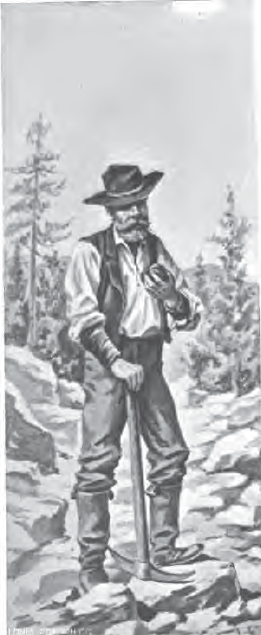










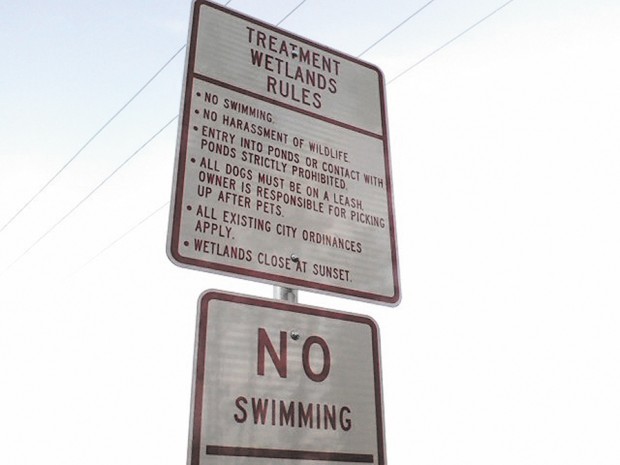


 -6
-6








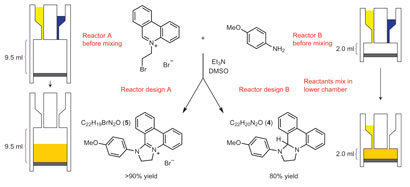


![\textrm{pH} = \textrm{pK}_{a}+ \log \frac{[\textrm{Ind}^-]}{[\textrm{HInd}]}](file:///D:/DOCUME%7E1/jacque/LOCALS%7E1/Temp/msohtml1/01/clip_image001.gif)


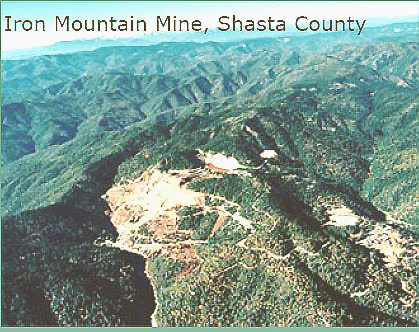




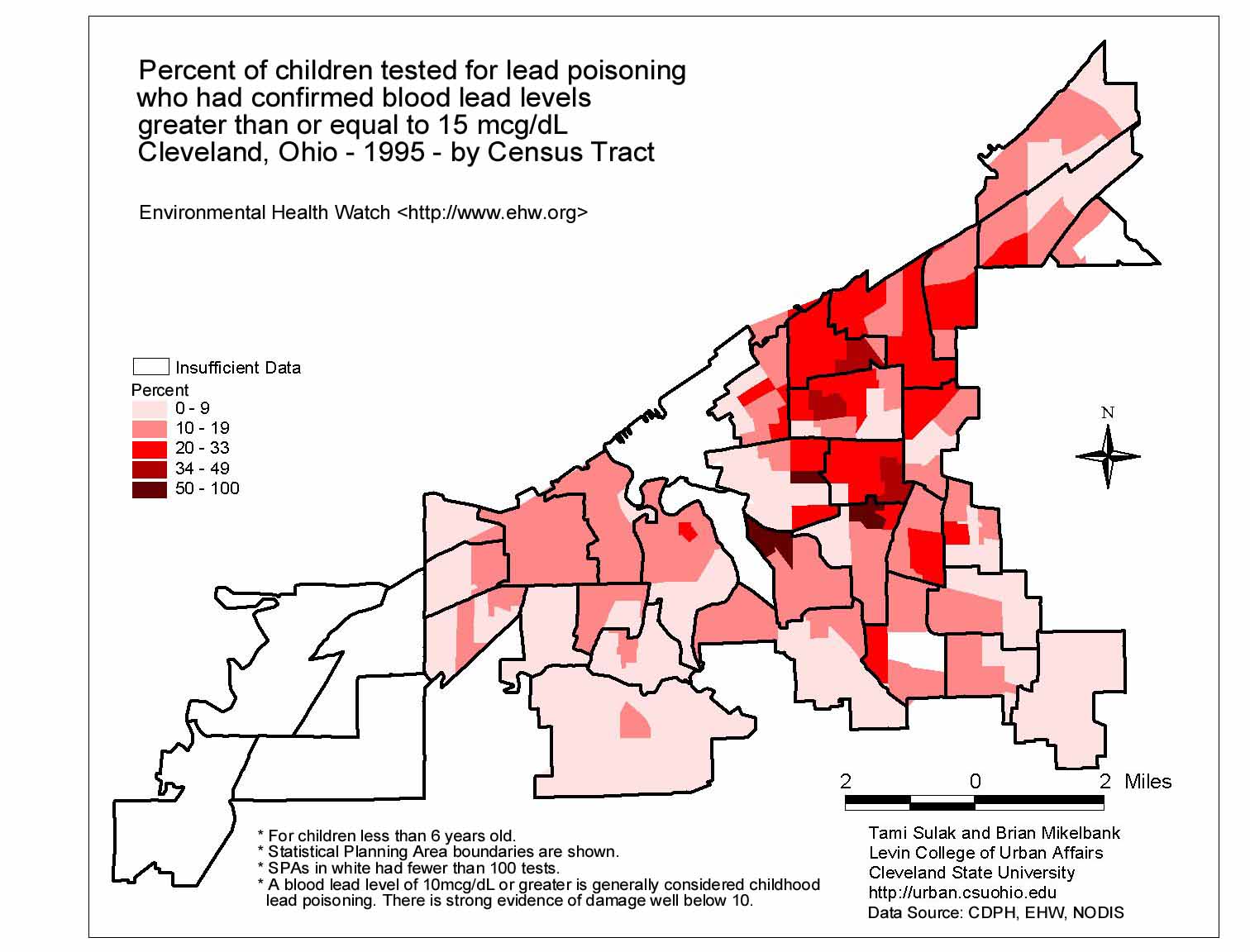
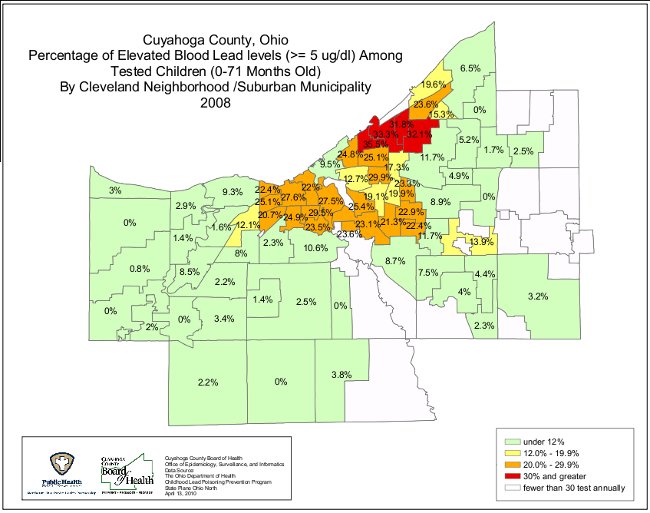



















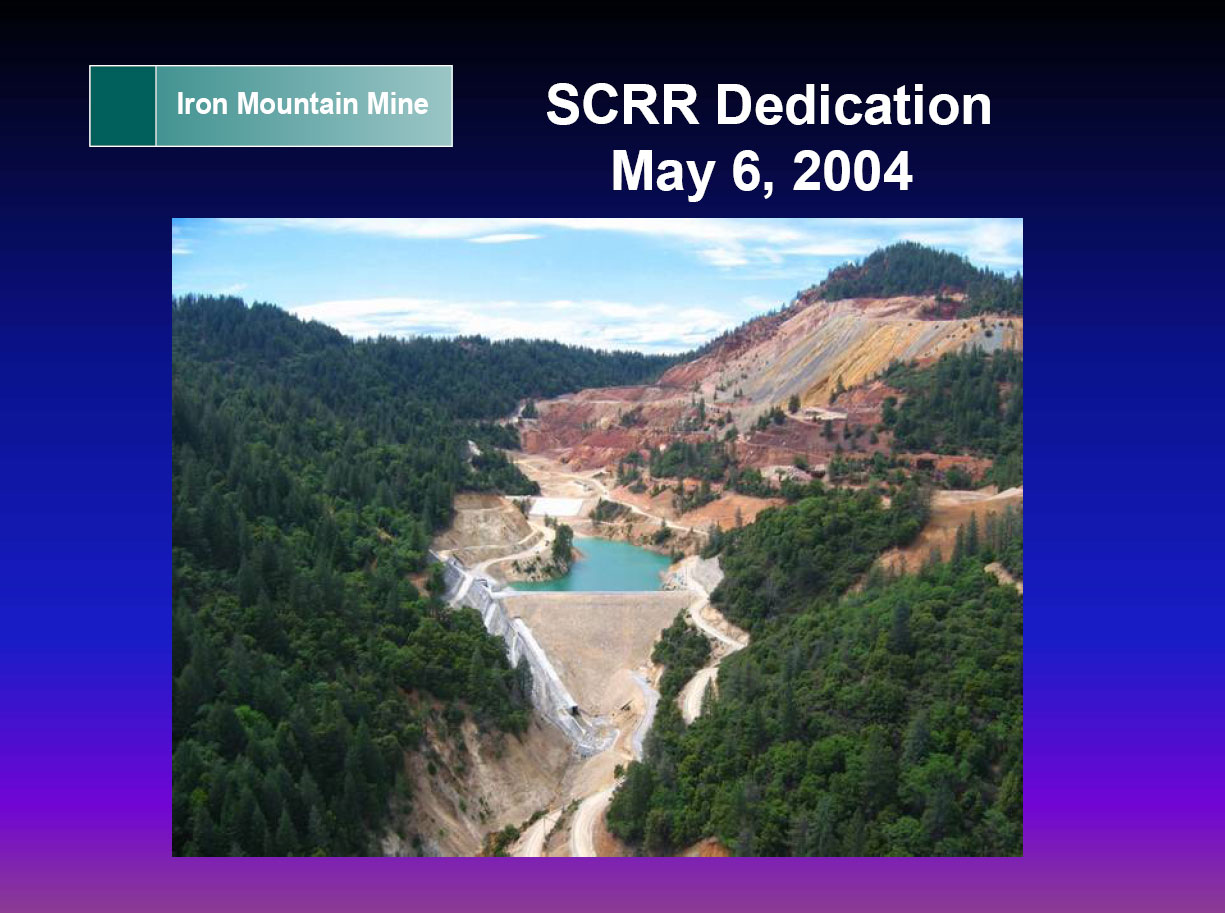
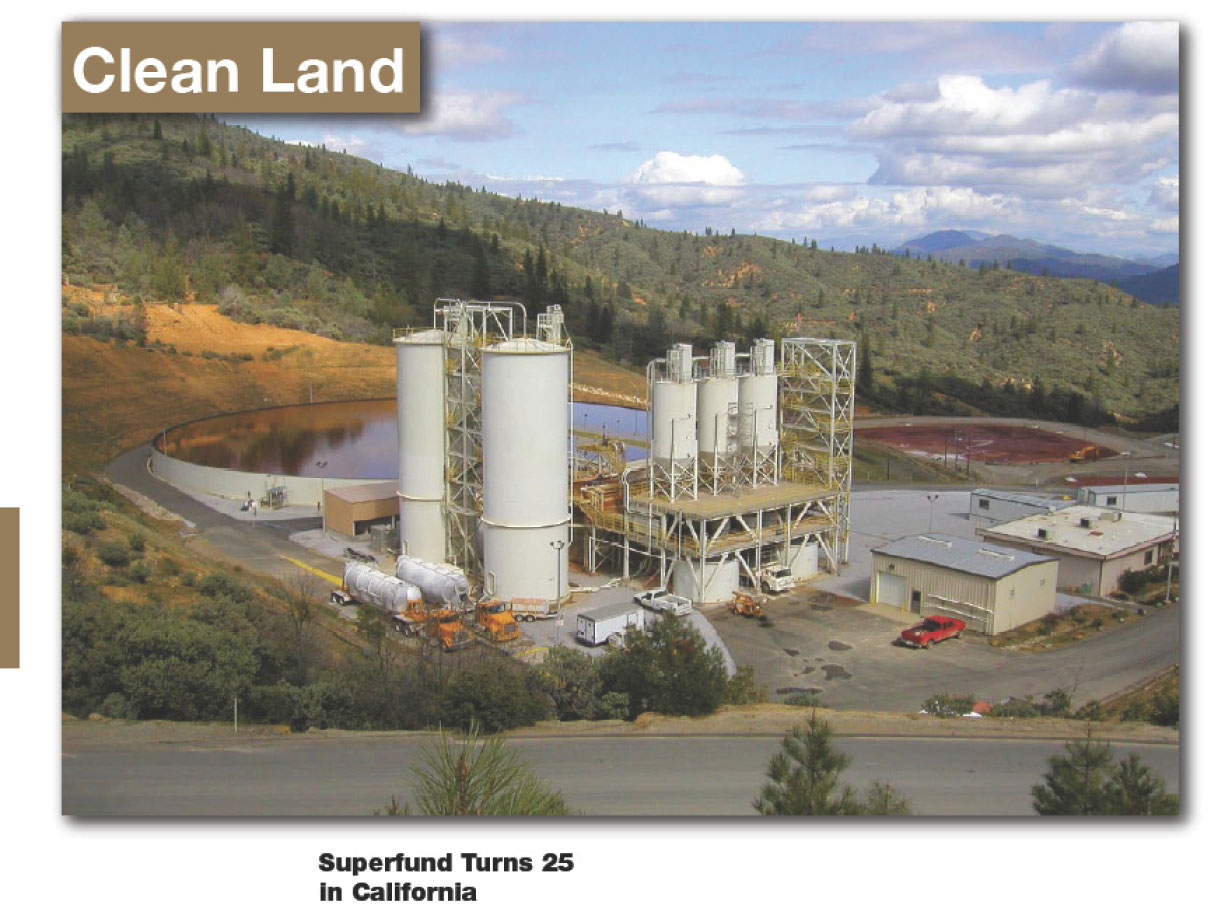








 Real-time comments on legal news by newsmakers, activists, legal experts and special guests...
 Monday, October 26, 2009


 hospitalised
in 1978 as a consequence of taking drugs and some 30 per cent of all hospitalised
people are further damaged by their treatments. Every year, an estimated
140,000 Americans are killed because of drug taking (21) and one in seven
hospital beds is taken up by patients suffering from adverse drug reactions.
hospitalised
in 1978 as a consequence of taking drugs and some 30 per cent of all hospitalised
people are further damaged by their treatments. Every year, an estimated
140,000 Americans are killed because of drug taking (21) and one in seven
hospital beds is taken up by patients suffering from adverse drug reactions.














 product
champions and psychiatry associations in and determine their involvement
with money-grubbing schemes and the abuse of patients. And let me re-emphasize
this point: this is a medical specialty that is second to none in ripping
off and abusing patients. The situation has long been out-of-control. It
is no longer a matter of a few bad apples screwing everyone left and right.
It’s become a full-scale assault on humanity.
product
champions and psychiatry associations in and determine their involvement
with money-grubbing schemes and the abuse of patients. And let me re-emphasize
this point: this is a medical specialty that is second to none in ripping
off and abusing patients. The situation has long been out-of-control. It
is no longer a matter of a few bad apples screwing everyone left and right.
It’s become a full-scale assault on humanity.