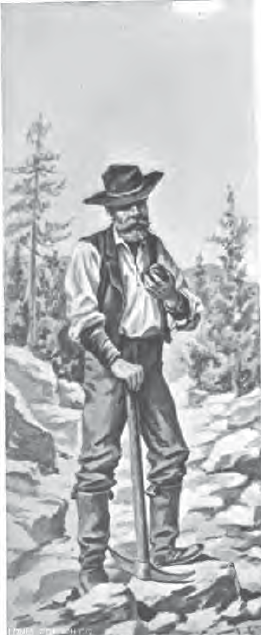
IRON MOUNTAIN MINES INSTITUTE
IRON MOUNTAIN MINES INSTITUTE

WASHINGTON, D.C. - The Congressional Oversight Panel today released its September oversight report, "Assessing the TARP on the Eve of Its Expiration." The Panel found that, although the Troubled Asset Relief Program (TARP) provided critical support to the financial markets at a time when market confidence was in freefall, the program has been far less effective in meeting its other statutory goals, such as supporting home values, retirement savings, and economic growth.
Under its original authorization, the TARP would have expired at the end of 2009. Late last year, however, the Secretary of the Treasury exercised his legal authority to extend the program until October 3, 2010, the latest date authorized by statute. This month, in anticipation of the final expiration of the TARP's most significant authorities, the Panel explored the program's overall effectiveness. The Panel found that:
Although the TARP quelled the financial panic in the fall of 2008, severe economic weaknesses remain even today. Since the TARP was authorized in October of 2008, 7.1 million homeowners have received foreclosure notices. Since their pre-crisis peaks, home values have dropped 28 percent, and stock indices -- which indicate the health of many Americans' most significant investments for college and retirement -- have fallen 30 percent. Given that Treasury was mandated by law to use the TARP to address these measures of the economy, their lingering weakness is cause for concern.
The TARP's extension served primarily to extend the implicit guarantee of the financial system. When the Secretary extended the TARP, he stated that any new use of funds would be limited to providing mortgage foreclosure relief, extending capital to small and community banks, and supporting the securitization market. He also noted that extending the TARP would preserve his authority to intervene swiftly in the event of another financial crash -- essentially prolonging the government's "implicit guarantee" of the financial system. In practice, this second justification proved by far the more significant, as Treasury did not add any additional funding to any programs intended to address the specific economic weaknesses identified by the Secretary.
The TARP's "stigma" has grown and may prove an obstacle to future financial stability efforts. Treasury's policy choices have been increasingly constrained by public anger about the TARP. For example, the TARP is today so widely unpopular -- due in part to shortcomings in Treasury's transparency and its implementation of TARP programs -- that some banks refused to participate in the Capital Purchase Program for fear of losing customers. The unpopularity of the TARP may mean that the government will not authorize similar policy responses in the future. Thus, the TARP's greatest consequence may be that the government has lost some of its ability to respond to financial crises.
Economists surveyed by the Panel raised severe concerns about moral hazard. The Panel sought the input of four prominent economists on the effectiveness of the TARP. These experts generally agreed both that the TARP was necessary to stabilize the financial system and that it had been mismanaged and could pose significant costs far into the future. Further, the economists unanimously felt that the program created significant moral hazard. TARP offered its funding on relatively generous terms, without requiring participating institutions to enter liquidation or receivership, remove failed managers, or wipe out existing shareholders. The fact that the government chose not to impose such stringent costs meant that the TARP's moral hazard costs were much greater than necessary.
The full report is available at http://cop.senate.gov/. The Congressional Oversight Panel will continue to issue monthly reports evaluating the TARP until the Panel's statutory authority expires on April 3, 2011.
The Congressional Oversight Panel was created to oversee the expenditure of the Troubled Asset Relief Program (TARP) funds authorized by Congress in the Emergency Economic Stabilization Act of 2008 (EESA) and to provide recommendations on regulatory reform. The Panel members are: J. Mark McWatters; Richard H. Neiman, Superintendent of Banks for the State of New York; Damon Silvers, Policy Director and Special Counsel for the AFL-CIO; Kenneth Troske, William B. Sturgill Professor of Economics at the University of Kentucky; and Elizabeth Warren, Leo Gottlieb Professor of Law at Harvard Law School.

BREAKTHROUGH DICOVERY! IRON MOUNTAIN MINE CATALYST BREAKSDOWN PESTICIDE, HERBICIDE, & FUNGICIDE RESIDUES IN SOIL, BIODEGRADATION OF ECONOMIC POISONS FROM INDUSTRIAL AGRICULTURE
"HEMATITAN" SOIL MINERALS - $1,440 per tonne/ $99 per 5 gal. plus shipping 'ARMAN' solution $55 per 5 gal. plus shipping: fax orders to 530-275-4559
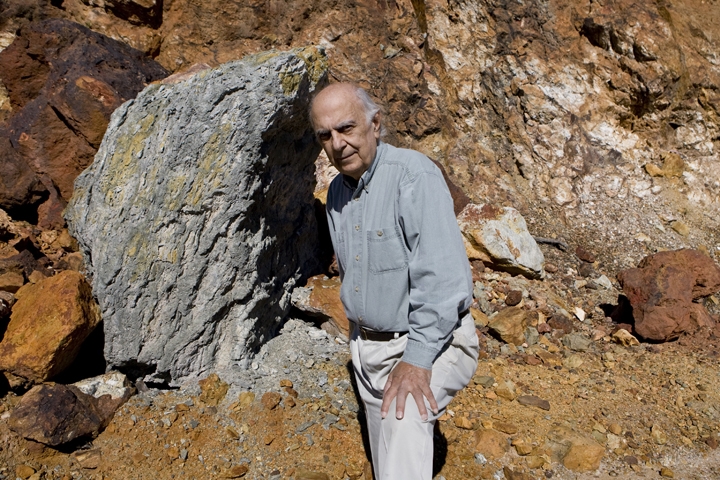
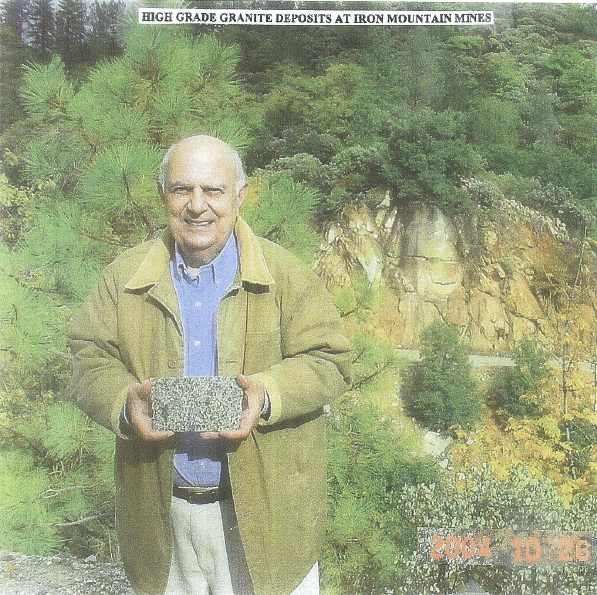

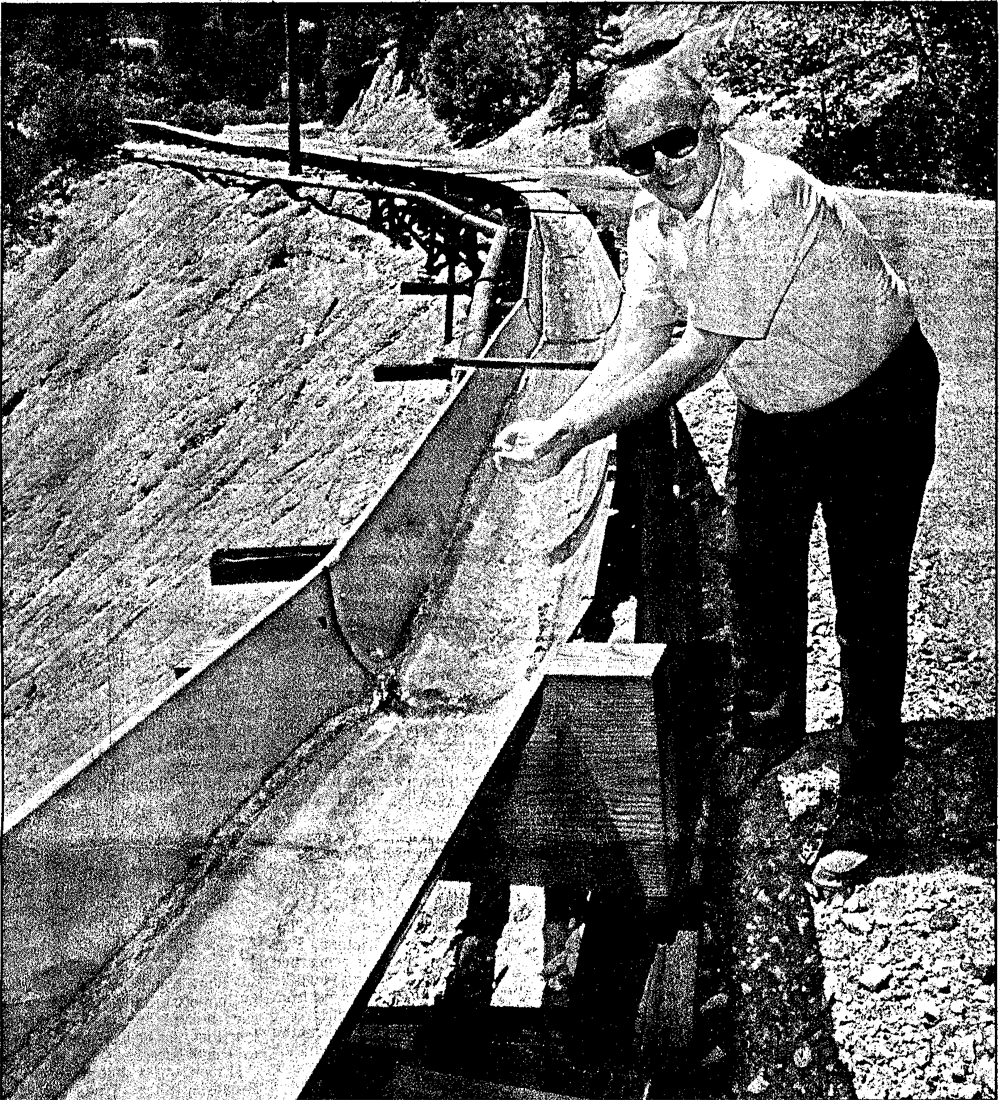
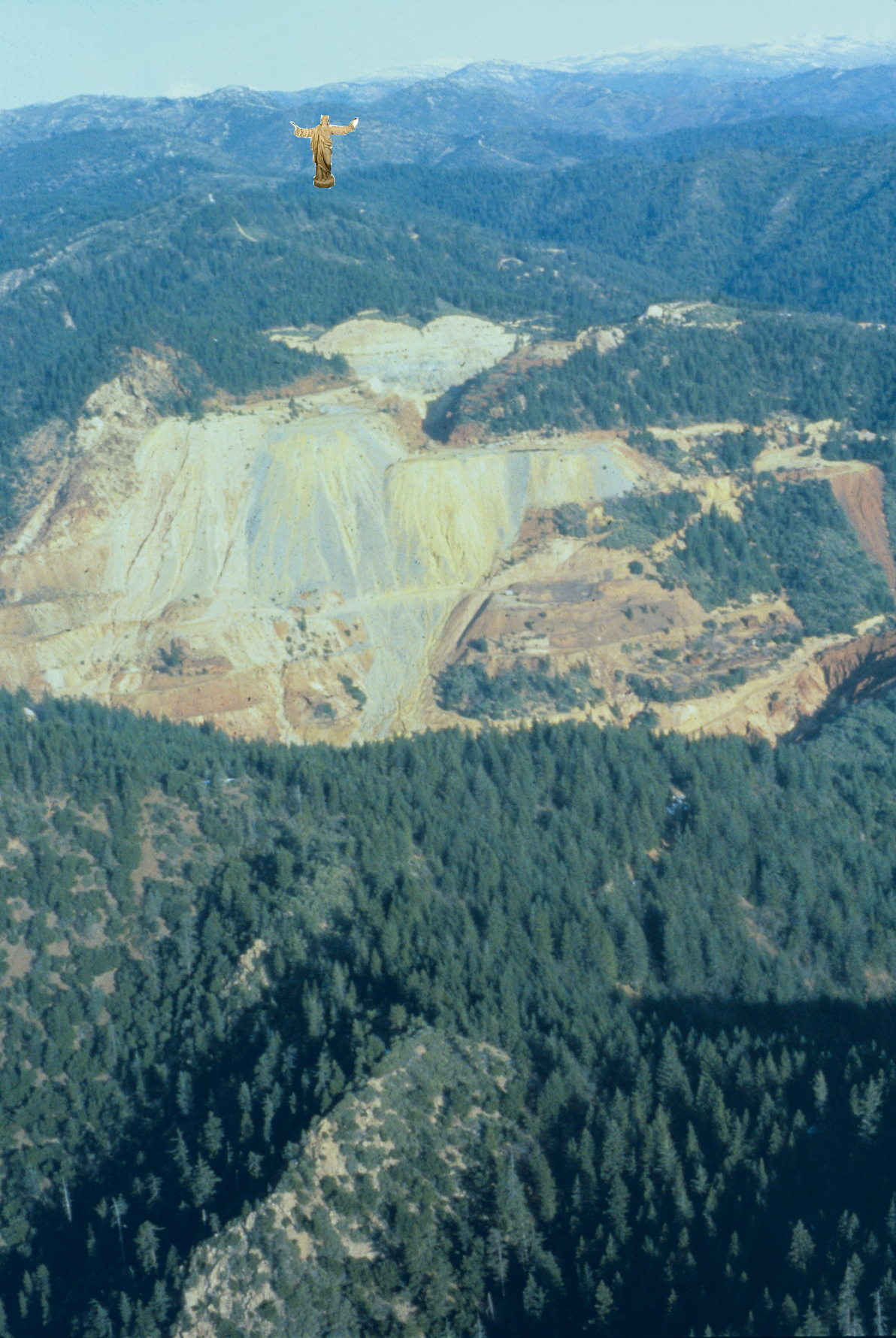

Christ Statue and Spiritual Sanctuary MR. T.W. "TED" ARMAN, OWNER OF IRON MOUNTAIN MINE, LTD., PRESIDENT, CHAIRMAN, CEO OF IRON MOUNTAIN MINES, INC. OWNER OF IRON MOUNTAIN MINE, IRON MOUNTAIN, THE COPPER MOUNTAIN MINING CO., MOUNTAIN COPPER CO., IRON MOUNTAIN INVESTMENT CO., THE ARMAN CONSOLIDATED MINES, THE ARMAN CONSOLIDATED MINING CLAIMS, THE ARMAN MINES EQUITABLE TRUSTS, THE ARMAN SOVEREIGN WAR ON POVERTY FUND, THE ARMAN MINES CHARITABLE FOUNDATION, THE ARMAN MINES MINISTRY OF NATURAL RESOURCES FEDERATION, THE ARMAN LOST CONFIDENCE MINE, THE ARMAN AGRICULTURAL COLLEGE, THE ARMAN MINES HAZARD AND REMEDIATION DIRECTORATE, THE ARMAN MINES DISASTER ASSISTANCE DIRECTORATE, AND THE ARMAN MINES HUMMINGBIRD INSTITUTE COLLEGE OF THE HUMMINGBIRD CENTER FOR HEALTH INSTITUTE FOR LIBERTY AND INDEPENDENCE.
OLD WORLD MIX - MINERALS & METALS, PAINTS & STAINS, CATALYSTS & NANOMATERIALS, GRANITE & PORPHYRY, AGGREGATES & BUILDING STONE, COPPER, ZINC, SILVER, & GOLD
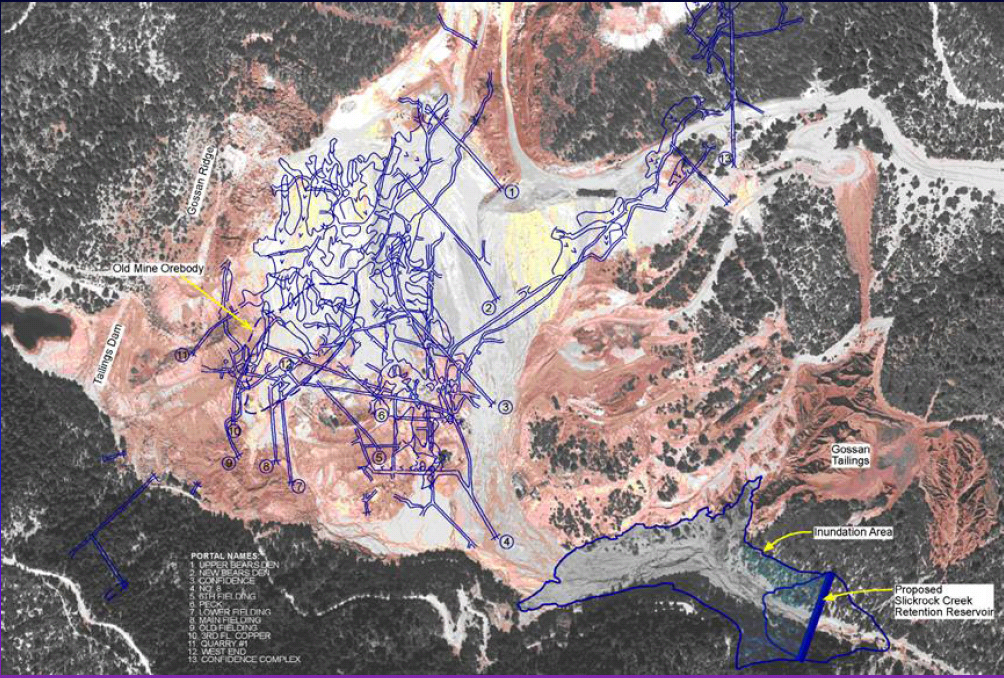
CALIFORNIA - EPA DELISTING IRON MOUNTAIN MINE! PROCLAMATION TERMINATING THE NATIONAL EMERGENCY
"the revised PHG of 300 g/L is two orders of magnitude greater than the applicable numeric chemical-specific standards identified in ROD 5 for the protection of freshwater aquatic life." Rick Sugarek, EPA project manager for Iron Mountain Mine Superfund cleanup, 2008 5 year review. (How much is two orders of magnitude damages?)
COPPER, CADMIUM, AND ZINC; QAPP Information: QA Info Missing; Keswick dam to Cottonwood creek; Final Listing Decision: Delist from 303(d) list. JUNE 15, 2010;
Corpus Christi Pleads for Help from EPAby: Texas Sierra ClubMon Sep 20, 2010 at 00:06 PM CDT |
| Last week, hundreds of students and community members from Corpus Christi, Texas, disappointed with the carelessness of the Texas Commission on Environmental Quality's permitting policy, began appealing directly to the Environmental Protection Agency's enforcement offices.
The proposed petroleum coke plant, the Las Brisas Energy Center, was proposed in 2008 and is currently undergoing the contested case hearing process to obtain a permit. The hearing, conducted by the State Office of Administrative Hearings, will result in a non-enforceable recommendation made by the Administrative Law Judges to the Texas Commission on Environmental Quality. The hearing is set for late October. "We decided that we can't wait while the TCEQ issues a questionable flex permit to the Las Brisas Energy Center. So we decided to gather petitions at our university calling on the EPA to intervene and sent them directly to Gina McCarthy, the head of enforcement at the EPA and assistant to Administrator Lisa Jackson" states Daniel Lucio, student at Texas A & M, Corpus Christi. "We have a real problem with the TCEQ's permitting process," says Jim Klein, chair of Corpus Christi's Clean Economy Coalition, "Chairman Bryan Shaw and Commissioner Buddy Garcia have stated that a case by case MACT analysis is not needed for this plant, and we know that this flex permitting isn't complying with the federal Clean Air Act." Hal Suter, of the local Sierra Club, explained, "Over a hundred of us took action and called, emailed, or signed a petition that went directly Gina McCarthy's office last week, because we can't wait while this dirty petroleum coke plant, Las Brisas, moves forward." |
FOR PUBLICATION
UNITED STATES COURT OF APPEALS
FOR THE NINTH CIRCUIT
UNITED STATES OF AMERICA
CALIFORNIA DEPARTMENT OF TOXIC
SUBSTANCES CONTROL,
Plaintiffs-Appellees,
v.
AEROJET GENERAL CORP.;
ART WEISS, INC.; ASTRO SEAL, INC.;
DEL RAY INDUSTRIAL ENTERPRISES, INC.;
SHELLEY LINDERMAN, as Trustee of
the Linderman Trust; M & T
COMPANY; MULTI CHEMICAL
PRODUCTS INC.; QUAKER CHEMICAL
CORPORATION; TIME REALTY
INVESTMENTS INC.; DON TONKS;
ROY TONKS; TONKS PROPERTIES;
ART WEISS,
Intervenors-Appellants.
Appeal from the United States District Court
for the Central District of California
Audrey B. Collins, Chief District Judge, Presiding
Argued and Submitted
October 5, 2009—Pasadena, California
Filed June 2, 2010
Before: Cynthia Holcomb Hall, William A. Fletcher and
Richard R. Clifton, Circuit Judges.
Opinion by Judge William A. Fletcher
OFFICE OF THE CALIFORNIA ATTORNEY GENERAL,
Los Angeles, California, for the plaintiffs-appellees.
Brian Donald Langa, DEMETRIOU, DEL GUERCIO,
SPRINGER & FRANCIS, Los Angeles, California, Catherine
Mitchell Wieman, Peter A. Nyquist, ALSTON & BIRD, Los
Angeles, California, Robert Stephen Niemann, SEYFARTH
SHAW, San Francisco, California, Carla Margolis Blanc,
SOUTHERN CALIFORNIA EDISON COMPANY, Rosemead,
California, for the defendants-appellees.
James Carlyle Macdonald, Thomas Jay Bois, II, BOIS &
MACDONALD, Irvine, California, Bradley L. Bunch, LAW
OFFICES OF McCOLLUM & BUNCH, Fresno, California,
Stephen Robert Onstot, WALSWORTH FRANKLIN BEVINS
& McCALL, Los Angeles, California, Stephen Arthur
Tuggy, LOCKE LORD BISSELL & LIDDELL, Los Angeles,
California, Lawrence Allen Hobel, COVINGTON & BURLING,
San Francisco, California, for the intervenors-appellants.
OPINION
W. FLETCHER, Circuit Judge:
The Comprehensive Environmental Response, Compensation,
and Liability Act, 42 U.S.C. §§ 9601-9675
(“CERCLA”), requires certain polluters to pay for cleaning up
contaminated sites. After identifying a contaminated site, the
federal Environmental Protection Agency (“EPA”) and state
environmental agencies typically negotiate with potentially
responsible parties (“PRPs”) over their shares of comparative
responsibility for cleanup (“response”) costs. CERCLA
allows PRPs to seek contribution from one another in order to
apportion response costs equitably. But CERCLA bars contribution
claims against PRPs that have obtained administratively
or judicially approved settlements with the government.
CERCLA thus provides an incentive for PRPs to settle by
leaving non-settling PRPs liable for all of the response costs
not paid by the settling PRPs.
We consider a question that has split the federal courts:
May a non-settling PRP intervene in litigation to oppose a
consent decree incorporating a settlement that, if approved,
would bar contribution from the settling PRP? We join the
Eighth and Tenth Circuits in holding that the answer is “yes.”
I. Background
A. Investigation and Negotiation
NU Online News Service, Sept. 16, 3:26 p.m. EDT
WASHINGTON — American International Group (AIG) still relies largely on government funding for capital and liquidity, and “most observers” expect that the AIG Investment Program will generate “significant losses” to U.S. taxpayers, according to a new government report.
The Congressional Oversight Panel's September report on the Troubled Asset Relief Program (TARP)—called “Assessing the TARP on the Eve of Its Expiration”— also carries other distressing news.
It acknowledges that the program provided “critical support” to the financial markets at a time when market confidence was in freefall, but it states the program has been far less effective in meeting its other statutory goals, such as supporting home values, retirement savings, and economic growth.
And, because it failed to stem the decline in value of the assets of Americans, especially their securities and homes, the report says the TARP program is very unpopular amongst the public.
“Thus, the greatest consequence of the TARP may be that the government has lost some of its ability to respond to financial crises,” the report notes.
It adds that since TARP was authorized in October of 2008, 7.1 million homeowners have received foreclosure notices.
“Since their pre-crisis peaks, home values have dropped 28 percent, and stock indices—which indicate the health of many Americans' most significant investments for college and retirement—have fallen 30 percent,” the report states.
“Given that Treasury was mandated by law to use the TARP to address these measures of the economy, their lingering weakness is cause for concern,” according to the report.
The COP report was released on the “eve of the expiration of the program,” which is scheduled to end Oct. 3.
“Popular anger remains high about taxpayer support of America's largest banks, and that anger has only intensified in light of the continuing economic turmoil,” the report states.
The TARP's unpopularity may mean that, unless the program's effectiveness can be convincingly demonstrated, the government will not authorize similar policy responses in the future, according to the report.
Regarding AIG, it says the latest estimates by the Congressional Budget Office, the Office of Management and Budget and the Treasury project losses in the amount of $36 billion, $50 billion, and $45 billion, respectively, although the estimated losses have steadily decreased since the inception of the credit facility.
The report notes that Treasury's ability to recoup its investment depends on the value of AIG's common stock at the time Treasury sells its interests.
Therefore, the report states, the value of Treasury's substantial investment in AIG and the size of any gain or loss are dependent on many external variables, and “the protracted investment in AIG continues to create significant risks to taxpayers.”
The report adds that Treasury has invested approximately $47.5 billion in TARP funds in AIG. This investment is comprised of non-cumulative preferred stock in the amount of $40 billion and an equity capital facility under which AIG has drawn down $7.5 billion.
Including the $1.6 billion in unpaid dividends, AIG's outstanding TARP assistance equals $49.1 billion, the report explains.
In addition, AIG must repay $79.1 billion in outstanding debt to the Federal Reserve Bank of New York.
“The timing of Treasury's exit is complicated by the fact that AIG is not permitted to repay Treasury until it has fully repaid FRBNY,” the report states.
Treasury, the Federal Reserve, and AIG have stated that they are confident that AIG will fully repay FRBNY in the near future without “jeopardizing its financial viability,” according to the report.
"All our constitutional laws and our system of government are based upon the fact that the government is not permitted to do anything that violates this system... but if the government is in a position to increase the quantity of money, all these provisions become absolutely meaningless and useless." — Ludwig von Mises
American International Group Inc. still owes the federal government about $128.2 billion, and the Troubled Asset Relief Program's Congressional Oversight Panel has issued a report suggesting it's still hard to say whether that taxpayer investment will pay for itself.
"Whether Treasury will be able to exit its investments in AIG without substantial losses turns on AIG's ability to produce strong operating results and demonstrate that it is capable of functioning as a stand-alone investment-grade company without government support," the report said.
An attempt to reach AIG (NYSE: AIG) for comment on the TARP report wasn't immediately successful.
"AIG still relies largely on government funding for capital and liquidity, although there are recent indications that AIG is planning to issue bonds," the report said. "Treasury's ability to recoup its investment depends on the value of AIG's common stock at the time Treasury sells its interests. Therefore, the value of Treasury's substantial investment in AIG and the size of any gain or loss are dependent on many external variables, and the protracted investment in AIG continues to create significant risks to taxpayers."
The company's outstanding TARP help equals $49.1 billion, while its debt to the Federal Reserve Bank of New York is $79.1 billion. AIG has to repay FRBNY before it can turn to settling its debt with the Department of the Treasury.
In general, the report reflected increasing optimism in the federal agencies that AIG may recover, but it points out the company has offered no concrete time line for debt repayment.
"At this time, AIG cannot afford to divert the cash it is generating through its insurance operations towards repaying FRBNY, because it is still quite weak financially," the report said. "Both the timing of the government's exit from its involvement with AIG and the ultimate return on its investment are difficult to predict with confidence."
The panel's report also included views from academic experts. It quoted Alan Blinder, a professor of economics and public affairs at Princeton University, as saying that "regarding stabilizing institutions like AIG, one has to count TARP as a huge success." He said it threw a "security blanket around every large entity. This is not something you'd want to do under normal circumstances but was appropriate at the time. And the net cost to the taxpayers for this part of the program will, in the end, be very small. In that sense, TARP looks like a bargain."
Because Treasury will sell off the remaining warrant positions it holds in Hartford Financial Services Group Inc. and Lincoln National Corp., ending the financial connection between the two major insurers and the federal government, that leaves AIG as the only insurance company financially connected to TARP (BestWire, Sept. 9, 2010).
TARP is nearing its statutory expiration on Oct. 3.
AIG stock was trading at $36.67 on the afternoon of Sept. 20, up 2.89% from the previous close. Most AIG insurers have current Best's Financial Strength Ratings of A (Excellent).
A Rule by the Environmental Protection Agency on 09/17/2010
EPA is issuing significant new use rules (SNURs) under section 5(a)(2) of the Toxic Substances Control Act (TSCA) for two chemical substances which were the subject of Premanufacture Notices (PMNs). The two chemical substances are identified generically as multi-walled carbon nanotubes (MWCNT) (PMN P-08-177) and single-walled carbon nanotubes (SWCNT) (PMN P-08-328). This action requires persons who intend to manufacture, import, or process either of these two chemical substances for a use that is designated as a significant new use by this final rule to notify EPA at least 90 days before commencing that activity. EPA believes that this action is necessary because these chemical substances may be hazardous to human health and the environment. The required notification would provide EPA with the opportunity to evaluate the intended use and, if necessary, to prohibit or limit that activity before it occurs. Show citation box
Significant New Use Rule (SNUR); Chemical-Specific SNURs To Extend Provisions of Section 5(e) Orders
21 actions from June 6th, 1994 to December 2010
Release date: 08/27/2010
“EPA today denied a petition submitted by several outside groups for the agency to implement a ban on the production and distribution of lead hunting ammunition. EPA reached this decision because the agency does not have the legal authority to regulate this type of product under the Toxic Substances Control Act (TSCA) – nor is the agency seeking such authority.
“EPA is taking action on many fronts to address major sources of lead in our society, such as eliminating childhood exposures to lead; however, EPA was not and is not considering taking action on whether the lead content in hunting ammunition poses an undue threat to wildlife.
“As there are no similar jurisdictional issues relating to the agency's authority over fishing sinkers, EPA – as required by law – will continue formally reviewing a second part the petition related to lead fishing sinkers.
“Those wishing to comment specifically on the fishing tackle issue can do so by visiting http://www.regulations.gov . EPA will consider comments that are submitted by September 15.”
The mayor of Pebbleton announces that, since the
colored flowers are so rare and valuable, they are
going to be used as money, with petals for change.
Is this a good idea? What qualities does a good
form of money have? Why? Which of these qualities
do flowers have and which do they lack? What
would happen to Pebbleton’s economy if someone
then discovered a new sunlit cavern with thousands
of flowers growing in it? Should someone control
the growth of those flowers? Who?
CONTACT:
Stacy Kika
Kika.stacy@epa.gov
202-564-0906
202-564-4355
Cathy Milbourn
Milbourn.cathy@epa.gov
202-564-7849
202-564-4355
FOR IMMEDIATE RELEASE
September 20, 2010
EPA Launches Green Power Community Challenge Nationwide
Local governments expand use of green power
WASHINGTON – The U.S. Environmental Protection Agency is kicking off its national “Green Power Community Challenge,” a year-long campaign to encourage cities, towns, villages, and Native American tribes to use renewable energy and fight climate change. Purchases of green power help to prevent greenhouse gas emissions and also help accelerate the development of new renewable energy capacity across the United States .
To participate in the challenge, a local government must join EPA's Green Power Partnership and use green power in amounts that meet the program's purchase requirements. The local government must also conduct a campaign to encourage local businesses and residents to collectively buy or produce green power on-site in amounts that meet EPA requirements.
More than 30 cities and towns in Alaska, California, Colorado, Connecticut, Maryland, Oregon, Pennsylvania, Texas, Utah, Washington, and Wisconsin have become green power communities, and are collectively buying more than 900 million kilowatt-hours (kWh) of green power annually, equivalent to the carbon dioxide emissions (CO2) from the electricity use of nearly 80,000 average American homes.
The campaign is designed to expand upon the successes of the program, aiming to double the total aggregate amount of green power used by EPA Green Power Communities. As part of the national campaign, communities will compete to see which one can use the most green power and which one can achieve the highest green power percentage of total electricity use. There will be a separate award for each category with national recognition and special attention from EPA. The winners will be announced in September 2011.
During the challenge, from Sept. 20, 2010, to Sept. 1, 2011, communities will be ranked for the two award categories on EPA's website on a quarterly schedule; EPA will also provide technical assistance to help participants increase their green power usage.
Green power is generated from renewable resources such as solar, wind, geothermal, biomass, biogas, and low-impact hydropower. Green power resources produce electricity with an environmental profile superior to conventional power technologies, and produce no net increase of greenhouse gas emissions.
More information on EPA's Green Power Community Challenge: http://www.epa.gov/greenpower/gpcchallenge
More information about EPA's Green Power Communities:
http://epa.gov/greenpower/communities/index.htm

September 20th, 2010 02:15am
By Dan Verel, Business Journal Staff Reporter
September 15, 2010 by admin
Zinc Air, Incorporated out of Montana has licensed the rights for a zinc air fuel cell developed by a retired chemist at the Lawrence Livermore National Laboratory (LLNL). The good news for hydrogen hybrid vehicle makers it that zinc is seen as a replacement for expensive platinum in fuel cells and not so environmentally friendly imported lithium in lithium-ion batteries.
According to the LLNL website, “The technology enables safe, lower-cost, clean, quiet, reliable and environmentally friendly power generation. Zinc Air Fuel Cell (ZAFC) products combine atmospheric oxygen from the air we breathe with zinc metal pellets as the fuel to generate electricity.
“In operation, the fuel cell consumes all of the zinc and is operationally quiet, providing instantaneous electrical energy with no greenhouse gas emissions . It also doesn't contain any of the toxic elements found in lithium batteries or other battery chemistries.”
Here is a high resolution image that shows how the zinc pellets are recycled in an environmentally friendly manner. Using zinc would mean less reliance on foreign countries for both platinum for fuel cells and lithium for the hybrid batteries.
According to Zinc Air Inc. President Dave Wilkins, “At the moment, most in the auto industry are currently looking to lithium batteries as the power solution for electric vehicles , but those batteries are manufactured primarily outside of the United States and are not cost effective for widespread use. There is enough readily available zinc just in the United States to produce billions of these batteries.”
So, using zinc instead of platinum or lithium would solve four problems:
1. First, replacing higher costing materials with lower costing zinc
2. Second, less environmental impact if zinc is used
3. Third, more reliance on U. S. resources for zinc rather than other countries for the other materials already listed
4. More U. S. jobs for mining zinc and manufacturing fuel cells and batteries
The proverbial ball is in Zinc Air's court. Now, let's see if they run with it.
Battery using a metal particle bed electrode
Abstract
A zinc-air battery in a case including a zinc particle bed supported adjacent the current feeder and diaphragm on a porous support plate which holds the particles but passes electrolyte solution. Electrolyte is recycled through a conduit between the support plate and top of the bed by convective forces created by a density of differential caused by a higher concentration of high density discharge products in the interstices of the bed than in the electrolyte recycle conduit.
| Inventors: | Evans; James V. (Piedmont, CA) , Savaskan; Gultekin (Albany, CA) |
| Assignee: | The Regents of the University of California (Oakland, CA) |
| Appl. No.: | 07/433,475 |
| Filed: | November 8, 1989 |
Additional Applications
Solid Zinc Strip has a unique set of attributes that make it perfect for a variety of applications.
For instance, Braille printing plates made from
Solid Zinc Strip create avery pronounced embossing that will not tear or stain paper during the printing process. The self-annealing properties of solid zinc strip allow these plates to be used for many years. Finning pads are made from solid zinc strip and are used to polish eyeglass lens.
All you have to do is look at Zinc's unique set of attributes to know that its uses are wide and varied and provide some very innovative solutions.
EPA Marks 20 th Anniversary of the Pollution Prevention Act of 1990
WASHINGTON — This year during Pollution Prevention Week, September 19-25, the U.S. Environmental Protection Agency marks the 20 th anniversary of the Pollution Prevention Act of 1990. The act laid the groundwork for reducing pollution at its source and protecting children and families from exposure to harmful pollutants, as well as significantly reducing the amount of contaminants released into the environment. EPA Administrator Lisa P. Jackson is urging the public to recommit to the goal of pollution prevention in their everyday lives.
"Protecting public health and the environment begins with pollution prevention. We're taking proactive steps that minimize pollution at the source and keep environmental threats from reaching our communities," said EPA Administrator Lisa P. Jackson. "The Pollution Prevention Act of 1990 gave our nation a strong start in this direction. Twenty years later, we must work with our government and industry partners to foster clean innovations and sustainable strategies that expand and enhance pollution prevention across the country."
EPA is focused on integrating of pollution prevention goals into all its programs and has already achieved results in many agency programs:
· In 2009 alone, Americans with the help of Energy Star saved $17 billion dollars on their energy bills and reduced greenhouse gas emissions equivalent to those of 29 million cars.
· WasteWise celebrated 15 years of environmental results in 2009, with 2,860 members contributing to the prevention and recycling of more than 160 million tons of waste (or 320 billion pounds).
· Since the program began in 2003, Plug-In To eCycling partners have recycled more than 360 million pounds of electronics, including televisions, computers and cell phones.
· WaterSense has helped consumers save 46 billion gallons of water and $343 million in water and sewer bills since the program's inception in 2006.
· Green electronics, Green Chemistry and Green Engineering, and the Design for the Environment (DfE) programs have reduced the use of toxic materials in everyday items like computers and household cleaners and give consumers the choice to use safer products since the programs began in 2006, 1995 and 1992 respectively. To day, more than 2,000 products carry the DfE label.
EPA has also been working closely with states, local governments, international organizations, environmental groups and industry to identify pollution prevention opportunities. One example is the Economy, Energy and Environment (E3) Program, which is helping manufacturers reduce costs and become more efficient, competitive and sustainable in a global market.
More information on Pollution Prevention Week and what you can do: http://epa.gov/p2week/
Participate in Pollution Prevention Week webinars—Journey to Sustainability: http://epa.gov/p2week/#web
Pollution Prevention Week radio actualities: http://www.epa.gov/ocspp/soundbites.html
The National Mining Association on Friday filed a second lawsuit in federal district court to block implementation of tougher EPA water-quality ?guidelines for “mountaintop removal” and other coal-mining practices in six Appalachian states.
The group is arguing the court should suspend the guidelines because of their economic damage to the coal states. It is the second lawsuit NMA has filed in district court against the guidelines. In an initial filing in July, the group argued the guidelines violated federal law by circumventing requirements for public notice and comment and receiving a peer review.
“There's an illicit policy being implemented based on bogus science which is already having real economic consequences,” said National Mining Association spokesman Luke Popovich. “It is, in effect, in our view, contributing to the delays that we've seen in getting permits approved and therefore adding to the stress throughout the coal communities in the six states they apply to.”
The guidelines were issued in draft form April 1. EPA is taking publi comment until Dec. 1 and will issue final guidelines by next April. But the agency is already using the released guidelines to clarify how? future Clean Water Act permits are being issued for coal-mining practices in the six states.
NMA is also arguing the guidelines meet “all the legal definitions of regulations” and should be treated to the same process before they become final and are actually used, Popovich said.
Coal-state lawmakers from both parties have joined the fight, as well.
A bipartisan group of 15 House lawmakers — led by Rep. Hal Rogers (R-Ky.) and including five Democrats — has so far backed a bill introduced last week to block funding next year for EPA to implement the guidelines.
In addition, Popovich said one coal-state Democratic senator has had “serious discussions” about offering a companion bill, which could? come up in this fall's spending debate. The issue was raised at a pro-coal rally attended by House and Senate coal-state lawmakers from both parties on Capitol Hill last week.
EPA has countered that the guidelines are based on sound science. EPA Administrator Lisa Jackson in a statement when they were released said that the “people of Appalachia shouldn't have to choose between a clean, healthy environment in which to raise their families and the jobs they need to support them.”
As reported by the U.S.-based Waste Business Journal ( www.wastebusinessjournal.com ), a settlement resolving litigation over the U.S. Environmental Protection Agency's (EPA's) controversial definition of solid waste (DSW) rule is expected soon.
Lisa Feldt, deputy assistant administrator for EPA's Office of Solid Waste and Emergency Response, told the Environmental Council of the States' annual meeting on August 30, 2010 that "we are in settlement talks and hope to have an announcement soon."
The current rule, which dates from the Bush administration, provides exemptions for the management of certain wastes under Resource Conservation & Recovery Act requirements in an effort to promote recycling.
In its lawsuit, Sierra Club alleges that the exemptions go too far and will lead to dangerous "sham" recycling at facilities located disproportionately near low-income and minority communities.
Sierra Club also filed a petition for reconsideration with EPA urging the agency to repeal the rule.
Last year, EPA said it was considering more precisely defining how industry must "contain" recyclable materials and that it would require more elaborate notification by companies seeking exemptions.
In January, EPA released a draft methodology for analyzing the rule's impacts on low income and minority communities.
Monday, September 20, 2010
PORTLAND, Ore. (AP) -- An environmental group is challenging the way the U.S. Army Corps of Engineers is developing gravel mining regulations for rivers in Oregon.
The Northwest Environmental Defense Center filed a lawsuit Monday in U.S. District Court in Portland alleging the corps kept salmon advocates out of meetings to develop standards for taking gravel out of the Chetco River in southwestern Oregon.
The complaint claims the corps failed to heed environmental concerns raised by state and federal agencies.
The lawsuit also seeks to overturn a NOAA Fisheries Service finding that mining in the Chetco under terms of a proposed permit would not push threatened coho salmon closer to extinction.
Spokespeople for the agencies said they could not comment on the lawsuit.

AURORA — Unlike many other parts of the world — and even the United States — Illinois has always had an abundance of water resources.
On Thursday, Illinois Environmental Protection Agency officials came to Aurora to unveil a new grant program, specifically designed to protect those resources.
The Green Infrastructure Grant program, introduced outside of Aurora's new police headquarters on East Indian Trail, is expected to reduce stormwater runoff and discharges into the state's waterways.
"We're fortunate in Illinois to have some very good water sources," said Doug Scott, director of the Illinois EPA. "We have a tremendous responsibility to take care of these water sources we are so blessed with."
Thursday's announcement also marked the first day that the agency would begin accepting proposals for projects aimed at green infrastructure solutions for storm water management, such as permeable pavements, bio-swales, green roofs, rain barrels, rain gardens, or other approaches that would keep pollutants out of Illinois water sources.
The $5 million grant program, from federal funding through the U.S. EPA, is a result of the Green Infrastructure for Clean Water Act passed by the Illinois General Assembly and signed by Gov. Pat Quinn earlier this year.
"Citizens really do have a right to clean water, clean air, and a clean environment," said State Sen. Linda Holmes, an Aurora Democrat who played a key role in the grant's formation.
The Green Infrastructure Grant Program will accept proposals in three different categories:
n Combined sewer overflow rehabilitation projects with a maximum grant of $3 million or 85 percent of the project costs.
n Storm water retention, with a maximum grant of $750,000 or 75 percent of the project cost.
n Green infrastructure small projects, for $75,00 or 75 percent of total cost.
"In recent months we have seen torrential rain events," said Scott. "They increase the urgency for green stormwater management projects."
It was not by coincidence that Aurora's police headquarters was chosen as the site to launch the new grant program.
The building, which was constructed utilizing green technology, includes permeable pavers which allow stormwater to seep into the ground through crack, and filter naturally into the water supply rather than going through a sewer pipe.
"The best way to protect nature is to let nature do what it does best," said Aurora Mayor Tom Weisner.
The IEPA anticipates awarding two to 13 of the new grants each year. More information is available on the agency's website at www.epa.state.il.us.

A group consisting overwhelmingly of state utilities and agricultural representatives penned a letter to Florida's U.S. House and Senate members Tuesday, pleading for more time to review the EPA's water quality criteria, parts of which are set to be finalized next month.
The letter, which was released Tuesday, requests “an independent scientific and economic review of EPA's proposed criteria in its entirety,” and says that the implementation of the rule will “add substantial new costs on all Floridians.”
The letter suggests the EPA continue to use “science-based nutrient water quality programs which have created measurable environmental improvements in Florida's estuaries, lakes, rivers, and streams.”
Several Florida environmentalists would disagree that current standards have created “measurable improvements” in area waters, especially lately.
This past summer has been nothing short of a nightmare for St. Johns Riverkeeper Neil Armingeon, who has seen the river invaded by blue-green algae that caused a rash of fish kills (a host of suspicious bird deaths occured around the same time, too). More recently, a thick foam that, in some places, was as much as several inches thick, emerged.
Armingeon has been emphatic in his view that industries like those that wrote the letter should be governed by stricter standards, so that the river can eventually heal. In fact, the St. Johns Riverkeeper was one of five environmental groups that filed a consent decree against the EPA, alleging that the agency “failed to perform a non-discretionary duty to set numeric nutrient criteria for the State of Florida as required by the Clean Water Act.”
In January 2009 (during the final week of the Bush administration), the EPA made a determination that the existing narrative standards governing bodies of water were insufficient, and that numeric nutrient standards were necessary to meet the standards of the Clean Water Act. Still, the Sept. 14 industry-penned letter states that the EPA rulemaking effort “was spawned by litigation, not science” and that Florida state scientists “have raised serious questions regarding the scientific validity of EPA's proposed criteria.”
Agencies represented in the letter are a who's-who of state polluters: The list includes the Florida Fertilizer & Agrichemical Association, the Florida Farm Bureau, the Association of Florida Community Developers and The Fertilizer Institute.
Read in full or download the letter:
If the big banks that brought you the current credit crisis can already meet the new requirements, what exactly does Basel III achieve, beyond shaking down their smaller competitors?
By Ellen Brown ( about the author )
The stock market shot up on September 13, after new banking regulations were announced called Basel III. Wall Street breathed a sigh of relief. The megabanks, propped up by generous taxpayer bailouts, would have no trouble meeting the new capital requirements, which were lower than expected and would not be fully implemented until 2019. Only the local commercial banks, the ones already struggling to meet capital requirements, would be seriously challenged by the new rules. Unfortunately, these are the banks that make most of the loans to local businesses, which do most of the hiring and producing in the real economy. The Basel III capital requirements were ostensibly designed to prevent a repeat of the 2008 banking collapse, but the new rules fail to address its real cause.
Why Basel III Misses the MarkWe are still trapped in that spiral today, despite massive "quantitative easing" (essentially money-printing) by the Federal Reserve. The money supply has continued to shrink in 2010 at an alarming rate. In an article in The Financial Times titled "US Money Supply Plunges at 1930s Pace as Obama Eyes Fresh Stimulus," Ambrose Evans-Pritchard quoted Professor Tim Congdon from International Monetary Research, who warned:
"The plunge in M3 [the largest measure of the money supply] has no precedent since the Great Depression. The dominant reason for this is that regulators across the world are pressing banks to raise capital asset ratios and to shrink their risk assets. This is why the US is not recovering properly."
In a working paper called "Unconventional Monetary Policies: An Appraisal", the Bank for International Settlements concurred with Professor Congdon. The authors said, " The main exogenous [external] constraint on the expansion of credit is minimum capital requirements ." ("Capital" means a bank's own assets minus its liabilities, as distinguished from its "reserves," which apply to deposits and can be borrowed from the Federal Reserve or from other banks.)
The Bank for International Settlements (BIS) is "the central bankers' central bank" in Basel, Switzerland; and its Basel Committee on Banking Supervision (BCBS) is responsible for setting capital standards globally. The BIS acknowledges that pressure on banks to meet heightened capital requirements is stagnating economic activity by stagnating credit. Yet in its new banking regulations called Basel III, the BCBS is raising capital requirements. Under the new rules, the mandatory reserve known as Tier 1 capital will be raised from 4 percent to 4.5 percent by 2013 and will reach 6 percent in 2019. Banks will also be required to keep an emergency reserve of 2.5 percent.
Why Is the BCBS Raising Capital Requirements When Existing Requirements Are Already Squeezing Credit?Concerns about the credit-tightening effects of Basel III were reported in a September 13 Huffington Post article by Greg Keller and Frank Jordans, who wrote:
"Bankers and analysts said new global rules could mean less money available to lend to businesses and consumers. . . .
"European savings banks warned that the new capital requirements could affect their lending by unfairly penalizing small, part-publicly owned institutions.
""We see the danger that German banks' ability to give credit could be significantly curtailed,' said Karl-Heinz Boos, head of the Association of German Public Sector Banks.
"Insisting that French banks were "among those with the greatest capacity to adapt to the new rules,' the country's banking federation nevertheless said they were "a strong constraint that will inevitably weigh on the financing of the economy, especially the volume and cost of credit.'
Juan Jose Toribio, former executive director at the IMF and now dean of IESE Business School in Madrid, said the rules could hamper the fragile recovery.
""These are regulations and burdens on bank results that only make sense in times of monetary and credit expansion,' he said."
For smaller commercial banks and public sector banks (government-owned banks popular in Europe), the credit-constraining effects of Basel III are a serious problem. But larger banks, said Keller and Jordans, "were quick to praise the agreement and insisted they would meet the required reserves in time." The larger banks were not worried, because " The largest U.S. banks are already in compliance with the higher capital standards demanded by Basel III, meaning their customers won't be directly affected ." Their customers, of course, are mainly large corporations. "Small businesses that rely on borrowing from community banks," on the other hand, "may be more affected . . . . They will try to make up for the higher capital requirements by lending at higher rates and stiffer terms."
If the big banks that brought you the current credit crisis can already meet the new requirements, what exactly does Basel III achieve, beyond shaking down their smaller competitors? As David Daven remarked in a September 13 article called "Biggest Banks Already Qualify Under Basel III Reforms":
"Indeed, on the day Lehman Brothers collapsed, THEY would have been in compliance with the Basel III standards."
Punishing Your Local Bank for Wall Street's MisdeedsWhat precipitated the credit crisis and bank bailout of 2008 was not that the existing Basel II capital requirements were too low. It was that banks found a way around the rules by purchasing unregulated "insurance contracts" known as credit default swaps (CDS). The Basel II rules based capital requirements on how risky a bank's loan book was, and banks could make their books look less risky by buying CDS. This "insurance," however, proved to be a fraud when AIG, the major seller of CDS, went bankrupt on September 15, 2008. The bailout of the Wall Street banks caught in this derivative scheme followed.
The smaller local banks neither triggered the crisis nor got the bailout money. Yet it is they that will be affected by the new rules, and that effect could cripple local lending. Raising the capital requirements on the smaller banks seems so counterproductive that suspicious observers might wonder if something else is going on. Professor Carroll Quigley, an insider groomed by the international bankers, wrote in Tragedy and Hope in 1966 of the pivotal role played by the BIS in the grand scheme of his mentors:
"[T]he powers of financial capitalism had another far-reaching aim, nothing less than to create a world system of financial control in private hands able to dominate the political system of each country and the economy of the world as a whole. This system was to be controlled in a feudalist fashion by the central banks of the world acting in concert, by secret agreements arrived at in frequent private meetings and conferences. The apex of the system was to be the Bank for International Settlements in Basel, Switzerland, a private bank owned and controlled by the world's central banks which were themselves private corporations ."
The BIS has now become the apex of the system as Dr. Quigley foresaw, dictating rules that strengthen an international banking empire at the expense of smaller rivals and of economies generally. The big global bankers are one step closer to global dominance, steered by the invisible hand of their captains at the BIS. In a game that has been played by bankers for centuries, tightening credit in the ebbs of the "business cycle" creates waves of bankruptcies and foreclosures, allowing property to be snatched up at fire sale prices by financiers who not only saw the wave coming but actually precipitated it.
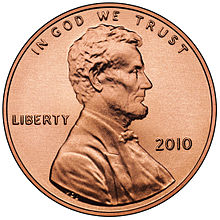
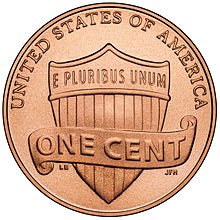 no eagle, no wheat, no arrows. Out of many one shield? what about DEO FAVENTE Perennis?

It has been suggested that the penny should be eliminated as a unit of currency for several reasons including that many Americans do not actually spend them, but rather only receive them in change at stores and proceed to return them to a bank for higher denomination currencies, or cash them in at coin counting kiosks. Most modern vending machines do not accept pennies, further diminishing their utility, and the production cost now exceeds the face value of the coin due to increasing metal prices. [ 32 ] In 2001 and 2006, for example, United States Representative Jim Kolbe (R) of Arizona introduced bills which would have stopped production of pennies (in 2001 the Legal Tender Modernization Act , and in 2006 the Currency Overhaul for an Industrious Nation (COIN) Act). [ 33 ]
At the current metal prices as of Jan 22, 2010, a pre-1982 penny contains $0.021698 worth of copper, which makes them an attractive target for melting by people wanting to sell the metal as a profit. [ 34 ] The US Mint, which is a part of the US Department of the Treasury, in anticipation of the business of melting down US pennies and US nickels for profit, implemented new regulations [ 35 ] on December 14, 2006 which criminalize the melting of pennies and nickels and place limits on export of the coins. Violators can be punished with a fine of up to $10,000 USD and/or imprisoned for a maximum of five years.
As of April 20, 2010, all US nickels and pre-1982 pennies have an intrinsic metal value worth more the face value of the coins themselves. As of April 20, 2010, the commodity value of the nickel is $0.0626539. [ 34 ] while the pre-1982 penny is at $0.0232022. [ 34 ] However, post-1982 US pennies, which weigh 2.5 grams, are 97.5% zinc and 2.5% copper (coated over the zinc) by weight, have a metallurgical value of $0.0063159, or 63.159% of the face value as of April 20, 2010. [ 34 ]
According to the US Mint, the costs of producing and shipping one-cent (penny) and five-cent (nickel) coins during fiscal year 2007 were $0.0167 per penny and $0.0953 per nickel. [ 36 ] Canada switched to making plated steel coins in 2000, where the face value of some older coins is below the metal content of those coins. In a similar move on February 8, 2008, a bill was introduced in the U.S. House of Representatives that would allow for changing the metal components in U.S. coins due to the rising cost of commodities and monetary inflation resulting in the devaluation of the US dollar. No such bill has yet been signed into law.
The Coin Coalition is an organization supporting the elimination of pennies and dollar bills from U.S. currency. It is funded by vending machine companies, video arcade owners, and the soft drink industry, who all have an interest in eliminating maintenance costs associated with dollar bill validators . The National Bulk Vendors Association supports the Coalition.
According to Randy Chilton, manufacturers converted machines to accept the dollar coin at great expense, but the unwillingness of the U.S. government to phase out the dollar bill prevented the coin from becoming popular. [ 1 ] Although copper miners and other interest groups backed the Coin Coalition on this issue, they were unable to match the influence of Save the Greenback , a rival organization supporting continued dollar bill production.
In 1995, Thomas M. Davis , introducing the Save the Greenback Act , warned that customers' pockets would be weighted down with heavy coins. However, a 1997 Wall Street Journal article disputed this notion by noting, "This argument ignores the vast number of quarters now required for parking meters, vending machines, buses and many other staples of life. For a lot of transactions, an attractive $1 coin would be a great convenience. And although we would all be walking around with a few $1 coins, they would be replacing several quarters". [ 2 ]
In advocating abolition of the penny, the Coin Coalition cites three penny-related costs that are passed on to consumers: [ 3 ]
James C. Benfield , a partner with Bracy Williams and Company ( Washington, D.C. ), led the Coalition from 1987 until his death in 2002. He testified in committee hearings on the United States $1 Coin Act of 1997 .
A debate exists within the United States government , and American society at large, over whether the one-cent coin , commonly known as the penny, should be eliminated as a unit of currency in the United States. Two bills introduced in the U.S. Congress would have ceased production of pennies, but neither bill was approved. Such a bill would leave the nickel , at five cents, as the lowest-value coin.
In 2002, United States Representative Jim Kolbe ( R - AZ ) introduced the Legal Tender Modernization Act and in 2006 he introduced the Currency Overhaul for an Industrious Nation (COIN) Act. [ 1 ] Both bills failed to advance in the house and died when Congress adjourned. [ 2 ]
The economist François R. Velde has suggested an alternative plan in which the government would make the penny worth five cents. This change would cause minor monetary inflation of $5.6 billion. [ 16 ]
On February 28, 2008, Rep. Zack Space (D-OH) introduced the H.R. 5512, the Coin Modernization and Taxpayer Savings Act of 2008. If enacted to law, the act would result in the penny being made primarily of steel and treated to have a copper color within 270 days of enactment unless the Secretary of the Treasury can come up with a new element for coin composition that, when added to zinc and copper will lower the price to manufacture to under one cent. According to the act, "Given the current cost to make a penny and volume of pennies minted, simply reducing penny production costs to face value, the United States will save more than $500,000,000 in the next ten years alone". After committee hearings, the House passed the bill on May 8, 2008 by voice vote. However, the bill died in committee in the United States Senate . [ 17 ] [ 18 ]
Many countries outside the United States have chosen to remove low-value coins from circulation:
However, many nations still use coins of similar or smaller value to the US cent. In some cases, while the nominal value of the coin may be smaller than that of a US cent, the purchasing power may be higher:
On April 17, 2007 a Department of the Treasury regulation went into effect prohibiting the treatment, melting, or mass export of pennies and nickels . Exceptions were allowed for numismatists , jewelry makers, and normal tourism demands. [ 32 ] The reason given was that the price of copper was rising to the point where these coins could be melted for their metal content. [ 33 ] In 1969, a similar law regarding silver coinage was repealed. [ 34 ]
The Save the Greenback Act was legislation proposed, but not passed, in the United States Congress in 1995 and 1997 forbidding the phase-out of the United States one-dollar bill .
It stated simply, "Notwithstanding any other provision of law, the Secretary of the Treasury and the Board of Governors of the Federal Reserve System shall take such action as may be necessary to ensure that the number of Federal reserve notes in the denomination of $1 which are in circulation at any time does not decrease below the number of such reserve notes in circulation as of the date of the enactment of this Act."
In a February 24, 1995 speech introducing the Save the Greenback Act, Rep. Thomas M. Davis gave several arguments against phasing out the one-dollar bill: [ 1 ]
Notwithstanding these arguments, many people contend that $1 is far too low a denomination for a paper note at today's price levels and point to the example of virtually every other developed country, whose lowest-denomination banknotes are worth several times more. Most vending machines , for example, need to install dollar bill readers because their commodities have become more expensive due to inflation, a problem compounded by the bills' often being crumpled, torn, or otherwise unreadable.
Furthermore, the continuation of the dollar bill discourages any meaningful reform of the coinage, as people would be slow to use any dollar coin with the dollar bill still around simply out of habit , [ citation needed ] as proven with the Sacagawea dollar . [ citation needed ] Lastly, other countries, including the entire Eurozone , Japan , Australia , Canada and New Zealand have successfully made similar transitions.
For comparison, here are the lowest-denomination banknotes of some other developed countries (with equivalent U.S. dollar value in exchange, as at 4-11-2010):
The plan shifts the fire authority to our public safety group. That change won't cost the county money. The described public safety group includes the sheriff's department as a better fit for the fire authority. "The ability to have one person making decisions is absolutely critical,"
Due Process and the EPA's Enforcement of CERCLA: The Problem with Big Business Challenges to a Small Business Problem
Scott Corley
affiliation not provided to SSRN
April 15, 2010
Abstract:
In the past few years, a number of challenges have been mounted against the Comprehensive Environmental Response, Compensation, and Liability Act (CERCLA). Specifically a challenge mounted by the General Electric Company has asserted that the Environmental Protection Agency's (EPA) pattern and practice of enforcing CERCLA violates due process under the Ex Parte Young and Mathews v. Eldridge tests.
Using an assertion that constitutional challenges to CERCLA are only likely to succeed when (1) the property interest infringed by the government is not strictly monetary; (2) the statute calls for a complete lack of pre-deprivation procedures; and (3) the statute's purported delay of review actually results in the complete preclusion of review, this paper argues that the EPA's enforcement of CERCLA raises serious constitutional concerns when it is applied against small businesses, but not when it is enforced against large corporations. This is because large corporations like GE will be able to bear the decontamination costs associated with CERCLA and still mount judicial challenges at the end of the process while smaller businesses will lose financing due to potentially astronomical environmental cleanup costs and penalties that can escalate at a rate of nearly $1 million per month. The result is that the statute's purported delay of review actually completely precludes review for smaller businesses but not for large corporations.
For this reason, the strongest argument that can be made concerning the constitutionality of the EPA's enforcement of CERCLA arises when environmental liabilities are imposed on small businesses. Ultimately, this context provides the clearest evidence that certain provisions of CERCLA have been enforced in a way that has violated the due process rights of certain potentially responsible parties (PRPs).
Keywords: EPA, CERCLA, Pattern and Practice, Due Process, General Electric v. Jackson, PRPs, UAOs, Mathews v. Eldridge, Ex Parte Young
Working Paper SeriesEPA Should Revise Outdated or Inconsistent EPA-State Clean Water Act Memoranda of Agreement
What We Found
NPDES MOAs between EPA and States do not ensure Agency management control and effective oversight over a national program administered by States that is capable of providing equal protection to all Americans. EPA Headquarters does not hold EPA regional or State offices accountable for updating their MOAs when necessary and relies on other planning and management mechanisms to exercise control over State programs. However, MOAs are critical because they are the common denominator for State-authorized programs and should represent a common baseline. Outdated MOAs or MOAs that are not adhered to reduce EPA’s ability to maintain a uniform program across States that meets the goals of CWA sections 101 and
402. An effective national program must maintain consistent management control and oversight of State programs.
What We Recommend
We recommend that EPA ensure that all NPDES MOAs contain essential elements for a nationally consistent enforcement program, including CWA, Code of Federal Regulations, and State Review Framework criteria. We recommend that EPA develop and provide a national template and/or guidance for a model MOA; direct EPA regions to revise outdated or inconsistent MOAs to meet the national template and standards; and establish a process for periodic review and revision of MOAs, including when the CWA or Code of Federal Regulations are revised or when State programs change. Finally, we recommend that EPA establish a national, public clearinghouse of all current MOAs so that EPA, States, and the public have access to these documents.
EPA generally agreed with our recommendations, saying it would coordinate assessment and revision of NPDES MOAs with implementation of the CWA Action Plan. Three recommendations are open and one recommendation is listed as undecided. In its final response to this report, EPA should provide estimated or actual completion dates for all recommendations.
This is our report on the subject evaluation conducted by the Office of Inspector General (OIG) of the U.S. Environmental Protection Agency (EPA). This report contains findings that describe the problems the OIG has identified and corrective actions the OIG recommends. This report represents the opinion of the OIG and does not necessarily represent the final EPA position. Final determinations on matters in this report will be made by EPA managers in accordance with established audit resolution procedures.
The estimated cost of this report – calculated by multiplying the project’s staff days by the applicable daily full cost billing rates in effect at the time and adding travel costs – is $660,519.
Action Required
In accordance with EPA Manual 2750, you are required to provide a written response to this report within 90 calendar days. You should include a corrective actions plan for agreed-upon actions, including milestone dates. Your response will be posted on the OIG’s public Website, along with our comments on your response. Your response should be provided in an Adobe PDF file that complies with the accessibility requirements of section 508 of the Rehabilitation Act of 1973, as amended. If your response contains data that you do not want to be released to the public, you should identify the data for redaction. We have no objections to the further release of this report to the public. This report will be available at http://www.epa.gov/oig.
If you or your staff have any questions regarding this report, please contact Wade Najjum at (202) 566-0832 or najjum.wade@epa.gov, or Dan Engelberg at (202) 566-0830 or engelberg.dan@epa.gov.
EPA’s Enforcement Performance Has Been Questioned
In 2005, EPA initiated the State Review Framework, a formal process using standardized criteria, collaboratively developed by OECA, EPA regions, States, and the Environmental Council of the States, to gauge State performance in compliance assurance and enforcement. EPA wanted to increase its oversight inspections and other direct actions in the States. EPA reviewed State data, inspection and enforcement files, negotiated commitments, management discussions with the State, and other existing assessments. Through its reviews, EPA identified four programmatic deficiencies in State enforcement: data quality, identification of significant violations, the timeliness of enforcement actions, and penalties.
In October 2009, the EPA Administrator testified before the House Transportation and Infrastructure Committee that EPA was falling short of expectations for effective and fair enforcement of the CWA:
Data available to EPA shows that, in many parts of the country, the level of significant non-compliance with permitting requirements is unacceptably high and the level of enforcement activity is unacceptably low. For example, one out of every four of the largest Clean Water Act dischargers had significant violations in 2008. Many of these violations were serious effluent violations or failure to comply with enforcement orders. The government’s enforcement response to these violations is uneven across the country. For example, a violation in one State results in the assessment of mandatory minimum penalties, while in another State, no enforcement action is taken for the same violation. This situation creates a competitive disadvantage for States that are enforcing the law. We need to change this. Strong and fair compliance and enforcement across the country is vital to establishing a level playing field for industrial facilities, preventing some regions from attempting to achieve an economic advantage over others.
Both GAO and the EPA OIG have frequently reported on problems with the EPA-State enforcement relationship, noting key issues such as data quality, identification of violations, issuing enforcement penalties and other enforcement actions in a timely and appropriate manner, and general oversight issues. See Appendix B for a list of reports on these issues.
In its October 2009 testimony before the House Transportation and Infrastructure Committee, GAO reported that longstanding issues impact EPA and State enforcement efforts.2 For example, findings from a GAO enforcement report in 2000 demonstrated that local variations among EPA’s regional offices led to inconsistencies in the actions they take to enforce environmental requirements.3 In 2004, the EPA OIG responded to a congressional request to review the Region 3 NPDES program.4 In part, the OIG found that the MOAs between the States and Region 3 were all more than 10 years old at the time and included outdated requirements. These MOAs had not been revised as of the date of this report.
1 Testimony of Lisa P. Jackson, Administrator, U.S. Environmental Protection Agency, Before the Committee on Transportation and Infrastructure, U.S. House of Representatives, October 15, 2009. http://www.epa.gov/ocir/hearings/testimony/111_2009_2010/2009_1015_lpj.pdf.
MOAs Are Missing Key Regulatory Requirements
MOAs were missing key requirements of Title 40 CFR 123.24. MOA documents also lacked MOA-specific program regulations contained in Title 40 CFR 123.26 and 123.27. For each of the 46 criteria, OIG rated the MOA as a “0” (does not address this element), “1” (addresses the element in some way), or “2” (addresses the element verbatim or in synonymous language). Figure 2-1 shows that across all regulatory criteria, MOAs did not contain 39 percent of the criteria, and that 61 percent of regulatory criteria are either not addressed or only partially addressed. EPA should define the requirements for management control of a nationally consistent enforcement program, and then review each State MOA to determine which MOAs are adequate and which MOAs need to be revised.
MOAs did not address key regulatory requirements for MOA documents. For example, the CFR requires that States establish data management systems to support their compliance evaluation activities. Twenty percent of the MOAs did not contain any language about a data management system. This does not mean the State does not have such a system or that the system is not discussed in another document. However, because the primary, required document, the MOA, does not mention it, EPA cannot readily determine whether there is nationwide uniformity in data management systems.
MOAs also did not include a number of the additional regulatory program requirements contained in Title 40 CFR 123.26 and 123.27. These additional requirements correspond to the programmatic deficiencies that OECA identified in its first-round State Review Framework evaluations (data quality, identification of significant violations, the timeliness of enforcement actions, and penalties). For example, the CFR requires that States establish minimum civil penalty policies, such as the ability to assess at least a $5,000 penalty per day for each NPDES violation. The State Review Framework identified penalty calculation as a comprehensive weakness. Fifty-four percent of MOAs did not include any language about minimum civil penalty standards (i.e., received a score of “0” for this element). Only 1 of the 46 MOAs specified that the minimum penalty per day, per violation, would be $5,000 (a score of “2”).
MOAs most comprehensively addressed the MOA-specific regulations (CFR 123.24), containing these requirements 77 percent of the time. MOAs contained fewer requirements in the non-MOA-specific monitoring and inspections section (65 percent for CFR 123.26) and fewest in the enforcement section (36 percent for CFR 123.27). For example, 63 percent of the MOAs did not include language verifying that no other State enforcement agreement could override the MOA, as required by CFR 123.24(c). Eighty percent of MOAs did not note whether the State had the authority to enter any permitted facility (123.26(c)). Figure 2-2 shows how the percentage of missing regulations varied according to the CFR section under review.
EPA Could Establish a National Baseline for CWA Implementation with an MOA Template
EPA faces a significant challenge: to implement a nationally consistent enforcement program that offers equal protection from pollution to all Americans. By renegotiating outdated or inconsistent MOAs according to a national template, EPA can establish a current baseline for national consistency. A national template could also ease the MOA negotiation process. EPA should identify the key requirements that should be delineated in MOAs, including the other programmatic concerns disclosed through the CFR and issues uncovered during OECA’s State Review Framework, and incorporate them into a national template.
The officials of OECA, EPA regions, and State organizations we spoke with agree that MOAs are out of date and should be renegotiated, but OECA also pointed out that the process could face State resistance because it might require considerable resources. Enforcement managers and officials in two of the four regions we spoke with indicated that MOA renegotiation would be a low priority for them and would require them to remove resources from other enforcement activities. However, in our opinion, the management control benefit justifies the resource requirement. For example, as a result of renegotiating MOAs, Region 4 enforcement staff reported that they improved baseline management control over EPA-State enforcement relationships. In the face of a disagreement over responsibilities, regional staff said they show State program staff where an enhanced requirement is written in the updated MOA, and the State program staff then carry out the requirement.
Staff from each region we interviewed and other stakeholders agreed that an EPA Headquarters model MOA would be beneficial in determining MOA adequacy.
Region 4 developed a regional template for use in its MOA renegotiations. Regional enforcement officials reported that the template did not change much between the beginning and end of negotiations. A Region 10 enforcement program manager suggested that a model MOA that would serve as a foundational reference document could help to clarify the core oversight responsibilities. Region 10 staff stated that a model MOA could identify EPA and State expectations with respect to inspection, timely follow-up, data quality, transparency, and adequate response. In addition, the Environmental Council of the States said its member States would be interested in discussing a model MOA.
Conclusion
The current state of the MOAs means that EPA cannot assure it has effective management control over State programs that assures the public that CWA objectives are being achieved. EPA has not established a national template defining the key requirements necessary for current, robust MOAs. In addition, EPA has not developed a periodic review system to determine which MOAs remain adequate and which need to be revised to remain current with changing regulations. MOAs should establish the foundations for nationally consistent enforcement, defining the baseline roles and responsibilities for EPA and States. MOAs should also be the basis for assessing States’ ability and commitment to administer EPA’s NPDES program in accordance with the CWA. The CFR requires MOAs to outline the basic parameters of the EPA-State relationship and ensure CWA goals are being met through State-authorized programs. To ensure that MOAs fulfill their intended function, EPA must put in place a system that maintains and oversees consistent management controls over State programs. To ensure transparency and accountability, EPA should maintain a publicly available MOA repository, making these documents available to all States, EPA regions, and the public.
Recommendations
We recommend that the Deputy Administrator:
2-1 Develop a national MOA template including essential requirements derived from the updated CWA, CFR requirements, and State Review Framework findings.
2-2 Develop a systematic approach to identify which States have outdated or inconsistent MOAs; renegotiate and update those MOAs using the MOA template; and secure the active involvement and final, documented concurrence of Headquarters to ensure national consistency.
2-3 Establish a process for reviewing MOAs on a regular basis, taking into account legislative and management changes that affect the adequacy of the MOA.
2-4 Maintain a publicly available repository of MOAs.
Agency Response and OIG Comment
EPA’s Deputy Administrator provided the Agency response, coordinating comments from OECA and OW. The Deputy Administrator generally agreed with these recommendations and provided an outline of corrective actions that he would take in response to the recommendations.
The Deputy Administrator agreed with recommendations 2-1, 2-3, and 2-4.
In response to recommendation 2-2, the Deputy Administrator stated that renegotiating MOAs with States can be time consuming and may not be always be the best use of EPA resources. Deficiencies in State enforcement programs may be better addressed through other solutions and approaches. The Deputy Administrator proposed that OECA and OW integrate MOA assessment into a coordinated State program review process to identify and correct MOAs that present the greatest barriers to State program performance.
The OIG responds by noting that the draft report and the final report both make mention of the other mechanisms EPA uses to manage programs, even noting that there is a layered system of management controls (see page 2, for example). However, the report emphasizes that while EPA uses other mechanisms, the only required mechanism is the authorization MOA. The way in which EPA regions and States use other mechanisms varies, but the MOA is the only document that each State must have. For this reason, it is important that authorization MOAs be up to date and compliant with the CFR.
While acknowledging EPA’s need to maintain flexibility, the OIG believes that MOAs are a critical building block of State enforcement programs. Depending on how it is constructed, a systematic State program review process that contains a strategy for updating outdated or inconsistent MOAs could address our recommendation. We will list the status of recommendation 2-2 as “undecided,” and list the other recommendations as “open.” We look forward to a detailed strategy and timeline for implementation in the Agency’s 90-day response to this final report.
List of CFR Criteria for MOA Assessment1
CFR
Criterion
1
123.24(a)
MOA executed by the State Director and the Regional Administrator and approved by Administrator
2
MOA meets all requirements of paragraph (b)
3
MOA has no provisions restricting EPA’s statutory oversight responsibility
4
123.24(b)
Provisions for prompt transfer from EPA to the State of pending permit applications and any other relevant program operation information
5
MOA contain procedure for transfer of any existing permits for administration
6
MOA contain specific procedure for transfer of administration if a State lacks administration authority for permits issued by Federal government
7
MOA contain provisions specifying classes and categories of permit applications, draft permits, and proposed permits for Regional Administrator review
8
MOA contain provisions specifying the frequency and content of reports, documents and other information which the State is required to submit to EPA
9
MOA contain provisions allowing EPA to routinely review State records, reports, and files relevant to the administration and enforcement of the approved program
10
MOA contain provisions for coordination of compliance monitoring activities by the State and by EPA and EPA inspection of select facilities or activities within State
11
MOA contain procedures to assure coordination of enforcement activities
12
MOA contain provisions, when appropriate, for joint processing of permits by the State and EPA for facilities or activities which require permits from both EPA and the State under different programs per § 124.4
13
MOA contain provisions for modification of the MOA in accordance with this part
14
123.24(c)
MOA, the annual program grant and the State/EPA Agreement should be consistent. If the State/EPA Agreement indicates that a change is needed in the Memorandum of Agreement, the Memorandum of Agreement may be amended through the procedures set forth in this part.
15
State/EPA Agreement cannot override MOA
16
123.24(d)
MOA specify the extent to which EPA will waive its right to review, object to, or comment upon State-issued permits under section 402(d)(3), (e) or (f) of CWA
17
123.26(a)
State programs shall have procedures for receipt, evaluation, retention and investigation for possible enforcement of all notices and reports required of permittees and other regulated persons (and for investigation for possible enforcement of failure to submit these notices and reports).
18
123.26(b)
State programs shall have inspection and surveillance procedures to determine, independent of information supplied by regulated persons, compliance or noncompliance with applicable program requirements.
19
The State shall maintain a program which is capable of making comprehensive surveys of all facilities and activities subject to the State Director's authority to identify persons subject to regulation who have failed to comply with permit application or other program requirements. Any compilation, index or inventory of such facilities and activities shall be made available to the Regional Administrator upon request;
20
The State shall maintain a program for periodic inspections of the facilities and activities subject to regulation.
1 MOA assessment excludes the review of 123.24(b)(ii) and 123.27(e) as noted within the Scope and Methodology.
18
10-P-0224
CFR
Criterion
21
These inspections shall be conducted in a manner designed to: Determine compliance or noncompliance with issued permit conditions and other program requirements;
22
These inspections shall be conducted in a manner designed to: Verify the accuracy of information submitted by permittees and other regulated persons in reporting forms and other forms supplying monitoring data; and
23
These inspections shall be conducted in a manner designed to: Verify the adequacy of sampling, monitoring, and other methods used by permittees and other regulated persons to develop that information;
24
The State shall maintain a program for investigating information obtained regarding violations of applicable program and permit requirements; and
25
The State shall maintain procedures for receiving and ensuring proper consideration of information submitted by the Public about violations. Public effort in reporting violations shall be encouraged, and the State Director shall make available information on reporting procedures.
26
123.26(c)
The State Director and State officers engaged in compliance evaluation shall have authority to enter any site or premises subject to regulation or in which records relevant to program operation are kept in order to copy any records, inspect, monitor or otherwise investigate compliance with the State program including compliance with permit conditions and other program requirements. States whose law requires a search warrant before entry conform with this requirement.
27
123.26(d)
Investigatory inspections shall be conducted, samples shall be taken and other information shall be gathered in a manner (e.g., using proper “chain of custody” procedures) that will produce evidence admissible in an enforcement proceeding or in court.
28
123.26(e)
Maintaining a comprehensive inventory of all sources covered by NPDES permits and a schedule of reports required to be submitted by permittees to the State agency;
29
Initial screening (i.e., pre-enforcement evaluation) of all permit or grant-related compliance information to identify violations and to establish priorities for further substantive technical evaluation;
30
When warranted, conducting a substantive technical evaluation following the initial screening of all permit or grant-related compliance information to determine the appropriate agency response;
31
Maintaining a management information system which supports the compliance evaluation activities of this part; and
32
Inspecting the facilities of all major dischargers at least annually.
33
123.27(a)
To restrain immediately and effectively any person by order or by suit in State court from engaging in any unauthorized activity which is endangering or causing damage to public health or the environment;
34
Note: This paragraph (a)(1) requires that States have a mechanism (e.g., an administrative cease and desist order or the ability to seek a temporary restraining order) to stop any unauthorized activity endangering public health or the environment.
35
To sue in courts of competent jurisdiction to enjoin any threatened or continuing violation of any program requirement, including permit conditions, without the necessity of a prior revocation of the permit;
36
To assess or sue to recover in court civil penalties and to seek criminal remedies, including fines, as follows:
37
Civil penalties shall be recoverable for the violation of any NPDES permit condition; any NPDES filing requirement; any duty to allow or carry out inspection, entry or monitoring activities; or, any regulation or orders issued by the State Director. These penalties shall be assessable in at least the amount of $5,000 a day for each violation.
19
10-P-0224
CFR
Criterion
38
Criminal fines shall be recoverable against any person who willfully or negligently violates any applicable standards or limitations; any NPDES permit condition; or any NPDES filing requirement. These fines shall be assessable in at least the amount of $10,000 a day for each violation.
39
Criminal fines shall be recoverable against any person who knowingly makes any false statement, representation or certification in any NPDES form, in any notice or report required by an NPDES permit, or who knowingly renders inaccurate any monitoring device or method required to be maintained by the Director. These fines shall be recoverable in at least the amount of $5,000 for each instance of violation.
40
123.27(b)
The maximum civil penalty or criminal fine (as provided in paragraph (a)(3) of this section) shall be assessable for each instance of violation and, if the violation is continuous, shall be assessable up to the maximum amount for each day of violation.
41
The burden of proof and degree of knowledge or intent required under State law for establishing violations under paragraph (a)(3) of this section, shall be no greater than the burden of proof or degree of knowledge or intent EPA must provide when it brings an action under the appropriate Act;
42
123.27(c)
A civil penalty assessed, sought, or agreed upon by the State Director under paragraph (a)(3) of this section shall be appropriate to the violation.
43
Procedures for assessment by the State of the cost of investigations, inspections, or monitoring surveys which lead to the establishment of violations;
44
In addition to the requirements of this paragraph, the State may have other enforcement remedies. The following enforcement options, while not mandatory, are highly recommended:
45
123.27(d)
Any State administering a program shall provide for public participation in the State enforcement process by providing either:
46
Authority which allows intervention as of right in any civil or administrative action to obtain remedies specified in paragraphs (a)(1), (2) or (3) of this section by any citizen having an interest which is or may be adversely affected; or (2) Assurance that the State agency or enforcement authority will: (i) Investigate and provide written responses to all citizen complaints submitted pursuant to the procedures specified in §123.26(b)(4); (ii) Not oppose intervention by any citizen when permissive intervention may be authorized by statute, rule, or regulation; and (iii) Publish notice of and provide at least 30 days for public comment on any proposed settlement of a State enforcement action.
Catalyst for Improving the Environment
Method for smelting noble metal
Abstract
A method for refining noble metals has a silver treating process including a nitric acid leaching step of silver, a purification step of the leaching solution, an electrolytic decomposition step of silver, and a recycling step after the electrolytic decomposition, wherein in the purification step, lime is added in order to precipitate the metallic impurities, such as selenium, tellurium, bismuth, and copper, by neutralization of the leaching solution, and in the recycling step, sulfuric acid is added to the solution after electrolytic decomposition to regenerate nitric acid for recycling use by precipitation of calcium in the solution as gypsum . Preferably, the refining method has a gold recovery process, as well as the silver treating process, wherein the residue of the nitric leaching of the crude silver is dissolved by chlorination and gold is recovered from the leaching solution by solvent extraction or reductive precipitation. High purity gold and silver can be readily obtained, and the refining time for gold is significantly shorter than that in conventional methods.
| Inventors: | Okada; Satoshi (Omiya, JP ) , Mochida; Hiromi (Omiya, JP ) |
| Assignee: | Mitsubishi Materials Corporation (Tokyo, JP ) |
| Appl. No.: | 09/180,272 |
| Filed: | January 15, 1999 |
| PCT Filed: | June 04, 1998 |
| PCT No.: | PCT/JP98/02479 |
| 371 Date: | January 15, 1999 |
| 102(e) Date: | January 15, 1999 |
| PCT Pub. No.: | WO98/58089 |
| PCT Pub. Date: | December 23, 1998 |
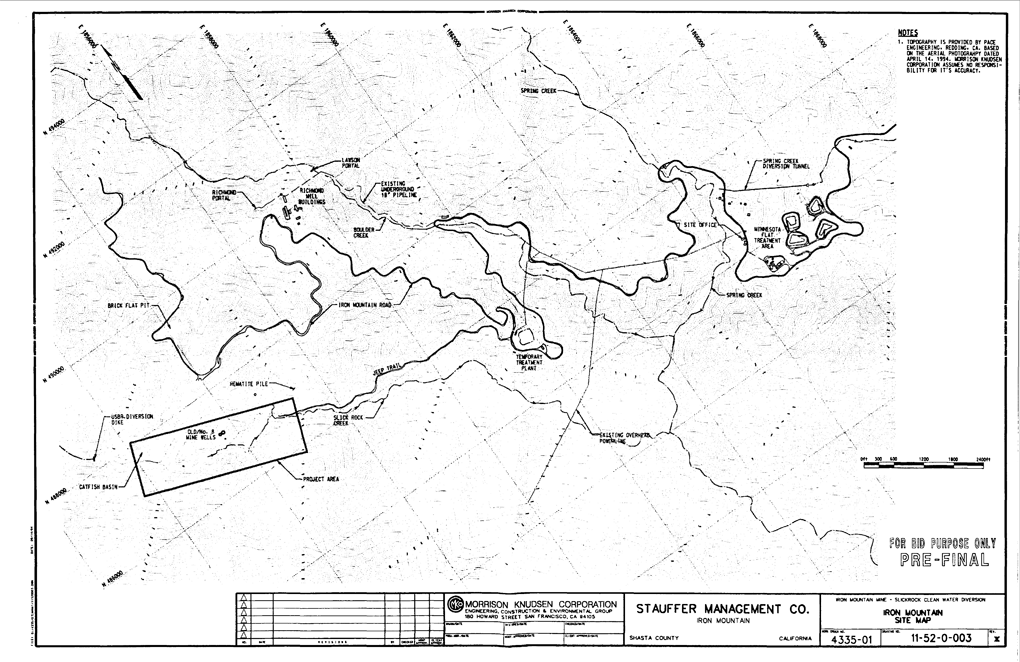
September 15, 2010 • By Lucas Wachob ,
Tomorrow the United States Constitution will turn 223 years old, the oldest constitution in the world. It serves as a contract between the national government, the states and the citizens. Trust in government stems from the mutual agreement to strictly adhere to the terms of the Constitution. If it's violated, the contract breaks and citizen rights can cease to exist at the whim of those in power. Recent waves of anti-incumbency sentiment and an increasing disparity between parties suggest that many, including myself, suspect this contract has been broken.
The answer to “can government do this?” is found in the Constitution. Both opponents and proponents of the recent health care reform reference the Constitution to justify their positions. Vague language in the Constitution and centuries of Supreme Court decisions have made it difficult to figure out what it all actually means. An understanding of the founders' spirit of government is necessary to assess legitimacy.
The Constitution purposely splits authority among different levels of government. While the national government is given supremacy over the states, certain actions are specifically prohibited. The 10th Amendment states, “The powers not delegated to the United States by the Constitution, nor prohibited by it to the States, are reserved to the States respectively, or to the people.” This strictly limits the authority of the national government, but today it seems that there is almost nothing that government cannot do.
The national government today is involved in everything from agricultural subsidies and expression rights to health care and industrial activity. Whether you view it as a positive or negative gain to society, there can be no denying that government impacts nearly every aspect of your life. But is that what the Constitution was intended do?
James Madison advocated a limited and fragmented government and wrote in Federalist No. 51, “in framing a government which is to be administered by men over men … you must first enable the government to control the governed; and in the next place oblige it to control itself.” The founders intentionally curtailed government capability to ensure that it acts only within its granted authority, but today we see hundreds of government agencies created to improve “efficiency” at the sacrifice of individual liberty.
This blatant contradiction to our founding spirit was made possible by the emergence of permanent political parties and judicial review. Parties may not openly violate the structure of the Constitution, but permanent parties create the same, aligned power that the system was designed to prevent. Judicial review, not mentioned in the Constitution, gives the Supreme Court the power to determine official interpretations of the Constitution. It should be troubling to citizens that the government gets to determine what the document it's accountable to says. As Thomas Jefferson wrote, “[the Constitution] is a mere thing of wax in the hands of the judiciary, which they may twist and shape into any form they please.”
United by parties and legitimized by the Court, government has exponentially increased its scope and redefined its purposes. Rather than empowering individuals to exercise their own discretion, the modern government is focused on imposing artificial standards walks of life through programs and bills.
Whether you think Constitutional principles are still being upheld, or that they've been distorted or discarded, as a country we need to have a serious discussion about what we actually believe in and want. Even when power is abused, we must never forget that it originates with and derives from the people, and that it's never too late to re-channel our collective power to whatever priorities we deem most important.
So happy 223 birthday, Constitution. Get well soon.
Release date: 09/15/2010
Contact Information: James Pinkney, (404) 562-9183, pinkney.james@epa.gov
(ATLANTA – September 15, 2010) The Woolfolk Alliance Group was recognized today by the U.S. Environmental Protection Agency as the winner of the 2010 Citizen Excellence in Community Involvement Award. This award is presented annually to an individual or a community group working with a Superfund team for outstanding achievements in the field of environmental protection.
“The Woolfolk Alliance Group serves as a great example for communities across the nation on how to bring together many diverse interests to solve a common challenge,” said EPA Region 4 Administrator Gwen Keyes Fleming. “EPA is proud to present this award to Ft. Valley Mayor John E. Stumbo and members of the Woolfolk Alliance Group, and commends them for their dedication to the cleanup and redevelopment of the Woolfolk Chemical Works site.”
The Woolfolk Alliance Group was recognized for its commitment and dedication to the Ft. Valley, Georgia communities affected by the Woolfolk Chemical Works Superfund site. The dedication of the Woolfolk Alliance Group is unparalleled, and is evidenced by the majority of the founding members remaining active in the group for over ten years. The Woolfolk Alliance Group facilitated information exchange between state and federal agencies, and found productive ways to reuse the formerly contaminated site. Today the former site boasts a public library and tourist information center.
• REGENESIS granted patent for microemulsion bioremediation product 3DMe®; Unique 3DMe molecular structure and microemulsion promotes wide-area transport in aquifer systems, requiring less substrate and fewer injection points for effective contaminant treatment
SAN CLEMENTE, CA, Sept. 14, 2010 -- REGENESIS , a leading innovator of advanced, cost-effective groundwater and soil remediation technologies, was recently granted U.S. Patent 7,667,062 for 3-D Microemulsion (3DMe®), a proven groundwater remediation technology specifically designed to penetrate and treat aquifer systems unlike any other anaerobic bioremediation material on the market today. Other related U.S. and international patents are currently pending.
The compelling chemistry behind 3DMe provides wide-area subsurface distribution characteristics coupled with sustained in-situ biological degradation of chlorinated contaminants. In addition, patented 3DMe® is a completely new molecule with a novel structure that incorporates three separate and highly efficient electron donors -- free lactic acid, controlled-release lactic acid, and long-release fatty acids -- that promote biodegradation in the subsurface for up to 3-5 years on a single application.
Enhanced anaerobic bioremediation using 3DMe adds hydrogen (an electron donor) to groundwater in order to increase the number and activity of anaerobic microbes that naturally biodegrade many contaminants to ethane, ethene and other innocuous end products.
Introduced to the market in 2008, to date 3DMe has been applied successfully on close to 300 sites worldwide. Delivered as a concentrate, 3DMe is mixed with water to form a dilute, easily pumped microemulsion with a high hydrophilic/lipophilic balance that allows the material to move rapidly through a contaminant plume. It is typically placed into the subsurface by direct-push injection or via permanent wells. Once emplaced, the 3DMe suspension moves out into aquifer pore spaces via a unique and highly efficient micellar transport mechanism, eventually coating virtually all available surfaces. This attribute offers increased spacing between injection points, leading to increased efficiency in the form of fewer injection points and less time spent in the field.
3DMe's combination of wide-area dispersion and long-term electron donor supply makes it one of the most efficient and cost-effective in-situ remediation methods for the treatment of a long list of chlorinated contaminants, including widely used industrial degreasers such as perchloroethylene (PCE), trichloroethylene (TCE), dichloroethylene (DCE), vinyl chloride (VC), trichloroethane (TCA), chlorofluorocarbons, carbon tetrachloride, chloroform and methylene chloride, and many types of pesticides, explosives and dyes. 3DMe has been used to treat most of these contaminant types at a range of project sites including, among others, manufacturing facilities, dry cleaners, military bases, industrial complexes, brownfield redevelopments and metal plating operations.
More recently 3DMe has been the focus of a 20-site review seeking to ensure that application of 3DMe will have little or no detrimental effect on an aquifer's groundwater pH. The study can be accessed at the REGENESIS website, www.regenesis.com.
San Clemente, CA-based REGENESIS has been a recognized leader within the environmental industry since 1994, with proven, innovative environmental technologies that significantly reduce the cost, time and difficulty of restoring contaminated soil and groundwater. REGENESIS products have been applied on approximately 16,000 soil and groundwater cleanup projects worldwide by a range of leading environmental consulting firms. In the last several years, REGENESIS has expanded its capabilities by moving into the vapor intrusion mitigation market through a new division called Land Science Technologies. For more information visit the REGENESIS website at www.regenesis.com or the Land Science Technologies website at www.landsciencetech.com. Alternatively, you can contact Bryan Vigue, Vice President of Marketing at bvigue@regenesis.com or 949-366-8000, x122.
"We the People of the United States, in Order to form a more perfect Union, establish Justice, insure domestic Tranquility, provide for the common defence, promote the general Welfare, and secure the Blessings of Liberty to ourselves and our Posterity, do ordain and establish this Constitution for the United States of America. ... Done...the seventeenth day of September, in the year of our LORD one thousand seven hundred and eighty seven." --George Washington and the delegates
On 17 September of each year, we observe Constitution Day, in recognition of the anniversary of that venerable document's signing by our nation's Founders. Of course, most of the federal judiciary pay no homage to that date. They are preoccupied rewriting the so-called "Living Constitution," amending it by judicial diktat rather than its prescribed method in Article V.
For its first 150 years (with the notable exception Marbury v. Madison in 1803), our Constitution stood as our Founders, and more importantly, "the people," intended -- as is -- in accordance with its original intent. In other words, it was interpreted exegetically rather than eisegetically , textually as constructed, not what could be read into it by later generations of jurists.
In the early 20th Century, there was still evidence of reverence for the supreme law of the land. For example, prohibitionists acknowledged that the Constitution did not include a single word about alcohol consumption and would have to be amended before the central government would have the authority to outlaw alcohol. On 16 January 1919, the 18th Amendment was ratified by the states. Within the decade the law of unintended consequences prevailed, and even ardent prohibitionists realized that enforcing the 18th Amendment had spawned a massive and violent organized-crime culture. Thus, on 5 December 1933, the 21st Amendment was ratified, repealing the 18th.
These two amendments were the last pertaining most directly to the authority of the central government, while the remaining five address specific modifications to the plain language of our Constitution. So how is it now that the central government has become the behemoth our Constitution expressly prohibited?
Prior to the reign of Franklin D. Roosevelt, the courts were still largely populated with originalists, who properly rendered legal interpretation based on construction of the Constitution's "original intent." However, FDR grossly exceeded the Constitutional limits upon the authority of his office and that of the legislature in his folly to end The Great Depression (the latter falling victim to World War II -- not FDR's social and economic engineering). FDR's extra-constitutional exploits opened the door for the judiciary to follow the same path -- to read into the Constitution what was necessary to make it conform to the demands of the prevailing political will.
In the decades that followed, the notion of a "Living Constitution," one subject to all manner of judicial interpretation, took hold in the federal courts. Judicial activists, those who legislate from the bench by issuing rulings based on their personal interpretation of the Constitution, or at the behest of likeminded special-interest constituencies, were nominated for the federal bench and confirmed in droves.
This degradation of law was codified by the Warren Court in Trop v. Dulles (1958). In that ruling, the High Court noted that the Constitution should comport with "evolving standards...that mark the progress of a maturing society." In other words, it had now become a fully pliable document. Indeed, the Constitution has become "a mere thing of wax in the hands of the judiciary which they may twist and shape into any form they please," as Thomas Jefferson warned, and the judiciary, in Jefferson's words, "the Despotic Branch" .
Consequently, we now have a Constitution in exile, it having becoming little more than a straw man as the courts have become increasingly politicized, serving the special interests of political constituencies rather than interpreting the plain language of our Constitution, as judges are, by oath, sworn to do (Article VI, Section 3).
The Federalist Papers, as the definitive explication of our Constitution's original intent, clearly define original intent in regards to Constitutional interpretation. Founders James Madison (our Constitution's principle author), Alexander Hamilton and John Jay, published the Federalist Papers in order to clearly delineate the parameters of the proposed Constitution.
In regard to the role of the judiciary, Federalist Paper No. 73, notes, "Judges...by being often associated with the Executive...might be induced to embark too far in the political views of that magistrate, and thus a dangerous combination might by degrees be cemented between the executive and judiciary departments. It is impossible to keep the judges too distinct from every other avocation than that of expounding the laws. It is peculiarly dangerous to place them in a situation to be either corrupted or influenced by the Executive."
Federalist No. 78 further notes, "[The Judicial Branch] may truly be said to have neither FORCE nor WILL, but merely judgment...liberty can have nothing to fear from the judiciary alone, but would have everything to fear from its union with either of the other departments."
And in no uncertain terms, Federalist No. 81 makes abundantly clear, "[T]here is not a syllable in the [Constitution] which directly empowers the national courts to construe the laws according to the spirit of the Constitution...."
George Washington advised, "The basis of our political systems is the right of the people to make and to alter their Constitutions of Government. But the Constitution which at any time exists, 'till changed by an explicit and authentic act of the whole People is sacredly obligatory upon all."
Today, two centuries hence, Justice Antonin Scalia says of judicial activism, "As long as judges tinker with the Constitution to 'do what the people want,' instead of what the document actually commands, politicians who pick and confirm new federal judges will naturally want only those who agree with them politically."
The most insidious line of activist interpretations concerns our Constitution's First Amendment. Invoking Jefferson's "Wall of Separation," the Despotic Branch has endeavored to remove any vestigial remnant of faith from all quarters of the public square at the federal, state and local level.
Of course, the First Amendment states only that "Congress shall make no law respecting an establishment of religion, or prohibiting the free exercise thereof..."
The errant interpretation of the "wall" metaphor puts liberty in great peril.
Our Declaration of Independence and its subordinate guidance, our Constitution, are based on natural law, and outline the natural rights of man as being from our Creator, not manmade.
"Life, liberty and the pursuit of happiness" are natural rights "endowed by our Creator," not government. Likewise, our Constitution was written and ratified "in order secure the Blessings of Liberty to ourselves and our Posterity." As such, it established a republic ruled by laws, not men.
Indeed, as Alexander Hamilton wrote, "The sacred rights of mankind are not to be rummaged for, among old parchments, or musty records. They are written, as with a sun beam, in the whole volume of human nature, by the hand of the divinity itself; and can never be erased or obscured by mortal power."
However, if the expression of faith is banished from all government forums, not the least of which being schools, then how long will "the people" continue to understand that these "inalienable rights" are, in Jefferson's words, "the gift of God"?
The late Supreme Court Chief Justice William Rehnquist concluded, "The wall of separation between church and state is a metaphor based upon bad history, a metaphor which has proved useless as a guide to judging. It should be frankly and explicitly abandoned. ... The greatest injury of the 'wall' notion is its mischievous diversion of judges from the actual intention of the drafters of the Bill of Rights."
George Washington proclaimed, "[W]here is the security for property, for reputation, for life, if the sense of religious obligation deserts the oaths...?"
That is a question we should all be asking today.
While the words "conservative" and "liberal" are ubiquitously used to describe Republicans and Democrats respectively, these words properly should describe whether one advocates for the conservation of our Constitution, as originally intended, or its liberal interpretation by judicial activists. Does one want to conserve Constitutional limits on the central government, or liberate those limits?
Our Constitution established a Republic intended to reflect the consent of the governed, a nation of laws, not men.
At the close of the Constitutional Convention in Philadelphia, Benjamin Franklin was asked if the delegates formed "a republic or a monarchy." He responded, "A republic if you can keep it."
To that end, John Adams wrote, "A Constitution of Government once changed from Freedom, can never be restored. Liberty, once lost, is lost forever."
By Mark Alexander · Friday, September 16, 2005
BE AN ACTIVIST! FIGHT TO RESTORE THE CLEAN WATER ACT !$9-$14/Hr
Kenneth Anderson • September 16, 2010 12:05 pm
On occasion, I have lamented what I perceive as the lack of due attention in the scholarly literature to the actual circumstances of international organizations, starting with the UN. One of those fundamental issues concerns accountability, in the special sense that there is no obvious judicial forum for reviewing actions even of individuals alleged to have engaged in serious misconduct, such as fraud, embezzlement, etc.
On the one hand, the treaties put the organizations and their civil servants beyond the reach of national courts. On their face, they seem to leave at most, in some cases, the often highly unlikely possibility of a prosecution or civil action in the person's national jurisdiction. Given the politics, let alone the legal questions, home jurisdiction prosecution of one's own nationals is out of reach in many if not nearly all cases. On the other hand, such accountability as supposedly exists rests in various internal review processes. These internal review processes vacillate, however, between being tools by which senior managers are able to punish whistleblowers and so protect themselves or their underlings or their national confreres or what have you; or else being captured by the other side of the process through what amounts (in my jaundiced view, admittedly) to the world's strongest public employee union.
It's not really surprising that legal academics find it hard to get too interested in the hard material facts of UN budgets and fiscal accounting — although as Marx often advised, follow the money. But it is more surprising to me that so little attention has been paid to the legal issues involved in the accountability-jurisidction questions. These include particular whether and, if so, which courts might have jurisdiction in the remarkably varied cases that, in an accountable domestic society, might have attracted the attention of regulators or prosecutors or someone; actions by agencies and organizations also remarkably varied; and finally actions by individual actors who also vary quite a lot in their legal situations, perhaps diplomats, perhaps not, and so on.
At the height of the Oil-for-Food scandal at the UN, when the General Secretariat was at its politically weakest (as the reach of the scandal went all the way up to Kofi Annan, whom the Volcker investigation reports left seriously wounded, with clear implications of some level of culpability, while leaving a barely sufficient shred of cover to not force a fight over pushing Annan to resign), there were calls for someone to prosecute someone for something. It was not just the Oil-for-Food scandal, however, as those familiar even superficially with the opportunities for fraud, self-dealing, and rent-seeking, in a system at once as byzantine and unaccountable as the UN's, would recognize. As more rocks began to be overturned in other UN programs and organs, evidence of serious graft, embezzlement, kickbacks, and other financial fraud of a kind that would plainly be criminally prosecutable, if only there were someplace to prosecute it, began to emerge in other UN programs. The procurement program for the politically crucial peacekeeping operations — in my view, one of the (very few) UN activities worthy of serious support by the US — was particularly at risk, for example, as its budget has ramped up in recent years, outstripping the regular organization budget. And to be clear, I do not raise here disguised political or policy questions — just “simple” fraud by well-placed officials that I don't imagine anyone in the upper tiers of the organizations at issue would defend in substance.
In the midst of this turmoil at the UN in 2005, the then-Manhattan DA, the legendary Robert Morgenthau, announced an investigation into the senior UN official in the Oil-for-Food scandal, Benon Sevan (who departed to his native Cyprus, and, if I recall correctly and I might not, following “internal reviews” at the UN, had his legal fees paid and saw no reduction in his pension benefits). The legal basis for this was never exactly clear to me, however. Because the UN is located in Manhattan? Because some of the conduct involved might have taken place in Manhattan but outside of the UN territory, or involved non-UN assets such as telephone lines, etc.? This is, after all, an investigation by a state DA, and not even a federal prosecutor. Although somewhat weirdly, given the politics at that moment, a local level investigation by a state DA of unimpeachable integrity and also a stalwart of the Democratic establishment — rather than a DOJ investigation by the then-Bush administration — turned out to be far more politically palatable.
In any case, the weakened Annan did not do what might otherwise have been an inflexible and categorical response of the UN — quite natural and routine, to be sure, for any sovereign — and robustly disclaim any jurisdictional basis for a Manhattan DA to get involved at all. Benon Sevan had diplomatic immunity, but the General Secretariat indicated that it would waive it if requested by a prosecutor — clearly meaning Morgenthau. Perhaps the senior UN management understand perfectly well that Sevan would depart to his native country which of course would do nothing. Perhaps some small number of top UN leaders understood that this lack of accountability was a genuine problem and that Morgenthau was a decent option. (I skip over some other Manhattan DA investigations, particularly involving corruption in UN peacekeeping procurement.)
It is not hard to see, in other words, that international organizations such as the UN have massive structural agency failure problems. That is a somewhat anodyne way of putting it; the problems range from rent-seeking to major criminal corruption and fraud. They arise from a treaty structure deliberately designed to shield the organization and its agents from judicial accountability — for perfectly understandable reasons, to be sure. And from the predictable “capture” of internal review mechanisms. The result is to put the UN and international organizations and their agents in fundamental ways outside of the rule of law in the most ordinary sense. That's not too strong a way of putting it. But again, this receives remarkably little attention from academics. The reflexive position of observers tends to be to define today's deviancy down, discounting today against the glorious, but always-receding, always-promised future of international institutions. Mostly, I think, people just want to focus on the idealistic stuff about tomorrow and plug up their ears about anything that actually happens today.
So let me welcome a new paper up on SSRN by Matthew Parish, of the British Institute of International and Comparative Law, writing in the International Organizations Law Review, “An Essay on the Accountability of International Organizations,” offering a detailed look at the problems of legal accountability for a wide variety of international organizations and their agents. It is a fine paper on a neglected topic. I don't say this from complete agreement; I have reservations about the paper's proposals for accountability for national peacekeeping forces on missions in the field, for example. Nor does Parish share my fundamental skepticism about the UN and its imagined mission; far from it, he is looking for ways to make it better on its own terms. But overall I think it has many sensible things to say, and in any case offers a cogent account of the many agency failure problems at issue, from the standpoint of legal jurisdiction. I've put the abstract from SSRN below the fold (crosspost at OJ) .
International organizations sometimes suffer from acute agency problems. Three exogenous methods of addressing those problems are considered: economic incentives, political accountability and legal accountability. For international organizations, the first is undesirable and the second inevitably weak. There is therefore an argument for heightened legal scrutiny of their actions. Yet international organizations have an unenviable track record of acting without regard to the most fundamental international standards of rule of law, and this article offers an unsightly catalogue of their legal aberrations. Moreover, the internal legal mechanisms international organizations have created ostensibly to hold themselves to account prove wanting at best. There may also be structural reasons why international courts and tribunals will never be able to conduct an adequate review of the important decisions international organizations routinely take. This makes those organizations' assertions of blanket legal immunity from jurisdiction of domestic courts appear increasingly inexplicable, as it removes all possibility of legal accountability. The supposed rationales for legal immunities of international organizations are reviewed and proved wanting. The conclusion drawn is that international organizations should be subjected to radically improved regimes of international judicial oversight, or their immunities should be abrogated in certain areas so that they may be rendered subject to the jurisdiction of the domestic courts of the countries in which they operate, or both. Measures of this kind may dramatically improve the quality of decision-making and accountability of international organizations.
In another installment of the environmental cult v.s. the working class, it seems that the EPA can't wait to enact their version to cap-n-tax in order to shut down coal mines .
Since last year, The Environmental Protection Agency has stepped up regulation on mountaintop coal mining across six Appalachian states because the explosives that are used to remove mountain surfaces send debris into rivers and streams, endangering the environment.
But with the stricter rules in place, the industry, which is considered the lifeblood of Appalachian towns, argues it's under attack. Workers and advocacy groups that represent them say the rules unfairly target their region and require mining firms to meet unrealistic standards.
They say the hold-up threatens mining jobs, industry investment and small businesses in the region that rely on the salaries of well-paid miners to keep their economy humming.
“It's causing the elimination of jobs across Appalachia,” said Bryan Brown, executive director of the Federation for American Coal, Energy and Security, or FACES of Coal. “At a time when the nation's trying to get people back to work, it's threatening to take people's jobs away.”
This isn't the direct frontal attack that c-n-t would be, this is more typical of environmentalists; a sneaky underhanded weaselly abuse of science.
Citing the Clean Water Act, the EPA last June announced stricter environmental reviews for mountaintop coal mining in Kentucky, Virginia, West Virginia, Tennessee, Pennsylvania and Ohio.
Then the EPA clamped down on the Spruce No. 1 mine in Logan County, W.Va., moving in March to hold up one of the largest mountaintop mining projects in the country, arguing the debris from the mine would suffocate nearby streams.
Then in April, the EPA issued a memorandum that called for mining firms to meet strict water quality standards. The rule requires the firms to minimize the amount of minerals and pollution running into the waterways as a result of their work.
The memo called the environmental impact “far-reaching,” citing studies showing that thousands of miles of streams had been filled in by debris and that nine of every 10 streams downstream from the mining activity were “impaired” by the work.
Notice that there's no claim about impacted species or water quality?
The agency said its regulations were based on “extensive” scientific review, which is “documenting the significance of water quality and environmental impacts associated with coal mining operations including the loss of over 1,200 miles of headwater streams, contamination of streams from coal mining waste and potential public health concerns.”
But the industry argues that the rules were arbitrary and unfair, requiring companies to spend extra money for expensive water quality treatment; the National Mining Association filed suit against the EPA and the Army Corps of Engineers in July, accusing the federal government of circumventing its own rulemaking process.
Brown said the standard the EPA uses is “ludicrous” and almost impossible to meet.
“Perrier drinking water doesn't meet that standard,” he said. “They've implemented it knowing that the industry can't meet it.”
I'm in full sympathy with these Appalachian coal miners on this, but I do have one question: where were you when these same groups and activists were trying this template out on the loggers of the Pacific Northwest with the Northern Spotted Owl ruse? Remember how Father Niemoller's poem goes? Something like: first they came for the loggers jobs, and I said nothing because I wasn't a logger…

 |
Document ID: | 1982-0002059 | |
Assessor Parcel #: | Please Contact Assessor's Office | |
|
Recorded on: | 1/12/1982 | |
Book Page #: | Book: 1864 : Page: 7 | |
|
No. of Pages: | Unknown | |
Image: | Documents can only be viewed in Records Office, Internet access is not available. |
ATTACHMENT
| ARMAN, TED | SHASTA CO MARSHAL |
| IRON MOUNTAIN MINE | |
| FOSTER, FRANK |
|
Document ID: | 1982-0005054 | |
Assessor Parcel #: | Please Contact Assessor's Office | |
|
Recorded on: | 2/18/1982 | |
Book Page #: | Book: 1871 : Page: 44 | |
|
No. of Pages: | Unknown | |
Image: | Documents can only be viewed in Records Office, Internet access is not available. |
RELEASE OF ATTACHMENT
| ARMAN, TED | IRON MOUNTAIN MINE |

ARMAN, TED W 2010-0021996 RESCISSION 7/22/2010
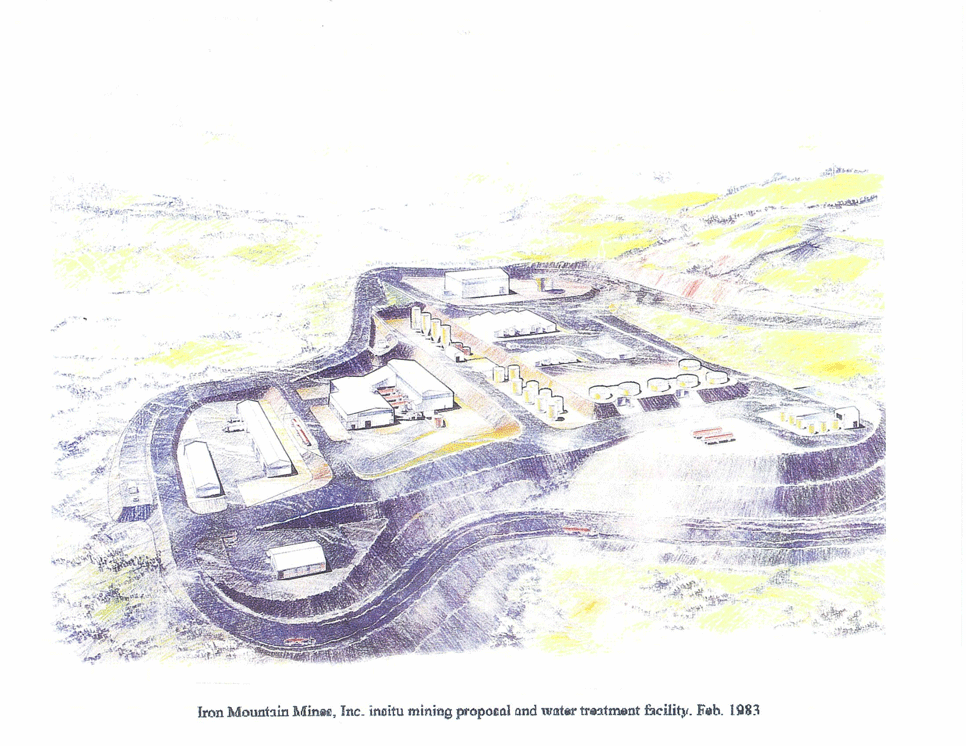
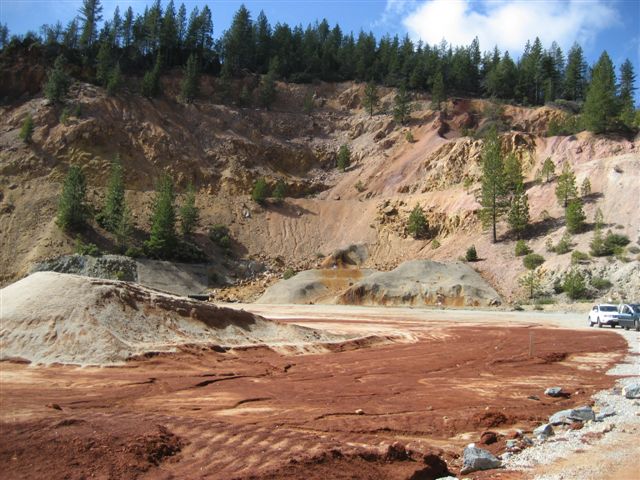
AUGUST 31 - ADMINISTRATIVE REVIEW OF IRON MOUNTAIN MINE REMEDIATION BEGINS IN NINTH CIRCUIT COURT
"the proposed government cannot be deemed a national one; since its jurisdiction extends to certain enumerated objects only, and leaves to the several states a residuary and inviolable sovereignty over all other objects." Madison wrote this before adoption of the 10th Amendment, which restates, "the powers not delegated to the United States by the Constitution ... are reserved to the states respectively, or to the people." This restriction of powers was intended to be the single greatest bulwark of American liberty.
September 16, 2010 by senatus
Senator Dianne Feinstein (D-CA) — who “oversees the Appropriations panel's subcommittee overseeing Interior Department and Environmental Protection Agency spending — said debate on the appropriations bill in the committee is indefinitely postponed, in part over concerns about efforts to delay EPA climate regulations,” The Hill reports.
“It's off the calendar,” Feinstein told reporters Thursday. “A decision will have to be made about whether it goes back on or out.”
San Francisco is in line to receive another $86 million in federal funds to further the cleanup of the former Hunters Point Naval Shipyard, a Superfund site being converted into one of the largest development projects in the city's history.
The new funding is still subject to congressional approval, but Mayor Gavin Newsom and his administration are optimistic the money will come through once the federal budget is passed, possibly after the November election.
The latest tranche would bring to $800 million the total spent on cleanup at Hunters Point over the last 10 years. This year, $92 million in federal funds were allocated for the cleanup, with about $82 million the year before. Newsom largely credits House Speaker Nancy Pelosi and U.S. Sen. Dianne Feinstein with securing the funds for their home city.
San Francisco officials estimate the federal cleanup efforts, being done in sections, are about 70 percent complete. A handful of local groups say the cleanup plans are inadequate, although officials note the land won't be turned over for development until federal, state and local authorities sign off on its safety.
The 702-acre project on a base closed in 1974 calls for 10,500 residential units, along with 320 acres of parks and open space. The plan calls for retail and entertainment facilities, a green technology campus and possibly an NFL football stadium if the 49ers decide to remain in San Francisco.
Another $86 million on tap to clean up Hunters Point San Francisco is in line to receive another $86 million in federal funds to further the cleanup of the former Hunters Point Naval Shipyard, a Superfund site being converted into one of the largest...
newsom claims everything but oil spills and murders
Newsom also largely credits the sun for illuminating the day.
$800mm to clean up 702 acres, and the job's not yet done? Over a million dollars an acre and more is needed?? Nobody needs to ask anymore why our government and all its agencies are broke.
Considering the Hunter Point Shipyard's history, it's kind of surprising it can be cleaned up at any price. Remember this expensive lesson when crying about environmental regulations driving out business - it's pay now to keep the industrial sites clean in the first place - or pay massive amounts in the future (for further instruction see "Iron Mountain").
what's interesting about this article is what it doesnt say--what the cleanup is for and why its necessary. the HP naval shipyard area has the #1 and #2 EPA-designated Superfund sites in the country. the level of radiation is worse than Chernobyl. radioactive materials brought back from the Bikini Atoll a-bomb tests have been combined with other toxic waste and seeped into the ground, contaminating the soil and making it doubtful that it can ever be truly "cleaned up". more likely, contained and/or moved somewhere else. nevertheless, i wouldnt want to live somewhere with potential radiation poisoning issues, no matter how nice the view.
Itsmymoneytoo might look into why this cleanup is so expensive. The navy spent decades polluting Hunter's Point with just about every toxic industrial product known from asbestos to radioactive junk. One little peculiarity our military enjoys to this day is a sweeping exemption from environmental regulations. I.e. they aren't held responsible no matter how gross their messes may be. Sure, our military has essential work to do, but it could be done with far less collateral damage. Back when much of the mess at Hunter's Point was made, we really didn't know much better. Now we've learned.
The government took tax payer dollars and ruined this property while it was occupied and used by the government and now will take tax payer money to clean it up and Newsom claims all this a victory?????
and just wait until we find out how much of this money has been and contin ues to be wasted. OMG our government spending is so completly out of control while our elected officials continue to pat themselves on the back for spending OUR money. Over a million dollars and acre? OMG! Something smells with this 'black hole' project. Who is overseeing how our money is being spent here? Anybody?
Keep in mind the true purpose of this "development" project which is the largest in SF history......keeping the 49ers in SF. This is how this whole project originated. First it started with remodelling Candlestick, then it was proposed by Eddie Debartolo ( when he was still owner of the 49ers ) and Willie Brown, to build a new stadium and redevelop the entire area. The ballot measure passed but Eddie soon had to give up the team to his sister.....seems the Yorks are deadset on keeping the Niners in Santa Clara, but you never know....
Institutional controls are non-engineered instruments, such as administrative and legal controls, that help minimize the potential for human exposure to contamination and/or protect the integrity of the remedy. Although it is EPA's expectation that treatment or engineering controls will be used to address principal threat wastes and that groundwater will be returned to its beneficial use whenever practicable, ICs play an important role in site remedies because they reduce exposure to contamination by limiting land or resource use and guide human behavior at a site. For instance, zoning restrictions prevent site land uses, like residential uses, that are not consistent with the level of cleanup.
Often, ICs are a critical component of the cleanup process and are used by the site manager to ensure both the short- and long-term protection of human health and the environment. For this reason it is important to understand what constitutes an IC. Specifically for EPA, ICs:
. are non-engineered instruments such as administrative and/or legal controls that minimize the potential for human exposure to contamination by limiting land or resource use;
. are generally to be used in conjunction with, rather than in lieu of, engineering measures such as waste treatment or containment;
. can be used during all stages of the cleanup process to accomplish various cleanup-related objectives; and,
. should be “layered” (i.e., use multiple ICs) or implemented in a series to provide overlapping assurances of protection from contamination.
ICs are vital elements of response alternatives because they simultaneously influence and supplement the physical component of the remedy to be implemented. On the one hand, the right mix of ICs can help ensure the protectiveness of the remedy; on the other, limitations in ICs may lead to reevaluation and adjustment of the remedy components, including the proposed ICs. At some sites, remedy contingencies may protect against uncertainties in the ability of the ICs to provide the required long-term protectiveness. These points illustrate how important it is for site managers to evaluate ICs as thoroughly as the other remedy components in the Feasibility Study (FS) or Corrective Measures Study (CMS), when looking for the best ICs for addressing site-specific circumstances. Adding ICs on as an afterthought without carefully thinking about their objectives, how the ICs fit into the overall remedy, and whether the ICs can be realistically implemented in a reliable and enforceable manner, could jeopardize the effectiveness of the entire remedy.
Often ICs are more effective if they are layered or implemented in series. Layering means using different types of ICs at the same time to enhance the protectiveness of the remedy. For example, to restrict land use, the site manager may issue an enforcement tool [e.g., Unilateral Administrative Order (UAO)]; obtain an easement; initiate discussions with local governments about a potential zoning change; and enhance future awareness of the restrictions by recording them in a deed notice and in a state registry of contaminated sites. Also, the effectiveness of a remedy may be enhanced when ICs are used in conjunction with physical barriers, such as fences, to limit access to contaminated areas.
ICs may also be applied in series to ensure both the short- and long-term effectiveness of the remedy. For example, the site manager may use an enforcement tool to require the land owner to obtain an easement from an adjacent property owner in order to conduct ground water sampling or implement a portion of the active remedy. This easement may not be needed for the long-term effectiveness of the remedy and is terminated when the construction is complete. At another site, the site manager may use an Administrative Order on Consent (AOC) or permit condition to prohibit the land owner from developing the site during the investigation. Later, the site manager may add a provision to the Consent Decree (CD) or the permit requiring the land owner to notify EPA if the property is to be sold and to work with the local government to implement zoning restrictions on the property.
CERCLA as amended by SARA, the NCP and RCRA support the use of ICs in remediation of a site:
CERCLA—Section 121(d)(2)(B)(ii)(III) refers to the use of enforceable measures (e.g., ICs) as part of the remedial alternative at sites. EPA can enforce the implementation of ICs, but not necessarily their long term maintenance. For example, the local government with zoning jurisdiction may agree to change the zoning of the site to prohibit residential land uses as part of the remedy, but the local government retains the authority to change the zoning designation in the future. EPA is authorized, under CERCLA section 104(j), to acquire (by purchase, lease or otherwise) real property interests, such as easements, needed to conduct a remedial action provided that the state in which the interest is to be acquired is willing to accept transfer of the interest following the remedial action. Transfers of contaminated Federal property are subject to special deed requirements under CERCLA sections 120(h)(3)(A)(iii) and 120(h)(3)(C)(ii)(I) and (II).
NCP—the NCP provides EPA’s expectations for developing appropriate remedial alternatives, including ICs under CERCLA. In particular, it states that EPA expects to use treatment to address the principal threats posed by sites; engineering controls for wastes that pose relatively low risk or where treatment is impracticable; and a combination of the two to protect human health and the environment [40 CFR 300.430(a)(1)(iii)(A), (B), and (C)]. In appropriate situations, a combination of treatment, containment, and ICs may be necessary. The NCP also emphasizes the use of ICs to supplement engineering controls during all phases of cleanup and as a component of the completed remedy, but cautions against their use as the sole remedy unless active response measures are determined to be impracticable [40 CFR 300.430(a)(1)(iii)(D)]. In the case where ICs are the entire remedy, the response to comments section of the preamble to the NCP states that special precautions must be made to ensure the controls are reliable (55 Federal Register, March 8, 1990, page 8706). Recognizing that EPA may not have the authority to implement such controls, the NCP requires that (for fund financed sites) the state assure that the ICs implemented as part of the remedial action are in place, reliable, and will remain in place after the initiation of operation and maintenance [40 CFR 300.510(c)(1)]. Lastly, for Superfund financed and private sites, the NCP also requires the state to hold any interest in property that is acquired (once the site goes into O&M) to ensure the reliability of ICs [40 CFR 300.510(f)].
RCRA—RCRA requirements are imposed through legal mechanisms different from those used under CERCLA. In RCRA, authorized states are the primary decision makers, this results in a wide variety of state-specific mechanisms being available. This fact sheet does not attempt to list all of the state and local IC mechanisms, but to identify key principles for the use of ICs. If the IC is being imposed through a RCRA permit, steps should be taken to ensure that long-term enforcement is not lost through property transfer or permit expiration. Cleanups under RCRA are conducted in connection with the closure of regulated units and facility-wide corrective action either under a permit [RCRA sections 3004(u) and (v)], interim status order [RCRA section 3008(h)] or imminent hazard order [RCRA section 7003] or other authorities. It should also be noted that landfill closure requirements under 40 CFR 264.119 require deed notices that the land has been used to manage hazardous waste, although the notice itself does not restrict future use. EPA expects to use a combination of methods (e.g., treatment, engineering, and institutional controls) under RCRA, as appropriate, to achieve protection of human health and the environment. EPA also expects to use ICs, such as water and land use restrictions, primarily to supplement engineering controls, as appropriate, for short- and long-term management to prevent or limit exposure to hazardous wastes and constituents. ICs are not generally expected to be the sole remedial action.
Proprietary Controls—These controls, such as easements and covenants, have their basis in real property law and are unique in that they generally create legal property interests. In other words, proprietary controls involve legal instruments placed in the chain of title of the site or property. The instrument may include the conveyance of a property interest from the owner (grantor) to a second party (grantee) for the purpose of restricting land or resource use. An example of this type of control is an easement that provides access rights to a property so the Potentially Responsible Party (PRP), facility owner/operator, or regulatory agency may inspect and monitor a groundwater pump-and-treat system or cover system. The benefit of these types of controls is that they can be binding on subsequent purchasers of the property (successors in title) and transferable, which may make them more reliable in the long-term than other types of ICs.
However, proprietary controls also have their drawbacks. Property law can be complicated because a property owner has many individual rights with respect to his or her property. To illustrate this point, property rights can be thought of as a bundle of sticks, with each stick representing a single right (e.g., the right to collect rents). The terminology, enforceability, and effect of each of these rights is largely dependent upon real property common law and the state where the site is located. A property owner can convey certain rights to other entities (either voluntarily or involuntarily through condemnation) and keep other rights. For example, if it is determined that a long-term easement is required to ensure remedy protectiveness, this “right” would need to be transferred by the property owner to another entity. For the easement to bind subsequent purchasers, some states require that the entity be an adjacent property owner. This may complicate long-term monitoring and enforcement since the party receiving the right (the grantee) is often not an adjacent property owner. To eliminate this problem, a proprietary control may be established “in gross.” This means that the holder of the control (the grantee) does not need to be the owner of the adjacent property. However, it should be noted that easements in gross may not be enforceable under the laws of some states. State property laws governing easements should therefore be researched before this type of IC is selected in order to determine its enforceability in that jurisdiction.
A distinction at Federal sites being transferred to the private sector is that CERCLA sections 120(h)(3)(A)(iii) and 120(h)(3)(c)(ii) and (iii) require that property interests be retained by the Federal government. At active Federal sites, proprietary controls may not be an option because a deed does not exist or the landholding Federal agency lacks the authority to encumber the property. However, the landholding Agency may be willing to enter a Memorandum of Understanding (MOU) with EPA and/or state regulators providing for specific IC implementation plans, periodic inspections and other activities which it will undertake (in lieu of deed restrictions) to assure that ICs for the active site will remain effective.
Enforcement and Permit Tools with IC Components—Under sections 104 and 106(a) of CERCLA, UAOs and AOCs can be issued or negotiated to compel the land owner (usually a PRP) to limit certain site activities at both Federal and private sites; CDS can also be negotiated at private sites under 122(d). Similarly, EPA can enforce permits, conditions and/or issue orders under RCRA sections 3004(a), 3004(u) and (v), 3008(h), or 7003. These tools are frequently used by site managers, but may also have significant shortcomings that should be thoroughly evaluated. For example, most enforcement agreements are only binding on the signatories, and the property restrictions are not transferred through a property transaction. For example, if a PRP under CERCLA signs a CD or receives a UAO and then sells his or her property, many types of ICs would not be enforceable against the next owner. This could jeopardize the protectiveness of the remedy. One possible solution to this problem is to ensure that the enforcement tool contains provisions requiring EPA or state notification and/or approval prior to a property transfer. In this instance, EPA could negotiate an agreement with the new owner. Another solution is to require signatories of an enforcement document to implement additional long-term institutional controls such as information devices or proprietary controls (i.e., layering).
Informational Devices—Informational tools provide information or notification that residual or capped contamination may remain on site. Common examples include state registries of contaminated properties, deed notices, and advisories. Due to the nature of some informational devices (e.g., deed or hazard notices) and their potential non-enforceability, it is important to carefully consider the objective of this category of ICs. Informational devices are most likely to be used as a secondary “layer” to help ensure the overall reliability of other ICs.
ICs at Federal Facilities
Because of Federal ownership, there are significant differences in the way ICs are applied at Federal facilities. Some proprietary or governmental controls cannot be applied on active Federal facilities. However, for properties being transferred as part of a base closure, the Department of Defense does have the authority to restrict property by retaining a property interest (i.e., an easement intended to assure the protectiveness of the remedy). For active bases, ICs are commonly addressed through remedy selection documents, base master plans, and separate MOUs. More detailed information on ICs and Federal facilities is contained in “Institutional Controls: A Reference Manual (Workgroup Draft - March 1998)” and in the FFRRO IC guidance ("Institutional Controls and Transfer of Real Property under CERCLA Section 120(h)(3)(A), (B), or (C)," January, 2000).
Legal Mechanisms for Imposing ICs Under CERCLA and RCRA
CERCLA and RCRA employ the same types of ICs to reduce exposure to residual contamination. However, as explained below, EPA’s legal authority to establish, monitor and enforce ICs varies significantly between the two programs. As a result, officials involved in cleanups need to appreciate the range of options available under each program before determining whether, and to what extent, ICs should be incorporated into a remedial decision.
At CERCLA sites, EPA often imposes ICs via enforcement tools (e.g., UAOs, AOCs, and CDs). Since these enforcement tools only bind the parties named in the enforcement document, it may be necessary to require the parties to implement ICs that “run with the land” (i.e., applied to the property itself) in order to bind subsequent land owners. For Fund-lead CERCLA sites, the lead agency has the responsibility for ensuring ICs are implemented. Legal mechanisms such as UAOs, AOCs and CDS should also require reporting to EPA and/or the state of any sale of the property.
Under RCRA, ICs are typically imposed through permit conditions or by orders issued under section 3008(h). In certain circumstances cleanup may also be required under the imminent hazard order authority of section 7003. In the case where an IC is meant to continue beyond the expiration of a permit, an order may be required to ensure the IC remains in effect for the long term RCRA permit writers should incorporate ICs as specific permit conditions, where appropriate. By doing so, such conditions would be enforceable through the permit. At the same time, permit writers should consider whether additional ICs are available (e.g., governmental and/or proprietary controls) to ensure that subsequent property owners will be aware of, and bound by, the same types of restrictions. Similar factors should be considered when preparing RCRA corrective action orders to ensure that both the current facility owner/operator and any subsequent property owners are subject to effective and enforceable ICs that will minimize exposure to any residual contamination.
One significant difference between RCRA and CERCLA is that RCRA generally does not authorize EPA to acquire any interests in property. Therefore, many proprietary controls (such as easements) will require the involvement of third parties (e.g., states or local governments) under RCRA.
ICs and Future Land Use
Land use and ICs are usually linked. As a site moves through the Superfund Remedial Investigation/Feasibility Study (RI/FS) or RCRA Facility Investigation/Corrective Measures Study (RFI/CMS), site managers should develop assumptions about reasonably anticipated future land uses and consider whether ICs will be needed to maintain these uses over time. EPA’s land use guidance (Land Use in CERCLA Remedy Selection Process, OSWER Directive No. 9355.7-04, May 25, 1995) states that the site manager should discuss reasonably anticipated future uses of the site with local land use planning authorities, local officials, and the public, as appropriate, as early as possible during the scoping phase of the RI/FS or RFI/CMS. Where there is a possibility that the land will not be cleaned up to a level that supports unlimited use and unrestricted exposure, the site manager should also discuss potential ICs that may be appropriate, including legal implementation issues, jurisdictional questions, the impact of layering ICs and reliability and enforceability concerns. It is also important for the site manager to recognize that, in addition to land uses, ICs can be used to affect specific activities at sites (e.g., fishing prohibitions).
Screening ICs
The need for ICs can be driven by both the need to guard against potential exposure and to protect a remedy. If any remedial options being evaluated in the FS or CMS leave waste in place that would not result in unrestricted use and unlimited exposure, ICs should be considered to ensure that unacceptable exposure from residual contamination does not occur. However, ICs may not be necessary if the waste that is left at the site allows for unrestricted use and unlimited exposure. Remedy options that typically leave residual wastes on site and necessitate ICs include capping waste in place, construction of containment facilities, natural attenuation and long-term pumping-and-treatment of groundwater.
ICs should be evaluated in the same level of detail as other remedy components. ICs are considered response actions under CERCLA and RCRA. ICs must meet all statutory requirements, and are subject to the nine evaluation criteria outlined in the NCP (40 CFR 300.430 (e)(9)(i)) for CERCLA cleanups. The balancing criteria recommended for corrective actions should generally be used in evaluating ICs under RCRA. However, before applying these criteria, the site manager should first make several determinations: *&%#@^$_jf FASCISTS AND COMMUNISTS!
Determining the Role of Local Governments
CERCLA, RCRA, and the NCP do not specify a role for local governments in implementing the selected remedy. However, a local government is often the only entity that has the legal authority to implement, monitor and enforce certain types of ICs (e.g., zoning changes). While EPA and the states take the lead on CERCLA and RCRA response activities, local governments have an important role to play in at least three areas: (1) determining future land use; (2) helping engage the public and assisting in public involvement activities; and (3) implementation and long-term monitoring and enforcement of ICs. Therefore, it is critical that the site manager and his or her state counterpart involve the appropriate local government agency in discussions on the types of controls that are being considered. The capability and willingness of the local government to implement and ensure the short- or long-term effectiveness of the proposed ICs should be considered during the RI/FS or RFI/CMS. In certain cases, cooperative agreements may be considered to assist local governments in the implementation, monitoring and enforcement of required ICs.
ICs in CERCLA Removal Actions
ICs will rarely be a component of true emergencies where a time critical action serves as the only response at a site. It is more likely that a site manager will choose ICs as a component of a non-time critical removal action or during a follow-up remedial action. A post-removal site control agreement must be completed before commencing a fund-financed removal action where ICs are included in post-removal site control (OSWER Directive No. 9360.22-02). As in the remedial process, begin considering ICs when conducting an analysis of land use assumptions during the removal decision-making process. Where a final, site-wide, non-time critical removal remedy decision will be made, ICs should be thoroughly and rigorously evaluated with all other response actions in the Engineering Evaluation/Cost Analysis (EE/CA). In short, because ICs are considered to be actions, apply the full criteria required by
the NCP for EE/CA evaluations. It is anticipated that ICs would not be chosen as the sole action for a removal.
It is fundamental that a remedy under RCRA or CERCLA that includes ICs meet the following threshold criteria:
• protect human health and the environment; and • for CERCLA sites, comply with Applicable or Relevant and Appropriate Requirements (ARARs).
The site manager for RCRA facilities should also consider whether remedies that include ICs:
• attain media cleanup standards or comply with applicable standards for waste management; and
• control the source(s) of releases so as to reduce or eliminate, to the extent practicable, further releases of hazardous waste that might cause threats to human health and the environment.
Balancing Criteria
The site manager evaluates the individual, layered or series of ICs to determine their respective strengths and weaknesses. ICs are also evaluated in combination with engineered controls to identify the key tradeoffs that should be balanced for the site. Following are balancing criteria required by CERCLA and the NCP and recommended by the RCRA program in guidance.
Long-term effectiveness and permanence (CERCLA) or reliability (RCRA)—Under both CERCLA and RCRA, this factor assesses the permanence/reliability and effectiveness of ICs that may be used to manage treatment residuals or untreated wastes that remain at the site over time. When evaluating whether an IC will be effective over the long-term, the site manager should consider factors such as: whether the property is a government-owned site or a privately-owned site that is likely to change hands; the applicability of ICs to multiple property owners; the size of the area to be managed; the number of parcels; the contaminated media to be addressed; the persistence of the contamination; whether site contamination is well-defined; and whether local governments or other governing bodies are willing and able to monitor and enforce long-term ICs. The site manager should also consider the contaminated media to be addressed by the ICs. Different ICs may be required for different media.
Where ICs must be effective for a long period, either proprietary or governmental controls should be considered because they generally run with the land and are enforceable. However, both proprietary and governmental controls have weaknesses in terms of long-term reliability. For example, with proprietary controls, common law doctrines may restrict enforcement by parties who do not own adjoining land. This can render proprietary controls ineffective if EPA or another party capable of enforcing the control is not the owner of the adjacent property. To eliminate this problem, proprietary controls may be established "in gross," signifying that the holder of the control does not need to be the owner of the adjacent property. However, some courts do not recognize in gross proprietary controls.
At some sites, governmental controls may be preferable to proprietary controls. For example, the site manager might work with a local government to pass an ordinance to restrict construction or invasive digging that might disturb or cause exposure to covered residual lead contamination in a large residential area. The implementation of government controls might be considered a beneficial addition to information tools that may be forgotten over the long term or an enforcement action that would be binding only on certain parties.
Proprietary controls would likely be deemed impractical at such a site due to the complex and uncertain task of obtaining easements from multiple property owners.
Like proprietary controls, the use of governmental controls may not be effective over the long term. Of primary concern are the political and fiscal constraints that may affect the ability of a state or local government to enforce the controls. Similarly, governmental controls may be problematic when the local or state government is or may become the site owner or operator because of the appearance of a conflict of interest. Regardless of the control selected, its viability over the long term needs to be closely evaluated.
Reduction of toxicity, mobility, or volume through treatment—
This CERCLA and RCRA criterion does not apply since ICs are not treatment measures.
Short-term Effectiveness—Short-term effectiveness of ICs at CERCLA and RCRA sites should be evaluated with respect to potential effects on human health and the environment during construction and implementation of the remedy. In order to satisfy this criterion, the remedy might entail the use of an IC through an enforcement order to compel the PRP to restrict certain uses of the groundwater at or down gradient from the site during remediation.
After remediation is complete, other ICs might be implemented if residual contamination remains on site (i.e., implementing ICs in series).
Implementability—This CERCLA and RCRA criterion evaluates the administrative feasibility of an action and/or the activities that need to be coordinated with other offices and agencies. Implementation factors that generally should be considered for ICs include whether the entity responsible for implementation possesses the jurisdiction, authority, willingness and capability to establish, monitor and enforce
ICs. A proper analysis of implementability can be complex, considering such diverse factors as the extent to which land being restricted is owned by liable parties and the willingness and capability
of the local government or other authority responsible for establishing controls for land or resource use.
Cost—This CERCLA and RCRA criterion includes estimated capital and O&M costs. In CERCLA, estimated costs for implementing, monitoring, and enforcing ICs should be developed. For example, cost estimates for ICs might include legal fees associated with obtaining easements restricting land use, the costs of purchasing property rights (e.g.., groundwater rights, easements), or the wages of the state or local government personnel that will regularly monitor the IC to ensure that it has not been violated. It is interesting to note that once the total life-cycle costs of implementing, monitoring and enforcing an IC – which may exceed 30 years – are fully calculated, it may actually be less costly in the long term to implement a remedy that requires treatment of the waste. For more information on estimating response costs, see “A Guide to Developing and Documenting Cost Estimates During the Feasibility Study,” EPA 540-R-00-002, OSWER 9355.0-
075. In RCRA, costs historically have played a less prominent role in remediation selection. Typically cost estimates are expected to be developed at the discretion of the owner/operator, although implementors should take into account sites where ICs are inappropriately costly.
Modifying Criteria
Typically the site manager presents the proposed remedy, including ICs to the state, local government, and community for comment prior to implementation. The issues and concerns of these stakeholders may result in modifications to the remedy and are addressed by the site manager in the remedy decision document. Following is a discussion of these modifying criteria (note: these criteria are only recommended in RCRA guidance).
State Acceptance—The site manager should make the appropriate state authorities aware of the basis and scope of the ICs to be implemented under CERCLA or RCRA, and what role, if any, the state is expected to play to make ICs an effective part of the remedy. The state can formally express its concerns about the use of ICs, in general, and its role, in particular, or indicate its willingness to take on the responsibility for implementing and enforcing the proposed ICs. If the state’s position is uncertain at the time the remedy is selected (e.g., for CERCLA sites, when the ROD is signed or, for RCRA facilities, when the permit/order is issued or modified), it may be necessary to outline contingent remedial approaches in the decision documents. Specifically, remedies that require long-term ICs to remain protective may require alternative actions (e.g., additional soil removal) if the ICs are later determined to be unenforceable or cannot meet the
remedial objectives. Alternatively, at a RCRA site, it may be necessary to leave a facility under a permit or other mechanism enforceable by the regulating agency. If the state’s willingness or ability to implement or enforce an IC changes after remedy selection, the protectiveness of the remedy should generally be re-evaluated and, when necessary, remedial decisions revised. Under CERCLA, this may require an Explanation of Significant Differences (ESD), or even a ROD amendment. Under RCRA, a permit modification or change to a corrective action order may
be necessary. It is important to note that under no circumstances can a Fund-financed CERCLA remedial action be initiated without receiving state assurances on ICs and property transfer.
Local Government and Community Acceptance—Involving the community and local government early during the remedy decision process will enable the site manager to more fully evaluate IC options. Discussions with the local government and community give the site manager the opportunity to:
• gather local government and community input on the proposed ICs;
• identify whether a particular stakeholder group may be harmed as a result of a proposed IC (for example, will a ban on fishing cause an economic hardship in the community);
• receive comment on the impacts of the potential ICs on religious or cultural customs and beliefs (e.g., preventing access to property which grows the plants that are used in a tribal ceremony); and
• determine if the community has special needs in regards to the IC (for example, will it be necessary to publish informational devices in multiple languages).
In addition, the local government and community’s response to certain types of ICs and the willingness and capability of the local government to monitor ICs will help the site manager determine whether the ICs will be effective overall. This is especially important if nearby property owners will need to agree to implement proprietary controls or if other governmental ICs (e.g., zoning changes) will have an impact on the community. Early involvement will also enable the community to work with the local government to develop innovative approaches to using ICs, especially in light of any future land use plans.
As with other aspects of the proposed remedy, the community should have the opportunity to comment on the proposed IC component of the remedy during the public comment period. It may be necessary to educate the community about ICs so that its members understand how the different ICs may impact their property and activities. Under CERCLA, it may also be possible, as long as all appropriate requirements are met, to provide a Technical Assistance Grant to the community so they can hire a technical expert to assist them in evaluating ICs and the overall remedy.
In some cases, it may be appropriate not to identify the exact IC required at the time of the remedy decision. In these instances the critical evaluation of the available ICs should still be conducted and the specific objective(s) of the ICs should be clearly stated in the ROD or other decision document. Examples of when this flexibility may be appropriate are contingent remedies based on pilot studies or if a remedy would not be implemented for several years and the state is developing enabling language for Conservation Easements authority.
Conclusion
The ICs outlined in this fact sheet can be important elements of environmental cleanups. ICs play an important role in limiting risk and are often needed to ensure that engineered remedies are not affected by future site activities. When selecting ICs, the site manager needs to evaluate the situation at the site, define the needs that ICs are intended to address, identify the kinds of legal and other tools available to meet these needs, and ensure the ICs are implemented effectively. All of this requires up-front planning and working closely with the Regional office attorneys, the state, community, and PRPs or facility owner/operators. Key concepts to keep in mind when implementing ICs are provided in the text box below.
If you have questions regarding the material covered in this fact sheet, consult the draft document, “Institutional Controls: A Reference Manual” or contact your Regional Coordinator in the OERR Technical Regional Response Center. For information on model language for enforcement or legal documents used to implement ICs, consult your Regional Counsel, OSRE or the Office of General Counsel.
IRON MOUNTAIN HAZARD ASSISTANCE REMEDIATION DIRECTORATE
COMING TOGETHER FOR THE SAFE WATERSHED REFORM-ACT:
IMMI's STRATEGY FOR ACHIEVING THE SAFE WATERSHED REFORM-ACT (SWR)
Public Discussion NOT FINAL – August 2010 TESTIMONY DE BENNE ESSE
On April 15, 2010, Environmental Protection Agency (EPA) Administrator Lisa P. Jackson brought together a diverse group of individuals to discuss and explore opportunities for reinvigorating EPA's approaches to achieving clean water in America . At this forum, The Coming Together for Clean Water , Administrator Jackson stated her desire “to see a huge leap forward in water quality as we saw in the 1970s after the passage of the Clean Water Act.” The forum was one of many drivers for this strategy which charts EPA's path to achieve that leap forward in our nation's water quality and outlines a sustainable approach to meet our economic needs and improve the quality of the nation's water for generations to come.
EPA's approach focuses around our two thematic lines: 1) healthy watersheds, and 2) sustainable communities – both critical Administration and EPA priorities. It relies on the concepts and ideas generated at the Coming Together for Clean Water forum and also incorporates the bold new approaches identified from the October 2009 Clean Water Action Plan, which initiated efforts to revamp the National Pollutant Discharge Elimination System (NPDES) compliance and enforcement program.
SAFE WATERSHED REFORM-ACT CHALLENGES
The Safe Watershed Reform-Act (SWR) sets a vision for the watersheds of the United States to be safe. While we have certainly made progress toward that vision since 1972, we face challenges in attaining it.
In 1972 when the CWA was enacted, traditional point sources were thought to be the dominant cause of pollution. Now we have a better understanding that safe watersheds does not necessarily mean clean water, and vice versa. IT IS OXYMORONIC THAT THE FAILURE OF THE CWA BEGINS WITH A FUNDAMENTAL LACK OF GOVERNMENT ACCOUNTABILITY OR UNDERSTANDING REGARDING THE VERY DEFINITION OF CLEAN OR SAFE WATER AND THE OBVIOUS USURPATION AND COERCION THAT HAS RESULTED. WATER IS KNOWN AS THE UNIVERSAL SOLVENT, WATER IS ALWAYS FOUND IN NATURE WITH CONSIDERABLE DISSOLVED MINERALS, AND THE FACT IS THAT UNTIL THE LAST 30 YEARS OR SO, THE RIVERS OF OUR COUNTRY AND INDEED AROUND THE WORLD WERE TREATED AS LITTLE MORE THAN OPEN SEWERS. PURE WATER IS INDEED UNHEALTHY FOR DRINKING, AS IT WILL LEACH MINERALS FROM THE BODY. MOST WATERS IN THE U.S.THAT ARE OBTAINED FROM WELLS (AQUIFERS) CONTAIN SUBSTANTIAL AMOUNTS OF MINERALS SUCH AS CALCIUM AND IRON, AND IN MANY LOCALES IT IS NECESSARY TO INSTALL A “WATER SOFTENER” OR OTHER TREATMENT USING MINERAL SALTS OR FILTRATION TO EXCHANGE OR REMOVE THE MINERALS AND MAKE THE WATER EFFECTIVE FOR WASHING AND PALATABLE TO DRINK.
FISHABLE AND SWIMMABLE IS LIKEWISE ARBITRARY, AS IT IS CERTAIN THAT THE OCEANS ARE USUALLY FISHABLE AND SWIMMABLE, BUT WOULD BE CONSIDERED POISONOUS UNDER THE TERMS OF THE CLEAN WATER ACT.
CALIFORNIANS WHO SAY THEY WANT DRINKABLE RIVERS? IRON MOUNTAIN MINE BOULDER CREEK IS PATHOGEN FREE.
IF YOU HAVE NOT DONE SO ALREADY, THE CWA IS HEREBY ABOLISHED:
THE SAFE WATERSHED REFORM-ACT.
Over the last 30 years National Water Quality Inventories have documented pathogens as a leading cause of river and stream impairments.
EPA MUST ADDRESS THIS PRIORITY.
THE RAPTURE OF ENVIRONMENTALISM
THERE IS NO EVIDENCE OF DAMAGES, INJURY, HAZARD OR RISK. DAM IMPROVEMENT
THE JUDGMENT IS VACATED BY ABSOLUTE ORDER
YOU SHOULD CONSIDER ALL THE GOLD IN CALIFORNIA .
INNOCENCE DISCHARGED; ABSENCE OF INJURY; INCAPACITY OF JURISDICTION; MALICIOUS PROSECUTION; DEFAMATION OF INNOCENT LAND & OWNER;
H.A.R.D. LOOK
C. National Environmental Policy Act
In passing NEPA, Congress “recognized the profound impact of man's activity on the interrelations of all components of the natural environment” and set out “to create and maintain conditions under which man and nature can exist in productive harmony.” 42 U.S.C. § 4331(a). [WE should all be MUSICIANS?]
To bring federal action in line with Congress' goals and to foster environmentally informed decision-making by federal agencies, NEPA “establishes ‘action-forcing' procedures that require agencies
to take a ‘hard look' at environmental consequences.” Metcalf v. Daley , 214 F.3d 1135, 1141 (9th Cir. 2000) (quoting Robertson v. Methow Valley Citizens Council , 490 U.S. 332, 348 (1989)). Foremost among those procedures is the preparation of an environmental impact statement (EIS).
Agencies considering “major Federal actions significantly affecting the quality of the human environment” are required to prepare an EIS. 42 U.S.C. § 4332(C). The EIS “shall provide full and fair discussion of [the] significant environmental impacts” of the proposed action. 40 C.F.R. § 1502.1. That discussion serves two purposes:
First, it ensures that the agency, in reaching its decision, will have available, and will carefully consider,
detailed information concerning significant environmental impacts. Second, it guarantees that the relevant
information will be made available to the larger audience that may also play a role in both the decisionmaking process and the implementation of that decision. Dep't of Transp. v. Pub. Citizen , 541 U.S. 752, 768 (2004) (internal quotation marks, brackets, and citation omitted). By WESTERN W ATERSHEDS PROJECT v. KRAAYENBRINK 13249 focusing agency and public attention on the environmental effects of proposed agency action, “NEPA ensures that the agency will not act on incomplete information, only to regret its decision after it is too late to correct.” Marsh v. Or. Natural Res. Council , 490 U.S. 360, 371 (1989).
and coordinated compliance and enforcement, more integrated approaches to capitalize on synergies, improved communication with a broader audience, and greater leveraging of programs. Just as EPA will have to employ all of its tools, so too must all our partners—state, local, tribal, and federal—play their roles.
EPA must improve and adapt regulations, permitting and compliance/enforcement efforts as a key first step to change our current path. EPA will also work to greatly increase cooperation, partnerships and communication to achieve victories in areas where regulatory approaches are not appropriate. We will support legislation and consider administrative action to restore the CWA protections to wetlands and headwater streams that provide clean water for human and ecological uses. We will take action to ensure all major point sources of pollution have permits that require clear, verifiable results. And by implementing new enforcement approaches per the Clean Water Action Plan , including more integrated problem solving, collaboration across standards setting, permitting and enforcement programs, EPA will bring violators into compliance.
Another key element of this strategy is improvement of assessment and classification of watersheds. And building on this, EPA will increase cooperation with states to identify and protect those waters that are healthy; a far more cost effective approach than cleaning up a waterbody [WATER BODIES] after it has been polluted. EPA also seeks to find ways to better integrate new technologies and approaches into our clean water programs. For example, green infrastructure provides an important set of tools for changing the way stormwater discharges STORM WATER IS viewed—from being treated as a waste product that comes with high-cost infrastructure systems – to realizing and using it as a valued resource. Green infrastructure can also have positive effects on sanitary sewer overflows and combined sewer overflows, which are major urban water concerns. EPA will also explore opportunities to better integrate oNLY sustainable practices into ALL policies and programs; for instance: energy-neutral wastewater treatment, water efficiency, energy efficiency, and water reuse.
EPA will seek solutions and implement programs to address recent, emerging, and growing watershed quality issues including increased mining activities, drilling, aging infrastructure and increased urbanization and development. Invasive species are also a significant threat to aquatic ecosystems. Using both regulatory and non-regulatory programs, EPA is taking meaningful steps to reduce the likelihood that invasive species are able to spread from one waterbody to another . Additionally, as excess nutrient pollution continues to be a major concern, EPA sees a better means to addressing this problem on the critical path to success. EPA will work in partnership with states to better manage excess nutrient enrichment in LAND AND surface waters and promote state accountability frameworks that include publicly-available, science-based, state nutrient reduction implementation activities that are watershed-based and have NON-COERCIVE FEDERALLY-binding mechanisms to achieve the reductions.
STRATEGIES TO ACHIEVE SAFE WATERSHED REFORM-ACT GOALS
This strategy's success depends on many factors working together. Local governments, states, and tribes, each working under their own authorities and capacities, to ensure watersheds in their jurisdiction are safe. It is up to EPA to bring these groups together to more smoothly coordinate and harmonize our efforts in order to optimize the results. EPA has identified several key strategies to guide our efforts, and actions that respond to the challenges we face: Public Discussion NOT FINAL – August 2010 4
• Systematically assess the nation's watersheds to provide a baseline for transparently tracking progress;
• Enhance COMMUNITIES ability to restore degraded watersheds, and take action to increase the number of restored watersheds;
• Reduce emissions entering our watersheds; and
• Enhance watershed resiliency and revitalize communities through multi-benefit, sustainable technologies and approaches that will ensure resiliency to development, urbanization and other factors.
KEY ACTIONS FOR STRENGTHENING WATERSHED PROTECTIONS
By approaching the most significant safe land and watershed challenges facing the nation from a more realistic perspective and using resources creatively, we will undertake a range of actions to implement these strategies to get a better understanding of the state of our nation's watersheds, work to protect what we've got, fix what's broken, expand our work to keep watersheds safe, and build for the future while ensuring we are meeting our economic and community needs. In doing so, the community will expand existing partnerships and develop new, locally-based partnerships, and implement tools and policies that will foster tailored approaches. In addition to strengthening and expanding partnerships, to achieve the next level of protection, we will work within the community and outside the community to strategically leverage funding opportunities to reduce emissions from unregulated sources.
In implementing these actions, the community remains committed to the following principles:
• Use bold, new, creative, more effective ways to implement SWR and other programs, more strategically deploy existing regulatory authorities and enforcement programs, as well as voluntary approaches and market-based incentives;
• Rely on robust science and cutting-edge technologies, particularly in emerging areas of concern such as climate adaptation, ecosystem services, integrated watershed approaches;
• Increase focus on improving environmental quality in disadvantaged communities that have historically suffered severe degradation of watershed quality that provide key ecosystem services;
• Engage a broader range of stakeholders in decision-making and provide the EPA and other stakeholders with reliable information about watersheds; and
• Achieve and document measurable results.
Know What You've Got – Systematically Assess the Nation's Watersheds to Provide a Baseline Effective management of watershed resources requires reliable information and an informed public. To better inform our efforts, improve accountability, policy, planning, increase stewardship, and better measure progress of ongoing efforts to improve the quality of data in the long-term; the EPA will focus on systematically assessing the nations watersheds. The National Aquatic Resource Surveys for streams, lakes and coastal waters already provide the baseline for the condition of watersheds across the - Public Discussion Draft – August 2010 5 -
nation against which we can track changes in water condition at the national and regional scales. In the next several years, EPA will complete the first set of five Aquatic Resource Surveys that will give us a complete picture of the condition of all watershed types across the nation. EPA, working with our partners, will also explore opportunities to build on existing monitoring and assessment efforts to better identify, classify, and track the status of our watersheds. This multi-scaled approach to monitoring and assessment will give communities the information they need to make informed decisions about how best to manage watershed resources and help the public understand the effectiveness of federal and state investments.
Key EPA Actions:
• Complete cycle of National Aquatic Resource Surveys to provide baseline for documenting trends in degradation and major stressors in the next several years,
• Complement existing impaired watershed listings with identification of healthy watersheds across the U.S. ; and
• Explore opportunities for increasing strategic information attained from and integrity of the Integrated Watershed Quality Monitoring and Assessment Reports to provide a more comprehensive picture.
Protect What We Have – Increased Focus on Protection of Healthy Watersheds
EPA's watershed quality protection program is focused on the remediation of impaired watersheds and the reduction of specific emission levels in watersheds. While EPA and our state partners have made and are continuing to make considerable progress in this important work, we recognize the need to protect and maintain healthy watersheds as well. Healthy watersheds provide our communities with drinking water, recreational opportunities, environmental benefits and services, including safe watershed for healthy aquatic ecosystems, habitat for fish and wildlife, and better resilience against floods and future land-use changes. Protecting healthy watersheds will result in considerable savings over time if the need for costly restoration can be avoided in watersheds that would otherwise become impaired by cumulative impacts.
EPA will study and report the health and safety of watersheds sufficiently for communities to explore, develop, and make available more effective information and expertise to conduct ecological assessments, to classify and list healthy watersheds. By developing, along with our state partners, a science-based structure on a national level, EPA hopes to provide the tools to help them inventory and then take action to protect their healthy watersheds. EPA will also enhance public awareness and, together with better equipped and organized State action, will ultimately lead to increased protection of our watershed assets.
COMMUNITIES will utilize SWR tools to increase protection of high quality watersheds, including revisions to water quality standards, and focus on protecting those watersheds that are threatened by coal and hard rock mining activities.
Key EPA Actions:
• Through the new Healthy Watershed Initiative, develop a common set of comprehensive metrics to create a national list of healthy watersheds (e.g., linking watershed protection and species diversity); use the latest state-of-the-science, peer-reviewed methods to conduct
Public Discussion Draft – August 2010 6
assessments to identify healthy watersheds across states using CWA funds (e.g., 604(b), 319, and 106) in partnership with other Federal agencies. With these assessments, help set States set priorities and implement protection and conservation programs;
?? Support legislation and consider administrative action to initiate SWR protections for our watersheds;
?? Use the full suite of SWR tools to dam high-quality streams from destruction and degradation caused by mining activities;
?? Propose changes to the state water quality standard regulations to protect watersheds; and
?? Ensure States are effectively administering watershed programs.
Fix What's Broken – Enhance THE COMMUNITIES Ability to Restore Watersheds
The restoration of watersheds will be critical to making significant progress. In order to do so EPA will use the Chesapeake Bay as a demonstration for improved monitoring of restoration progress. Success in cleaning up the Chesapeake Bay watershed will be a model for watershed protection in other parts of the country. This combined approach of protecting healthy watersheds and restoring impaired waters will ultimately improve the overall state of our nation's watersheds.
Key EPA Actions
?? Work with states to carry out more strategic and effective implementation of watershed-based plans;
?? Develop and implement reasonable assurance guidelines regarding watersheds identified in TMDLs;
?? Coordinate funding opportunities with USDA to accelerate nutrient and sediment reductions and tackle key agriculture challenges through an integrated approach using 319 Program, Clean Water State Revolving Fund (CWSRF), CWA section 117, STAR grants and USDA Conservation programs;
?? Use trading offsets and other market-based tools where appropriate, to improve watersheds;
?? Implement all of the above actions in conjunction with states in the Chesapeake Bay watershed and other federal agencies to execute the President's Executive Order to clean up the Chesapeake Bay.
In addition, in the Chesapeake Bay watershed, EPA will:
• Implement federal land management practices that protect forests and watersheds, and incorporate sustainable practices;
• Create a system for tracking and reporting watershed commitments and two-year milestone commitments;
• Implement current regulations for concentrated animal feeding operations (CAFOs) and propose new regulations to more effectively achieve pollutant reductions necessary to meet the Chesapeake Bay TMDL; and
• Implement improvements to the current watershed programs and initiate new national watershed rulemaking with Chesapeake Bay watershed provisions.
Keep it Safe – Safe Watersheds Reform-Act Public Discussion NOT FINAL – August 2010 7
EPA seeks to increase protection of our watersheds by reducing current loadings and preparing for substantial predicted increases associated with development, urbanization, climate change and other factors. Across the board, under the SWR, COMMUNITIES address a number of watershed challenges.
Where problems are identified, communities apply the best standards available, eliminate loopholes, and set performance standards through robust modifications to current regulations.
For example, in addition to the work underway in Chesapeake Bay as part of the President's recent Executive Order, EPA will use its expertise robustly to protect and restore threatened natural treasures such as the Great Lakes and the Gulf of Mexico as navigable waterways of the united states . EPA is heading up a multi-agency effort to restore and protect the Great Lakes, one of America 's great waterways, through the Great Lakes Restoration Initiative. In other parts of the nation, we will focus on nutrient pollution, which threatens the long-term health of important ecosystems such as the Mississippi River Basin . Further, given the environmental catastrophe resulting from the Deepwater BP oil spill, EPA will take all necessary actions to support efforts to clean up and restore the Gulf of Mexico ecosystem.
Key EPA Actions:
• Transfer the National Pollutant Discharge Elimination System (NPDES) which will streamline the regulatory authority to designate an animal feeding operating (AFO) as a concentrated animal feeding operation (CAFO);
• Develop guidance for publicly owned treatment works (POTWs) to protect the public and the environment from the effects of sanitary sewer overflows and the release of partially treated waste water from treatment facilities. Potential regulatory approaches include additional reporting and public notice when overflows occur, increased responsibilities for properly operating and maintaining sewer systems, clarifying the requirements for satellite collection systems, and addressing peak wet weather flows at the treatment plant. EPA will also explore more widespread use of green infrastructure techniques in combined sewer overflow control plans;
• Expand municipal storm water permitting coverage to currently unregulated areas and establish performance standards for storm water discharges from newly developed and redeveloped sites that result in reduced discharge of pollutants, including through the use of green infrastructure techniques;
• Develop guidance to reduce pesticide discharges to waters of the U.S. ;
• Audit point source programs (CAFOs, storm water, water quality based permits) that have significant nutrient reduction potential to assure full CWA tools implementation;
• Evaluate implications of study currently underway within EPA's Office of Research and Development on the relationship between hydraulic fracturing and water resources for taking further action to protect water quality;
• Develop guidance for cooling water intakes at over 1200 power plants and manufacturing facilities; and
• Work in partnership with states to better manage excess nutrient enrichment in surface waters, including:
Public Discussion Draft – August 2010 8
• Initiating scientific report(s) based on best available science and subject to peer review to determine necessary nutrient loads to restore and maintain watershed quality in key areas;
• Developing and implementing guidance to assist authorities in standards for nutrients;
• Improving public understanding of the seriousness of nutrient pollution including impacts on drinking water and other public health, environmental impacts, and economics; and
• Leveraging federal funding to assist communities in implementing nutrient reduction strategies.
Build for the Future – Enhance Watershed Resiliency and Revitalize Communities
In order to maximize clean watershed protection under current authorities, EPA is making a substantial shift in our programmatic approaches to identify and implement multi-benefit solutions that will help communities plan and be more responsive to changing factors such as population growth, increased urbanization and climate change. A more realistic approach will facilitate capitalizing on existing programs, tools, policies and available funding to achieve measurable results. A collaborative approach to community-based programs will achieve multiple objectives, break down traditionally stovepipe divisions, and broadly engage local communities in decisions that impact local and state waters. For example, capitalizing on green infrastructure, water/energy synergies and integrated water management are key features in this new approach.
EPA will develop and implement a renewed strategy on green infrastructure to identify and target the next set of actions that need to be undertaken to promote and support green infrastructure practices. EPA will also develop a framework for encouraging and facilitating more integrated watershed management approaches at the state and local level, and will support solutions that reduce infrastructure costs and promote more efficient, locally coordinated resource use. These more integrated solutions, ultimately, lead to long-term sustainability, community buy-out, better watershed quality, and more robust ecosystem services.
Key EPA Actions:
• Promote green infrastructure more broadly. Consider policy options to make green infrastructure solutions an available tool for meeting SWR requirements by: ensuring that MS4 permits include cost-effective green infrastructure approaches, including green infrastructure in CSO long-term control plans, considering the incorporation of non-traditional or green infrastructure alternatives in consent decrees, and other policies to increase adoption of green infrastructure practices;
• Encourage integrated water management approaches. Implement policies and help direct national attention toward more sustainable water management practices that better integrate land use at the watershed level. Building on synergies within the watershed sector, integrated approaches can allow communities to more sustainable watershed infrastructure and supply costs and investments,
Public Discussion Draft – August 2010 9
as well as potentially reduce overall energy consumption, and both utilize renewable energy and/or create new energy sources;
?? Encourage states to use their Clean Water State Revolving Funds (CWSRF) for projects that will best advance these policies and are consistent with the community's sustainability policy. Additionally, EPA will continue to work with States to ensure that all CWSRF programs meet the mandated requirement to use at most 100% of FY 2010 appropriated funds for green projects such as green storm water infrastructure, water efficiency projects, energy efficiency projects, and other innovative environmental projects;
?? Develop policies that will facilitate greater collaboration and accelerate the commercialization of cutting-edge technologies that help deliver clean water such as energy self-sufficient waste water treatment;
?? Develop comprehensive approaches, including all of the above actions, to help transform previously degraded urban watersheds into community assets by:
• Linking environmental programs with existing priorities such as economic development;
• Adding environmental components to economic programs in pilot areas
• Facilitating watershed clean-up efforts; and
• ?? Work to ensure the overall sustainability of drinking water and waste water utilities by better incorporating adaptation and mitigation strategies and other cost-efficient infrastructure practices into planning and operations.
CONCLUSION
Without safe watersheds, no part of a community—its ecology, its economy, its health—can thrive. It is at the core of our communities and is crucial to the vitality of our rural areas. Realizing this imperative for safe watersheds, our nation will require the balanced, organized, and thoughtful effort and collaboration of all levels of government. We will make the most of all of the resources and programs available to us.
The best way to bring the Safe Watershed Reform-Act's purpose into reality is for communities to strengthen and expand the national conversation on protecting and maintaining watersheds. Growing partnerships will be helpful in light of national trends in watershed quality and recent environmental disasters.
EPA invites tribes, states, communities, and all Americans to come together for safe watersheds and our national quest to achieve the purpose of the SWR. We can have sustainable communities and watersheds.
CIRCUMSCRIPTION OF JURISDICTION
Shasta County , by M. E. Dittmar, Redding , California .
"The best foundation for communal prosperity is diversity of resource. A diversity of soil and climate assure a variety of agricultural, horticultural and pomological products. A diversity of industrial raw materials and forest resources invites industrial expansion. When a community embraces these, with a superabundance of water for power and irrigation, it offers a combination of advantages, rarely equalled (sic) and never excelled. These are the advantages that Shasta County at the extreme head of the Sacramento Valley possesses.
"In area Shasta is the largest geographical subdivision of the Sacramento River drainage, embracing 4,050 square miles within its borders - the States of Rhode Island and Delaware could be included in this area and leave a surplus of over 750 square miles.
"The increasing importance of irrigation as an aid to intensive agriculture, speeding up the soil, is generally recognized. As compared with dry farming and cereal crops exclusively, intensive agriculture, fruitgrowing (sic) and diversified husbandry, has increased the annual net profit from the soil many fold. In the last analysis, water on the land is as a rule more valuable than the land itself.
"According to official daily gauging records, the average annual run-off, originating within the limits of Shasta County , is 8,100,000 acre feet - a valuable irrigation and power asset.
"Over one-sixth of the potential water-power energy of California exists within the border of Shasta County . The development of cheap and convenient power means industrial development. Water, for power and for irrigation, is the 'open sesame' of Shasta's future.
"To utilize the power, Shasta has industrial raw materials to attract giants of capital and industry. The industrial metals, copper, iron and zinc, already highly developed and of the first magnitude in quantity; cement materials and great beds of fine quality clays; the elements essential for the manufacture of commercial fertilizers, on a scale to supply the greater part of the North American continent with calcium nitrates - destined to entirely supersede the sodium nitrates of Chile; hardwood timber for the manufacture of furniture, and vast forests of commercial pine and fir for the lumberman - containing over 5,250,000,000 feet (board measure) standing commercial timber.
"These resources represent the foundation for an industrial community that cannot be equalled (sic) for diversity, quantity and general advantages, within a like area anywhere in the United States .
In metal mining, Shasta has been in a class by itself, leading all other countries in California for the past eighteen years. The official statistics from 1897 - the year when her great sulphide ore bodies were first exploited - to 1914 (last year estimated) credit the county with a total output of $99,144,777, or an average of over $5,508,000 per year.
"More than two thousand men find employment at good wages, all the year round, in this great industry, and approximately $3,000,000 per annum are paid out within the borders of the county for wages and supplies.
"The great industrial metal, copper, is next to iron in importance, in the work of the world. In the past eighteen years Shasta has produced 488,211,278 pounds of this metal.
"To Shasta County is due the credit of the first important development on the Pacific Coast , in the production of iron ore, and the manufacture of pigiron by means of the electric furnace.
"The electric furnaces at Heroult have also been utilized in the manufacture of ferro-manganese, for the steel plants of the eastern portion of the United States . Here are grouped the iron ores, the elements essential in the manufacture of special steel, and a million horsepower of potential energy - the basis for the upbuilding of another Pittsburgh.
"In emphasizing the industrial present and future of Shasta County, we wish to make its importance apparent from the 'home market' viewpoint, with thousands of consumers finding remunerative and continuous occupation the producer has an advantage not frequently enjoyed, and this is particularly true where intensive cultivation is practiced, on smaller land holdings.
Deciduous fruit is grown on an extensive scale in the lower valleys and foothills. The culture of the prune is predominant, with peaches and pears a close second.
"The olive, one of the most stable orchard products, has demonstrated its superiority in Shasta County . Hundreds of contiguous acres are now planted to olive groves, and one of the largest groves in the State, containing 120 acres, planted more than twenty years ago, is also one of the most prolific in the State.
"The vine, in these higher but still semi-tropic latitudes, during the long sunny summer days, stores larger percentages of sugar in the grape - an advantage that will appeal to the viticulturist.
"No climatic reason exists why oranges should not be grown successfully, as the isothermal zone of the Central California valleys extends to the vicinity of Redding . Trees a score of years old or more, planted chiefly for ornamental purposes, attest the feasibility of citrus culture.
"Cereals of all kinds are grown in the main valley - especially in the Church Creek Bottoms - and in the mountain valleys of northeastern Shasta. A greater area is being devoted from year to year, to alfalfa, with the increase of irrigation - although three crops are usually cut without irrigation - and dairying and stock-raising are on the increase.
"The stock-grower, except where stock is wintered in the higher altitudes, does little winter feeding, utilizing instead a combination of summer and winter range, made possibly by the varying altitudes and the vast acreage of public domain in the forest reserves.
" Shasta County contains a number of thriving cities and towns. Redding is the county seat, a beautifully located city of about four thousand people (circa 1915), at the extreme head of the Sacramento Valley , where mountain and vale meet. It is the natural distributing center for a large area of Northern California, the center of industrial development, with large and prosperous business houses, excellent hotels, etc., up-to-date schools including the Shasta County high school, churches of various denominations, and all the more prominent fraternal organizations.
"The thriving towns of Anderson and Cottonwood are the chief fruit centers of Shasta, and thousands of tons of fruit, as well as agricultural products and livestock, are shipped annually from these points.
"Kennett is the center of smelting activity, and is an important industrial city of over two thousand people.
"Other towns of importance are Fall River and McArthur, in northeastern Shasta; Castella, La Moine and Delta, in the Sacramento Canyon ; De Lamar, French Gulch, the old pioneer county seat of Shasta, Coram and Keswick, in the mining districts; Millville and Ono represent smaller agricultural and stock-raising communities.
"The County is traversed by many good roads, and the streams are bridged with creditable permanent structures. The California State Highway is under construction, through the heart of Shasta, and State Highway laterals, into Trinity County to the west, connecting with the main trunk road at Redding , have been provided for.
"Shasta has excellent main line railroad facilities, with expansion in feeders and other main line construction assured in the near future.
"The beautiful in nature is blended with the utilitarian, in Shasta County . In the Shasta Canyon , enchanting vistas of Mount Shasta and the stately domes and spires of the Castle Crags offer an ever-changing panorama of indescribable grandeur, through verdant mountain recesses cut by the crystal river.
"The beautiful McCloud in all its pristine glory, where the gamey trout abounds, and the timid doe or stately buck emerges from their leafy lanes along the river's brink or mountain glades. The rugged gorges of the Pit, where masjesty (sic) and power impress the visitor. Beautiful Burney, the misty mistic (sic) falls that tumble over lava cliffs a hundred feet and more, to greet the onrush of the river - all these inspire.
"But nature, not content with her lavish bestowal of the majestic and beautiful, assays a new wonder - the awe-inspiring eruption of Mount Lassen . In a region of fantastic natural features, the mountain long quiescent now holds the center of the stage. Unique, as the only active crater in continental United States - remote from centers of population, that the release of its pent-up energies may fall harmless - it presents a spectacular climax in its periodical eruptions, forcing a mighty column of steam and volcanic ejecta, two miles and more in the air. This is Shasta's exclusive wonder, though visible for a hundred miles, and Congress recognizes its attractive powers by proposing to establish here the Lassen Volcanic National Park . The Lassen Trail Highway to Manzanita Lake , five miles from the crater summit, presents a route of easy access for the automobilist. The nature lover will find the lure of Shasta's natural wonders an inspirational revelation.
"The development of the manifold resources of Shasta County assures her a great future -
"The door of opportunity stands ajar.
Industrial opportunity for capital.
Land at reasonable prices for the home-seeker.
Delightful climate, and magnificent scenery.
The foundation of prosperity is secure.
"(Note. - For more detailed information, send for booklet on Shasta County , California , free, address Shasta County Promotion and Development Association, Redding , California . Or during the Fair at Shasta headquarters, California State Palace , P.P.I.E.)"
Shasta County Mineral Industry (circa 1919) – Excerpt from California Mineral Production for 1919, Bulletin No. 88 , by Walter W. Bradley, California State Mining Bureau, 1920, pp. 165.
Area: 3,858.
Population: 13,311 (1920 census)
Location: North-central portion of state.
" Shasta County stood eleventh in California among the mineral-producing counties for 1919, with an output valued at $2,912,718, as compared with the 1918 production worth $8,098,671. The marked decrease both in 1918 and 1919 was due to the falling off in the output of copper, the large plants of the Mammoth and Mountain copper companies being shut down most of the year. Not taking petroleum into account, Shasta for a number of years lead (sic) all of the counties by a wide margin; but in 1919 was passed by San Bernardino , Yuba, Amador, and Nevada among the 'metal' counties.
"Shasta's mineral resources include: Asbestos, barytes, brick, chromite, coal, copper, gold, iron, lead, lime, limestone, mineral water, molybdenum, pyrite, silver, soapstone, miscellaneous stone, and zinc.
"Lassen Peak is located in southeastern Shasta County
"Commercial production for 1919 was as follows:
(Headings for the information below are: Substance, Amount, and Value.)
Copper, 8,673,342 lbs., $1,613,242
Gold, ---, $425,000 (estimated)
Lime and limestone, ---, $29,100
Platinum, 121 oz., $21,075
Pyrite, 138,046 tons, $497,398
Silver,---, $155,000 (estimated)
Stone, miscellaneous, ---, $31,750
Other minerals,* ---, $40,153
(Total value) $2,912,718
(* Includes barytes, brick, iron ore, lead, mineral water, and zinc.)
SITE INSPECTION SUMMARY
IRON MOUNTAIN MINE FIVE-YEAR REVIEW
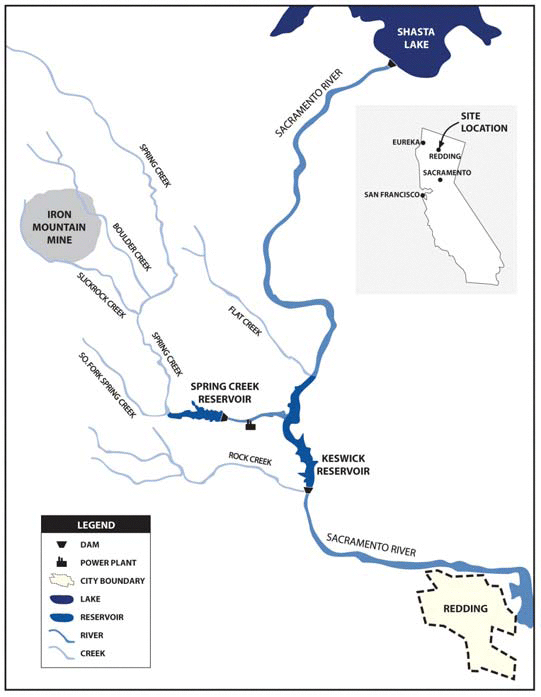
SOMEBODY MISSING A DEBRIS DAM?
T.W. ARMAN & IRON MOUNTAIN MINES, INC. INTERVENE - "TWO MINERS"
8/24/10 Herger: Federal Policies and Radical Environmentalists Kill More Northern California Jobs
Washington, D.C. – Congressman Wally Herger (R-CA) issued the following statement in response to the announcement that Sierra Pacific Industries (SPI) will close its biomass power plant in Loyalton, CA:
“I was deeply saddened to learn that SPI will be forced to suspend operations of its biomass power plant in Loyalton. It is outrageous that SPI and other forest products companies are being continually forced to make decisions like these in large part because federal policies and litigation by radical environmental groups are virtually shutting down access to our national forests. I thank and applaud SPI for its continued investment in our communities and for pursuing other opportunities to operate its power plant.
“This was another facility constructed with the hope that sufficient forest material would have been made available from our dense and overgrown forests after passage of the Herger-Feinstein Quincy Library Group Forest Recovery Act. Despite being a monumental, collaborative and bipartisan effort to get past the timber wars and restore commonsense forest management to our federal lands, the HFQLG pilot project has become the victim of extreme activist groups that abuse the regulatory and judicial processes to needlessly stall and derail implementation of this law and other forest management projects designed to protect rural communities from wildfires. Our rural areas continue to suffer as a result of this no-holds-barred assault from the radical environmental community.
“Absurdly enough, their efforts in this case have caused us to lose yet another source of clean, renewable power that serves multiple purposes: generating electricity while thinning our overstocked forests and reducing the threat of catastrophic wildfire. Renewable biomass power is widely-considered to be a win-win, yet it continues to be opposed by a hypocritical minority of ideologues who do not want to see trees cut from our California forests, despite the obvious benefits for our communities and the environment.
“This tragic news serves as further testament of the dire need to make our environmental laws work for us and not against us. While this fight has been going on for a long time, it is far from over. I will continue working for the needed reforms that will prevent continued abuses of the law and allow for balanced forest management that will create jobs and protect public health and safety by reducing the threat of catastrophic wildfire.”


IMPEACH JUDGE JOHN A. MENDEZ
| The Colbert Report | Mon - Thurs 11:30pm / 10:30c | |||
| The Word - Justice | ||||
in Picquet v. Swan, 5 Mas. 35, Mr. Justice Story said: —
"Where a party is within a territory, he may justly be subjected to its process, and bound personally by the judgment pronounced on such process against him. Where he is not within such territory, and is not personally subject to its laws, if, on account of his supposed or actual property being within the territory, process by the local laws may, by attachment, go to compel his appearance, and for his default to appear judgment may be pronounced against him, such a judgment must, upon general principles, be deemed only to bind him to the extent of such property, and cannot have the effect of a conclusive judgment in personam, for the plain reason, that, except so far as the property is concerned, it is a judgment coram non judice."
And in Boswell's Lessee v. Otis, 9 How. 336, where the title of the plaintiff in ejectment was acquired on a sheriff's sale, under a money decree rendered upon publication of notice against non-residents, in a suit brought to enforce a contract relating to land, Mr. Justice McLean said: —
"Jurisdiction is acquired in one of two modes: first, as against the person of the defendant by the service of process; or, secondly, by a procedure against the property of the defendant within the jurisdiction of the court. In the latter case, the defendant is not personally bound by the judgment beyond the property in question. And it is immaterial whether the proceeding against the property be by an attachment or bill in chancery. It must be substantially a proceeding in rem."
Mr. Justice Miller, said: —
"Its essential purpose or nature is to establish, by the judgment of the court, a demand or claim against the defendant, and subject his property lying within the territorial jurisdiction of the court to the payment of that demand. But the plaintiff is met at the commencement of his proceedings by the fact that the defendant is not within the territorial jurisdiction, and cannot be served with any process by which he can be brought personally within the power of the court. For this difficulty the statute has provided a remedy. It says that, upon affidavit being made of that fact, a writ of attachment may be issued and levied on any of the defendant's property, and a publication may be made warning him to appear; and that thereafter the court may proceed in the case, whether he appears or not. If the defendant appears, the cause becomes mainly a suit in personam, with the added incident, that the property attached remains liable, under the control of the court, to answer to any demand which may be established against the defendant by the final judgment of the court. But if there is no appearance of the defendant, and no service of process on him, the case becomes in its essential nature a proceeding in rem, the only effect of which is to subject the property attached to the payment of the demand which the court may find to be due to the plaintiff. That such is 726 *726 the nature of this proceeding in this latter class of cases is clearly evinced by two well-established propositions: first, the judgment of the court, though in form a personal judgment against the defendant, has no effect beyond the property attached in that suit. No general execution can be issued for any balance unpaid after the attached property is exhausted. No suit can be maintained on such a judgment in the same court, or in any other; nor can it be used as evidence in any other proceeding not affecting the attached property; nor could the costs in that proceeding be collected of defendant out of any other property than that attached in the suit. Second, the court, in such a suit, cannot proceed, unless the officer finds some property of defendant on which to levy the writ of attachment. A return that none can be found is the end of the case, and deprives the court of further jurisdiction, though the publication may have been duly made and proven in court."
it beginning to be considered, as it always ought to have been, that a judgment which can be treated in any State of this Union as contrary to the first principles of justice, and as an absolute nullity, because rendered without any jurisdiction of the tribunal over the party, is not entitled to any respect in the State where rendered. Smith v. McCutchen, 38 Mo. 415 ; Darrance v. Preston, 18 Iowa, 396 ; Hakes v. Shupe, 27 id. 465; Mitchell's Administrator v. Gray, 18 Ind. 123 .
Be that as it may, the courts of the United States are not required to give effect to judgments of this character when any right is claimed under them. Whilst they are not foreign tribunals in their relations to the State courts, they are tribunals 733 *733 of a different sovereignty, exercising a distinct and independent jurisdiction, and are bound to give to the judgments of the State courts only the same faith and credit which the courts of another State are bound to give to them.
Since the adoption of the Fourteenth Amendment to the Federal Constitution, the validity of such judgments may be directly questioned, and their enforcement in the State resisted, on the ground that proceedings in a court of justice to determine the personal rights and obligations of parties over whom that court has no jurisdiction do not constitute due process of law. Whatever difficulty may be experienced in giving to those terms a definition which will embrace every permissible exertion of power affecting private rights, and exclude such as is forbidden, there can be no doubt of their meaning when applied to judicial proceedings. They then mean a course of legal proceedings according to those rules and principles which have been established in our systems of jurisprudence for the protection and enforcement of private rights. To give such proceedings any validity, there must be a tribunal competent by its constitution — that is, by the law of its creation — to pass upon the subject-matter of the suit; and, if that involves merely a determination of the personal liability of the defendant, he must be brought within its jurisdiction by service of process within the State, or his voluntary appearance.
Except in cases affecting the personal status of the plaintiff, and cases in which that mode of service may be considered to have been assented to in advance, as hereinafter mentioned, the substituted service of process by publication, allowed by the law of Oregon and by similar laws in other States, where actions are brought against non-residents, is effectual only where, in connection with process against the person for commencing the action, property in the State is brought under the control of the court, and subjected to its disposition by process adapted to that purpose, or where the judgment is sought as a means of reaching such property or affecting some interest therein; in other words, where the action is in the nature of a proceeding in rem. As stated by Cooley in his Treatise on Constitutional Limitations, 405, for any other purpose than to subject the property of a non-resident to valid claims against 734 *734 him in the State, "due process of law would require appearance or personal service before the defendant could be personally bound by any judgment rendered." 95 U.S. 714 (____)
Supreme Court of United States.
719 *719 Mr. W.F. Trimble for the plaintiff in error.
Mr. James K. Kelly, contra.
MR. JUSTICE FIELD delivered the opinion of the court.
“The law assumes that property is always in the possession of its owner ….” Pennoyer v. Neff , 95 U.S. (5 Otto) 714, 727 (1877)

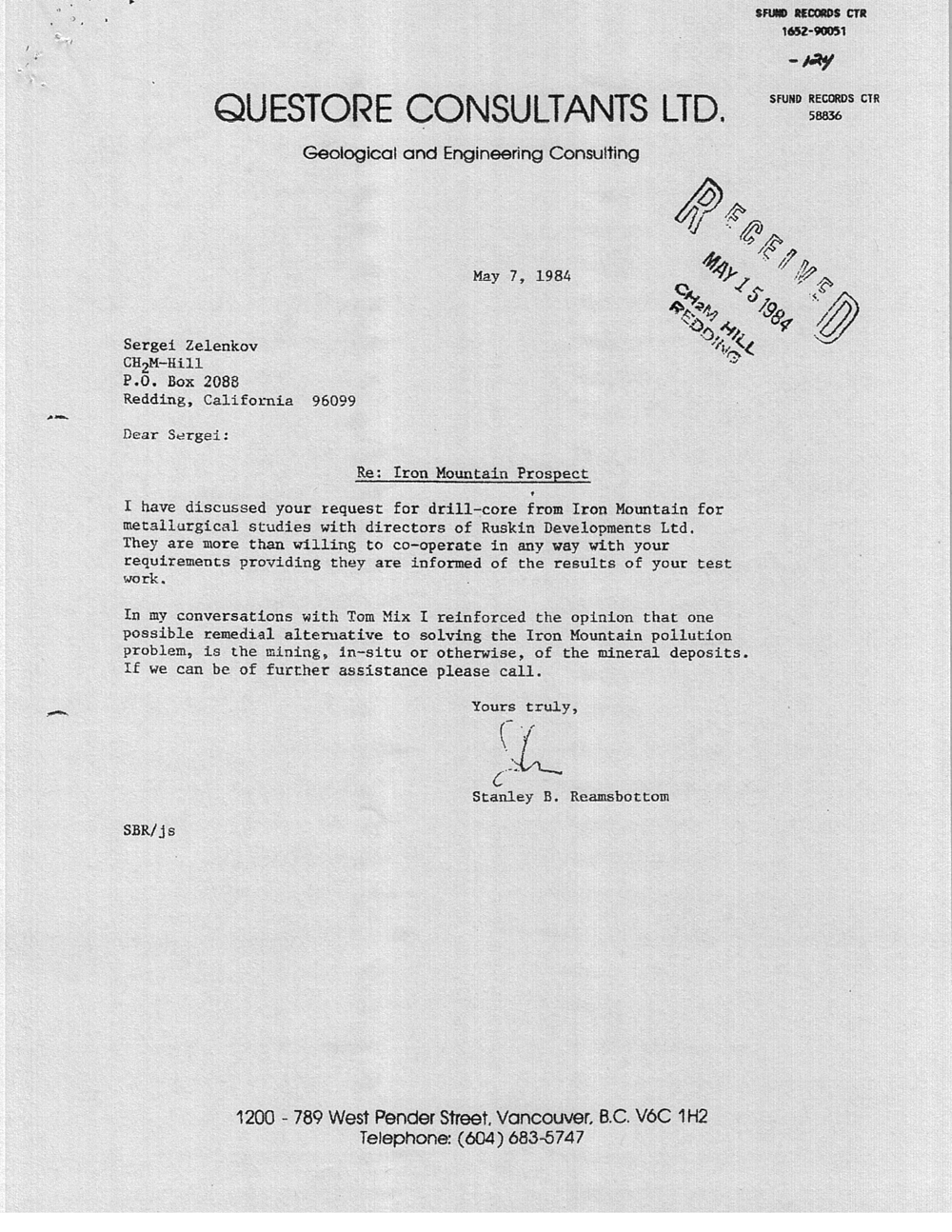
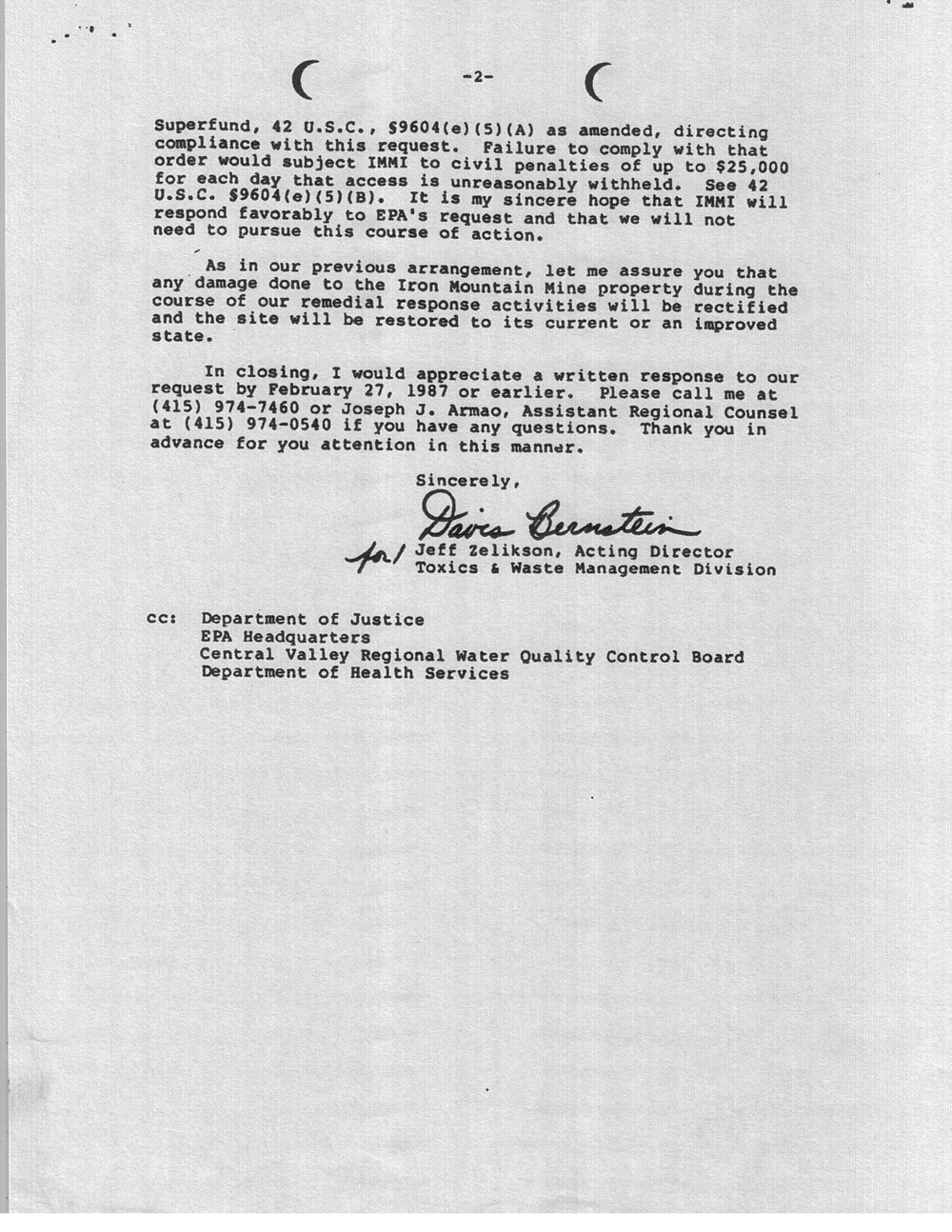
MARCO ISLAND — It's no small task for a man without a law degree to take a federal agency to court and claim victory. However, that's just what computer science professor Mario Sanchez did.
Sanchez spent years seeking information regarding the handling of toxic substances in Marco Island.
The Marco resident had little success until he filed a complaint, representing himself, against the Environmental Protection Agency last Sept. 18. The complaint contended the EPA violated the federal Freedom of Information Act by not providing documents pertaining to an investigation of effluent pumped into waterways and mishandled asbestos.
When Sanchez received the documentation that he sought, he agreed to drop the case in early August.
“I feel I won,” Sanchez said. “Because it was such a horrifying experience for me to be a non-attorney, just a regular Joe Blow, who went up against the U.S. government.”
The request was for all EPA documentation related to Marco Island from 2005 through July, 31, 2008.
His complaint asserted that effluent containing hydrogen sulfide, sulfuric acid and sediment was pumped untreated into waterways, streets, swales and sidewalks. Also, according to the document, hydrogen sulfide gas was released into the air. This caused several residents and at least two city workers to seek medical treatment, officials have since confirmed.
Initially, the EPA denied these allegations in its defense filed with the U.S. District Court in Fort Myers.
However, the EPA did follow through on asbestos mishandling in March, alleging that the city and its contractor, Quality Enterprises, violated six sections of the Clean Air Act as early as March 2005 until as late as November 2008 while the city undertook road widening and adding sewer lines to Collier Boulevard.
“That, to me, was a great satisfaction, proving we weren't crazy. The city was in fact polluting our environment,” Sanchez said.
Sanchez and other residents of the time, including Godfrey Davies, were providing evidence to the Florida Department of Environmental Protection and the EPA to no avail.
Davies, who later moved to Kirklin, Ind., in 2008, provided time-stamped video and other evidence indicating what he believed to be violations of the Clean Air Act as well as violations of the Clean Water Act.
The city and Quality Enterprises settled with the EPA in lieu of formal enforcement for Clean Air Act violations. Fines as high as $37,500 per day were averted when Quality Enterprises agreed to pay $81,772 total in the June settlement agreement.
So far, nothing has come of the Clean Water Act investigations.
The relationship between the state and federal agencies may be the cause for that, Sanchez said.
The EPA enforces the Clean Air Act and DEP is responsible for investigating Clean Water Act violations. The EPA relies on DEP's Clean Water Act investigations, and, in this case, DEP dismissed the evidence provided by citizens, Sanchez said.
“The citizens were denigrated beyond redemption,” he said.
The EPA declined to answer questions from the Daily News, referring inquiries to the U.S. Department of Justice. Questions for comments were sent to a Justice spokesman, but so far the Daily News hasn't received responses.
Nearly 1,000 pages of records were obtained since the Freedom of Information Act filing and are posted to Sanchez's website, marcoislandblog.blogspot.com. They indicated that several environmental crimes, as first reported by Sanchez and other residents, were substantiated.
DEP official Michael Tanski, in an e-mail dated Aug. 24, 2007, to Alenda Johnson of the EPA, denied that any environmental wrongdoing was taking place on Marco Island and wrote that the residents were making up the allegations of Clean Water Act violations.
“The residents are trying to do whatever they can to disrupt the extension of the sewer lines to the area, and from the department's view, there are no violations being generated from the construction activities,” Tanski wrote.
However, an e-mail dated earlier the same day to Tanksi contradicted his statement.
“The effluent was originally deposited into the swales, but in some areas, H2S (hydrogen sulfide) levels were easily detectable and raised concern for health issues,” wrote DEP employee Jon Iglehart.
Davies first sent his videos and other evidence to the DEP, but when he wasn't getting responses, he began taking his evidence to the EPA.
“Mario and I took it to the highest levels we could and they still dropped the ball,” Davies said.
If the recently obtained records had been provided earlier, Sanchez said he would have sued the EPA to require it take enforcement action against city and DEP employees.
“It did take time and that was a winning strategy (for them),” Sanchez said. “The damage was already done. It's sad that the people can get away with it.”
| 1793–1857 | 100% copper |
| 1857–1864 | 88% copper, 12% nickel (also known as NS-12 ) |
| 1864–1942 1946–1962 | bronze (94% copper, 6% tin and zinc) |
| 1943 | zinc-coated steel (also known as steel penny ) |
| 1944–1946 | brass (94% copper, 6% zinc) |
| 1974 | Experimental aluminum variety |
| 1962–1982 | brass (95% copper, 5% zinc) |
| 1982–present* | 97.5% zinc core, 2.5% copper plating |
Through mint errors , a number of rare and valuable Lincoln Cents have been produced. Some random errors, such as an off-center strike, slightly increase the value of the coin, and are sought after by niche collectors. However some errors were systemic , and produced a number of coins with the exact same problem in the same year. These have become recognized varieties that are often extremely valuable and sought after by mainstream collectors.
The first Doubled Die error occurred during the production of the 1909 VDB. Not identified until the 1970s, it shows the RTY in Liberty and the 190 of the date slightly doubled. This coin is extremely rare in high grades.
In 1922, no one-cent coins were produced by the Philadelphia Mint . However, three pairs of Denver Mint worn and overly polished dies then produced the Weak D and No D varieties, making them appear as if they had been produced in Philadelphia. These varieties are known as the 1922 plain cents. Collectors must be wary of removed mint marks.
There are a few 1943 cents that were produced in bronze, as opposed to the steel/zinc composition used that year. There are 10 to 12 known to exist. [ 26 ] Likewise, a few 1944 cents were produced in steel/zinc.
In 1955, a die error caused some cents to get struck with an obverse die which showed doubling in all of the obverse devices, producing a prominent doubling of the date, and to a less noticeable degree, the rest of the obverse. This is known as the 1955 doubled die cent . A similar die error occurred in 1969 on dies used at the San Francisco Mint. While the 1955 doubled die cent is well-known and widely collected, the 1969-S doubled die is far rarer, with an uncirculated specimen selling for as much as $126,500 in a 2008 Heritage auction. [ 27 ] A slightly different mechanism produced 1972, 1983, 1984, and 1995 Doubled die cents. Doubled Dies are known in practically every date in the Lincoln cent series, but most are minor, and less impressive compared to the 1955 and the other Doubled Die varieties mentioned here.
In 1990, 3,055 proof cents were struck at the San Francisco Mint without the "S" mint mark, making them appear as if they had been struck at the Philadelphia Mint. However, as no proof cents were struck in Philadelphia that year, they are easily distinguishable as errors, and highly valuable.
The reverse of some Lincoln cents minted in 1992 at the Philadelphia and Denver mints and some of those minted in 1998 and 1999 at the San Francisco mint feature a smaller-than-normal gap between the first two letters of AMERICA. These coins, known as the Close AM variety are valued at $20,000 and $5,000 for the 1992 specimens in gem uncirculated condition and $3,000 and $1,000 for the San Francisco specimens in gem proof condition.
The reverse of some Lincoln cents minted in 1998, 1999, and 2000 in Philadelphia feature a larger-than-normal gap between the first two letters of AMERICA. These coins, known as the Wide AM variety are valued at $10, $500, and $5, respectively, in gem uncirculated condition.
Zinc, a major component of post-1982 US pennies, is toxic in large quantities. Swallowing such a penny, which is 97.5% zinc, can cause damage to the stomach lining due to the high solubility of the zinc ion in the acidic stomach. [ 28 ] Coins are the most commonly ingested foreign body in children but generally are allowed to pass spontaneously unless the patient is symptomatic. [ 29 ] Zinc toxicity, mostly in the form of the ingestion of US pennies minted after 1982, is commonly fatal in dogs where it causes a severe hemolytic anemia . [ 30 ] It is also highly toxic in pet parrots and can often be fatal. [ 31 ]
Iron Mountain Mine Zinc Batteries literally run on pennies a day.
Public Health Goal
A revised PHG of 300 ^g/L was developed for copper in drinking water, based on a review 1
of the scientific literature since the original PHG, in 1997 (OEHHA, 2008). Copper is an
essential nutiient in humans, and has not been shown to be carcinogenic in animals or
humans. However, young children, and infants in particular, appear to be especially
susceptible to the effects of excess copper.
The revised PHG of 300 pig/L is two orders of magnitude greater than the applicable
numeric chemical-specific standards identified in ROD 5 for the protection of freshwater aquatic life
(see Table 1). Therefore, the revised PHG for copper wUl have no impact on the
protectiveness of the remedies originally selected in the RODs for IMM.
Posted on September 12, 2010, 1:03 pm, by pvdesign, under Uncategorized .
(West Valley) Roosevelt Irrigation District sues 72 entities for water pollution mitigation
Brief rev. 09/11/10
On July 23, 2010, Roosevelt Irrigation District (RID) , an irrigation district organized and operated (since 1926) under Article XIII of the Arizona Constitution, Title 48, Chapter 19 of the Arizona Revised Statutes and operated as both a private entity as well as a political subdivision of the State of Arizona – filed complaint CV-10-0290-PHX-ROS in The United States District Court for the District of Arizona, with the Honorable Roslyn O Silver presiding.
(RID), represented by the law firm of Gallagher & Kennedy, P.A. of Phoenix and specifically David Kimball and Stuart Kimball allege that all 72 entities (DEFENDANTS) are liable for violations of Comprehensive Environmental Response, Compensation, and Liability Act – CERCLA and other environmental laws and regulations, as well as for common-law torts amounting to $40,000,000 at least and each (DEFENDANTS) are held jointly and severally responsible for a complaint total of $2,880,000,000 at least.
Yes, this is a Two Billion Eight hundred and Eighty Million dollar lawsuit.
(RID) contends that the (DEFENDANTS) have contributed to the West Van Buren groundwater contamination Plume by emitting TCE, PCE, TCA, DCA, DCE and MTBE or any other substances into (RID)'s wells.
(RID)'s list of (DEFENDANTS) include:
Several of these (DEFENDANTS) are outside the Plume area and several of these (DEFENDANTS) have not emitted any contaminants and, at least, one (DEFENDANT) has an EPA Phase I study and an individual letter from ADEQ stating no releases, no contaminants discovered in ADEQ test wells and is not a “possible responsible party” (PRP). Nevertheless (RID) refuses (through its attorneys) to release these (DEFENDANTS) from the filed claim.
Background on Roosevelt Irrigation District (RID):
Formed in the 1920's to provide irrigation water for the cotton and alfalfa growers in the West Valley, took the well rights from Carrick & Mangham Agua Fria Lands & Irrigation Company issued to it by the Salt River Valley Water Users' Association on July 10, 1923.
Background on (RID)'s retained attorneys:
(RID) is using CERCLA liability to justify its suit:
2. The Supreme Court has held in Burlington Northern et al v. U.S., 129 S.Ct. 1870 (2009) that the scope of liability is determined by the apportionment of harms when there is a reasonable basis for determining the contribution of each cause to a single harm. Subsequently, (RID) must prove each (DEFENDANT) contributed the pollutants cited in the complaint.
3. Waste Management of Alameda County v. East Bay Regional Park Dist., 135 F.Supp.2d 1071 (N.D. Cal. 2001) in which the court ruled that – the simple fact of property ownership was not persuasive unless the current owner is responsible for the contamination or played some contributory role in the contamination. In fact, in Gopher Oil Co. v. Union Oil Co. of Cal., 955 F.2d 519, 523, 527 (8 th Cir. 1992) it was found that the prior owner was responsible for contamination, current owner allocated zero liability.
This suit, therefore, raises many questions – such as:
Edited and Published by:
S. A. Everly, Managing General Partner for PVDB
II. STANDARD OF REVIEW
The timeliness of the federal habeas petition, including whether the limitation period should be tolled, is reviewed de novo because there are no findings of fact.Townsend v. Knowles, 562 F.3d 1200, 1204 (9th Cir.), cert. denied, 130 S. Ct. 193 (2009) (quoting Harris v. Carter, 515 F.3d 1051, 1054 (9th Cir. 2008)); Waldron-Ramsey v. Pacholke, 556 F.3d 1008, 1011 (9th Cir.), cert. denied, 130 S. Ct. 244 (2009); Spitsyn v. Moore, 345 F.3d 796, 799 (9th Cir. 2003). The district court may dismiss a habeas petition only when “it plainly appears from the petition and any attached exhibits that the petitioner is not entitled to relief.” Rules Governing § 2254 Cases R. 4; Boyd v. Thompson, 147 F.3d 1124, 1128 (9th Cir. 1998).
Prisoner pro se pleadings are given the benefit of liberal construction. Erickson v. Pardus, 551 U.S. 89, 94 (2007) (per curiam) (“A document filed pro se is to be liberally construed”).
However, in construing pro se petitions liberally, the petitioner is not entitled to the benefit of every conceivable doubt; the court is obligated to draw only reasonable factual inferences in the petitioner’s favor. McKinney v. De Bord, 507 F.2d 501, 504 (9th Cir. 1974).
III. ANALYSIS
[1] Under the Anti-Terrorism and Effective Death Penalty
Act (“AEDPA”), 28 U.S.C. § 2244(d)(1)(A), a federal petition
for writ of habeas corpus ordinarily must be filed within
one year after the state court judgment becomes final by the
conclusion of direct review or the expiration of the time to
seek direct review. The time during which a properly filed
application for state post-conviction or collateral review
(including California habeas proceedings) is pending does not
count toward this one-year period. Id. § 2244(d)(2). Various
rules regarding the computation of the § 2244(d)(1) limitation
period and § 2244(d)(2) statutory tolling apply.
The period between when direct review becomes final and
the filing of a state habeas petition is not tolled; tolling begins
when the state habeas petition is filed. Raspberry v. Garcia,
448 F.3d 1150, 1153 n.1 (9th Cir. 2006) (quoting Nino v.
Galaza, 183 F.3d 1003, 1006 (9th Cir. 1999)). In determining
when a pro se state or federal petition is filed, the “mailbox”
rule applies. A petition is considered to be filed on the date
a prisoner hands the petition to prison officials for mailing.
Ramirez, 571 F.3d at 996 n.1; Jenkins, 330 F.3d at 1149 n.2.
As to California habeas proceedings, collateral review is considered
to be pending during the interim between a writ being
denied at one court level and a new petition being filed at the
next higher court level as long as the petition at the next level
is filed within a reasonable period of time. Carey v. Saffold,
536 U.S. 214, 222-25 (2002); Evans, 546 U.S. at 192-93. If
the time to file a federal petition has not already expired when
a second round of properly filed California habeas petitions
begins, the second round of petitions will also toll the
§ 2244(d)(1) period. See Dils v. Small, 260 F.3d 984, 986 (9th
Cir. 2001). For tolling to be applied based on a second round,
the petition cannot be untimely or an improper successive
petition. See Townsend, 562 F.3d at 1205. The time between
the completion of a first round and the beginning of a second
round is not tolled. Delhomme v. Ramirez, 340 F.3d 817, 820
(9th Cir. 2003).
In determining the running of the limitations period in this
case, certain finality rules apply. When, on direct appeal,
review is sought in the state’s highest court but no petition for
certiorari to the United States Supreme Court is filed, direct
review is considered to be final when the certiorari petition
would have been due, which is 90 days after the decision of
the state’s highest court. Bowen v. Roe, 188 F.3d 1157 (9th
Cir. 1999); Townsend, 562 F.3d at 1204. Until January 1,
2003, when the California Supreme Court denied a habeas
petition, that round of habeas review was considered to be
final 30 days thereafter. Raspberry, 448 F.3d at 1152; Delhomme,
340 F.3d at 819; Cal. R. of Ct. 8.532(b)(2)(C) (2003).
[2] Recently, the United States Supreme Court held that
equitable tolling may apply to the limitation period of
§ 2244(d)(1). Holland v. Florida, 130 S. Ct. ___, 2010 WL
2346549 *9-12 (June 14, 2010). This Circuit had previously
so held. See Ramirez, 571 F.3d at 997; Waldron-Ramsey, 556
F.3d at 1011 n.2; Calderon v. United States Dist. Ct. for C.D.
of Cal. (Kelly), 163 F.3d 530, 541 (9th Cir. 1998) (en banc);
Calderon v. United States Dist. Ct. for C.D. of Cal. (Beeler),
128 F.3d 1283 (9th Cir. 1997), overruled on other grounds,
Kelly, supra. As respondent concedes, all other circuits that
have reached the issue had also so held. While recognizing
Ninth Circuit law was to the contrary, respondent preserved
the argument that equitable tolling can never apply to the
§ 2244(d)(1) limitation period. Holland conclusively resolves
that it may apply.
[3] “[A] ‘petitioner’ is ‘entitled to equitable tolling’ only if
he shows ‘(1) that he has been pursuing his rights diligently,
and (2) that some extraordinary circumstance stood in his
way,’ and prevented timely filing.” Holland, 2010 WL
2346549 at *12 (quoting Pace, 544 U.S. at 418). The petitioner
must show that “the extraordinary circumstances were
the cause of his untimeliness and that the extraordinary circumstances
made it impossible to file a petition on time.”
Ramirez, 571 F.3d at 997 (internal quotation marks & citations
omitted). “[T]he threshold necessary to trigger equitable
tolling [under AEDPA] is very high, lest the exceptions swallow
the rule.” Spitsyn, 345 F.3d at 799 (quoting Miranda v.
Castro, 292 F.3d 1063, 1066 (9th Cir. 2002)).
[4] Attorney negligence, including a miscalculation of a
filing deadline, is not a sufficient basis for applying equitable
tolling to the § 2244(d)(1) limitation period. Holland, 2010
WL 2346549 at *13-14; Randle v. Crawford, 604 F.3d 1047,
1058 (9th Cir. 2010); Spitsyn, 345 F.3d at 800; Miranda, 292
F.3d at 1068; Frye v. Hickman, 273 F.3d 1144 (9th Cir.
2001). However, attorney misconduct that is sufficiently egregious
to meet the extraordinary misconduct standard can be a
basis for applying equitable tolling. Spitsyn, 345 F.3d at 801.
In Spitsyn, the attorney was retained a full year in advance of
the deadline, but completely failed to prepare or file a petition
even though the attorney was repeatedly contacted by both the
client and the client’s mother, and a grievance was filed with
the state bar association complaining about the lack of
response. Also, despite a letter terminating the representation
and requesting the file, the file was not turned over until two
months after the expiration of the filing deadline. This conduct
was held to be sufficiently egregious. Id. at 798, 801. It
was still necessary that the petitioner act with reasonable diligence.
Id. at 802.
In Holland, 2010 WL 2346549 at *14, the Supreme Court
held that the facts before the court, which required further
development on remand, were sufficient to “suggest” far more
than “garden variety” negligence or “excusable neglect.”
To be sure, Collins failed to file Holland’s petition
on time and appears to have been unaware of the
date on which the limitations period expired—two
facts that, alone, might suggest simple negligence.
But, in these circumstances, the record facts we have
elucidated suggest that the failure amounted to more:
Here, Collins failed to file Holland’s federal petition
on time despite Holland’s many letters that repeatedly
emphasized the importance of his doing so.
Collins apparently did not do the research necessary
to find out the proper filing date, despite Holland’s
letters that went so far as to identify the applicable
legal rules. Collins failed to inform Holland in a
timely manner about the crucial fact that the Florida
Supreme Court had decided his case, again despite
Holland’s many pleas for that information. And Collins
failed to communicate with his client over a
period of years, despite various pleas from Holland
that Collins respond to his letters.
The court also indicated the extraordinary nature of the attorney’s
conduct was supported by the conduct being violations
of canons of professional responsibility. Id.
Supreme Court of United States.
719 *719 Mr. W.F. Trimble for the plaintiff in error.
Mr. James K. Kelly, contra.
MR. JUSTICE FIELD delivered the opinion of the court.
“The law assumes that property is always in the possession of its owner ….” Pennoyer v. Neff , 95 U.S. (5 Otto) 714, 727 (1877)

IRON MOUNTAIN MINE GATE - PREVENIENT RIGHTS
FLAGSTAFF, Ariz. (AP) - The U.S. Environmental Protection Agency says two settlements reached this week will help address uranium contamination on the Navajo and Hopi reservations.
The agency says Rio Algom Mining LLC has agreed to investigate levels of contamination at one of its sites near Gallup N.M. The work is expected to cost $1 million.
Under a separate agreement, the U.S. Bureau of Indian Affairs will assess the 30-acre Tuba City dump to determine how best to clean up contaminated soil, groundwater and waste. The BIA expects to spend $1.5 million on the feasibility study.
EPA regional administrator Jared Blumenfeld in San Francisco says the actions are part of a coordinated effort to clean up waste from past uranium mining operations.
| A.I.G. Said to Plan Exit From U.S. Ownership - NYTimes.com By By DEALBOOK American International Group is in talks with US officials to formulate a plan that would speed up the insurer's exit from government ownership, The Wall Street Journal said. DealBook - http://dealbook.blogs.nytimes.com/ |
| Why is AIG Being Permitted to Retrade Its Deal With Taxpayers Yet ... By Yves Smith In case you lost track of this sorry affair, AIG , the biggest ward of the state in human history, continues to get the kid glove treatment. The IMF, doing the dirty work of the Washington Consensus, has repeatedly imposed far more pain ... naked capitalism - http://www.nakedcapitalism.com/ |
| AIG Planning End to U.S. Govt Aid | FrumForum By FrumForum News A successful exit from AIG for the Treasury Department would take several years and is far from certain, depending on, among other things, market conditions and the company's ability to convince investors it can generate consistent ... FrumForum - http://www.frumforum.com/ |
| AIG Reportedly Hatches Plan To Repay Taxpayers By The Huffington Post News Editors Two years after it received at least $180 billion in bailouts, of which $120 billion is still outstanding, American International Group has reportedly hatched a new plan to repay taxpayers and free itself from the government's clutches. The Huffington Post | Full News Feed - http://www.huffingtonpost.com/thenewswire/ |
| Report: AIG , government discuss bailout repayment | The Daily ... NEW YORK (AP) — Insurance giant American International Group Inc. is discussing plans with the government to fully repay the government bailout it received. The Daily Caller - Breaking News,... - http://dailycaller.com/ |
RBS Plans Giant Mortgage Securities Issuance (Financial Times) Royal Bank of Scotland is launching a £4.7 billion ($7.24 billion) issue of securities backed by its mortgages. It will be a key test of the securitization market.
A Walk Along Stone's Wall Street (New York Times). Blackstone's Steve Schwarzman stops by Andrew Ross Sorkin's table at the Grill Room at the Four Seasons but the conversation gets awkward when Schwarzman realizes Oliver Stone is at the table. Sigh. We've all had days like that, haven't we?
Thomson Reuters to Launch Next Generation Desktop (Reuters @ NY Times). Reuters hopes to chip away at the market dominance of the Bloomberg terminal with a new desktop that will have functions borrowed from Twitter and Facebook. What, no FourSquare?
White House renominated Peter Diamond to Fed (Bloomberg) After the Senate rebuffed the nomination, the White House just sends it back. Senator Shelby is the one everyone thinks did the rebuffing, although no one is sure why.
Credit Suisse's awesome chart of where every major European bank's Tier 1 capital falls in terms of Basel III requirements. (TwitPic via Felix Salmon)
Investors Lack Confidence in Regulators to Fix Markets (CNBC) 86 percent of the 1,035 respondents view the market as unfair to small investors.
There is overwhelming evidence that replenishment of minerals to croplands has reached a critical point in history. Our foods are nearly empty of nutrients dependent on minerals for synthesis in food. The fields we have grown our foods in for 150 years are depleted of micro nutrient mineral elements. The rate of depletion from 1900 to 1940 is almost 85% and this is evidenced by the rate of mineral deficient diseases increasing in the population as minerals were removed from the soil.
Simply put, nutrient deficient fields are producing a product of low value. The research conducted at major Universities and government agencies offer compelling findings that indicate an overall mineral deficiency condition in the soil of the nation's croplands. In recent years a growing number of reports have appeared which conclude that today's foods are not as nutritious as those eaten in the past.
1936. United States Senate document 264 documented the issue of depleted soil borne micro nutrient trace minerals and concluded that a national crisis was looming in the near future with the outcome a dramatic increase in mineral deficiency disease. To quote from this study: "Countless human ills stem from the fact that impoverished soil of America no longer provides plant foods with the mineral elements essential to human nourishment and health!"
1997. The US Department of Agriculture confirmed this prediction with the graphic depiction of the reduction of soil borne micro nutrient trace minerals coincidental with the increase in mineral deficiency disease.
2008. The Society of Chemical Industry's (SCI) Journal of the Science of Food and Agriculture. It reported that there is no significant difference in nutrient value in organically grown food compared to non organically grown food. [2] Both methods produce remarkably low nutrient values deficient in critical minerals due to past over harvesting practices.
University of Texas. Donald Davis, a senior researcher at the University of Texas, performed research into the disappearing nutrients in food. He compared Agriculture Department figures on nutrient content for 43 common fruits and vegetables. Davis says historical data spanning 50 to 70 years show apparent declines of 5 percent to 40 percent or more in minerals, vitamins and proteins in vegetables.
Washington State University professor Stephen Jones and researcher Kevin Murphy. Research showed that today's modern wheat has less nutritional value concluding that grains have been developed for baking qualities that are related to protein, not related to iron and zinc and selenium and other essential vitamins and minerals. "You would have to eat twice as many slices of modern bread as you would of the older variety to get the same nutritional value."
2001. The Journal of Complimentary Medicine pointed out that US and UK Government statistics show a decline in trace minerals of up to 76% in fruit and vegetables over the period 1940 to 1991.
2003. News Canada reported that today's fruit and vegetables contain far fewer nutrients than they did 50 years ago. Potatoes, for example, had lost 100 % of vitamin A content, 57% of vitamin C and iron, and 28% of calcium. The report examined data from the US Department of Agriculture involving vegetable quality. Over the entire 20th century the average mineral content in cabbage, lettuce, spinach and tomatoes, declined from 400mg to less than 50mg.
2004. The Journal of the American College of Nutrition examined food composition changes from 1950 to 1999 recorded in the USDA food composition tables. Forty-three crops were examined showing statistically reliable declines for 6 nutrients. The declines were observed in protein, calcium, phosphorous, iron, riboflavin and ascorbic acid; 6% in the case of protein and 38% for riboflavin.
2008. The UK publication Food Magazine. Analysis of food quality changes in the UK over the period 1940-2002. In an analysis of milk: iron content had fallen 62%; magnesium was down 21%; copper content had disappeared completely. Parmesan cheese; 70% decrease in magnesium. The calcium and iron content of all the foods examined was reduced dramatically. Beef rump steak iron content fell 55%.
One thing is certain, mineral deficiency is a root cause of multiple medical conditions that are abated by mineral replenishment. It is likely that plant disease can also be reduced by mineral replenishment.
By JOHN R. WILKE and SUSAN WARREN
Staff Reporters of THE WALL STREET JOURNAL
WASHINGTON -- The world's two biggest vitamin makers agreed to pay a total of $725 million to settle Justice Department charges that they and other manufacturers engaged in a massive price-fixing conspiracy that inflated the cost of everything from breakfast cereal to hamburgers over the past decade.
Hoffmann-La Roche Ltd., a unit of the Swiss drug giant Roche Holding AG that has 40% of the global human and animal vitamin market, agreed in U.S. District Court in Dallas to pay a record $500 million fine and plead guilty as part of the settlement. BASF AG, a major German chemical maker that has 20% of the market, will pay $225 million and enter a guilty plea as well.
Rhone-Poulenc SA of France, the world's third-biggest vitamin maker with 15% market share, also participated in the price-fixing ring. But the company began cooperating with federal investigators a few months ago under an amnesty program and helped make the case against its co-conspirators, U.S. officials said.
Members of the ring, including Rhone-Poulenc, also face potentially massive damage claims in 25 private lawsuits now pending in four federal courts. The suits were brought by livestock farmers and other purchasers of bulk vitamins who allege they were forced to pay illegally inflated prices. The first of these cases was filed in U.S. District Court in Washington, D.C., in March 1998.
Wide Effect Cited
The cartel "is the most pervasive and harmful criminal antitrust conspiracy ever uncovered," declared Joel Klein, chief of the Justice Department's antitrust division. The price-fixing ring "hurt the pocketbook of virtually every American consumer, anyone who took a vitamin, drank a glass of milk, or had a bowl of cereal," he said.
10 largest fines secured by the U.S. Justice Department in antitrust cases. |
Company |
Fine (millions) |
Year |
Industry |
| Roche Holding | $500 | 1999 | Vitamins |
| BASF | 225 | 1999 | Vitamins |
| SGL Carbon | 135 | 1999 | Electricity conductors |
| Ucar International | 110 | 1998 | Electricity conductors |
| Archers Daniels Midland | 100 | 1996 | Feed supplements, food additives |
| Bayer | 50 | 1997 | Food additives |
| HeereMac | 49 | 1997 | Offshore oil and gas construction services |
| Showa Denko Carbon | 33 | 1998 | Electricity conductors |
| Fujisawa Pharmaceutical | 20 | 1998 | Industrial cleaners |
| Dockwise | 16 | 1997 | Offshore oil and gas construction, transportation |
David Gutierrez
NaturalNews
September 7, 2010
Emerging research increasingly indicates that the U.S. water supply is widely contaminated with the endocrine disrupting chemical atrazine, but that the Environmental Protection Agency (EPA) is taking almost no action on the threat.
Atrazine is an herbicide widely sprayed on corn fields in the Midwest, and one of the most widely detected groundwater contaminants in the country. According to an analysis of state and federal records by the Chicago Tribune , atrazine has been detected in the drinking water of a million people in 60 Illinois communities over the past four years. Yet the EPA requires testing for the chemical only four times a year, meaning that short-term spikes of the toxin go undetected — and unregulated.
Special agreements between the EPA and Syngenta, the top manufacturer of the atrazine used in the U.S., have led to limited weekly or biweekly testing for the chemical by 130 water utilities in 10 different states. In 2008, nearly half of these communities in the Midwest alone experienced atrazine levels in their water above the federally imposed limit of 3 ppb (parts per billion) at least once. In Flora, Illinois, levels spiked as high as 30 ppb at one point.
In nine Midwestern communities, atrazine levels averaged higher than 3 ppb for the full year. Yet unless levels higher than 3 ppb are detected during one of the EPA's four official yearly tests, the agency is helpless to take action. Likewise, contamination detected at other times need not, under the Safe Water Drinking Act, be reported to the public. This has led to a situation where citizens are not only unaware that their water is contaminated, they are never told that an inexpensive home filter could remove the toxin from their water.
Even the EPA's “safe” level of 3 ppb, however, may be far too high; studies suggest that atrazine is biologically active in levels as low as 0.1 ppb, mimicking the action of hormones in the body. A recent meta-analysis of 125 studies by researchers from the University of South Florida found that the chemical causes developmental and reproductive defects in amphibians and fish. Another study, conducted by University of California-Berkeley researchers and published in the Proceedings of the National Academy of Sciences , found that small amounts of atrazine lowered testosterone levels and fertility in male frogs . Many of the frogs were chemically castrated or even turned into females.
Prenatal exposure to low levels of atrazine has also been shown to predispose rats to cancer as adults. And according to a 2009 study by researchers from Indiana University, human children conceived between the months of April and July, when atrazine levels in water are highest, were more likely to suffer from nine different kinds of birth defects than children conceived in other months.
“ Atrazine … appears to have effects during critical stages of fetal development,” said Suzanne Fenton of the National Institute of Environmental Health Sciences, a former EPA researcher.
Atrazine has been banned in Europe for its contaminating effects on groundwater , and a handful of U.S. states prohibit spraying in certain contamination-prone areas. Yet the EPA's most recent ruling on the chemical, issued in 2006, endorses its use. The Bush-era ruling was based on a 2003 review heavily funded by Syngenta. Bush administration officials are known to have met with officials from the company at least 50 times before issuing their ruling, including at two industry-dominated panels.
The EPA's position has drawn the ire of states that have been stuck with regulating the atrazine problem on their own. In 2009, 44 water utilities in the states of Illinois, Indiana, Iowa, Kansas, Mississippi and Ohio sued the federal government to reimburse them for the costs of atrazine cleanup.
Since the 2003 EPA review, a further 100 studies have been published showing health risks from atrazine exposure. The Obama administration is now conducting a review of the EPA's stance on the chemical.
St. Louis, MO-IL - In light of the upcoming U.S. Environmental Protection Agency Scientific Advisory Panel's reevaluation of atrazine, The National Corn Growers Association (NCGA) reemphasizes the safety and importance of the herbicide in a new commentary:
"For four days, academic, industry and government experts, along with representatives of stakeholder groups, will again address the EPA committee with information on the safe and important herbicide atrazine.
The most studied herbicide in the world, with more than 6,000 studies on record, atrazine is already supported as a safe crop protectant by years of credible, scientific research. Despite the copious data on this proven tool, the EPA is carrying out this reevaluation outside of normal procedures due to unsubstantiated activist claims based upon incendiary rhetoric. The National Corn Growers Association strongly opposes the EPA's complicity in this continued attack and urges the agency to base policy decisions in sound science.
Monday, Sep 13, 2010 07:01 ET War Room
Now that President Obama has tucked away two Supreme Court justices, a greater challenge awaits: fixing a vacancy-driven backlog in the lower federal courts that threatens the speedy and fair administration of justice.
At present, 104 of the 876 federal judgeships -- almost 1 in 8 -- lie vacant. Some openings have persisted for so long and some caseloads have become so unmanageable that the Administrative Office of the U.S. Courts has declared 49 "judicial emergencies." In districts once known as "rocket dockets," civil litigants can expect to wait two to three years before they get a trial. According to Carolyn Lamm , the president of the American Bar Association, the problem is "fast approaching crisis proportion."
The efficiency of the federal courts isn't an issue that tracks with partisan divisions. Nor does either party have a monopoly on politicizing the confirmation process. Seven years ago, in 2003, it was George W. Bush who complained that a "vacancy crisis" and delays in confirming judges were endangering American justice. Now it's the other way around.
Republicans claim that the Democrats are reaping what they sowed during the Bush years. But if that's the case, theirs is a vengeance disproportionate and compounded. GOP opposition to Obama's nominees is markedly different in its success rate, its indiscriminateness and the secrecy enshrouding its tactics. Unlike the noisy, targeted "judge wars" of the Bush years, what's transpiring now is a covert campaign of wholesale obstruction.
Here are some startling data points. At this point in his presidency, a Democratic-controlled Senate had confirmed 59 percent of Bush II's nominees. President Clinton, whose party had a six-vote majority in the Senate, had confirmed 72 percent by his second September in office. But despite enjoying the largest Senate majority since 1977, President Obama has gotten a meager 47 percent of his nominees confirmed -- the lowest rate since Richard Nixon. As a result, the rate of vacancies in the federal judiciary has doubled since he took office. Obama's confirmation rate is so bad, in fact, that due to retirements, the percentage of Republican-nominated district judges has actually gone up on his watch.
A New York state appeals court is scheduled to hear arguments on Sept. 14 that American International Group's (AIG) auditor failed to unearth the alleged fraud the company perpetrated and should be held liable for it.
In the case, a Delaware court threw out a suit, Teachers Retirement System of Louisiana v. American International Group, because it was determined that AIG employees committed the fraud and the auditor, PricewaterhouseCoopers should not be held negligent for failing to identify the fraud.
However, the Delaware court passed the issue of auditor liability to the New York Court of Appeals to resolve questions in that state's law over whether professional malpractice/negligence suits are barred against an auditing firm under the doctrine of “in pari delicto” or at mutual fault.
The Delaware court asked the New York court to decide if a suit can be brought against an auditing firm that was not a participant in the corporation's fraud but failed “to satisfy professional standards in its audits of the corporation's financial statements.”
The Supreme Court of Delaware said it would take no further action until after the New York court makes a decision.
The questions stem from illegal accounting actions taken by AIG dating back to 1999, including the company's sham reinsurance contract with Gen Re to cover-up company losses.
Stuart Grant, with the law firm Grant & Eisenhofer, will be representing the plaintiffs in the case.
SAN FRANCISCO (CN) - The Sierra Club and WildEarth Guardians claim the U.S. Environmental Protection Agency violated the Clean Air Act by failing to ensure that six states meet national air quality standards. And the EPA failed to take final action on clean-air plans submitted by 13 other states and the District of Columbia, according to the federal complaint.
The EPA found in 2008 that six states and three U.S. territories failed to submit implementation plans for National Ambient Air Quality Standards, and failed to issue federal implementation plans for North Dakota, Hawaii, Guam, American Samoa, Northern Mariana Islands, Alaska, Idaho, Oregon and Washington, the environmental groups say.
And the EPA never took final action on plans submitted by Maryland, Virginia, Delaware, Arkansas, New Mexico, Oklahoma, Florida, Georgia, Texas, Nevada, North Carolina, Tennessee, Washington, D.C. and West Virginia.
EPA approvals are required under to Clean Air Act, to limit levels of pollutants such as carbon monoxide, lead and ozone.
The groups ask the court to order the EPA to implement the "long-overdue" standards under the Clean Air Act.
They are represented by Kristin Henry with the Sierra Club's
Environmental Law Program in San Francisco.

OTHER ENVIRONMENTAL JUSTICE COMMUNITIES
In Hilao , the Ninth Circuit recognized that “serious questions” as to whether this method comported with due process, but nonetheless concluded that due process was provided. Id. (citing Hilao, 103 F.3d at 786). “The defendant's interest was in the aggregate amount of damages; thus, provided that the average was properly calculated, it was of no consequence to defendant that some plaintiffs would have been entitled, in individual adjudications, to more or less than this average.” Id. (citing Hilao , 103 F.3d at 786). The Ninth Circuit concluded that plaintiffs had an “enormous” interest in the use of averages since individual adjudications were infeasible; and the Hilao court concluded that balancing these interests under Connecticut v. Doehr , 501 U.S. 1, 10-11 (1991) and Mathews v. Eldridge , 424 U.S. 319 (1976), the method did not offend the Due Process clause. Id.
The court in Adoma cited the Ninth Circuit's recent en banc opinion in Dukes v. Wal-Mart , affirming the continuing validity of Hilao . Dukes v. Wal-Mart , 603 F.3d at 625-27:
Id. *7.
The court concluded that “the types of arguments are common to all class members” and that “ Hilao appears to permit a representative inquiry to determine the magnitude of these effects, and at this stage, the court cannot distinguish Hilao.” Id. *8. The court also found that the “question of whether the Avaya system gave defendants at least constructive knowledge of the employee overtime is a common question.” Thus it concluded that common questions predominate.
Order
The court thus granted plaintiffs' motion for class certification, defining the classes as follows: 
ADVERSE CLAIMS - DEFAMATION OF CHARACTER - STIGMATIC INJURY - ILLEGITIMATE ANIMUS - LIBEL & SLANDER
CONCURRENT JURISDICTIONS & CLASS ACTION FAIRNESS ACTION -"TWO MINERS (A HUNDRED MEMBERS) & 8000 ACRES OF LAND"
Structure of Cooperative Utility Model
One model for replacing Fannie Mae and Freddie Mac that has so far received frequent
mention but little sustained analysis is the lender cooperative utility. Yet while each different model
for a successor to the GSEs has its own strengths and weaknesses, a private lender cooperative
utility may provide the best overall solution based on the design principles listed earlier. Under this
model, securitization would be carried out by a mortgage securitization cooperative that would be
mutually owned by a membership consisting of financial institutions engaged in residential mortgage
lending. Cooperative or mutual structures have existed for more than a century in the U.S. financial
system, ranging from clearing houses (e.g. CME until 2000, DTC, CLS, ICE Trust), banking (e.g.
mutual savings banks, credit unions and the FHLB system) and agricultural finance (e.g. the Farm
Credit System). The main goal of a cooperative is to provide services to its members
The office of reformer of the superstitions of a nation, is ever dangerous. Jesus had to walk on the perilous confines of reason and religion; and a step to the right or left might place him within the grasp of the priests of the superstition, a bloodthirsty race, as cruel and remorseless as the being whom they represented as the family God of Abraham, of Isaac and of Jacob, and the local God of Israel. They were constantly laying snares, too, to entangle him in the web of the law. He was justifiable, therefore, in avoiding these by evasions, by sophisms, by misconstructions and misapplications of scraps of the prophets, and in defending himself with these their own weapons, as sufficient ad homines, at least. That Jesus did not mean to impose himself on mankind as the son of God, physically speaking, I have been convinced by the writings of men more learned than myself in that lore. But that he might conscientiously believe himself inspired from above, is very possible. The whole religion of the Jew, inculcated in him from his infancy, was founded in the belief of divine inspiration. The fumes of the most disordered imaginations were recorded in their religious code, as special communications of the Deity . . . Elevated by the enthusiasm of a warm and pure heart, conscious of the high strains of an eloquence which had not been taught him, he might readily mistake the coruscations of his own fine genius for inspirations of an higher order. This belief carried, therefore, no more personal imputation, than the belief of Socrates, that himself was under the care and admonitions of a guardian Daemon. - Thomas Jefferson
By ROBERT LENZNER
The confessions of Fed Chairman Ben Bernanke before the Financial Crisis Inquiry Commission were a startling wake-up call about his previous lack of absolute candor. Chairman Ben admitted he knew Lehman Bros. was likely insolvent in 2008– but was not “straightforward” with the public, because it might have triggered selling pressure in the markets.
Is he kidding? The failure of Lehman triggered one of the most disastrous chain of wealth destruction the nation has ever endured. The panic that ensued require trillions to bail out and make safe money market mutual funds, the commercial paper market, AIG, Citigroup, Bank of America, Fannie Mae, Freddie Mac, and a capital injection for a host of other financial institutions like Goldman Sachs and Morgan Stanley. It was only going to be the end of the world, as we know it.
But, there's more mea culpa. The Fed, the Chairman admitted, was mistaken in not using its “existing”– (I repeat)… “existing authority” to regulate mortgage lending practices. Folks; the Fed had “existing authority” to do something about the rank speculation and greed in housing markets– and did nothing.
So, Bernanke wasn't “straightforward” in his public statements of Lehman's condition. So, why should we take his word that nothing was done because “Lehman didn't have enough collateral to support a loan from the central bank.” Collateral. Schmateral. Helicopter Ben could have staunched the capital problem, and changed the law later, if it was that threatening a general crisis. That nothing was done, admits Bernanke “is my own fault, in a sense.”
This incredible confession never made the headlines or became an issue taken up by the cable bigmouths. Incredibly, it was played on page A6 of the WSJ first section and page B3 of the NY Times Business Section.(Thank you John M. Mason of iStockAnalyst for pointing this out in you Sept. 3 blog. In other words, it was nearly forgotten.
And ,when you might ask, will we hear from the former President of the New York Federal Reserve Bank, Treasury Secretary Tim Geithner, whose job, ahem, responsibility it was, to monitor, well regulate the money center banks like Citigroup. Waiting for Godot.
We have heard the fantastic admission of former Fed chairman Alan Greenspan about his inabiity veer off from a total belief in the free market ideology of his former guru Ayn Rand. In 2008, testifying before the House Committee on Oversight and Government Reform, Greenspan recanted; “those of us who have looked to the self-interest of lending institutions to protect shareholders equity, myself included, are in a state of shocked disbelief. The modern (free market) paradigm held sway for decades. The whole intellectual edifice, however, collapsed in the summer of last year.”
What unbearable pap! Here's Greenspan defending his obstruction to a 1994 bill to regulate derivatives by installing capital requirements at banks, disclosure and tight accounting regulations.. In 1994– almost a decade and a half before the collapse of finance, Greenspan intoned that the “risk in financial markets, including derivatives markets, are being regulated by private parties… There is nothing involved in federal regulation per se which makes it superior to market regulation.” That's why he did nothing to stem the dot.com bubble in the late 1990s despite muscular prodding by Larry Tisch, chairman, Loews Corp. and John Whitehead, former managing partner, Goldman Sachs.
Another admission of guilt came this year from former President Bill Clinton who bared his terrible mistake in listening to former Treasury Secretaries Rubin and Summers about NOT regulating the derivatives markets. Just a year ago Clinton told me in a videotaped interview(see forbes.com, Streettalk) that he couldn't see that the creation of derivatives had added $1.00 to the nation's economic growth.
On other matters Chairman Bernanke was most vague about his responsibility. He could not define “systemic risk” in any precise manner, suggesting that the conditions for “systemic risk” will “remain subjective.” Boy, there was nothing “subjective” about the crisis we just went through. I recall it being painfully “objective.”
Most incredulously, Bernanke refused to say the immanent collapse of AIG was due to its financial connections to counter-parties like Goldman Sachs and a raft of European banks. The $180 billion bailout was “based on intuition” not a steady of AIG's credit exposure.
In fact, get set for this whopper; Our central bank chairman, two years later, claims he still doesn't know the net exposures that AIG had with Goldman, Societe Generale, Deutsche Bank or anyone else for that matter. Do you believe him? Please let me know. Because, if he's telling the truth then we are in a great deal more trouble than I ever supposed.
Cmon, Mr. President. Order your man Geithner to get to the bottom of this. What were the net exposures of AIG to the world's financial community?

$10,000 in gold reserves for every vote to impeach Judge John A. Mendez
Oakland, CA — Fifteen years after Earthjustice won a key court case, the state of California finalized strong pollution regulations to clean up the Klamath River. Under court order, the state released new rules that essentially limit pollution from nitrogen, phosphorus, sediment and activities affecting water temperatures and dissolved oxygen. If properly implemented, the Klamath River will once again support more robust salmon runs that are important to tribes and local economies up and down the west coast.
The Klamath River was historically the third biggest salmon producing river on the west coast, but in recent years the river has been seriously impaired primarily from farm runoff near its headwaters and five dams blocking salmon migration. The farm pollution flows downstream, gets trapped behind the dams which generates massive toxic algae blooms, heats the water and decreases the amount of dissolved oxygen available for aquatic species.
“It's been a long time coming to get these badly needed pollution limits on the Klamath River,” said Earthjustice attorney George Torgun. “This development shows that with vision and persistence we can restore one of the west coast's most important rivers.”
The pollution rules are required under a part of the Clean Water Act that was rarely followed until private citizen groups brought a series of enforcement actions during the 1990s. The case involving impaired rivers in the North Coast region of California, including the Klamath River, was brought by Earthjustice attorney Joe Brecher back when Earthjustice was called the Sierra Club Legal Defense Fund. Earthjustice represented the Pacific Coast Federation of Fishermen's Associations (PCFFA) and a number of other conservation groups in the case.
PCFFA executive director Zeke Grader said, “Cleaning up the Klamath River will rebuild salmon runs which our coastal communities depend on for food, economy and recreation.”
The U.S. EPA has said it will adopt the new limits by the end of this year.
Plans are in the works to eventually remove four of the Klamath dams, which will be another great step in restoring that river's salmon runs. In the meantime, the new pollution rules should go a long ways towards making the river more hospitable to salmon and the other native wildlife that life there.
The owner of the dams, an electric utility company called Pacificorp, opposes the new rules as does Siskiyou County.
WASHINGTON, Sep 09, 2010 (A. M. Best via COMTEX) --
The U.S. Department of the Treasury will sell off the remaining warrant positions it holds in Hartford Financial Services Group Inc. and Lincoln National Corp., ending the financial connection between the two major insurers and the federal government that began with aid under the Troubled Asset Relief Program.
CONTACT:
Stacy Kika
202-564-0906
202-564-4355
FOR IMMEDIATE RELEASE
September 15, 2010
EPA to Transition Climate Leaders Program
WASHINGTON - The U.S. Environmental Protection Agency (EPA) announced that it will phase down services the agency offers under its Climate Leaders program over the coming year and encourage participating companies to transition to state or non-governmental programs. Factoring into the agency's plans for the program are the many new developments in regulatory and voluntary programs that address greenhouse gas (GHG) emissions, including the first-ever mandatory greenhouse gas reporting rule that took effect on January 1, 2010. In addition, several states and non-governmental organizations (NGOs) now offer climate programs that are now robust enough to serve companies in the Climate Leaders program.
As EPA phases down services the agency provides under the program – including technical assistance and setting greenhouse gas reduction goals – the agency will also take steps to assist the transition of the partners into non-federal programs that will allow them to go above and beyond mandatory reporting requirements to meet their goals. The agency will work with these programs to continue to stay involved in important initiatives related to corporate greenhouse gas accounting and to support companies' actions to reduce their GHG emissions, in particular through other EPA programs such as Energy Star and the Green Power Partnership. The agency will also seek new ways to promote, support and recognize climate leadership.
EPA is confident that this transition will allow the agency to realign resources to better assist companies in learning from the emissions data collected under the Greenhouse Gas Reporting Program. This data will facilitate the exchange and application of best practices and innovative technologies across a wide range of industries. EPA's other voluntary programs will remain in place and continue to work with partner organizations to reduce emissions and increase sustainability.
Climate Leaders was started in 2002 as a voluntary program for organizations to complete a corporate-wide greenhouse gas inventory, set a reduction goal and meet that goal.
CONTACT:CONTACTO:
Jalil Isa
isa.jalil@epa.gov
202-564-3226
202-564-4355
PARA PUBLICACIÓN INMEDIATA
15 de septiembre de 2010
Representantes de 36 gobiernos se reúnen en México. Agenda: reducir gases de efecto invernadero y energía limpia
Administradora Lisa P. Jackson y Ministros adelantan la cooperación para la reducción de metano
WASHINGTON – La Administradora Lisa P. Jackson de la Agencia de Protección Ambiental de EE.UU. (EPA, por sus siglas en inglés) se unirá a los ministros de los países que forman la Asociación de Metano al Mercado (Methane to Markets ). Esta reunión se dará lugar el 1 de octubre en la Ciudad de México. Durante la reunión, EE.UU. colaborará con otros países socios para promover acción global con el objetivo de reducir las fuentes de emisiones de metano y para identificar recursos adicionales para alcanzar esta meta. El metano es un gas de efecto invernadero (GHG) que es 20 veces más potente que el dióxido de carbono en su capacidad de calentar la atmósfera.
“Con el metano y otros contaminantes dañando la atmósfera del planeta, es una prioridad doméstica e internacional, la cual requerirá la ayuda de todos los países para hacerle frente al cambio de clima y para lograr mejorar la calidad de aire,” dijo la Administradora Lisa P. Jackson. “La asociación de Metano al Mercado ha gozado de tremendos logros en este esfuerzo. Estoy animada a participar en nuestra reunión en octubre al igual que continuar nuestra labor para que juntos podamos reducir las emisiones de metano a nivel mundial.”
La reunión, en la cual EPA y la Secretaría de Medio Ambiente y Recursos Naturales de México servirán de anfitriones, también celebrará los logros de la asociación. Éstos incluyen el apoyo de más de 300 proyectos para la reducción de emisiones de metano por todo el mundo. Los proyectos, cuando estén completos, ayudarán reducir las emisiones de GHG en una cantidad equivalente a lo que emiten 11.4 millones de automóviles anualmente. Se espera que los ministros reafirmen sus compromisos a tomar fuertes medidas de acción mundial para combatir el metano durante cinco años más.
La Asociación de Metano al Mercado reduce las emisiones de GHG promoviendo la recuperación y el uso de metano de manera eficiente a través de proyectos globales. Dichos proyectos también son importantes porque proveen nuevas fuentes de energía limpia, a la vez que mejoran la calidad del aire y agua. Desde el 2004, la asociación ha resultado ser uno de los esfuerzos internacionales más efectivos para la reducción de emisiones de gases de efecto invernadero. La asociación ha crecido de 14 a 36 países socios los cuales representan el 70 por ciento de las emisiones de metano alrededor del mundo. Más de 1,000 organizaciones del sector privado y público también se han unido hasta la fecha.
La asociación ha contado con casi $360 millones en inversiones de compañías privadas e instituciones financieras. EPA estima que si la tecnología actualmente disponible para llevar a cabo la reducción de metano se implementa completamente alrededor del mundo, la reducción de emisiones anuales de GHG en una cantidad equivalente a 280 millones de autos pudiera lograrse para el año 2020 a un costo relativamente bajo.
Más información de la asociación: http://methanetomarkets.org/spanish.aspx
Más información sobre las prioridades internacionales de EPA (en inglés): http://www.epa.gov/international/topsix.html
You are subscribed to HQ: International News Releases for U.S. Environmental Protection Agency. This information has recently been updated, and is now available .
|
Passenger safety is a key requirement in the public transport sector, but the interiors of train and subway carriages, trams and buses also need to be protected against the wear resulting from frequent use, not to mention the damage caused by vandalism.
|
ARKANSAS CARPENTERS HEALTH AND WELFARE FUND, MARIA LOCURTO, PAPER, ALLIED-INDUS, UNITED FOOD AND COMMERCIAL WORKERS UNION-EMPLOYER, LOUISIANA WHOLESALE DRUG CO., INC., CVS PHARMACY, INC., RITE AID CORPORATION, ARTHUR'S DRUG STORE, INC., Plaintiffs-Appellants,
SOL LUBIN, ANN STUART, LINDA K. MCINTYRE, Plaintiffs,
v.
BAYER AG, BAYER CORP., formerly doing business as MILES INC., HOECHST MARION ROUSSEL, INC., THE RUGBY GROUP, INC., WATSON PHARMACEUTICALS, INC., BARR LABORATORIES INC., Defendants-Appellees.
Nos. 05-2851-cv (L), 05-2852-cv (CON), 05-2863-cv (CON). [ 1 ]
United States Court of Appeals, Second Circuit.
September 7, 2010.
Following disposition of this appeal on April 29, 2010, Plaintiffs-Appellants Louisiana Wholesale Drug Co., Inc.; Arthur's Drug Store, Inc.; CVS Pharmacy, Inc.; and Rite Aid Corporation filed a petition for rehearing in banc . An active judge requested a poll on whether to rehear the case in banc . A poll having been conducted and there being no majority favoring in banc review, rehearing in banc is hereby DENIED .
Judge Pooler dissents in an opinion.
ROSEMARY S. POOLER, Circuit Judge, dissenting: [ 2 ]
In 1991, Barr Labs sought to market a generic version of ciprofloxacin hydrochloride ("Cipro"). Bayer, which holds the Cipro patent, sued Barr for infringement, lost its motion for summary judgment, and subsequently settled with Barr on the eve of trial. Under the terms of the settlement agreement, Bayer paid Barr nearly $400 million and in exchange Barr agreed not to market a generic version of Cipro during the life of the patent.
The Bayer-Barr settlement agreement was unusual in a number of respects. Most obviously, under the terms of the settlement the patent holder agreed to pay the alleged infringer to settle the suit in exchange for the alleged infringer's agreement to stay out of the marketplace during the life of the patent. In the industry parlance, this is called a "reverse exclusion payment," or, more evocatively, a "pay-for-delay" settlement. [ 3 ]
This type of settlement, once unheard of, has become increasingly common. This Court has played a significant role in encouraging this unfortunate practice. In In re Tamoxifen Citrate Antitrust Litig., 466 F.3d 187 (2d Cir. 2006), a panel of this Court, over my dissent, held that exclusion payment settlements are lawful unless the branded firm's patent is "shown to have been procured by fraud, or a suit for its enforcement is objectively baseless ..." Id. at 213. What followed was a dramatic surge in the practice of pharmaceutical patent holders paying potential competitors to concede the validity of their patents. In the five years before Tamoxifen was decided, there were no settlements involving exclusion payments, [ 4 ] and even pharmaceutical industry representatives appear to have conceded the illegality of the practice, testifying before Congress that proposed amendments to the Hatch Waxman Act explicitly prohibiting exclusion payment settlements were unnecessary because such settlements "would have been violations of the antitrust laws and/or the patent laws whether the Hatch-Waxman Act existed or not." [ 5 ] In the four years since Tamoxifen, by contrast, the Federal Trade Commission has identified fifty-three pharmaceutical patent settlements involving exclusion payments. [ 6 ] The Commission estimates that such settlements cost consumers approximately $3.5 billion per year. [ 7 ] Further, such settlements serve no obvious redeeming social purpose. Put simply, what the patent holder purchases by means of an exclusion payment settlement is the continuation of a patent the patent holder must have thought had some significant probability of being declared invalid. [ 8 ]
Of course, all of this would not be this Court's concern if the Hatch-Waxman Act explicitly permitted exclusion payment settlements. However, the Act is silent on the legality of such settlements, and the Act's sponsors have openly criticized the practice. [ 9 ] Further, exclusion payment settlements seem plainly inconsistent with the stated purpose of the Hatch Waxman Act, which is to encourage patent challenges as a way of increasing consumer access to low-cost drugs. [ 10 ]
More significantly, the Hatch Waxman Act does nothing to change the general rule that market-sharing agreements violate the antitrust laws. See Palmer v. BRG of Georgia, Inc., 498 U.S. 46, 49 (1990) (per curiam); United States v. Sealy, Inc., 388 U.S. 350, 357-58 (1967). This is just as true when one of the parties to a market-sharing agreement happens to hold a patent. See Palmer v. BRG of Georgia, Inc., 498 U.S. 46, 49 (1990); United States v. Sealy, Inc., 388 U.S. 350, 357-58 (1967). Thus, even though we are required to presume that Bayer's patent is valid, 35 U.S.C. § 282, as the United States points out in its amicus brief,
[t]he presumption of patent validity is simply a procedural device that assigns burdens in litigation challenging the validity of an issued patent. There is no basis for treating that presumption as virtually conclusive and allowing it to serve as a substantive basis to limit the application of the Sherman Act.Br. of United States, at 6-7 (internal citations omitted).
It should not be surprising, therefore, that our Tamoxifen decision has inspired vigorous criticism from a variety of sources. The United States has described our Tamoxifen rule as "incorrect," [ 11 ] and has supported the plaintiffs' petition for en banc rehearing in this case. [ 12 ] Also supporting the petition for rehearing are the majority of State Attorneys General, [ 13 ] the Federal Trade Commission, [ 14 ] the American Medical Association, [ 15 ] and an impressive array of consumer groups and academic commentators. [ 16 ] As amici point out, although "commentators are divided on the treatment to be accorded [exclusion payment] settlements ... none take the position adopted by [] Tamoxifen. " [ 17 ]
In the light of all this, I think that our Tamoxifen decision unambiguously deserves reexamination. The Tamoxifen majority recognized the "troubling dynamic" of permitting exclusion payments that "inevitably protect patent monopolies that are, perhaps, undeserved." 466 F.3d at 211. Subsequent experience has shown that the majority was right to be "troubled." Although the "enormous importance" of the issues that this case raises is beyond dispute, Fed. R. App. P. 35(a)(2), a majority of this Court has voted against en banc rehearing. I respectfully dissent from that decision. It will be up to the Supreme Court or Congress to resolve the conflict among the Courts of Appeals. Compare In re Ciprofloxacin Antitrust Litig., 544 F.3d 1323, 1333 (Fed. Cir. 2008) (exclusion payments legal), and Schering-Plough Corp. v. FTC, 402 F.3d 1056, 1076 (11th Cir. 2005) (same) with In re Cardizem CD Antitrust Litig., 332 F.3d 896, 908 (6th Cir. 2003) (exclusion payments per se illegal).
* The appeal docketed under 05-2863-cv has been transferred to the United States Court of Appeals for the Federal Circuit. See Nov. 7, 2007 Order. 1. Senior Circuit Judges Jon O. Newman and Barrington D. Parker, members of the original panel, are not authorized to participate in the en banc poll, but the panel opinion endorses the views expressed in this opinion. 2. See generally C. Scott Hemphill, Paying for Delay: Pharmaceutical Patent Settlement as a Regulatory Design Problem, 81 N.Y.U. L. Rev. 1553 (2006). 3. See Jon Leibowitz, Commissioner, Federal Trade Commission, Prepared Statement to the Committee on the Judiciary of the United States Senate: Anticompetitive Patent Settlements in the Pharmaceutical Industry, at 13 (Jan. 17, 2007), available at http://www.ftc.gov/speeches/leibowitz/070117anticompetitivepatentsettlements_senate.pdf. 4. See Hearing No. 107-1081 Before S. Comm. On Commerce, Science, and Transportation, 107th Cong. (Apr. 23, 2002), at 71 (statement of Greg Glover, Pharmaceutical Research and Manufacturers of America). 5. See Federal Trade Commission, Pay-for-Delay: How Drug Company Pay-Offs Cost Consumers Billions: An FTC Staff Study, at 4 (Jan. 2010), available at www.ftc.gov/os/2010/01/100112payfordelayrpt.pdf. 6. Id. at 8; see also Br. of the United States, available at http://www.justice.gov/atr/cases/f259300/259325.htm , at 4 (relying on FTC Staff Study). Cf. C. Scott Hemphill, An Aggregate Approach to Antitrust: Using New Data and Rulemaking to Preserve Drug Competition, 109 Colum. L. Rev. 629, 650 (2009) (estimating the exclusion payments have already cost consumers over $12 billion). 7. Nor, it should be noted, are exclusion payments a patent holder's only means of hedging against this probability. Instead, the probabilityof invalidation could be reflected in a settlement by means of which the patent holder agrees to some reduction in the unexpired term of the patent. 8. See 148 Cong. Rec. S7566 (July 20, 2002) (remarks of Sen. Hatch); Protecting Consumer Access to Generic Drugs Act of 2007, Hearing No. 110-39 Before H. Comm. on Energy and Commerce, 110th Cong. At 7 (May 2, 2007) (statement of Rep. Waxman). 9. H.R. Rep. No. 98-857(I), at 14-15 (1984), reprinted in 1984 U.S.C.C.A.N. 2647, 2647-48. 10. Br. of the United States, Joblove v. Barr Labs., Inc., S. Ct. No. 06-830, available at http://www.justice.gov/osg/briefs/2006/2pet/6invit/2006-0830.pet.ami.inv.html , at 1 (2007). 11. See Br. of the United States, supra note 5. 12. See Br. of 34 State Attorneys General, available at http://www.prescriptionaccess.org/docs/Cipro 2010 May AG Amicus.pdf. 13. See Br. of FTC, available at http://www.ftc.gov/os/2010/05/051202amicuscarpentershealth.pdf. 14. See Br. of AARP & AMA, available at http://www.fdalawblog.net/files/cipro— aarpama.pdf. 15. See generally http://blog.prescriptionaccess.org/?cat=422 (collecting links to amicus briefs in this case). 16. Br. of 86 Law, Economics, Pub. Pol'y, & Bus. Professors, at 6-7, available at http://www.law.stanford.edu/news/details/3793Publication Date: June 14, 2010
Source: IP Watchdog
Author: Gene Quinn
Professor Mark Lemley is is noted for authoring an amici curiae brief filed on behalf of 86 law professors, seeking the en banc review of the panel decision in the Ciprofloxacin Hydrochloride antitrust litigation. Gene Quinn of IP Watchdog filed this story:
On May 20, 2010, 86 law, economics, public policy and business professors filed an amici curiae brief with the United States Court of Appeals for the Second Circuit seeking the en banc review of the panel decision in In re Ciprofloxacin Hydrochloride Antitrust Litigation, which issued on April 29, 2010. In the per curium panel decision the judges affirmed the district court finding the the ruling in In re Tamoxifen Citrate Antitrust Litigation clearly dispositive, but due to the “exceptional importance of the antitrust implications of reverse exclusionary payment settlements of patent infringement suits,” the panel invited the plaintiffs-appellants to petition the entire Second Circuit for rehearing en banc.
Mark A. Lemley, William H. Neukom Professor, Stanford Law School and partner in the San Francisco law firm Durie Tangri LLP, is representing the 86 professors pursuing this matter pro bono as a concerned law professor and not on behalf of any client. When asked for comment he offered that he thinks “the Cipro case may well be the turning point in legal treatment of reverse settlements.”
The professor brief is short, sweet and to the point. On behalf of the professors Lemley writes:
I. The Tamoxifen Rule is Bad Policy
The precedent that compelled the outcome in this case contains fundamental errors of economic reasoning that, if widely implemented, would shield many anti-competitive agreements from the reach of antitrust law, causing great harm to competition, U.S. consumers, and (by unjustifiably raising the costs of needed medicines) public health. Under the panel decision in In re Tamoxifen Citrate Antitrust Litig., 466 F.3d 187, 212 (2d Cir. 2006), an agreement between a patent holder and an alleged infringer to settle their patent litigation cannot violate the antitrust laws so long as the patent litigation was not a sham or otherwise baseless and the settlement agreement does not impose restrictions on the alleged infringer that extend beyond the scope of the patent. Such settlements are immune from antitrust scrutiny even if, as here, the patent holder makes a substantial payment to the alleged infringer in exchange for the latter's promise not to sell the patented product independently during the patent's lifetime, and even if the patent in question is “fatally weak.” Id. at 211. In so holding, Tamoxifen adopted a rule of near per se legality for a practice akin to a naked market division scheme, a horizontal agreement that seems anticompetitive on its face.
Tamoxifen, moreover, is based on the mistaken premise that (absent fraudulent procurement) a patent grants full immunity from antitrust scrutiny for any and all anticompetitive conduct within the exclusionary power of the patent. The patent grant itself provides only a presumption of validity. The Tamoxifen rule has effectively converted that rebuttable (and oft-rebutted) presumption into an irrebuttable one. By claiming to focus on the “exclusionary zone” of the patent, but ignoring the question of whether the patent was valid in the first place, Tamoxifen falls back on the assumption that the patent holder, by virtue of the patent grant, has an absolute right to enter into a settlement that excludes competitors from the market. But that assumption is false. A patent does not confer a certain legal right. In re Etter, 756 F.2d 852, 856 (Fed. Cir. 1985). Rather, it reflects an initial judgment by the Patent and Trademark Office that the invention is patentable. That judgment is made after only a cursory scrutiny. When a patent is asserted in litigation, accused infringers are entitled to demonstrate that the patent should not have issued. As the Court put it in Lear, Inc. v. Adkins, 395 U.S. 653 (1969):
A patent, in the last analysis, simply represents a legal conclusion reached by the Patent Office. Moreover, the legal conclusion is predicated on factors as to which reasonable men can differ widely. Yet the Patent Office is often obliged to reach its decision in an ex parte proceeding, without the aid of the arguments which could be advanced by parties interested in proving patent invalidity. Consequently, it does not seem to us to be unfair to require a patentee to defend the Patent Office's judgment . . .
Id. at 670. Virtually every accused infringer asserts invalidity, and nearly half of all patents litigated to judgment are ultimately found invalid. John R. Allison & Mark A. Lemley, “Empirical Evidence on the Validity of Litigated Patents,” 28 Am. Intell. Prop. L. Ass'n. Q.J. 185 (1998). The number is even higher in pharmaceutical cases – an FTC study of all pharmaceutical patent litigation between 1992 and 2000 found that the patent owner lost in 73% of the cases.
Further, the fact that the patent owner must pay the accused infringer a large sum of money to stay out of the market and not to challenge the patent is strong evidence that the parties to the litigation – those with the most knowledge of the facts – see the patent as likely to be held invalid or not infringed. Indeed, the payment in this case was so large – $398.1 million – that it dwarfed the profits the generic manufacturer would expect to receive from successful entry. Put another way, even if it was absolutely certain that the patent was invalid, the patent owner could have paid Barr $398.1 million not to invalidate the patent, and Barr would have been better off taking the money and allowing the patent to remain in force than invalidating the patent. The presence of such a payment may or may not be conclusive evidence that the patent was invalid, but it is certainly evidence that could have led a jury to find that at the time they entered into the settlement, the parties believed the patent was likely invalid.
Tamoxifen recognized that its rule shields troubling settlements from the antitrust laws, but concluded that the policy favoring settlement is so strong that it must extend even to “fatally weak” patents, “even though such settlements will inevitably protect patent monopolies that are, perhaps, undeserved.” Tamoxifen Citrate, 466 F.3d at 211.
We agree that there is a general policy in favor of settlement. We strongly disagree, however, with Tamoxifen's view that patent settlements must always be encouraged. That view confuses a general policy in favor of settlements that are in the public interest with an endorsement of a particular kind of settlement. The general preference for settlement over litigation must be tempered when settlements have important adverse effects on third parties. Patent litigation serves the crucial role of testing weak patents and protecting the public from monopolies based on invalid patents.
Nor is immunizing exclusion payments necessary to encourage the many settlements that are in the public interest. Both generally and in the pharmaceutical context, patent owners and generic firms can and do settle patent cases without exclusion payments, by agreeing to let the generic company enter in exchange for a license fee, by agreeing to delay entry without a payment, or in other ways that do not involve paying the generic company to forego competition. Indeed, the Federal Trade Commission, to which pharmaceutical patent settlements must now be reported, found 14 agreements settling patent litigation during 2003 and 2004, with none involving an exclusion payment. See http://www.ftc.gov/opa/2005/01/drugsettlement.htm. The fact that pharmaceutical companies can and do settle litigation without exclusion payments shows that there is no need to allow anticompetitive settlements in order to get the social benefits that most settlements provide.
II. The Tamoxifen Rule Is Unprecedented and Conflicts With the Approaches of the Sixth Circuit, the Eleventh Circuit, and the Federal Trade Commission
The Tamoxifen rule is far outside the mainstream of judicial and academic analysis of exclusionary settlements. The Sixth Circuit considers such agreements per se illegal, see In re Cardizem CD Antitrust Litig., 332 F.3d 896 (6th Cir. 2003), the Federal Trade Commission and the Antitrust Division of the United States Department of Justice both consider them presumptively anticompetitive, see In re Schering Plough Corp., No. 9297 (F.T.C. Dec. 18, 2003), rev'd, 402 F.3d 1056 (11th Cir. 2005), while the Eleventh Circuit applies its own modified version of the rule of reason that inquires into the underlying validity of the patent before characterizing the conduct, see Valley Drug Co. v. Geneva Pharmaceuticals, Inc., 344 F.3d 1294 (11th Cir. 2003). Only the Federal Circuit has adopted the Tamoxifen approach, and it did so in a case on appeal from a district court in the Second Circuit in which Second Circuit law applied. In re Ciprofloxacin Hydrochloride Antitrust Litig., 544 F.3d 1323 (Fed. Cir. 2008).
Similarly, although academic commentators are divided on the treatment to be accorded such settlements, they uniformly agree they should not be considered per se legal. Some, including some of the undersigned, have written that settlements involving a large payment from the patent holder to the challenger should be presumptively anti-competitive. Others have argued for applying the rule of reason or for per se illegality. Other courts and commentators note that the antitrust analysis is more complex for settlements that generate offsetting benefits to consumers, e.g., those involving negotiated entry dates or patent licenses.
The undersigned amici differ in their views on precisely what standard should be applied to judge the legality of exclusionary settlements. We need not resolve those differences in this case because we all agree that exclusionary settlements of patent lawsuits can sometimes violate the antitrust laws. The But none take the position adopted by the Tamoxifen – that the court need not consider the validity of the patent in the antitrust analysis of whether that patent could have excluded a generic competitor from the market, but can instead conclusively presume that validity.
Tamoxifen court took the unprecedented step of concluding that as a matter of law exclusionary settlements can never be illegal unless the underlying lawsuit was a sham. As a result, unless the opinion is reversed case law in the Second Circuit – and perhaps in the country as a whole – will never develop to distinguish pro- and anti-competitive settlements.
Conclusion
We urge the Court to grant review en banc in order to reconsider its decision in Tamoxifen.
Mark A. Lemley
Counsel of Record
William H. Neukom Professor
Stanford Law School
559 Nathan Abbott Way
Stanford, CA 94305
(650) 723-4605
In the 20th century, the British company Zeneca (later Astra merger, as now AstraZeneca) researchers to develop a new type of contraceptive ICI46474 found: Although the drug in experimental animals do have Anti-implantation embryo cells (uterine wall) in the contraceptive effect, but later entered the clinical stage was found accidentally, ICI46474 pregnancy rate of women not only did not reduce, but can promote. Therefore, the clinical experts, the conclusion is: it can not be used as a contraceptive. But the researchers did not give up ICI46474 research, because it was discovered it was a very good female Hormone Antagonist, that is, a new pharmacological drugs.
As breast cancer in western countries is a high incidence of tumor diseases, so a listing of tamoxifen immediately welcomed by the world medical community?? 1994, sales reached 476 million U.S. dollars, in 2001 global sales of 10.24 billion, the highest sales year had 1.6 billion dollars. In 1999, the U.S. FDA in turn additional approval of tamoxifen for healthy women to prevent breast cancer prevention drug. Since then, at least tens of thousands of women around the world who have taken tamoxifen. According to the manufacturer claims: In the annual taking tamoxifen for the U.S. women, breast cancer incidence dropped by 50% while the placebo group was only 2.7% of breast cancer.
The Tamoxifen patent expired in 2003, so there are many companies around the world that have produced generic tamoxifen ,which imitated the earlier success of tamoxifen by the U.S. company Barr. The companies generic tamoxifen reduced drug prices 50%, which caused panic at AstraZeneca.
To this end, AstraZeneca invested 36 million U.S. dollars to buy the Barr's generic version of tamoxifen, so in the U.S. market AstraZeneca is still the only manufacturer of tamoxifen products.
$10,000 in gold reserves for every vote to impeach Judge John A. Mendez

U.S. Department of Justice
and the
Federal Trade Commission
Issued: August 19, 2010
4.1 Product Market Definition
When a product sold by one merging firm (Product A) competes against one or more products sold by the other merging firm, the Agencies define a relevant product market around Product A to evaluate the importance of that competition. Such a relevant product market consists of a group of substitute products including Product A. Multiple relevant product markets may thus be identified.
4.1.1 The Hypothetical Monopolist Test
The Agencies employ the hypothetical monopolist test to evaluate whether groups of products in candidate markets are sufficiently broad to constitute relevant antitrust markets. The Agencies use the
8
hypothetical monopolist test to identify a set of products that are reasonably interchangeable with a product sold by one of the merging firms.
The hypothetical monopolist test requires that a product market contain enough substitute products so that it could be subject to post-merger exercise of market power significantly exceeding that existing absent the merger. Specifically, the test requires that a hypothetical profit-maximizing firm, not subject to price regulation, that was the only present and future seller of those products (“hypothetical monopolist”) likely would impose at least a small but significant and non-transitory increase in price (“SSNIP”) on at least one product in the market, including at least one product sold by one of the merging firms.4 For the purpose of analyzing this issue, the terms of sale of products outside the candidate market are held constant. The SSNIP is employed solely as a methodological tool for performing the hypothetical monopolist test; it is not a tolerance level for price increases resulting from a merger.
Groups of products may satisfy the hypothetical monopolist test without including the full range of substitutes from which customers choose. The hypothetical monopolist test may identify a group of products as a relevant market even if customers would substitute significantly to products outside that group in response to a price increase.
Example 5: Products A and B are being tested as a candidate market. Each sells for $100, has an incremental cost of $60, and sells 1200 units. For every dollar increase in the price of Product A, for any given price of Product B, Product A loses twenty units of sales to products outside the candidate market and ten units of sales to Product B, and likewise for Product B. Under these conditions, economic analysis shows that a hypothetical profit-maximizing monopolist controlling Products A and B would raise both of their prices by ten percent, to $110. Therefore, Products A and B satisfy the hypothetical monopolist test using a five percent SSNIP, and indeed for any SSNIP size up to ten percent. This is true even though two-thirds of the sales lost by one product when it raises its price are diverted to products outside the relevant market.
When applying the hypothetical monopolist test to define a market around a product offered by one of the merging firms, if the market includes a second product, the Agencies will normally also include a third product if that third product is a closer substitute for the first product than is the second product. The third product is a closer substitute if, in response to a SSNIP on the first product, greater revenues are diverted to the third product than to the second product.
Example 6: In Example 5, suppose that half of the unit sales lost by Product A when it raises its price are diverted to Product C, which also has a price of $100, while one-third are diverted to Product B. Product C is a closer substitute for Product A than is Product B. Thus Product C will normally be included in the relevant market, even though Products A and B together satisfy the hypothetical monopolist test.
The hypothetical monopolist test ensures that markets are not defined too narrowly, but it does not lead to a single relevant market. The Agencies may evaluate a merger in any relevant market
If the pricing incentives of the firms supplying the products in the candidate market differ substantially from those of the hypothetical monopolist, for reasons other than the latter’s control over a larger group of substitutes, the Agencies may instead employ the concept of a hypothetical profit-maximizing cartel comprised of the firms (with all their products) that sell the products in the candidate market. This approach is most likely to be appropriate if the merging firms sell products outside the candidate market that significantly affect their pricing incentives for products in the candidate market. This could occur, for example, if the candidate market is one for durable equipment and the firms selling that equipment derive substantial net revenues from selling spare parts and service for that equipment.
9
4
satisfying the test, guided by the overarching principle that the purpose of defining the market and measuring market shares is to illuminate the evaluation of competitive effects. Because the relative competitive significance of more distant substitutes is apt to be overstated by their share of sales, when the Agencies rely on market shares and concentration, they usually do so in the smallest relevant market satisfying the hypothetical monopolist test.
Example 7: In Example 4, including cars in the market will lead to misleadingly small market shares for motorcycle producers. Unless motorcycles fail the hypothetical monopolist test, the Agencies would not include cars in the market in analyzing this motorcycle merger.
4.1.2 Benchmark Prices and SSNIP Size
The Agencies apply the SSNIP starting from prices that would likely prevail absent the merger. If prices are not likely to change absent the merger, these benchmark prices can reasonably be taken to be the prices prevailing prior to the merger.5 If prices are likely to change absent the merger, e.g., because of innovation or entry, the Agencies may use anticipated future prices as the benchmark for the test. If prices might fall absent the merger due to the breakdown of pre-merger coordination, the Agencies may use those lower prices as the benchmark for the test. In some cases, the techniques employed by the Agencies to implement the hypothetical monopolist test focus on the difference in incentives between pre-merger firms and the hypothetical monopolist and do not require specifying the benchmark prices.
The SSNIP is intended to represent a “small but significant” increase in the prices charged by firms in the candidate market for the value they contribute to the products or services used by customers. This properly directs attention to the effects of price changes commensurate with those that might result from a significant lessening of competition caused by the merger. This methodology is used because normally it is possible to quantify “small but significant” adverse price effects on customers and analyze their likely reactions, not because price effects are more important than non-price effects.
The Agencies most often use a SSNIP of five percent of the price paid by customers for the products or services to which the merging firms contribute value. However, what constitutes a “small but significant” increase in price, commensurate with a significant loss of competition caused by the merger, depends upon the nature of the industry and the merging firms’ positions in it, and the Agencies may accordingly use a price increase that is larger or smaller than five percent. Where explicit or implicit prices for the firms’ specific contribution to value can be identified with reasonable clarity, the Agencies may base the SSNIP on those prices.
Example 8: In a merger between two oil pipelines, the SSNIP would be based on the price charged for transporting the oil, not on the price of the oil itself. If pipelines buy the oil at one end and sell it at the other, the price charged for transporting the oil is implicit, equal to the difference between the price paid for oil at the input end and the price charged for oil at the output end. The relevant product sold by the pipelines is better described as “pipeline transportation of oil from point A to point B” than as “oil at point B.”
Market definition for the evaluation of non-merger antitrust concerns such as monopolization or facilitating practices will differ in this respect if the effects resulting from the conduct of concern are already occurring at the time of evaluation.
10
5
Example 9: In a merger between two firms that install computers purchased from third parties, the SSNIP would be based on their fees, not on the price of installed computers. If these firms purchase the computers and charge their customers one package price, the implicit installation fee is equal to the package charge to customers less the price of the computers.
Example 10: In Example 9, suppose that the prices paid by the merging firms to purchase computers are opaque, but account for at least ninety-five percent of the prices they charge for installed computers, with profits or implicit fees making up five percent of those prices at most. A five percent SSNIP on the total price paid by customers would at least double those fees or profits. Even if that would be unprofitable for a hypothetical monopolist, a significant increase in fees might well be profitable. If the SSNIP is based on the total price paid by customers, a lower percentage will be used.
4.1.3 Implementing the Hypothetical Monopolist Test
The hypothetical monopolist’s incentive to raise prices depends both on the extent to which customers would likely substitute away from the products in the candidate market in response to such a price increase and on the profit margins earned on those products. The profit margin on incremental units is the difference between price and incremental cost on those units. The Agencies often estimate incremental costs, for example using merging parties’ documents or data the merging parties use to make business decisions. Incremental cost is measured over the change in output that would be caused by the price increase under consideration.
In considering customers’ likely responses to higher prices, the Agencies take into account any reasonably available and reliable evidence, including, but not limited to:
how customers have shifted purchases in the past in response to relative changes in price or other terms and conditions;
information from buyers, including surveys, concerning how they would respond to price changes;
the conduct of industry participants, notably:
o sellers’ business decisions or business
$10,000 in gold reserves for every vote to impeach Judge John A. Mendez
If there is one bailout where the U.S. Treasury should be uncompromising in protecting taxpayer interests, it is the rescue of American International Group.
Yet, nearly two years after its near-collapse, AIG has yet to pay any cash dividends to the Treasury on the $49 billion of public money it still has invested in the company.
That fact is a jarring reminder of the big compromises the government made in shoring up AIG—and the potential conflicts the Treasury still has to navigate as it tries to exit the company.
AIG is making payments on the government ...
Look Who's Getting Money From AIG!
Name Office Total Contributions
Dodd, Chris (D-CT) Senate $103,100
Obama, Barack (D-IL) Senate $101,332
McCain, John (R-AZ) Senate $59,499
Clinton, Hillary (D-NY) Senate $35,965
Baucus, Max (D-MT) Senate $24,750
Romney, Mitt (R) Pres $20,850
Biden, Joseph R Jr (D-DE) Senate $19,975
Larson, John B (D-CT) House $19,750
Sununu, John E (R-NH) Senate $18,500
Giuliani, Rudolph W (R) Pres $13,200
Kanjorski, Paul E (D-PA) House $12,000
Durbin, Dick (D-IL) Senate $11,000
Perlmutter, Edwin G (D-CO) House $10,500
Rangel, Charles B (D-NY) House $9,000
Edwards, John (D) Pres $7,850
Corker, Bob (R-TN) Senate $7,400
Smith, Chris (R-NJ) House $6,900
Neal, Richard E (D-MA) House $6,500
Rockefeller, Jay (D-WV) Senate $6,500
Reed, Jack (D-RI) Senate $6,000
Udall, Mark (D-CO) House $5,800
Maffei, Dan (D-NY) House $5,000
Nelson, Bill (D-FL) Senate $5,000
Warner, Mark (D-VA) Senate $5,000
Bean, Melissa (D-IL) House $4,750
Shelby, Richard C (R-AL) Senate $4,500
Mahoney, Tim (D-FL) House $4,000
Crowley, Joseph (D-NY) House $3,500
Fimian, Keith S (R-VA) House $3,300
Huckabee, Mike (R) Pres $3,300
Leavitt, David O (R-UT) House $3,000
Murphy, Chris (D-CT) House $2,800
Berman, Howard L (D-CA) House $2,500
Dole, Elizabeth (R-NC) Senate $2,500
Garrett, Scott (R-NJ) House $2,500
Cornyn, John (R-TX) Senate $2,300
Culberson, John (R-TX) House $2,300
Goode, Gregory Justin (R-IN) House $2,300
Landrieu, Mary L (D-LA) Senate $2,300
Lummis, Cynthia Marie (R-WY) House $2,300
Shays, Christopher (R-CT) House $2,200
Davis, Tom (R-VA) House $2,000
Hoyer, Steny H (D-MD) House $2,000
Inouye, Daniel K (D-HI) Senate $2,000
Pomeroy, Earl (D-ND) House $2,000
Visclosky, Pete (D-IN) House $2,000
Weiner, Anthony D (D-NY) House $2,000
King, Pete (R-NY) House $1,843
Shaheen, Jeanne (D-NH) Senate $1,500
Grassley, Chuck (R-IA) Senate $1,250
Nelson, Ben (D-NE) Senate $1,200
Wicker, Roger (R-MS) Senate $1,100
Baker, Richard (R-LA) House $1,000
Barrasso, John A (R-WY) Senate $1,000
Bennett, Robert F (R-UT) Senate $1,000
Brady, Kevin (R-TX) House $1,000
Capps, Lois (D-CA) House $1,000
Coleman, Norm (R-MN) Senate $1,000
Cooper, Jim (D-TN) House $1,000
Donnelly, Joe (D-IN) House $1,000
Ellsworth, Brad (D-IN) House $1,000
Engel, Eliot L (D-NY) House $1,000
Enzi, Mike (R-WY) Senate $1,000
Gillibrand, Kirsten E (D-NY) House $1,000
Gordon, Bart (D-TN) House $1,000
Harkin, Tom (D-IA) Senate $1,000
Himes, Jim (D-CT) House $1,000
Jones, Stephanie Tubbs (D-OH) House $1,000
Kind, Ron (D-WI) House $1,000
Kirk, Mark (R-IL) House $1,000
Lautenberg, Frank R (D-NJ) Senate $1,000
Lowey, Nita M (D-NY) House $1,000
Maloney, Carolyn B (D-NY) House $1,000
McMahon, Michael E (D-NY) House $1,000
Olson, Pete (R-TX) House $1,000
Pryor, Mark (D-AR) Senate $1,000
Salazar, Ken (D-CO) Senate $1,000
Tiberi, Patrick J (R-OH) House $1,000
Towns, Edolphus (D-NY) House $1,000
Wilson, Charlie (D-OH) House $1,000
Mielke, Daniel Ernest (R-WI) House $900
Huelskamp, Timothy A (R-KS) House $750
Laesch, John (D-IL) House $750
Tinklenberg, Elwyn (D-MN) House $750
Vilsack, Thomas J (D) Pres $700
Harrison, Stephen A (D-NY) House $604
Brownback, Sam (R-KS) Senate $500
Courtney, Joe (D-CT) House $500
Crapo, Mike (R-ID) Senate $500
Davis, Geoff (R-KY) House $500
Fossella, Vito (R-NY) House $500
Gilchrest, Wayne T (R-MD) House $500
Musgrove, Ronnie (D-MS) Senate $500
Myers, Chris (R-NJ) House $500
Pierluisi, Pedro (3-PR) $500
Putnam, Adam H (R-FL) House $500
Richardson, Bill (D) Pres $500
Roggio, Robert (D-PA) House $500
Van Hollen, Chris (D-MD) House $500
Wu, David (D-OR) House $500
opensecrets.org
$10,000 in gold reserves for every vote to impeach Judge John A. Mendez
(AP)
AstraZeneca Canada Inc. v. Apotex Inc ., 2010 FC 714
This was an application brought by AstraZeneca under the provisions of the Patented Medicines (Notice of Compliance) Regulations for an order prohibiting the Minister of Health from issuing a notice of compliance to Apotex for 20 and 40 mg esomeprazole magnesium tablets until after the expiry of Canadian Patent No. 2,139,653 (the ‘653 patent). If successful on the application, this would have prevented Apotex from marketing a generic version of NEXIUM in Canada for treating conditions wherein a reduction of gastric acid secretion is required until May 27, 2014. Apotex, on the other hand, sought early market entry by arguing that the ‘653 patent was invalid for lack of sound prediction, anticipation (or lack of novelty), and obviousness.
The ‘653 patent relates to an improved process for preparing highly optically pure esomeprazole, one of the enantiomers of the racemate omeprazole, that is stable against racemisation (i.e. recombination). Claim 8 was the claim at issue and could be read as claiming a salt (e.g. magnesium) of esomeprazole having an optical purity of 99.8% or greater. There was no provision as to utility (or use of the invention) in claim 8. This was an important fact, as the Court noted that where the invention relates to a new compound, utility does not need to be included in the claim, so long as it is described in the description portion of the patent. On the other hand, when the patent relates to a new use for an old, known compound, that new use must be set out in the claims. In this case, claim 8 was not directed to a new compound; it was directed to a previously known compound having a particular purity.
Moreover, utility of the compound was simply described in the description of the patent as follows:
It is desirable to obtain compounds with improved pharmacokinetic and metabolic properties which will give an improved therapeutic profile such as a lower degree of interindividual variation. The present invention provides such compounds, which are novel salts of single enantiomers of omeprazole.
However, nowhere in the patent, whether in the Examples or otherwise, was any information given to the person skilled in the art as to whether, in fact, the highly pure esomeprazole salt does give an improved therapeutic profile such as a lower degree of interindividual variation. Moreover, there was no evidence from any witness to say that there was anything in the disclosure of the ‘653 patent that would inform a person skilled in the art that the purified esomeprazole salt would fulfill this promise. As a result, there was a clear question as to whether the invention had a basis for a “sound prediction” as to utility.
The requirements for sound prediction are well established: 1) there must be a factual basis for the prediction; 2) the inventors must have as of the date of the patent application an articulable and sound line of reasoning from which the desired result can be inferred from the factual basis; and 3) there must be proper disclosure.
The facts of the present case did not show that as of the priority date, May 1993, or even the Canadian filing date, May 1994, that the inventors had either a factual basis for a prediction that an esomeprazole salt of a particular purity would have the utility indicated in the patent, nor did they have an articulable and sound line of reasoning for inferring such a result. In addition, clearly there was no proper disclosure in the patent in that respect. As a result, the patent was invalid for a lack of sound prediction.
As to anticipation, the question was, given that prior art German patent application DE 40 35 455 A1 (DE ‘455) described a process for separating the enantiomers of omeprazole (and salts) into “optically pure” fractions, did the description, particularly Examples 5 and 6 (incorporating Examples 1 and 2) “enable” what was claimed in claim 8 of the ‘653 patent, a purity of 99.8% (ee) or greater? In this respect, the Court found that to practice DE ‘455 “would at best only occasionally result in a product with the purity level stipulated in claim 8.” On this basis, there was no enablement such as would support an allegation of anticipation.
As to obviousness, the Court was satisfied on the evidence that, as of the claim date, May 1993, it was known that omeprazole could be separated into its enantiomers (+) and (-), that they would be useful, just as omeprazole was, in treating gastric problems, and that they could be processed in salt form with a salt such as magnesium. A purity of 95.6% (ee) for esomeprazole had been reported as having been achieved in the prior art, and such technique could have been used to increase that purity to 99.8% (ee) if desired. In the result, the ‘653 patent was also found to be invalid for obviousness.
EJECTMENT FROM FLAT CREEK MINING DISTRICT, DEBARMENT COMMISSION. FOR T.W. ARMAN
This strategy is by no means the end of the discussion; it is the beginning of a more meaningful conversation with our watershed partners and the first step together on a new path towards more sustainable and safe watersheds and communities.
A NEW PATH TO SAFE WATERSHEDS, SOS, SAFE ON SOIL
The purpose outlined in the SWR—drinkable water—is not new . In fact, this strategy is about how we can achieve a leap forward in our nation's watersheds to realize this purpose.
In 23(b)(1) , 23(b)(3) Class , CAFA , Certification , Extrapolation on September 6, 2010 at 2:17 am
The first step is to improve transparency. Americans have a right to know how their government is doing in enforcing laws to protect the nation's water, and government has an obligation to clearly inform the public about water quality and our actions to protect it. An informed public is our best ally in pressing for better compliance. Therefore I am directing you to improve and enhance information that is available through the EPA web site on compliance with the Clean Water Act and the level of enforcement activity in each state, showing connections where possible to local water quality. This information should be user-friendly and provide a way to look at performance of individual businesses as well as state and national performance. State-by-state performance reports that have already been released under the Freedom of Information Act should also be posted to the web, together with tools to analyze the data EPA prepared for those reports.
Second, we need to raise the bar for clean water enforcement performance. We must make sure that strong and effective action is taken when serious violations of law threaten water quality, and we must boost EPA's enforcement presence against serious violators, recognizing that authorized states have the first opportunity to act. EPA must also improve its own enforcement performance in states where EPA directly implements the clean water program. And we must assure that we are doing the work that is most important to clean up our nation's waters. Because EPA and the states face significant and competing demands for resources, we need to place a high priority on the problems that have the biggest impact on water quality, such as wet weather pollution, which are not currently well represented in the information we have on Clean Water Act compliance.
Third, we need to move EPA's information technology into the 21st century. We need to transform EPA to be not only a collector and disseminator of information but an analytical resource that can present information in a form that is easily understood and useable by the public. We have seen that when information is made public, it can be a powerful tool to help improve the environment directly. We need to launch into a major shift of EPA's Clean Water Act information systems – so that data on both facilities' discharges and compliance and water quality and other environmental conditions will be readily available and transparent to both federal and state regulators and the public, over the web, on a real-time basis.
So that we can identify the concrete steps that EPA should take to accomplish these goals, I am directing you to work with the Office of Water to develop an action plan to further enhance public transparency regarding EPA and state Clean Water Act enforcement program performance, to strengthen that performance, and to transform our water quality and compliance information systems. A critical part of this process should be close consultation with EPA Regional Offices and with states, including the Environmental Council of the States (ECOS) and the Association of State and Interstate Water Pollution Control Administrators (ASIWPCA). You should gather the best ideas from the states and regions, as well as outside stakeholders, and report back to me within 90 days with your recommendations.
cc: Scott Fulton
Diane Thompson
Bob Sussman
Mike Shapiro
Assistant Administrators
Associate Administrators
Regional Administrators
$10,000 in gold reserves for every vote to impeach Judge John A. Mendez
The Fed is proposing another round of “quantitative easing,” although the first round failed to reverse deflation. It failed because the money went into the coffers of banks, which failed to lend it on. To reverse deflation, the money needs to be funneled directly to state and local economies. The Fed may not be authorized to “monetize” state bonds, but it COULD buy bonds issued by state-owned banks.
In 2002, in a speech that earned him the nickname “Helicopter Ben,” then-Fed Governor Bernanke famously said that the government could easily reverse a deflation, just by printing money and dropping it from helicopters. “ The U.S. government has a technology, called a printing press (or, today, its electronic equivalent),” he said, “that allows it to produce as many U.S. dollars as it wishes at essentially no cost .” Later in the speech he discussed “a money-financed tax cut,” which he said was “essentially equivalent to Milton Friedman's famous ‘helicopter drop' of money.” You could cure a deflation, said Professor Friedman, simply by dropping money from helicopters.
It seems logical enough. If there is insufficient money in the money supply (deflation), the solution is to put more money into it. But if deflation is so easy to fix, then why has the Fed's massive attempts to date failed to do the job? At the Federal Reserve's Jackson Hole summit on August 27, Chairman Bernanke said he would fight deflation with his whole arsenal, including “quantitative easing” (QE) – purchasing longterm securities with money created on a computer. Yet s ince 2008, the Fed has added more than $1.2 trillion to “ base money ” doing just that, and the economy is still in a serious deflationary spiral. In the first quarter of this year, the money supply actually shrank at a record annual rate of 9.6%.
Cullen Roche at The Pragmatic Capitalist has an answer to that puzzle. He says that as currently practiced, quantitative easing (QE) is not really a money drop. It is just an asset swap:
“[T]he Fed doesn't actually ‘print' anything when it initiates its QE policy. The Fed simply electronically swaps an asset with the private sector. In most cases it swaps deposits with an interest bearing asset.”
The Fed just swaps Federal Reserve Notes (dollar bills) for other assets (promissory notes or debt) that can quickly be turned into money. The Fed is merely trading one form of liquidity for another, without raising the overall water level in the pool.
The mechanics of how QE works were revealed in a remarkable segment on National Public Radio on August 26, describing how a team of Fed employees bought $1.25 trillion in mortgage bonds beginning in late 2008. According to NPR:
“The Fed was able to spend so much money so quickly because it has a unique power: It can create money out of thin air, whenever it decides to do so. So . . . the mortgage team would decide to buy a bond, they'd push a button on the computer – ‘and voila, money is created.'
“The thing about bonds, of course, is that people pay them back. So that $1.25 trillion in mortgage bonds will shrink over time, as they get repaid. Earlier this month, the Fed announced that it will use the proceeds from the mortgage bonds to buy Treasury bonds – essentially keeping all that newly created money in circulation. The decision was a sign that the Fed thinks the economy still needs to be propped up with extraordinary measures.”
“Extraordinary measures” was a reference to Section 13(3) of the Federal Reserve Act, which allows the Fed in “unusual and exigent circumstances” to buy “notes, drafts and bills of exchange” (debt instruments) from “any individual, partnership or corporation” satisfying its requirements. The Fed was supposedly engaging in these extraordinary measures to “reflate” the money supply and get credit flowing again. Yet the money supply continued to shrink. The problem, as Roche explains, is that the dollars were merely being swapped for other highly liquid assets on bank balance sheets. That this sort of asset swap will not pump up a collapsed money supply has been shown not only by the Fed's failed experiments over the last two years but by two decades of failed QE policy in Japan, an economy which remains in the deflationary doldrums. To reverse deflation, it seems, QE needs to be directed somewhere else besides the balance sheets of private banks. What we need is the sort of helicopter drop described by Bernanke in 2002 – one over the towns and cities of the real economy.
There is another interesting lesson suggested by two decades of failed QE: it might actually be possible for the government to “print” its way out of debt, without triggering the dreaded hyperinflation long warned of by pundits. Swapping dollars for debt hasn't inflated the circulating money supply to date because federal debt securities already serve as forms of “money” in the economy.
Beginning with some definitions, “ quantitative easing ” is explained in Wikipedia like this:
“A central bank . . . first credit[s] its own account with money it has created ex nihilo (‘out of nothing'). It then purchases financial assets, including government bonds, mortgage-backed securities and corporate bonds, from banks and other financial institutions in a process referred to as open market operations. The purchases, by way of account deposits, give banks the excess reserves required for them to create new money, and thus a hopeful stimulation of the economy, by the process of deposit multiplication from increased lending in the fractional reserve banking system.”
“Deposit multiplication” is the textbook explanation for how credit expands as it circulates through the economy. In the textbook model, banks must retain “reserves” equal to 10% of outstanding deposits (including deposits created as loans). With a 10% reserve requirement, a $100 deposit can support a $90 loan, which gets deposited in another bank, where it becomes an $81 loan, and so forth, until a $100 deposit becomes $1,000 in credit-money.
The theory is that increasing the banks' reserves will stimulate this process, but both the Federal Reserve and the Bank for International Settlements (BIS) now concede that the process has not been working in the textbook way. (The BIS is “the central bankers' central bank” in Basel, Switzerland.) The futile effort to push more money into bloated bank reserve accounts has been compared to adding more apples to shelves that are already overstocked with apples. Adding more reserves to a banking system that already has more reserves than it can use has no net effect on the money supply.
The failure of QE either to increase bank lending or to inflate the money supply was confirmed in a March 24 paper by Federal Reserve Vice Chairman Donald L. Kohn , who wrote:
“The huge quantity of bank reserves that were created [by quantitative easing] has been seen largely as a byproduct of the purchases [of debt instruments] that would be unlikely to have a significant independent effect on financial markets and the economy. This view is not consistent with the simple models in many textbooks or the monetarist tradition in monetary policy, which emphasizes a line of causation from reserves to the money supply to economic activity and inflation.”
The textbook model is obsolete because banks don't make lending decisions based on how many reserves they have. They can always get the reserves they need. If customers don't walk in the door with new deposits, the bank can borrow deposits from other banks, something they can now do at the very low Fed funds rate of .2% (1/5 th of 1%). And if those deposits are not available, the Federal Reserve itself will supply the reserves. This was confirmed in a BIS working paper called “Unconventional Monetary Policies: An Appraisal”, which observed:
“[T]he level of reserves hardly figures in banks' lending decisions. The amount of credit outstanding is determined by banks' willingness to supply loans, based on perceived risk-return trade-offs, and by the demand for those loans. . . .
“The aggregate availability of bank reserves does not constrain the expansion [of credit] directly. The reason is simple: . . . in order to avoid extreme volatility in the interest rate, central banks supply reserves as demanded by the system . From this perspective, a reserve requirement, depending on its remuneration, affects the cost . . . of loans, but does not constrain credit expansion quantitatively. . . . [A]n expansion of reserves in excess of any requirement does not give banks more resources to expand lending. It only changes the composition of liquid assets of the banking system. Given the very high substitutability between bank reserves and other government assets held for liquidity purposes, the impact can be marginal at best .”
Again, one form of liquidity is just substituted for another, without changing the overall level in the pool.
If bank reserves do not constrain bank lending, what does? According to the BIS paper, “the main . . . constraint on the expansion of credit is minimum capital requirements.” These capital requirements, known as “Basel I” and “Basel II,” were imposed by the BIS itself. It is interesting that the BIS knows that the main constraints on bank lending are its own capital requirements, yet it is talking about raising them, in an economic climate in which lending is already seriously impaired. Either the BIS is talking out of both sides of its mouth, or its writers don't read each other.
A Solution to the Federal Debt Crisis?
Another interesting aside arising from all this is the suggestion that the government could actually print its way out of debt – it could print dollars and buy back its bonds -- without creating inflation. As Roche observes:
“[Quantitative easing] in time of a balance sheet recession is not actually inflationary at all . With the government merely swapping assets they are not actually ‘printing' any new money. In fact, the government is now essentially stealing interest bearing assets from the private sector and replacing them with deposits. . . . [T]his policy response would in fact be deflationary – not inflationary .”
Roche concludes, “the inflationistas have been wrong and the USA defaultistas have been horribly wrong.” The “inflationistas” are the pundits screaming that QE will end in hyperinflation, and the “defaultistas” are those insisting that the U.S. must eventually default on its debt. Representing both camps, for example, is Richard Russell , who writes:
“In my opinion, the US MUST default on its debt . There are two ways to default. One is simply to renege on the debt. . . . The other way to default on the debt is to inflate it away . I'm absolutely convinced that this is the path that the US will take. If the US inflates enough, then over time (many years) the devalued dollar will tend to reduce the power of the debts.”
The failed QE experiments in Japan and the U.S. suggest, however, that there is a third alternative. Printing dollars to pay the debt (referred to by Russell as “inflating the debt away”) might actually eliminate the debt without creating inflation. This is because federal bonds and Federal Reserve Notes are interchangeable forms of liquidity. Government securities trade around the world just as if they were money. A $100 bond represents a claim on $100 worth of goods and services, just as a $100 bill does. The difference, as Thomas Edison said nearly a century ago, is merely that “ the bond lets money brokers collect twice the amount of the bond and an additional 20%, whereas the currency pays nobody but those who contribute directly in some useful way. . . . Both are promises to pay, but one promise fattens the usurers and the other helps the people.”
The Fed's earlier attempts at QE involved swapping $1.25 trillion in mortgaged-backed securities (MBS) for dollars created on a computer screen. As noted in the NPR segment, many of those securities have come due and have gotten paid off, putting cash in the Fed's till. The Fed now proposes to use this money to buy long-term Treasury debt rather than MBS. That means the Fed will, in effect, be buying the government's debt with dollars created on a computer screen. The privately-owned Federal Reserve is not actually an arm of the federal government, but if it were, the government would thus be printing its way out of debt – just as Helicopter Ben proposed in 2002. Recall that he said, “ the U.S. government has a technology, called a printing press” – the U.S. government, not the central bank that has done all the QE to date.
Running the government's printing presses to pay its bills has not seriously been tried since the Civil War, when President Lincoln saved the North from a crippling war debt at usurious interest rates by printing Greenbacks (U.S. Notes). Other countries , however, have tested and proven this model more recently. They include Germany, which pulled itself out of a massive financial collapse in the early 1930s by printing a form of currency called “MEFO bills”; and Australia, New Zealand and Canada, all of which successfully funded public works in the first half of the twentieth century simply by advancing the credit of the nation. China, Malaysia, Guernsey, Jersey, India, Argentina and other countries have also revived their economies at critical times by this means. The U.S. government could do this too. It could print dollars (or type them into electronic bank accounts) and spend the money on the sorts of local public projects that would put people back to work and get the economy rolling again.
How to Reverse a Deflation:
Do a Helicopter Drop on the States
The government could pay its bills by issuing Greenbacks as Lincoln did, but it probably won't, given the current deadlock in Congress. Today only the Federal Reserve Chairman seems to be in a position to act unilaterally, without asking anyone's permission. Chairman Bernanke could execute his own plan and generate the credit needed to get the economy churning again, by aiming his “quantitative easing” tool at the states. After all, if Wall Street (which got us into this mess) can borrow at .2%, underwritten by the Fed as “lender of last resort,” then state and local governments should be able to as well. Chairman Bernanke could credit the Fed's account with money created ex nihilo (out of nothing) and swap it for state and municipal bonds at the Fed funds rate.
A “state” might not qualify as an “individual, partnership or corporation” under Section 13(3) of the Federal Reserve Act, but a state-owned bank would. Bruce Cahan , an attorney and social entrepreneur in Silicon Valley, California, proposes that the Fed could diversify its role by buying long-term bonds in existing or newly-chartered state-owned banks. These banks, which would have a mandate to serve state and local communities, would more quickly and accountably lend for in-state purposes than private banks do now. They could be required to use accepted transparency accounting standards to trace how the proceeds of their loans flowed into the economy. Local needs would thus determine how best to jumpstart and keep alive businesses and households that the “too big to fail” megabanks no longer want to fund on fair credit terms. Adding a state-owned bank would also bring competition to regional banking markets such as that of the San Francisco Bay area, which are now dominated by out-of-state megabanks. By funding state-owned banks, t he Fed could inject “liquidity” where it is most needed, in local markets where workers are hired and real goods and services are sold.
Ellen Brown is an attorney and the author of eleven books. In Web of Debt , her latest book, she shows how the Federal Reserve and "the money trust" have usurped the power to create money from the people themselves, and how we the people can get it back. Her websites are webofdebt.com , ellenbrown.com , and public-banking.com .
FROM: KAREN BUDD-FALEN
BUDD-FALEN LAW OFFICES, LLC
DATE: SEPTEMBER 7, 2010
It is no surprise that there is a big difference between legal requirements, radical opinion, political power, private extortion . . . and then there is the rest of the story. With regard to the payment of attorneys' fees to radical environmental groups, radical opinion and political power seem to often win and legal requirements are ignored. In fact, political power supporting radical opinions forced payment of at least $4,697,978 in taxpayer dollars to 14 environmental groups in 19 states and the District of Columbia. Political power payments for radical opinions happens 21% of the time when attorneys' fees are paid.
And then there are the cases where these same radical environmental groups are extorting millions from major corporations and local governments as payment to drop appeals and protests. For example, recently Western Watersheds Project (“WWP”) and Oregon Natural Desert Association (“ONDA”) extorted $22 million from El Paso Corporation to drop their protests of the Ruby Pipeline project. In another case, the Center for Biological Diversity (“CBD”) extorted almost $1 million from Alameda County, California to drop its protests to a City's approval of a residential and commercial development project. The general theme is that money changes hands, development moves forward and the taxpayers and consumers get stuck with the bill.
The story goes like this:
Attorney Fees Legal Requirements:
Under the Equal Access to Justice Act (“EAJA”), attorneys are only supposed to be paid if they represent the prevailing parties in a lawsuit against the federal government. According to EAJA, a prevailing party must achieve a court-sanctioned change in the position of the federal agency through litigation.
Under the Endangered Species Act, Clean Water Act and other fee shifting statutes whose funds come out of the Judgment Fund, attorneys' fees are only supposed to be paid if the attorney achieved some success in the litigation for the plaintiff. Thus, the plaintiffs had to achieve some benefit from the litigation through the courts.
Radical Opinion:
All too often however, radical environmental groups, WWP for example, sue the federal government because they claim the government failed to consider the cumulative impacts of all livestock grazing everywhere in the Western United States on a species that is not even listed as a threatened or endangered species. NEPA is the procedural statute that requires impacts of federally permitted decisions be considered–the Act does not require a particular outcome, just that the government consider all the impacts of its decision.
Quite frankly, I do not believe that the WWP or other radical groups care at all about the NEPA process or wildlife because these groups do not spend any of their money on projects that benefit the land or the animals on it. Rather, the goals of WWP and others are to eliminate livestock grazing under all circumstances in all locations. They even claim that cattle contribute to global warming by “belching carbon,” like the internal gas emissions of livestock are any different from the internal emissions of cats, dogs or other wildlife. This is not about the environment . . . it is about eliminating land use and ownership starting with ranchers and moving to other groups once the ranchers are gone.
Political Power:
The federal government however gets a copy of the WWP suit and instead of defending its NEPA documentation and decision and protecting the ranchers' rights to continue grazing, the government pays WWP our tax dollars just to make the litigation go away. In 21% of the cases – more than $4.6 million dollars worth – there is no court decision and no determination that the WWP was “prevailing,” just a request to please withdraw the litigation and more taxpayer money is paid to radical groups who use their political power to assert minority radical opinions.
Private Extortion
Getting paid to go away is not just about taking American tax dollars for attorneys' fees; now radical environmental groups are directly extorting money from businesses as well while more costs are passed on to the American consumer. Recently WWP and ONDA announced that it has extorted $22 million from El Paso Corporation in exchange for dropping their protests to the federal government's permits allowing El Paso to build the 680 mile long natural gas Ruby Pipeline. As part of the deal, El Paso did not change the route or any other aspect of the pipeline, it just paid ONDA and WWP to go away.
In the California case, CBD extorted almost $1 million from Alameda County for “habitat acquisition” in exchange for dropping its protest to the development of a residential area. This is just more American taxpayer money going to radical environmental groups.
And the rest of the story. . . .
And the rest of the story is that the American taxpayers across the country are paying more money to a minority of radical causes. Even harder to take is that the ranchers whose cattle grazing were drawn into the WWP litigation because they happened to graze where WWP wanted them eliminated (everywhere) have to now go back to the government to assist with preparing more paperwork, the government has to spend more time writing documents, and there is more pressure to just walk away from another American small business. And the big corporations and counties who are paying extortion dollars are just passing their losses along to the American consumers. It is our dollars that are paying for the destruction. This is not a phenomenon that just happens to Western ranchers, but “getting paid to go away” occurs when roads are widened, bridges are built, water supplies are updated, timber is cut, fishermen are out in their boats, pipelines are built and in all other businesses across this country.
With regard to the attorneys' fees payments, in more than 21% of its cases, the federal government does not even defend its decisions; it spent more than $4.6 million to make cases filed by radical environmental groups go away. There is no way to measure the additional money that is being directly extorted from businesses and governments so that radical groups will withdraw appeals and protests. That is a sad story with a very bad ending.
Posted by Frank DuBois at 4:43 AM
 SLWilmeth said...
Until the federal government is forced to revert to the role of land steward that the founding fathers envisioned, these issues will abound. We attempt to extract logic from the various legislation and policy that the land agencies bring to the landscape, but the fundamental problem is much more simplistic. When leaders are not men of independence and grounded in the basic belief that certain rights are basic and God given, our country will have those leaders in the mix attempting to get their share of the spoils. Karen Budd-Falen must recognize that her calling is yet higher. As for her words and insight . . . we thank her.
Editor's Note : Monday's (Labor Day) FarmPolicy.com update regarding the Farm Bill, direct payments, and nutrition issues is available here .
Food Security Issues
Neil MacFarquhar reported in Saturday's New York Times that, “ With memories still fresh of food riots set off by spiking prices just two years ago, agricultural experts on Friday cast a wary eye on the steep rise in the cost of wheat prompted by a Russian export ban and the questions looming over harvests in other parts of the world because of drought or flooding .
“ Food prices rose 5 percent globally during August, according to the United Nations, spurred mostly by the higher cost of wheat, and the first signs of unrest erupted as 10 people died in Mozambique during clashes ignited partly by a 30 percent leap in the cost of bread.
“‘You are dealing with an unstable situation,' said Abdolreza Abbassian, an economist at the United Nation's Food and Agriculture Organization in Rome.”
The article pointed out that, “ The F.A.O. has called a special session of grain experts from around the world on Sept. 24 to address the supply question . Given that the fields stretching out from the Black Sea have been the main source of a huge leap in wheat trade over the past decade, the fluctuating weather patterns and unstable harvests there will have to be addressed, [Abbassian] said.
“It is an issue not limited to Russia alone. Harvest forecasts in Germany and Canada are clouded by wet weather and flooding, while crops in Argentina will suffer from drought, as could Australia's, according to agricultural experts. The bump in prices because of the uncertainty about future supplies means the poor in some areas of the world will face higher bread prices in the coming months .
“ Food prices are still some 30 percent below the 2008 levels , Mr. Abbassian said, when a tripling in the price of rice among other staples led to food riots in about a dozen countries and helped topple at least one government.”
Saturday's article stated that, “‘ If you look at the numbers globally, the Americans, the Europeans and the Australians can make up the supply,' Mr. Abbassian said of the wheat harvest, playing down the chances of repeating the 2008 crisis . ‘There is no reason for this hype, but once the psychological thing sets in it is hard to change that perception, especially if Russia keeps sending bad news.'”
Bloomberg writer Maria Kolesnikova reported on Friday that, “ While prices have jumped, they're still a long way off the peaks reached in 2008 . Then, wheat reached a record $13.495 and rice rose as high as $25.07 per 100 pounds in Chicago. Rice for November delivery closed yesterday at $11.43. A United Nations' index of 55 foods rose to 175.9 points last month, 18 percent below the 214 points recorded in June 2008. The world's poorest nations will spend 37 percent less on cereal imports this year than at the peak, according to the UN.
“World wheat stockpiles are expected to be 174.8 million metric tons in the 2010-11 season, comprised of local marketing years, according to the U.S. Department of Agriculture. That's 40 percent more than in 2007-08 .”
Meanwhile, Ian Berry reported in Saturday's Wall Street Journal that, “ Corn prices rallied to a fresh 23-month high after a closely watched private crop forecaster called the abundance of U.S. grain supplies into question .
“Informa Economics, a Memphis, Tenn.-based agricultural consultancy, is projecting that the current U.S. corn harvest will yield on average 3.9% less than the latest estimate by the U.S. Department of Agriculture.
“ This is a significant downgrade in a time of tight global grain supplies . Russia has banned exports of wheat for several months in the wake of a record drought. This has put pressure on markets for other grains, as consumers such as livestock-feed suppliers look for substitutes, and sparked fears of global food shortages.”
The Journal article stated that, “ Informa Economics estimates a final U.S. corn yield of 158.5 bushels an acre , according to information reviewed by Dow Jones Newswires. The firm doesn't publicly release its predictions. That compares with the USDA's most recent estimate of 165 bushels an acre .”
“ A yield around 160 bushels per acre would lead to uncomfortably tight supplies for the U.S. market , which is expected to make up the global shortfall created by Russia. The drought in the former Soviet Union and crop troubles in other parts of the world have sent grain prices sharply higher over the past two months,” the Journal article said.
Saturday's update explained that, “Wheat and soybeans also continue to climb. Wheat futures gained 27.5 cents, or 3.9%, to $7.4125 a bushel, and soybeans rose 26 cents, or 2.6%, to $10.35.
“The USDA will release updated production figures on Sept. 10 .”
With this background in mind, Bloomberg writer Maria Kolesnikova reported yesterday that, “ Global grain supplies are adequate to meet demand and any ‘panic' isn't warranted, Russian Deputy Agriculture Minister Alexander Petrikov said .
“Russia, the world's third-biggest grower, banned exports Aug. 15 after the worst drought in half a century. The country last season shipped 18.5 million metric tons of wheat overseas, or 14 percent of global exports, according to the U.S. Department of Agriculture. Prime Minister Vladimir Putin last week extended the grains and flour export ban to next year.
“‘There shouldn't be any panic,' Petrikov said in an interview in Moscow today. ‘The global market has enough reserves,' Petrikov said.”
Food Safety (Animal Agriculture)
Elizabeth Weise reported late last week at USA Today Online that, “There is nothing small scale about Pearl Valley Eggs, deep in the heart of Illinois farm country. The egg farm itself, two miles south of the nearest town, is a neat collection of 350-foot- and 450-foot henhouses covered in white steel siding. They're linked by overhead pipes that bring in ground corn and soybeans from the farm's own feed mill.
“The farm employs 100 people and produces 800,000 to 850,000 eggs a day, seven days a week. ‘The chickens don't stop laying eggs just because it's the weekend,' says Ben Thompson, 30, who runs the farm with his father, Dave.”
The article noted that, “ Yet, in the face of the nation's largest recorded egg recall, a total of 550 million eggs potentially infected with salmonella enteritidis, and revelations of filthy conditions at the two Iowa egg farms involved, many animal rights groups and organic supporters have pointed a finger of blame at industrial animal agriculture .
“Only by returning to small-scale, local farms (according to the organic and local supporters) or by ending or drastically limiting the use of animals as a food source (several animal rights groups), or both, can Americans protect themselves against such large, food-borne outbreaks.”
Ms. Weise stated that, “Ben Thompson of Pearl Valley Eggs begs to differ. The farm his father founded in 1987 about two and a half hours west of Chicago now houses a whopping 1.1 million Shaverchickens in seven henhouses. But since the Thompsons began testing a decade ago, the farm has never once had a positive test for salmonella enteritidis .
“Conveyer belts below each row whisk away the chicken manure. Another conveyer system in front of the cages brings clean, new food.
“A wall of four-foot fans at the end of the building, looking something like the bottom of a rocket ship, keeps the air quality inside almost as clean as the outdoors, as well as keeping temperatures down, despite up to 167,000 chickens to a house. On average only 1% of their hens die a year, a remarkably low number compared with the average of 3% to 4% in caged birds and 6% to 8% a year in cage-free birds , says Jeffrey Armstrong, dean of the School of Agriculture and Natural Resources at Michigan State University in East Lansing.”
The USA Today article added that, “The first question is whether caged or cage-free flocks are more at risk for salmonella. It depends on whom you ask.”
In related developments, Dan Eggen reported in today's Washington Post that, “ Even before the recent salmonella outbreak, the nation's egg industry was struggling to fend off another threat: allegations that it was cruel to chickens .
“Egg producers are alarmed by efforts to ban small cages for hens, a movement that has gained momentum in an increasing number of states.”
The Post article stated that, “‘The cage-free movement is not only about providing a humane environment for animals,' said Paul Shapiro, senior director of the society's End Factory Farming campaign. ‘There is also a strong food-safety component as well.'
“ But the United Egg Producers, the U.S. industry's top lobbying group, says there is no difference in safety between eggs produced by caged or free-range hens . The cooperative-style organization, based in Alpharetta, Ga., represents companies that provide about 85 percent of the 80 billion eggs produced in the United States each year.
“Group spokesman Mitch Head said measures to limit or outlaw the use of battery cages are based on emotions and flawed readings of scientific evidence. He warned that banning such cages altogether would lead to a 25 percent increase in egg prices , or about 25 cents per dozen at the current Grade A retail average.
“‘We would prefer that this be worked out through the marketplace and based on science,' Head said. ‘Instead, it's become a political and ballot-box issue. That makes us concerned.'”
The article added that, “ Two California lawmakers, Reps. Diane Watson (D) and Elton Gallegly (R), have introduced a bill that would bar the federal government from buying eggs produced in battery-cage facilities . The measure, which has about three dozen co-sponsors, has been referred to the House Agriculture and government reform committees.”
In other news, Ken Anderson reported on Friday at Brownfield that, “Ohio agriculture department director Robert Boggs is clarifying his position on the animal welfare agreement brokered by Ohio ag interests and The Humane Society of the United States.
“ Boggs was quoted last week as saying he considered the agreement ‘non-binding' on the Ohio Livestock Care Standards Board. But in a statement released this week, Boggs says the agreement provides ‘a middle ground' on which Ohio agriculture ‘can move forward with a more clear, stable direction.' He adds that the compromise agreement provides ‘a solid foundation for the board to build upon.'”
Farm Bill
Paul Hollis reported on Friday at the Southeast Farm Press Online that, “As time draws ever closer for a new farm bill, peanut producers might want to consider improving a program that hasn't exactly worked according to plan.
“‘We took a model from other commodities, slapped it on peanuts, and expected it to work,' says Tiffany Arthur, an economist with the Farm Service Agency's Economic and Policy Analysis Staff. ‘ Peanuts are a different commodity, and maybe we need a more unique program for peanuts .'”
Mr. Hollis explained that, “When the marketing loan concept was first introduced, says Arthur, the intent was to provide farmers with a portion of their expected revenue up front at harvest for the purpose of repaying creditors.
“‘Farmers then have nine months to market their crops and repay loans, allowing them to time their sales to capture higher revenues, rather than selling at harvest, when prices are usually lowest. But peanut option contracts circumvent this process,' she says.
“Most farmers contract peanuts prior to planting or harvest, making the loan irrelevant to them, and shellers use the marketing loan in their stead, says Arthur.”
The article pointed out that, “Interest in a peanut revenue insurance program appears to be increasing grower support for mandatory reporting requirements, she [Arthur] says. Expected benefits include reduced risk for insurers considering revenue insurance, as well as higher coverage levels under such a program, increased coverage levels under the existing disaster program, a higher price guarantee under ACRE , higher coverage under SURE , and better price information for peanut growers negotiating contracts or cash prices.”
Meanwhile, with respect to the Farm Bill and direct payments , a subject that was highlighted in yesterday's FarmPolicy.com report , Beth Wischmeyer reported yesterday at the Argus Leader Online (South Dakota) that, “A standing-room-only crowd in the Women's Building auditorium Sunday at the State Fair watched candidates for the U.S. House debate a fitting topic for the venue: agriculture.
“Democratic candidate Stephanie Herseth Sandlin , Republican candidate Kristi Noem and Independent candidate B. Thomas Marking discussed ethanol subsidies and changes they would make to the farm bill.”
The article stated that, “ Herseth Sandlin said in many conversations since passage of the 2008 farm bill, it is increasingly difficult to justify making direct payments to producers to the American taxpayer .”
And in other developments, a news release Friday from Senate Ag Committee Chairman Blanche Lincoln (D-Arkansas) stated that, “[Sen. Lincoln] today pressed the U.S. Department of Agriculture to purchase approximately 60 million pounds of Arkansas poultry through its Agricultural Marketing Service, in a letter sent to Secretary Tom Vilsack.”
EPA Issues
A news release Friday from the National Corn Growers Association stated that, “Since the Clean Water Act was passed in the early 1970s, the Environmental Protection Agency has interpreted the law to exclude lawful pesticide applications regulated under the Federal Insecticide, Fungicide and Rodenticide Act from National Pollutant Discharge Elimination System permits. But early in 2009, the Sixth Circuit Court of Appeals ruled the permits are necessary for the application of pesticides . The National Corn Growers Association sees this as a game changer that would impact any grower that uses pesticides .
“‘In the past, you knew if you were applying a pesticide according to the label language you were in compliance with federal pesticide law,' said NCGA Director of Public Policy Rod Snyder . ‘At this point, with additional Clean Water Act requirements and the possibility of citizen suits under that act should a pesticide happen to reach a body of water, even a ditch or a puddle, you have a secondary layer of regulations with potential legal vulnerabilities that you did not have before .'”
Friday's update noted that, “The citizen action suit provisions within the Clean Water Act are a major concern for NCGA. This interpretation of the law would require permits for pesticide usage. These provisions also make it possible for activist groups to directly sue farmers should they feel that there is a breach of a permit or a permit was not applied for at the agency. This would provide ample opportunities for lawsuits attacking farmers in the courts.
“The EPA developed and released a draft permit earlier this year. The agency is currently working out the details with a court-imposed implementation deadline of April 2011.”
Friday's NCGA update noted that, “‘ There is now legislation that has been introduced in both the House and the Senate that will clarify by saying that if you are following federal pesticide law and the label instructions no additional permits are required ,' said Snyder. ‘NCGA supports this legislation and thinks that it is a very clean cut way of returning to the way things were prior to the Sixth Circuit's decision, where farmers would simply need to follow what's on the label.'”
Keith Good
The Army Corps of Engineers is putting solar panels on nine dams in California, and the Department of Homeland Security will include rain gardens and other green landscapingVictor Li, The American Lawyer, August 31, 2010
American International Group has finally closed the book on the turbulent Maurice "Hank" Greenberg era. On Thursday the embattled former chief executive officer and other defendants agreed to settle a derivative suit alleging that they fraudulently used various accounting tricks to mask problems at the company. Under the deal, which must be approved by Vice Chancellor Leo Strine Jr. of Delaware Chancery Court, AIG will receive $90 million. At the same time, Greenberg and former AIG Chief Financial Officer Howard Smith will be reimbursed $60 million for their legal fees. Both sums will be paid by AIG's insurance carriers.
Greenberg's attorney, Lee Wolosky of Boies, Schiller & Flexner , said he was pleased with the settlement and pointed out that his client isn't paying a cent. "Hank Greenberg is very glad to be finished with all this litigation so he can return his full efforts to his business and philanthropic pursuits," Wolosky said.
Plaintiffs lawyer Stuart Grant of Grant & Eisenhofer , however, offered a different spin. He stressed that the $90 million AIG is getting would have otherwise gone to Greenberg and the other defendants based on a 2009 settlement between AIG, Greenberg and Smith , under which AIG agreed to reimburse up to $150 million of their legal fees. "It's technically true that Greenberg isn't paying anything, but he gave up money and rights that were coming to him," said Grant, who represents the Teachers' Retirement System of Louisiana. "AIG is a winner here because they got money and obligations that they would not have received otherwise."
Wolosky disagreed that his client was giving up his rights to $90 million and pointed out that AIG has a $200 million insurance policy for director and officer liability for cases like this. "At the end of the day, my client has paid not one penny to any parties represented by Mr. Grant," he said. "In fact, Mr. Greenberg has received over $200 million in connection with this week's settlement and last year's settlement with AIG."
Greenberg has been targeted in several suits since he left AIG in 2005. In 2008 Greenberg and other executives agreed to pay $115 million to settle a derivative suit alleging that AIG was overpaying C.V. Starr, a company headed by Greenberg. In 2009 Greenberg paid $16.5 million to settle an SEC complaint . A lawsuit initiated by former New York Attorney General Eliot Spitzer and taken over by his successor, Andrew Cuomo, is pending.
As for AIG, the company, like Greenberg, sounds ready to move on. "This settlement resolves longstanding shareholder derivative claims asserted on behalf of AIG against more than 20 current and former officers and directors, as well as insurance coverage issues," said Mark Herr, vice president of media relations, in a statement. "We are pleased this matter has been satisfactorily resolved."
Peter Harrar of Wolf Haldenstein Adler Freeman & Herz represented the other plaintiff in this case, the city of New Orleans. Harrar did not respond to a request for comment.
This article first appeared on The Am Law Litigation Daily blog on AmericanLawyer.com.
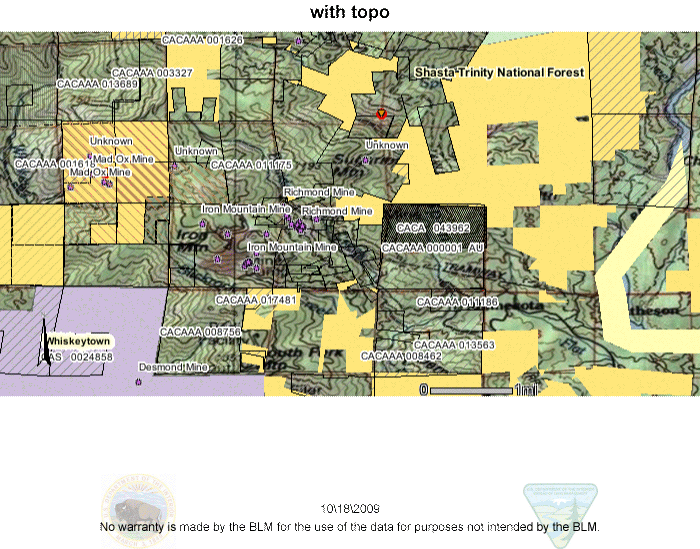
Last Update: July 24, 2010 This page compares maximum contaminant levels (MCLs) and public health goals (PHGs).
Posted by the EPA on August 20th, 2010 - 11:58 AM
Local Governments
Several local governments have developed local wetlands management plans. See the links for the following communities.
Case law makes clear that an environmental agency's costs of responding to serious environmental contamination that poses a substantial risk to health or safety are generally entitled to administrative expense treatment. See Pa. Dep't of Envtl. Res. v. Conroy, 24 F.3d 568, 569 (3d Cir. 1994) (finding that costs incurred by state agency to remediate property will be accorded administrative expense treatment because the expenses incurred to remove the threat are necessary to preserve the estate); Chateaugay, 944 F.2d at 1009 (finding that expenses to remove toxic substances that pose a significant hazard to public health are necessary to preserve the estate); Wall Tube, 831 F.2d at 122-24 (finding that in the absence of compliance by the debtor's estate, state was entitled to administrative expense to assess the gravity of the environmental hazard). But in each of these cases (and in many others) the debtor had abdicated its responsibility to remediate serious environmental contamination, no other private party had stepped in, and a state or federal regulatory agency had undertaken the remediation work and sought to recover its costs. The postpetition costs of the agencies were entitled to administrative expense treatment under section 503(b)(1)(A) for the "the actual, necessary costs and expenses of preserving the estate . . . ."
In many ways this is an "easy case," in the sense that no extended analysis is required to determine whether MDNRE incurred actual and necessary costs and expenses of preserving the estate. Because MDNRE has not demonstrated that it has expended any money for response costs (with the exception of the small administrative expense allowed in this opinion), or that it will be required to do so in the future (since MDI continues to perform the remediation obligations), there can be no argument whether "any particular item of cost is entitled to priority," based upon a "particularized determination." See Chateaugay, 944 F.2d at 1010. See also In re Microfab, Inc., 105 B.R. 161, 166 (Bankr. D. Mass. 1989) (denying as premature the state's request for allowance of an administrative expense as the state had not yet expended any funds to clean up the site and it "cannot speculate as to what amounts might eventually be allowable as `actual' and `necessary' expenses of the estate"). [ 8 ]
For the foregoing reasons, MDNRE's Motion for allowance of an administrative expense is GRANTED in the amount of $486.23, and it is DENIED as to any post-sale-closing response costs.
IT IS SO ORDERED.
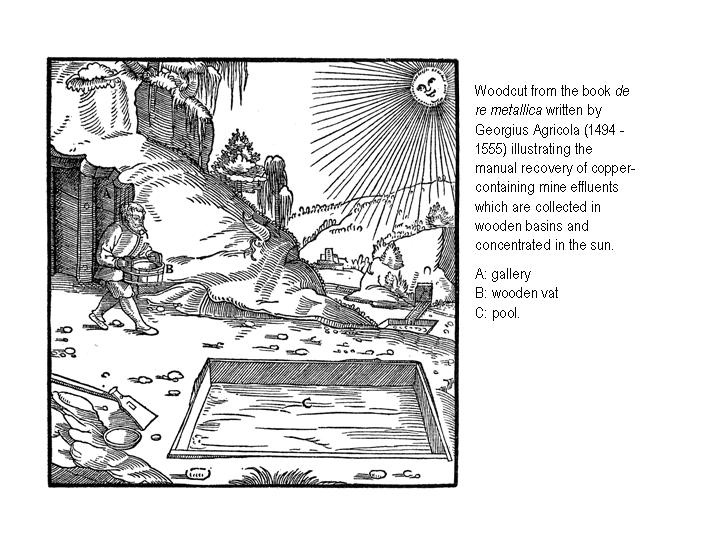
The War Against Mountaintop Mining Heats Up

RELATED REPORTS
Special Publication 103 (Revised 1999): Mines and Mineral Producers Active in California (1997-
1998); by Department of Conservation, Division of Mines and Geology in cooperation with
Department of Conservation, Office of Mine Reclamation
NCP, 40 CFR§300.435(f)(2), states, “A remedy becomes ‘operational and functional’ either one year after construction is complete, or when the remedy is determined concurrently by EPA and the State to be functioning properly and is performing as designed, whichever is earlier.

http://www.scribd.com/doc/17233336/September-11-Commission-Report-Revised-December-2008

A Cu-Zn-Fe-Pt-Ti mine located in secs. 26, 27, 34 & 35, T33N, R6W, MDM, about 4 miles NNW of Keswick and 9½ miles NW of Redding.
THE FOLLOWING INFORMATION IS FROM THE USGS WEBSITE (FORMERLY THE U.S. BUREAU OF MINES RECORDS)
Producer in Shasta county in California, United States with commodity Iron
Ownership information
| Owner-Operator | Iron Mountain Mine, Ltd. | 1989 |
| Deposit | CALIF. DIV. MINES AND GEOL. SPECIAL PUBL. 103, 1990. |
| Deposit | IRON MINED USED IN CEMENT |
| 23-NOV-1994 | U.S. Bureau of Mines |
| 2010-08-18 13:14:48 |
Mineral Resources > Online Spatial Data > Mineral Resource Data System (MRDS)
The Richmond Mine at Iron Mountain, Shasta County, California, USA provides an excellent opportunity to study the chemical and biological controls on acid mine drainage (AMD) generation in situ , and to identify key factors controlling solution chemistry.

ORGANIC BASE SILICATES
Since silica dissolves above about pH 10.7-11.0, silicates can ber prepared with organic bases. Merrill and Spencer reported the preparation of a number of water-soluble quaternary ammonium silicates by grinding silica gel with a solution of the free base. However, the compounds all appear to have a ratio of 2:1 when expressed by analogy with the alkali metal system.
COMPLEX METAL ION SILICATES
Numerous metal polyamine silicate compositions can be formed with amines including copper, iron, zinc, magnesium, manganese, and molybdenum.
HUMIC ACIDS
Humic acid from decaying vegetation is believed to have a structure related to fulvic acid, which has adjacent hydroxyl groups on an unsaturated six-membered carbon ring and forms chelates with silicon. The soluble chelate with ammonium humate has been used to supply silicon as a nutrient to rice plants, which require silicon for their structure.
(not for marijuana cultivation) no smoking
Symptoms of mineral deficiency in soil
| Element | Deficiency symptoms | Probable cause and ordinary remedy |
| Nitrogen | Growth is poor; shoots are short; leaves are small; and yellow brassicas turn pink then orange. Fruit or tubers are small. |
As an immediate booster, spray with diluted liquid seaweed or fish fertiliser. Incorporate as much compost and manure as possible. |
Phosphorus |
Root development and flower bud formation are poor, and plants sometimes also show symptoms similar to that of nitrogen deficiency. Brown spots may appear on leaves, or leaf edges may turn brown. Fruit has an acid flavour. | Bonemeal is rich in phosphorus. Incorporate 120 g per square metre before planting. The deficiency appears more often in acid soils. |
| Potassium | Growth becomes stunted, and leaves turn a dull bluegreen, with browning at the leaf tips or leaf margins, or showing as blotches. Leaves of broad-leaved plants curl downwards. |
Most often seen on light, sandy soils. Comfrey tea is high in potassium; dilute 1 part tea to 15 parts water and apply to soil. Wood ash is high in potassium. |
| Magnesium | Magnesium deficiency shows either as a loss of colour or as a mottling of red, orange, brown and purple tints. | Excessive potash application may be responsible. Spray with a solution of Epsom salts (250 g in 12 litres water). If liming soil, apply dolomite, which is rich in magnesium as well as calcium, or green sand. |
| Manganese | Manganese deficiency occurs in sandy and alkaline soils, frequently in combination with iron defi ciency. Chlorosis (loss of colour) begins on older leaves. The leaves of green peas develop brown patches. Beetroot leaves have red-brown speckling. | This is most evident in poorly drained soils. Lift beds to improve drainage. Overliming can also be responsible. Never apply manganese to soils with a pH below 6. |
Iron |
Chlorosis (loss of colour) occurs on young shoot tips and leaves, while the veins remain green. Eventually, shoots die back. This condition usually occurs in alkaline soils, which prevent plants from absorbing iron. |
Sequestered iron (iron EDTA) used as a foliar spray produces rapid results. Check soil pH and acidify with sulphur and regular compost additions. |
| Boron | The roots of beetroots, swedes and turnips turn brown. Cauliflower curds also turn brown. Brown cracks appear across the stalks of celery. Apple cores become ‘corky'. The growing points of plants die off. | Mix 30 g borax with sand and disperse evenly over 18 square metres of soil. Or spray crops fortnightly with liquid seaweed fertiliser. Overliming can cause this problem. |
Molybdenum |
Leaves, particularly of broccoli and cauliflowers, develop a disorder known as whiptail. Leaves become distorted and shrink back to the midrib, giving a tail-like appearance. On tomatoes, leaves become mottled and roll forward. | Apply ground dolomite to acidic soils. Add kelp meal to soil. For a short-term remedy, apply sodium molybdate at 30 g per 8 litres water. This will treat 8 square metres of soil. |
| Calcium | This shows most commonly in tomatoes and capsicums as a darkened, shrivelled end on fruit. It also causes bitter pit in apples. | Uneven soil moisture causes a failure of calcium uptake from the soil. This is particularly evident in pot-grown plants and in light soils. Water regularly. To add calcium, incorporate crushed eggshells into compost. |
TRY AG-GEL!

Ag-Gel micronutrient with soluble silicate offers growers these performance benefits in agricultural applications:
Reduces disease pressure.
Provides resistance to mineral stress.
Decreases climate stress.
Improves plant strength.
Increases growth and yeild.
Ag-Gel micronutrient with silicate reduces the stress from diseases including powdery mildew, pythium root rot, and rice blast. It resists or prevents toxicity from phosphorous, manganese, aluminum, and iron, and increases plant tolerance to salt.
Application of Ag-Gel micronutrient with soluble silicate improves leaf erectness, reduces susceptibility to lodging in grasses, and improves photosynthesis efficiency.
Crops that have demonstrated benificial responses to Ag-Gel micronutrient with soluble silicate application include rice, wheat, barley, sugar cane, tomatoes, beans, cucurbits, strawberries, grapes, roses, apples, grass, and ornamental plants.
Ag-Gel micronutrient with soluble silicate can increase growth and yield by providing micronutrients and by reducing susceptibility to diseases and pests.
Iron in Plants
Iron is a absorbed by plant roots as Fe²+ and Fe³+. The chemical properties of iron making it an important part of oxidation-reduction reactions in both soils and plants. Because iron can exist in more than one oxidation state, it accepts or donates electrons according to the oxidation potential of the reactants. The transfer of electrons between the organic molecule and iron provides the potential for many of the enzymatic transformations. Several of these enzymes are involved in chlorophyll synthesis, and when iron is deficient chlorophyll production is reduced, which results in the characteristic chlorosis symptoms of iron stress.
Iron is a structural component of porphyrin molecules. These substances are involved in band oxidation-reduction reactions in respiration and photosynthesis. As much as 75% of the total cell iron is associated with chloroplast, and up to 90 percent of the iron in the leaves occurs with lipoprotein of the chloroplast and the mitochindria membranes.
The sufficiency range of time in plant tissue is normally between 50 and 250 ppm. and in general, when iron contents are 50 ppm or less in the dry matter, deficiency is likely to occur. Iron deficiency symptoms show up in the young leaves of plants, first because iron does not readily translocate from older tissues to the tip meristem; as a result, growth ceises. The young leaves develop an interveinal chlorosis, which progresses rapidly over the entire leaf. In severe cases the leaves turn entirely white. Iron toxicity can be observed under certain conditions. For example, in rice grown on poorly drained or submerge soils, a condition known as a bronzing is associated with greater than 300 ppm iron levels in rice leaves at telling.
Iron in soil
Mineral Fe. Iron comprises 5% of the earth's crust and is the fourth most abundant element in the lithosphere. Common primary and secondary iron minerals are olivene, siderite, hematite, goethite, magnetite, and limonite. Iron can be either concentrated or depleted during soil development; thus, iron concentrations in soil vary widely, from 0.7 to 55%. Most of the soil iron is found in primary minerals, clays, oxides, and hydroxides.
Forms and functions of Calcium in plants.
Ca is absorbed by plants as Ca²+ from the soil solution and is supplied to the root surface by mass flow and root interception. Ca deficiency is uncommon but can occur in highly leached and unlimed acidic soils. In soils abundant in Ca²+, excessive accumulation in the vicinity of roots can occur.
Ca²+ concentration in plants range from 0.2 to 1.0%. Ca is important in the structure and permeability of cell membranes. Lack of Ca²+ causes a breakdown of membrane structure, with resultant loss in retention of cellular diffusible compounds. Ca enhances uptake of NO3 and therefore is interrelated with N metabolism. Ca²+ provides some regulation in cation uptake. For example, studies have shown that K+ and Na+ uptake are about equal in the absence of Ca²+, but in its presence, K+ uptakes greatly exceeds Na+ uptake.
Ca is essential for cell elongation and division, and Ca²+ deficiency manifests itself in the failure of terminal buds of shoots and apical tips of roots to develop, which causes plant growth to cease. In corn Ca²+ deficiency prevents the emergence and unfolding of new leaves, the tips are almost colorless and are covered with sticky gelatinous material that causes them to adhere to one another. In fruits and vegetables, the most frequent indicator of Ca²+ deficiency consists of disorders in the storage tissues. Examples of Ca²+ disorders are bloom-end rot in tomato and bitter pit of apples. Finally, Ca²+ is generally immobile in the plant. There is very little translocation of Ca²+ in the phloem, and for this reason there is often a poor supply of Ca²+ to fruits and storage organs. Downward translocation of Ca²+ is also limited in roots, which usually prevents them from entering low-Ca soils.
Conditions impairing the growth of new roots will reduce root access to Ca²+ and induce deficiency. Problems related to inadequate Ca²+ uptake are more likely to occur with plants that have smaller root systems than with those possessing more highly developed root systems.
Special attention must be given to the Ca²+ requirements of certain crops, including peanuts, tomatoes, and celery, which are often unable to obtain sufficient Ca²+ from soils supplying adequate Ca²+ for most other crops. Proper Ca²+ supply is important for tree fruits and other crops such as alfalfa, cabbage, potatoes, and sugar beets, which are known to have high Ca²+ requirements.
Ca in Soil
The Ca concentration in the earth's crust is about 3.5%; however, the Ca²+ content in soils varies widely. Sandy soils of humid regions contain very low amounts of Ca²+, whereas Ca²+ normally ranges from 0.7 to 1.5% in noncalcareous soils of humid temperate regions; however, highly weathered soils of the humid tropics may contain as little as 0.1 to 0.3% Ca. Ca levels in calcareous soils vary from less than 1% to more than 25%.
Calcium concentrations in the soil higher than necessary for proper plant growth normally have low affect on the Ca²+ uptake, because Ca²+ uptake, is genetically controlled. Although the concentration of the soil solution is about 10 times greater than that of potassium, it's a uptake is usually lower than that a potassium. Plants capacity for uptake is limited because it can be absorbed only by young root tips in which the cell walls of the in the endodermis are still unsuberized.
As a general rule, course-textured, humid-region soils formed from rocks low in calcium minerals are low in calcium. The fine-textured soils formed from rocks high in calcium are much higher in both exchangeable and total calcium. However, in humid regions, even soils formed from limestone are frequently acetic in the surface layers because of the removal of calcium and other cations by excess leaching. As water containing dissolved CO2 percolates through the soil, the H + forms displaces Ca²+ (and other basic cations) on the exchange complex. If there is considerable percolation of such water through the soil profile, soils gradually become acidic. When leaching occurs, Na+ is lost more readily than Ca²+, however, since exchangeable and solution Ca²+ is much greater than Na+ in most soils, the quantity of Ca²+ lost is also much greater. Calcium is often the dominant cation in drainage waters, springs, streams, and lakes. Leaching of calcium ranges from 75 to 200 lbs. per acre per year. Since Ca²+ is absorbed on the cation exchange capacity (CEC), losses by erosion may be considerable in some soils.
Copper in plants.
Cu is absorbed by plants as the cupric ion, Cu²+, and may be absorbed as a component of either natural or synthetic organic complexes. It's normal concentration in plant tissue ranges from 5 to 20 ppm. Deficiencies are probable when Cu levels in plants fall below 4 ppm in the dry matter.
Symptoms of Cu deficiency vary with crop. In corn the youngest leaves become stunted, and as the deficiency becomes more severe, the young leaves pale and the older leaves die back. In advanced stages, dead tissue appears along the tips and edges of the leaves in a pattern similar to that of K deficiency. Cu-deficient small-grain plants lose color in young leaves, which eventually break, and the tips die. Stem melanosis and take-al root rot disease occur in certain wheat varieties when Cu is deficient. Also ergot infection is associated with Cu deficiency in some wheat and barley varieties. In many vegetables crops the leaves lack turgor. They develop a bluish-green cast, become chlorotic, and curl, and flower production fails to take place.
Cu in it's reduced form readily binds and reduces O2. In the oxidized form the metal is readily reduced, and protein-complexed Cu has a high redox potential. Enzymes that create complex polymers such as lignin and melanin exploit these properties of Cu. Cu is unique in its involvement in enzymes, and its cannot be replaced by any other metal ion.
Toxicity symptoms include reduced shoot vigor, poorly developed and discolored root systems, and leaf chlorosis. The chlorotic condition in shoots superficially resembles Fe deficiency. Toxicities are uncommon, occurring in limited areas of high Cu availability; after additions of high-Cu materials such as sewage sludge, municipal composts, pig and poultry manure's, and mine wastes; and from repeated use of Cu-containing pesticides.
Copper in soil.
Cu concentration in the earth's crust average about 55 t0 70 ppm. Igneous rocks contain 10 to 100 ppm Cu, while sedimentary rocks contain between 4 and 45 ppm Cu. Cu concentration in soils ranges from 1 to 40 ppm and averages about 9 ppm. Total soil Cu may be 1 or 2 ppm in deficient soils.
Copper interaction with other nutrients.
There are numerous interactions involving Cu. Applications of N-P-K fertilization can induce Cu deficiencies. Furthermore, increased growth resulting from the application of N or other nutrients may be proportionally greater than Cu uptake, which dilutes Cu concentration in plants. Increasing the N supply to crops can reduce mobility of Cu in plants, since large amounts of N in plants impede translocation of Cu from older leaves to new growth. High concentration of Zn, Fe, and P in soil solution can also depress Cu absorption by plant roots and may intensify Cu deficiency.
Plant Factors.
Crops vary greatly in response to Cu. Among small-grain species, rye has exceptional tolerance to low levels of soil Cu and will be healthy, whereas wheat fails completely without the application of Cu. Rye can extract up to twice as much Cu as wheat under the same conditions. The usual order of sensitivity of the small grains to Cu deficiency in the field is wheat > barley > oats > rye. Varietal differences in tolerance to low Cu are important, and sometimes they can be as large as those among crop species.
Severe Cu deficiency in crops planted in soils with high C/N residues is related to (1) reactions of Cu with organic compounds originating from decomposing straw, (2) competition for available Cu by stimulated microbial populations, and (3) inhibition of root development and the ability to absorb Cu. If the soil-available Cu is low, manure added to a field may accentuate the problems. Organic material from manure, straws, or hay can tie up Cu, making it unavailable to plants.
Copper - Functions in the plant or soil
Essential for chlorophyll formation
Essential in many plant enzymes (oxidases in particular)
It is involved in electron transfer
Essential in enzyme systems associated with grain, seed, and fruit formation
It has a marked effect on the formation and chemical composition of cell walls - Very distinct on stem tissue
Copper - Special considerations
Copper can be used as a fungicide on plants
Excessive amounts of copper can cause iron deficiency
It is rather immobile in plants, therefore deficiency symptoms usually occur on new growth
Copper - The conditions associated with deficiencies
Sandy soils
High organic soils
Overlimed soils
High pH soils
Soils with high concentrations of phosphate and nitrogen
Copper - Deficiency Symptoms
Corn
General chlorosis of younger leaves
Leaf tips die and curl like pig tails
Interveinal chlorosis toward lower end of leaves
Small Grains
High organic matter soils - Yellowing of plant
Leaf tip dieback and twisting of leaf tips
Alfalfa
Youngest tissue turns faded green with grayish cast
Plants appear bushy and drought-stricken
Forms and Functions of Magnesium (Mg) in Plants
Mg is absorbed by plants as Mg²+ from the soil solution and, like Ca²+, is supplied to plant roots by mass flow and diffusion. Root interception contributes much less Mg²+ to uptake than Ca²+. The amount of Mg²+ taken up by plants is usually less than that of Ca²+ or K+.
Mg²+ concentration in crops varies between 0.1 to 0.4%. Mg²+ is a primary constituent of chlorophyll, and without chlorophyll the autotrophic green plant would fail to carry on photosynthesis. Chlorophyll usually accounts for about 15 to 20% of the total Mg²+ content of plants.
Mg also serves as a structural component to ribosomes, stabilizing them in the configuration necessary for protein synthesis. As a consequence of Mg²+ deficiency, the proportion of protein N decreases and that of non proteins N generally increases in plants.
Mg is associated with transfer reactions involving phosphate-reactive groups. Mg is required for maximum activity of most every phosphorylating enzyme in carbohydrate metabolism. Most reactions involving phosphates transfer from bad adenosine triphosphate (ATP) require Mg²+. Since the fundamental process of energy transfer occurs in photosynthesis, glycolysis, the citric or acid cycle, and respiration, Mg²+ is important throughout plant metabolism.
Because of the mobility of plant Mg²+ and it's ready transportation from older to younger plant parts, deficiency symptoms often appear first on the lower leaves. In many species, shortage of Mg²+ results in interveinal chlorosis of the leaf, in which only the veins remain green. In more advance stages the leaf tissue becomes uniformly pale yellow, then brown and necrotic. In other species, notably cotton, the lower leaves may develop a reddish-purple cast, gradually turning brown and finally necrotic.
Mg in Soil
Mg constitutes 1.93% of the earth's crust; however, the Mg²+ content of soils ranges from 0.1% in course, sandy soils in humid regions to 4% in fine-textured, arid, or semiarid soils formed from high-Mg parent materials.
The Mg concentration of soil solutions is typically 5 to 50 ppm in temperate- region soils, although Mg²+ concentrations between 120 and 2,400 ppm have been observed. Mg²+, like Ca²+, can be leached from soils, and Mg losses of 5 to 60 lbs./acre have been observed. The amounts lost depend on the interaction of several factors, including the Mg content of soil, rate of weathering, intensity of leaching, and the uptake by plants. Leaching of Mg²+ is often a problem in sandy soils, particularly following the addition of fertilizer such as KCL and K2SO4. Very little Mg displacement occurs when equivalent amounts of K are applied as either CO3²-, HCO3, or H2PO4-. Apparently, Mg²+ desorption and leaching in coarse-texture soils are enhanced by the presence of soluble Cl- and SO4²-. As with Ca²+, erosion losses can be considerable in some soils.
Mg in clay minerals is slowly weathered out by leaching and exhaustive cropping. Conditions in which Mg is likely to be deficient include acidic, sandy, highly leached soils with low CEC; calcareous soils with inherently lower Mg levels; acidic soils receiving high rates of lining materials low in Mg; higher rates of NH4+ or K+ fertilization; and crops with Mg demand.
Mg Sources
In contrast to calcium, the primary nutrient fertilizers contain magnesium, with the exception of K2SO4 · MgSO4. Dolomite is commonly applied to low-Mg acidic soils. K2SO4 · MgSO4 and MgSO4 (Epsom salts) are the most widely used materials in dry fertilizer formulation. Other materials containing Magnesium are magnesia (MgO, 55% Mg), magnesium nitrate [Mg(NO3)2. 16% Mg], magnesium silicate (basic slag, 3 to 4 % Mg; serpentine, 26% Mg), magnesium chloride solution (MgCl2 ( 10 H20, 8 to 9% Mg), synthetic chelates (2 to 4% Mg), and natural organic complexing substances (4 to 9% Mg). MgSO4, MgCl2, Mg(NO3)2, and synthetic and natural magnesium chelates are well-suited for application in clear liquids and foliar sprays. Magnesium deficiency of citrus trees in California is frequently corrected by foliar applications of Mg(NO3)2. In some tree-fruit growing areas, MgSO4 solutions are applied to maintain levels, and in seriously deficient orchards several annual applications are necessary. K2SO4 ¸ MgSO4 are the most widely used magnesium additives in suspensions. Special suspension grade [100% passing through a 20-mesh screen] of this material is available commercially. Magnesium content in animal and municipal waste is similar to S content and can therefore be used to supply sufficient magnesium.
Manganese in Soil
Mineral manganese. Manganese concentration in the earth's crust average 1000 ppm, and manganese is found in most iron-magnesium rocks. Manganese, when released through weathering of primary rocks, will combine with O2 to form secondary minerals, including pyrolusite (MnO2), hausmannite (Mn3O4), and manganite (MnOOH). Pyrolusite and manganite are the most abundant.
Total manganese in soils generally range between 20 and 3,000 ppm and averages about 600 ppm. Manganese in soils occurs as various oxides and hydroxide coated on soil particles, deposited in cracks and veins, and mixed with iron oxides and other soil constituents.
Soil solution manganese. The principal species in solution is Mn²+ , which decreases 100-fold for each unit increase in pH, similar to the behavior of other divalent metal cations. The concentration of Mn²+, in solution is predominately controlled by MnO2. Concentration of Mn²+ in the soil solution of the acidic and neutral soils is commonly in the range of 0.01 to 1 ppm, with organically complexed Mn²+ comprising about 90 percent of solution Mn²+. Plants take up Mn²+, which moves to their root surface by diffusion.
Manganese in soil solutions is greatly increased under acidic, low-redox conditions. In extremely acidic soils, Mn²+ solubility can be sufficiently great to cause toxicity problems in sensitive plant species.
Interaction with other nutrients
High levels of copper, iron, or zinc, can reduce manganese uptake by plants. Addition of acid-forming NH4+ to soil will enhance manganese uptake.
Plant Factors
Several plant species exhibit differences in sensitivity to manganese deficiency. These differences in the response of manganese deficient and manganese inefficient plants are due to internal factors rather than to the facts of the plants on the soil. Reductive capacity at the root may be the factor restricting manganese uptake and translocation. There may also be significant differences in the amounts and properties of root exudates generated by plants, which can influence Mn²+ availability. It is possible that plant characteristics possessed by irony fission plants may similarly influence manganese uptake in plants and their tolerance to manganese stress.
Manganese sources
Organic manganese. The manganese concentration in most animal wastes is similar to zinc, ranging between 0.01 and 0.05% (0.2and 1 lb. / t). Thus, with most manures, average application rates will provide sufficient plant available manganese. As with iron, zinc, and copper, the primary benefits of organic waste application is increased organic material and associated natural chelation properties that increased manganese concentration in soil solution and plant availability. As with the other micronutrients, manganese content in municipal waste varies greatly depending on the stores. On average, manganese content is about half the copper content (0.05%, or one pound per ton).
Organic manganese. Manganese sulfate is widely used for correction of manganese deficiency and may be soil or foliar applied. In addition to organic manganese fertilizers, natural organic complexes and chelated manganese are available and are usually foliar applied.
Manganese oxide (MnO) is only slightly water soluble, but it is usually a satisfactory source of manganese. Manganese oxide must be finely ground to be affected. Rates of manganese applications range from 1 to 25 lbs. per acre; higher rates are recommended for broadcast application, while lower rates are foliar applied. Band-applied manganese is generally more effective than broadcast manganese, and band treatments are usually about one-half of the broadcast rates. Oxidation to less available forms of manganese is apparently delayed with band-applied manganese. Applications at the higher rates may be required on organic soils. Band application of manganese in combination with N-P-K fertilizers is commonly practiced.
Broadcast application of manganese chelates and natural organic complexes is not normally advised because soil calcium or iron can replace manganese in these chelates, and the freed manganese is usually converted to unavailable forms. Meanwhile, the more available chelated calcium or iron probably accentuates the manganese deficiency. Limestone or high-pH-induced manganese deficiency can be rectified by acidification resulting from the use of sulfur or other assets-forming materials.
Manganese - Functions in plant or soil
It has a role in production of chlorophyll but is not a component
It is involved in electron transfer reactions
Involved in enzyme systems, arginase and phosphotransferase
Involved in enzyme systems of sugar metabolism
Participates in oxygen-evolving system of photosynthesis
Involved in electron transport in chloroplasts
Involved in transfer of electrons from water to the photosynthetic II protein fraction
It accelerates germination and maturity
Manganese - Special considerations
Its solubility increases 100 fold per unit drop in pH - can be toxic in low pH soils
Manganese concentrated in leaves and stems - seeds contain only small amounts
High concentration of Mn in soil can lead to poor iron absorption
Manganese - The conditions associated with deficiencies
High soil pH
High organic soils
Cool wet soil conditions
Overlimed soils - High calcium levels
Manganese - Deficiency symptoms
Corn & Grain Sorghum
Interveinal chlorosis with general stunting similar to iron deficiency except iron is seldom short on high organic matter soils
Small Grains
Marginal gray and brown necrotic spots and streaks appearing on basal portion of leaves
Ends of affected leaves may stay green for an extended time
On older affected leaves the spots are oval and gray brown
Soybeans
Interveinal chlorosis
As deficiency becomes more severe, leaves become pale green, then yellow
Brown necrotic spots develop as deficiency becomes more pronounced
Veins remain darker as compared to iron deficiency
Zinc (Zn)
Zinc is involved in many enzymatic activities, but it is not known whether it acts as a functional, structural, or regulatory cofactor.
Zinc - Functions in plant or soil
Involved in large number of enzymes - including dehydrogenases, aldolases, isomerases, transphosphorylases, RNA and DNA polymerases
Involved in carbohydrate metabolism
Involved in the rate of protein synthesis
Zinc - Special considerations
Availability enhanced significantly by presence of mycorrhizal fungi in the soil
It is not subject to oxidation-reduction reactions in soil-plant system
It is quite immobile in the soil
It will bond strongly with sulfide formed from decomposing humus under anaerobic conditions
Solubility increases 100 fold for each pH unit lowered
Zinc - The conditions associated with deficiencies
High pH soils
Calcareous soils
Overlimed soils
Sandy soils
Soils where anaerobic decomposition is present
High soil phosphorus levels - Varies by crop
Cold wet soils
Zinc - Deficiency symptoms
Corn
Appear within first 2 weeks after emergence
Broad band of chloritic tissue on one or both sides of leaf midrib - most pronounced towards base of leaf
Young leaves most severely affected
Delayed maturity and reduced yields
Grain Sorghum
Similar to corn
Small Grain
Similar to corn
Soybeans
Chlorosis of younger leaves
Chlorosis may extend to all leaves on plant
Total chlorosis without green veins
Silica (Si)
Silica is one of the most abundant elements on the surface of the earth. Silica contributes to the structure of cell walls. Concentrations of up to 10% occur in silica rich plants. Silica primarily impregnates the walls of epidermis and vascular tissues, where it appears to strengthen the cell wall, reduce water loss, and retard fungal infection.
The involvement of silica in root functions is believed to be its contribution to the drought tolerance of crops. Although no biochemical role for silica in plant development has been positively identified, it has been proposed that in enzyme-silicon complexes they act as protectors or regulators of photosynthesis and enzyme activity.
The beneficial effects of silicon have been attributed to corrections of soil toxicity arising from high levels of available manganese, iron, and aluminum; plant disease resistance; increased availability of phosphorus; and reduced transpiration.
Silica - Functions in plant or cell
In epidermal cell walls silica reduces water loss by cuticular transpiration
Silica acts as a barrier against invasion of parasites and pathogens in endodermis cells of roots
Silica increases epidermal layer of leaves resistance to fungal attacks.
Silica is associated with incorporation of inorganic phosphate into ATP, ADP, and sugar phosphates
Silica - Special considerations
Because of the abundance of silica in the soil, it is difficult to prove it is an essential micronutrient for higher plants
Silica reduced manganese and iron toxicity where soil levels are excessive
Silica - The conditions associated with deficiencies
Undefined
Silica - Deficiency symptoms
Wetland Rice
Reduced vegetative growth and grain production
Sugarcane
Drastic reduction in growth
Leaf freckling on leaf blades directly exposed to full sunlight
Sulfur (S)
Although more than 95% of soil sulfur is bonded in organic forms and present in the upper layers of most soils, these reserves are not readily available to the plant.
Forms of Sulfur in Plants:
Sulfur is absorption by plant roots almost exclusively as sulfate, SO4-². Small quantities of SO2 can be absorbed through plant leaves and utilized within plants, but high concentrations are toxic. Typically concentrations of sulfur in plants range between 0.1 and 0.5%. Among the families of crop plants sulfur content increases in order Gramineae < Leguminosae < Cruciferae and is reflected in the differences in sulfur content of their seeds: 0.18-0.19%, 0.25-0.3%, and 1.1-1.7%, respectively.
Functions of Sulfur in Plants
Sulfur is required for synthesis of the S-containing amino acids, which are essential components of protein. Approximately 90% of the sulfur in plants is found in these amino acids. Increasing sulfur availability increase sulfur content in leaves, which increases sulfur containing amino acids.
Plants suffering sulfur deficiency accumulate non-protein nitrogen in the form of NH2 and NH3. It is apparent that sulfur fertilization improves the quality of this forage by narrowing the nitrogen to sulfur ratio. A Nitrogen to sulfur ratio of between 9:1 and 12: 1 is needed for effective use of nitrogen by rumen and microorganisms. This beneficial effect of sulfur fertilization on improving crop quality through reductions in the nitrogen to sulfur ratio is important in animal nutrition.
Ag-Gel is a naturally occurring micronutrient plant fertilizer concentrated into a soluble silicate gel. Produced from naturally occurring micronutrient mineral sources, Ag-Gel is a semi-permeable gel membrane that absorbs and holds over 700% its dry weight in water. When applied to the soil it creates a nutrient rich moisture barrier which helps reduce evaporation from the soil while providing plants essential nutrients they need to thrive.
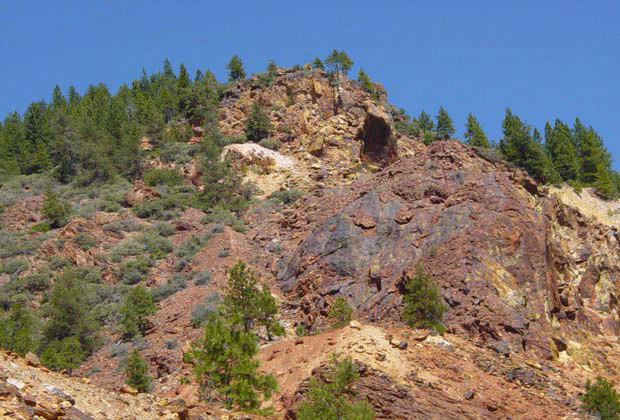
SUMMARY: Current NASA regulations at 14 CFR part 1260 describe the use of cooperative agreements with educational institutions and non-profit organizations. The proposed regulation will establish the requirements for cooperative agreements with commercial firms. DATES: Comments are due on or before August 28, 1995. ADDRESSES: Headquarters, NASA, Washington, DC 20546, ATTN: CODE HK/MR. T. Deback. Comments on the paperwork burden should also be addressed to the Office of Information and Regulatory Affairs, Attention: Desk Officer for NASA, Washington, DC 20503. FOR FURTHER INFORMATION CONTACT: Mr. T. Deback, (202) 358-0431. SUPPLEMENTARY INFORMATION: Background As a result of the National Performance Review, participation in ARPA's Technology Reinvestment Program, the High Performance Computing Initiative, and a strong sense within NASA that cooperative agreements with industry are an appropriate way to carry out certain assistance type activities, use of cooperative agreements is being increased. As part of this increase, cooperative agreements with industry are being utilized for the first time. Regulatory Flexibility Act NASA certifies that this regulation will not have a significant economic effect on a substantial number of small entities under the Regulatory Flexibility Act ( 5 U.S.C. 601 et seq.). Paperwork Reduction Act The information collection requirements in this proposed rule have been submitted to the Office of Management and Budget for review under 44 U.S.C. 3504 (h). NASA requires certain reporting and recordkeeping of commercial firms in order to determine eligibility for selection and compliance with the provisions of the cooperative agreements. The estimated total annual reporting and recordkeeping burden is 6680 hours. The estimated average burden hours per response is 6 hours. The rule proposes annual reporting for patents, property, and technical results. Other reports are required at the conclusion of the agreement or the occurrence of other events. The estimated number of likely respondents is 175 firms submitting proposals per year resulting in the award of 50 cooperative agreements per year. List of Subjects in 14 CFR Part 1274 Grant programs, Business and industry. Tom Luedtke, Deputy Associate Administrator for Procurement. Accordingly, 14 CFR part 1274 is proposed to be added as follows. PART 1274--COOPERATIVE AGREEMENTS WITH COMMERCIAL FIRMS Subpart A--General 1274.101 Purpose. 1274.102 Definitions. 1274.103 Effect on other issuances. 1274.104 Deviations. 1274.105 Approval of Cooperative Agreement Notices (CANs) and cooperative agreements. Subpart B--Pre-Award Requirements 1274.201 Purpose. 1274.202 Solicitations and proposals. 1274.203 Invention and patent rights. 1274.204 Evaluation and selection. 1274.205 Award procedures. 1274.206 Document format and numbering. 1274.207 Distribution of cooperative agreements. Subpart C--Administration 1274.301 Delegation of administration. 1274.302 Transfers, novations, and change of name agreements. Subpart D--Government Property 1274.401 Government property. Subpart E--Procurement Standards 1274.501 Subcontracts. Subpart F--Reports and Records 1274.601 Retention and access requirements for records. Subpart G--Suspension or Revocation 1274.701 Suspension or revocation. Subpart H--After-the-Award Requirements 1274.801 Purpose. 1274.802 Closeout procedures. 1274.803 Subsequent adjustments and continuing responsibilities. Subpart I--Other Provisions and Special Conditions 1274.901 Other provisions and special conditions. 1274.902 Purpose (XXX 1995) 1274.903 Responsibilities (XXX 1995) 1274.904 Resource Sharing Requirements (XXX 1995) 1274.905 Rights in Data (XXX 1995) 1274.906 Designation of New Technology Representative and Patent Representative (XXX 1995) 1274.907 Disputes (XXX 1995) 1274.908 Milestone Payments (XXX 1995) 1274.909 Term of this Agreement (XXX 1995) 1274.910 Authority (XXX 1995) 1274.911 Patent Rights (XXX 1995) 1274.912 Patent Rights--Retention by the Contractor (Large Business) (XXX 1995) 1274.913 Patent Rights--Retention by the Contractor (Small Business) (XXX 1995) 1274.914 Requests for Waiver of Rights--Large Business (XXX 1995) 1274.915 Restrictions on Sale or Transfer of Technology to Foreign Firms or Institutions (XXX 1995) 1274.916 Liability and Risk of Loss (XXX 1995) 1274.917 Additional Funds (XXX 1995) 1274.918 Incremental Funding (XXX 1995) 1274.919 Cost Principles and Accounting Standards (XXX 1995) 1274.920 Responsibilities of the NASA Technical Officer (XXX 1995) 1274.921 Publications and Reports: Non-Proprietary Research Results (XXX 1995) 1274.922 Suspension or Revocation (XXX 1995) 1274.923 Equipment and Other Property (XXX 1995) 1274.924 Civil Rights (XXX 1995) 1274.925 Subcontracts (XXX 1995) 1274.926 Clean Air-Water Pollution Control Acts (XXX 1995) 1274.927 Debarment and Suspension and Drug-Free Workplace (XXX 1995) 1274.928 Foreign National Employee Investigative Requirements (XXX 1995) 1274.929 Restrictions on Lobbying (XXX 1995) 1274.930 Travel and Transportation (XXX 1995) 1274.931 Officials Not to Benefit (XXX 1995) 1274.932 Electronic Funds Transfer Payment Methods (XXX 1995) 1274.933 Retention and Examination of Records (XXX 1995) Appendix A--Contract Provisions Appendix B--Reports Appendix C--Listing of Exhibits Authority: 31 U.S.C. 6301 to 6308; 42 U.S.C. 2451 , et seq. Subpart A--General Sec. 1274.101 Purpose. This regulation establishes uniform administrative requirements for NASA cooperative agreements awarded to commercial firms. Cooperative agreements are ordinarily entered into with commercial firms to-- (1) Support research and development, (2) Provide technology transfer from the Government to the recipient, or (3) Develop a capability among U.S. firms to potentially enhance U.S. competitiveness. (b) Award to foreign firms is not precluded; however, an award may not be made to a foreign government. Sec. 1274.102 Definitions. Administrator. The Administrator or Deputy Administrator of NASA. Associate Administrator for Procurement. The head of the Office of Procurement, NASA Headquarters (Code H). Cash contributions. The recipient's cash outlay, including the outlay of money contributed to the recipient by third parties. Closeout. The process by which a NASA determines that all applicable administrative actions and all required work of the award have been completed by the recipient and NASA. Cooperative agreement. As defined by 31 U.S.C. 6305 , cooperative agreements are financial assistance instruments used to stimulate or support activities for authorized purposes and in which the Government participates substantially in the performance of the effort. This regulation covers only cooperative agreements with commercial firms. Cooperative agreements with universities and non-profit organizations are covered by 14 CFR part 1260. Cost sharing or matching. That portion of project or program costs not borne by the Federal Government except that the recipient's contribution may be reimbursable under other Government awards as allowable IR&D costs pursuant to 48 CFR (NFS) 1831.205-18 ( 59 FR 22521 , May 2, 1994). Date of completion. The date on which all work under an award is completed or the date on the award document, or any supplement or amendment thereto, on which NASA sponsorship ends. Days. Calendar days, unless otherwise indicated. Government furnished equipment. Equipment in the possession of, or acquired directly by, the Government and subsequently delivered, or otherwise made available, to a Recipient. Grant Officer. A Government employee who has been delegated the authority to negotiate, award, or administer grants or cooperative agreements. Incremental funding. A method of funding a cooperative agreement where the funds initially allotted to the cooperative agreement are less than the award amount. Additional funding is added as described in Sec. 1274.918. Recipient. An organization receiving financial assistance under a cooperative agreement to carry out a project or program. A recipient may be an individual firm, a consortium, a partnership, etc. Resource contribution. The total value of resources provided by either party to the cooperative agreement including both cash and in- kind contributions. Revocation. The cancellation of NASA sponsorship, in whole or in part, under an agreement at any time prior to the date of completion. Support contractor means a NASA contractor performing part or all of the NASA responsibilities under a cooperative agreement. Suspension. An action by NASA that temporarily withdraws sponsorship under an award, pending corrective action by the recipient or pending a decision to revoke the award by NASA. Suspension of an award is a separate action from suspension under Federal agency regulations implementing E.O.'s 12549 and 12689, ``Debarment and Suspension.'' Technical officer. The official of the cognizant NASA office who is responsible for monitoring the technical aspects of the work under a cooperative agreement. Sec. 1274.103 Effect on other issuances. For awards subject to this regulation, all administrative requirements of codified program regulations, program manuals, handbooks and other nonregulatory materials which are inconsistent with the requirements of this Regulation shall be superseded, except to the extent they are required by statute, or authorized in accordance with the deviations provision in Sec. 1274.104. Sec. 1274.104 Deviations. (a) The Associate Administrator for Procurement may grant exceptions for classes of or individual cooperative agreements from the requirements of this Regulation when exceptions are not prohibited by statute. (b) Applicability. A deviation is required for any of the following: (1) When a prescribed provision set forth in this regulation for use verbatim is modified or omitted. (2) When a provision is set forth in this regulation, but not prescribed for use verbatim, and the installation substitutes a provision which is inconsistent with the intent, principle, and substance of the prescribed provision. (3) When a NASA form or other form is prescribed by this regulation, and that form is altered or another form is used in its place. (4) When limitations, imposed by this regulation upon the use of a provision, form, procedure, or any other action, are not adhered to. (c) Request for deviations. Requests for authority to deviate from this regulation will be forwarded to Headquarters, Program Operations Division (Code HS). Such requests, signed by the Procurement Officer, shall contain as a minimum: (1) A full description of the deviation and identification of the regulatory requirement from which a deviation is sought. (2) Detailed rationale for the request, including any pertinent background information. (3) The name of the recipient and identification of the cooperative agreement affected, including the dollar value. (4) A statement as to whether the deviation has been requested previously, and, if so, circumstances of the previous request(s). (5) A description of the intended effect of the deviation. (6) A copy of legal counsel's concurrence or comments. Sec. 1274.105 Approval of Cooperative Agreement Notices (CANs) and cooperative agreements. (a) As soon as possible after the initial decision is made by program or procurement personnel to use the CAN process, the cognizant program office or procurement office, shall notify the Associate Administrator for Procurement (Code HS), of the intent to use a CAN in all cases where the total Government funds to be awarded in response to CAN proposals is expected to equal or exceed $10 million. All such notifications, as described below, shall be concurred in by the Procurement Officer. This requirement also applies in those cases where an unsolicited proposal is received and a decision is made to award a cooperative agreement in which the recipient (or one or more of a ``team'' of recipients) is a commercial firm and the total Government funds are expected to equal or exceed $10 million. (b) The required notification is to be accomplished by sending an electronic mail (e-mail) message to the following address at NASA Headquarters: can@mercury.hq.nasa.gov . The notification must include the following information, as a minimum: (1) Identification of the cognizant center and program office, (2) Description of the proposed program for which proposals are to be solicited, (3) Rationale for decision to use a CAN rather than other types of solicitations, (4) The amount of Government funding to be available for awards, (5) Estimate of the number of cooperative agreements to be awarded as a result of the CAN, (6) The percentage of cost-sharing to be required, and (7) Tentative schedule for release of CAN and award of cooperative agreements (c) Code HS will respond by e-mail message to the sender, with a copy of the message to the Procurement Officer, within 5 working days of receipt of this initial notification. The response will address the following: (1) Whether Code HS agrees or disagrees with the appropriateness for using a CAN for the effort described, (2) Whether Code HS will require review and approval of the CAN before its issuance, (3) Whether Code HS will require review and approval of the selected offeror's cost sharing arrangement (e.g., cost sharing percentage; type of contribution (cash, labor, intellectual property, etc.)), and (4) Whether Code HS will require review and approval of the resulting cooperative agreement(s). (d) If a response from Code HS is not received within 5 working days of notification, the program office or center may proceed with release of the CAN and award of the cooperative agreements as described. Subpart B--Pre-Award Requirements Sec. 1274.201 Purpose. Sections 1274.202 through 1274.207 prescribe forms and instructions and addresses other pre-award matters. Sec. 1274.202 Solicitations and proposals. (a) Consistent with 31 U.S.C. 6301 (3), NASA uses competitive procedures to award cooperative agreements whenever possible. An award will normally be made as a result of a Cooperative Agreement Notice (CAN) which envisions a cooperative agreement as the award instrument. A Commerce Business Daily synopsis will be used to publicize the CAN. (b) Unsolicited proposals. (1) An award may be made as a result of an unsolicited proposal. The unsolicited proposal must evidence a unique and innovative idea or approach which is not the subject of a current or anticipated solicitation. When a cooperative agreement is awarded as a result of an unsolicited proposal, a Commerce Business Daily synopsis must be published to provide an opportunity for other firms/consortia to express an interest in the agreement unless the exception in 48 CFR (FAR) 5.202(a)(8) applies. Respondents should be given a minimum of thirty days to respond. If interest is expressed, a decision must be made to proceed with the award or to issue a solicitation for competitive proposals. (2) Prior to an award made as the result of an unsolicited proposal, the award must be approved by the Procurement Officer if NASA's total resource contribution is below $5 million. Center Director approval is required if NASA's total resource contribution is $5 million or more. For Headquarters cooperative agreements, approval by the Associate Administrator for Procurement is required if NASA's total resource contribution is $5 million or more. (c) Cost and payment matters (1) The allowability of costs incurred by the recipient is determined in accordance with 48 CFR (FAR) Part 31, ``Contract Cost Principles and Procedures.'' (2) Cost sharing. A substantial resource contribution on the part of the Recipient is required. The Recipient is expected to contribute at least 50% of the total resources required to accomplish the cooperative agreement. Recipient contributions may be in either cash or in-kind or both. In those cases in which a contribution of less than 50% is anticipated from the Recipient, approval of the Associate Administrator for Procurement (Code HS) is required prior to award. The request for approval should address the evaluation factor in the solicitation and how the proposal accomplishes those objectives to such a degree that a share ratio of less than 50% is warranted. (3) Fixed Funding. Cooperative agreements are funded by NASA in a fixed amount. Payments in fixed amounts will be made by NASA in accordance with ``Milestone Billings'' which are discussed in paragraph (c)(4) of this section. If the Recipient completes the final milestone, final payment is made, and NASA will have completed its financial responsibilities under the agreement. However, if the cooperative agreement is revoked prior to achievement of all milestones, NASA's funding will be limited to milestone payments already made plus NASA's share of costs incurred by the Recipient since the last milestone payment as reflected in the cost share agreement. In no event shall these additional costs or payment exceed the amount of the next payable milestone billing amount. (4) Milestone billings is the method of payment to the Recipient under cooperative agreements. Performance based milestones are used as the basis of establishing a set of verifiable milestones for payment purposes. Each milestone payment shall be established so that the Government payment is at the same share ratio as the cooperative agreement share ratio. If the Recipient is a consortium, the Articles of Collaboration is required to contain an extensive list of performance based milestones that the consortium has agreed to. Generally, payments should not be made more than once monthly; ideally, payments will be made about every 60 to 90 days but in all cases should be made on the basis of verifiable, significant events as opposed to the passage of time. The last payment milestone should be large enough to ensure that the Recipient completes its responsibilities under the cooperative agreement (or funds should be reserved for payment until after completion of the cooperative agreement). The Government technical officer must verify completion of each milestone to the Grants Officer as part of the payment process. If the Government's projected cash contribution to a cooperative agreement exceeds $5 million, approval of the Milestone Payment clause, including the milestones and anticipated payments, by the Associate Administrator for Procurement (Code HS)is required prior to award. The request for approval should contain substantially the same information required by 48 CFR (NFS) 1832.7006. (5) Incremental funding. Cooperative agreements with anticipated annual funding exceeding $5 million may be incrementally funded subject to the following: (i) Two increments per fiscal year are authorized. The second increment will be the balance of funding for the year. (ii) The incremental funding provision contained in Sec. 1274.918 is included in the cooperative agreement. (6) Cost sharing. Cost sharing requirements on cooperative agreements with commercial firms are based on section 23 of the Attachment to OMB Circular A-110, November 23, 1993 (58 FR 62992, November 29, 1993). Only cash or cash equivalent resources are acceptable sources for the Recipient contribution to a cooperative agreement. This includes such items as purchased equipment, equipment, labor, office space, etc. The actual or imputed value of intellectual property such as patent rights, data rights, trade secrets, etc., are not acceptable as sources for the Recipient contribution. (7) Recipients shall not be paid a profit under cooperative agreements. Profit may be paid by the Recipient to subcontractors, if the subcontractor is not part of the offering team and the subcontract is an arms-length relationship. (8) The Recipient's resource share of the cooperative agreement may be allocated as part of its IR&D program in accordance with a class deviation pursuant to 48 CFR (NFS) 1831.205-18 ( 59 FR 22521 , May 2, 1994). (9) The CAN must provide a description of the non-cash Government contribution (personnel, equipment, facilities, etc.) as part of the Government's contribution to the cooperative agreement in addition to funding. The offeror may propose that additional non-monetary Government resources be provided under two conditions. First, the offeror is responsible for verifying the availability of the resources and their suitability for their intended purpose and, second, those resources are considered part of the Government contribution and paid for directly by the awarding organization. (d) Consortia as recipients. (1) The use of consortia as Recipients for cooperative agreements is encouraged. Consortia will tend to bring to a cooperative agreement a broader range of capabilities and resources. A consortium is a group of organizations that enter into an agreement to collaborate for the purposes of the cooperative agreement with NASA. The agreement to collaborate can take the form of a legal entity such as a partnership or joint venture but it is not necessary that such an entity be created. A consortium may be made up of firms which normally compete for commercial or Government business or may be made up of firms which perform complementary functions in a given industry. The inclusion of a non-profit or educational institutions, small businesses, or small disadvantaged businesses in the consortium could be particularly valuable in ensuring that the results of the consortium's activities are disseminated. (2) Key to the success of the cooperative agreement with a consortium is the consortium's Articles of Collaboration, which is a definitive description of the roles and responsibilities of the consortium's members. It should also address to the extent appropriate: commitments of financial, personnel, facilities and other resources, a detailed milestone chart of consortium activities, accounting requirements, subcontracting procedures, disputes, term of the agreement, insurance and liability issues, internal and external reporting requirements, management structure of the consortium, obligations of organizations withdrawing from the consortia, allocation of data and patent rights among the consortia members, agreements, if any, to share existing technology and data, the firm which is responsible for the completion of the consortium's responsibilities under the cooperative agreement and has the authority to commit the consortium and receive payments from NASA, employee policy issues, etc. (3) An outline of the Articles of Collaboration should be required as part of the proposal and evaluated during the source selection process. (e) Metric system of measurement. The Metric Conversion Act, as amended by the Omnibus Trade and Competitiveness Act ( 15 U.S.C. 205 ) declares that the metric system is the preferred measurement system for U.S. trade and commerce. NASA's policy with respect to the metric measurement system is stated in NMI 8010.2A, Use of the Metric System of Measurement in NASA Programs, dated June 11, 1991. Sec. 1274.203 Invention and patent rights. (a) A cooperative agreement covers the disposition of rights relating to inventions and patents between NASA and the Recipient. If the Recipient is a consortium or partnership, rights flowing between multiple organizations in a consortium must be negotiated separately and formally documented, preferably in the Articles of Collaboration. (b) Patent rights clauses exist for Recipients of the Agreement whether they are: (1) other than small business or nonprofit organizations (generally referred to as large businesses) or (2) small businesses or nonprofit organizations. The clauses are required by statute and regulation. (c) There are five situations in which inventions may arise under a cooperative agreement: Recipient Inventions, Subcontractor Inventions, NASA Inventions, NASA Support Contractor Inventions, and Joint Inventions with Recipient. (d)(1) Recipient inventions. (i) A Recipient, if a large business, is subject to section 305 of the National Aeronautics and Space Act of 1958 ( 42 U.S.C. 2457 ) relating to property rights in inventions. The term ``invention'' includes any invention, discovery, improvement, or innovation. Title to an invention made under a cooperative agreement by a large business Recipient initially vests with NASA. The Recipient may request a waiver under the NASA Patent Waiver Regulations to obtain title to inventions made under the Agreement. Such a request may be made in advance of the Agreement (or 30 days thereafter) for all inventions made under the Agreement. Alternatively, requests may be made on a case-by-case basis any time an individual invention is made. Such waivers are liberally and expeditiously granted after review by NASA's Invention and Contribution Board and approval by NASA's General Counsel. When a waiver is granted, any inventions made in the performance of work under the Agreement are subject to certain reporting, election and filing requirements, a royalty-free license to the Government, march-in rights, and certain other reservations. (ii) A Recipient, if a small business or nonprofit organization, may elect to retain title to its inventions. The term ``nonprofit organization'' is defined in 35 U.S.C. 201 (i) and includes universities and other institutions of higher education or an organization of the type described in section 501(c)(3) of the Internal Revenue Code. The Government obtains an irrevocable, nonexclusive, royalty-free license. (2) Subcontractor Inventions. (i) Large Business. If a Recipient enters a subcontract (or similar arrangement) with a large business organization for experimental, developmental, research, design or engineering work in support of the Agreement to be done in the United States, its possessions, or Puerto Rico, Subpart 305 of the Space Act applies. The clause applicable to large business organizations is to be used (suitably modified to identify the parties) in any subcontract. The subcontractor may request a waiver under the NASA Patent Waiver Regulations to obtain rights to inventions made under the subcontract just as a large business Recipient can (see paragraph (d)(1)(i) of this section). It is strongly recommended that a prospective large business subcontractor contact the NASA installation Patent Counsel or Intellectual Property Counsel to assure that the right procedures are followed. Just like the Recipient, any inventions made in the performance of work under the Agreement are subject to certain reporting, election and filing requirements, a royalty-free license to the Government, march-in rights, and certain other reservations. (ii) Non-profit organization or Small Business. In the event the Recipient enters into a subcontract (or similar arrangement) with a domestic nonprofit organization or a small business firm for experimental, developmental, or research work to be performed under the Agreement, the requirements of 35 U.S.C. 200 et seq. regarding ``Patent Rights in Inventions Made With Federal Assistance,'' apply. The subcontractor has the first option to elect title to any inventions made in the performance of work under the Agreement, subject to specific reporting, election and filing requirements, a royalty-free license to the Government, march-in rights, and certain other reservations that are specifically set forth. (iii) Work outside the United States. If the Recipient subcontracts for work to be done outside the United States, its possessions or Puerto Rico, the NASA installation Patent Counsel or Intellectual Property Counsel should be contacted for the proper patent rights clause to use and the procedures to follow. (iv) Notwithstanding the above, and in recognition of the Recipient's substantial contribution, the Recipient is authorized, subject to rights of NASA set forth elsewhere in the Agreement, to: (A) Acquire by negotiation and mutual agreement rights to a subcontractor's subject inventions as the Recipient may deem necessary, or (B) If unable to reach agreement pursuant to paragraph (d)(2)(iv)(A) of this section, request that NASA invoke exceptional circumstances as necessary pursuant to 37 CFR 401.3 (a)(2) if the prospective subcontractor is a small business firm or nonprofit organization, or for all other organizations, request that such rights for the Recipient be included as an additional reservation in a waiver granted pursuant to 14 CFR 1245.1 . The exercise of this exception does not change the flow down of the applicable patent rights clause to subcontractors. Applicable laws and regulations require that title to inventions made under a subcontract must initially reside in either the subcontractor or NASA, not the Recipient. This exception does not change that. The exception does authorize the Recipient to negotiate and reach mutual agreement with the subcontractor for the grant-back of rights. Such grant-back could be an option for an exclusive license or an assignment, depending on the circumstances. (3) NASA Inventions. NASA will use reasonable efforts to report inventions made by its employees as a consequence of, or which bear a direct relation to, the performance of specified NASA activities under an Agreement. Upon timely request, NASA will use its best efforts to grant Recipient first option to acquire either an exclusive or partially-exclusive, revocable, royalty-bearing license, on terms to be negotiated, for any patent applications and patents covering such inventions. This exclusive or partially-exclusive license to the Recipient will be subject to the retention of rights by or on behalf of the Government for Government purposes. (4) NASA Support Contractor Inventions. It is preferred that NASA support contractors be excluded from performing any of NASA's responsibilities under the Agreement since the rights obtained by a NASA support contractor could work against the rights needed by the Recipient. In the event NASA support contractors are tasked to work under the Agreement and inventions are made by support contractor employees, the support contractor will normally obtain rights in such inventions. However, if NASA has the right to acquire or has acquired title to such inventions, upon timely request, NASA will use its best efforts to grant Recipient first option to acquire either an exclusive or partially exclusive, revocable, royalty-bearing license, upon terms to be negotiated, for any patent applications and patents covering such inventions. This exclusive or partially-exclusive license to the Recipient will be subject to the retention of rights by or on behalf of the Government for Government purposes. (5) Joint Inventions. (i) NASA and the Recipient agree to use reasonable efforts to identify and report to each other any inventions made jointly between NASA employees (or employees of NASA support contractors) and employees of Recipient. For large businesses, the Headquarters General Counsel may agree that the United States will refrain, for a specified period, from exercising its undivided interest in a manner inconsistent with Recipient's commercial interest. For small business firms and nonprofit organizations, the Associate General Counsel (Intellectual Property) may agree to assign or transfer whatever rights NASA may acquire in a subject invention from its employee to the Recipient as authorized by 35 U.S.C. 202 (e). The grant officer negotiating the Agreement with small business firms and nonprofit organizations can agree, up front, that NASA will assign whatever rights it may acquire in a subject invention from its employee to the small business firm or nonprofit organization. Requests under this paragraph shall be made through the Center Patent Counsel. (ii) NASA support contractors may be joint inventors. If a NASA support contractor employee is a joint inventor with a NASA employee, the same provisions apply as those for NASA Support Contractor Inventions. The NASA support contractor will retain or obtain nonexclusive licenses to those inventions in which NASA obtains title. If a NASA support contractor employee is a joint inventor with a Recipient employee, the NASA support contractor and Recipient will become joint owners of those inventions in which they have elected to retain title or requested and have been granted waiver of title. Where the NASA support contractor has not elected to retain title or has not been granted waiver of title, NASA will jointly own the invention with the Recipient. (e) Licenses to Recipient(s). (1) Any exclusive or partially exclusive commercial licenses are to be royalty-bearing consistent with Government-wide policy in licensing its inventions. It also provides an opportunity for royalty-sharing with the employee-inventor, consistent with Government-wide policy under the Federal Technology Transfer Act. (2) Upon application in compliance with 37 CFR part 404--Licensing of Government Owned Inventions, all Recipients shall be granted a revocable, nonexclusive, royalty-free license in each patent application filed in any country on a subject invention and any resulting patent in which the Government obtains title. Because cooperative agreements are cost sharing cooperative arrangements with a purpose of benefiting the public by improving the competitiveness of the Recipient and the Government receives an irrevocable, nonexclusive, royalty-free license in each Recipient subject invention, it is only equitable that the Recipient receive, at a minimum, a revocable, nonexclusive, royalty-free license in NASA inventions and NASA contractor inventions where NASA has acquired title. (3) Notice Requirements. Once a Recipient has exercised its option to apply for an exclusive or partially exclusive license, a notice, identifying the invention and the Recipient, is published in the Federal Register, providing the public opportunity for filing written objections for 60 days. (f) Preference for United States Manufacture. Despite any other provision, the Recipient agrees that any products embodying subject inventions or produced through the use of subject inventions shall be manufactured substantially in the United States. The intent of this provision is to support manufacturing jobs in the United States regardless of the status of the Recipient as a domestic or foreign controlled company. However, in individual cases, the requirement to manufacture substantially in the United States, may be waived by the Associate Administrator for Procurement (Code HS) upon a showing by the Recipient that under the circumstances domestic manufacture is not commercially feasible. (g) Space Act Agreements. Invention and patent rights in cooperative agreements must comply with statutory and regulatory provisions. Where circumstances permit, a Space Act Agreement is available as an alternative instrument which can be more flexible in the area of invention and patent rights. (h) Data Rights. Data rights provisions can and should be tailored to best achieve the needs and objectives of the respective parties concerned. (1) The data rights clause at Sec. 1274.905 assumes a substantially equal cost sharing relationship where collaborative research, experimental, developmental, engineering, demonstration, or design activities are to be carried out, such that it is likely that ``proprietary'' information will be developed and/or exchanged under the agreement. If cost sharing is unequal or no extensive research, experimental, developmental, engineering, demonstration, or design activities are likely, a different set of clauses may be appropriate. (2) The primary question that must be answered when developing data clauses is what does each party need or intend to do with the data developed under the agreement. Accordingly, the data rights clauses may be tailored to fit the circumstances. Where conflicting goals of the parties result in incompatible data provisions, grant officers for the Government must recognize that private companies entering into cooperative agreements bring resources to that relationship and must be allowed to reap an appropriate benefit for the expenditure of those resources. However, since serving a public purpose is a major objective of a cooperative agreement, care must be exercised to ensure the Recipient is not established as a long term sole source supplier of an item or service and is not in a position to take unfair advantage of the results of the cooperative agreement. Therefore, a reasonable time period (two to seven years depending on the technology) should be established after which the data rights will be made public. (3) Data can be generated from different sources and can have various restrictions placed on its dissemination. Recipient data furnished to NASA can exist prior to, or be produced outside of, the agreement or be produced under the agreement. NASA can also produce data in carrying out its responsibilities under the agreement. Each of these areas need to be covered. (4) For data, including software, first produced by the Recipient under the agreement, the Recipient may assert copyright. Data exchanged with a notice showing that the data is protected by copyright must include appropriate licenses in order for NASA to use the data as needed. (5) Recognizing that the dissemination of the results of NASA's activities is a primary objective of a cooperative agreement, the parties should specifically delineate what results will be published and under what conditions. This should be set forth in the clause of the cooperative agreement entitled ``Publication and Reports.'' Any such agreement on the publication of results should be stated to take precedence over any other clause in the cooperative agreement. (6) In accordance with section 303(b) of the Space Act, any data first produced by NASA under the agreement which embodies trade secrets or financial information that would be privileged or confidential if it had been obtained from a private participant, will be marked with an appropriate legend and maintained in confidence for an agreed to period of up to five years (the maximum allowed by law). This does not apply to data other than that for which there has been agreement regarding publication or distribution. Also, NASA itself may use the marked data (under suitable protective conditions) for agreed-to purposes. Sec. 1274.204 Evaluation and selection. (a) A single technical evaluation factor is typically used for CANs. That evaluation factor may be one of the following: providing research and development or technology transfer, enhancing U.S. competitiveness, or developing a capability among U.S. firms. Award to foreign firms is not precluded if the evaluation factor is satisfied. Subfactors could include such things as fostering U.S. leadership, potential to advance technologies anticipated to enhance U.S. competitiveness, timeliness of proposed accomplishments, private sector commitment to commercialization, identification of specific potential commercial markets, appropriateness of business risk, potential for broad impact on the U.S. technology and knowledge base, level of commitment (contribution of private resources to the project), appropriateness of team member participation and relationships, appropriateness of management planning, relevant experience, qualifications and depth of management and technical staff, quality and appropriateness of resources committed to the project, performance bench marks, technical approach, business approach/resource sharing, past performance, the articles of collaboration, etc. (b) Technical evaluation. (1) The technical officer will evaluate proposals in accordance with the criteria in the CAN. Proposals selected for award will be supported by documentation as described in paragraph (c)(1) of this section. When evaluation results in a proposal not being selected, the proposer will be notified in accordance with the CAN. (2) The technical evaluation of proposals may include peer reviews. Since the business sense of a cooperative agreement proposal is critical to its success, NASA should reserve the right to utilize appropriate outside evaluators to assist in the evaluation of such proposal elements as the business base projections, the market for proposed products, and/or the impact of anticipated product price reductions. The use of outside evaluators shall be approved in accordance with 48 CFR (NFS) 1815.413-2(c)(2). It is strongly recommended that a numerical scoring system be established to rank proposals. (3) Unsolicited proposals. Evaluation of unsolicited proposals must consider whether: the subject of the proposal is available to NASA from another source without restriction; the proposal closely resembles a pending competitive acquisition; and the research proposed demonstrates an innovative and unique method, approach, or concept. Organizations submitting unaccepted proposals will be notified in writing. (c) Documentation requirements. For proposals selected for award, the technical officer will prepare and furnish to the grant officer the following documentation: (1) For a competitively selected proposal, a signed selection statement and technical evaluation based on the evaluation criteria stated in the solicitation. (2) For an unsolicited proposal, a justification for acceptance of an unsolicited proposal (JAUP) prepared by the cognizant technical office. The JAUP shall be submitted for the approval of the grant officer after review and concurrence at a level above the technical officer. The evaluator shall consider the following factors, in addition to any others appropriate for the particular proposal: (i) Unique and innovative methods, approaches or concepts demonstrated by the proposal. (ii) Overall scientific or technical merits of the proposal. (iii) The offeror's capabilities, related experience, facilities, techniques, or unique combinations of these which are integral factors for achieving the proposal objectives. (iv) The qualifications, capabilities, and experience of the proposed key personnel who are critical in achieving the proposal objectives. (v) Current, open solicitations under which the unsolicited proposal could be evaluated. (d) Cost evaluation. (1) The grant officer and technical team will determine whether the overall proposed cost of the project is reasonable and that the Recipient's contribution is valid, verifiable, and available. Commitments should be obtained and verified to the extent practical from the offeror or members of the consortia that the proposed contributions can and will be made as specified in the proposal or statement of work. (i) If the Recipient's verified share on a cooperative agreement equals or exceeds 50% of the total cost of the agreement and the total value of the agreement is less than $5 million, the cost evaluation of the offeror's proposal should focus on the overall reasonableness and timing of the proposer's contribution. Cost and pricing data should not normally be required. (ii) If the Recipient's share is projected to be less than 50% or the total value of the agreement is more than $5 million, a more in- depth analysis of the proposed costs should be undertaken. Cost and pricing data should be required although certification is not required. An analysis consistent with 48 CFR (FAR) 15.805-3 through 15.805-5 should be performed. (e) If the cooperative agreement is to be awarded to a consortium, a completed, formally executed Articles of Collaboration is required prior to award. (f) Printing, binding, and duplicating. Proposals for effort which involve printing, binding, and duplicating in excess of 25,000 pages are subject to the regulations of the Congressional Joint Committee on Printing. The technical office will refer such proposals to the Installation Central Printing Management Officer (ICPMO) to ensure compliance with NMI 1490.1. The grant officer will be advised in writing of the results of the ICPMO review. Sec. 1274.205 Award procedures. (a) General. Multiple year cooperative agreements are encouraged, but normally they should not extend beyond two years. (b) Award above proposed amount. Awards of cooperative agreements in response to competitive solicitations will not result in providing more NASA funds or resources than was anticipated in the Recipient's proposal. If additional funds or resources are deemed necessary, they will be provided by the Recipient and the Government cost share will be adjusted downward. (c) Changes to cooperative agreements. Cost growth or in-scope changes shall not increase the amount of NASA's contribution. Additional costs which arise during the performance of the cooperative agreement are the responsibility of the Recipient. Funding for work required beyond the scope of the cooperative agreement must be sought through the submission of a proposal which will be treated as an unsolicited proposal. (d) Bilateral award. All cooperative agreements awarded under this regulation will be awarded on a bilateral basis. (e) Certifications and representations. (1) Unless prohibited by statute or codified regulation, Recipients will be encouraged to submit certifications and representations required by statute, executive order, or regulation on an annual basis, if the Recipients have ongoing and continuing relationships with the agency. Annual certifications and representations shall be signed by responsible officials with the authority to ensure Recipients' compliance with the pertinent requirements. (2) Civil rights requirements--nondiscrimination in certain Federally-funded programs. Recipients must furnish assurances of compliance with civil rights statutes specified in 14 CFR parts 1250 through 1252. Such assurances are not required for each cooperative agreement, if they have previously been furnished and remain current and accurate. Certifications to NASA are normally made on NASA Form 1206, which may be obtained from the grant officer. Upon acceptance, the grant officer will forward assurances to the NASA Office of Equal Opportunity Programs for recording and retention purposes. (3) NASA cooperative agreements are subject to the provisions of 14 CFR part 1265, Governmentwide Debarment and Suspension (Nonprocurement) and Governmentwide requirements for Drug-Free Workplace (Grants), unless excepted by Secs. 1265.110 1265.610. (4) Lobbying Certification. A Lobbying Certification in accordance with 14 CFR part 1271 will be obtained prior to award. (f) Indemnification under Pub. L. 85-804 is not authorized for cooperative agreements. Sec. 1274.206 Document format and numbering. (a) Formats. Grant officers are authorized to use the format in Exhibit A of Appendix C to this part 1274 for the award of all cooperative agreements. Computer-generated versions and omission of inapplicable items are allowed. (b) Cooperative agreement numbering. The identification numbering system for all cooperative agreements shall conform to 48 CFR (NFS) 1804.7102-3, except that a NCC prefix will be used in lieu of the NAS prefix. Sec. 1274.207 Distribution of cooperative agreements. Copies of cooperative agreements and modifications will be provided to: Payment office, technical officer, administrative grant officer when delegation has been made, NASA Center for Aerospace Information (CASI), Attn: Document Processing Subpart, 800 Elkridge Landing Road, Linthicum Heights, Maryland 21090-2934, and any other appropriate recipient. Copies of the statement of work, contained in the Recipient's proposal and accepted by NASA, will be provided to the administrative grant officer and CASI. The cooperative agreement file will contain a record of the addresses for distributing agreements and supplements. Subpart C--Administration Sec. 1274.301 Delegation of administration. Normally, cooperative agreements will be administered by the awarding activity. Sec. 1274.302 Transfers, novations, and change of name agreements. (a) Transfer of cooperative agreements. Novation is the only means by which a cooperative agreement may be transferred from one Recipient to another. (b) Novation and change of name. All novation agreements and change of name agreements of the Recipient, prior to execution, shall be reviewed by NASA legal counsel for legal sufficiency prior to approval. Subpart D--Government Property Sec. 1274.401 Government property. The accomplishment of a cooperative agreement may require the purchase of equipment for a wide range of purposes. If this equipment is purchased with Government funds, i.e., as part of the Government contribution to the cooperative agreement, it becomes Government property and must be disposed of in accordance with 48 CFR (FAR) Part 45 at the conclusion of the cooperative agreement. In some cases, this may meet the needs of the parties. If, however, the Recipient may need the equipment to continue commercial efforts following the cooperative agreement, it should be purchased by the Recipient and included as an in-kind contribution of the Recipient. In this way, it is not procured, not even in part, with Government funds and the Government acquires no ownership interest. Procurement by the Recipient may be before or during the performance of the cooperative agreement. Subpart E--Procurement Standards Sec. 1274.501 Subcontracts. All contracts, including small purchases, awarded by Recipients and their contractors shall contain the procurement provisions of Appendix A to this part, as applicable. Subpart F--Reports and Records Sec. 1274.601 Retention and access requirements for records. (a) This Subpart sets forth requirements for record retention and access to records for awards to Recipients. (b) Financial records, supporting documents, statistical records, and all other records pertinent to an award shall be retained for a period of three years from the date of submission of the final invoice. The only exceptions are the following: (1) If any litigation, claim, or audit is started before the expiration of the 3-year period, the records shall be retained until all litigation, claims or audit findings involving the records have been resolved and final action taken. (2) Records for real property and equipment acquired with Federal funds shall be retained for 3 years after final disposition. (3) When records are transferred to or maintained by NASA, the 3- year retention requirement is not applicable to the Recipient. (4) Indirect cost rate proposals, cost allocations plans, etc. as specified in paragraph (g) of this section. (c) Copies of original records may be substituted for the original records if authorized by NASA. (d) NASA shall request transfer of certain records to its custody from Recipients when it determines that the records possess long term retention value. However, in order to avoid duplicate record keeping, NASA may make arrangements for Recipients to retain any records that are continuously needed for joint use. (e) NASA, the Inspector General, Comptroller General of the United States, or any of their duly authorized representatives, have the right of timely and unrestricted access to any books, documents, papers, or other records of Recipients that are pertinent to the awards, in order to make audits, examinations, excerpts, transcripts and copies of such documents. This right also includes timely and reasonable access to a Recipient's personnel for the purpose of interview and discussion related to such documents. The rights of access in this paragraph are not limited to the required retention period, but shall last as long as records are retained. (f) Unless required by statute, NASA shall not place restrictions on Recipients that limit public access to the records of Recipients that are pertinent to an award, except when NASA can demonstrate that such records shall be kept confidential and would have been exempted from disclosure pursuant to the Freedom of Information Act ( 5 U.S.C. 552 ) if the records had belonged to NASA. (g) Indirect cost rate proposals, cost allocations plans, etc. This paragraph applies to the following types of documents, and their supporting records: indirect cost rate computations or proposals, cost allocation plans, and any similar accounting computations of the rate at which a particular group of costs is chargeable (such as computer usage chargeback rates or composite fringe benefit rates). (1) If submitted for negotiation. If the Recipient submits to NASA or the subrecipient submits to the Recipient the proposal, plan, or other computation to form the basis for negotiation of the rate, then the 3-year retention period for its supporting records starts on the date of such submission. (2) If not submitted for negotiation. If the Recipient is not required to submit to NASA or the subrecipient is not required to submit to the Recipient the proposal, plan, or other computation for negotiation purposes, then the 3-year retention period for the proposal, plan, or other computation and its supporting records starts at the end of the fiscal year (or other accounting period) covered by the proposal, plan, or other computation. Subpart G--Suspension or Revocation Sec. 1274.701 Suspension or revocation. A cooperative agreement provides both NASA and the Recipient the ability to revoke the agreement if it is in their best interests to do so. For example, NASA may revoke the agreement if the Recipient is not making anticipated technical progress or if the Recipient materially fails to comply with the terms of the agreement. Similarly, the Recipient may revoke the agreement if technical progress is not being made, if the firms are shifting their technical emphasis, or if other technological advances have made the effort obsolete. NASA may also suspend the cooperative agreement for a short period of time if an assessment needs to be made as to whether the agreement should be revoked or not. Subpart H--After-the-Award Requirements Sec. 1274.801 Purpose. Sections 1274.802 and 1274.803 contain closeout procedures and other procedures for subsequent disallowances and adjustments. Sec. 1274.802 Closeout procedures. (a) Recipients shall submit, within 90 calendar days after the date of completion of the cooperative agreement, all financial, performance, and other reports as required by the terms and conditions of the award. Extensions may be approved when requested by the Recipient. (b) The Recipient shall account for any real and personal property acquired with Federal funds or received from the Federal Government in accordance with Subpart D of this part. Sec. 1274.803 Subsequent adjustments and continuing responsibilities. The closeout of an award does not affect any of the following: (a) Audit requirements in Sec. 1274.933. (b) Property management requirements in subpart D of this part. (c) Records retention as required in Sec. 1274.601. Subpart I--Other Provisions and Special Conditions Sec. 1274.901 Other provisions and special conditions. The provisions set forth in this subpart are to be incorporated in and made a part of all cooperative agreements. The provisions at Secs. 1274.902 through 1274.909 are to be incorporated in full text substantially as stated in this regulation. The provisions at Secs. 1274.910 through 1274.933 will be incorporated by reference in an enclosure to each cooperative agreement (see Exhibit A as listed in Appendix C to this part). For inclusion of provisions in subcontracts, see Subpart E--Procurement Standards of this part. Sec. 1274.902 Purpose (XXX 1995) The purpose of this cooperative agreement is to conduct a shared resource project that will lead to ____________. This cooperative agreement will advance the technology developments and research which have been performed on ____________. The specific objective is to ____________. This work will culminate in ____________. Sec. 1274.903 Responsibilities (XXX 1995). (a) This cooperative agreement will include substantial NASA participation during performance of the effort. NASA and the Recipient agree to the following Responsibilities, a statement of cooperative interactions to occur during the performance of this effort. NASA and the Recipient shall exert all reasonable efforts to fulfill the responsibilities stated below. (b) NASA Responsibilities. Since NASA contractors may obtain certain intellectual property rights arising from work for NASA in support of this agreement, NASA will inform Recipient whenever NASA intends to use NASA contractors to perform technical engineering services in support of this agreement. The following responsibilities are hereby set forth with anticipated start and ending dates, as appropriate: ------------------------------------------------------------------------ Responsibility Start End ------------------------------------------------------------------------ ------------------------------------------------------------------------ (c) Recipient Responsibilities. The Recipient shall be responsible for particular aspects of project performance as set forth in the technical proposal dated ____________, attached hereto (or Statement of Work dated ____________, attached hereto.) The following responsibilities are hereby set forth with anticipated start and ending dates, as appropriate: ------------------------------------------------------------------------ Responsibility Start End ------------------------------------------------------------------------ ------------------------------------------------------------------------ Sec. 1274.904 Resource Sharing Requirements (XXX 1995). (a) NASA and the Recipient will share in providing the resources necessary to perform the agreement. NASA funding and non-cash contributions (personnel, equipment, facilities, etc.) and the dollar value of the Recipient's cash and/or in-kind contribution will be on a ________ (NASA)-________ (Recipient) basis. Criteria and procedures for the allowability and allocability of cash and in-kind contributions shall be governed by Section 23, ``Cost Sharing or Matching,'' of the Attachment to OMB Circular A-110 (58 FR 62992, November 29, 1993). The ``applicable federal cost principles'' cited in OMB Circular A-110 are 48 CFR (FAR) Part 31, entitled ``Contract Cost Principles and Procedures.'' (b) The Recipient's share shall not be charged to the Government under this agreement or under any other contract, grant, or cooperative agreement, except that the Recipient's contribution may be considered as allowable IR&D costs pursuant to 48 CFR (NFS) 1831.205-18. Sec. 1274.905 Rights in Data (XXX 1995) (a) Definitions. Data means recorded information, regardless of form, the media on which it may be recorded, or the method of recording. The term includes, but is not limited to, data of a scientific or technical nature, computer software and documentation thereof, and data comprising commercial and financial information. (b) Data Categories. (1) General: Data exchanged between NASA and Recipient under this cooperative agreement will be exchanged without restriction as to its disclosure, use or duplication except as otherwise provided below in this provision. (2) Background Data: In the event it is necessary for Recipient to furnish NASA with Data which existed prior to, or produced outside of, this cooperative agreement, and such Data embodies trade secrets or comprises commercial or financial information which is privileged or confidential, and such Data is so identified with a suitable notice or legend, the Data will be maintained in confidence and disclosed and used by NASA and its contractors (under suitable protective conditions) only for the purpose of carrying out NASA's responsibilities under this cooperative agreement. Upon completion of activities under this agreement, such Data will be disposed of as requested by Recipient. (3) Data first produced by Recipient: In the event Data first produced by Recipient in carrying out Recipient's responsibilities under this cooperative agreement is furnished to NASA, and Recipient considers such Data to embody trade secrets or to comprise commercial or financial information which is privileged or confidential, and such Data is so identified with a suitable notice or legend, the Data will be maintained in confidence and disclosed and used by [``NASA'' or ``the Government,'' as appropriate] and its contractors (under suitable protective conditions) only for [insert appropriate purpose; for example: experimental; evaluation; research; development, etc.] by or on behalf of [``NASA'' or ``the Government'' as appropriate]. In order that [``NASA'' or the ``Government'', as appropriate] and its contractors may exercise the right to use such Data for the purposes designated above, NASA, upon request to the Recipient, shall have the right to review and request delivery of Data first produced by Recipient. Delivery shall be made within a time period specified by NASA. (4) Data first produced by NASA: As to Data first produced by NASA in carrying out NASA's responsibilities under this cooperative agreement and which Data would embody trade secrets or would comprise commercial or financial information that is privileged or confidential if obtained from the Recipient, such Data will, to the extent permitted by law, be appropriately marked with a notice or legend and maintained in confidence for a period of ( ) years [INSERT A PERIOD UP TO 5 YEARS] after development of the information, with the express understanding that during the aforesaid period such Data may be disclosed and used (under suitable protective conditions) by or on behalf of the Government for Government purposes only, and thereafter for any purpose whatsoever without restriction on disclosure and use. Recipient agrees not to disclose such Data to any third party without NASA's written approval until the aforementioned restricted period expires. (5) Copyright. In the event Data is exchanged with a notice indicating the Data is protected under copyright as a published copyrighted work, or are deposited for registration as a published work in the U.S. Copyright Office, the following paid-up licenses shall apply: (i) If it is indicated on the Data that the Data existed prior to, or was produced outside of, this agreement, the receiving party and others acting on its behalf, may reproduce, distribute, and prepare derivative works for the purpose of carrying out the receiving party's responsibilities under this cooperative agreement; and (ii) If the furnished Data does not contain the indication of parag



1. Operative Clause.
a. “Right of the People.” The first salient feature of
the operative clause is that it codifies a “right of the people.”
The unamended Constitution and the Bill of Rights
use the phrase “right of the people” two other times, in the
First Amendment’s Assembly-and-Petition Clause and in
the Fourth Amendment’s Search-and-Seizure Clause. The
Ninth Amendment uses very similar terminology (“The
enumeration in the Constitution, of certain rights, shall
not be construed to deny or disparage others retained by
the people”). All three of these instances unambiguously
refer to individual rights, not “collective” rights, or rights
that may be exercised only through participation in some
corporate body.5
in a context other than “rights”—the famous preamble
(“We the people”), §2 of Article I (providing that “the people”
will choose members of the House), and the Tenth
Amendment (providing that those powers not given the
Federal Government remain with “the States” or “the
people”). Those provisions arguably refer to “the people”
acting collectively—but they deal with the exercise or
reservation of powers, not rights. Nowhere else in the
Constitution does a “right” attributed to “the people” refer
to anything other than an individual right.6
What is more, in all six other provisions of the Constitution
that mention “the people,” the term unambiguously
refers to all members of the political community, not an
unspecified subset. As we said in United States v. Verdugo-
Urquidez, 494 U. S. 259, 265 (1990):
"the people" seems to have been a term of art employed in select parts of the Constitution. The Preamble declares that the Constitution is ordained and established by "the People of the United States." The Second Amendment protects "the right of the people to keep and bear Arms," and the Ninth and Tenth Amendments provide that certain rights and powers are retained by and reserved to "the people." See also U.S. Const., Amdt. 1, ("Congress shall make no law . . . abridging . . . the right of the people peaceably to assemble"); Art. I, § 2, cl. 1 ("The House of Representatives shall be composed of Members chosen every second Year by the People of the several States ") (emphasis added). While this textual exegesis is by no means conclusive, it suggests that "the people" protected by the Fourth Amendment, and by the First and Second Amendments, and to whom rights and powers are reserved in the Ninth and Tenth Amendments, refers to a class of persons who are part of a national community or who have otherwise developed sufficient connection with this country to be considered part of that community. See United States ex rel. Turner v. Williams, 194 U. S. 279 , 194 U. S. 292 (1904) (Excludable alien is not entitled to First Amendment rights, because "[h]e does not become one of the people to whom these things are secured by our Constitution by an attempt to enter forbidden by law"). The language of these Amendments contrasts with the words
"person" and "accused" used in the Fifth and Sixth Amendments regulating procedure in criminal cases.
What we know of the history of the drafting of the Fourth Amendment also suggests that its purpose was to restrict searches and seizures which might be conducted by the United States in domestic matters. The Framers originally decided not to include a provision like the Fourth Amendment, because they believed the National Government lacked power to conduct searches and seizures. See C. Warren, The Making of the Constitution 508-509 (1928); The Federalist No. 84, p. 513 (C. Rossiter ed. 1961) (A. Hamilton); 1 Annals of Cong. 437 (1789) (statement of J. Madison). Many disputed the original view that the Federal Government possessed only narrow delegated powers over domestic affairs, however, and ultimately felt an Amendment prohibiting unreasonable searches and seizures was necessary. Madison, for example, argued that
"there is a clause granting to Congress the power to make all laws which shall be necessary and proper for carrying into execution all of the powers vested in the Government of the United States,"
and that general warrants might be considered "necessary" for the purpose of collecting revenue. Id. at 438. The driving force behind the adoption of the Amendment, as suggested by Madison's advocacy, was widespread hostility among the former Colonists to the issuance of writs of assistance empowering revenue officers to search suspected places for smuggled goods, and general search warrants permitting the search of private houses, often to uncover papers that might be used to convict persons of libel. See Boyd v. United States, 116 U. S. 616 , 116 U. S. 625 -626 (1886). The available historical data show, therefore, that the purpose of the Fourth Amendment was to protect the people of the United States against arbitrary action by their own Government; it was never suggested that the provision was intended to restrain the actions of the Federal Government against aliens outside of the United States territory.
There is likewise no indication that the Fourth Amendment was understood by contemporaries of the Framers to apply to activities of the United States directed against aliens in foreign territory or in international waters. Only seven years after the ratification of the Amendment, French interference with American commercial vessels engaged in neutral trade triggered what came to be known as the "undeclared war" with France. In an Act to "protect the Commerce of the United States" in 1798, Congress authorized President Adams to
"instruct the commanders of the public armed vessels which are, or which shall be employed in the service of the United States, to subdue, seize and take any armed French vessel, which shall be found within the jurisdictional limits of the United States, or elsewhere, on the high seas."
§ 1 of An Act Further to Protect the Commerce of the United States, Ch. 68, 1 Stat. 578. This public naval force consisted of only 45 vessels, so Congress also gave the President power to grant to the owners of private armed ships and vessels of the United States "special commissions," which would allow them
"the same license and authority for the subduing, seizing and capturing any armed French vessel, and for the recapture of the vessels, goods and effects of the people of the United States, as the public armed vessels of the United States may by law have."
§ 2, 1 Stat. 579; see U.S. Const., Art. I, § 8, cl. 11 (Congress has power to grant letters of marque and reprisal). Under the latter provision, 365 private armed vessels were commissioned before March 1, 1799, see G. Allen, Our Naval War with France 59 (1967); together, these enactments resulted in scores of seizures of foreign vessels under congressional authority. See M. Palmer, Stoddert's War: Naval Operations during the Quasi-War with France 1798-1801, p. 235 (1987). See also An Act further to suspend the Commercial Intercourse between the United States and France, Ch. 2, 1 Stat. 613. Some commanders were held liable by this Court for unlawful seizures because their actions were beyond the scope of the congressional
grant of authority, see, e.g., 6 U. S. 177 -178 (1804); cf. 5 U. S. 31 , (1801) (seizure of neutral ship lawful where American captain had probable cause to believe vessel was French), but it was never suggested that the Fourth Amendment restrained the authority of Congress or of United States agents to conduct operations such as this.
The global view taken by the Court of Appeals of the application of the Constitution is also contrary to this Court's decisions in the Insular Cases, which held that not every constitutional provision applies to governmental activity even where the United States has sovereign power. See, e.g., Balzac v. Porto Rico, 258 U. S. 298 (1922) (Fifth Amendment right to jury trial inapplicable in Puerto Rico); Ocampo v. United States, 234 U. S. 91 (1914) (Sixth Amendment grand jury provision inapplicable in Philippines); Dorr v. United States, 195 U. S. 138 (1904) (jury trial provision inapplicable in Philippines); Hawaii v. Mankichi, 190 U. S. 197 (1903) (provisions on indictment by grand jury and jury trial inapplicable in Hawaii); Downes v. Bidwell, 182 U. S. 244 (1901) (revenue clauses of Constitution inapplicable to Puerto Rico). In Dorr, we declared the general rule that in an unincorporated territory -- one not clearly destined for statehood -- Congress was not required to adopt
"a system of laws which shall include the right of trial by jury, and that the Constitution does not without legislation and of its own force, carry such right to territory so situated. "
195 U.S. at 195 U. S. 149 (emphasis added). Only "fundamental" constitutional rights are guaranteed to inhabitants of those territories. Id. at 148; Balzac, supra, 258 U.S. at 258 U. S. 312 -313; see Examining Board of Engineers, Architects and Surveyors v. Flores de Otero, 426 U. S. 572 , 426 U. S. 599 , n. 30 (1976). If that is true with respect to territories ultimately governed by Congress, respondent's claim that the protections of the Fourth Amendment extend to aliens in foreign nations is even weaker. And certainly, it is not open to us in light of the Insular Cases to endorse the
view that every constitutional provision applies wherever the United States Government exercises its power.
Indeed, we have rejected the claim that aliens are entitled to Fifth Amendment rights outside the sovereign territory of the United States. In Johnson v. Eisentrager, 339 U. S. 763 (1950), the Court held that enemy aliens arrested in China and imprisoned in Germany after World War II could not obtain writs of habeas corpus in our federal courts on the ground that their convictions for war crimes had violated the Fifth Amendment and other constitutional provisions. The Eisentrager opinion acknowledged that in some cases constitutional provisions extend beyond the citizenry; "[t]he alien . . . has been accorded a generous and ascending scale of rights as he increases his identity with our society." Id. at 339 U. S. 770 . But our rejection of extraterritorial application of the Fifth Amendment was emphatic:
"Such extraterritorial application of organic law would have been so significant an innovation in the practice of governments that, if intended or apprehended, it could scarcely have failed to excite contemporary comment. Not one word can be cited. No decision of this Court supports such a view. Cf. Downes v. Bidwell, 182 U. S. 244 (1901). None of the learned commentators on our Constitution has even hinted at it. The practice of every modern government is opposed to it."
Id. at 339 U. S. 784 . If such is true of the Fifth Amendment, which speaks in the relatively universal term of "person," it would seem even more true with respect to the Fourth Amendment, which applies only to "the people."
To support his all-encompassing view of the Fourth Amendment, respondent points to language from a plurality opinion in Reid v. Covert, 354 U. S. 1 (1957). Reid involved an attempt by Congress to subject the wives of American servicemen to trial by military tribunals without the protection of the Fifth and Sixth Amendments. The Court held that it was unconstitutional to apply the Uniform Code of Military
Justice to the trials of the American women for capital crimes. Four Justices "reject[ed] the idea that when the United States acts against citizens abroad it can do so free of the Bill of Rights." Id. at 354 U. S. 5 (emphasis added). The plurality went on to say:
"The United States is entirely a creature of the Constitution. Its power and authority have no other source. It can only act in accordance with all the limitations imposed by the Constitution. When the Government reaches out to punish a citizen who is abroad, the shield which the Bill of Rights and other parts of the Constitution provide to protect his life and liberty should not be stripped away just because he happens to be in another land."
Id. at 354 U. S. 5 -6 (emphasis added; footnote omitted). Respondent urges that we interpret this discussion to mean that federal officials are constrained by the Fourth Amendment wherever and against whomever they act. But the holding of Reid stands for no such sweeping proposition: it decided that United States citizens stationed abroad could invoke the protection of the Fifth and Sixth Amendments. The concurring opinions by Justices Frankfurter and Harlan in Reid resolved the case on much narrower grounds than the plurality and declined even to hold that United States citizens were entitled to the full range of constitutional protections in all overseas criminal prosecutions. See id. at 354 U. S. 75 (Harlan, J., concurring in result) ("I agree with my brother FRANKFURTER that . . . we have before us a question analogous, ultimately, to issues of due process; one can say, in fact, that the question of which specific safeguards of the Constitution are appropriately to be applied in a particular context overseas can be reduced to the issue of what process is due' a defendant in the particular circumstances of a particular case"). Since respondent is not a United States citizen, he can derive no comfort from the Reid holding.
Verdugo-Urquidez also relies on a series of cases in which we have held that aliens enjoy certain constitutional rights.
See, e.g., Plyler v. Doe, 457 U. S. 202 , 457 U. S. 211 -212 (1982) (illegal aliens protected by Equal Protection Clause); Kwong Hai Chew v. Colding, 344 U. S. 590 , 344 U. S. 596 (1953) (resident alien is a "person" within the meaning of the Fifth Amendment); Bridges v. Wixon, 326 U. S. 135 , 326 U. S. 148 (1945) (resident aliens have First Amendment rights); Russian Volunteer Fleet v. United States, 282 U. S. 481 (1931) (Just Compensation Clause of Fifth Amendment); Wong Wing v. United States, 163 U. S. 228 , 163 U. S. 238 (1896) (resident aliens entitled to Fifth and Sixth Amendment rights); Yick Wo v. Hopkins, 118 U. S. 356 , 118 U. S. 369 (1886) (Fourteenth Amendment protects resident aliens). These cases, however, establish only that aliens receive constitutional protections when they have come within the territory of the United States and developed substantial connections with this country. See, e.g., Plyler, supra, 457 U.S. at 457 U. S. 212 (The provisions of the Fourteenth Amendment " are universal in their application, to all persons within the territorial jurisdiction. . . . '") (quoting Yick Wo, supra, 118 U.S. at 118 U. S. 369 ); Kwong Hai Chew, supra, 344 U.S. at 344 U. S. 596 , n. 5 ("The Bill of Rights is a futile authority for the alien seeking admission for the first time to these shores. But once an alien lawfully enters and resides in this country he becomes invested with the rights guaranteed by the Constitution to all people within our borders.") (quoting Bridges, supra, 326 U.S. at 326 U. S. 161 (concurring opinion) (emphasis added)). Respondent is an alien who has had no previous significant voluntary connection with the United States, so these cases avail him not.
Justice STEVENS' concurrence in the judgment takes the view that, even though the search took place in Mexico, it is nonetheless governed by the requirements of the Fourth Amendment because respondent was "lawfully present in the United States . . . even though he was brought and held here against his will." Post at 494 U. S. 279 . But this sort of presence -- lawful but involuntary -- is not of the sort to indicate any substantial connection with our country. The extent to which respondent might claim the protection of the Fourth Amendment
if the duration of his stay in the United States were to be prolonged -- by a prison sentence, for example -- we need not decide. When the search of his house in Mexico took place, he had been present in the United States for only a matter of days. We do not think the applicability of the Fourth Amendment to the search of premises in Mexico should turn on the fortuitous circumstance of whether the custodian of its nonresident alien owner had or had not transported him to the United States at the time the search was made.
The Court of Appeals found some support for its holding in our decision in INS v. Lopez-Mendoza, 468 U. S. 1032 (1984), where a majority of Justices assumed that the Fourth Amendment applied to illegal aliens in the United States. We cannot fault the Court of Appeals for placing some reliance on the case, but our decision did not expressly address the proposition gleaned by the court below. The question presented for decision in Lopez-Mendoza was limited to whether the Fourth Amendment's exclusionary rule should be extended to civil deportation proceedings; it did not encompass whether the protections of the Fourth Amendment extend to illegal aliens in this country. The Court often grants certiorari to decide particular legal issues while assuming without deciding the validity of antecedent propositions, compare, e.g., Maine v. Thiboutot, 448 U. S. 1 (1980) (assuming State is a "person" within the meaning of 42 U.S.C. § 1983) with Will v. Michigan Dept. of State Police, 491 U. S. 58 (1989) (State is not a "person"), and such assumptions -- even on jurisdictional issues -- are not binding in future cases that directly raise the questions. Id. at 491 U. S. 63 , n. 4; Hagans v. Levine, 415 U. S. 528 , 415 U. S. 535 , n. 5 (1974). Our statements in Lopez-Mendoza are therefore not dispositive of how the Court would rule on a Fourth Amendment claim by illegal aliens in the United States if such a claim were squarely before us. Even assuming such aliens would be entitled to Fourth Amendment protections, their situation is
different from respondent's. The illegal aliens in Lopez-Mendoza were in the United States voluntarily and presumably had accepted some societal obligations; but respondent had no voluntary connection with this country that might place him among "the people" of the United States.
Respondent also contends that to treat aliens differently from citizens with respect to the Fourth Amendment somehow violates the equal protection component of the Fifth Amendment to the United States Constitution. He relies on Graham v. Richardson, 403 U. S. 365 (1971), and Foley v. Connelie, 435 U. S. 291 (1978), for this proposition. But the very cases previously cited with respect to the protection extended by the Constitution to aliens undermine this claim. They are constitutional decisions of this Court expressly according differing protection to aliens than to citizens, based on our conclusion that the particular provisions in question were not intended to extend to aliens in the same degree as to citizens. Cf. Mathews v. Diaz, 426 U. S. 67 , 426 U. S. 79 -80 (1976) ("In the exercise of its broad power over naturalization and immigration, Congress regularly makes rules that would be unacceptable if applied to citizens").
Not only are history and case law against respondent, but as pointed out in Johnson v. Eisentrager, supra, the result of accepting his claim would have significant and deleterious consequences for the United States in conducting activities beyond its boundaries. The rule adopted by the Court of Appeals would apply not only to law enforcement operations abroad, but also to other foreign policy operations which might result in "searches or seizures." The United States frequently employs armed forces outside this country -- over 200 times in our history -- for the protection of American citizens or national security. Congressional Research Service, Instances of Use of United States Armed Forces Abroad, 1798-1983 (E. Collier ed. 1983). Application of the Fourth Amendment to those circumstances could significantly disrupt the ability of the political
branches to respond to foreign situations involving our national interest. Were respondent to prevail, aliens with no attachment to this country might well bring actions for damages to remedy claimed violations of the Fourth Amendment in foreign countries or in international waters. See Bivens v. Six Unknown Federal Narcotics Agents, 403 U. S. 388 (1971); cf. Tennessee v. Garner, 471 U. S. 1 (1985); Graham v. Connor, 490 U. S. 386 (1989). Perhaps a Bivens action might be unavailable in some or all of these situations due to " special factors counselling hesitation,'" see Chappell v. Wallace, 462 U. S. 296 , 462 U. S. 298 (1983) (quoting Bivens, supra, 403 U.S. at 403 U. S. 396 ), but the Government would still be faced with case-by-case adjudications concerning the availability of such an action. And even were Bivens deemed wholly inapplicable in cases of foreign activity, that would not obviate the problems attending the application of the Fourth Amendment abroad to aliens. The Members of the Executive and Legislative Branches are sworn to uphold the Constitution, and they presumably desire to follow its commands. But the Court of Appeals' global view of its applicability would plunge them into a sea of uncertainty as to what might be reasonable in the way of searches and seizures conducted abroad. Indeed, the Court of Appeals held that absent exigent circumstances, United States agents could not effect a "search or seizure" for law enforcement purposes in a foreign country without first obtaining a warrant -- which would be a dead letter outside the United States -- from a magistrate in this country. Even if no warrant were required, American agents would have to articulate specific facts giving them probable cause to undertake a search or seizure if they wished to comply with the Fourth Amendment as conceived by the Court of Appeals.
We think that the text of the Fourth Amendment, its history, and our cases discussing the application of the Constitution to aliens and extraterritorially require rejection of respondent's claim. At the time of the search, he was a citizen and resident of Mexico with no voluntary attachment to the
United States, and the place searched was located in Mexico. Under these circumstances, the Fourth Amendment has no application.
For better or for worse, we live in a world of nation-states in which our Government must be able to "functio[n] effectively in the company of sovereign nations." Perez v. Brownell, 356 U. S. 44 , 356 U. S. 57 (1958). Some who violate our laws may live outside our borders under a regime quite different from that which obtains in this country. Situations threatening to important American interests may arise half-way around the globe, situations which in the view of the political branches of our Government require an American response with armed force. If there are to be restrictions on searches and seizures which occur incident to such American action, they must be imposed by the political branches through diplomatic understanding, treaty, or legislation.
The judgment of the Court of Appeals is accordingly
Reversed.
Justice KENNEDY, concurring.
I agree that no violation of the Fourth Amendment has occurred and that we must reverse the judgment of the Court of Appeals. Although some explanation of my views is appropriate given the difficulties of this case, I do not believe they depart in fundamental respects from the opinion of the Court, which I join.
In cases involving the extraterritorial application of the Constitution, we have taken care to state whether the person claiming its protection is a citizen, see, e.g., Reid v. Covert, 354 U. S. 1 (1957), or an alien, see, e.g., Johnson v. Eisentrager, 339 U. S. 763 (1950). The distinction between citizens and aliens follows from the undoubted proposition that the Constitution does not create, nor do general principles of law create, any juridical relation between our country and some undefined, limitless class of noncitizens who are beyond our territory. We should note, however, that the absence of
this relation does not depend on the idea that only a limited class of persons ratified the instrument that formed our Government. Though it must be beyond dispute that persons outside the United States did not and could not assent to the Constitution, that is quite irrelevant to any construction of the powers conferred or the limitations imposed by it. As Justice Story explained in his Commentaries:
"A government may originate in the voluntary compact or assent of the people of several states, or of a people never before united, and yet when adopted and ratified by them, be no longer a matter resting in compact; but become an executed government or constitution, a fundamental law, and not a mere league. But the difficulty in asserting it to be a compact between the people of each state, and all the people of the other states is, that the constitution itself contains no such expression, and no such designation of parties."
1 J. Story, Commentaries on the Constitution § 365, p. 335 (1833) (footnote omitted). The force of the Constitution is not confined because it was brought into being by certain persons who gave their immediate assent to its terms.
For somewhat similar reasons, I cannot place any weight on the reference to "the people" in the Fourth Amendment as a source of restricting its protections. With respect, I submit these words do not detract from its force or its reach. Given the history of our Nation's concern over warrantless and unreasonable searches, explicit recognition of "the right of the people" to Fourth Amendment protection may be interpreted to underscore the importance of the right, rather than to restrict the category of persons who may assert it. The restrictions that the United States must observe with reference to aliens beyond its territory or jurisdiction depend, as a consequence, on general principles of interpretation, not on an inquiry as to who formed the Constitution or a construction that some rights are mentioned as being those of "the people."
I take it to be correct, as the plurality opinion in Reid v. Covert sets forth, that the Government may act only as the Constitution authorizes, whether the actions in question are foreign or domestic. See 354 U.S. at 354 U. S. 6 . But this principle is only a first step in resolving this case. The question before us then becomes what constitutional standards apply when the Government acts, in reference to an alien, within its sphere of foreign operations. We have not overruled either In re Ross, 140 U. S. 453 (1891), or the so-called Insular Cases ( i.e., Downes v. Bidwell, 182 U. S. 244 (1901); Hawaii v. Mankichi, 190 U. S. 197 (1903); Dorr v. United States, 195 U. S. 138 (1904); Balzac v. Porto Rico, 258 U. S. 298 (1922)). These authorities, as well as United States v. Curtiss-Wright Export Corp., 299 U. S. 304 , 299 U. S. 318 (1936), stand for the proposition that we must interpret constitutional protections in light of the undoubted power of the United States to take actions to assert its legitimate power and authority abroad. Justice Harlan made this observation in his opinion concurring in the judgment in Reid v. Covert:
"I cannot agree with the suggestion that every provision of the Constitution must always be deemed automatically applicable to American citizens in every part of the world. For Ross and the Insular Cases do stand for an important proposition, one which seems to me a wise and necessary gloss on our Constitution. The proposition is, of course, not that the Constitution 'does not apply' overseas, but that there are provisions in the Constitution which do not necessarily apply in all circumstances in every foreign place. In other words, it seems to me that the basic teaching of Ross and the Insular Cases is that there is no rigid and abstract rule that Congress, as a condition precedent to exercising power over Americans overseas, must exercise it subject to all the guarantees of the Constitution, no matter what the conditions and considerations are that would make adherence to a
specific guarantee altogether impracticable and anomalous."
354 U.S. at 354 U. S. 74 .
The conditions and considerations of this case would.make adherence to the Fourth Amendment's warrant requirement impracticable and anomalous. Just as the Constitution in the Insular Cases did not require Congress to implement all constitutional guarantees in its territories because of their "wholly dissimilar traditions and institutions," the Constitution does not require United States agents to obtain a warrant when searching the foreign home of a nonresident alien. If the search had occurred in a residence within the United States, I have little doubt that the full protections of the Fourth Amendment would apply. But that is not this case. The absence of local judges or magistrates available to issue warrants, the differing and perhaps unascertainable conceptions of reasonableness and privacy that prevail abroad, and the need to cooperate with foreign officials all indicate that the Fourth Amendment's warrant requirement should not apply in Mexico as it does in this country. For this reason, in addition to the other persuasive justifications stated by the Court, I agree that no violation of the Fourth Amendment has occurred in the case before us. The rights of a citizen, as to whom the United States has continuing obligations, are not presented by this case.
I do not mean to imply, and the Court has not decided, that persons in the position of the respondent have no constitutional protection. The United States is prosecuting a foreign national in a court established under Article III, and all of the trial proceedings are governed by the Constitution. All would agree, for instance, that the dictates of the Due Process Clause of the Fifth Amendment protect the defendant. Indeed, as Justice Harlan put it,
"the question of which specific safeguards . . . are appropriately to be applied in a particular context . . . can be reduced to the issue of what process is 'due' a defendant in the particular circumstances of a particular case."
Reid, 354 U.S. at 354 U. S. 75 . Nothing approaching a violation of due process has occurred in this case.
Justice STEVENS, concurring in judgment.
In my opinion aliens who are lawfully present in the United States are among those "people" who are entitled to the protection of the Bill of Rights, including the Fourth Amendment. Respondent is surely such a person even though he was brought and held here against his will. I therefore cannot join the Court's sweeping opinion.{*} I do agree, however, with the Government's submission that the search conducted by the United States agents with the approval and cooperation of the Mexican authorities was not "unreasonable" as that term is used in the first clause of the Amendment. I do not believe the Warrant Clause has any application to searches of noncitizens' homes in foreign jurisdictions because American magistrates have no power to authorize such searches. I therefore concur in the Court's judgment.
* The Court's interesting historical discussion is simply irrelevant to the question whether an alien lawfully within the sovereign territory of the United States is entitled to the protection of our laws. Nor is comment on illegal aliens' entitlement to the protections of the Fourth Amendment necessary to resolve this case.
Justice BRENNAN, with whom Justice MARSHALL joins, dissenting.
Today the Court holds that although foreign nationals must abide by our laws even when in their own countries, our Government need not abide by the Fourth Amendment when it investigates them for violations of our laws. I respectfully dissent.
Particularly in the past decade, our Government has sought, successfully, to hold foreign nationals criminally liable under federal laws for conduct committed entirely beyond the territorial limits of the United States that nevertheless has effects
in this country. Foreign nationals must now take care not to violate our drug laws, [ Footnote 2/1 ] our antitrust laws, [ Footnote 2/2 ] our securities laws, [ Footnote 2/3 ] and a host of other federal criminal statutes. [ Footnote 2/4 ] The
enormous expansion of federal criminal jurisdiction outside our Nation's boundaries has led one commentator to suggest that our country's three largest exports are now "rock music, blue jeans, and United States law." Grundman, The New Imperialism: The Extraterritorial Application of United States Law, 14 Int'l Law. 257, 257 (1980).
The Constitution is the source of Congress' authority to criminalize conduct, whether here or abroad, and of the Executive's authority to investigate and prosecute such conduct. But the same Constitution also prescribes limits on our Government's authority to investigate, prosecute, and punish criminal conduct, whether foreign or domestic. As a plurality of the Court noted in Reid v. Covert, 354 U. S. 1 , 354 U. S. 5 -6 (1957):
"The United States is entirely a creature of the Constitution. Its power and authority have no other source. It can only act in accordance with all the limitations imposed by the Constitution."
(Footnotes omitted.) See also ante at 494 U. S. 277 (KENNEDY, J., concurring) ("[T]he Government may act only as the Constitution authorizes, whether the actions in question are foreign or domestic"). In particular, the Fourth Amendment provides:
"The right of the people to be secure in their persons, houses, papers, and effects, against unreasonable searches and seizures, shall not be violated; and no Warrants shall issue but upon probable cause, supported by
Oath or affirmation, and particularly describing the place to be searched, and the persons or things to be seized."
The Court today creates an antilogy: the Constitution authorizes our Government to enforce our criminal laws abroad, but when Government agents exercise this authority, the Fourth Amendment does not travel with them. This cannot be. At the very least, the Fourth Amendment is an unavoidable correlative of the Government's power to enforce the criminal law.
the 2010 Horizontal Merger Guidelines outline the principal analytical techniques, practices, and the enforcement policy of the FTC and DOJ with respect to mergers and acquisitions involving actual or potential competitors (“horizontal mergers”) under the federal antitrust laws. The relevant statutory provisions include Section 7 of the Clayton Act, 15 U.S.C. § 18 ; Sections 1 and 2 of the Sherman Act, 15 U.S.C. § 1 and 15 U.S.C. § 2 ; and Section 5 of the Federal Trade Commission Act, 15 U.S.C. § 45 . Notwithstanding, it is Section 7 of the Clayton Act that is most often implicated. Section 7 of the Clayton Act prohibits mergers if “in any line of commerce or in any activity affecting commerce in any section of the country, the effect of such acquisition may be substantially to lessen competition, or to tend to create a monopoly.”
The revised Guidelines are derived from the collective experience and expertise of the FTC and DOJ acquired through assessing thousands of transactions. As a result of this experience these two agencies have identified certain types of evidence that help them characterize the influence and impact a particular merger is likely to have on the marketplace. Hence, a primary goal of the 2010 guidelines is to help the agencies to uniformly identify and challenge competitively harmful mergers while avoiding unnecessary interference with mergers that either are competitively beneficial or likely will have no competitive impact on the marketplace. A byproduct is to give the business community information about what types of mergers are likely to result in the most scrutiny.
The Horizontal Merger Guidelines, which were first adopted in 1968, and revised in 1992, serve as an outline of the main analytical techniques, practices and enforcement policies the FTC and the Department of Justice use to evaluate mergers and acquisitions involving actual or potential competitors under federal antitrust laws. The guidelines issued today take into account the legal and economic developments since the 1992 guidelines were issued. They are not intended to represent a change in the direction of merger review policy, but to offer more clarity on the merger review process to better assist the business community and, in particular, parties to mergers and acquisitions.
The 2010 Guidelines are different from the 1992 Guidelines in several important ways. The guidelines:
With respect to innovation, the Guidelines explain that the FTC and DOJ “may consider whether a merger is likely to diminish innovation competition by encouraging the merged firm to curtail its innovative efforts below the level that would prevail in the absence of the merger.” The Guidelines explain that that curtailment of innovation that would be troubling could take several forms. Specifically, curtailment of innovation could be of concern if it is believed that the merger would reduce incentive to continue with an existing product-development effort or if there would be a reduced incentive to initiate development of new products.
Conversely, the Guidelines also address when a merger might seem appropriate. For example, the FTC and DOJ will also consider whether the merger is likely to foster innovation that would not otherwise have take place, by bringing together complementary capabilities that could not otherwise be combined absent a merged company. Following this thinking, the Guidelines also explain that one primary benefit of mergers is their potential to generate significant efficiencies and thus enhance the merged firm's ability and incentive to compete, which may result in lower prices, improved quality, enhanced service, or new products. For example, efficiencies achieved through merger may lead to more innovation and new or improved products.
“Because of the hard work of all involved at both agencies, private parties and judges will be better equipped to understand how the agencies evaluate deals. That improvement in clarity and predictability will benefit everyone,” said FTC Chairman Jon Leibowitz. “We thank Christine Varney and her team at DOJ for their terrific work on this initiative, demonstrating once again how effectively and collegially the two agencies work together.”
“The revised guidelines better reflect the agencies' actual practices,” said Christine Varney, Assistant Attorney General in charge of the Department of Justice's Antitrust Division. “The guidelines provide more clarity and transparency, and will provide businesses with an even greater understanding of how we review transactions. This has been a successful process due to the commitment of the talented staff from both agencies and the excellent working relationship with the FTC led by Jon Leibowitz.”
Collateral Damage U.S. Covert Operations and the Terrorist Attacks on September 11 2001_28062008
The Fourth Amendment guarantees the right of "the people" to be free from unreasonable searches and seizures and provides that a warrant shall issue only upon presentation of an oath or affirmation demonstrating probable cause and particularly describing the place to be searched and the persons or things to be seized. According to the majority, the term "the people" refers to "a class of persons who are part of a national community or who have otherwise developed sufficient connection with this country to be considered part of that community." Ante at 494 U. S. 265 . The Court admits that "the people" extends beyond the citizenry, but leaves the precise contours of its "sufficient connection" test unclear. At one point the majority hints that aliens are protected by the Fourth Amendment only when they come within the United States and develop "substantial connections" with our country. Ante at 494 U. S. 271 . At other junctures, the Court suggests that an alien's presence in the United States must be voluntary [ Footnote 2/5 ] and that the alien must have "accepted some societal
obligations." [ Footnote 2/6 ] Ante at 494 U. S. 273 . At yet other points, the majority implies that respondent would be protected by the Fourth Amendment if the place searched were in the United States. [ Footnote 2/7 ] Ante at 494 U. S. 266 , 494 U. S. 274 -275.
What the majority ignores, however, is the most obvious connection between Verdugo-Urquidez and the United States: he was investigated and is being prosecuted for violations of United States law and may well spend the rest of his life in a United States prison. The "sufficient connection" is supplied not by Verdugo-Urquidez, but by the Government.
Respondent is entitled to the protections of the Fourth Amendment because our Government, by investigating him and attempting to hold him accountable under United States criminal laws, has treated him as a member of our community for purposes of enforcing our laws. He has become, quite literally, one of the governed. Fundamental fairness and the ideals underlying our Bill of Rights compel the conclusion that when we impose "societal obligations," ante at 494 U. S. 273 , such as the obligation to comply with our criminal laws, on foreign nationals, we in turn are obliged to respect certain correlative rights, among them the Fourth Amendment.
By concluding that respondent is not one of "the people" protected by the Fourth Amendment, the majority disregards basic notions of mutuality. If we expect aliens to obey our laws, aliens should be able to expect that we will obey our Constitution when we investigate, prosecute, and punish them. We have recognized this fundamental principle of mutuality since the time of the Framers. James Madison, universally recognized as the primary architect of the Bill of Rights, emphasized the importance of mutuality when he spoke out against the Alien and Sedition Acts less than a decade after the adoption of the Fourth Amendment:
"[I]t does not follow, because aliens are not parties to the Constitution, as citizens are parties to it, that, whilst they actually conform to it, they have no right to its protection. Aliens are no more parties to the laws than they are parties to the Constitution; yet it will not be disputed that, as they owe, on one hand, a temporary obedience, they are entitled, in return, to their protection and advantage."
Madison's Report on the Virginia Resolutions (1800), reprinted in 4 Elliot's Debates 556 (2d ed. 1836).
Mutuality is essential to ensure the fundamental fairness that underlies our Bill of Rights. Foreign nationals investigated and prosecuted for alleged violations of United States criminal laws are just as vulnerable to oppressive government
behavior as are United States citizens investigated and prosecuted for the same alleged violations. Indeed, in a case such as this where the Government claims the existence of an international criminal conspiracy, citizens and foreign nationals may be codefendants, charged under the same statutes for the same conduct and facing the same penalties if convicted. They may have been investigated by the same agents pursuant to the same enforcement authority. When our Government holds these co-defendants to the same standards of conduct, the Fourth Amendment, which protects the citizen from unreasonable searches and seizures, should protect the foreign national as well.
Mutuality also serves to inculcate the values of law and order. By respecting the rights of foreign nationals, we encourage other nations to respect the rights of our citizens. Moreover, as our Nation becomes increasingly concerned about the domestic effects of international crime, we cannot forget that the behavior of our law enforcement agents abroad sends a powerful message about the rule of law to individuals everywhere. As Justice Brandeis warned in Olmstead v. United States, 277 U. S. 438 (1928):
"If the Government becomes a lawbreaker, it breeds contempt for law; it invites every man to become a law unto himself; it invites anarchy. To declare that in the administration of the criminal law the end justifies the means . . . would bring terrible retribution. Against that pernicious doctrine, this Court should resolutely set its face."
Id. at 277 U. S. 485 (dissenting opinion). This principle is no different when the United States applies its rules of conduct to foreign nationals. If we seek respect for law and order, we must observe these principles ourselves. Lawlessness breeds lawlessness.
Finally, when United States agents conduct unreasonable searches, whether at home or abroad, they disregard our Nation's values. For over 200 years, our country has considered itself the world's foremost protector of liberties. The
privacy and sanctity of the home have been primary tenets of our moral, philosophical, and judicial beliefs. [ Footnote 2/8 ] Our national interest is defined by those values and by the need to preserve our own just institutions. We take pride in our commitment to a government that cannot, on mere whim, break down doors and invade the most personal of places. We exhort other nations to follow our example. How can we explain to others -- and to ourselves -- that these long cherished ideals are suddenly of no consequence when the door being broken belongs to a foreigner?
The majority today brushes aside the principles of mutuality and fundamental fairness that are central to our Nation's constitutional conscience. The Court articulates a "sufficient connection" test but then refuses to discuss the underlying principles upon which any interpretation of that test must rest. I believe that by placing respondent among those governed by federal criminal laws and investigating him for violations of those laws, the Government has made him a part of our community for purposes of the Fourth Amendment.
B
In its effort to establish that respondent does not have sufficient connection to the United States to be considered one of "the people" protected by the Fourth Amendment, the Court relies on the text of the Amendment, historical evidence, and cases refusing to apply certain constitutional provisions outside the United States. None of these, however, justifies the majority's cramped interpretation of the Fourth Amendment's applicability.
The majority looks to various constitutional provisions and suggests that " the people' seems to have been a term of art." Ante at 494 U. S. 265 . But the majority admits that its "textual exegesis is by no means conclusive." Ante at 494 U. S. 265 . [ Footnote 2/9 ] One Member of the majority even states that he "cannot place any weight on the reference to `the people' in the Fourth Amendment as a source of restricting its protections." Ante at 494 U. S. 276 (KENNEDY, J., concurring). The majority suggests a restrictive interpretation of those with "sufficient connection" to this country to be considered among "the people," but the term "the people" is better understood as a rhetorical counterpoint to "the government," such that rights that were reserved to "the people" were to protect all those subject to "the government." Cf. New Jersey v. T.L.0., 469 U. S. 325 , 469 U. S. 335 (1985) ("[T]he Court has long spoken of the Fourth Amendment's strictures as restraints imposed upon `governmental action'"). "The people" are "the governed."
In drafting both the Constitution and the Bill of Rights, the Framers strove to create a form of government decidedly different from their British heritage. Whereas the British Parliament was unconstrained, the Framers intended to create a government of limited powers. See B. Bailyn, The Ideological Origins of the American Revolution 182 (1967); 1 The Complete Anti-Federalist 65 (H. Storing ed. 1981). The colonists considered the British government dangerously omnipotent. After all, the British declaration of rights in
1688 had been enacted not by the people, but by Parliament. The Federalist No. 84, p. 439 (M. Beloff ed. 1987). Americans vehemently attacked the notion that rights were matters of " favor and grace,'" given to the people from the government. B. Bailyn, supra, at 187 (quoting John Dickinson).
Thus, the Framers of the Bill of Rights did not purport to "create" rights. Rather, they designed the Bill of Rights to prohibit our Government from infringing rights and liberties presumed to be preexisting. See, e.g., U.S. Const., Amdt. 9 ("The enumeration in the Constitution of certain rights, shall not be construed to deny or disparage others retained by the people"). The Fourth Amendment, for example, does not create a new right of security against unreasonable searches and seizures. It states that
"[t]he right of the people to be secure in their persons, houses, papers, and effects, against unreasonable searches and seizures, shall not be violated. . . ."
The focus of the Fourth Amendment is on what the Government can and cannot do, and how it may act, not on against whom these actions may be taken. Bestowing rights and delineating protected groups would have been inconsistent with the drafters' fundamental conception of a Bill of Rights as a limitation on the Government's conduct with respect to all whom it seeks to govern. It is thus extremely unlikely that the Framers intended the narrow construction of the term "the people" presented today. by the majority.
The drafting history of the Fourth Amendment also does not support the majority's interpretation of "the people." First, the drafters chose not to limit the right against unreasonable searches and seizures in more specific ways. They could have limited the right to "citizens," "freemen," "residents," or "the American people." The conventions called to ratify the Constitution in New York and Virginia, for example, each recommended an amendment stating, "That every freeman has a right to be secure from all unreasonable searches and seizures. . . . " W. Cuddihy, Search and Seizure
in Great Britain and the American Colonies, pt. 2, p. 571, n. 129, 574, n. 134 (1974). But the drafters of the Fourth Amendment rejected this limitation, and instead provided broadly for "[t]he right of the people to be secure in their persons, houses, papers, and effects." Second, historical materials contain no evidence that the drafters intended to limit the availability of the right expressed in the Fourth Amendment. [ Footnote 2/10 ] The Amendment was introduced on the floor of Congress, considered by Committee, debated by the House of Representatives and the Senate, and submitted to the 13 States for approval. Throughout that entire process, no speaker or commentator, pro or con, referred to the term "the people" as a limitation.
The Court also relies on a series of cases dealing with the application of criminal procedural protections outside of the United States to conclude that "not every constitutional provision applies to governmental activity even where the United States has sovereign power." Ante at 494 U. S. 268 . None of these cases, however, purports to read the phrase "the people" as limiting the protections of the Fourth Amendment to those with "sufficient connection" to the United States, and thus none gives content to the majority's analysis. The cases shed no light on the question of whether respondent -- a citizen of a nonenemy nation being tried in a United States federal court -- is one of "the people" protected by the Fourth Amendment.
The majority mischaracterizes Johnson v. Eisentrager, 339 U. S. 763 (1950), as having "rejected the claim that aliens are entitled to Fifth Amendment rights outside the sovereign territory of the United States." Ante at 494 U. S. 269 . In Johnson, 21 German nationals were convicted of engaging in continued military activity against the United States after the surrender of Germany and before the surrender of Japan in World War II. The Court held that
"the Constitution does not confer a right of personal security or an immunity from military trial and punishment upon an alien enemy engaged in the hostile service of a government at war with the United States."
Johnson, 339 U.S. at 339 U. S. 785 (emphasis added). As the Court wrote:
"It is war that exposes the relative vulnerability of the alien's status. The security and protection enjoyed while the nation of his allegiance remains in amity with the United States are greatly impaired when his nation takes up arms against us. . . . But disabilities this country lays upon the alien who becomes also an enemy are imposed temporarily as an incident of war and not as an incident of alienage."
Id. at 339 U. S. 771 -772.
The Court rejected the German nationals' efforts to obtain writs of habeas corpus not because they were foreign nationals, but because they were enemy soldiers.
The Insular Cases, Balzac v. Porto Rico, 258 U. S. 298 (1922), Ocampo v. United States, 234 U. S. 91 (1914), Dorr v. United States, 195 U. S. 138 (1904), and Hawaii v. Mankichi, 190 U. S. 197 (1903), are likewise inapposite. The Insular Cases all concerned whether accused persons enjoyed the protections of certain rights in criminal prosecutions brought by territorial authorities in territorial courts. These cases were limited to their facts long ago, see Reid v. Covert, 354 U. S. 1 , 354 U. S. 14 (1957) (plurality opinion) ("[I]t is our judgment that neither the cases nor their reasoning should be given any further expansion"), and they are of no analytical value when a criminal defendant seeks to invoke the Fourth Amendment in a prosecution by the Federal Government in a federal court. [ Footnote 2/11 ]
C
The majority's rejection of respondent's claim to Fourth Amendment protection is apparently motivated by its fear that application of the Amendment to law enforcement searches against foreign nationals overseas "could significantly disrupt the ability of the political branches to respond to foreign situations involving our national interest." Ante at 494 U. S. 273 -274. The majority's doomsday scenario -- that American Armed Forces conducting a mission to protect our national security with no law enforcement objective "would have to articulate specific facts giving them probable cause to undertake a search or seizure," ante at 494 U. S. 274 -- is fanciful. Verdugo-Urquidez is protected by the Fourth Amendment
because our Government, by investigating and prosecuting him, has made him one of "the governed." See supra, at 494 U. S. 284 , 494 U. S. 287 . Accepting respondent as one of "the governed," however, hardly requires the Court to accept enemy aliens in wartime as among "the governed" entitled to invoke the protection of the Fourth Amendment. See Johnson v. Eisentrager, supra.
Moreover, with respect to non-law enforcement activities not directed against enemy aliens in wartime but nevertheless implicating national security, doctrinal exceptions to the general requirements of a warrant and probable cause likely would be applicable more frequently abroad, thus lessening the purported tension between the Fourth Amendment's strictures and the Executive's foreign affairs power. Many situations involving sensitive operations abroad likely would involve exigent circumstances such that the warrant requirement would be excused. Cf. Warden v. Hayden, 387 U. S. 294 , 387 U. S. 298 (1967). Therefore, the Government's conduct would be assessed only under the reasonableness standard, the application of which depends on context. See United States v. Montoya de Hernandez, 473 U. S. 531 , 473 U. S. 537 (1985) ("What is reasonable depends upon all of the circumstances surrounding the search or seizure and the nature of the search or seizure itself").
In addition, where the precise contours of a "reasonable" search and seizure are unclear, the Executive Branch will not be "plunge[d] . . . into a sea of uncertainty," ante at 494 U. S. 274 , that will impair materially its ability to conduct foreign affairs. Doctrines such as official immunity have long protected Government agents from any undue chill on the exercise of lawful discretion. See, e.g., Butz v. Economou, 438 U. S. 478 (1978). Similarly, the Court has recognized that there may be certain situations in which the offensive use of constitutional rights should be limited. Cf. Bivens v. Six Unknown Fed. Narcotics Agents, 403 U. S. 388 , 403 U. S. 396 (1971) (precluding suits for damages for violations of the Fourth Amendment where there are "special factors
counseling hesitation"). In most cases implicating foreign policy concerns in which the reasonableness of an overseas search or seizure is unclear, application of the Fourth Amendment will not interfere with the Executive's traditional prerogative in foreign affairs because a court will have occasion to decide the constitutionality of such a search only if the Executive decides to bring a criminal prosecution and introduce evidence seized abroad. When the Executive decides to conduct a search as part of an ongoing criminal investigation, fails to get a warrant, and then seeks to introduce the fruits of that search at trial, however, the courts must enforce the Constitution.
Because the Fourth Amendment governs the search of respondent's Mexican residences, the District Court properly suppressed the evidence found in that search because the officers conducting the search did not obtain a warrant. [ Footnote 2/12 ] I cannot agree with Justice BLACKMUN and Justice STEVENS that the Warrant Clause has no application to searches
of noncitizens' homes in foreign jurisdictions because American magistrates lack the power to authorize such searches. [ Footnote 2/13 ] See post at 494 U. S. 297 (BLACKMUN, J., dissenting); ante at 494 U. S. 279 (STEVENS, J., concurring in judgment). The Warrant Clause would serve the same primary functions abroad as it does domestically, and I see no reason to distinguish between foreign and domestic searches.
The primary purpose of the warrant requirement is its assurance of neutrality. As Justice Jackson stated for
the Court in Johnson v. United States, 333 U. S. 10 , 333 U. S. 13 -14 (1948) (footnotes omitted):
"The point of the Fourth Amendment, which often is not grasped by zealous officers, is not that it denies law enforcement the support of the usual inferences which reasonable men draw from evidence. Its protection consists in requiring that those inferences be drawn by a neutral and detached magistrate instead of being judged by the officer engaged in the often competitive enterprise of ferreting out crime. Any assumption that evidence sufficient to support a magistrate's disinterested determination to issue a search warrant will justify the officers in making a search without a warrant would reduce the Amendment to a nullity and leave the people's homes secure only in the discretion of police officers. . . . When the right of privacy must reasonably yield to the right of search is, as a rule, to be decided by a judicial officer, not by a policeman or government enforcement agent."
See also Welsh v. Wisconsin, 466 U. S. 740 , 466 U. S. 748 -749, and n. 10 (1984); Coolidge v. New Hampshire, 403 U. S. 443 , 403 U. S. 449 (1971). A warrant also defines the scope of a search and limits the discretion of the inspecting officers. See New York v. Burger, 482 U. S. 691 , 482 U. S. 703 (1987); Marron v. United States, 275 U. S. 192 , 275 U. S. 196 (1927). These purposes would be served no less in the foreign than in the domestic context.
The Warrant Clause cannot be ignored simply because Congress has not given any United States magistrate authority to issue search warrants for foreign searches. See Fed. Rule Crim.Proc. 41(a). Congress cannot define the contours of the Constitution. If the Warrant Clause applies, Congress cannot excise the Clause from the Constitution by failing to provide a means for United States agents to obtain a warrant. See Best v. United States, 184 F.2d 131 , 138 (CA1 1950) ("Obviously, Congress may not nullify the guarantees of the Fourth Amendment by the simple expedient of
not empowering any judicial officer to act on an application for a warrant"), cert. denied, 340 U.S. 939 (1951).
Nor is the Warrant Clause inapplicable merely because a warrant from a United States magistrate could not "authorize" a search in a foreign country. Although this may be true as a matter of international law, it is irrelevant to our interpretation of the Fourth Amendment. As a matter of United States constitutional law, a warrant serves the same primary function overseas as it does domestically: it assures that a neutral magistrate has authorized the search and limited its scope. The need to protect those suspected of criminal activity from the unbridled discretion of investigating officers is no less important abroad than at home. [ Footnote 2/14 ]
When our Government conducts a law enforcement search against a foreign national outside of the United States and its territories, it must comply with the Fourth Amendment. Absent exigent circumstances or consent, it must obtain a
search warrant from a United States court. When we tell the world that we expect all people, wherever they may be, to abide by our laws, we cannot in the same breath tell the world that our law enforcement officers need not do the same. Because we cannot expect others to respect our laws until we respect our Constitution, I respectfully dissent.
[ Footnote 2/1 ]
Federal drug enforcement statutes written broadly enough to permit extraterritorial application include laws proscribing the manufacture, distribution, or possession with intent to manufacture or distribute controlled substances on board vessels, see 46 U.S.C.App. § 1903(h) (1982 ed., Supp. V) ("This section is intended to reach acts . . . committed outside the territorial jurisdiction of the United States"), the possession, manufacture, or distribution of a controlled substance for purposes of unlawful importation, see 21 U.S.C. § 959(c) (same), and conspiracy to violate federal narcotics laws, see Chua Han Mow v. United States, 730 F.2d 1308 ,
1311-1312 (CA9 1984) (applying 21 U.S.C. §§ 846 and 963 to conduct by a Malaysian citizen in Malaysia), cert. denied, 470 U. S. 1031 (1985).
[ Footnote 2/2 ]
The Sherman Act defines "person" to include foreign corporations, 15 U.S.C. § 7, and has been applied to certain conduct beyond the territorial limits of the United States by foreign corporations and nationals for at least 45 years. See United States v. Aluminum Co. of America, 148 F.2d 416, 443-444 (CA2 1945).
[ Footnote 2/3 ]
Foreign corporations may be liable under section 10(b) of the Securities Exchange Act of 1934, 15 U.S.C. § 78j(b), for transactions that occur outside the United States if the transactions involve stock registered and listed on a national securities exchange and the alleged conduct is "detrimental to the interests of American investors." Schoenbaum v. Firstbrook, 405 F.2d 200 , 208 (CA2 1968), rev'd on rehearing on other grounds, 405 F.2d 215 (CA2 1968) (en banc), cert. denied, sub nom. Manley v. Schoenbaum, 395 U.S. 906 (1969).
[ Footnote 2/4 ]
See e.g, 18 U.S.C. § 32(b) (violence against an individual aboard or destruction of any "civil aircraft registered in a country other than the United States while such aircraft is in flight"); § 111 (assaulting, resisting, or impeding certain officers or employees); § 115 (influencing, impeding, or retaliating against a federal official by threatening or injuring a family member); §§ 1114, 1117 (murder, attempted murder, and conspiracy to murder certain federal officers and employees); § 1201(a)(5) (kidnaping of federal officers and employees listed in § 1114); § 1201(e) (kidnaping of "an internationally protected person," if the alleged offender is found in the United States, "irrespective of the place where the offense was committed or the nationality of the victim or the alleged offender"); § 1203 (hostage taking outside the United States, if the offender or the person seized is a United States national, if the offender is found in the United States, or if "the governmental organization sought to be compelled is the Government of the United States"); § 1546 (fraud and misuse of visas, permits, and other immigration documents); § 2331 (terrorist acts abroad against United States nationals); 49 U.S. C.App. § 1472(n) (1982 ed. and Supp. V) (aircraft piracy outside the special aircraft jurisdiction of the United States, if the offender is found in the United States). Foreign nationals may also be criminally liable for numerous federal crimes falling within the "special maritime and territorial jurisdiction of the United States," which includes "[a]ny place outside the jurisdiction of any nation with respect to an offense by or against a national of the United States." 18 U.S.C. § 7(7). Finally, broad construction of federal conspiracy statutes may permit prosecution of foreign nationals who have had no direct contact with anyone or anything in the United States. See Ford v. United States, 273 U. S. 593 , 273 U. S. 619 -620 (1927).
[ Footnote 2/5 ]
None of the cases cited by the majority, ante at 494 U. S. 271 , require an alien's connections to the United States to be "voluntary" before the alien can claim the benefits of the Constitution. Indeed, Mathews v. Diaz, 426 U. S. 67 , 426 U. S. 77 (1976), explicitly rejects the notion that an individual's connections to the United States must be voluntary or sustained to qualify for constitutional protection. Furthermore, even if a voluntariness requirement were sensible in cases guaranteeing certain governmental benefits to illegal aliens, e.g., Plyler v. Doe, 457 U. S. 202 (1982) (holding that States cannot deny to illegal aliens the free public education they provide to citizens and legally documented aliens), it is not a sensible requirement when our Government chooses to impose our criminal laws on others.
[ Footnote 2/6 ]
In this discussion, the Court implicitly suggests that the Fourth Amendment may not protect illegal aliens in the United States. Ante at 494 U. S. 273 . Numerous lower courts, however, have held that illegal aliens in the United States are protected by the Fourth Amendment, and not a single lower court has held to the contrary. See, e.g., Benitez-Mendez v. INS, 760 F.2d 907 (CA9 1985); United States v. Rodriguez, 532 F.2d 834 , 838 (CA2 1976); Au YiLau v. INS, 144 U.S.App.D.C. 147, 156, 445 F.2d 217 , 225, cert. denied, 404 U.S. 864 (1971); Yam Sang Kwai v. INS, 133 U.S.App. D.C. 369, 372, 411 F.2d 683 , 686, cert. denied, 396 U.S. 877 (1969).
[ Footnote 2/7 ]
The Fourth Amendment contains no express or implied territorial limitations, and the majority does not hold that the Fourth Amendment is inapplicable to searches outside the United States and its territories. It holds that respondent is not protected by the Fourth Amendment because he is not one of "the people." Indeed, the majority's analysis implies that a foreign national who had "developed sufficient connection with this country to be considered part of [our] community" would be protected by the Fourth Amendment regardless of the location of the search. Certainly nothing in the Court's opinion questions the validity of the rule, accepted by every Court of Appeals to have considered the question, that the Fourth Amendment applies to searches conducted by the United States Government against United States citizens abroad. See, e.g., United States v. Conroy, 589 F.2d 1258 , 1264 (CA5), cert. denied, 444 U.S. 831 (1979); United States v. Rose, 570 F.2d 1358 , 1362 (CA9 1978). A warrantless, unreasonable search and seizure is no less a violation of the Fourth Amendment because it occurs in Mexicali, Mexico, rather than Calexico, California.
[ Footnote 2/8 ]
President John Adams traced the origins of our independence from England to James Otis' impassioned argument in 1761 against the British writs of assistance, which allowed revenue officers to search American homes wherever and whenever they wanted. Otis argued that "[a] man's house is his castle," 2 Works of John Adams 524 (C. Adams ed. 1850), and Adams declared that "[t]hen and there the child Independence was born." 10 Works of John Adams 248 (C. Adams ed. 1856).
[ Footnote 2/9 ]
The majority places an unsupportable reliance on the fact that the drafters used "the people" in the Fourth Amendment while using "person" and "accused" in the Fifth and Sixth Amendments respectively, see ante at 494 U. S. 265 -266. The drafters purposely did not use the term "accused." As the majority recognizes, ante at 494 U. S. 264 , the Fourth Amendment is violated at the time of an unreasonable governmental intrusion, even if the victim of unreasonable governmental action is never formally "accused" of any wrongdoing. The majority's suggestion that the drafters could have used "person" ignores the fact that the Fourth Amendment then would have begun quite awkwardly: "The right of persons to be secure in their persons. . . . "
[ Footnote 2/10 ]
The only historical evidence the majority sets forth in support of its restrictive interpretation of the Fourth Amendment involves the seizure of French vessels during an "undeclared war" with France in 1798 and 1799. Because opinions in two Supreme Court cases, 6 U. S. 268 , the majority deduces that those alive when the Fourth Amendment was adopted did not believe it protected foreign nationals. Relying on the absence of any discussion of the Fourth Amendment in these decisions, however, runs directly contrary to the majority's admonition that the Court only truly decides that which it "expressly address[es]." Ante at 494 U. S. 272 (discussing INS v. Lopez-Mendoza, 468 U. S. 1032 (1984)). Moreover, the Court in Little found that the American commander had violated the statute authorizing seizures, thus rendering any discussion of the constitutional question superfluous. See, e.g., Ashwander v. TVA, 297 U. S. 288 , 297 U. S. 347 (1936) (Brandeis, J., concurring). And in Talbot, the vessel's owners opposed the seizure on purely factual grounds, claiming the vessel was not French. Furthermore, although neither Little nor Talbot expressly mentions the Fourth Amendment, both opinions adopt a "probable cause" standard, suggesting that the Court may have either applied or been informed by the Fourth Amendment's standards of conduct. Little, supra, at 2 Cranch 6 U. S. 179 ; Talbot, supra,@ 1 Cranch at 5 U. S. 31 -32 (declaring that "where there is probable cause to believe the Vessel met with at sea is in the condition of one liable to capture, it is lawful to take her, and subject her to the examination and adjudication of the courts").
[ Footnote 2/11 ]
The last of the Insular Cases cited by the majority, Downes v. Bidwell, 182 U. S. 244 (1901), is equally irrelevant. In Downes, the Court held that Puerto Rico was not part of "the United States" with respect to the constitutional provision that "all Duties, Imposts and Excises shall be uniform throughout the United States," U.S. Const., Art. 1, § 8, cl. 1. 182 U.S. at 182 U. S. 249 . Unlike the uniform duties clause, the Fourth Amendment contains no express territorial limitations. See n. 7, supra.
[ Footnote 2/12 ]
The District Court found no exigent circumstances that would justify a warrantless search. After respondent's arrest in Mexico, he was transported to the United States and held in custody in southern California. Only after respondent was in custody in the United States did the Drug Enforcement Administration (DEA) begin preparations for a search of his Mexican residences. On the night respondent was arrested, DEA Agent Terry Bowen contacted DEA Special Agent Walter White in Mexico to seek his assistance in conducting the search. Special Agent White contacted Mexican officials the next morning and at 1 p.m. authorized Agent Bowen to conduct the search. A team of DEA agents then drove to Mexico, met with Mexican officials, and arrived at the first of respondent's two residences after dark. 856 F.2d 1214 , 1226 (CA9 1988). The search did not begin until approximately 10 p.m. the day after respondent was taken into custody.App. to Pet. for Cert. 101a. In all that time, particularly when respondent and Agent Bowen were both in the United States and Agent Bowen was awaiting further communications from Special Agent White, DEA agents could easily have sought a warrant from a United States Magistrate.
[ Footnote 2/13 ]
Justice STEVENS concurs in the judgment because he believes that the search in this case "was not unreasonable' as that term is used in the first clause of the Amendment." Ante at 494 U. S. 279 . I do not understand why Justice STEVENS reaches the reasonableness question in the first instance rather than remanding that issue to the Court of Appeals. The District Court found that, even if a warrant were not required for this search, the search was nevertheless unreasonable. The court found that the search was unconstitutionally general in its scope, as the agents were not limited by any precise written or oral descriptions of the type of documentary evidence sought.App. to Pet. for Cert. 102a. Furthermore, the Government demonstrated no specific exigent circumstances that would justify the increased intrusiveness of searching respondent's residences between 10 p.m. and 4 a.m., rather than during the day. Id. at 101a. Finally, the DEA agents who conducted the search did not prepare contemporaneous inventories of the items seized or leave receipts to inform the residents of the search and the items seized. Id. at 102a. Because the Court of Appeals found that the search violated the Warrant Clause, it never reviewed the District Court's alternative holding that the search was unreasonable even if no warrant were required. Thus, even if I agreed with Justice STEVENS that the Warrant Clause did not apply in this case, I would remand to the Court of Appeals for consideration of whether the search was unreasonable. Barring a detailed review of the record, I think it is inappropriate to draw any conclusion about the reasonableness of the Government's conduct, particularly when the conclusion reached contradicts the specific findings of the District Court.
Justice KENNEDY rejects application of the Warrant Clause not because of the identity of the individual seeking protection, but because of the location of the search. See ante at 494 U. S. 278 (KENNEDY, J., concurring) ("[T]he Fourth Amendment's warrant requirement should not apply in Mexico as it does in this country"). Justice KENNEDY, however, never explains why the reasonableness clause, as opposed to the Warrant Clause, would not apply to searches abroad.
[ Footnote 2/14 ]
The United States Government has already recognized the importance of these constitutional requirements by adopting a warrant requirement for certain foreign searches. Department of the Army regulations state that the Army must seek a "judicial warrant" from a United States court whenever the Army seeks to intercept the wire or oral communications of a person not subject to the Uniform Code of Military Justice outside of the United States and its territories. Army Regulation 190-53 ? 2-2(b) (1986). Any request for a judicial warrant must be supported by sufficient facts to meet the probable cause standard applied to interceptions of wire or oral communications in the United States, 18 U.S.C. § 2518(3). Army Regulation 190-53 ? 2-2(b). If the foreign country in which the interception will occur has certain requirements that must be met before other nations can intercept wire or oral communications, an American judicial warrant will not alone authorize the interception under international law. Nevertheless, the Army has recognized that an order from a United States court is necessary under domestic law. By its own regulations, the United States Government has conceded that although an American warrant might be a "dead letter" in a foreign country, a warrant procedure in an American court plays a vital and indispensable role in circumscribing the discretion of agents of the Federal Government.
Justice BLACKMUN, dissenting.
I cannot accept the Court of Appeals' conclusion, echoed in some portions of Justice BRENNAN's dissent, that the Fourth Amendment governs every action by an American official that can be characterized as a search or seizure. American agents acting abroad generally do not purport to exercise sovereign authority over the foreign nationals with whom they come in contact. The relationship between these agents and foreign nationals is therefore fundamentally different from the relationship between United States officials and individuals residing within this country.
I am inclined to agree with Justice BRENNAN, however, that when a foreign national is held accountable for purported violations of United States criminal laws, he has effectively been treated as one of "the governed" and therefore is entitled to Fourth Amendment protections. Although the Government's exercise of power abroad does not ordinarily implicate the Fourth Amendment, the enforcement of domestic criminal law seems to me to be the paradigmatic exercise of sovereignty over those who are compelled to obey. In any event, as Justice STEVENS notes, ante at 494 U. S. 279 , respondent was lawfully (though involuntarily) within this country at the time the search occurred. Under these circumstances I believe that respondent is entitled to invoke protections of the Fourth Amendment. I agree with the Government, however, that an American magistrate's lack of power to authorize a search abroad renders the Warrant Clause inapplicable to the search of a noncitizen's residence outside this country.
The Fourth Amendment nevertheless requires that the search be "reasonable." And when the purpose of a search is
the procurement of evidence for a criminal prosecution, we have consistently held that the search, to be reasonable, must be based upon probable cause. Neither the District Court nor the Court of Appeals addressed the issue of probable cause, and I do not believe that a reliable determination could be made on the basis of the record before us. I therefore would vacate the judgment of the Court of Appeals and remand the case for further proceedings.
During September 2008 hysteria hit the financial markets and the economy dived. Hundreds of billions of Lehman Brothers' liabilities dried up when it went bankrupt on September 16. A day later the Federal Reserve gave AIG an initial bailout of $85 billion. AIG was unable to pay its huge losses on insurance products that were exempt from insurance regulations. The following week the Fed announced that two large investment banks, Goldman Sachs and Morgan Stanley, would be made commercial banks allowing them readily available borrowing authority from the Fed's "discount window."
Immediately after the recession took a dramatic dive in September 2008, the Bernanke Fed implemented a policy that continues to further damage the incentive for banks to lend to businesses. On October 6, 2008 the Fed's Board of Governors, chaired by Ben Bernanke, announced it would begin paying interest on the reserve balances of the nation's banks, major lenders to medium and small size businesses.
You don't need a Ph.D. economist to know that if you pay banks ¼ percent risk free interest to hold reserves that they can obtain at near zero interest, that would be an incentive to hold the reserves. The Fed pumped out huge amounts of money, with the base of the money supply more than doubling from August 2008 to August 2010, reaching $1.99 trillion. Guess who has over half of this money parked in cold storage? The banks have $1.085 trillion on reserves drawing interest, The Fed records show they were paid $2.18 billion interest on these reserves in 2009.
A number of people spoke about the disincentive for bank lending embedded in this policy including Chairman Bernanke.
I spoke against this policy in January 2009 at the National Press Club and at Chapman University Law School. Jim McTague, Washington Editor of Barrons , wrote in his February 2, 2009 column, "Where's the Stimulus:" "Increasing the supply of credit might help pump up spending, too. University of Texas Professor Robert Auerbach an economist who studied under the late Milton Friedman, thinks he has the makings of a malpractice suit against Federal Reserve Chairman Ben Bernanke, as the Fed is holding a record number of reserves: $901 billion in January as opposed to $44 billion in September, when the Fed began paying interest on money commercial banks parked at the central bank. The banks prefer the sure rate of return they get by sitting in cash, not making loans. Fed, stop paying, he says."
Shortly after this article appeared Fed Chairman Bernanke explained: "Because banks should be unwilling to lend reserves at a rate lower than they can receive from the Fed, the interest rate the Fed pays on bank reserves should help to set a floor on the overnight interest rate." (National Press Club, February 18, 2009) That was an admission that the Fed's payment of interest on reserves did impair bank lending. Bernanke's rationale for interest payments on reserves included preventing banks from lending at lower interest rates. That is illogical at a time when the Fed's target interest rate for federal funds, the small market for interbank loans, was zero to a quarter of one percent. The banks would be unlikely to lend at negative rates of interest -- paying people to take their money -- even without the Fed paying the banks to hold reserves.
The next month William T. Gavin, an excellent economist at the St. Louis Federal Reserve, wrote in its March\April 2009 publication: "first, for the individual bank, the risk-free rate of ¼ percent must be the bank's perception of its best investment opportunity."
The Bernanke Fed's policy was a repetition of what the Fed did in 1936 and 1937 which helped drive the country into a second depression. Why does Chairman Bernanke, who has studied the Great Depression of the 1930's and has surely read the classic 1963 account of improper actions by the Fed on bank reserves described by Milton Friedman and Anna Schwartz, repeat the mistaken policy?
As the economy pulled out of the deep recession in 1936 the Fed Board thought the U.S. banks had too much excess reserves, so they began to raise the reserves banks were required to hold. In three steps from August 1936 to May 1937 they doubled the reserve requirements for the large banks (13 percent to 26 percent of checkable deposits) and the country banks (7 percent to 14 percent of checkable deposits).
Friedman and Schwartz ask: "why seek to immobilize reserves at that time?" The economy went back into a deep depression. The Bernanke Fed's 2008 to 2010 policy also immobilizes the banking system's reserves reducing the banks' incentive to make loans.
This is a bad policy even if the banks approve. The correct policy now should be to slowly reduce the interest paid on bank reserves to zero and simultaneously maintain a moderate increase in the money supply by slowly raising the short term market interest rate targeted by the Fed. Keeping the short term target interest rate at zero causes many problems, not the least of which is allowing banks to borrow at a zero interest rate and sit on their reserves so they can receive billions in interest from the taxpayers via the Fed. Business loans from banks are vital to the nations' recovery.
Thursday may be high noon for efforts to block the Obama administration from regulating carbon dioxide emissions.
Sources on and off Capitol Hill are expecting the Senate Appropriations Committee to vote on an amendment to undercut Environmental Protection Agency climate change regulations when it marks up the agency's annual spending bill.
Read more: http://www.politico.com/news/stories/0910/42083.html#ixzz0zSYkSJ38
| Beshear Announces $3.3 Million Federal Grant |
| By WestKyStar Staff |
| FRANKFORT, KY - Gov. Steve Beshear today announced the awarding of approximately $3.3 million in a federal nonpoint source pollution control grant to 10 communities and organizations around the state for the development of watershed management plans and implementation of nonpoint source pollution controls. The projects will be funded under Section 319(h) of the federal Clean Water Act and administered by the Kentucky Division of Water (DOW). “Protection of our water resources is fundamental to our environment, our economy and good public health,” Gov. Beshear said. “These grants will fund efforts to help control pollution from sediment, pesticides and other substances that run off our land when it rains.” Pollution from runoff, or nonpoint source pollution, is the main cause of impairments to streams, lakes and rivers in Kentucky . It results when rainfall or snowmelt moves over and through the ground, picking up loose soil and pollutants along its way. The waterborne pollutants often travel through storm sewers that discharge directly into streams -- bypassing treatment at a municipal water treatment facility. Examples of nonpoint source pollutants include: · Excess fertilizers, herbicides and insecticides from agricultural lands and residential areas. · Oil, grease and toxic chemicals from urban runoff. · Sediment from improperly managed construction sites, crops, forestlands and eroding stream banks. · Acid drainage from abandoned coal mines. · Bacteria and nutrients from livestock, pet wastes and faulty septic systems. The DOW received 22 grant project proposals that underwent a multi-agency ranking process. Of those, 14 were invited to apply for the federal fiscal year 2010 funding. The 10 projects selected for funding must provide 40 percent in matching funds. Projects selected for funding include the following: 1. Habitat for Humanity Bowling Green/Warren County Infrastructure Statewide Demonstration Create an integrated green infrastructure using low-impact development techniques to manage storm water as part of a planned medium density green affordable housing community. Grant recipient: Western Kentucky University , Center for Environmental Education and Sustainability. Federal grant: $391,205. Matching grant: $263,871. 2. Four Rivers Basin Coordinator The coordinator will work with communities, agencies and businesses to improve water quality and reduce nonpoint source pollution. Grant recipient: Jackson Purchase Foundation Inc. Federal grant: $173,596. Matching grant: $115,731. 3. Meeting the Demand for Land Management Education Reprint the Kentucky Forest Landowner Handbook for distribution in Kentucky 's Appalachian counties. Grant recipient: Mountain Association for Community Economic Development. Federal grant: $10,800. Matching grant: $7,200. 4. Livestock Stewardship BMP Training and Demonstration Project Install livestock best management practices on the University of Kentucky Princeton Farm to demonstrate innovative ways to reduce nonpoint source pollution. Grant recipient: University of Kentucky , Biosystems and Agricultural Engineering. Federal grant: $188,814. Matching grant: $126,186. 5. Rural Community Building Efforts within the Little River Watershed Establish a model for stakeholder collaboration in watershed management through educational activities in a rural setting to address water quality issues. Grant recipient: Cumberland River Compact. Federal grant: $42,900. Matching grant: $28,600. 6. Implementation of Green Campus Master Plan on Kenton County School District STEM Campus Implement a plan developed with a previous 319(h) grant award to design and construct storm water best management practices. Grant recipient: Kenton County Schools. Federal grant: $138,326. Matching grant: $92,217. 7. Dix River Watershed Implementation Project, Phase I Target the identified water quality pollutants from failing wastewater systems and storm-related runoff. Perform public outreach and education. Grant recipient: City of Danville . Federal grant: $200,460. Matching grant: $133,640. 8. Woolper Creek Watershed-Based Plan Addressing Hydro-modification Develop a plan to address water quality impairments and return streams to their designated uses. Grant recipient: Boone County Conservation District. Federal grant: $449,870. Matching grant: $301,247. 9. Bacon Creek Watershed Plan Implementation Revise and improve the existing watershed-based plan while promoting implementation of agricultural and residential best management practices. Perform public outreach and education. Grant recipient: Kentucky Waterways Alliance. Federal grant: $255,953. Matching grant: $170,636. 10. Brushy Creek Sediment, Habitat and Water Quality Investigation Build working partnerships in the watershed and develop a water quality data analysis report as a foundation for a Brushy Creek Watershed Plan. Grant recipient: Pulaski County Conservation District. Federal grant: $487,919. Matching grant: $325,279. To learn more about nonpoint source pollution and the nonpoint source implementation grant program, go to http://water.ky.gov/nsp/Pages/default.aspx or e-mail james.roe@ky.gov . |


The Solution to our Chronic Mineral Deficiency Now!
by Dawn Adrienne Taylor
Information has finally reached the daily press warning of the link between
mineral-deficient foods and degenerative diseases. But what can we
do to improve our health immediately and prevent future disease?
It took almost 30 years of sourcing optimum nutrition before
I discovered a unique 75 organic plant-derived mineral
supplement that is transforming my health
and that of countless others.
“Minerals in the soil control the metabolism of plants, animals and man.
All of life will be either healthy or unhealthy according to the fertility of the soil.”
This was a statement made by Dr Alexus Carrel, Nobel Prize Winner, in 1912. Almost a hundred years later, agriculturist and writer, Graham Harvey, wrote in The Daily Telegraph , 18 February 2006: “Britain's once fertile soil has been systematically stripped of its crucial minerals by industrial farming, leaving our fruit and vegetables tasteless and a nation in chronic ill health.”
William Albrecht (1896-1974 Illinois), referred to as the Father of Soil Research for his pioneering studies of the effects of infertile soil on plants and animals, warned in 1930s that if the land was not remineralised, there would be a massive increase in human degenerative diseases.
under the circumstances of the case the demand for entry or inspection is arbitrary and capricious, an abuse of discretion, or otherwise not in accordance with law.
Iron Mountain Mine and T.W. Arman intervene, "two miners"
As a recent Congressional Research Service report explains, crime is ordinarily proscribed, tried, and punished according to the laws of the place where it occurs. American criminal law applies beyond the geographical confines of the United States, however, under certain limited circumstances. . . . A surprising number of federal criminal statutes have extraterritorial application, but prosecutions have been few. This may be because when extraterritorial criminal jurisdiction does exist, practical and legal complications, and sometimes diplomatic considerations, may counsel against its exercise.
Charles Doyle, Extraterritorial Application of American Criminal Law , Congressional Research Service (March 26, 2010). This post is about a recent decision that issued in U.S. v. Daniels, 2010 WL 2557506 (U.S. District Court for the Northern District of California 2010).
On August 27, 2009, a federal grand jury in California “returned a nine-count indictment” charging Donald Daniels, Martin Washburn, Tapani Koivunen and Irina Rebegeneau with committing and conspiring to commit wire fraud, mail fraud and money laundering in violation of federal law. U.S. v. Daniels, supra. On October 1, 20009, the grand jury returned a superseding indictment that re-charged these counts but added two: “Counts 10 and 11, against Daniels, Washburn and [Sergei] Shkurkin, for using and conspiring to use extortionate means to collect or attempt to collect any extension of credit in violation of 18 U.S. Code § 894.” U.S. v. Daniels, supra. These defendants then moved to dismiss Counts 10 and 11 on the theory that “a pplying section 894 under such circumstances constitutes an impermissible extraterritorial application of the extortion statute,” i.e., that this district court could not legally “exercise jurisdiction over such conduct.” U.S. v. Daniels, supra.
Before we can analyze their argument, the government's response and the court's ruling on the motion to dismiss, I need to outline how the charges arose:
Washburn was the president of FoodPro International, Inc.; Rebegeneau was a project manager/engineer at FoodPro; and Koivunen was the chief executive officer of Global Sierra Management, LLC. In 2003, FoodPro and GSM, along with AS Vahenurme Agro (`ASV'), an Estonian company owned by Finnish partners, formed Global Sierra Partners, LLC (`GSP'), a Nevada corporation. . . . created with the intent of opening a state-of-the-art milling and bakery operation in Estonia.
GSP sought a loan from [OPIC], a [U.S.] agency that provides financing . . . to encourage participation in foreign business projects. . . . OPIC [agreed to] provide an $8.9 million small business loan to GSP, and GSP would contribute $7.6 million in equity investment to the project. FoodPro would provide $3.8 million cash, ASV would provide $700,000 cash and $2 million in property contributions, and GSM would provide $1 million cash. . . .
The members of GSP devised a scheme [to] procure a short-term loan of $4.5 million from entities controlled by Daniels, . . . so GSP would appear to possess the financing it had promised OPIC it would procure. Once GSP received the loans from OPIC, GSP would return the money to Daniels, rather than invest it in the bakery. Daniels agreed to provide the short-term loan in exchange for 25% interest, which would ultimately result in a $1.15 million payment from GSP to Daniels. . . .
[By] October 2004, Daniels had become unhappy with the pace at which he was being repaid . . . . Daniels, Washburn and Shkurkin (a business associate of Daniels) devised a plan to convince the Finnish partners that Daniels' money came from the Russian mafia and to threaten the Finnish partners with bodily harm unless they quickly paid the remaining $650,000 owed to Daniels. To effectuate the plan, Daniels asked Arkady Zalan, a high-level employee at FoodPro, if he knew anyone in the Russian mafia. Although Zalan did not know anyone in the Russian mafia, he ultimately contacted a man known as `Gennadi,' who lived in Israel.
On October 20, 2004, Washburn sent an email to the Finnish partners, . . . stating that representatives for the investors, including two Americans . . . and one Russian (Gennadi), wanted a face-to-face meeting to address . . . the loan agreement. In a follow up email sent the next day by Shkurkin to Koivunen (and copied to Washburn, Zalan and the Finnish partners), Shkurkin stated `[y]ou [the Finnish partners] knew exactly what you were getting into. We were very clear. . . . ‘
On November 15, 2004, a meeting of the GSP Board of Directors took place at a hotel in Helsinki, Finland. In attendance were Washburn, Zalan, Koivunen, the Finnish partners, Shkurkin and Gennadi. Prior to the meeting, Daniels deposited $5,000 into Zalan's bank account to pay for Gennadi's expenses. . . . [and] Zalan, Washburn and Shkurkin crafted a statement for Gennadi to read to the assembled Board.
At the meeting, Gennadi read the statement, which, . . . [said] that if the remaining $650,000 were not paid by GSP to Daniels, it would be collected from GSP and GSP's members by `all means necessary.' The Finnish partners described this as a `mafia-style' threat. . . .
U.S. v. Daniels, supra. As I noted above, this threat was the basis of the 18 U.S. Code § 894 against the defendants listed above. They argued, basically, that the threat was made in a foreign county, so the U.S. federal court didn't have jurisdiction over the extortion charge. The government claimed the court had jurisdiction because “overt acts that aided and abetted” the threat occurring in the U.S. U.S. v. Daniels, supra. As the judge noted, the government relied on the theory of territorial jurisdiction, under which the U.S. can assert jurisdiction over a crime if the crime, or part of the crime, occurred in U.S. territory. U.S. v. Daniels, supra. The court explained that to rule on the motion to dismiss, it had to decide “what conduct” violates § 894 and then decide if part of that conduct occurred in the U.S. U.S. v. Daniels, supra.
Section 894 makes it a crime for anyone to “knowingly participate[] in any way . . . in the use of extortionate means to . . . attempt to collect any extension of credit.” It defines “extortionate means” as any “means which involves the use, or an express or implicit threat of use, of violence or other criminal means to cause harm to the person, reputation, or property of any person”. 18 U.S. Code § 891(7). The court noted that by making anyone who “participate[s] in any way” in such activity liable, Congress “evinced an intent to reach a broad range of conduct.” U.S. v. Daniels, supra.
The judge then found that all three defendants participated in such activity:
Daniels wired $5,000 to a bank account controlled by Zalan with the intent that Zalan use the funds to finance Gennadi's travel to . . . Helsinki. Moreover, the purpose of the extortion scheme was to threaten the Finnish partners into repaying Daniels' loan to a bank account in the United States. Washburn sent an email from the United States to, among others, the Finnish partners in order to arrange the meeting in Helsinki, with full knowledge that the threat would be delivered at the meeting. Shkurkin sent a vaguely threatening email from the United States to . . . the Finnish partners informing them that he would be attending the Helsinki meeting on behalf of Daniels.
U.S. v. Daniels, supra. The judge found that this activity, “standing alone,” gave the court jurisdiction over Counts 10 and 11. U.S. v. Daniels, supra. The court also noted that Congress intended for § to be applied extra-territorially, but that this, in and of itself, did not establish that international law would allow it to be applied in that fashion. U.S. v. Daniels, supra.
The judge explained that under international law five principles allow a sovereign to exercise extraterritorial criminal jurisdiction:
(1) territorial, wherein jurisdiction is based on the place where the offense is committed; (2) national, wherein jurisdiction is based on the nationality or national character of the offender; (3) protective, wherein jurisdiction is based on whether the national interest is injured; (4) universal, which amounts to physical custody of the offender; and (5) passive personal, wherein jurisdiction is based on the nationality or national character of the victim.
U.S. v. Daniels, supra (citing Chua Han Mow v. U.S. , 730 F.2d 1308 (U.S. Court of Appeals for the 9 th Circuit 1984). The judge found that in this case exercising jurisdiction
is justified pursuant to the territorial and national principles of extraterritoriality. Firstly, . . . while the actual threat in this case was delivered overseas, much of the preparatory work was completed within the United States. Furthermore, the intended effects of the conspiracy -- to recover money for Daniels that would be deposited in the United States -- would have impacted the United States. Pursuant to the territorial principle of extraterritoriality, courts have frequently held that where a crime is committed outside of the United States, but its effects are felt within the United States, a federal criminal law may apply extraterritorially. . . . Secondly, Daniels, Washburn and Shkurkin all appear to be citizens, nationals or residents of the United States and no evidence to the contrary has been presented. The government therefore has a recognized and valid interest in prosecuting them for misdeeds committed outside of the country.
U.S. v. Daniels, supra . Finally, the judge found it was “reasonable” for the U.S. to exercise jurisdiction over the activity at issue in Counts 10 and 11 because it was strongly linked to the U.S., the U.S. has a strong connection with the defendants given their nationality, there was little if any risk that exercising jurisdiction would conflict with the interests of another state and exercising jurisdiction was “consistent with the traditions of the international system.” U.S. v. Daniels, supra .
While the judge noted that “there can be no doubt that Finland likely has a strong interest in regulating the conduct at issue in this case,” he found that all of the other relevant factors “favor finding that the exercise of jurisdiction is reasonable.” U.S. v. Daniels, supra .
For Immediate Release: September 13, 2010
Media Contact: Rusty Harris-Bishop, 415-972-3140, harris-bishop.rusty@epa.gov
Analysts at the Federal Reserve of New York have proposed creating a lender cooperative to replace Fannie Mae and Freddie Mac .
The cooperative model is laid out in a 19-page staff report that includes six principles for the reorganization of the U.S. housing market and how they apply to the proposed facility.
According to the report, membership in the cooperative would include both large and small lenders, as well as banks and non-banks.
"Capital Waterfall for a Private Lender Cooperative Utility
The lender cooperative would focus on the “core” of the housing market, letting the FHA take the
lead on programs for first-time homebuyers as well as mortgage products to make homeownership
more affordable for low-income households. We anticipate that this core market would contain only
a few standard mortgage products such as the 30-year fixed rate mortgage and plain vanilla
adjustable rate mortgages. Innovation in mortgage products would occur in the periphery of the
market outside of the cooperative. Products could be considered to be added to the core product set
only after sufficient history on these products has been accumulated to be able to estimate the
government's tail risk premium. Since the tail risk is explicitly priced by the government, there is a
good argument for the government to avoid “taxing” the lender cooperative to support any specific
housing initiatives or assigning it any housing subsidy mandates. The possibility that the tail-risk
insurance may be underpriced does not in our opinion make a good case for placing affordable
housing mandates on the cooperative. A better response would be to adjust the price for the
insurance and to focus the mandates in a government entity such as the FHA. However, even a tax
is better than quotas or other targets that would distort the cooperative's business decisions."
Posted September 13th, 2010
Nowhere in the Clean Air Act does the term “greenhouse gas” (GHG) appear, yet the U.S. Environmental Protection Agency (EPA) is invoking the statute to unleash economy-busting emissions strictures.
The agency's latest power grab is not going unchallenged, however. The U.S. Chamber of Commerce has filed a federal lawsuit to force the EPA to reconsider the regulatory scheme that will otherwise encumber the energy and manufacturing sectors as well as millions of offices, apartment buildings, shopping malls, restaurants, hotels, hospitals, schools, houses of worship, theaters, and sports arenas.
The Chamber's suit is procedural in scope: It seeks to compel the EPA to reconsider its “finding” that GHG emissions, as the supposed cause of global warming, endangers public health and welfare. EPA Administrator Lisa Jackson in July denied petitions for reconsideration filed by the Chamber, the states of Virginia and Texas, the Competitive Enterprise Institute, Peabody Energy Corporation, and others.
Jackson's refusal to reconsider the “endangerment finding” was all the more objectionable for having followed closely a series of revelations exposing deception and fraud in the research widely cited as proof of anthropogenic climate change.
Moreover, the regulations are unsupported by either clinical studies or toxicological data normally relied upon by the agency to discern an actual threat to human health and the environment. In the case of greenhouse gases, however, the EPA has acted solely on hypothetical effects that remain hotly contested.
It was never the intention of Congress to regulate carbon dioxide or other so-called greenhouse gases under the Clean Air Act, and previous Administrations have declined to do so. Evidently, this Administration is more interested in scoring points with the green lobby than in alleviating unemployment and jumpstarting the moribund economy.
U.S. EPA settlements require investigation of uranium contamination on Southwestern tribal lands
More than $2.5 million to be spent for work on Navajo Nation and Hopi Reservation
SAN FRANCISCO – This week the U.S. Environmental Protection Agency entered into two enforcement actions, both of which will contribute towards cleaning up uranium contamination at the Navajo Nation and Hopi Reservation.
In one settlement, Rio Algom Mining LLC, a subsidiary of Canadian corporation BHP Billiton, has agreed to control releases of radium (a decay product of uranium) from the Quivira Mine Site, near Gallup, N.M. In addition, the company is to conduct a comprehensive investigation of the levels of contamination at the site. The total cost for this work is estimated to be approximately $1 million.
Under the terms of a separate settlement, the United States Department of Interior, Bureau of Indian Affairs (BIA), will begin a comprehensive investigation of the levels of uranium and other contaminants in the waste, soils and groundwater at the Tuba City Dump Site in Arizona. They will also evaluate the feasibility of a range of cleanup actions.
“Uranium mining has left a toxic legacy, and we are working as partners with the Navajo Nation, the Hopi Tribe and other federal agencies to clean up contaminated homes, mines and water supplies,” said Jared Blumenfeld, Regional Administrator for EPA's Pacific Southwest Region. “These actions are just one part of a coordinated plan that has already resulted in the replacement of 14 homes, the assessment of more than 200 mines, and funding for water systems that will serve over 3,000 people with clean water.”
“The Navajo Nation is appreciative of the work done by U.S. EPA Region 9 on this matter,” said Stephen Etsitty, Executive Director of the Navajo Nation Environmental Protection Agency. “We especially value the legal work done by the Region 9 Office of Regional Counsel in consultation with the Navajo Nation Department of Justice, and we consider this a good first step in making Rio Algom accept responsibility for its past mining practices.”
From 1944 to 1986, nearly four million tons of uranium ore were extracted from Navajo lands. Today the mines are closed, but a legacy of uranium contamination from more than 500 abandoned uranium mines, homes built with contaminated mine waste, and contaminated water wells remains. In January 2008, the House Committee on Oversight and Government Reform directed five federal agencies – the Environmental Protection Agency, Bureau of Indian Affairs, Department of Energy, Indian Health Services, and Nuclear Regulatory Commission – to work together to address this problem. EPA Pacific Southwest Region took the lead in developing a collaborative five-year plan to address contaminated homes, wells, mine sites, mills, and dumps.
Potential health effects from abandoned uranium mines include lung cancer from inhalation of radioactive particles, as well as bone cancer and impaired kidney function from exposure to radionuclides in drinking water.
Rio Algom will pave a portion of Red Water Pond Road close to the Quivira Site, minimizing the spread of low-level contaminated dust. The company will also minimize erosion from the site, and repair fencing to prevent human and animal exposure to a large waste pile. Rio Algom has agreed to reimburse the EPA for oversight costs associated with the work. The Navajo Nation EPA will work with EPA in overseeing the work and reviewing the results of the investigation.
The Tuba City Dump Site is located near Tuba City, Arizona, about four miles from a former uranium mill. It covers approximately 30 acres and includes parts of both the Hopi Reservation and Navajo Nation. In 1998, the Bureau of Indian Affairs (BIA) undertook various activities to close the Site, including stabilization, fencing and posting of signs to restrict access. Under the agreement reached this week, BIA will complete assessment of the Site and will evaluate cleanup options for soil, groundwater, and waste. To date, BIA has spent over $4.5 million to investigate and address environmental conditions at the Site and estimates it will spend an additional approximately $1.5 million to complete the remedial investigation and feasibility study.
On September 14-16, EPA will be conducting a Uranium Contamination Stakeholders Workshop in Tuba City, Arizona. This free workshop is an opportunity to collaborate with co-implementers and stakeholders of the multi-agency Five-Year Plan to find practical and effective solutions to uranium contamination on the Navajo Nation. For a full agenda and information on registering, please contact uranium_conf@epa.gov .
For more information, please go to: www.epa.gov/region9/necr or http://bit.ly/8YgNoO
From The Associated Press, September 15, 2010 - 11:04 AM
PHOENIX (AP) - Arizona is getting a $39.2 million federal grant from the U.S. Department of Commerce to improve the state's Internet broadband infrastructure as part of the federal government's stimulus program.
The money is going to Scottsdale-based GovNET Inc. for use in improving broadband access across the state, with a focus on improving government services.
Gov. Jan Brewer announced the grant Tuesday, saying it help improve rural schools and libraries as well as link hospitals and other health care providers. She also says it will help law enforcement communications.
By Tennille Tracy, Of DOW JONES NEWSWIRES
WASHINGTON -(Dow Jones)- U.S. Environmental Protection Agency Administrator Lisa P. Jackson took a swipe at industry lobbyists Tuesday, saying their " doomsday predictions" of environmental rules and the rules' impacts on U.S. businesses are often false and exaggerated.
"We are not going to fall victim to another round of trumped-up doomsday predictions," Jackson said during a symposium to celebrate the 40th anniversary of the Clean Air Act.
Jackson's comments coincide with EPA's ongoing efforts to regulate greenhouse gas emissions -- a controversial endeavour that has sparked widespread criticism from lawmakers and lobbyists alike.
Energy lobbyists, in particular, have criticized the EPA for using its authority under Clean Air Act to regulate greenhouse gases and have said the costs of complying with the rules could cripple some sectors of the industry and kill jobs.
Jackson's comments, made during a 15-minute keynote address at the Washington, D.C., symposium, appeared to be a direct response to those attacks and a defense of her agency's decision to regulate carbon dioxide and other greenhouse gases.
Jackson said the EPA's rules are based on solid science, pointing to a so- called endangerment finding the agency released last year. She also reminded audience members that the EPA was directed to regulate greenhouse gases by the U.S. Supreme Court, which decided in 2007 that greenhouse gases are air pollutants under the Clean Air Act.
She also denied claims that EPA's efforts represented a "bureaucratic power grab," which some industry representatives have claimed in urging the U.S. Congress to block the agency's efforts.
Jackson also criticized some lobbyists for openly encouraging the EPA to regulate greenhouse gases in the most aggressive way possible, saying their goal was to make greenhouse gas rules so burdensome that it would create a backlash and force the EPA to back down.
Fortunately, Jackson said, "the Clean Air Act does not require EPA to act in a reckless manner."
-By Tennille Tracy, Dow Jones Newswires; 202-862-6619; tennille.tracy@ dowjones.com
Man plays with mercury, causes EPA cleanup
UPI.com
A neighbor of Jean's alerted police and the EPA brought in a bulldozer and concrete cutters to tear down Jean's driveway and clean up other indoor and ...
See all stories on this topic »
By Phil Kerpen
Published September 14, 2010
| FoxNews.com
I wrote here on June 10 about a crucial Senate vote on blocking the EPA's backdoor efforts to impose global warming regulations under the 1970 Clean Air Act. That vote, unfortunately, failed. However, the Senate can make another attempt with an appropriations rider that would defund the EPA's global warming efforts. A vote on just that was expected in the Senate Appropriations Committee on Thursday, but the Democratic leaders -- who feared it would pass -- have now delayed it indefinitely. We need to keep the pressure on.
To recap, the EPA's global warming regulations were originally devised by White House climate czar Carol Browner in the 1990s, when she was EPA administrator. It was a strategy to circumvent Congress and force through unpopular regulations without a vote.
The tactic of shoehorning global warming regulations into the 1970s Clean Air Act seemed far-fetched until the Supreme Court opened the door for it with their decision in Massachusetts v. EPA in 2007. That 5-4 decision instructed the EPA to decide whether or not to pursue global warming regulation based on the language of the statute.
A reasonable EPA would have reacted to the Court by citing the enormous administrative burden and absurd results of trying to stop global warming using a 40 year-old law designed for very different problems and deferred to Congress on the issue. But the Obama EPA, under the watchful eye of Climate Czar Browner (she couldn't officially get the EPA administrator job she had under President Clinton because her service on the board of the Socialist International Commission on World Governance would have made her unconfirmable by the Senate) is moving full steam ahead.
YOU MIGHT ALSO BE INTERESTED IN Ten Worst Places to Live President Changes Tune on Health-Care Costs 6 Top Car Insurance Myths 3 steps to take when disposing of your computer Gold Hits Record High as Investors Scramble for SafetyThe EPA has decided to apply the full force of the Clean Air Act to carbon dioxide and other greenhouse gases, and simply ignore the inconvenient requirements of the law. The first regulations are set to take effect for power plants next year. The impact, like cap-and-trade, is designed to lead to skyrocketing prices so people won't be able to afford to use as much electricity.
Two days before the June vote it looked like it would pass. The White House, however, launched a massive counter-offensive, including a veto threat and direct strong-arming of several key energy-state senators. Harry Reid ultimately had no choice but to promise a future vote on a two-year delay of EPA regulations proposed by Senator Jay Rockefeller of West Virginia . Even so, all 41 Republicans and 6 Democrats voted to stop the EPA. The 47 votes were just 4 shy of the 51 needed for passage.
This week the Senate Appropriations Committee was set to vote on stopping the EPA by passing an amendment to the Interior-EPA Appropriations bill to defund the EPA's global warming regulations. Because appropriations are an annual process, it would be only a one-year ban. But appropriations riders can often be renewed annually for a long time, and at the very least it would buy us needed time to revisit the issue in a more balanced Congress next year.
A look at a list of the Senate Appropriations Committee members shows this would be a winnable vote. All 12 Republicans are likely yes votes, just as all 41 Republicans voted for Murkowski's permanent solution in June. Of the 18 Democrats, there are three who voted for Murkowski— Mary Landrieu of Louisiana, Ben Nelson of Nebraska, and Mark Pryor of Arkansas. Unless they flip-flop, that makes a 15-15 tie. Two other Democrats on the committee, Byron Dorgan of North Dakota and Tim Johnson of South Dakota, are co-sponsors of Rockefeller's two-year delay, and so unless they flip-flop they should put the one-year funding ban over the top. It would also be a tough vote for other Democrats on the committee from energy and manufacturing states likes Jon Tester of Montana, Herb Kohl of Wisconsin, and Sherrod Brown of Ohio.
Democratic leadership apparently saw the same thing. We just got word that they've pulled the bill from consideration because they feared the amendment would pass. But sooner or later the Senate will have to get around to funding the EPA and the Interior Department. When they do, they should use it as an opportunity to stand up to the EPA's power grab and take responsibility as the legitimate legislative branch of government.
Mr. Kerpen is vice president for policy at Americans for Prosperity. He can be reached on Twitter, Facebook, and through www.PhilKerpen.com .
CONTACT:
EPA Press Office
202-564-6794
FOR IMMEDIATE RELEASE
September 15, 2010
TODAY: EPA Administrator to Testify on Enbridge Pipeline Oil Spill in the Kalamazoo River
WASHINGTON – U.S. EPA Administrator Lisa P. Jackson will testify before the House Transportation and Infrastructure Committee today on EPA's response to the Enbridge Pipeline Oil Spill in the Kalamazoo River . Administrator Jackson will be joined by representatives from the Department of Transportation, the National Transportation Safety Board, the National Institute of Environmental Health Sciences as well as Michigan state officials and residents impacted by the spill.
On Monday, July 26, a 30-inch pipeline belonging to Enbridge Inc. burst in Marshall , Mich. , releasing hundreds of thousands of gallons of crude oil into Talmadge Creek, a waterway that feeds the Kalamazoo River . The spill site, located between Marshall and Battle Creek , includes marshlands, residential areas, farmland and businesses. In the end, the spill was contained approximately 80 river miles from Lake Michigan . Heavy rains caused the river to overtop existing dams and carried oil 30 miles downstream. EPA has the role of federal on-scene coordinator for this incident.
Hearing details:
WHO: EPA Administrator Lisa P. Jackson
WHAT: Testifying before the House Transportation and Infrastructure Committee
WHEN: 10:30 a.m., Wednesday, September 15
WHERE: 2167 Rayburn House Office Building , Washington , D.C.
More information on EPA's efforts in the response to the Enbridge Pipeline Oil Spill: http://www.epa.gov/enbridgespill/
Title 3— The President Notice of September 10, 2010
Consistent with section 202(d) of the National Emergencies Act, 50 U.S.C. 1622 (d),I am continuing for 1 year the national emergency previously declared on September 14,2001, in Proclamation 7463, with respect to the terrorist attacks of September 11, 2001,and the continuing and immediate threat of further attacks on the United States.
Because the terrorist threat continues, the national emergency declared onSeptember 14, 2001, and the powers and authorities adopted to deal with that emergencymust continue in effect beyond September 14, 2010. Therefore, I am continuing in effectfor an additional year the national emergency that was declared on September 14, 2001,with respect to the terrorist threat.
This notice shall be published in the Federal Register andtransmitted to the Congress.
[The GPO has not yet made images accessible. Image OB#1.EPS]TITLE 50--WAR AND NATIONAL DEFENSE CHAPTER 34--NATIONAL EMERGENCIES SUBCHAPTER II--DECLARATIONS OF FUTURE NATIONAL EMERGENCIES Sec. 1622. National emergencies (a) Termination methods Any national emergency declared by the President in accordance with this subchapter shall terminate if-- (1) there is enacted into law a joint resolution terminating the emergency; or (2) the President issues a proclamation terminating the emergency. [[Page 281]] Any national emergency declared by the President shall be terminated on the date specified in any joint resolution referred to in clause (1) or on the date specified in a proclamation by the President terminating the emergency as provided in clause (2) of this subsection, whichever date is earlier, and any powers or authorities exercised by reason of said emergency shall cease to be exercised after such specified date, except that such termination shall not affect-- (A) any action taken or proceeding pending not finally concluded or determined on such date; (B) any action or proceeding based on any act committed prior to such date; or (C) any rights or duties that matured or penalties that were incurred prior to such date. (b) Termination review of national emergencies by Congress Not later than six months after a national emergency is declared, and not later than the end of each six-month period thereafter that such emergency continues, each House of Congress shall meet to consider a vote on a joint resolution to determine whether that emergency shall be terminated. (c) Joint resolution; referral to Congressional committees; conference committee in event of disagreement; filing of report; termination procedure deemed part of rules of House and Senate (1) A joint resolution to terminate a national emergency declared by the President shall be referred to the appropriate committee of the House of Representatives or the Senate, as the case may be. One such joint resolution shall be reported out by such committee together with its recommendations within fifteen calendar days after the day on which such resolution is referred to such committee, unless such House shall otherwise determine by the yeas and nays. (2) Any joint resolution so reported shall become the pending business of the House in question (in the case of the Senate the time for debate shall be equally divided between the proponents and the opponents) and shall be voted on within three calendar days after the day on which such resolution is reported, unless such House shall otherwise determine by yeas and nays. (3) Such a joint resolution passed by one House shall be referred to the appropriate committee of the other House and shall be reported out by such committee together with its recommendations within fifteen calendar days after the day on which such resolution is referred to such committee and shall thereupon become the pending business of such House and shall be voted upon within three calendar days after the day on which such resolution is reported, unless such House shall otherwise determine by yeas and nays. (4) In the case of any disagreement between the two Houses of Congress with respect to a joint resolution passed by both Houses, conferees shall be promptly appointed and the committee of conference shall make and file a report with respect to such joint resolution within six calendar days after the day on which managers on the part of the Senate and the House have been appointed. Notwithstanding any rule in either House concerning the printing of conference reports or concerning any delay in the consideration of such reports, such report shall be acted on by both Houses not later than six calendar days after the conference report is filed in the House in which such report is filed first. In the event the conferees are unable to agree within forty-eight hours, they shall report back to their respective Houses in disagreement. (5) Paragraphs (1)-(4) of this subsection, subsection (b) of this section, and section 1651(b) of this title are enacted by Congress-- (A) as an exercise of the rulemaking power of the Senate and the House of Representatives, respectively, and as such they are deemed a part of the rules of each House, respectively, but applicable only with respect to the procedure to be followed in the House in the case of resolutions described by this subsection; and they supersede other rules only to the extent that they are inconsistent therewith; and (B) with full recognition of the constitutional right of either House to change the rules (so far as relating to the procedure of that House) at any time, in the same manner, and to the same extent as in the case of any other rule of that House. (d) Automatic termination of national emergency; continuation notice from President to Congress; publication in Federal Register Any national emergency declared by the President in accordance with this subchapter, and not otherwise previously terminated, shall terminate on the anniversary of the declaration of that emergency if, within the ninety-day period prior to each anniversary date, the President does not publish in the Federal Register and transmit to the Congress a notice stating that such emergency is to continue in effect after such anniversary. (Pub. L. 94-412, title II, Sec. 202, Sept. 14, 1976, 90 Stat. 1255; Pub. L. 99-93, title VIII, Sec. 801, Aug. 16, 1985, 99 Stat. 448.) Amendments 1985--Subsecs. (a) to (c). Pub. L. 99-93 substituted ``there is enacted into law a joint resolution terminating the emergency'' for ``Congress terminates the emergency by concurrent resolution'' in par. (1) of subsec. (a), and substituted ``joint resolution'' for ``concurrent resolution'' wherever appearing in second sentence of subsec. (a), subsec. (b), and pars. (1) to (4) of subsec. (c).
September 14, 2010
The Honorable Daniel Inouye The Honorable Thad Cochran
Chairman Vice Chairman
Senate Appropriations Committee Senate Appropriations Committee
S-128 U.S. Capitol S-128 U.S. Capitol
Washington, DC 20510 Washington, DC 20510
Dear Chairman Inouye and Vice Chairman Cochran:
Unless Congress acts this Fall new Environmental Protection Agency (EPA) rules regulating greenhouse gas (GHG) emissions under the Clean Air Act will go into effect on January 2, 2011. The rules impose a significant burden across the U.S. economy, including the sectors that will create jobs and lead us in our economic recovery. It is Congress’ prerogative to enact a national climate policy, not the EPA’s. Fortunately, there are opportunities for Congress to exercise its prerogative prior to the end of the legislative session.
We urge your strong support for measures to temporarily restrict EPA’s authority to implement the GHG rules affecting stationary sources, and to give Congress the time necessary to consider the appropriate regulatory approach for those sources.
According to EPA, as many as six million of America’s industrial facilities, power plants, hospitals, agricultural and commercial establishments eventually will be subject to these rules, at a considerable cost and burden on jobs, state resources and the ability to move forward on a national climate policy. State implementing agencies have no guidance on issuing the required permits, the measures needed to comply are not known, and both state implementing agencies and covered commercial facilities will be left in a bind. There is the very real prospect that investments by businesses across the entire economy – the investments that will drive economic recovery and job creation – will be delayed, curtailed or, even worse, cancelled.
The appropriations process can ensure that the potentially damaging impacts of EPA’s rules are postponed for a two or three year period pending Congressional action. Indeed, the approach would allow any restrictions on funding in a manner that still allows EPA’s rules on motor vehicles to continue in effect unchanged. More importantly, the appropriations process provides Congress an important oversight and management tool that will inform the further development of a national climate policy. Other approaches, such as a codification of EPA’s “tailoring” rule to ease the potential burden on smaller businesses have been suggested. Unfortunately, the vast majority of American businesses affected by the GHG rules will not be protected by a simple codification of EPA’s rules.
Representatives Nick Rahall and Rick Boucher and Senator Jay Rockefeller have introduced legislation (the Stationary Source Regulations Delay Act, H.R. 4753 and S. 3072, respectively) to place a two year moratorium on the EPA’s actions to regulate GHGs from stationary sources.
Senator Rockefeller has received a commitment from Majority Leader Harry Reid to hold a vote on his bill in September. We support the concept of a two-year postponement and urge your strong support as an appropriate legislative measure is developed and considered. Simply, a two-year moratorium will prevent the negative economic impacts anticipated from the EPA GHG rule.
In short, American businesses, investment, and jobs need your active support. We urge you to support efforts to postpone EPA regulation of GHG emissions from all stationary sources through targeted amendments to relevant appropriations measures or legislation based on the Rahall/Boucher or Rockefeller bills.
Sincerely,
American Chemistry Council
American Farm Bureau Federation
American Forest & Paper Association
American Frozen Food Institute
American Petroleum Institute
American Iron and Steel Institute
Ball Clay Producers Association
CropLife America
International Diatomite Producers Association
Industrial Minerals Association – North America
Missouri Forest Products Association
National Association of Chemical Distributors
National Association of Manufacturers
National Association of Oilseed Processors
National Association of Wholesaler-Distributors
National Industrial Sand Association
National Lime Association
National Mining Association
National Petrochemical & Refiners Association
Society of Chemical Manufacturers and Affiliates
The Aluminum Association
The Fertilizer Institute
Treated Wood Council
U.S. Chamber of Commerce
cc: Senate Appropriations Committee
At the beginning of August, Mayor Michael Bloomberg signed an agreement that could revivify thousands of acres of wasteland contaminated by industrial pollution in New York City. Speaking at the first so-called “brownfield” site to be reclaimed under the plan, and soon to be graced with an affordable housing complex, Bloomberg declared a victory for everyone.
In many respects, it was precisely the kind of public-private venture that should be applauded. The city would give incentives to private developers to clean up the kind of sites that fell in the light to mid-range of the pollution spectrum and thus languished in state and federal clean-up programs for their lack of severity: if developers complied with environmental guidelines and submitted to oversight, they would be spared the specter of future liability. New projects could, therefore, be financed without massive insurance costs to guard against future lawsuits.
Unfortunately, there's a much bigger specter hanging over this and other municipal and state plans to reclaim 450,000 to a million “brownfield” sites in the U.S.: It's the Environmental Protection Agency, and its quixotic — one might say bizarro — obsession with dioxin in soil, which threatens to play havoc with urban renewal.
Putting the cart before the horse, the EPA issued preliminary clean up goals for dioxin on December 31, 2009 — before the agency had completed a new risk assessment on the chemical, widely perceived as one of most toxic environmental pollutants (the assessment is due by the end of this year) The current environmental standards, set in 1998, are that dioxin in residential soil should not exceed 1000 parts per trillion (ppt); the new clean up goal is 72ppt. For commercial land, the proposed goal drops from 5000-20,000ppt to 2,000 to 950ppt, depending on whether workers are indoors or outdoors. But the agency then began circulating a second set of cancer-based goals, which lowered permissible dioxin levels to 3.7 ppt for residential soil and 17ppt for commercial sites.
These numbers alarmed other parts of the Federal Government, notably the Department of Agriculture and the Defense Department; and this was because they overlapped with the current background levels of dioxin in rural soils (0.2 to 11.4 ppt) and thus present both agencies with potentially massive clean-up costs. The DoD has already complained that the new levels are not justified by the scientific evidence on dioxin, particularly that there is a threshold under which it is not carcinogenic to humans, and that the EPA has failed to use on the most up-to-date research to formulate its clean up goals. The National Academy of Science has criticized the EPA on similar grounds, and leading toxicologists have said that the agency is out of step with the scientific consensus.
But it is the states that may have the most to lose if these clean up goals are put in to effect. The largest source of dioxin in urban areas originates in backyard burning, either in barrels, or from small generators which were widely used until the 1960s in the Northeast and Midwest. But while dioxin levels in the environment have fallen by 90 percent over the past 30 years and, correspondingly in people's blood levels, but the new clean up goals are so low that it's impossible to assume that anywhere is in compliance.
Take a hypothetical development on land suspected of dioxin contamination. The first stage will involve testing the soil at $500 to $1,000 dollars a sample, with roughly 20 samples needed per acre. If the determination is made that the levels exceed the EPA limit, and the dioxin is due to general use, anywhere from three to six feet of soil will have to be removed and sent for burial in landfills (of which there are about six in the U.S. that will accept such soil). If the source of the dioxin is determined to be hazardous, which is to say it originates from industrial usage, such as lumber treatment, the soil will need to be shipped to Canada to be incinerated, as there are no such facilities in the U.S.
A standard 10 wheel dump truck can hold up to 12 cubic yards of soil. Excavating an acre of soil to the depth of three feet will give you 4,840 cubic yards of soil, which will require approximately 400 dump truck journeys. Brownfield sites – sites we're pretty sure are contaminated with some problematic chemicals – account for 7,000 acres in New York City alone. Now factor in the distance to a landfill or to an incinerator Canada, and consider that the dump truck will be powered by a diesel engine which emits, according to the EPA, “significant yields” of dioxin .
Worse, the vast amount of truck mileage will have a huge carbon footprint and increase the risk of traffic accidents and fatalities: Large trucks accounted for 8 percent of all fatal traffic accidents in the U.S. according to the most recent data . And to round it off, no-one knows the likely economic cost or how many sites will be affected. There is a high probability that sites the EPA has already spent hundreds of millions of dollars reclaiming will have to be reclaimed again.
Julia Vitullo-Martin, director of the Center for Urban Innovation at the Regional Plan Association, who was highly critical of the EPA's handling of the Gowanus Canal clean up in Brooklyn, believes the EPA's new levels “could shut down an awful lot of waterfront development (perhaps most) in the old Midwestern industrial cities — Detroit, Cleveland, St. Louis, Milwaukee, etc — and perhaps New York as well,” “But,” she continues, “I think you'd really have to go site by site to know the on-the-ground consequences–which the EPA should be doing by providing maps. Somehow, despite all EPA' s seeming specificity, the agency never supplies the data to make it easy to determine the practical results of their analysis.”
One of the keys to rational risk assessment is to assess the risk of doing something versus the risk of not doing something. It's clear that reducing soil dioxin levels will cost the states dearly and have deleterious environmental consequences: a plan that requires sending millions of cubic feet of soil to Canada to be incinerated is a plan that should give everyone pause for thought.
Rule deregulated 1.5 million tons of toxic waste
September 10, 2010
Washington, D.C. — The U.S. Environmental Protection Agency has agreed to revisit a loophole that stripped federal oversight of companies that handle 1.5 million tons of hazardous waste each year. The loophole allows any company that claims to recycle hazardous waste to opt out of safety and inspection requirements. Facilities with alarming records of environmental damage were quick to take advantage of this Bush-era exemption, and the communities most at risk have been predominantly low income and minority communities.
To settle a lawsuit brought by Earthjustice on behalf of the Sierra Club, the EPA has agreed to undertake a new rulemaking process to address these concerns. In this settlement agreement the EPA agreed to take final action on the rulemaking no later than Dec. 31, 2012.
“This is a great first step toward restoring safeguards that should always be in place at hazardous waste facilities,” said Earthjustice attorney Abigail Dillen. “This administration has promised to look out for the vulnerable communities where hazardous wastes often end up, and we expect EPA to deliver on that promise with protective new rules.”
During the Clinton administration, an executive order was handed down that required federal agencies to consider how their actions disproportionally impact low-income and minority communities. In July 2009, the EPA agreed to undertake a comprehensive environmental justice analysis—the first of its kind—to assess the threat posed to low-income and communities of color by deregulation of hazardous waste recycling.
“We are pleased that those most directly affected by exposure to these hazardous wastes are finally being heard,” said Vernice Miller-Travis, vice chair of the Maryland Commission on Environmental Justice and Sustainable Communites. “This settlement agreement is a clear reflection that this EPA is turning a new tide and listening directly to the communities who were ignored for far too long.”
Shasta -Trinity National Forest- News & Events Dear Friend:
I recently participated in a roundtable discussion on the management of the U.S Forest Service hosted by Congressman Wally Herger in Sacramento. Because the Forest Service and the abundant natural resources it is charged with managing play such a vital role in our community and economy, I am forwarding the comments I made at the meeting to Regional Forester Randy Moore.
If you would like to share your thoughts on the Forest Service and the management of our natural resources, I hope you will take time to call, write, or email at www.mcclintock.house.gov/contact . I look forward to hearing from you.
Sincerely,
Tom
Statement to the Regional U.S. Forest Service Management Roundtable
August 25, 2010 Sacramento, California
I want to thank my friend and colleague, Congressman Herger, for organizing this meeting and for his invitation to participate in it.
There are four general subjects that my constituents have brought to my attention that I feel are important to raise in this forum.
First, some of the most disturbing stories I have heard locally involve the abuse of cost recovery fees by the Forest Service. This has been a source of great frustration and evinces an attitude within the Service that I believe requires immediate correction.
For example, the California Endurance Riders Association had been using the El Dorado National Forest for many years. This time, when they sought a simple 5-year 10-event permit to continue doing exactly what they have been doing without incident for decades, the Forest Service demanded $11,000 in fees.
They paid these fees, but the El Dorado National Forest management nevertheless pulled the approved permit and halted the process on utterly specious grounds. It then demanded an additional $17,000 fee, causing the Endurance Riders Association to cancel what had been a long-term civic tradition that had been a boon to the local economy. In 2010 this outrage was repeated after the group spent $5,800 for the "Fool's Gold Endurance Run" that had been an ongoing event for more than 40 years.
The Polka Dots Motorcycle Club tells a similar story of excessive Forest Service fees that forced them to cancel a ride they have sponsored for four decades. Likewise, the Gold Country Endurance Riders, an equestrian group, had to cancel an event they had been holding since 1993 because of a prohibitive increase in the permit fees.
I seriously question the authority of the Forest Service to exact these fees at all, since federal guidelines do not require them if the surveys or research are done in the "public good." Moreover, it is clear the Forest Service was not dealing in good faith with these groups and that it should refund these fees in full and restore to them the full access to our public lands that they have been accorded for many years.
Second, the Forest Service is charging exorbitant Cabin User Fees to families that have had long-term possession of mountain cabins, based on peak market prices from 2007 and 2008. These inflated prices are many times the actual market price in this distressed economy, forcing many of these families to abandon cabins that they have had for decades and even generations.
Third, my office has been approached by several families that have had long-established grazing permits dating as far back as 1931, who are now seeing conditions placed on their use that are simply ludicrous.
For example, the Leavell Family has grazed cattle in the Tahoe National Forrest since 1931 and by all accounts has been an excellent and responsible steward of the land. The incidents of harassment that they have encountered from the Forest Service have been unconscionable.
With absolutely no warning, the Forest Service presented them with a letter declaring that they were in non-compliance because of cattle that occasionally stray off the land. Yet in the past, federal regulations have prohibited them from building fences to prevent that very problem. The Forest Service recently charged that the cattle were damaging Aspen stands - allegations that further inspection proved to be groundless. Having failed to make its case on these grounds, the Forest Service then ordered the Leavells to remove cabins they have maintained and paid property taxes on for 79 years.
Also without warning, the Forest Service told the Coughlin family that it was cancelling their long-standing grazing permit because of a lack of sufficient feed as determined by a Forest Service biologist. A subsequent field trip utterly disproved the biologist's opinion - so the Forest Service next informed them that their permit is still in jeopardy because of the same wandering cows that it used as pretense in the Leavell's case.
Finally - and most importantly, since this affects the safety of entire communities in my district - I remain concerned over the demonstrated disinterest that the Forest Service has recently demonstrated in supporting sustainable timber harvests. The expensive and labor-intensive process of twig removal cannot achieve fuel reductions that reduce the risk and intensity of forest fires. We must restore responsible and sustainable thinning of over populated forests called for in the Herger-Feinstein Quincy Library Group Forest Restoration Act of 1998, and which the U.S. Forest Service is now thwarting in our region.
For generations, the U.S. Forest Service maintained a balanced approach to the management of our forests that assured both healthy forests and a healthy economy. Now, it seems to be following a very different policy of exclusion, expulsion and benign neglect of our forests.
My office has brought these concerns and complaints of arbitrary and capricious conduct to the Forest Service's attention without a satisfactory resolution.
Practiced in the marketplace, we would renounce these tactics as predatory and abusive. In the public service sector, they are intolerable.
Combined, these actions evince an ideologically driven hostility to the public's use of the public's land - and a clear intention to deny the public the responsible and sustainable use of that land.
If the Forest Service fails to reverse these policies - and the attitude that has produced them - I intend to use my position on the National Parks, Forests and Public Lands subcommittee of the House Natural Resources Committee to press for extensive hearings during the next session of Congress into the economic damage these actions have caused.
The Senate Appropriations Committee has canceled a planned Thursday markup of the annual Interior Department and Environmental Protection Agency spending bill, a session that was slated to include a battle over whether to delay looming EPA climate change rules.
Sen. Dianne Feinstein (D-Calif.), who heads the subcommittee that crafts the two agencies' spending bills, said the session was delayed to allow time to review a revised White House budget plan for offshore oil-and-gas regulation.
“In light of the fact that the Administration transmitted to Congress last night a $100 million budget amendment affecting the reorganization of the Department of the Interior Bureau of Ocean Energy Management, Regulation and Enforcement, I have respectfully asked Chairman Inouye for a delay in marking up the Interior, Environment and Related Agencies Appropriations bill while we evaluate the Administration's proposal,” she said in a statement Tuesday afternoon.
A new date has not been set. Republicans were planning to offer an amendment that would have blocked upcoming EPA rules to limit greenhouse gas emissions from power plants, refineries and other facilities.
Several Democrats on the panel support halting EPA rules, although it's not clear how many of them would back an amendment at the committee markup.
The plan to delay EPA climate rules is drawing strong support from industry trade groups , while environmentalists are lobbying against the measure.
A spokesman for Sen. Lisa Murkowski (R-Alaska) believes the committee's Democratic leaders scrapped the markup to avoid the showdown over EPA's regulatory authority. “It seems to be enough to scare off the majority,” spokesman Robert Dillon said. ??
Dillon said Murkowski is on her way back to Washington, D.C., Tuesday, and was going to meet with staff Wednesday morning to discuss offering her amendment, which would delay the EPA regulations for one year.
More than 30 environmental groups sent a letter to members of the Appropriations Committee Tuesday urging them to oppose amendments that block EPA's power to regulate heat-trapping emissions.
“Now is the time to move forward, not backward, in protecting public health, cutting pollution, and transitioning to a clean energy future,” states the letter from groups such as the Sierra Club, the National Wildlife Federation, Greenpeace, Environment America, the Natural Resources Defense Council and many others.
“Every year that global warming pollution remains unaddressed means delayed investments in 21st century technology that will be the key to economic success in the future. Every delay means digging the nation deeper into a future of heat waves, rising sea levels, and more extreme weather events,” the letter adds.
French and Feldman mine Supreme Court’s decision in Martinez religion case
Feldman spoke about precedents to Martinez, in particular a case that changed the terrain for religious freedom litigation. In Rosenberger v. University of Virginia, the Supreme Court held that it was a violation of free speech to deny funding to a state university's religious publication, rather than an establishment clause violation to provide such funding. That ruling, he said, represented a sea change. But in Martinez, said Feldman, the Court drew a line and backed away from the implication of that position.
Why did the Court draw this line? In part, Feldman said, because of “a bizarre element of the doctrine” that treats public universities as state actors. Feldman called that “crazy.” In reality, he said, public universities operate very much like private universities, except that they are constrained by constitutional doctrines that bind the states.
Feldman also attributed the Court's decision to the transformation underway in the views of Justice Anthony Kennedy '61, a “Reagan appointee who has emerged as the most influential liberal Supreme Court justice of the last 20 years” mostly because of his decisions in gay rights cases. In these cases, said Feldman, he has located himself on the “liberal side of the divide.” Feldman added that he believes that on this issue, Kennedy is “on the right side of history,” and that, as his vote in this case indicates, he wants to stay there.
—Emily Newburger
Restoration Partners Break Ground for Battle Creek Salmon and Steelhead Restoration Project
Published on Sep 16, 2010 - 5:50:31 AM
By: U.S. Bureau of Reclamation
Sept. 15, 2010 - Today's 2 p.m. groundbreaking ceremony for the Battle Creek Salmon and Steelhead Restoration Project culminated in representatives from the Bureau of Reclamation, Pacific Gas and Electric, U.S. Fish and Wildlife Service, National Marine Fisheries Service, and California Department of Fish and Game symbolically turning a wheel at Coleman Dam along the banks of the South Fork of Battle Creek near Manton, Calif. This signifies a decade of commitment and dedication to this important effort.
About 100 people attended the ceremony and all attendees were invited to the Battle Creek Water Conservancy annual meeting and dinner in the evening.
Speaking at the event was Monica Medina, Principal Deputy Undersecretary for Oceans and Atmosphere for the National Oceanic and Atmospheric Administration together with Michael Connor, Commissioner, Bureau of Reclamation; Randy Livingston, Vice President of Power Generation, PG&E; Neil Manji, Regional Manager, Northern Region, California Department of Fish and Game; and Robert Clarke, Acting Assistant Regional Director, U.S. Fish and Wildlife Service.
PG&E's Livingston said “PG&E's early and full participation in the project is a reflection of our commitment to environmental stewardship.”
"Reclamation and its partners and contributors are embarking on a historic restoration of valuable habitat in Battle Creek," said Reclamation Commissioner Michael Connor. "And by improving fish populations, the reliability in state and federal water operations as well as the salmon harvest will also be improved."
Robert Clarke, Acting Assistant Regional Director, U.S. Fish and Wildlife Service, added "It is because of the continuing stewardship and support of natural resources of the Battle Creek watershed by the local community, that this project is now being implemented."
PG&E is foregoing of nearly one-third of hydroelectric production of this facility, or 69 gigawatt hours of generation per year, and will maintain the newly built infrastructure. The utility also bore costs of a federal license amendment to allow the restoration work.
The restoration project is among one of the largest cold-water anadromous fish restoration efforts in North America. The project will restore approximately 42 miles of habitat on Battle Creek and an additional 6 miles of habitat on tributaries to Battle Creek while maintaining the continued production of hydroelectric power. This is a unique opportunity because of the geology, hydrology, and habitat suitability for threatened and endangered Chinook salmon and Central Valley steelhead trout. The project is in Shasta and Tehama counties near Manton, Calif.
In 1999, a Memorandum of Understanding between PG&E, Bureau of Reclamation, U.S. Fish and Wildlife Service, National Marine Fisheries Service and the California Department of Fish and Game was signed committing each to the restoration project. In addition, numerous partners have played an important role in bringing this project forward.
Funding for the restoration project has been provided by federal and state agencies, including $6.8 million by the American Recovery and Reinvestment Act of 2009, and through private donations. Additional financial support was provided by CALFED; the Packard Foundation (via The Nature Conservancy); the California Wildlife Conservation Board; the California Department of Fish and Game; the California Department of Transportation; the Battle Creek Watershed Conservancy; the Greater Battle Creek Watershed Working Group; the Metropolitan Water District of Southern California; the California Department of Water Resources; and the Iron Mountain Mine Trustee Council. PG&E is contributing to the restoration project in the form of foregone energy generation, voluntarily pursuing amendments to the Battle Creek Hydroelectric Project's federal energy generation license, and transferring certain water rights to the California Department of Fish and Game.
Two construction contracts were awarded late 2009, and on-site construction began at the Wildcat, Eagle Canyon and North Battle Creek Feeder sites on North Fork Battle Creek in April 2010. Wildcat Dam has recently been removed, and construction crews are installing fish ladders and screens at the Eagle Canyon and North Battle Creek Feeder Diversion Dam sites. A third construction contract was awarded in June 2010, and includes building a bypass and tailrace connector at the Inskip Powerhouse/Coleman Diversion Dam site on the South Fork of Battle Creek. The construction phase of the project is anticipated to be completed in 2014. The adaptive management phase for the project will begin after construction is complete. More information about the project is posted on the Battle Creek Watershed Conservancy's Web site.
Published: Wednesday, September 15, 2010 2:43 PM CDT News Analysis
September 7, 2010
Dick Kamp / Wick Communications Environmental Liaison
The medium-term future of the Rosemont mine in the Santa Rita Mountains is a matrix of some regulatory and perhaps some politically driven actions that will move into what may be precedent-setting legal battles. They will all require resolution before a mine could open.
Meanwhile Canadian-based Augusta Resource and their subsidiary Tucson-based Rosemont Mine Corporation will no doubt generate corporate optimism, while opponents remain hopeful they can stop the mine.
Rosemont is one of four Santa Rita Augusta properties consisting of private land and public mining claims.
Here are current hurdles that the mine faces:
1. There has to be a "record of decision (ROD)" by the US Forest Service, (FS) a branch of the US Department of Agriculture (USDA) that the mine could operate without potentially violating any laws. That ROD is based on the National Environmental Policy Act (NEPA) that produces an environmental impact statement (EIS). There is no required deadline for the NEPA process and skeptics expect it to take years; although the Forest Service claims they will have a draft EIS out by the end of this year.
USDA Undersecretary Jay Jensen has twice said publicly that the agency would be looking at options that could lead to NOT granting Rosemont a ROD to mine. USDA and the FS are tight-lipped concerning what that might mean. The Coronado continues to presume that under the 1872 Mining Law their job is to "mitigate" mine impacts.
2. The question remains unanswered as to whether Augusta will have to demonstrate that its claims are valid. Rep. Raul Grijalva's bill to withdraw Santa Cruz and Pima County Coronado land from future mining would trigger a "validation" requirement for current mining claims, but it remains dormant in the House. The Interior Department and USDA-both supporters of the bill--have failed to respond to Congressional and local government requests to take agency actions to ask for proof of claim validity, an alternative to Congressional withdrawal.
3. Related: a lawsuit questioning the right of the Federal government to allow mine wastes on mine claims on public land is wending its way through the courts. Plaintiffs include Rosemont opponents, and the case could impact Rosemont's future. The plaintiffs claim the Forest Service's assumption that the claims are valid without ever inquiring as to whether that assumption is supported by the facts is unrealistic and violates federal law.
4. Rosemont needs a Clean Water Act permit from the US Army Corp of Engineers ensuring that the mine will not discharge any materials that could ultimately enter the Santa Cruz River.
5. Rosemont needs at least two permits, and possibly a third, from the Arizona Department of Environmental Quality (ADEQ) related to water.
6. Rosemont needs an air quality permit from Pima County Department of Environmental Quality (PDEQ). Pima County is in no hurry to issue one.
Permits will eventually be issued, and the ROD, validity questions and lawsuits should drag this controversy on for quite some time.
Inching a ROD: The Coronado National Forest on July 15 issued a draft Chapter 1 internal review of their Draft Environmental Impact Statement (DEIS) for comment to "cooperating agencies".
The internal introductory chapter was trashed by Pima County, a cooperating agency and mine opponent. County Administrator Chuck Huckelberry said in a July 30 letter, "Chapter 1 is not responsive to previous comments on purpose and need...ignores... issues related to electromagnetic emissions, wetlands, floodplains, climate change, public safety and socioeconomics....Analysis of geology and minerals is completely absent...factors for alternative comparisons generally ignore differences in duration of impacts and overlook opportunities for avoiding and minimizing impacts."
Huckelberry added , "The Coronado hasn't changed from their rejection of the 'no action' alternative. We haven't seen anything that looks like a true NEPA alternatives analysis."
US Army Corps of Engineers' Marjorie Blaine said in an email, "There is no value to the DEIS internal review comments for the public." Meaning, presumably, that it is chaotic and stormy.
The main shortcomings to the last proposed Rosemont Plan of Operations identified by the Coronado were water quality and hydrology, including geochemistry (rocks and potential water pollution) and endangered species impacts. EIS coordinator for the Coronado, Tom Furgason from consulting firm SWCA, referred all questions to the agency and e-mailed, "Our technical sub-consultants are reviewing reports related to the proposed pit and geochemistry impacts that may result from the proposed Rosemont Copper Project."
USDA Undersecretary Jensen said last October in a Green Valley interview, "USDA will be looking at the bases of determining what a record of decision could be to not approve a mine in spite of the 1872 Mining Act. This analysis would start on the basis mentioned by the last testimony here in Green Valley (by retired forester Dan Meyer). (Meyer) highlighted the 1897 Organic Act that states that the number one priority for the US Forest Service is protecting free flows of water. There are a half dozen other potential legal bases."
Jensen declined to expand on his comment for this article, passing all questions on to Acting Coronado Forest Supervisor Reta Laford who in a candid moment said, "I wish it had been left more black and white to figure out."
Laford confirmed that the Coronado would be looking at a "no action" alternative for the mine, but in a follow-up email added, "The Forest Service may reasonably regulate mining activities to protect surface resources, but there are statutory and constitutional limits to its discretion when reviewing and approving a Plan of Operations. The Forest Service may reject an unreasonable or illegal Plan of Operations, but cannot categorically prohibit mining activity or deny reasonable and legal mineral operations under the mining laws." She added a list of mining laws, including provisions of the 1897 Organic Act, to support her statements.
An ROD that approves a mine will almost certainly lead to litigation by mine opponents. Augusta declined comment as of press deadline on whether they would litigate if the mine was denied an operating permit under NEPA.
An attorney representing Sahuarita's FICO pecan orchard, Dinah Bear, was for many years Federal overseer of NEPA as US Council of Environmental Quality General Counsel. Bear said "the ROD is years away" adding she is uninterested in discussing Rosemont legal strategy at this time.
Huckelberry adds, "My guess is that litigation over a Rosemont ROD on the basis of an inadequate EIS and NEPA process would be an option placed before the Supervisors for consideration and that they would consider it grounds for potential litigation, but of course we don't know enough yet."
Roger Flynn from the Colorado-based Western Mining Action Project (WMAP) stressed that "there will be no legal action on Rosemont until all regulatory remedies are exhausted."
Flynn expects that the Forest Service, including the Regional Forester in Albuquerque, will "attempt to avoid the difficult question as to whether Rosemont's claims are valid and will simply reject the "no action" alternative as being prohibited by the Mining Law".
Rosemont Claims Valid? According to the Forest Service, decisions on claim validity are not part of the NEPA-EIS and ROD/decision process. However, filing a series of mining claims doesn't guarantee that every claim is valid nor that they meet the legal standard used by the Federal government that a "prudent man (now person)" would find that there are "valuable" mineral resources on all the lands covered by the proposed operation.
Would that "prudent person" find all Rosemont claims valid? In March, 2008, the late-Fred Tahse, a Green Valley mining geologist and Rosemont opponent, alleged that only about 22% of the mineral resources at the Rosemont mine are "proven".
Augusta has said that they have a profitable mine; however, they have consistently opposed claim validation.
Validation is not cut and dried; for example how do you provide physical evidence for minerals 800 feet below the surface on perhaps hundreds of claims? Also, separate from the pit area, are there "valuable minerals" on the lands proposed for waste dumping?
In 2008, Phoenix BLM claim validator Ralph Costa said, "Let us say there is a mining claimant trying to put in a mine, drilling, raising millions, getting permits for a mine; can you see how hard it might be for a government mining engineer like myself to say 'this isn't prudent?'" Even if true, however, this would only apply to the claims covering the pit area, but not to the thousands of acres proposed for waste dumping.
Validity and Congress: In 2009, Congressman Raul Grijalva introduced HR 2944, the Southern Arizona Public Lands Protection Act that would withdraw Federal land from future mining in Santa Cruz and Pima Counties as well as some claims on Pima County land. Withdrawal requires that all existing mining claims seeking an agency action undergo validation.
In a January 2010 hearing, USDA's Jensen gave support to the bill, repeating his "no action" assessment commitment. He said, USDA "has some concern with the Rosemont Copper Project. I have personally visited the site of the proposed mine and have asked the Forest Service to analyze a "no action" alternative in the environmental analysis for the proposed mine plan of operations." Jensen added he has "no idea" how many claims in Pima and Santa Cruz County are valid. BLM also supported the bill, which has not progressed.
Grijalva spokesman Adam Sarvana said in an email, "we're looking for a vehicle, including an omnibus option if one moves forward before the end of the session. We're confident about moving the bill out of committee and potentially to the floor on the House side, but the Senate doesn't have a companion bill. Attaching it to other legislation will be the best way to move it this year."
Arizona Senators McCain and Kyl have not opposed Rosemont, and are unlikely to back HR 2944, according to Congressional sources.
Validation without Congress? When has claim validation been something a Federal land agency has done on their own?
In a January, 2007, interview Art Burch of BLM's Phoenix office explained: "There are three cases where the technical validity examination is going to be applied. First, where there is a legal trigger that calls for it: for example, claims that are on Wilderness land or where land is patented (rare since a1994 moratorium). Second, there is a regulatory action calling for it such as withdrawal of lands from new mining. And third, whenever a land manager wants to, for example, if there happens to be a severe resource conflict they can choose to do so anytime."
However, the Coronado has consistently denied requests by Representatives Grijalva and Gabriel Giffords, and by Pima County, to validate Rosemont claims. Acting Coronado Forest Supervisor Reta LaFord expressed no opinion when asked whether validation was a potential option for the Coronado at this stage and neither she nor USDA's Jensen responded to a request to justify why it would not be appropriate.
In 2009, a SWCA Rosemont endangered species analysis estimated that the mine's pit would utilize 590 acres of private land and 360 of Coronado land and that the wastes would cover 235 private acres and 2660 acres of FS property.
Rosemont claim validity has two implications for the eventual legality of a decision to approve the Mine. First, whether the 360 acres of Federal pit land are valid and second, if mine wastes are to cover 2660 acres of Federal land with mining claims, are those claims valid as well (i.e., do they contain valuable minerals)?
So far, the federal agencies have refused to inquire as to whether any of the claims are valid, and have simply assumed that Rosemont has a right to mine and dump waste on the claims. Roger Flynn suggests that on a practical basis, this has been a "don't ask-don't tell" policy
In October, 2009, WMAP on behalf of several plaintiffs, including Rosemont opponents Save the Scenic Santa Ritas, sued Interior and USDA over the agencies' policy of approving mine plans as a "right" under the Mining Law without even inquiring into whether a company's mining claims are valid. Flynn said that legal briefing in the case has yet to begin, but a decision is expected in 2011. In an earlier WMAP case, this same judge criticized Bush Administration policy over claim validity interpretation and land value questions "that Interior continues to implement."
WMAP, in previous cases and in their Federal case, has argued that valid claims at a mine pit are probably not all valid. A corollary is that the Forest Service does not have to continue approving piles of wastes of any kind on top of claims that are valid--if a claimant could demonstrate that they are valid. Accordingly, the attorneys believe that the Forest Service lacks enough information to make RODs for the mines that they approve.
One practical issue may be if the court decision on the Rosemont case arrives before a final ROD has been made on the mine. The decision will most clearly apply to Rosemont in that case.
As of press time, Augusta had not replied to questions as to whether they would seek legal remedies in the event that the Forest Service took a no-action alternative or issued a negative ROD.
Mine Permits: Federally, at a minimum, the Rosemont mine still needs a permit under the Clean Water Act from the Army Corps of Engineers that will ensure that the mine does not discharge "dredge or fill material into waters of the United States (i.e. the Santa Cruz River)" or into wetlands that could enter the Santa Cruz. An August 18 DC court decision backed the US EPA and Army Corps 2008 determination that it is a "navigable water of the United States" and subject to Clean Water Act protection.
The DC decision was important because of an ongoing national controversy over the impacts of the 2006 Rapanos Supreme Court decision that narrowed the authority of the Clean Water Act and has nationally disrupted EPA water pollution enforcement actions as well as Army Corps permits impacting surface water flows. A Congressional bill to reinforce the Clean Water Act has been pending for the past two years.
Marjorie Blaine said in an email that she was working with the FS on the draft EIS but did not specify when the Corps would address the Rosemont permit.
Statewide, ADEQ has been working on an Aquifer Protection Permit (APP) for Rosemont, identifying shortcomings in mid-April that were partly addressed in Mid-July by Rosemont, according to spokesman Mark Shaffer. The permit evaluation process continues with no particular deadline, nor even the necessity of a firm location for the facility, according to Shaffer: "ADEQ can review and issue an APP based solely on the design submitted by Rosemont. We issue APPs regularly for facilities not yet built. Design changes after permit issuance will require a permit amendment." For example, if the Coronado EIS results in a different facility than submitted to ADEQ, Rosemont will submit a "significant amendment" application to include the differences.
Chuck Huckelberry wrote ADEQ director Benjamin Grumbles in May to ask how the agency could possibly permit an undefined facility, but apparently the state does not find this a problem.
However, as of September 1, said Shaffer "The APP (application) definitely needs geochemical information to determine if there is a potential to pollute either groundwater or surface water. There is also a narrative aquifer water quality standard that says no discharge under the APP program can result in an exceedance of surface water quality standards."
Rosemont will also need a state stormwater permit to prevent surface pollution discharges and, says Shaffer, "It's hard to tell at this point whether it will need an individual AZPDES permit for discharges (into waters covered by the Clean Water Act) because the plan isn't far enough along. At the point we know there will be a point source discharge to a surface water, we'll let them know they need an AZPDES permit....most of which can be covered under their MSGP (stormwater) permit."
Pima County sees the issue of an air quality permit from the Pima Department of Environmental Quality both differently and more personally than ADEQ.
Huckelberry said, "It's a practical issue. We believe that we have to analyze a very specific facility in order to not have a permit application so broad that we cannot calculate air emissions. To date, we find it hard to believe that without a Forest Service EIS approved definition of the facility we cannot predict the air emissions. We expect to complete our technical review and get our legal opinions from the County Attorney on this issue by the first week of September and we can tell you better at that time how solid this interpretation may be."
Augusta vice-president Jamie Sturgess responded to the PDEQ interpretation in the Arizona Daily Star as an "August (political) surprise." Rosemont apparently subsequently unleashed a phone barrage of callers to PDEQ, demanding an air permit for the mine, that was coordinated by Tucson-based Direct Marketing Services on August 19 and 20, according to a letter from Huckelberry to the Board of Supervisors.
Augusta had not responded to questions as to the veracity of Huckelberry's letter as of press deadline.
Huckelberry added, "We'll answer all those who called and later wrote once we have formally addressed the Rosemont permit."
We'll just have to wait and see how this all looks in September, 2011.
Bayer CEO: Global Anticoagulant Market Worth $12 Billion-$15 Billion Annually
LEVERKUSEN, Germany -(Dow Jones)- German chemical and pharmaceutical company Bayer AG (BAYN.XE) estimates the global market value of anticoagulants such as its Xarelto medication will reach $12 billion to $15 billion per year, outgoing chief executive Werner Wenning said Tuesday evening.
He added that chronic indications are the most important in terms of market value. At the moment, the drug is approved for preventing clots in adult patients after hip and knee replacement in over 100 countries, making it "a small business" for Bayer.
But if Xarelto is licensed for use in every possible indication, it could reach peak sales of EUR2 billion, Wenning said. "It's a very important asset" for Bayer, Wenning said.
The latest crop of blood-thinning agents could represent a $12 billion market in 2021, Barclays Capital has estimated.
Pharmaceutical companies are battling one another to gain market share. The U.S. Food and Drug Administration is set to issue a ruling on Boehringer Ingelheim GmbH's oral blood-thinning drug Pradaxa later this month. Bristol- Myers Squibb (BMY) and Pfizer Inc. (PFE) also reported positive results from a study for its apixaban blood-thinner at the end of August.
-By Natali Schwab, Dow Jones Newswires: +49 69 29725 511, natali.schwab@ dowjones.com
FRANKFORT, Ky. -- Kentucky has received about $3.3 million in federal grants to help 10 communities and organizations protect water sources from being polluted by runoff. Gov. Steve Beshear said Monday that the grants will help develop watershed management plans and implement pollution controls. The projects are funded under the federal Clean Water Act and administered by the state Division of Water. Pollution from runoff is a big cause of fouling streams, lakes and rivers in Kentucky. It occurs when rainfall or snowmelt moves over the ground, picking up loose soil and pollutants along the way. The 10 Kentucky projects selected for funding must provide 40 percent in matching funds.
Sub specie mali : The stream of thought flows on; but most of its segments fall into the bottomless abyss of oblivion. Of some, no memory survives the instant of their passage. Of others, it is confined to a few moments, hours or days. Others, again, leave vestiges which are indestructible, and by means of which they may be recalled as long as life endures. -William James
GANYMEDE