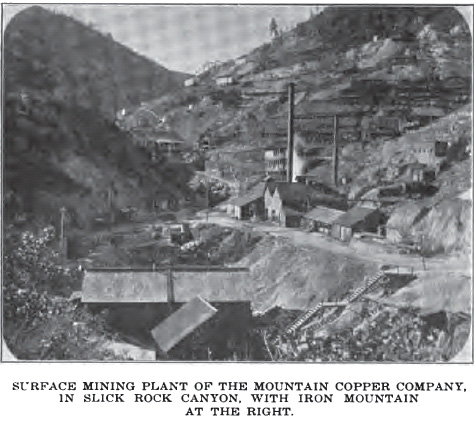
(The view from the summit of Iron Mountain east toward the city of Redding, California)
Iron Mountain Mine was placed on the EPA Superfund in 1983. The previous owners of the mine settled a lawsuit to recover the costs of treatment of the Acid Mine Drainage in 2000. Under current conditions the Acid Mine Drainage may continue for 3 to 5 Thousand years. Left unrecovered the resulting sludge will by then exceed one hundred fifty million tons, enough sludge to build 5 Great Pyramid of Giza . Iron Mountain has proven reserves of 15 million tons of massive sulfide ore.
The Mining and Minerals Policy Act of 1970 at 30 U.S.C. § 21 (a) in which the Congress declares it is “…the continuing policy of the Federal Government in the national interest to foster and encourage private enterprise in (1) the development of economically sound and stable domestic mining, minerals, metal and mineral reclamation industries, (2) the orderly and economic development of domestic mineral resources, reserves, and reclamation of metals and minerals to help assure satisfaction of industrial, security and environmental needs…”
TITLE 42 > CHAPTER 82
CHAPTER 82—SOLID WASTE DISPOSAL
6901. Congressional findings
(a) Solid waste
The Congress finds with respect to solid waste—
(1) that the continuing technological progress and improvement in methods of manufacture, packaging, and marketing of consumer products has resulted in an ever-mounting increase, and in a change in the characteristics, of the mass material discarded by the purchaser of such products;
(2) that the economic and population growth of our Nation, and the improvements in the standard of living enjoyed by our population, have required increased industrial production to meet our needs, and have made necessary the demolition of old buildings, the construction of new buildings, and the provision of highways and other avenues of transportation, which, together with related industrial, commercial, and agricultural operations, have resulted in a rising tide of scrap, discarded, and waste materials;
(3) that the continuing concentration of our population in expanding metropolitan and other urban areas has presented these communities with serious financial, management, intergovernmental, and technical problems in the disposal of solid wastes resulting from the industrial, commercial, domestic, and other activities carried on in such areas;
(4) that while the collection and disposal of solid wastes should continue to be primarily the function of State, regional, and local agencies, the problems of waste disposal as set forth above have become a matter national in scope and in concern and necessitate Federal action through financial and technical assistance and leadership in the development, demonstration, and application of new and improved methods and processes to reduce the amount of waste and unsalvageable materials and to provide for proper and economical solid waste disposal practices.
(b) Environment and health
The Congress finds with respect to the environment and health, that—
(1) although land is too valuable a national resource to be needlessly polluted by discarded materials, most solid waste is disposed of on land in open dumps and sanitary landfills;
(2) disposal of solid waste and hazardous waste in or on the land without careful planning and management can present a danger to human health and the environment;
(3) as a result of the Clean Air Act [ 42 U.S.C. 7401 et seq.], the Water Pollution Control Act [ 33 U.S.C. 1251 et seq.], and other Federal and State laws respecting public health and the environment, greater amounts of solid waste (in the form of sludge and other pollution treatment residues) have been created. Similarly, inadequate and environmentally unsound practices for the disposal or use of solid waste have created greater amounts of air and water pollution and other problems for the environment and for health;
(4) open dumping is particularly harmful to health, contaminates drinking water from underground and surface supplies, and pollutes the air and the land;
(5) the placement of inadequate controls on hazardous waste management will result in substantial risks to human health and the environment;
(6) if hazardous waste management is improperly performed in the first instance, corrective action is likely to be expensive, complex, and time consuming;
(7) certain classes of land disposal facilities are not capable of assuring long-term containment of certain hazardous wastes, and to avoid substantial risk to human health and the environment, reliance on land disposal should be minimized or eliminated, and land disposal, particularly landfill and surface impoundment, should be the least favored method for managing hazardous wastes; and
(8) alternatives to existing methods of land disposal must be developed since many of the cities in the United States will be running out of suitable solid waste disposal sites within five years unless immediate action is taken.
(c) Materials
The Congress finds with respect to materials, that—
(1) millions of tons of recoverable material which could be used are needlessly buried each year;
(2) methods are available to separate usable materials from solid waste; and
(3) the recovery and conservation of such materials can reduce the dependence of the United States on foreign resources and reduce the deficit in its balance of payments.
CALIFORNIA PUBLIC RESOURCES CODE
SECTION 2710-2719
2710. This chapter shall be known and may be cited as the Surface Mining and Reclamation Act of 1975.
2711. (a) The Legislature hereby finds and declares that the extraction of minerals is essential to the continued economic well-being of the state and to the needs of the society, and that the reclamation of mined lands is necessary to prevent or minimize adverse effects on the environment and to protect the public health and safety. (b) The Legislature further finds that the reclamation of mined lands as provided in this chapter will permit the continued mining of minerals and will provide for the protection and subsequent beneficial use of the mined and reclaimed land. (c) The Legislature further finds that surface mining takes place in diverse areas where the geologic, topographic, climatic, biological, and social conditions are significantly different and that reclamation operations and the specifications therefor may vary accordingly.
2712. It is the intent of the Legislature to create and maintain an effective and comprehensive surface mining and reclamation policy with regulation of surface mining operations so as to assure that: (a) Adverse environmental effects are prevented or minimized and that mined lands are reclaimed to a usable condition which is readily adaptable for alternative land uses. (b) The production and conservation of minerals are encouraged, while giving consideration to values relating to recreation, watershed, wildlife, range and forage, and aesthetic enjoyment. (c) Residual hazards to the public health and safety are eliminated.
2713. It is not the intent of the Legislature by the enactment of this chapter to take private property for public use without payment of just compensation in violation of the California and United States Constitutions.
The parties hereby declare their intention to submit an application for permit for the resumption of surface mining pursuant to:
SURFACE MINING AND RECLAMATION ACT of 1975 and ASSOCIATED REGULATIONS
The county of Shasta is defined as the lead agency for the purposes of this chapter, and has the primary responsibility for enforcing SMARA. (PRC Section 2774.1(f))
With: Request for Approval of a transfer of duties and obligations as provided for by the Consent Judgment and SOW.
Application for Remedy Review pursuant to 121 (c) CERCLA, Post ROD Remedial Investigation and Feasibility Study and Restoration Plan Proposal for Modifications to Remedial Design and Remedial Action
And proposal for new Statement of Work (SOW) and schedule and budget (CERCLIS)
Statutory requirements as they relate to the scope and objectives of the remedial action (NCP §300.430(f)(5)(ii)). “How the remedy utilizes permanent solutions and alternative treatment technologies or resource recovery technologies to the maximum extent practicable.”
Statement of Work For Remedial Investigation (RI) and Feasibility Study (FS) Iron Mountain Mine Superfund Site ARTESIAN MINERAL DEVELOPMENT & CONSOLIDATED SLUDGE, INC. (AMD&CSI) INTRODUCTION Artesian Mineral Development & Consolidated Sludge, Inc.(AMD&CSI) has been engaged through a joint venture agreement with Iron Mountain Mines, Inc. to undertake the responsibilities of Site Operator of the EPA treatment plant and other facilities at Iron Mountain Mines Superfund site. AMD&CSI also has been engaged to perform resource conservation and recovery of the process sludge and to market those products. AMD&CSI proposes to construct and operate a processing facility adjoining the existing treatment plant at Minnesota flats to process the sludge into marketable products. AMD&CSI proposes to construct and operate a pretreatment facility at the Slickrock creek copper cementation plant to remove dissolved and suspended minerals and metals from the Acid Mine Drainage (AMD) and to recirculate a portion of the solution back into the mine, to accelerate the dissolution of the ore bodies as a final remedial action plan according to provisions of CERCLA and the NCP. AMD&CSI proposes to construct and operate a toxic sludge reclamation facility at the toxic pit upon the Brick Flat mine. This Statement of Work (SOW) sets forth requirements of the implementation of work, including the development of a remedial investigation and feasibility study (RI/FS). The purpose of the RI/FS is to investigate the nature and extent of contamination at the Iron Mountain Mine Superfund Site (the "Site"), and develop and evaluate potential remedial alternatives. The RI and FS are interactive and may be conducted concurrently so that the data collected in the RI influences the development of remedial alternatives in the FS, which in turn affects the data needs and the scope of treatability studies. AMD&CSI will conduct the RI/FS (except for the human health baseline risk assessment (HHRA) and the ecological risk assessment (ERA) components, jointly "the risk assessments," as noted in Paragraph 23 of this document) and produce a draft RI and FS report that are in accordance with the Order, including this SOW, the Guidance for Conducting Remedial Investigations and Feasibility Studies Under CERCLA (the "RI/FS Guidance"), the Guide to Preparing Superfund Proposed Plans, Records of Decision, and Other Remedy Selection Decision Documents (the "ROD Guidance"), and any other guidance documents that EPA uses in conducting an RI/FS (a list of the primary guidance documents is attached), as well as any additional requirements in the Order. (1) The RI/FS Guidance describes the report format and the required report content. (In this SOW, numbers in parentheses at the head of a section or paragraph refer to a specific part of the RI/FS Guidance.) AMD&CSI will furnish all necessary personnel, materials, and services needed, or incidental to, performing the RI/FS, except as otherwise specified in the Order. At the completion of the RI/FS, EPA will be responsible for the selection of a Site remedy and will document this selection in a Record of Decision (ROD). The remedial action alternative selected by EPA will meet the cleanup standards specified in CERCLA Section 121. That is, the selected remedial action will be protective of human health and the environment, will be in compliance with, or include a waiver of, applicable or relevant and appropriate requirements of other laws, will be cost-effective, will utilize permanent solutions and alternative treatment technologies or resource recovery technologies to the maximum extent practicable, and will address the statutory preference for treatment as a principal element. The final RI/FS report and EPA's risk assessments will, with the administrative record, form the basis for the selection of the Site remedy and will provide the information necessary to support the development of the ROD.
As specified in CERCLA Section 104(a)(1), as amended by SARA, EPA will provide oversight of AMD&CSI's activities throughout the RI/FS. AMD&CSI will support EPA's initiation and conduct of activities related to the implementation of oversight activities. WORK TO BE PERFORMED I. Scoping (RI/FS Guidance, Chapter 2)
AMD&CSI 's Project Coordinator will meet with EPA after submittal of the written documents listed above to brief EPA regarding the findings that AMD&CSI made during the first phases of scoping (as defined in Chapter 2 of the RI/FS Guidance). EPA will notify AMD&CSI in writing of the proposed date of the meeting, to be mutually agreed upon. During Site Characterization (SOW Section III) EPA may require AMD&CSI to conduct additional scoping activities, if the results of field screening or laboratory analyses show that Site conditions are significantly different than EPA originally believed them to be at the end of the first phase of scoping. EPA will notify AMD&CSI in writing whenever EPA decides that AMD&CSI will perform additional scoping, and AMD&CSI will perform the additional scoping as notified by EPA. Within 30 days of EPA's notification to AMD&CSI regarding additional scoping, AMD&CSI will develop and submit, for EPA review and approval, a written work plan for the additional scoping that EPA requires AMD&CSI to perform. AMD&CSI will then perform the additional scoping according to the EPA-approved work plan and the EPA-approved schedules in the work plan. The RI/FS Work Plan and Sampling and Analysis Plan will be reviewed and approved by EPA before the initiation of field activities. EPA will, if requested by AMD&CSI, review and comment on work plans for upcoming or ongoing field activities conducted under state authorities, to assist AMD&CSI in gathering data which will be of sufficient quality to be useful in the Remedial Investigation detailed in this SOW. AMD&CSI may also submit written requests to EPA to perform RI field activities before EPA approval of the entire RI/FS Work Plan. EPA may approve or deny the request.
Sources of contaminants, migration pathways, and potential human and environmental receptors; including a review of all historical and current potential sources (natural and man-made) of ground water contamination; Varieties and quantities of contaminants released at or near the Site; Past disposal practices of any kind at and near the Site including a comprehensive study of historic tailings spills; The physical and chemical characteristics of the contaminants, and their distribution among the environmental media (ground water, soil, surface water, sediments, and air) at and near the Site; Any previous sampling events conducted at or near the Site; Previous responses conducted at or near the Site by local, state, federal, or private parties, known by AMD&CSI; Geology, hydrogeology, local and regional hydrology, and meteorology of the Site; Environmental characterization of the Site, including flora and fauna at and near the Site; data regarding threatened, endangered, or rare species; and sensitive environmental areas and critical habitats at and near the Site (AMD&CSI will compile any results from relevant previous testing to document any known ecological effect such as toxicity or bioaccumulation in the food chain.); Background ground water, soil, surface water, sediments, and air characteristics; Demographics and land use at and near the Site; Residential, municipal, agricultural, or industrial wells at or near the Site; and Surface water uses for areas surrounding the Site, including downstream of the Site. AMD&CSI will use data compiled and reviewed to describe additional data needed to characterize the Site, to better define potential ARARs, and to develop a range of preliminarily identified remedial alternatives. All data compiled will be supplied to EPA in ArcView ® format or other electronic format as approved by the RPM. All GIS data sets will be in a UTM or State Plane coordinate system. EPA recognizes that, historically, survey data at the AMD&CSI Mine Site in Questa have been generated in the mine coordinate system. Conversion of these data to the State Plane coordinate system may result in errors in the x, y, and z directions. The RI/FS Work Plan will include a data management plan as specified in Paragraph 13 of this SOW. AMD&CSI will establish DQOs, subject to EPA approval, for evaluating the usefulness of existing data.
Further detail in the site conceptual model will be refined by EPA with input from the Technical Coordination Group (TCG) in the risk assessments (Step 3 of the Ecological Risk Assessment.)
Field personnel will be made available for EPA QA/QC training and orientation at EPA's request. AMD&CSI will demonstrate, in advance and to EPA's satisfaction, that each laboratory it may use is qualified to conduct the proposed work. All laboratories used will use methods and analytical protocols for the analytes in the media of interest within detection and quantification limits consistent with EPA QA/QC procedures and with DQOs approved in the QAPP for the Site by EPA. All laboratories used will have and follow an approved QA program. If a laboratory not in the Contract Laboratory Program (CLP) is selected, methods consistent with CLP methods that would be used at this Site for the purposes proposed and QA/QC procedures approved by EPA will be used. In addition, a laboratory QA program will be submitted for EPA review and approval, and the laboratory's EPA proficiency tests for waste water and drinking water for at least the previous two years will be submitted to EPA. EPA may require that AMD&CSI submit detailed information to demonstrate that any laboratory used is qualified to conduct the work, including information on personnel qualifications, equipment and material specifications. Any laboratory used for work under the Order is subject to EPA disapproval in accordance with Paragraph 34 of the Order. If, at any time, EPA determines that any laboratory used by AMD&CSI is unacceptable for any reason, AMD&CSI, will at EPA's request bar that laboratory from any work under the Order, and notify EPA of AMD&CSI's selected new laboratory. AMD&CSI will provide EPA with unlimited access to laboratory personnel, equipment and records relating to sample collection, transportation and analysis.
II. Community Relations
REMEDIAL INVESTIGATION III. Site Characterization (RI/FS Guidance, Chapter 3)
Site characterization also includes determining past (including pre-mining) and present background concentrations of analytes in all environmental media, including, but not limited to, ground water, surface water, sediment, seeps and springs, soil, and native rock. Factors affecting background may include regional geology, hydrogeology, and hydrology. Background concentrations of analytes will be compared to Site concentrations of contaminants before EPA makes risk management decisions.
AMD&CSI will collect the information described in the first column of Table 3-10 (Summary of Source Information) of the RI/FS Guidance using the primary and secondary collection methods described in the third and fourth columns of that table, as appropriate. If requested by EPA, AMD&CSI will collect data regarding the location and extent of contaminant sources using methodologies described in Section 8 of the Compendium. EPA may require AMD&CSI to collect data using survey techniques including ground-penetrating radar, electrical resistivity, electromagnetic induction, magnetometry, seismic profiling, and aerial photography (using infrared imagery to find sources through interpretation of the ecological effects that result from stressed biota).
In the iterative process, AMD&CSI will initially take a round of samples on and near the Site using field screening type techniques, if necessary. The sampling program will be based on EPA's preliminary work on the risk assessments, including the problem formulation step of the ecological risk assessment, and will include ground water, soil, surface water, sediment, and air samples, and biological samples in support of the ERA. Based on the results of the initial samples, EPA will work with AMD&CSI, using the DQO process and standard statistical methods, to evaluate the necessity of taking additional rounds of ground water, soil, surface water, sediments, air, and/or biological samples. EPA will then determine the adequacy of the number and types of samples after consultation with AMD&CSI. If appropriate, as determined by EPA's evaluation, AMD&CSI will analyze subsequent sampling rounds using more exacting techniques as specified by EPA. As the final step in this iterative sampling and analysis process, AMD&CSI will document the extent of contamination on and near the Site using an analytical level specified by EPA that yields data quality that is sufficient, as determined by EPA, for use in the risk assessments and in the analysis and selection of remedial alternatives. AMD&CSI will use the methodologies for sampling in each medium required by the RI/FS Guidance (section 3.2.4).
All data and programming, including any proprietary programs, will be made available to EPA together with a sensitivity analysis. AMD&CSI may assert a business confidentiality claim for the proprietary programs, as provided in Section XVI of the Order. The RI data will be presented in ArcView ® format or other electronic format as directed by the RPM, and in accordance with the data management plan to facilitate EPA's preparation of the risk assessments. All GIS data sets will be in a UTM or State Plane coordinate system. Conversion of these data to the State Plane coordinate system may result in errors in the x, y, and z directions. Analyses of data collected for Site characterization will meet the DQOs developed in the QA/QC plan stated in the SAP (or as revised during the RI).
AMD&CSI will record data directly and legibly in field log books with entries signed and dated by AMD&CSI or AMD&CSI's contractors. Original written field log book entries may not be obscured when AMD&CSI makes changes in written log book entries, and AMD&CSI or AMD&CSI's agent will sign and date any changes. AMD&CSI will use standard format information sheets for AMD&CSI's written daily log entries.
IV. Treatability Studies (RI/FS Guidance, Chapter 5)
As provided in Paragraph 8 of the Order, on request by AMD&CSI EPA may review these actions to determine whether they are consistent with the NCP and the RI/FS Guidance. (EPA has not yet reviewed these actions for that purpose.) AMD&CSI will submit one copy of each engineering design document and drawing for these activities to the EPA RPM. If these documents and drawings will be used in the RI/FS Report, they must be presented in a format that is in accordance with the data management plan. FEASIBILITY STUDY V. Development and Screening of Remedial Alternatives (RI/FS Guidance, Chapter 5)
Technology Process options will be evaluated on the basis of effectiveness, implementability, and cost factors to select and retain one or more representative processes for each technology type. AMD&CSI will summarize the technology types and process options and specify the reasons for eliminating alternatives.
VI. Detailed Analysis of Remedial Alternatives (RI/FS Guidance, Chapter 6)
REFERENCES The following list, although not comprehensive, contains many of the regulations and guidance documents that apply to the RI/FS process: National Oil and Hazardous Substances Pollution Contingency Plan, 40 C.F.R. Part 300. OSHA regulations at 29 C.F.R. 1910.120. "Guidance for Conducting Remedial Investigations and Feasibility Studies Under CERCLA," U.S. EPA, Office of Emergency and Remedial Response, October 1988, OSWER Directive No. 9355.3-01. "Guidance on Oversight of Potentially Responsible Party Remedial Investigations and Feasibility Studies," U.S. EPA, Office of Waste Programs Enforcement, OSWER Directive No. 9835.3. "Interim Guidance on PRP Participation in the RI/FS Process," U.S. EPA, May 16, 1988, OSWER Directive No. 9835.1a. "Guide to Preparing Superfund Proposed Plans, Records of Decision, and Other Remedy Selection Decision Documents," U.S. EPA, Office of Solid Waste and Emergency Response, EPA 540-R-98-031, July 1999, OSWER Directive No. 9200.1-23P. "A Compendium of Superfund Field Operations Methods," Two Volumes, U.S. EPA, Office of Emergency and Remedial Response, EPA/540/P-87/001a, August 1987, OSWER Directive No. 9355.0-14. "EPA NEIC Policies and Procedures Manual," May 1978, revised November 1984, EPA-330/9-78-001-R. "Data Quality Objectives for Remedial Response Activities," U.S. EPA, Office of Emergency and Remedial Response and Office of Waste Programs Enforcement, EPA/540/G-87/003, March 1987, OSWER Directive No. 9335.0-7B. "EPA Requirements for Quality Assurance Project Plans, Interim Final," EPA QA/R-5, November 1999. "EPA Guidance for Quality Assurance Project Plans," EPA QA/G-5, February 1998. "Users Guide to the EPA Contract Laboratory Programs," U.S. EPA, Sample Management Office, August 1982. "Interim Guidance on Compliance with Applicable or Relevant and Appropriate Requirements," U.S. EPA, Office of Emergency and Remedial Response, July 9, 1987, OSWER Directive No. 9234.0-05. "CERCLA Compliance with Other Laws Manual," Two Volumes, U.S. EPA, Office of Emergency and Remedial Response, August 1988 (draft), OSWER Directive No. 9234.1-01 and -02. "Guidance on Remedial Actions for Contaminated Ground Water at Superfund Sites" (Interim Final), U.S. EPA, Office of Emergency and Remedial Response, December 1, 1988, OSWER Directive No. 9283.1-2. "Draft Guidance on Preparing Superfund Decision Documents," U.S. EPA, Office of Emergency and Remedial Response, March 1988, OSWER Directive No. 9355.3-02. "Risk Assessment Guidance for Superfund - Volume I Human Health Evaluation Manual (Part A)," December 1989, EPA/540/1-89/002. "Risk Assessment Guidance for Superfund - Volume I Human Health Evaluation Manual (Part B) - Development of Risk-based Preliminary Remediation Goals," 1991. "Risk Assessment Guidance for Superfund - Volume I Human Health Evaluation Manual (Part D) - Standardized Planning, Reporting, and Review of Superfund Risk Assessments," January 1998. "Risk Assessment Guidance for Superfund. Volume I: Human Health Evaluation Manual. Supplemental Guidance. Dermal Risk Assessment." Interim Guidance, 1998 "Risk Assessment Guidance for Superfund - Volume II Environmental Evaluation Manual," March 1989, EPA/540/1-89/001. "Ecological Risk Assessment Guidance for Superfund: Process for Designing and Conducting Ecological Risk Assessments" (Interim Final), U.S. EPA, June 5, 1997. "Guidance for Data Usability in Risk Assessment," Parts A and B, April 1, 1992, OSWER Directives 9285.7-09A and B. "Performance of Risk Assessments in Remedial Investigation/Feasibility Studies (RI/FSs) Conducted by Potentially Responsible Parties (PRPs)," August 28, 1990, OSWER Directive No. 9835.15. "Role of the Baseline Risk Assessment in Superfund Remedy Selection Decisions," April 22, 1991, OSWER Directive No. 9355.0-30. "Health and Safety Requirements of Employees Employed in Field Activities," U.S. EPA, Office of Emergency and Remedial Response, July 12, 1981, EPA Order No. 1440.2. "Final Guidance on Administrative Records for Selecting CERCLA Response Actions," U.S. EPA, December 3, 1990, OSWER Directive No. 9833.3A-1. "Community Relations in Superfund: A Handbook," U.S. EPA, Office of Emergency and Remedial Response, June 1988, OSWER Directive No. 9230.0#3B. "Community Relations During Enforcement Activities And Development of the Administrative Record," U.S. EPA, Office of Programs Enforcement, November 1988, OSWER Directive No. 9836.0-1A. "Exposure Factors Handbook," EPA, 1997. "Human Health Evaluation Manual, Supplemental Guidance, Standard Default Exposure Factors," EPA , 1991. "Dermal Exposure Assessment: Principles and Applications" (Interim Report), U.S. EPA, Office of Health and Environmental Assessment, January, 1992. EPA/600/8-91/011/B. Integrated Risk Information System (IRIS), 2000. "Health Effects Assessment Summary Tables (HEAST)," U.S. EPA, Office of Solid Waste and Emergency Response, 1997, EPA/540/R-95/036. "Use of Soil Cleanup Criteria in 40 CFR Part 192 as Remediation Goals for CERCLA sites," U.S. EPA, Office of Emergency and Remedial Response, February 12, 1998, OSWER Directive No. 9200.4-25. "Guidelines for Ecological Risk Assessment," U.S. EPA, April 1998, EPA/630/R-95/0021 (Federal Register Vol. 63, No. 93, May 14, 1998). Notes 1. If EPA approves a schedule under the Order, that schedule supersedes any timing requirements established in guidance documents. Likewise, if EPA, in accordance with the Order, requires AMD&CSI to perform work at a time not consistent with guidance documents, AMD&CSI will nonetheless perform the work. 2. As noted in the Definitions section of the Order, as used herein the term "contaminant" includes hazardous substances and pollutants. If any submission under this Order references any contaminant or pollutant that is not also a hazardous substance, AMD&CSI will make an explicit statement to that effect in the same submission. 3. The identification of environmental receptors is a part of the ecological risk assessment problem formulation, and thus will be coordinated with EPA. |
The Iron Mountain Mines, Inc. proposed ROD 6 Remedy
(No Hard-Rock Mining is proposed for this final remedy pursuant to CERCLA and the NCP)
Conceptual Site Model
According to the Statement of Work, Remedial Investigation (RI) and Feasibility Study (FS)
And in accordance with the Consent Decree for the Iron Mountain Mines Superfund Site
Artesian Mineral Development & Consolidated Sludge, Inc. (AMD&CSI) has been engaged on behalf of Iron Mountain Mines, Inc. to undertake the responsibilities of Site Operator of the EPA treatment plant and other facilities at Iron Mountain Mines, Inc. Superfund site. AMD&CSI also has been engaged to perform implementation of bio-mining and resource conservation and recovery of the process sludge and the acid mine drainage and to market those products.

AMD&CSI proposes to construct and operate a processing facility adjoining the existing treatment plant at Minnesota flats to process the sludge into marketable products. The proposed sludge processing facility will process sludge that has been acid leached of heavy metals in a high temperature calcining plant to manufacture high performance cement and grout products and an acid recovery plant. The proposed facility will have an acid leaching facility, a calcining plant facility, a silica sand recovery facility, an acid plant recovery facility, and research facilities. Heavy metals recovered by the acid leaching will be transported to the Minnesota facilities for further processing and refining.
AMD&CSI proposes to construct and operate a pretreatment facility between the copper cementation plant and the Richmond Mine Portal to remove dissolved and suspended minerals and metals from the Acid Mine Drainage (AMD) and to recirculate a portion of the solution back into the mine, to accelerate the dissolution of the ore bodies as a final remedial action plan according to provisions of CERCLA and the NCP. (The IMMI proposal for solution mining (insitu mining) also now known as biomining, first submitted in 1985)
AMD&CSI proposes to construct and operate a toxic sludge reclamation facility at the toxic pit upon the Brick Flat mine. The processing of the sludge will involve acid leaching of the sludge to remove heavy metals, and the transport of the sludge to the Minnesota flats treatment facility for processing at the calcining plant. A comprehensive evaluation of the economics involved in operating a secondary sludge acid leaching facility as opposed to transporting the toxic metal sludge directly will be evaluated to take into account all of the variables regarding operation, labor, transport, and environmental impacts to determine the best technology to process the existing sludge disposed upon the Brick Flat mine.
AMD&CSI proposes to construct and operate a bio-remediation pre-treatment facility at the Richmond mine portal facilities, which include the former Richmond warehouses and what remains of the ore processing facilities. This facility will incorporate a bio-sulfide production facility, a selective sulfide precipitation facility, an acid leaching facility, a heavy metals recovery facility, and a fertilizer production facility,
AMD&CSI proposes to construct at Minnesota a heavy metals and precious metals refining facility, an advanced hydrometallurgy facility, a research facility, staff and researcher accommodations, a manufacturing facility, and a IGCC gasification plant. This facility will provide power, as well as facilitate the production of: Ammonia, Isobutylene and other syngas derived hydro-carbons, and hydrogen and carbon for processing streams. The facility will utilize low grade coal from the Montgomery formation, rice straw, and other organic waste streams.
AMD&CSI proposes to preprocess the Acid Mine Drainage and the Sludge leachate to recover heavy metals and precious metals prior to processing in the lime treatment plant. This process will substantially remove Copper and Cadmium from the AMD prior to lime treatment. The lime treatment plant will continue to operate to remove Zinc, as well as to remove Iron, Aluminum, Magnesium, Manganese and other residual metals and minerals from the AMD.
The benefits of this process and procedure to human health and the environment will be improved effluent quality of the treated water discharged into the public waterways, and reduced potential exposure to toxic metals due to disposal issues.
The economic benefits of this procedure will be reduced demand on the lime treatment facility in reduced amount of waste processed, reduced amount of lime required for treatment, reduced amount of waste material generated for subsequent processing, and reduced energy and labor requirements to operate the existing lime treatment and disposal facilities.
Further economic value is projected based upon the value of the recovered materials.
Some of the anticipated valuable materials to be recovered from the AMD and Sludge and/ or manufactured include:
Precious metals; (Gold, Silver, Platinum, Palladium, Rhodium, Rhenium, Osmium, Iridium)
Cadmium Sulfide and Cadmium Telluride for photovoltaic cells, modulators, and other high technology applications.
Copper Sulfide, electrolytic copper
Zinc Oxide, electrolytic zinc
Sulfur and Sulfuric Acid
High performance cements and grouts.
Ammonia, Phosphorus, Potassium, and trace elements for fertilizers.
Iron Pigments, Iron Sponge
Aluminum oxide, Magnesium oxide
Silicon and silica
Strategic metals including Manganese, Uranium, Tantalum, Indium, Gallium, Niobium, Titanium, Cobalt, Nickel, Lithium, Zirconium, Tungsten, Vanadium, Lead, Mercury, Boron, Barium, Strontium, Selenium, Tellurium, Tin, and Rare Earth Elements.
As Recovered from the AMD and Sludge.
The conceptual site model synthesizes and crystallizes what is already known about the site that is pertinent to decision-making requirements.
The proposed sulfide pretreatment plant will be purchased and operated under a joint venture agreement with Bioteq, Inc. of Vancouve, BC and IMMI .
The proposed high temperature calcining plant, fertilizer plant and acid plant will be purchased from Metso Minerals, Inc. Finland
The proposed IGCC gasification plant will be purchased from Chevron, Inc.
SMARA requirements will be performed by LSA Associates, South San Francisco
This conceptual site model is the result of a systematic planning process in the development of a conceptual site model (CSM). Using all available information and with the assistance of appropriate disciplinary expertise, the project team has developed a CSM that distills what is already known about the site. The CSM, in turn, can now be used to identify what more must be learned in order to achieve project goals.
As the site moves from the equivalent of a remedial investigation and on to remediation, the CSM could possibly include a fate and transport model (numerical or analytical), a pathways analysis to support risk evaluation, if required, along with a supporting risk or dose model, a spatially correct electronic map of the site that incorporates pertinent contextual features such as roads, fence lines, building footprints, aerial photos, existing analytical data, pertinent infrastructure, topographical information, etc., a subsurface stratigraphic model, and possibly a depiction of where contamination is believed to exist at levels of concern, based on past sampling results.
- The project's CSM will evolve and mature as the project work progresses. At any given point in time, the maturity of the CSM reflects both the level of site understanding and the amount of information and complexity of analysis required to support the decisions that need to be made. For sites such as Iron Mountain Mine with a long-term life-cycle (i.e., the characterization, remediation, and closure process will be measured in tens or hundreds of years), continuity in maintaining the CSM and carrying it forward as it evolves and matures becomes a critical management issue. The project management team will therefore be a top priority to establish a long term chain of command and authority for the site.
- A sufficient CSM not only captures what is known about the site, but also supports the evaluation of the uncertainty associated with decision-making based on what is currently known. Managing decision uncertainty will be discussed later in this section. Uncertainty may be addressed in a qualitative fashion, using a weight of evidence approach, or it may be more quantitative in nature, using statistical techniques and statistical concepts. The evaluation of uncertainty is an extremely important point of concurrence for the project team. The result of an uncertainty evaluation may be that a decision can be made based on existing information as embodied in the CSM. Alternatively, the result may identify data gaps that, if addressed by additional data collection, would allow decision-making to go forward.
- For those decisions that would be made with an unacceptable level of uncertainty if only existing data were used, the CSM should provide the foundation for developing information-gathering programs to reduce decision-making uncertainty to acceptable levels. The CSM should lead to hypotheses or statements that are "testable" or verifiable via data collection (e.g., contamination levels within a particular decision unit do not satisfy cleanup requirements). The CSM should do this in a manner that supports a dynamic work strategy for resolving those uncertainties. This assumes that the CSM can and will be updated and refined as activities that are part of the dynamic work strategy produce new information. The design of dynamic work strategies and their linkages with underlying CSMs are discussed in greater detail in the section entitled Dynamic Work Strategies.
The CSM can also serve several supporting roles in the implementation a resource conservation and recovery approach. These include educating stakeholders, identifying required technical expertise, screening applicable analytical or characterization technologies, refining project strategies, identifying potential regulatory drivers, selecting points of compliance, estimating dose or risk and deriving risk or dose-based cleanup criteria, supporting cost estimation needs, evaluating and implementing remedial alternatives, guiding sampling efforts, visualizing contamination distributions, and supporting site closeout.
Dynamic Work Strategies
Dynamic work strategies allow project activities to adapt to unexpected site conditions and the results from real-time measurement systems.
Dynamic work strategies refer to strategies that incorporate the ability to adapt project activities to site conditions as new information becomes available while work is underway. This adaptation may be in response to data collection activities designed to address CSM unknowns, or it may be in response to completely unexpected site conditions encountered during the course of work.
Dynamic work strategies can be integrated into almost every activity associated with hazardous waste site characterization and remediation. This includes overall project strategies, sampling and analysis programs for characterization purposes, remedial action design, implementation, and performance monitoring, long-term monitoring for sites that require it, closure plans, and quality assurance/quality control activities.
This section discusses some of the key concepts associated with dynamic work strategies, important considerations when designing and implementing dynamic work strategies, and the types of adaptive approaches that can be incorporated in dynamic work strategies.
Key Concepts
Dynamic work strategies provide a basis for adapting work activities in response to real-time data while work is underway.
Dynamic work strategies are a product of the systematic planning process. When a review of decision uncertainty, as reflected by the CSM, indicates that there are key information deficiencies contributing to uncertainty, then dynamic work strategies and real-time measurement systems become important tools for cost-effectively managing that uncertainty. Dynamic work strategies address and reflect CSM data gaps. Dynamic work strategies are also an integral part of the feedback process for life-cycle systematic planning. Information generated as part of field activities associated with a dynamic work strategy contributes to the refinement and maturation of the CSM. The refined CSM, in turn, forms the basis for future decisions and additional data collection as necessary.
Dynamic work strategies are captured in planning documents. The implementation of the general and dynamic work strategies does not change the overall documentation process required under CERCLA or RCRA. There will still be the need for health and safety plans, quality assurance project plans, sampling and analysis plans, remedial action plans, standard operating procedures, etc., although the character of those plans will change to reflect dynamic work strategies. The nature of those changes will be discussed later in this section.
For any particular field activity, dynamic work strategies do not preclude the use of static strategies (i.e., strategies that specify exactly what field activities will take place). An example of a static data collection strategy is one where samples numbers, sample locations, and analytics are firmly established before field work begins. In fact, the work strategies will usually combine some level of fixed field activities with other activities that are more dynamic in nature. The best mix will be site and decision-need specific. In some cases a dynamic strategy may result in a work plan that is almost completely static in nature, with contingencies built in to accommodate possible results that are unlikely to occur. In other cases, a dynamic strategy may be based on very little pre-specified activities, with the bulk of work expected to be driven by information and circumstances encountered as work is underway.
An important distinction for dynamic work strategies is the distinction between strategies that actively acquire real-time information to reduce CSM uncertainty and use that information to change the course of field activities, versus strategies that include planning for unlikely project outcomes or conditions that may be encountered while work is underway, but that do not use real-time information gathering to determine whether those conditions exist or not. An example of the former are adaptive data collection programs used to bound contamination extent in soils, with new sample location selection determined by real-time results from previously sampled locations. An example of the latter is planning for field conditions that may adversely affect activities such as unusually wet soils, early snowfall, or high water conditions for programs involving sediments. The latter involves planning that would be expected for any well-managed program.
The concept of a "region or interval of decision uncertainty" is important for dynamic work strategies. The uncertainty interval represents a CSM state, measurement result, or set of measurement results that are insufficient to support confident decision-making. The uncertainty region concept and its relationship to measurement results will be discussed in greater detail in the section entitled Real-Time Measurement Systems. For this section's purposes, what is important is that when information falls in the uncertainty interval, subsequent data collection will likely be required to reduce the uncertainty of the situation to acceptable levels. Additional data collection is "likely," but not "essential" since the cost of collecting additional information may not be worth the uncertainty reduction that will be achieved, and decision-makers may opt for a conservative course of action instead. For example, a real-time screening result may indicate the possibility of contamination above cleanup levels for a particular location. The decision-maker may choose to simply remediate that location if remediation costs are not significant compared to the cost of collecting more definitive information through the use of more rigorous analytical methods.
Contingency planning is a critical step in formulating dynamic work strategies. Contingency planning addresses situations where different possible field activity outcomes require different responses. Dynamic work strategies are usually captured as "if-then" statements, and often formalized as a decision tree. Examples of common generic "if-then" statements built on real-time measurement results include:
- If a real-time measurement result (or set of results) is below a particular field-based action level, then contamination is at an acceptable level. Depending on where one is in the characterization/remediation process, an appropriate response might be labeling that area as no further action, skipping over that area during remediation, determining that remedial action performance is acceptable, designating the area for clean-closure confirmation sampling, or concluding that closure has been attained for that area.
- If a real-time measurement result (or set of results) is above a particular investigation level, then contamination is above acceptable levels. Depending on where one is in the characterization/remediation process, an appropriate response might include labeling that location as an area of concern for future attention, collecting additional neighboring samples to bound extent or assist in estimating impacted volumes, initiating a remedial action at that location, identifying that result as a monitoring issue and taking appropriate corrective actions (including increasing monitoring frequency or checking adjacent wells), or concluding that closure requirements have not been met and initiating additional remedial activities.
- If a real-time measurement result (or set of results) falls into a range defined as the region of decision uncertainty, then additional actions are required to address the uncertainty inherent in the result. These actions might include collecting additional real-time measurements in the vicinity to reduce sampling uncertainty, submitting one or more samples from that location for a more definitive analysis to control analytical or relational uncertainty, or initiating a remedial action at that location.
- If a real-time measurement result indicates the possible presence of new contaminants of concern, then appropriate responses might include revisiting analytical requirements to allow for more definitive speciation and quantification of these new contaminants of concern, initiating a process to determine site-specific cleanup objectives for the new contaminants of concern, or revisiting remedial strategies to determine their appropriateness and potential effectiveness for the new contaminants of concern.
- If focused QA/QC (i.e., QA/QC based on real-time quality control protocols) yields unexpected or unacceptable results, then appropriate corrective actions might include increasing the frequency of QC analyses, re-sampling and re-analyzing areas where results were suspect, modifying measurement approaches to improve overall data quality, or switching to alternative methods to manage quality control concerns.
Dynamic work strategies that involve data collection are typically associated with judgmental sampling programs. This is especially true when contamination is expected to be highly patterned due to release and/or migration mechanisms. Judgmental sampling programs are most commonly used to determine the presence or absence of contamination at levels of concern at specific locations. Location selection is driven by the "weight of evidence" derived from multiple sources of information pertinent to the contamination status of a site. There are also adaptive/sequential sampling program designs that are statistically based, and that can be used to estimate contaminated volumes, determine population characteristics such as the mean or median contamination concentration for an area, or bound contamination extent. While these techniques have not seen wide application, they can be very effective. For adaptive sampling strategies, it is important to have appropriate sampling program design expertise to ensure the program will be both technically defensible when complete, and that the approach is as cost-effective as possible. When considering technical expertise requirements for a project, one should remember that sampling program design issues are intimately intertwined with the selection of analytical techniques, and that addressing decision uncertainty means managing and balancing sampling, analytical, and relational uncertainties concurrently.
Important Considerations for Dynamic Work Strategies
Important considerations for dynamic work strategies include logistics, lines of authority, documentation requirements, and vendor involvement in strategy development.
There are several important considerations that must be addressed by project managers when developing a dynamic work strategy for a site. These include logistics, lines of authority, documentation requirements, and the potential need for service provider and/or vendor involvement in dynamic work strategy development.
Logistics
Because they are so critical to the successful implementation, logistical issues associated with dynamic work strategies and field activities are covered in greater detail in the section entitled Logistical and Implementation Considerations. Logistical issues include scheduling and coordination of activities, readiness reviews, technology validation, in-field decision support, data management, and project communication. While field activities are underway, project costs are measured by the number of days field teams are deployed. Down-time in the field, whatever the cause (equipment failure, communication problems, unexpected conditions, delays in decision-making, etc.), translate directly into increased project costs. For many real-time measurement technologies, costs per unit measurement are directly related to sample throughput. Unused capacity in field-based analytics drives up project costs. On the other hand, insufficient capacity can result in overall project delays and/or improper decision-making (i.e., time critical decisions that must be made whether data are available or not). Programs require an additional level of choreography for field activities, and this needs to be reflected in the dynamic work strategies that are formulated for a site. Logistical needs become particularly acute when a logistical approach is bundled into the overall remedial design.
Lines of Authority
Dynamic work strategies result in decisions that are made in the field in response to real-time information. Field-based decision-making can be relatively straightforward if decisions are anticipated and captured in appropriate "if-then" statements with associated contingency plans. However there will also likely be decisions that were not anticipated, or where site conditions deviate somewhat from what was expected in contingency plans. To address these situations, dynamic work strategies need to define clear lines of decision-making authority.
There are basically three levels of decision-making that may potentially be required during the course of field activity. The lowest level involves events, results, or conditions that are fully anticipated and captured in planning documentation or whose decision implications are insignificant. An example would be an investigation level for a particular real-time analytical technique that triggers the submittal of an additional sample for more definitive analysis. A second example would be slightly moving sampling locations to avoid obstructions. These types of decisions are the domain of the field project manager.
The second level involves decisions that could not be or were not fully anticipated. These types of decisions often can only be made with additional input and support from technical and project management staff. These staff may be present at the site during field activities, but more likely are technical resources that are "on-call" as-needed. The decisions at this level often require some additional technical analysis from or consultation with subject matter experts. A prime example is the inevitable quality control concerns that are encountered during the course of work, requiring mid-stream corrections or adjustments to analytical procedures or equipment. The problems that these types of concerns can cause can be minimized if readiness reviews or start-up field activities are used to identify potential concerns or bottlenecks before they become critical issues.
The third level involves decisions that are truly significant from a project decision-making perspective, and so require review by and consensus among the core team. The domain of these decisions depends on the level of core team involvement in on-going work, the degree of mutual trust in project technical staff, and how much decision-making authority was delegated during the planning process to the field and technical leads. Perhaps the best example of this type of decision is when data are being collected to document and demonstrate closure or to support a no further action (NFA) decision for specific portions of the site. The dynamic work strategy may leave the door open to collecting additional information in an area while field activities are underway if data sets initially collected are not deemed sufficient to support a closure or NFA finding. Closure or NFA decisions would likely be made by the project management team for a specific area.
Lines of authority can be effectively implemented only if the communication mechanisms are in place to support information sharing. These requirements will be discussed in greater detail in the section entitled Logistical and Implementation Considerations. There will be the need for timely exchange of information and feedback, along with methods to facilitate that communication (e.g., use of e-mail, secure project Web sites, etc.).
Documentation Requirements
The dynamic work strategies do not require a different set of planning documentation for characterization and remediation. Health and safety plans, sampling and analysis plans, remedial action work plans, quality assurance project plans, standard operating procedures...the documentation framework remains the same. However, different content needs for at least some of these documents will be required to support and implement dynamic work strategies. Specific content includes sections that detail real-time communication protocols, that fully define lines of authority for decision-making, that present a fuller level of "if-then" and contingency planning than would otherwise be needed, that discuss how real-time decision support will be provided for all levels of decision-making, and that address specific data management needs.
The project also will involve additional documentation as part of the implementation of dynamic work strategies simply to record what decisions were made, what the basis for those decisions were, and what activities were undertaken as a result. Documenting variances from work plans is standard practice for traditional characterization and remediation activities as well, but variances usually are the exception, not the rule. The situation may be reversed if site conditions are significantly different from what was anticipated during systematic planning.
Real-Time Measurement Service Provider Involvement
Dynamic work strategies also often can benefit from a greater level of real-time measurement system service provider involvement during the planning and strategy development process than would be the case otherwise. There are a couple of reasons for this. One is that the real-time measurement techniques under consideration may be non-standard either in their base technology, or in the way a more common technology (such as a GC/MS) is proposed for use. In some cases the technology that is most promising may be proprietary, and not commonly available. For many field-based real-time measurement technologies, conditions that will be encountered in the field may have a significant impact on expected performance. The potential service provider or original vendor of the technology may be the best source of information on what to expect performance-wise from the proposed technologies, as well as the primary technical resource for developing modifications to make sure the technology performs as well as possible.
A second reason is that service providers will be part of dynamic field activities. A service provider may bring his or her own special logistical needs and constraints that must be factored into the overall planning process (e.g., power requirements, other supporting service needs, throughput and turn-around constraints for analytical techniques, etc.). It is important to capture these early on when formulating dynamic work strategies.
Dynamic Work Strategies and Adaptation
Dynamic work strategies can be applied to project management, characterization, remedial design, monitoring, and site closure.
Dynamic work strategies can be the foundation for work activities throughout the hazardous waste site characterization and remediation process. Dynamic work strategies result in project adaptation. This adaptation can take place at different levels, from overall project management down to specific field activities. The following subsections describe in more detail what dynamic work strategies and resulting adaptations can look like when using a dynamic work strategies approach.
Adaptive Project Management
How the adaptive project management approach can be used to develop dynamic work strategies that improve overall project management and implementation.
While the adaptive project management approach is usually discussed in the context of dynamic data collection strategies, it can be used to develop dynamic work strategies that improve overall project management and implementation across the hazardous waste site life-cycle of characterization, remediation, and closure.
One of the potential benefits of the adaptive project management approach is the possibility for compressing activities into fewer field deployments, thereby shortening schedules and saving mobilization and demobilization costs.
An adaptive project management approach can facilitate the design and implementation of "treatment train" approaches to more difficult remediation problems such as chlorinated solvent contamination in groundwater. The concept of a treatment train is that the best approach to remediation may include the application of a number of different techniques sequentially. For example, for a DNAPL groundwater problem a treatment train may begin with the excavation and remediation of soils in the original source area, active in situ remediation of contaminated groundwater through the use of an injected reagent, followed by passive in situ groundwater remediation through monitored natural attenuation combined with plume hydraulic control. Treatment train approaches require active management of the overall remediation strategy. This includes making process control decisions for individual components of a treatment train while remediation is underway, and also deciding when to switch from one component to the next. Real-time measurements within a dynamic work strategy can be very useful in this regard.
An adaptive project management approach can be used to support site reuse decisions. Reuse options (e.g., residential, industrial, commercial, recreational) are tied to the economics of site redevelopment, including the ultimate cost of addressing environmental contamination problems. The use of an adaptive project management approach can allow characterization work to proceed without finalized reuse options, with characterization proceeding from high risk/uncertainty areas to areas of less concern. Decision points can be included at key steps in the characterization process to allow characterization activities to be terminated or redirected based on real-time results, as reuse option viability becomes clarified by the data collected.
Using the adaptive project management to change project management strategies often requires modifying activities to accommodate this approach. For example, closure and remediation strategies may need to be developed to some degree before characterization activities begin. Work flow may need to be structured so that closure is attained for areas with a low probability of contamination before remediation begins or while remediation is underway. Alternatively, data collection may be organized so that work begins with locations that have the greatest implications for the decisions that need to be made (e.g., those with the greatest likelihood of contamination).
Developing adaptive project management strategies is part of the systematic planning process. Addressing long-term issues early on (e.g., future land use options, remedial alternatives, closure requirements) and documenting them as part of the systematic planning process helps ensure that upper management is aware of potential decision contingencies that may arise along with their implications. This allows overall project strategies to be initially structured in a way that best manages uncertainties, and sets the stage for modifying or adapting project strategies as work proceeds and site realities become evident.
Adaptive Data Collection Strategies
A discussion of adaptive location selection and adaptive analytics selection as forms of adaptive data collection strategies.
The adaptive project management approach and dynamic work strategies are most commonly used in the form of adaptive data collection strategies. Data collection strategies can be "adaptive" in a number of different ways, one or all of which may be used in a particular adaptive data collection program. These include:
- Adaptive Location Selection. Adaptive location selection refers to data collection programs where sampling location decisions are made in the field in response to real-time data collection results.
- One example is selecting biased locations in response to other information available once field work begins. The purpose usually is to confirm the presence or absence of contamination at levels of concern for a particular location. Biasing information can include visual inspection, non-intrusive geophysical survey results for subsurface sample selection, active or passive soil gas monitoring results, results from gamma walkover surveys in the case of radionuclide contamination, etc. Another common application is the use of direct push technologies in conjunction with real-time measurements to decide where to place more costly permanent monitoring wells, or to support evaluation of subsurface site hydrogeology.
- A second example is the selection of additional locations in the field in response to contamination that has been discovered. The purpose is too laterally or vertically bound contamination above some pre-defined concentration level (i.e., contaminant delin