SACRAMENTO RIVER SAFE FROM IMM-AMD AT KESWICK!
Government Attacked For AIG Bailout - TIME FOR REFORM!
The Congressional Oversight Panel attacked the Treasury for two aspects of its bailout of AIG.
“By providing a complete rescue that called for no shared sacrifice among AIG's creditors, the Federal Reserve and Treasury fundamentally changed the relationship between the government and the country's most sophisticated financial player.”
“The AIG rescue demonstrated that Treasury and the Federal Reserve would commit taxpayers to pay any price and bear any burden to prevent the collapse of America's largest financial institutions and to assure repayment to the creditors doing business with them.”
false claims of unusual exigency - coercive monopoly fraud
INTERVENTION OF RIGHT! NINTH CIRCUIT RULES!
Iron Mountain Mine and T.W. Arman intervene, "two miners"
in looking at the substance of the matter, they can see that it "is a clear, unmistakable infringement of rights secured by the fundamental law." Booth v. Illinois , 184 U.S. 425 , 429 .
From such a gentle thing, from such a fountain of all delight, my every pain is born.
Michelangelo
Words that everyone once used are now obsolete, and so are the men whose names were once on everyone's lips: Camillus, Caeso, Volesus, Dentatus, and to a lesser degree Scipio and Cato, and yes, even Augustus, Hadrian, and Antoninus are less spoken of now than they were in their own days. For all things fade away, become the stuff of legend, and are soon buried in oblivion. Mind you, this is true only for those who blazed once like bright stars in the firmament, but for the rest, as soon as a few clods of earth cover their corpses, they are 'out of sight, out of mind.' In the end, what would you gain from everlasting remembrance? Absolutely nothing. So what is left worth living for? This alone: justice in thought, goodness in action, speech that cannot deceive, and a disposition glad of whatever comes, welcoming it as necessary, as familiar, as flowing from the same source and fountain as yourself. (IV. 33, trans. Scot and David Hicks)
errare humanum est, sed perseverare diabolicum
'to err is human, but to persist is diabolical.'
extra territorium jus dicenti impune non paretur

History of the clean Water Act and What Caused Its Failure
By Peter Maier, PhD, PE
August 2008
Prior to 1972, states had their own water pollution regulations, but since they were different, industries in ‘clean' states moved to ‘dirty' states. This led to employment loses in the ‘clean' states and Congress was asked to set national water pollution standards.
When reading the historical discussions prior to the actual CWA, it becomes clear that the Act was not yet able to set sewage treatment standards, but instead established a principle in order to achieve a goal that when somebody uses water, it should be returned at least in the same or better conditions, hence the ultimate goal of the Act to eliminate all water pollution, by 1985.
It was also realized that such a goal was not yet achievable, since the only technical term used in the legislation was demanding ‘secondary treatment', without any further definition, but which was supposed to be 85% treatment.
The legislation also selected a ‘technology-based' program, in stead of a ‘water quality-based' program, as it was felt that this would allow local politicians to manipulate local treatment requirements, thus avoiding the purpose and goal of the Act itself.
A technological-based program meant that everybody treating wastewater has to do so with the best treatment available, while a water-quality based program means that treatment standards could be determined by the water quality of the receiving water bodies.
The Act also acknowledged that ‘secondary treatment' would not any longer be acceptable if better treatment would become available and incorporated special legislation to allow EPA to set stricter treatment standards to achieve the ultimate goal of 100% treatment. The Act also provided funding for R&D to achieve better treatment than the initial required ‘secondary treatment'.
When EPA implemented the CWA, it established the NPDES (National Pollution Discharge Elimination System) permit system and established 85% treatment of two commonly used pollution tests, the TSS (Total Suspended Solids) and the BOD5 (Biochemical Oxygen Demand test after 5 days) test.
The BOD5 test was widely used worldwide, but what was forgotten was the fact that the 5-day test was mainly used as a timesaver and only measured the pollution caused by fecal waste. When EPA assumed that the BOD5 of raw sewage is 200 mg/l to establish the ‘secondary treatment' standards, it only addressed 40% of the ultimate BOD, which is 500 mg/l.
By setting 85% BOD5 treatment standards, EPA ignored all the water pollution caused by nitrogenous (urine and protein) waste. For those interested in how the BOD test should be applied, visit www.petermaier,net and look in the Technical PDF file.
Using the BOD5 test without any nitrogen data does not allow the real performance evaluation of sewage treatment plants nordetermine the real waste loadings on receiving water bodies.
Although EPA acknowledged the problems with the test in 1984, in stead of correcting the test, it allowed an alternative test and officially ignored the water pollution caused by nitrogenous waste, while this waste, like fecal waste, not only exerts an oxygen demand, but also in all its forms is a nutrient for algae and other aquatic plant life. Utah States' Science Council in 1984, recommended correcting this essential test, but their recommendation was rejected.
Nitrogenous waste, called a nutrient, according to EPA's 1992 “National Water Quality Inventory Report to Congress” is now causing mayor problems in the nation's rivers, lakes and estuaries.
The sad conclusion is that; solely due a lack of understanding of an essential pollution test, the Clean Water Act, the second largest federally funded public works program, was a failure and nobody seems to either care or can be held accountable.
Peter Maier, PhD, PE
COPPER, CADMIUM, AND ZINC; QAPP Information: QA Info Missing
Final Listing Decision: Delist from 303(d) list
(being addressed by USEPA approved TMDL)
Factors Leading to Failures in Predicting Post-
Mine Water Quality and Acid Mine Drainage
In the report comparing predicted and actual water
quality at hard rock mines (Kuipers et al. 2006), the
authors identified two types of characterization failures
that led to differences between predicted water quality as
speculated in EIS documents and the actual water quality
either during or after mining began. The two characterization
failure types were: 1) insufficient or inaccurate characterization
of the hydrology, and 2) insufficient or inaccurate geochemical
characterization of the proposed mine. Inaccurate pre-mining
characterization and interpretation can, therefore, result in a
failure to recognize or predict water quality impacts. The
authors reported primary causes of hydrologic characterization
failures as follows: overestimations of dilution, lack of hydrological
characterization, overestimations of discharge volumes, and
underestimations of storm size. The primary causes of
geochemical characterization failures were identified as:
lack of adequate geochemical characterization, in terms of sample
representativeness and sample adequacy.
In the 25 case study mines, the authors identified mitigation failures
with the following primary causes: mitigation measures were not
identified or they were inadequate, or not implemented; waste rock
mixing and segregation was not effective, liners leaked, tailings
were spilled, or embankments failed, and land application
discharge was not effective. The authors provided a table
summarizing these failures (Table 1) for the 25 case study mines.
Table 1. Water Quality Predictions Failure Modes, Root Causes
and Examples from Case Study Mines (Kuipers et.al, 2006).
Marc Beauchamp: Redding's 'Taj Mahal' quietly turns 10
Posted June 18, 2010 at 11:36 p.m.
SUPERFUND TURNS 30 AND T.W. ARMAN TURNS 88 AS THE TRUE EXTENT OF THE PLUNDER AND PILLAGE BY THE EPA - DOJ - AIG CONSPIRACY IS REVEALED!
Holy war looming over Iron Mountain
ARMAN MINES MINISTRY OF NATURAL RESOURCES FEDERATION, THE HUMMINGBIRD INSTITUTE
Carol Hardy Vincent, Coordinator
Specialist in Natural Resources Policy
The Interior, Environment, and Related Agencies appropriations bill includes funding for the Department of the Interior (DOI), except for the Bureau of Reclamation, and for agencies within other departments—including the Forest Service within the Department of Agriculture and the Indian Health Service (IHS) within the Department of Health and Human Services. It also includes funding for arts and cultural agencies, the Environmental Protection Agency, and numerous other entities.
The President requested $32.43 billion for FY2011 for Interior, Environment, and Related Agencies, a $136.3 million (0.4%) increase over the FY2010 level of $32.29 billion. Despite the relative stability of this total funding, the President sought increases for some agencies and decreases for other agencies. Among the proposed increases for FY2011, over FY2010 appropriations, were the following:
• $354.1 million (9%) for the Indian Health Service;
• $79.4 million (1%) for the Forest Service;
• $36.2 million (5%) for the Smithsonian Institution;
• $21.6 million (2%) for the U.S. Geological Survey; and
• $11.4 million (8%) for the Minerals Management Service.
Among the proposed decreases were the following:
• $269.9 million (3%) for the Environmental Protection Agency;
• $53.6 million (2%) for the Bureau of Indian Affairs;
• $25.8 million (14%) for the Office of Special Trustee for American Indians;
• $16.7 million (10%) for the Office of Surface Mining; and
• $15.5 million (15%) for Insular Affairs.
The House and Senate Appropriations Subcommittees on Interior, Environment, and Related Agencies have held hearings on FY2011 agency budget requests. No bill to fund Interior, Environment, and Related Agencies for FY2011 has been introduced to date. Congress may debate a variety of funding and policy issues during consideration of the FY2011 Interior appropriations legislation. These issues might include energy development onshore and offshore, wildland fire fighting, Indian trust fund management, royalty relief, climate change, DOI science programs, and wild horse and burro management. Other issues might include appropriate funding levels for Bureau of Indian Affairs law enforcement and education; Indian Health Service construction and contract health services; wastewater/drinking water needs; the arts; land acquisition through the Land and Water Conservation Fund; and the Superfund program.
Date of Report: May 26, 2010
Number of Pages: 60
John F. Sargent Jr., Coordinator
Specialist in Science and Technology Policy
President Obama has requested $147.696 billion for research and development (R&D) in FY2011, a $343 million (0.2%) increase from the estimated FY2010 R&D funding level of $147.353 million. Congress will play a central role in defining the nation's R&D priorities, especially with respect to two overarching issues: the extent to which the federal R&D investment can grow in the context of increased pressure on discretionary spending and how available funding will be prioritized and allocated. Low or negative growth in the overall R&D investment may require movement of resources across disciplines, programs, or agencies to address priorities. This report will be updated as Congress acts on appropriations bills that include funding for research, development and related funding.
Under the President's request, six federal agencies would receive 94.8% of total federal R&D spending: the Department of Defense (52.5%), Department of Health and Human Services (largely the National Institutes of Health) (21.8%), National Aeronautics and Space Administration (7.4%), Department of Energy (7.6%), National Science Foundation (3.8%), and Department of Agriculture (1.7%). NASA would receive the largest dollar increase for R&D of any agency, $1.700 billion (18.3%) above its FY2010 funding level. The Department of Defense would receive the largest reduction in R&D funding, $3.542 billion (4.4%) below its FY2010 level.
The President's FY2011 request includes: $31.341 billion for basic research, up $1.339 billion (4.5%) from FY2010; $30.276 billion for applied research, up $1.949 billion (6.9%); $81.455 billion for development, down $2.918 billion (3.5%); and $4.624 billion for R&D facilities and equipment, down $27 million (0.6%). The FY2011 request includes funding for three multiagency R&D initiatives: the National Nanotechnology Initiative, $1.776 billion, down $5 million (0.3%); the Networking and Information Technology R&D program, $4.281 billion, down $9 million (0.2%); and the U.S. Global Change Research Program, $2.561 billion, up $439 million (20.7%).
President Obama has requested increases in the R&D budgets of the three agencies that were targeted for doubling in the America COMPETES Act (over seven years) and by President Bush under his American Competitiveness Initiative (over ten years) as measured using FY2006 R&D funding as the baseline. Under President Obama's FY2011 budget, the Department of Energy's Office of Science would receive an increase of $226 million (4.6%), the National Science Foundation's budget would rise by $551 million (8.0%), and funding for the National Institute of Standards and Technology's core research and facilities would grow by $48 million (7.3%).
For the past four years, federal R&D funding and execution has been affected by mechanisms used to complete the annual appropriations process—the year-long continuing resolution for FY2007 (P.L. 110-5) and the combining of multiple regular appropriations bills into the Consolidated Appropriations Act, 2008 for FY2008 (P.L. 110-161), the Omnibus Appropriations Act, 2009 (P.L. 111-8), and the Consolidated Appropriations Act, 2010 (P.L. 111-117). Completion of appropriations after the beginning of each fiscal year may cause agencies to delay or cancel some planned R&D and equipment acquisition. .
Date of Report: June 3, 2010
Number of Pages: 51
Order Number: R41098
Price: $29.95
Document available via e-mail as a pdf file or in paper form.
To order, e-mail Penny Hill Press or call us at 301-253-0881. Provide a Visa, MasterCard, American Express, or Discover card number, expiration date, and name on the card. Indicate whether you want e-mail or postal delivery. Phone orders are preferred and receive priority processing.
Bruce R. Lindsay
Analyst in Emergency Management Policy
Justin Murray
Information Research Specialist
When a state is overwhelmed by an emergency or disaster, the governor may request assistance from the federal government. Federal assistance is contingent on whether the President issues an emergency or major disaster declaration. Once the declaration has been issued the Federal Emergency Management Agency (FEMA) provides disaster relief through the use of the Disaster Relief Fund (DRF), which is the source of funding for the Robert T. Stafford Emergency Relief and Disaster Assistance Act response and recovery programs. Congress appropriates money to the DRF to ensure that funding for disaster relief is available to help individuals and communities stricken by emergencies and major disasters (in addition, Congress appropriates disaster funds to other accounts administered by other federal agencies pursuant to federal statutes that authorize specific types of disaster relief).
The DRF is generally funded at a level that is sufficient for what are known as “normal” disasters. These are incidents for which DRF outlays are less than $500 million dollars. When a large disaster occurs, funding for the DRF may be augmented through emergency supplemental appropriations. A supplemental appropriation generally provides additional budget authority during the current fiscal year to (1) finance activities not provided for in the regular appropriation; or (2) provide funds when the regular appropriation is deemed insufficient .
Whether or not the current practice is the best system for budgeting disaster relief is subject to debate. Some argue that more money should be appropriated in FEMA's DRF account in annual appropriations, while others maintain that augmenting the DRF through emergency supplemental appropriations is preferable because it allows Congress to react directly to a particular situation. Others may argue that emergency supplemental appropriations are preferable for fiscal management reasons because an appropriation is not requested unless there is a real need for supplemental funding. Another argument is to revamp the budgetary process to fund disaster relief.
This report describes the various components of the DRF, including (1) what authorities have shaped it over the years; (2) how FEMA determines the amount of the appropriation requested to Congress (pertaining to the DRF); and (3) how emergency supplemental appropriations are requested. In addition to the DRF, information is provided on funds appropriated in supplemental appropriations legislation to agencies other than the Department of Homeland Security (DHS). Aspects of debate concerning how disaster relief is budgeted are also highlighted and examined, and alternative budgetary options are summarized.
In the current Congress, H.R. 4899, the “Disaster Relief and Summer Jobs Act of 2010,” was introduced in the House by Representative David Obey on March 21, 2010. The bill passed the House on March 24, 2010, was received in the Senate on March 25, 2010, and was referred to the Committee on Appropriations on May 7, 2010. The committee reported the bill on May 14, 2010 (S.Rept. 111-188).
Date of Report: May 24, 2010
Number of Pages: 33
Order Number: R40708
Price: $29.95
Document available via e-mail as a pdf file or in paper form.
To order, e-mail Penny Hill Press or call us at 301-253-0881. Provide a Visa, MasterCard, American Express, or Discover card number, expiration date, and name on the card. Indicate whether you want e-mail or postal delivery. Phone orders are preferred and receive priority processing.
Francis X. McCarthy
Analyst in Emergency Management Policy
During the first session of the 111th Congress, Representative Oberstar, along with co-sponsors Representative Mica, Representative Holmes-Norton, and Representative Mario Diaz-Balart introduced H.R. 3377, the Disaster Response, Recovery and Mitigation Enhancement Act of 2009. Along with other provisions, the legislation would reinstate a Robert T. Stafford Disaster Relief and Emergency Assistance Act (P.L. 93-288, as amended) provision that provided mortgage and rental assistance to disaster victims. Previously, Senators Feinstein and Boxer had introduced S. 2386, the Mortgage and Rental Disaster Relief Act of 2007. Mortgage and Rental Assistance (MRA) had been dropped from the Stafford Act by P.L. 106-390, the Disaster Mitigation Act of 2000 (DMA2K).
MRA provided economic aid to help households remain in their residences by assisting with mortgage or rent payments for a period of up to eighteen months. This is distinct from temporary housing assistance under the Stafford Act that provides rental assistance due to disaster damage that makes a residence uninhabitable. For MRA help, the applicant had to prove a loss of income due to the disaster event.
The MRA provision in H.R. 3377 is similar to the original Stafford Act language in providing such emergency help for up to 18 months. However, the new proposed provision emphasizes eligibility based on “imminent risk” rather than “written notice.” An earlier Senate bill to reauthorize MRA, S. 2386, differed from the original Stafford MRA provision in that it established eligibility based on an income threshold in order for an applicant to qualify for the proposed MRA assistance.
This report summarizes the previous MRA provision administered by the Federal Emergency Management Agency, the issues that were a part of the discussion prior to its removal in P.L. 106- 390, and questions that have been raised since 2000 regarding mortgage and rental assistance.
Date of Report: June 3, 2010
Number of Pages: 9
Order Number: RS22828
Keith Bea
Specialist in American National Government
The Robert T. Stafford Disaster Relief and Emergency Assistance Act (the Stafford Act) authorizes the President to issue major disaster or emergency declarations in response to catastrophes in the United States that overwhelm state and local governments. Such declarations result in the distribution of a wide range of federal aid to individuals and families, certain nonprofit organizations, and public agencies. Congress appropriates money to the Disaster Relief Fund (DRF) for disaster assistance authorized by the Stafford Act. The Federal Emergency Management Agency (FEMA) within the Department of Homeland Security (DHS) administers most, but not all, of the authority the statute vests in the President.
The most recent significant action concerning the statute occurred in the closing months of the 109th Congress as a result of the congressional investigation on the response to Hurricane Katrina (August 2005). Senators inserted Stafford Act amendments into the FY2007 DHS appropriations legislation (Title VI of P.L. 109-295). These amendments expanded FEMA's authority to expedite emergency assistance to stricken areas, imposed new planning and preparedness requirements on federal administrators, provided new authority to regional offices, and increased federal assistance to victims and communities. More recently, Congress included a provision in the FY2010 appropriations legislation (P.L. 111-83) that allows retired law judges to arbitrate conflicts concerning the recovery of public infrastructure in the Gulf Coast due to Hurricanes Katrina and Rita. While not an amendment to the Stafford Act, this provision affects the administration of the FEMA appeals process under which applications for Stafford assistance are reconsidered. The decisions made to date by the arbitration panels resulted in an Administration request for supplemental funding for FY2010. That request is the subject of some debate in the 111th Congress.
Legislation pending in the 111th Congress would amend the statute. Among the proposals, H.R. 3377, the Disaster Response, Recovery, and Mitigation Enhancement Act of 2009, would authorize the President to modernize the integrated public alert system to ensure that warnings are disseminated to the public, provide health benefits to temporary or intermittent federal employees who provide disaster assistance, authorize the National Urban Search and Rescue Response System, and make other changes to the statute. Other pending bills would reauthorize a mortgage and rental assistance program terminated in 2000 (H.R. 888/S. 763), establish new eligibility criteria (H.R. 941, H.R. 1059, H.R. 1494, H.R. 2484, H.R. 4141, and S. 1069), and mandate establishment of a tracking and storage plan for housing units used by disaster survivors (H.R. 3437/S. 713).
Date of Report: March 16, 2010
Number of Pages: 33
Order Number: RL33053
Price: $29.95
Document available electronically as a pdf file or in paper form.
To order, e-mail congress@pennyhill.com or call us at 301-253-0881.
Eugene Boyd
Analyst in Federalism and Economic Development Policy
Oscar R. Gonzales
Analyst in Economic Development Policy
In the aftermath of presidentially declared disasters, Congress has used a variety of programs to help states and local governments finance recovery efforts, among them the Community Development Block Grant (CDBG) program. Over the years, Congress has appropriated supplemental CDBG funds to assist states and communities recover from such natural disasters as hurricanes, earthquakes, and tornadoes. In addition, CDBG funds supported recovery efforts in New York City following the terrorist attacks of September 11, 2001; in Oklahoma City following the bombing of the Alfred Murrah Building in 1995; and in the city and county of Los Angeles following the riots of 1992. In response to those calamities, CDBG funds were made available for short-term relief efforts, mitigation actions, and long-term recovery, and to provide housing and business assistance, infrastructure reconstruction, and public services.
The Gulf Coast hurricanes of 2005 (Katrina, Rita, and Wilma) resulted in the largest appropriation of CDBG funds for disaster relief and recovery in the program's history. Since December 2005, Congress has provided $19.85 billion in CDBG disaster-related assistance to the five states (Alabama, Florida, Louisiana, Mississippi, and Texas) affected by the Gulf Coast hurricanes of 2005. This included $11.5 billion in CDBG assistance appropriated in the Defense Appropriations Act for FY2006, P.L. 109-148; $5.2 billion in the Emergency Supplemental Appropriations Act for Defense, the Global War on Terror, and Hurricane Recovery Act of 2006, P.L. 109-234; and $3 billion (exclusively for Louisiana's Road Home Program) appropriated in the Department of Defense Appropriations Act for FY2008, P.L. 110-116.
The 110th Congress appropriated $6.8 billion in CDBG funds to be used to respond to presidentially declared disasters occurring in 2008. This included $300 million appropriated under the Department of Defense Appropriations Act, P.L. 110-252, and $6.5 billion included in the Consolidated Security, Disaster Assistance, and Continuing Appropriations Act, 2009, P.L. 110-329.
In general, CDBG disaster relief acts passed since 2005 have included provisions that limit the amount a state could use for administrative expenses to 5%; allow a state to seek waivers of program requirements, except those related to fair housing, nondiscrimination, labor standards, and environmental review; prohibit the use of funds for activities that were reimbursable by or made available by the Federal Emergency Management Agency (FEMA) or the Army Corp of Engineers; and require each state to develop and HUD to approve state recovery plans
As a condition for the receipt of CDBG disaster recovery assistance, states are required to submit quarterly reports to the House and Senate Appropriations Committees on all awards and use of funds. The acts do not prescribe the form these quarterly reports are to take nor the content they are to include, except for identifying and rationalizing the use of sole source contracts.
The 111th Congress is considering a supplemental appropriations act for 2010, H.R. 4899, that would provide an additional $100 million in CDBG funds to help states and communities undertake disaster recovery activities in presidentially declared disaster areas. This version of the bill would limit distribution of these funds to the states of Rhode Island and Tennessee, while an un-numbered House bill would include areas designated as major disasters during the period from December 31, 2009, to the date of enactment of the act. This would extend assistance to at least 35 states identified in 47 disaster declarations.
Date of Report: May 27, 2010
Number of Pages: 15
Order Number: RL33330
Price: $29.95
Eugene Boyd
Analyst in Federalism and Economic Development Policy
Oscar R. Gonzales
Analyst in Economic Development Policy
In the aftermath of presidentially declared disasters, Congress has used a variety of programs to help states and local governments finance recovery efforts, among them the Community Development Block Grant (CDBG) program. Over the years, Congress has appropriated supplemental CDBG funds to assist states and communities recover from such natural disasters as hurricanes, earthquakes, and tornadoes. In addition, CDBG funds supported recovery efforts in New York City following the terrorist attacks of September 11, 2001; in Oklahoma City following the bombing of the Alfred Murrah Building in 1995; and in the city and county of Los Angeles following the riots of 1992. In response to those calamities, CDBG funds were made available for short-term relief efforts, mitigation actions, and long-term recovery, and to provide housing and business assistance, infrastructure reconstruction, and public services.
The Gulf Coast hurricanes of 2005 (Katrina, Rita, and Wilma) resulted in the largest appropriation of CDBG funds for disaster relief and recovery in the program's history. Since December 2005, Congress has provided $19.85 billion in CDBG disaster-related assistance to the five states (Alabama, Florida, Louisiana, Mississippi, and Texas) affected by the Gulf Coast hurricanes of 2005. This included $11.5 billion in CDBG assistance appropriated in the Defense Appropriations Act for FY2006, P.L. 109-148; $5.2 billion in the Emergency Supplemental Appropriations Act for Defense, the Global War on Terror, and Hurricane Recovery Act of 2006, P.L. 109-234; and $3 billion (exclusively for Louisiana's Road Home Program) appropriated in the Department of Defense Appropriations Act for FY2008, P.L. 110-116.
The 110th Congress appropriated $6.8 billion in CDBG funds to be used to respond to presidentially declared disasters occurring in 2008. This included $300 million appropriated under the Department of Defense Appropriations Act, P.L. 110-252, and $6.5 billion included in the Consolidated Security, Disaster Assistance, and Continuing Appropriations Act, 2009, P.L. 110-329.
In general, CDBG disaster relief acts passed since 2005 have included provisions that limit the amount a state could use for administrative expenses to 5%; allow a state to seek waivers of program requirements, except those related to fair housing, nondiscrimination, labor standards, and environmental review; prohibit the use of funds for activities that were reimbursable by or made available bythe Federal Emergency Management Agency (FEMA) or the Army Corp of Engineers; and require each state to develop and HUD to approve state recovery plans
As a condition for the receipt of CDBG disaster recovery assistance, states are required to submit quarterly reports to the House and Senate Appropriations Committees on all awards and use of funds. The acts do not prescribe the form these quarterly reports are to take nor the content they are to include, except for identifying and rationalizing the use of sole source contracts. This report will be updated as events warrant.
Date of Report: January 28, 2010
Number of Pages: 14
Order Number: RL33330
Rawle O. King, Coordinator
Analyst in Financial Economics and Risk Assessment
Insurance plays a key role in the U.S. economy in covering, among other things, the financial losses caused by natural disasters. It also provides incentives for disaster mitigation investments, which helps to reduce the vulnerability of households and businesses to natural hazards.
Reliance on the decades old practice of reallocating resources throughout the economy after a major natural disaster to compensate disaster victims has become problematic, particularly in light of current fiscal deficits and the increasing frequency and severity of natural disasters. Importantly, the magnitude of damages caused by the 2004, 2005, and 2008 hurricane seasons, and predictions of more frequent storm activity in the Atlantic Basin over the next 15 to 20 years, have restricted homeowners' insurance, reduced availability, and raised affordability issues in disaster-prone areas. Insurance market analysts now question whether the economy's market for catastrophe insurance is sufficient to meet the burdens of a future mega-catastrophe.
Date of Report: January 22, 2010
Number of Pages: 3
Order Number: IS40291
Rawle O. King
Analyst in Financial Economics and Risk Assessment
This report examines earthquake catastrophe risk and insurance in the United States in light of recent developments, particularly the devastating earthquakes in Haiti and Chile. It examines both traditional and non-traditional approaches for financing recovery from earthquake losses as well as challenges in financing catastrophe losses with insurance. The report explores the feasibility of a federal residential earthquake insurance mechanism and assesses policy implications of such a program.
So far in the 111th Congress, six bills have been introduced that would broaden the federal government's role in insuring, mitigating, and financing recovery from natural catastrophes. Proposals include (1) establishing a national consortium to allow states to aggregate risk from state-sponsored insurance pools and transfer such risks to the capital markets through catastrophe bonds (H.R. 2555/S. 505), (2) a provision for a tax-free accumulation of reserves to pay catastrophe losses (H.R. 998/S. 1486), (3) a Treasury program to guarantee state-issued debt (H.R. 4014/S. 886), (4) a federal reinsurance backstop (H.R. 83), (5) a provision to establish individual catastrophe savings accounts (S. 1484), and (6) establishing a bipartisan commission to examine catastrophe risks and make recommendations for the management and financing of such risks (S. 1487). On March 10, 2010, the House Subcommittee on Housing and Community Opportunity and Subcommittee on Capital Markets, Insurance, and Government Sponsored Enterprises held a joint hearing on H.R. 2555. A mark up on H.R. 2555 is expected in April 2010.
Date of Report: March 12, 2010
Number of Pages: 16
Order Number: R41109
Marc Labonte
Specialist in Macroeconomic Policy
The recent financial crisis contained a number of systemic risk episodes, or episodes that caused instability for large parts of the financial system. The lesson some policymakers have taken from this crisis is that a systemic risk or “macroprudential” regulator is needed to prevent similar episodes in the future. But what types of risk would this new regulator be tasked with preventing, and is it the case that those activities are currently unsupervised?
Some of the major financial market phenomena that have been identified as posing systemic risk include liquidity problems; “too big to fail” or “systemically important” firms; the cycle of rising leverage followed by rapid deleverage; weaknesses in payment, settlement, and clearing systems; and asset bubbles. The Federal Reserve (Fed) already regulates bank holding companies and financial holding companies for capital and liquidity requirements, and it can advise their behavior in markets that it does not regulate. In addition, the Fed directly regulates or operates in some payment, settlement, and clearing systems. Many too big to fail firms are already regulated by the Fed because they are banks, although some may exist in what is referred to as the shadow banking system, which is largely free of federal regulation for safety and soundness. The Fed's monetary policy mandate is broad enough to allow it to use monetary policy to prick asset bubbles, although it has not chosen to do so in the past. Neither the Fed nor other existing regulators have the authority to identify and address gaps in existing regulation that they believe pose systemic risk.
Opponents of a systemic risk regulator argue that regulators did not fail to prevent the crisis because they lacked the necessary authority, but because they used their authority poorly and failed to identify systemic risk until it was too late. They fear that greater government regulation of financial markets will lead to moral hazard problems that increase systemic risk. On the other hand, the current crisis has demonstrated that government intervention may become unavoidable, even when firms or markets are not explicitly regulated or protected by the government.
If policymakers choose to create a systemic risk regulator, those duties could be given to the Fed or a new or existing regulator in the executive branch. The Fed's political independence has been used as an argument for and against giving it systemic risk regulatory responsibilities. Another consideration is that the Fed's existing responsibilities already have some overlap with systemic risk regulation. These responsibilities include a statutory mandate to maintain full employment and stable prices and the role of lender of last resort, as well as being the institution with the broadest existing financial regulatory powers.
The t Financial Stability Improvement Ac t of 2009 (H.R. 4173) passed the House on December 11, 2009. The Restoring American Financial Stability Act was ordered to be reported out of the Senate Banking Committee on March 22, 2010. Provisions of these bills involving the Federal Reserve and systemic risk are discussed in this report, including the creation of a Financial Services Oversight Council and the regulation of systemically significant firms by the Fed. Neither bill creates a “systemic risk regulator”; nonetheless, many of the potential duties that could be assigned to a systemic risk regulator discussed in this report are included in both bills. The bills spread these duties among multiple regulators, although many of the important ones are assigned to the Fed. Although this could be portrayed as an expansion of the Fed's powers, the bills also strip the Fed of certain powers and creates new checks on other powers.
Date of Report: March 26, 2010
Number of Pages: 28
Order Number: R40877
The Federal Reserve (Fed) has been central in the policy response to the financial turmoil that began in August 2007. It has sharply increased reserves to the banking system through open market operations and lowered the federal funds rate and discount rate on several occasions. In December 2008, it formally shifted its primary focus away from targeting the federal funds rate, allowing it to fall close to zero. As the crisis deepened, the Fed's focus shifted to providing liquidity directly to the financial system through new policy tools. Through new credit facilities, the Fed first expanded the scale of its lending to the banking system and then extended direct lending to non-bank financial firms. The latter marked the first time in over 50 years that financial institutions that are not member banks of the Federal Reserve System have been allowed to borrow directly from the Fed. After the crisis worsened in September 2008, the Fed began providing credit directly to markets for commercial paper and asset-backed securities. These programs resulted in an increase in the Fed's balance sheet of $1.4 trillion at its peak in December 2008, staying relative steady since then. The Fed's authority and capacity to lend is bound only by fears of the inflationary consequences, which have been partly offset by additional debt issuance by the Treasury. High inflation is unlikely to materialize as long as the crisis persists, but after the financial system stabilizes, the Fed may have to scale back its balance sheet rapidly to avoid it.
In March 2008, JPMorgan Chase agreed to acquire Bear Stearns. As part of the agreement, the Fed made a $28.82 billion loan to a limited liability corporation (LLC) it created to buy $29.97 billion of assets from Bear Stearns. The Fed has also agreed to make loans and purchase assets through an LLC from the American International Group (AIG) worth more than $120 billion. In November 2008, the Fed and federal government agreed to guarantee losses on $306 billion of assets owned by Citigroup. In all of these agreements, the Fed is exposed to downside financial risk if the assets purchased or guaranteed fall in value.
The statutory authority for most of the Fed's recent actions is based on a clause in the Federal Reserve Act to be used in “unusual or exigent circumstances” that had not been invoked in more than 70 years. All loans are backed by collateral that reduces the risk of losses. Any losses borne by the Fed from its loans or asset purchases would reduce the profits it remits to the Treasury, making the effect on the federal budget similar to if the loans were made directly by Treasury. It is highly unlikely that losses would exceed its other profits and capital, and require revenues to be transferred to the Fed from the Treasury.
Two policy issues raised by the Fed's actions are issues of systemic risk and moral hazard. Moral hazard refers to the phenomenon where actors take on more risk because they are protected. The Fed's involvement in stabilizing Bear Stearns, AIG, and Citigroup stemmed from the fear of systemic risk (that the financial system as a whole would cease to function) if they were allowed to fail. In other words, the firms were seen as “too big (or too interconnected) to fail.” The Fed's regulatory structure is intended to mitigate the moral hazard that stems from access to government protections. Yet Bear Stearns and AIG were not under the Fed's regulatory oversight because they were not member banks in the Federal Reserve system.
The Helping Families Save Their Homes Act of 2009 (S. 896, P.L. 111-22) permits audits by the Government Accountability Office of limited Fed emergency activities. Other bills to audit the Fed include H.R. 1207/H.R. 3310/S. 604, H.R. 4173, S. 1803, and H.R. 2424/S. 1457. H.R. 4173 also modifies the Fed's regulatory powers and emergency authority, and passed the House on December 11, 2009.
Marc Labonte
Specialist in Macroeconomic Policy
The Federal Reserve (Fed) defines monetary policy as the actions it undertakes to influence the availability and cost of money and credit to help promote its congressionally mandated goals, achieving a stable price level and maximum sustainable economic growth. Since the expectations of market participants play an important role in determining prices and growth, monetary policy can also be defined to include the directives, policies, statements, and actions of the Fed that influence how the future is perceived. In addition, the Fed acts as a “lender of last resort” to the nation's financial system, meaning that it ensures its sustainability, solvency, and integrity. This role has become of great importance with the onset of the financial crisis in the summer of 2007.
Traditionally, the Fed has had three means for achieving its goals: open market operations involving the purchase and sale of U.S. Treasury securities, the discount rate charged to banks who borrow from the Fed, and reserve requirements that governed the proportion of deposits that must be held either as vault cash or as a deposit at the Federal Reserve. Historically, open market operations have been the primary means for executing monetary policy. Recently, in response to the financial crisis, direct lending has become important once again and the Fed has created a number of new ways for injecting reserves, credit, and liquidity into the banking system, as well as making loans to firms that are not banks. As financial conditions normalize, the Fed is moving back to a more traditional reliance on open market operations.
The Fed conducts open market operations by setting an interest rate target that it believes will allow it to achieve price stability and maximum sustainable growth. The interest rate targeted is the federal funds rate, the price at which banks buy and sell reserves on an overnight basis. This rate is linked to other short term rates and these, in turn, influence longer term interest rates. Interest rates affect interest-sensitive spending – business capital spending on plant and equipment, household spending on consumer durables, and residential investment.
In the short run, monetary policy can be used to stimulate or slow aggregate spending. While monetary policy is charged with promoting maximum sustainable economic growth, it does so only indirectly in the long run by maintaining a stable price level since the direct effect of monetary policy is primarily on the rate of inflation. A low and stable rate of inflation through the business cycle promotes price transparency and, thereby, sounder economic decisions by households and businesses.
The Fed has frequently changed the federal funds target to match changes in expected economic conditions. Between January 3, 2001, and June 25, 2003, the target rate was reduced to 1% from 6½%. This policy was reversed on June 30, 2004, and in 17 equal increments ending on June 29, 2006, the target rate was raised to 5¼%. No additional changes were made until September 18, 2007, when, in a series of 10 moves, the target was reduced to a range of 0% to 1/4% on December 16, 2008, where it now remains. Since then, the Fed has added liquidity to the financial system beyond what is needed to meet its federal funds target through direct lending and, more recently, purchases of Treasury and government sponsored enterprise (GSE) securities. This practice is sometimes referred to as quantitative easing.
For more information on the Fed's crisis-response actions, see CRS Report RL34427, Financial Turmoil: Federal Reserve Policy Responses , by Marc Labonte. Legislative changes to the Fed's duties and authority related to financial regulatory reform can be found in CRS Report R40877, Financial Regulatory Reform: Systemic Risk and the Federal Reserve , by Marc Labonte.
Date of Report: March 31, 2010
Dick K. Nanto, Coordinator
Specialist in Industry and Trade
The world appears to be recovering from the global recession that has caused widespread business contraction, increases in unemployment, and shrinking government revenues. Although the industrialized economies have stopped contracting, for many, unemployment is still rising. The United States likely hit bottom in June 2009, but numerous small banks and households still face huge problems in restoring their balance sheets, and unemployment has combined with subprime loans to keep home foreclosures at a high rate. Nearly all industrialized countries and many emerging and developing nations avoided dropping into another “Great Depression” by implementing sizable economic stimulus and/or financial sector rescue packages, such as the American Recovery and Reinvestment Act of 2009 (P.L. 111-5). Several countries have resorted to borrowing from the International Monetary Fund as a last resort. The crisis has exposed fundamental weaknesses in financial systems worldwide, demonstrated how interconnected and interdependent economies are today, and has posed vexing policy dilemmas.
The process for coping with the crisis by countries across the globe has been manifest in four basic phases. The first has been intervention to contain the contagion and restore confidence in the system. The second has been coping with the secondary effects of the crisis, particularly the global recession and flight of capital from countries in emerging markets and elsewhere that have been affected by the crisis. The third phase of this process is to make changes in the financial system to reduce risk and prevent future crises. In order to give these proposals political backing, world leaders have called for international meetings to address changes in policy, regulations, oversight, and enforcement. On September 24-25, 2009, heads of the G-20 nations met in Pittsburgh to address the global financial crisis. The fourth phase of the process is dealing with political, social, and security effects of the financial turmoil. One such effect is the strengthened role of China in financial markets.
The role for Congress in this financial crisis is multifaceted. While the recent focus has been on combating the recession, the ultimate issue perhaps is how to ensure the smooth and efficient functioning of financial markets to promote the general well-being of the country while protecting taxpayer interests and facilitating business operations without creating a moral hazard. In addition to preventing future crises through legislative, oversight, and domestic regulatory functions, On June 17, 2009, the Obama Administration presented a proposal for financial regulatory reform that focuses on five areas and includes establishing the Federal Reserve as a systemic risk regulator, creating a Council of Regulators, regulating all financial derivatives, creating a Consumer Financial Protection Agency, improving coordination and oversight of international financial markets, and other provisions. The reform agenda now has moved to Congress with legislation that addresses many of the issues in the Obama plan but also includes other financial issues. Among the numerous bills in Congress addressing the financial crisis, H.R. 4173 (Wall Street Reform and Consumer Protection Act of 2009, passed the House on December 1, 2009) addresses many of the concerns raised. Congress also plays a role in measures to reform and recapitalize the International Monetary Fund, the World Bank, and regional development banks.
This report provides a historical account and analysis of the crisis through January 2010. For information on current aspects of the crisis, see other CRS reports.
This report will not be updated.Date of Report: February 4, 2010
Number of Pages: 174
Order Number: RL34742
Yes, there is news beyond the Skilling case. In fact, the high court today released a total of seven opinions.
We want to delve deeper into one of the rulings, involving a big Australian bank, which potentially could have a big impact on securities fraud litigation.
The case involved a securities fraud suit against National Australia Bank, which trades on the Australian stock exchange.
At issue was whether foreign investors who bought shares of the bank overseas can sue in a New York court for alleged fraud. The Supreme Court upheld a Second Circuit ruling that the suit could be dismissed on the grounds that American courts did not have jurisdiction.
Writing for a unanimous court, Justice Scalia said the securities law at issue — section 10(b) —does not authorize foreign plaintiffs to sue foreign and U.S. defendants for misconduct in connection with securities traded on foreign exchanges.
The ruling could strike at least a glancing blow to securities class action lawyers, who have actively sought foreign investors as clients in U.S. securities litigation. Here's a link to the ruling and click here for a Reuters account.
Sarah Cave, a partner at Hughes Hubbard, hailed the ruling. “The potential for liability for foreign companies under U.S. securities laws, and the corresponding costs of litigation, will decrease,” she said.
The bank's attorneys, Reuters reports, argued that the law at issue covered only investors who purchased or sold securities in the United States.
Foreign governments, including Australia, France and the United Kingdom, and business groups had filed briefs in the case arguing against jurisdiction for U.S. courts, according to Reuters.
The ruling “severely limits investors' remedies against securities fraud and it creates a risk that the U.S. will become a center for fraudulent activity,” said Thomas Dubbs, who represented the investors in the case. “We're hopeful Congress in its current work on financial regulatory reform will overrule this decision.”
Click here for Scotusblog summaries of some of the court's other rulings.
In the annals of unwarranted federal criminal prosecutions, it would be tough to find a more outrageous case than that of Idaho farmer Cory King, who stands convicted of felony violations of the Safe Drinking Water Act. Like many farmers in his semi-desert part of the state, King had a decades-long practice of injecting melting snows into his irrigation wells. That way, he could ensure adequate irrigation water for his crops during the dry summer months.
His felony? King failed to obtain a permit from Idaho officials before injecting the water. That, no doubt, was a regulatory infraction. King's farm paid a fine to Idaho officials and promised to get a permit before engaging in the practice again.
But three years later, federal prosecutors decided to jump into the act and make an example of King by indicting him on federal charges. Apparently, the Safe Drinking Water Act makes it a federal crime to violate state rules governing wells. Never mind that the water at issue did not run across any state borders and that the irrigation wells at issue have no connection to any drinking water supply. And never mind that Idaho officials decided that the matter should be handled administratively (although they could have charged King with a misdemeanor violation of Idaho law.)
Federal prosecutors could not resist the urge to exert their authority over a matter that traditionally has been regulated under state law. King was convicted on all charges; he is now appealing that conviction in a federal appeals court in San Francisco.
What makes this prosecution particularly senseless is that the Safe Drinking Water Act was adopted to prevent the pollution of water supplies, yet the evidence at trial convincingly demonstrated (and the trial judge so held) that the water King injected into his irrigation wells contained absolutely no contaminants.
The Safe Drinking Water Act includes numerous loopholes that allow oil and gas producers to inject a wide variety of chemicals into the ground without the need for a permit, yet federal prosecutors somehow deem it appropriate to bring felony charges against farmers who try to ensure that they have enough clean water to irrigate their crops.
King is represented on appeal by noted constitutional scholar Kathleen Sullivan , the former Dean of Stanford Law School. (My employer, the Washington Legal Foundation, also filed a brief in support of King's appeal.) Sullivan argues that federal prosecution for intrastate activities that violated an Idaho regulation exceeded the federal government's constitutional powers under the Commerce Clause. Here's hoping that the appeals court uses this case to impose some reasonable limits on the use and abuse of federal power.
A blog for Citizen Warriors written by the leadership and national staff of the Reserve Officers Association educating and advocating for a strong national security policy for the United States
Posted by Laura B. on June 22, 2010 · Leave a Comment
Superfund: EPA's Estimated Costs to Remediate Existing Sites Exceed Current Funding Levels, and More Sites Are Expected to Be Added to the National Priorities List. GAO-10-380, May 6.
http://www.gao.gov/cgi-bin/getrpt?GAO-10-380
Highlights – http://www.gao.gov/highlights/d10380high.pdf
Superfund: EPA's Costs to Remediate Existing and Future Sites Will Likely Exceed Current Funding Levels, by John B. Stephenson, director, natural resources and environment, before the Subcommittee on Superfund, Toxics and Environmental Health, Senate Committee on Environment and Public Works. GAO-10-857T, June 22.
http://www.gao.gov/cgi-bin/getrpt?GAO-10-857T
CONTACT:
EPA Press Office
FOR IMMEDIATE RELEASE
June 23, 2010
WASHINGTON – A scheduled July 8 public listening session and discussion will provide an opportunity for leaders of the America's Great Outdoors Initiative to hear from people in Southern California about solutions for building a 21 st century conservation and recreation agenda and reconnecting people with the outdoors. The listening session is free and open to the public and will be held at Occidental College 's Thorne Hall from 3:00 p.m. to 7:00 p.m. on July 8.
The America 's Great Outdoors Initiative was established by President Obama in April at a White House Conference specifically to develop a conservation and recreation agenda worthy of the 21 st century and to reconnect Americans with our great outdoors. To accomplish this goal, the administration's effort will be community driven.
The Secretaries of the departments of Interior and Agriculture, Administrator of the Environmental Protection Agency and Chair of the Council on Environmental Quality have been asked by the president to lead this effort and to listen and learn from people all over the country. Listening sessions will engage a full range of stakeholders including tribal leaders, farmers and ranchers, sportsmen, community park groups, foresters, business people, educators, state and local governments and recreation and conservation groups.
WHO: Representatives from U.S. EPA, CEQ, USDA, DOI and DOD will be present to hear your thoughts and to participate in a conversation with you about America 's Great Outdoors.
WHAT: Opportunities to share your ideas in breakout groups along with presentations by senior officials from U.S. EPA, CEQ, USDA, DOI and DOD and expert panel discussions.
WHEN: Thursday - July 8, 2010, 3:00 p.m. to 7:00 p.m.
WHERE: Thorne Hall
Occidental College
1600 Campus Road
Los Angeles , Calif.
Please Register: The event is free and open to the public, but please let us know if you will attend so we can plan accordingly. Please register by Thursday, July 1 by sending an email to sun.nelly@epa.gov with your name, the name of the organization with which you are affiliated, if any, your telephone number and email address.
More information on the America 's Great Outdoors Initiative and to submit comments online: http://www.doi.gov/americasgreatoutdoors/
HEARING OF THE DEFENSE SUBCOMMITTEE OF THE SENATE APPROPRIATIONS COMMITTEE
SUBJECT: FY 2011 APPROPRIATIONS FOR AGENCIES UNDER THE JURISDICTION OF THE DEPARTMENT OF DEFENSE
CHAIRED BY: SENATOR DANIEL INOUYE (D-HI)
WITNESSES: PANEL I: H. JAMES GOODEN, CHAIRMAN, AMERICAN LUNG ASSOCIATION'S BOARD OF DIRECTORS; REAR ADMIRAL CASEY COANE, EXECUTIVE DIRECTOR OF THE ASSOCIATION OF THE UNITED STATES NAVY; JANET HIESHETTER, EXECUTIVE DIRECTOR OF THE DYSTONIA MEDICAL RESEARCH FOUNDATION; JOHN DAVIS, FLEET RESERVE ASSOCIATION; PANEL II: TERRY WICK, AMERICAN ASSOCIATION OF NURSE ANESTHETISTS; KAREN MASON, OVARIAN CANCER NATIONAL ALLIANCE; KATIE SAVANT, NATIONAL MILITARY FAMILY ASSOCIATION; DAN PUTKA, AMERICAN PSYCHOLOGICAL ASSOCIATION; PANEL III: JOHN ELKAS, SOCIETY OF GYNECOLOGIC ONCOLOGISTS; RICHARD JONES, NATIONAL ASSOCIATION FOR UNIFORMED SERVICES; ELIZABETH COCHRAN, ASSOCIATIONS FOR AMERICA'S DEFENSE; COL. JONATHAN BERMAN (RETIRED), AMERICAN SOCIETY OF TROPICAL MEDICINE AND HYGIENE; PANEL IV: GEORGE ZITNAY, CO-FOUNDER OF THE DEFENSE AND VETERANS BRAIN INJURY CENTER AND THE INTREPID CENTER OF EXCELLENCE; MAJOR GENERAL DAVID BOCKEL (RETIRED), EXECUTIVE DIRECTOR OF THE RESERVE OFFICERS ASSOCIATION; JOY SIMHA, NATIONAL BREAST CANCER COALITION; JOHN BOSLEGO, PROGRAM FOR APPROPRIATE TECHNOLOGY IN HEALTH
192 DIRKSEN SENATE OFFICE BUILDING, WASHINGTON, D.C.
10:30 A.M. EDT, TUESDAY, JUNE 23, 2010
SEN. INOUYE: (Sounds gavel.) I'd like to welcome everyone to this hearing, where we receive public testimony pertaining to various issues related to the FY 2011 defense appropriations requests.
Because we have so many witnesses today, I'd like to remind each witness that they'll be limited to no more than four minutes apiece, but I can assure you that your full statement will be made part of the record. ...
Union Pacific says EPA destroyed records it wanted
OMAHA, Neb. — Union Pacific Corp. asked a federal judge Wednesday to order the Environmental Protection Agency to stop destroying records the railroad requested about lead contamination in Omaha.
The EPA and Union Pacific have been trying for years to settle who should pay more than $200 million to clean up 5,600 lead-contaminated properties in the railroad's home city because they disagree about the source of the contamination.
U.S. District Judge Laurie Smith Camp issued a temporary restraining order Wednesday ordering the EPA not to destroy any records the railroad requested while the lawsuit moves forward.
In Union Pacific's lawsuit, the railroad quotes from several e-mails where an EPA supervisor encourages employees to delete messages so they won't be subject to release as public records under the Freedom of Information Act.
In one e-mail the lawsuit references, the EPA supervisor overseeing the Omaha lead site, Robert Feild, wrote: “It will be critical that every i is dotted and t crossed since we are under a microscope. please delete this message after reading — we receive regular FOIA requests from Union Pacific for our e-mails. thanks, Bob F.”
EPA spokesman Dale Kemery said the agency doesn't typically comment on pending litigation.
Union Pacific said in its lawsuit that the document destruction appears to go back at least to 2004. Railroad officials want the court to help determine what has been destroyed and force the EPA to produce the records.
Union Pacific said the EPA has been slow to respond to the records requests it submitted in 2002, 2003, 2004 and 2009. The railroad said it found the e-mails about destroying documents buried in more than 1.1 million pages of records the EPA did provide, but UP is still not sure whether the agency provided everything requested.
Much of eastern Omaha has been designated a superfund site by the EPA because of the extent of the contamination.
Excessive lead is thought to be present in thousands of Omaha yards. The lead can endanger children's health, causing decreased intelligence, slow growth and behavior problems. The EPA has been working to clean up the site for several years because of the health problems high levels of lead can cause.
The EPA has already removed and replaced the soil at nearly 6,000 properties in Omaha, and the agency wants to spend roughly $237 million replacing the soil at 10,000 more yards. The total cost of the EPA cleanup is likely to exceed $400 million, according to agency estimates.
Union Pacific has said it shouldn't be held responsible for the lead contamination, because it only leased property to a smelting company, Asarco, and that ended in 1946 when Asarco bought the land and continued operating a smelter there until its closure in 1997.
Union Pacific also argues that lead-based house paint caused the contamination because nearly 80 percent of the homes in the area were built before 1950, when lead paint was common.
Union Pacific spokeswoman Donna Kush said the railroad believes the e-mails it is requesting would help resolve the dispute over the cause of contamination.
“The documents we're requesting would show what EPA knows about the true cause of lead in Omaha soils and whether the hundreds of millions of dollars EPA is spending will solve the problem,” Kush said.
In another e-mail cited in the lawsuit, Feild asked another EPA official whether samples collected before August 2004 were biased because of the presence of lead paint.
Asarco agreed last year to pay nearly $1.8 billion to help clean up contamination at more than 80 sites in 19 states. Those settlements included $776 million that went to the federal government to help pay for cleanup at 35 different sites, including Omaha.
Because Tom Emmer is finally being revealed for the constitutional idiot and litigious scrub that he is, I am going to repost this, originally published on the Stool on March 17th of this year. The Minnesota Incandescent Light Bulb Freedom Act is, of course, one of Tom Emmer's bright ideas.
o O o
A few years into the future:
[click] Farnsworth? Get down here. I have a case for you.
Is that you, G?
Of course it's me; who else would it be?
I don't know; I just got here a few days ago.
Farnsworth, the newest and greenest assistant in the AG's office, can hardly believe it. He thought it would be weeks before he even saw the AG in the hallway. But to be called to the AG's office this soon!
Hi, G, you said you've got a case for me?
Yes, come in and sit down.
Well, who am I up against?
The Commerce Clause of the United States Constitution.
I beg your pardon?
That's right, you weren't here when the Minnesota Light Bulb Freedom Act was passed. A few years ago, the Legislature passed a law to say that Minnesota could produce and sell incandescent light bulbs even after they were supposed to be phased out by federal law. Well, some fools have been making them, and the Justice Department wants to shut them down. Since it involves the invalidation of a state law, we have to intervene.
Oh, now I get it. The Commerce Clause, which authorizes the federal government to regulate interstate commerce, is the section of the Constitution relied on by the Congress for the Energy Independence and Security Act, sort of like the Clean Water Act, the creation of the EPA, and so on. This, um, doesn't sound like a winner, does it?
Well, the bright lights — so to speak — at the Leege said to the feds when they passed the statue, “If you got a lawsuit, bring it on.” And now they have.
I'm flattered, G, but don't you think this case needs someone with more experience?
Why? The result will be exactly the same. As it is, this will be an expensive enough fiasco for the taxpayer. You're the cheapest one I've got.
But G!
It's called taking one for the team, Farnsworth.
[shoulders sagging, Farnsworth gets up to leave] All right, G.
And Farnsworth —
Yes, G?
Godspeed .
WASHINGTON -- With few companies left under his supervision and a new disaster to absorb his attention, U.S. pay czar Kenneth Feinberg is stepping down.
Feinberg will resign later this summer to focus ...
Published: Wednesday, June 23, 2010
By BARBARA THOMAS
AVON – During the June 22 continuation of a public hearing started on June 8 regarding three applications, all contingent on a land swap between the Avon Land Trust and William and Pamela Ferrigno, members of the Planning and Zoning Commission learned that they have no jurisdiction over the land transfer.
Under an agreement that has been proposed, land on Chidsey Road now owned by the Ferrignos would be exchanged for property on Haynes Road that is presently in the hands of the ALT. That would allow the Ferrignos' Sunlight Construction, Inc. to develop the land on Haynes Road, and for the ALT to own a piece of property where Sunlight Construction would build walking trails, a gazebo and a parking lot. The trails would offer a view of Button Bush Swamp, which is located in the area, as well as Lake Erie.
Sunlight is also applying to build a two-lot resubdivision on Chidsey Road.
On the land currently owned by the ALT on Haynes Road, in addition to adjacent land already owned by the Ferrignos, Sunlight is applying to build a nine-lot subdivision, as well as a zone change to residential.
“…the commission has no authority over the prospective transfer of the land from the Avon Land Trust to Sunlight Construction,” Atty. Michael A. Zizka of Murtha Cullina LLP wrote in a letter to Town Planner Steven Kushner, referring to the Haynes Road property.
Many people attended the public hearing June 22, but when alerted by TPZ Chairman Duane Starr that comments made on June 8 were on record and should not be repeated, far fewer speakers came forward than at the previous meeting.
For instance, since the ALT's property was previously owned by the Nature Conservancy of Connecticut and carried a deed that said it would always be public land, Haynes Road residents have stated their displeasure, saying they had purchased their properties under the assumption that the adjacent land would never be developed.
Residents of Haynes Road were again present June 22, and they offered a few new comments.
One resident mentioned that the neighborhood's roads are in disrepair, and wondered if the blasting that would be done prior to construction would cause any damage to residents' septic systems. He was assured that blasting would follow the regulations that are set by the state fire marshal.
“The [attorney's] letter didn't state if the commission has the authority to say whether the zone change is appropriate,” Greg Frey of Haynes Road said.
He also mentioned that the subdivision, if built, would have a “huge impact to Farmington Woods on its views and property values.”
Residents of Farmington Woods, which abuts the property that would be developed, were in attendance at both hearings raising objections.
Some who spoke June 22 supported the land transfer and the advantages that the Chidsey Road parcel would offer the public.
“I'm a new member of the Avon Land Trust, and my first reaction when I walked the property was one of tranquility and peacefulness,” Carrie Firestone said. “The land is truly a treasure and I believe it should be part of the Avon Land Trust.”
She added that the site has “significant historical value and would be a good place to teach children about what Avon used to be.”
Connie Tassielli of Avon said her grandparents, the Meyers, had bought property on Chidsey Road years ago that is no longer in the family, but she has fond memories of enjoying the land there. When she heard of the proposed land swap she decided to come to the meeting and speak because the Chidsey Road parcel “would be a real benefit to the town.”
Harry Spring, a Chidsey Road resident and biologist, spoke of the biodiversity that exists on the property.
“It was cited as environmentally extremely important – a fragile environment for both animals and plants,” he said.
“Town ownership would be a mistake because there are limited resources to care for the property,” he added. “Meanwhile the Avon Land Trust has volunteers who can help. I implore you for the property to be made available as an educational resource.”
What Spring was referring to was a point made in the letter from Zizka. Since the ALT's control of the 15.8-acre parcel would not guarantee that it remain open, the letter states, “In order for the town to assure permanent public benefits from an open-space dedication, the town itself must acquire enforceable rights in the land…”
Options for doing so include town ownership or obtaining a conservation easement.
ALT member Rick ?? questioned a suggestion that was made regarding making the Chidsey Road site a town park.
“We don't understand what that entails and what the expenses would be; we're a non-profit and have limited funding,” he said. “We would be willing to work with the town if the town maintains the property. With our properties, we maintain them by walking them.”
Kushner said the intent of making the site a town park was that when the public uses the property, they should be subject to rules.
“We don't have rules for our properties; they're woods,” he said.
He also noted that it would be of great benefit to the town to have a conservation easement with the ALT.
“We [the land trust] have an exclusion from liability that the town doesn't have,” he said.
Another subject discussed during the public hearing was sewers for the nine-lot subdivision.
“The town engineer has requested septic and cap sewers,” said Atty. Bob Meyers, representing the Ferrignos.
The cap sewers would be put in place for the future possibility of sewer lines being installed on Haynes Road.
“Mrs. Griffin asked at the last meeting if sewers could be put in for the entire neighborhood, and we found out that Haynes Road is the town's number one priority for the installation of sewers,” Meyers said.
In order for that to happen, an agreement would have to be reached with current residents of Haynes Road stating their willingness to install sewers.
“It's rare that the town would do it for just nine properties,” Kushner said.
Another subject that came up is that Haynes Road is considered a “temporary” cul-de-sac but there has been no attempt to connect it to any other town road. There are currently 82 houses on the road.
“It was supposed to be connected but we have not seen it opened,” Commissioner Linda said. “There was a fatality on the street in 1986 and it was hard for people to get in and out. I don't want to add more houses, plus the potential of sewers going in, when there is only one way in and out.”
The public hearing will be continued again at the commission's July 6 meeting, when more information will be presented regarding the applications, Starr said.
MMS Moving to Mandate Safety Standards for Rig Workers
By ELANA SCHOR of Greenwire Published: June 23, 2010The worker-safety standards in place for offshore oil rigs before the Deepwater Horizon blast two months ago were voluntary and developed in consultation with the oil industry, a senior official at the retooled Minerals Management Service (MMS) told lawmakers today.
Doug Slitor, now the acting chief of offshore regulatory programs at the reorganized MMS, told members of the House Education and Labor Committee that his office is now working to turn the once-recommended worker safety guidelines -- drafted with the American Petroleum Institute -- into a mandatory program.
"Safety process management rules are absolutely critical. ... It is stunning that we don't have one in place for these rigs," said Rep. George Miller (D-Calif.), chairman of the Education and Labor panel, who pointed to safety lapses that have contributed to a number of past refinery and chemical accidents.
"When you're taking advice from the oil industry, you have to balance that off" by consulting with the Occupational Safety and Health Administration, the primary federal enforcer of worker safety rules, Miller added.
Lawmakers on both sides of the aisle raised questions about which agency should lead safety inspections of offshore rigs in the wake of the explosion that triggered the ongoing Gulf of Mexico gusher. Rep. John Kline of Minnesota, the committee's senior Republican, identified "confusion on everybody's part about who's in charge."
OSHA has authority over worker safety on land and near shore in the Gulf, but the agency's jurisdiction stops 3 miles offshore. The Coast Guard assumed jurisdiction over offshore rigs in 1979 but later delegated some safety inspection responsibilities to MMS, Rear Adm. Kevin Cook told lawmakers today.
That scenario has raised concerns among some public-health advocates monitoring the Gulf disaster who fear that monitoring of hazardous chemical exposures among offshore cleanup workers is inadequate to protect them from adverse health consequences ( Greenwire , June 11).
"It's time that we realized cleanup crews are being exposed to unhealthy chemicals and toxins that can have debilitating health effects," Rep. Jared Polis (D-Colo.) said.
OSHA chief David Michaels declined to call for an expansion of his agency's authority to cover offshore rigs. Instead, Michaels warned that his current safety-inspection resources are stretched thin as it is.
Slitor sounded the same note about MMS, calling its task of conducting annual safety checks "a challenge," given its 56 inspectors in the Gulf. The outer continental shelf area includes more than 3,500 offshore rigs, according to Slitor.
OSHA is still in settlement negotiations with BP PLC following its 2009 issuance of $87 million in fines over a fatal explosion at the company's Texas City refinery. The agency can levy a maximum $7,000 fine on businesses for individual safety violations, which Michaels depicted as an insufficient deterrent.
"We're talking about companies whose profits are billions of dollars a year," Michaels said, for which "the costs of an OSHA fine are part of the cost of doing business."
Michaels added that a narrow focus on worker injuries or illnesses at oil rigs, refineries and chemical plants is unlikely to provide the level of protection required to monitor complex energy facilities.
"We have to look at how they make decisions, how they investigate near-misses," Michaels said.
Copyright 2010 E&E Publishing. All Rights Reserved.
For more news on energy and the environment, visit www.greenwire.com .
Wednesday, June 23, 2010
I find it outrageous that a federal agency would treat local elected officials in such a dismissive manner.Not that rare a sentiment among Shasta County officials angry about the Forests Service's handling of the travel-management rule, but it carries more clout when it comes from our congressman, Wally Herger.
Here's a letter he sent earlier this month to Randy Moore, the regional forester. Click to expand.
Wednesday, June 23, 2010
I find it outrageous that a federal agency would treat local elected officials in such a dismissive manner.Not that rare a sentiment among Shasta County officials angry about the Forests Service's handling of the travel-management rule, but it carries more clout when it comes from our congressman, Wally Herger.
Here's a letter he sent earlier this month to Randy Moore, the regional forester. Click to expand.
ACC: Responsible Parties Paying for Superfund Site Cleanup
Misconceptions Could Lead to Inappropriate Taxation, Loss of U.S. Jobs without Environmental Benefit
ARLINGTON, VA (June 21, 2010) – Today the U.S. Environmental Protection Agency (EPA) wrote to U.S. House Speaker Nancy Pelosi calling for the reinstatement of Superfund taxes.
American Chemistry Council (ACC) President and CEO Cal Dooley issued the following statement:
“EPA's call for the re-imposition of Superfund taxes is a lose-lose for the environment and the economy. We read with particular interest EPA's comment that ‘parties who benefit from the manufacture or sale of substances commonly found in contaminated sites contribute to the cost of cleanup.' The fact is, since the taxes expired in 1995, responsible parties have continued paying for the cleanup of Superfund sites and continue to reimburse EPA for all of its cleanup costs. America's chemical makers and others targeted by the Superfund tax have paid for site remediation several times over: We paid for sites for which we were responsible, we helped pay for ‘orphan' sites where we were not the responsible party, and we paid corporate taxes such as the Corporate Environmental Income Tax. It would be inappropriate and unfair to impose Superfund taxes on companies with no responsibility for site contamination.
“Even worse, EPA's suggestion is in direct conflict with Congress's desire to grow U.S. jobs and President Obama's stated goal of doubling U.S. exports. The re-imposition of Superfund taxes will simply give our foreign competitors, who don't pay the tax, yet another advantage. We'll see the loss of U.S. market share, the importation of finished products, the loss of American jobs and even the tax revenue Congress was seeking in the first place.
“It's important to understand that Superfund taxes do not control the pace of cleanup, and the taxes have never correlated to EPA's annual Superfund budget, which is instead determined through the Congressional appropriations process. The budget challenges facing Congress are not a valid justification for taking action that will cost U.S. jobs and damage our nation's global competitiveness without positively affecting site remediation.
“The U.S. chemical industry employs more than 800,000 Americans and creates over five million jobs in downstream sectors. The industry is already facing slumping demand from the recession, continued high costs for energy, intense foreign competition, and razor-thin margins. It's imperative that Congress recognize the short-sighted nature of EPA's proposal and reject the re-imposition of Superfund taxes.”
Learn more about Energy and Superfund taxes .
Story Published: Jun 22, 2010
Story Updated: Jun 17, 2010
DENVER – Navajo residents worried about uranium mining's impact on their northwestern New Mexico community were handed a defeat by a narrowly divided federal appeals court in an en banc ruling June 15.
Justices of the 10th U.S. Circuit Court of Appeals ruled 6-5 that a tract of land owned by a uranium company surrounded by Indian lands did not constitute “Indian country,” as legally defined, and that the state, not the federal government, would enforce drinking water regulations at a leach mine that injects water and chemicals into an underlying aquifer, withdraws the solution and recovers uranium.
While the EPA said the aquifer beneath the Hydro Resources Inc. tract does not and will not serve as a drinking water supply, “tailings from uranium mines have contaminated air, groundwater, streams and soil on the Navajo reservation,” according to one dissenting judge. “The wind blew dust from the tailings piles into Navajo homes and water sources. Holding ponds on the reservation associated with the uranium mines were not well-maintained.”
Because of differences of opinion over the way in which “Indian country” was defined, one of the judges said the long-running litigation is likely to go to the Supreme Court, noting the current majority ruling “undoes decades of settled Indian law based upon sound principles.”
The tract owned by HRI east of Gallup is within the boundaries of Church Rock Chapter (a tribal unit established by the federal government in 1950) and is six miles from the chapter house and Church Rock community. EPA described the land as “completely surrounded” by lands set aside for Indian use – a dependent rural Indian community that is part of the chapter and one in which some families have used the land for generations.
Federal law defines Indian country as including reservation lands under U.S. jurisdiction, Indian allotments, and all “dependent Indian communities” in the U.S. whether in original or acquired territory.
A three-judge 10th Circuit panel in April 2009 upheld the EPA's 2007 decision that HRI's proposed in situ leach mine was inside “Indian country” as legally defined and therefore would be permitted and regulated by EPA and not the state, the assertion disputed by HRI and vacated June 15.
EPA's position rested in part on a complex two-stage definition of whether surrounding lands – the “community of reference” – when further defined by social, public, and jurisdictional factors constituted Indian country and encompassed the immediate area as a dependent Indian community.
In its ruling vacating the panel's decision, the full appellate court said that EPA argued federal, not state, criminal jurisdiction applied to the HRI tract because it is part of a dependent Indian community, but that two key requirements for that status – explicit use by Indians as Indian land, and federal superintendence – had not been met.
“Had EPA chosen to define its authority under the SDWA (Safe Drinking Water Act) in a different way, the result in this case might have been different,” the judges noted in a 116-page document.
“While groups of Indians may very well live on such lands in socially and politically discrete communities, they do not live in ‘Indian country' because the land in question has not been explicitly set aside by Congress for use as a ‘dependent Indian community.'
“The superintendence requirement means that the federal government currently must be ‘actively controlling the lands in question, effectively acting as a guardian for the Indians,'” the court said.
But, “Over the last 20 years in this circuit, we have held that a ‘community-of-reference ‘ test must be employed to determine the appropriate community, before determining whether that community is both ‘dependent' and ‘Indian,'” wrote Senior Judge David M. Ebel for the minority.
“By overturning decades of our precedent, the majority introduces confusion into an area of law that had been largely settled, and does so based on a case that did not even consider the issue.”
Land in Church Rock Chapter is overwhelmingly owned by or for Navajos, some 98 percent of the chapter's residents are Navajo or married to Navajos, and the Navajo Nation provides police protection, housing, electricity, drinking water, and other utilities to the residents in what constitutes a dependent Indian community, the judges stated.
The hydrology of the HRI tract is tied into the hydrology of the entire Church Rock Chapter, where three separate aquifers run directly beneath the tract and throughout the chapter. Fourteen wells from one of the aquifers, from which most chapter residents draw drinking water, are within 20 miles of the tract, and “Any pollution into the aquifers would likely affect much of the Chapter population,” the dissent states.
The Church Rock Chapter is the appropriate community of reference and HRI's tract is within a dependent Indian community, it states, noting that consequences of the majority ruling “are likely to be enormous, reintroducing checkerboard jurisdiction into the Southwest on a grand scale and disrupting a field of law that had been settled for decades,” which may ultimately require Supreme Court resolution.
In an additional statement, three of the dissenting justices noted “the externalities produced by a mining operation – including pollution, traffic, and the aesthetic harms by having a large mining operation nearby – also affect the surrounding community.” They cited “the largest nuclear spill in U.S. history” near Church Rock in 1979 that caused extensive damage and contamination.
Briefs in support of HRI were filed by the National Mining Association, United Nuclear Corporation, and the states of Colorado, Kansas, New Mexico, Utah and Wyoming, while those supporting EPA and the Navajo Nation were filed by the Pueblos of Santa Clara, Sandia, Isleta and Zia.
And The Department of Transportation's TIGER II Planning Grants
BOLTON, MS - June 22, 2010 - (RealEstateRama) — Today, United States Representative Bennie G. Thompson (D-MS) announced HUD's $40 million Community Challenge Planning Grant Program , which will foster reform and reduce barriers to achieving affordable, economically vital, and sustainable communities. Such efforts may include amending or replacing local master plans, zoning codes, and building codes, either on a jurisdiction-wide basis or in a specific neighborhood, district, corridor, or sector to promote mixed-use development, affordable housing, the reuse of older buildings and structures for new purposes, and similar activities with the goal of promoting sustainability at the local or neighborhood level. HUD's Community Challenge Planning Grant Program also supports the development of affordable housing through the development and adoption of inclusionary zoning ordinances and other activities such as acquisition of land for affordable housing projects.
DOT is authorized to use up to $35 million of the funds available for TIGER II Discretionary Grants for TIGER II Planning Grants to fund the planning, preparation, or design of surface transportation projects that would be eligible for funding under the TIGER II Discretionary Grant program. Applications are available at www.grants.gov .
For further information, please contact the TIGER II Discretionary Grant program manager via email at TIGERIIGrants (at) dot (dot) gov This e-mail address is being protected from spambots. You need JavaScript enabled to view it , or call Robert Mariner at 202–366–8914. A TDD is available for individuals who are deaf or hearing impaired, at 202–366–3993. In addition, DOT will regularly post answers to questions and requests for clarifications on DOT's website at www.dot.gov/recovery/ost/TIGERII .
Questions regarding HUD's Community Challenge Planning Grant Program should be directed to sustainablecommunities (at) hud (dot) gov This e-mail address is being protected from spambots. You need JavaScript enabled to view it or may be submitted through the www.hud.gov/sustainability website. HUD's contact person is Zuleika K. Morales-Romero, Office of Sustainable Housing and Communities, 451 Seventh Street SW, Washington, DC 20410-3000, telephone number 202-402-7683/facsimile 202-708-0465, or email: zuleika.k.morales (at) hud (dot) gov This e-mail address is being protected from spambots. You need JavaScript enabled to view it . For the hearing- or speech-impaired, contact the above telephone number via TTY by dialing the toll-free Federal Information Relay Service at 1-800-877-8339.
NU Online News Service, June 22, 3:40 p.m. EDT
WASHINGTON — The U.S. government is likely to suffer a loss on its investment in American International Group (AIG), Treasury Secretary Timothy Geithner acknowledged Tuesday.
In testimony before the Congressional Oversight Panel (COP), Mr. Geithner said that while AIG is making progress in restructuring its operations, “the U.S. investments in AIG will likely still result in some loss.”
Mr. Geithner's testimony is consistent with comments made at a June 10 hearing by COP staffers, and by analysts from Standard & Poor's and casualty research at Keefe, Bruyette and Woods, New York.
But the comments run counter to testimony Federal Reserve Board Chairman Ben Bernanke delivered at a recent House Budget Committee hearing.
Mr. Bernanke said he believes AIG will repay the government, and that the direct cost to taxpayers for shoring up financial institutions, including AIG, through the Troubled Asset Relief Program would be “really quite small and may, in the end, be in fact a profit.”
The Federal Reserve Board loaned AIG $85 billion in September 2008 after the declining value of credit default swaps it had issued to insure mortgage-backed-securities put pressure on the company to give the counterparties more capital.
To collateralize the original loan, AIG gave the Fed 79.9 percent of its stock.
Before AIG began paying back the government through securities sales and sales of some of its subsidiaries, the U.S. investment in AIG reached $182 billion.
In his comments about AIG, Mr. Geithner said the company is winding down its Financial Products subsidiary, “where much of that risk was concentrated.”
Moreover, he said, the company is working to divest two of its largest foreign insurance subsidiaries, and the proceeds will be used to pay down its loan from the Federal Reserve.
And, Mr. Geithner added, “AIG's core businesses are generating profits.”
The COP, in a June 10 report, said the AIG bailout poses an “extraordinary risk to taxpayers” and questioned whether the government will ever get all its money back.
Rodney Clark, a managing director at Standard & Poor's Rating Services, told the COP on June 10 that AIG would likely need an infusion of private capital in order to succeed once the government ceased its involvement in the company.
Cliff Gallant of AIG agreed. He told the oversight panel that AIG common shares are “grossly overvalued,” and he said AIG “may eventually need to raise significant equity capital from public markets in order to fully stand alone.”
NU Online News Service, June 22, 3:40 p.m. EDTWASHINGTON — The U.S. government is likely to suffer a loss on its investment in American International Group (AIG), Treasury Secretary Timothy Geithner acknowledged Tuesday.
In testimony before the Congressional Oversight Panel (COP), Mr. Geithner said that while AIG is making progress in restructuring its operations, “the U.S. investments in AIG will likely still result in some loss.”
Mr. Geithner's testimony is consistent with comments made at a June 10 hearing by COP staffers, and by analysts from Standard & Poor's and casualty research at Keefe, Bruyette and Woods, New York.
But the comments run counter to testimony Federal Reserve Board Chairman Ben Bernanke delivered at a recent House Budget Committee hearing.
Mr. Bernanke said he believes AIG will repay the government, and that the direct cost to taxpayers for shoring up financial institutions, including AIG, through the Troubled Asset Relief Program would be “really quite small and may, in the end, be in fact a profit.”
The Federal Reserve Board loaned AIG $85 billion in September 2008 after the declining value of credit default swaps it had issued to insure mortgage-backed-securities put pressure on the company to give the counterparties more capital.
To collateralize the original loan, AIG gave the Fed 79.9 percent of its stock.
Before AIG began paying back the government through securities sales and sales of some of its subsidiaries, the U.S. investment in AIG reached $182 billion.
In his comments about AIG, Mr. Geithner said the company is winding down its Financial Products subsidiary, “where much of that risk was concentrated.”
Moreover, he said, the company is working to divest two of its largest foreign insurance subsidiaries, and the proceeds will be used to pay down its loan from the Federal Reserve.
And, Mr. Geithner added, “AIG's core businesses are generating profits.”
The COP, in a June 10 report, said the AIG bailout poses an “extraordinary risk to taxpayers” and questioned whether the government will ever get all its money back.
Rodney Clark, a managing director at Standard & Poor's Rating Services, told the COP on June 10 that AIG would likely need an infusion of private capital in order to succeed once the government ceased its involvement in the company.
Cliff Gallant of AIG agreed. He told the oversight panel that AIG common shares are “grossly overvalued,” and he said AIG “may eventually need to raise significant equity capital from public markets in order to fully stand alone.”
Lawsuit spurs water safety plan
ICL and Advocates for the West sue EPA
By TONY EVANS
Express Staff Writer
A lawsuit filed by environmentalists in April against the U.S. Environmental Protection Agency has prompted the state of Idaho to write a plan to protect streams and lakes.
The nonprofit Idaho Conservation League and Advocates for the West, a public-interest environmental law firm, are suing the EPA for refusing to establish an anti-degradation implementation plan for waterways in the state that have been impacted by point-source pollution.
The suit alleges that in 2008 only 27 percent of Idaho's streams met state water-quality standards and that 36 percent of streams violated standards for one or more pollutants.
The suit also claims that the department has failed to monitor 37 percent of all waters within the state.
Todd Tucci, lead attorney for the plaintiffs, said the anti-degradation plan has been legally required since 1995 by the EPA, but that the Idaho Department of Environmental Quality has refused to write one.
"The state has a policy to protect water quality, but no implementation plan," Tucci said.
He said an anti-degradation plan would use available data to determine if waterways are degraded by pollution, and if they are, whether discharging pollution is necessary to accommodate "important economic and social development," a requirement of the Clean Water Act.
"The plan would also determine if there is an alternative method to discharging pollution," Tucci said.
Idaho Deputy Attorney General Doug Conde said the DEQ is working this summer to establish rules for industry and municipalities to satisfy the demands of the lawsuit.
"As a result of the lawsuit, the state is now developing provisions that will be included in Idaho's water-quality standards," Conde said.
Conde said if the state does not fulfill the obligation of writing the implementation plan, the EPA has a mandate to establish one.
The rulemaking process for the plan, which will be available for public comment in November, will include comments from industry officials. Conde said the DEQ hopes to form a "consensus" on the provisions. He said companies that will be affected by the plan include Monsanto, Sorrento and Jerome Cheese, which are allegedly discharging pollutants into the Snake River.
Tucci said the plan should have been implemented long ago, perhaps following passage of the Clean Water Act in 1973.
"Why did the state wait 35 years to take affirmative action to protect the quality of the waters of Idaho?" he asked. "While we welcome the Department of Environmental Quality coming late to the party, we will be following the process carefully to make sure that the rules meet the minimum standards of the Clean Water Act."
David Stockman, founder and senior managing director of Heartland Industrial Partners, L.P., sits in his home in Greenwich, Connecticut on July 10, 2007. Photographer: Douglas Healey/Bloomberg
David Pinkerton had just left his 8- year-old twins at his in-laws' home in Morristown, New Jersey , when he learned he was no longer a suspected felon.
Pinkerton's lawyer called to say that the U.S. prosecutors who had charged the former American International Group Inc. managing director with bribery -- which could have led to a decade in prison -- had dropped the case, Bloomberg Markets reports in its August 2010 issue.
The relief was so great that day in July 2008 that the 6- foot-2-inch-tall (1.88-meter-tall) executive, who had fought the stress of the 31-month-long ordeal with intense gym workouts, broke down and cried.
David Stockman , a former U.S. budget director , lived under the shadow of a fraud indictment for two years before prosecutors dropped the charges without explanation or apology.
“They wrecked my reputation, my business career,” Stockman, 63, says. “I don't know how you compensate for that.”
Stockman and Pinkerton are among a growing number of executives who have been indicted for corporate crimes in recent years and then had the charges dropped. From 2006 to 2008, the most recent period available, U.S. prosecutors dismissed charges against 42 such defendants for which the most serious charge was securities fraud. That's more than twice the 20 dismissals in the prior three years, according to the Federal Justice Statistics Resource Center .
Surprising Statistic
The collapse of so many cases is surprising, legal experts say, because U.S. prosecutors are expected to have thoroughly investigated the facts and law before asking a grand jury to bring charges.
At least five indictments were returned -- and then dropped -- by the U.S. Attorney's Office in Manhattan , which oversees Wall Street.
“This strikes me as very unusual,” says Duke University law professor Samuel Buell , a former prosecutor who brought fraud cases stemming from the collapse of Enron Corp . “These are some of the best prosecutors in the Justice Department.”
The increasing number of dismissals may signify that the transactions in some corporate cases have become so intricate that even top prosecutors have trouble mastering them, Buell says.
The phenomenon may become more widespread as investigators sift through the wreckage of the global financial crisis. Criminal investigators have probed Lehman Brothers Holdings Inc ., which filed for bankruptcy in 2008; Countrywide Financial Corp., which Bank of America Corp. acquired that year; and AIG, which got $182 billion in the U.S. bailout, according to people familiar with the probes.
‘Tough to Prove'
If indictments stem from the collapse, Peter Henning , a former Justice Department fraud prosecutor, says he doubts they'll focus on sophisticated transactions involving mortgage- backed securities.
“Those are very tough cases to prove,” says Henning, who now teaches at Wayne State University Law School in Detroit, citing the acquittals in November of former Bear Stearns Cos. hedge fund managers Ralph Cioffi and Matthew Tannin on fraud charges. Instead, prosecutors will look for clear instances where executives lied about company finances, he says.
Compassionate Decision
Yusill Scribner, a spokeswoman for U.S. Attorney Preet Bharara in New York, who took office after the Manhattan dismissals, declined to comment. A dismissal -- or what lawyers call a nolle prosequi -- may result when the evidence or law changes or because prosecutors make a tactical or even a compassionate decision, says Bruce Green , a professor at Fordham University School of Law .
“It should only be necessary in the rarest of circumstances,” says Michael Garcia , who was U.S. attorney in Manhattan from September 2005 to November 2008. “But the circumstances arise.”
Kevin McDonald, who was acting U.S. attorney in South Carolina until May, says prosecutors owed no apology after dismissing fraud charges against four former executives of a company acquired by WebMD Corp . His office would have pressed the case, which was developed by agents with accounting expertise, had there not been adverse legal rulings before the trial, he says.
“A grand jury indicted them based on the strength of the evidence,” he says. “It's not unusual during the course of the case and the investigation for the facts and circumstances to change and for rulings to limit the admissibility of evidence.”
Silent Blackberry
Alan Vinegrad , U.S. attorney in Brooklyn, New York, in 2001 and 2002, praises prosecutors for reconsidering cases while also urging them to ask what went wrong.
“My own view would be, ‘How come we didn't think of this before we indicted the case?'” he says.
Though exonerated defendants may sue for fees, there is no legal provision for repairing a damaged reputation.
“Somebody made an allegation that I did something improper, and everything got thrown under the bus,” Pinkerton, 49, says. “One day, 100 people around the world want to talk to you. The next, your BlackBerry goes silent and you have three friends.”
For a public figure such as Stockman, the impact was magnified. Television cameras rolled at a packed press conference on March 26, 2007, as Garcia announced the indictment of the former director of the Office of Management and Budget under President Ronald Reagan .
Allegations of Fraud
Flanked by investigators, Garcia said Stockman had lied in regulatory filings and defrauded investors of $1.35 billion in a scheme to raise capital and save Collins & Aikman Corp., the Southfield, Michigan-based auto parts maker of which he was chairman, from bankruptcy.
Stockman's private-equity firm, Heartland Industrial Partners LP, paid $260 million for the parts maker in 2001 and snapped up other auto-supply companies in a bid to create the dominant supplier of fabric, consoles and other components for automakers. Four years later, in May 2005, Collins & Aikman, with more than $1 billion in debt, filed for bankruptcy as Ford Motor Co. and General Motors Corp. slashed production.
After appearing in court in March 2007 to deny fraud charges that could have brought him two decades in prison, the gray-haired Stockman retreated to his home in Greenwich, Connecticut. He spent much of his time in his home office, which is decorated with framed tributes including one dated Aug. 13, 1981, from Reagan after the president signed a $750 billion tax cut.
“You rode point on this,” Reagan's note says.
‘Prospect of the Guillotine'
Hunched over company documents, Stockman spent weeks reviewing the rebate transactions and accounting at the heart of the case. Then he penned a 31-page memo to his lawyers outlining how he had tried to rescue his company.
“The prospect of the guillotine tends to focus the mind,” says a now-relaxed Stockman, in jeans and a white baseball cap, from the office where scores of binders filled with company documents still line his bookshelves.
Stockman hasn't lost any of the combativeness he showed decades earlier in Reagan's cabinet when he was forced to apologize to lawmakers after saying they lacked courage to truly slash government spending.
Ignoring his lawyers' warnings that the government rarely dismissed fraud cases, he insisted that his attorneys seek to convince prosecutors that they were wrong. Stockman helped lead dozens of lawyers, paralegals, accountants and investigators through 15 million documents that the government turned over.
“I was naive enough not to understand how bad the odds were,” says Stockman, a former Harvard Divinity School student and U.S. congressman.
47 Binders of Documents
After more than a year of research, Stockman's attorneys produced a 221-page report backed by 647 footnotes and 47 binders of documents. Evidence was overwhelming that he was innocent, the report said, adding that prosecutors hadn't done their homework and had relied too heavily on an internal probe done by Davis Polk & Wardwell LLP , the law firm that guided Collins & Aikman after its 2005 collapse.
“The government gave far too much credit to private counsel's unfounded conclusions,” the report said. “Much of the documentary evidence most directly relevant to this case appears not to have been reviewed at all -- by anyone -- prior to Mr. Stockman's indictment.”
The report, financed by Stockman's indemnification policies, argued that Collins & Aikman was never in jeopardy of violating loan covenants and that the accounting issues in the case were ambiguous.
‘15 Million-Page Swamp'
The defense found documents indicating that outside auditors knew of deals prosecutors said Stockman hid, transcripts of conference calls showing that Stockman never made statements attributed to him and records demonstrating that lenders weren't deceived about collateral.
“We found a lot of these,” Stockman says. “You'd find these nuggets everywhere, but it was a 15 million-page swamp.”
Stockman's defense delivered the report to prosecutors on Oct. 20, 2008. On Jan. 9, 2009, the government released a brief statement saying it had dropped the case against Stockman “in the interests of justice.” By then, the lead prosecutor had left for private practice.
Elkan Abramowitz , Stockman's lawyer, says the case underscores a wider issue. Lawyers for companies that come under government scrutiny have discovered that corporations won't be prosecuted if they deliver to authorities evidence against top executives, and sometimes they find crimes where there are none, he says.
‘Institutional Bias'
“There is almost an institutional bias to find and expose criminality,” he says.
Davis Polk partner Dennis Glazer defends his firm's confidential probe and refuses to characterize its findings.
Today, Stockman's anger is palpable. He leans forward, his voice urgent.
“I think the prosecutors involved in this should be personally liable,” says Stockman, who paid a total of $7.2 million to settle lawsuits by investors and the Securities and Exchange Commission without admitting or denying liability.
Lawyer Andrew Weissman says Stockman, who is writing a book on the banking crisis, wants the case behind him. Seven other Collins & Aikman employees, including four who pleaded guilty, also won dismissals. Prosecutors never announced their dismissal of charges against the four who had earlier pleaded guilty.
Azerbaijan Oil Deal
An indictment is devastating, AIG managing director Pinkerton says. His ordeal began with his decision to invest a fraction of the private-equity and hedge fund money he managed for AIG in an oil deal in Azerbaijan in 1998.
“It wasn't a bet-the-house,” says Pinkerton, who then managed about $6 billion. “It was $15 million.”
The deal had potential, Pinkerton thought. Clayton Lewis , who oversaw an AIG investment at New York-based hedge fund firm Omega Advisors Inc., was investing $126 million in a bid to buy state assets in the Caspian Sea nation and suggested AIG join.
Pinkerton says his due diligence showed the possibility for big gains: Investors might see a 1,000 percent return if Azerbaijan sold part of its hobbled oil industry. There was also risk: Not only might Azerbaijan choose not to sell the company; media reports said the deal's promoter, Viktor Kozeny , had stolen assets from public companies in the Czech Republic.
Pinkerton signed on, believing that Omega was a solid partner and that an oil investment was a good hedge against inflation. Kozeny denies stealing assets.
An AIG Blue Blood
The transaction was one of hundreds that Pinkerton authorized over the years. A University of Delaware graduate who later got a degree at night from Brooklyn Law School , Pinkerton joined AIG in 1985 in a $19,000-a-year underwriting job and eventually became its first U.S. employee devoted to hedge funds and private equity. He rose through the ranks overseeing AIG's investments in Blackstone Group LP , Carlyle Group and others.
“My blood ran blue with AIG,” Pinkerton says.
“He was a guy who you knew could handle bigger and bigger investments,” says Edward Matthews , who was AIG's vice chairman until 2005. “He grew into the position.”
Personal success followed, as Pinkerton and his college- sweetheart wife, Ana, moved up from a $105,000 condominium in Hoboken, New Jersey, to a 6,000-square-foot (560-square-meter) home in Bernardsville, New Jersey , a leafy community 39 miles (63 kilometers) from AIG's Manhattan headquarters. They had twins.
Deal Collapses
The Azerbaijan deal collapsed in 1999 when Azeri leaders didn't sell the company. AIG and Omega sued Kozeny, claiming he had pocketed their investment. Kozeny denied that and said AIG and Omega should be barred from suing because they had joined him in a plot to bribe Azeri leaders, in violation of U.S. anti- bribery laws. Kozeny also took his allegations to U.S. prosecutors, who launched a probe.
Lewis later pleaded guilty in Manhattan to charges of investing with Kozeny after learning of the bribery scheme. Seeking leniency, he cooperated with prosecutors and, according to court records, claimed Pinkerton knew of the payoffs.
On Oct. 4, 2005, Pinkerton's lawyer summoned him home from Switzerland, where he was visiting a client. Pinkerton surrendered to the Federal Bureau of Investigation two days later and was jailed for hours in a Manhattan federal court holding pen.
Shredded Dignity
“There's a process,” Pinkerton says. “It's really about trying to shred your dignity, putting you in a jail cell and letting you sit.”
Pinkerton's life slowly fell apart. After first being supportive, friends stopped calling. In December 2005, AIG placed him on leave without pay. Living off savings, Pinkerton immersed himself in his defense, only to grow frustrated at the glacial pace. He curtailed his daily contact with his lawyers.
“I'd wake up some mornings and say, ‘I can't handle it anymore,'” Pinkerton says. At one point, he fainted from what he feared was a stroke.
“It was all stressrelated,” he says. Pinkerton planted bushes at home and began working out with a personal trainer.
Then Ana got sick -- and prison became his second-biggest worry.
“You start to think, ‘What happens to my kids if my wife doesn't make it and I'm wrongfully convicted?'” he says.
Meanwhile, lawyer Barry Berke worked to prove Pinkerton's innocence. The co-chief of the white-collar practice at Kramer Levin Naftalis & Frankel LLP in New York, Berke gathered evidence showing that Pinkerton's due diligence was genuine, including assurances about Kozeny that a top AIG executive had gotten from another investor in the deal.
Misinterpreted Notes
Berke learned that Pinkerton had heard Azeri officials seeking American investors at a Washington conference. Colleagues of Pinkerton's agreed to testify that Lewis had said the deal was legitimate.
Berke concluded that prosecutors had misinterpreted notes found in AIG files. For instance, a mention that Azerbaijan's president was involved in the deal meant only that he supervised the asset sale, not that he had been bribed, Berke says.
Berke says prosecutors didn't probe deeply enough before filing charges. “The government often views the case with blinders on,” he says.
The indemnification policy that paid Berke also financed a defense investigative team at Nardello & Co. , which turned its sights on Lewis.
Investigators hired by Berke traveled to Australia , Azerbaijan, Hawaii and Seattle, following leads that Lewis was more involved in the scheme than he had claimed. They also uncovered documents indicating that Lewis had wrested control of an Australian pearl farm from its owners, which could be used to attack his credibility at a trial.
Background Investigations
“The government doesn't do the same sort of background investigation of witnesses,” says Dan Nardello, a Manhattan federal prosecutor from 1987 to 1994 and principal of the New York-based international investigative firm.
R. Scott Thompson , Lewis's lawyer, says Nardello got facts wrong about the pearl farm and his client's role in the bribes.
“They took a grain of truth and stretched it,” says Thompson, of Lowenstein Sandler PC in Roseland, New Jersey. In a lawsuit that was settled in May, Omega accused Lewis of hiding the bribery scheme from the firm.
Prosecutors, meanwhile, disclosed that Lewis had told Pinkerton that Omega had investigated Kozeny's arrangement with Azeri officials and concluded it wouldn't run afoul of anti- bribery laws.
Charges Dropped
On July 1, 2008, after nearly a year of discussions between defense lawyers and prosecutors, the government dropped the charges. Mark Mendelsohn , who was deputy fraud chief in the Justice Department, which brought the charges, declined to comment. Another investor, Frederic Bourke , was convicted of bribery conspiracy last year. He's appealing.
Now, with his wife recovered, Pinkerton is working to build the asset management firm he launched after his arrest, Pinkerton Capital Management LLC .
“I got a lot of feedback from people,” he says. “They said, ‘That could have been me.'”
Federal agents came knocking at Rick Karl 's door in September 2003 -- three years after he quit Medical Manager Corp. following its acquisition by WebMD. Karl, who earned about $225,000 a year as general counsel of the Tampa, Florida-based software company, had amassed some cash after selling stock options worth about $1.7 million over five years.
“I became a stay-at-home dad,” says Karl, then divorced and the father of four.
‘The End of Life'
Agents were investigating whether Medical Manager had cooked its books to inflate revenue and hide liabilities. In November 2005, Karl was among 10 executives indicted for a $16.8 million fraud.
“To be accused of fraud and money laundering, it felt like this is the end of life,” says Karl, 55, a lanky man who is the son of a judge.
Karl says he focused on software rights as a lawyer at Medical Manager, not financial deals.
“I wasn't designing transactions or giving advice on how to account for these things,” he says. He thinks prosecutors wanted to pressure him to plead guilty and testify against his former bosses, as others had.
“I had absolutely no idea that something was wrong,” he says.
Late last year, prosecutors gave up on Karl, dismissing charges against him and others after defense lawyers including James Robinson of Cadwalader Wickersham & Taft LLP won pretrial legal rulings.
Forever Linked
For Karl, exoneration came four years too late. By then, he says, he had lost an expected appointment to the Florida judicial bench, seen his reputation besmirched and spent countless sleepless nights wondering what he had done wrong.
The trauma is only now lifting. He works in a $127,000-a- year government job managing the airport in Volusia County, Florida , and lives in his three-bedroom childhood home, which he bought in 2004. His dreams of becoming a judge have evaporated; in the age of Google, he's aware he'll be forever linked to a fraud.
“It's like a shadow that's out there,” he says.
Wrongful accusations hang over Pinkerton and Stockman, too. Along with a notice of the dismissal in Stockman's case, press releases announcing his and Pinkerton's indictments remain on the prosecutor's website .
To contact the reporter on this story: David Glovin in U.S. District Court in New York at dglovin@bloomberg.net .
| Special Feature Archive |
| Date | Topic | Source |
| 11-Feb-10 | Decision Support Planning Methods: Incorporating Climate Change Uncertainties into Water Planning | Water Utility Climate Alliance |
| 19-Nov-09 | Editorial: Our Water Dance Marathon Has Just Begun | California Farm Bureau Federation Ag Alert |
| 04-Sep-09 | BDCP Draft Conservation Strategy Report | Bay Delta Conservation Plan Lead Agencies and Partners |
| 25-July-09 | Climate Change Impacts in the United States - Full Report - Executive Summary - Water Resources Chapter |
U.S. Global Change Research Program |
| 30-June-09 | Clean Water Infrastructure: A Variety of Issues Need to Be Considered When Designing a Clean Water Trust Fund | U.S. Government Accountability Office, Report to Congressional Requesters |
| 07-May-09 | Congressionally Requested Report on Comments Related to Effects of Jurisdictional Uncertainty on Clean Water Act Implementation | Special Report Submitted to Congress by the EPA Office of the Inspector General |
| 31-Mar-09 | Congressman Inhofe Opening Statement Michael Shapiro, EPA Office of Water, Testimony |
Statements before the Senate Subcommittee on Water and Wildlife at Hearing on EPA's Role in Promoting Water Use Efficiency |
| 04-Feb-09 | Committee Chairman Oberstar Statement Subcommittee Chairman Johnson Statement |
Statements before the House Subcommittee on Water Resources and Environment at Hearing on Sustainable Wastewater Infrastructure |
| 12-Jan-09 | Tax Incentive Paper Tax Incentive Paper Summary |
National Association of Water Companies |
| 23-Oct-08 | Managing For Excellence Concluding Report | Bureau of Reclamation |
| 01-Aug-08 | Timely, Fair, and Effective Water Courts | Water Court Committee of the Colorado Supreme Court |
| 24-Jun-08 | Watershed Management and Planning | Testimony of The Honorable Eddie Bernice Johnson before the House Subcommittee on Water Resources and Environment |
| 09-May-08 | Climate Change: Expert Opinion on the Economics of Policy Options to Address Climate Change |
U.S. Government Accountability Office, Report to Congressional Requesters |
| 17-Apr-08 | Western Governors: Addressing the West's aging, overburdened water infrastructure is essential |
Testimony of Tony Williardson, Western Governors' Association, before Water and Power Subcommittee of the Senate Energy and Natural Resources Committee |
| 13-Dec-07 | Secretary Kempthorne Signs Historic Decision For New Colorado River Management Strategies | Prepared Remarks of Secretary of the Interior, Dirk Kempthorne delivered to the Colorado River Water Users Association |
| 24-Jul-07 | A Fork in the River: Coping with Change on the Colorado | by: Patricia Mulroy, Reprinted from Water Strategist, May 2007 |
| 06-Mar-07 | Colorado River Basin Water Management: Evaluating and Adjusting to Hydroclimatic Variability | National Academy of Sciences |
| 26-Jan-07 | Why Do We Need the 2007 Texas State Water Plan? | Texas Water Development Board |
| 21-Dec-06 | President Bush Signs Bill to Create Early Drought Warning System | U.S. President George W. Bush |
| 05-Oct-06 | Governor Schwarzenegger Takes Action to Develop Strategic Vision for Delta | California Governor Arnold Schwarzenegger |
| 16-Jun-06 | Bureau Releases Managing for Excellence - An action plan for the 21 st Century | Bureau of Reclamation |
| 15-Feb-06 | Key Challenges for Science Identified by the USGS to Support Western Water Management | U.S. Geological Survey |
| 02-Feb-06 | Snow Makes Presentation on Governor Schwarzenegger's Strategic Growth Plan | Lester Snow, Director of California Department of Water Resources |
| 19-Dec-05 | Finding & Implementing Solutions on the Colorado River: The Alternative to Basin-Wide Litigation | Assistant Secretary of the Interior Mark Limbaugh |
| 08-Dec-05 | Federal Water Requirements: Challenges to Estimating the Cost Impact on Local Communities | U.S. Government Accountability Office |
| 07-Nov-05 | EPA Should Reduce the Review Time for Tribal Requests to Manage Environmental Programs | U.S. Government Accountability Office |
| 28-Sept-05 | Western Governors' Association Offers Bipartisan, Consensus-Based Recommendations for Improving ESA | Colorado Governor Bill Owens |
| 09-Aug-05 | USGS Report Shows How We Use Ground Water From Principal Aquifers | U.S. Geological Survey |
| 20-Jun-05 | Impacts of Public-Private Partnerships on Communities, Environment Are Positive | Water Partnership Council |
| 25-May-05 | Pombo Releases Oversight Report on ESA Implementation |
House Committee on Resources |
| 04-May-05 | Does the United States Have Enough Water? Science and Technology to Support Fresh Water Availability in the United States |
National Science and Technology Council Committee on Environment and Natural Resources |
| 30-Mar-05 | Klamath River Basin: Reclamation Met Its Water Bank Obligations, but Information Provided to Water Bank Stakeholders Could Be Improved | General Accounting Office |
| 28-Jan-05 | by: Bruce Babbitt |
|
| 22-Dec-04 | Colorado River Water Users Association |
|
| 13-Dec-04 | Know Your Environment , a publication of the Academy of Natural Sciences of Philadelphia |
|
| 12-Nov-04 | Interim Report to the Texas Senate Select Committee on Water Policy |
Texas Senate Subcommittee on the Lease of State Water Rights |
| 29-Sept-04 | b y: Rodney T. Smith |
|
| 27-Aug-04 | Nutrient Trading |
Know Your Environment, Environmental Associates of The Academy of Natural Sciences |
| 05-Aug-04 | by: Robert R. Loux, Executive Director of the Nevada Agency for Nuclear Projects Nuclear Waste Project Office |
|
| 01-July-04 | Watershed Management: |
General Accounting Office |
| 03-May-04 | Endangered Species Act: |
Richard W. Pombo (R-CA) Chairman House Resources Committee |
| 02-Apr-04 | General Accounting Office |
|
| 06-Feb-04 | Western Governors' Association |
|
| 12-Jan-04 | By: Rodney T. Smith, Editor, Water Strategist |
|
| 10-Dec-03 | United States General Accounting Office |
|
| 01-Nov-03 | The Bush Administration and the Anniversary of the Clean Water Act |
Committee on Transportation and Infrastructure |
| 25-Nov-02 | Future Investment in Drinking Water and Wastewater Infrastructure | Congressional Budget Office |
| 25-Sept-02 | Wetlands Issues: August 28, 2002 Update | Congressional Research Service, Report for Congress |
| 05-Sept-02 | Columbia River Basin Salmon and Steelhead: Federal Agencies' Recovery Responsibilities, Expenditures and Actions | United States General Accounting Office |
| 12-Aug-02 | Deschutes Water Exchange: A Winning Strategy for Streamflow Restoration | Lisa Nye, Deputy Director, Deschutes Resources Conservancy |
| 16-July-02 | EPA Draft Strategy for Water Quality Standards and Criteria | EPA |
| 27-Mar-02 | Western Water Resources Issues | Congressional Research Service, Report for Congress, March 27, 2002 |
| 08-Jan-02 | Clean Water Act Issues in the 107th Congress | Congressional Research Service, Issue Brief for Congress, January 2, 2002 |
| 01-Oct-01 | Senate Committee on Natural Resources and Wildlife Information Hearing | Transcripts of testimony |
| 09-Aug-01 | "Cracking the Adjudication Nut" | Comments by Tom Turney New Mexico State Engineer |
| 04-Jul-01 | California Farm Bureau Testimony: Cal-Fed Reauthorization | California Farm Bureau Federation |
| 14-Jun-01 | Canyon Reservoir Permit Could be Litmus Test for Statewide Water Planning Effort | Guadalupe-Blanco River Authority |
| 31-May-01 | Non-native Trout Threatens to Halt Regional Water Plan | Guadalupe-Blanco River Authority |
| 27-Mar-01 | Major New Ruling on Isolated Wetlands | James Burroughs, Allen Matkins Leck Gamble & Mallory LLP |
Copyright ©1999-2008 Stratecon Inc. All rights reserved. |
||
The Oklahoma Supreme Court has ruled that a trust overseeing a voluntary buyout program for residents of the Tar Creek Superfund site has violated the Oklahoma Open Meeting Act.
The state's highest court made the ruling in an 8-1 decision handed down Tuesday.
It says the Lead-Impacted Communities Relocation Assistance Trust violated the act by allowing Secretary of Environment J.D. Strong and representatives of appraisers to attend executive sessions where appraisals and property purchases were discussed.
The court says they were not authorized to attend the closed meetings.
It sent the case back to Ottawa County District Court to decide if former residents and property owners in the region should be allowed access to records of the trust's executive sessions.
The Planning Division serves as the land use information center for the County. The Division functions as a professional staff to the Board of Supervisors, the Planning Commission, and the Airport Land Use Commission. The Division disseminates information to the public regarding potential development areas for residential, commercial, industrial, and resource development and management.
The Division is responsible for the maintenance and implementation of the County General Plan, the County Zone Plan, and implementation of the California Environmental Quality Act (CEQA). The Division processes development applications and permit requests for land divisions, use permits, General Plan amendments, zone changes, and variances. It also processes permits and enforces state requirements for the Surface Mining and Reclamation Act (SMARA). The Division functions as the Census Data Center for the County and disseminates information regarding population, economic, and housing characteristics and trends.
The Mapping Unit provides mapping services to many sectors of County government and other public agencies. The Unit also maintains and implements the County street naming and addressing system and provides address related information for the County's Emergency 911 response program.
OVERVIEW OF THE PLANNING DIVISION
ORGANIZATIONAL FRAMEWORK
LAND DIVISION PROCESS
SERVICES PROVIDED
PERMIT/APPLICATION FEE STRUCTURE
IMPORTANT NOTICE:
Other County agencies, departments (i.e., Department of Public Works, Environmental Health Division, Fire Warden, etc.), and other agencies also charge project review fees. Any and all charges from other departments are in addition to the Planning Division fees. The fee schedules for these departments or agencies should be reviewed for the project being considered. All fee must be paid to the affected departments, as appropriate, and either a receipt or a fee waiver slip must be submitted to the Permit Counter at the time of project application. Otherwise, the project application will be considered incomplete. Questions concerning various department fees should be directed to the staff of each department.
DOCUMENTS AND INFORMATION AVAILABLE
The case is Rosebud Sioux Tribe v. Duwyenie (D. Ariz.). The state court opinion is posted here .
Here are the materials:
State Judicial Defendant Motion to Dismiss
State Judicial Defendant Reply
.
The U.S. Environmental Protection Agency has approved 12 new, alternative (and optional) testing methods for use in measuring the levels of contaminants in drinking water and determining compliance with national primary drinking water regulations.
The Safe Drinking Water Act (SDWA) authorizes EPA to streamline approval of the use of alternative testing methods through publication in the Federal Register . This expedited approach provides public water systems, laboratories, and primacy agencies with more timely access to new measurement techniques and greater flexibility in the selection of analytical methods, thereby reducing monitoring costs while maintaining public health protection.
The 12 alternative methods test for Dalapon; Radium-226; Uranium; Radioactive Cesium, Iodine and Gamma emitters; Tritium; and E. coli in drinking water.
Washington, D.C. – The Senate Judiciary Committee today approved a measure sponsored by U.S. Senator Dianne Feinstein (D-Calif.) that would restore temporary judgeships in two Federal Districts and extend temporary judgeships in six others.
The bill restores a temporary judgeship in the Eastern District of California. There hasn't been a new permanent judgeship for the Eastern District since 1978. Since then, the area has seen explosive population growth.
Chronically understaffed, the Eastern District has the heaviest caseload on a sustained basis of any federal judicial district in the nation. At the end of 2009, the District had 1,089 weighted filings per judgeship – more than twice the national average.
“Today's caseload in the Eastern District is so heavy that it has become utterly unmanageable,” Senator Feinstein said. “When federal courts cannot operate effectively, it means victims wait longer for justice and civil litigants wait years for lawsuits to be resolved. This is unacceptable and unfair. Restoring the temporary judgeship that was allowed to expire in 2004 will help ease this burden. We must ensure that the federal courts have the resources they need to do their work.”
The bill also restores a temporary judgeship in the District of Nebraska, and extends six temporary judgeships in Ohio, Hawaii, Kansas, Arizona, Texas and the Central District of California.
The bill is cosponsored by Senators Jon Kyl (R-Ariz.); John Cornyn (R-Texas); Sam Brownback (R-Kan.); Pat Roberts (R-Kan.); Barbara Boxer (D-Calif.); Ben Nelson (D-Neb.); Mike Johanns (R-Neb.); Daniel Akaka (D-Hawaii); Daniel Inouye (D-Hawaii); Sherrod Brown (D-Ohio); and George Voinovich (R-Ohio.).
WASHINGTON — The U.S. government is likely to suffer a loss on its investment in American International Group (AIG), Treasury Secretary Timothy Geithner acknowledged Tuesday.
In testimony before the Congressional Oversight Panel (COP), Mr. Geithner said that while AIG is making progress in restructuring its operations, “the U.S. investments in AIG will likely still result in some loss.”
Mr. Geithner's testimony is consistent with comments made at a June 10 hearing by COP staffers, and by analysts from Standard & Poor's and casualty research at Keefe, Bruyette and Woods, New York.
But the comments run counter to testimony Federal Reserve Board Chairman Ben Bernanke delivered at a recent House Budget Committee hearing.
Mr. Bernanke said he believes AIG will repay the government, and that the direct cost to taxpayers for shoring up financial institutions, including AIG, through the Troubled Asset Relief Program would be “really quite small and may, in the end, be in fact a profit.”
The Federal Reserve Board loaned AIG $85 billion in September 2008 after the declining value of credit default swaps it had issued to insure mortgage-backed-securities put pressure on the company to give the counterparties more capital.
To collateralize the original loan, AIG gave the Fed 79.9 percent of its stock.
Before AIG began paying back the government through securities sales and sales of some of its subsidiaries, the U.S. investment in AIG reached $182 billion.
In his comments about AIG, Mr. Geithner said the company is winding down its Financial Products subsidiary, “where much of that risk was concentrated.”
Moreover, he said, the company is working to divest two of its largest foreign insurance subsidiaries, and the proceeds will be used to pay down its loan from the Federal Reserve.
And, Mr. Geithner added, “AIG's core businesses are generating profits.”
The COP, in a June 10 report, said the AIG bailout poses an “extraordinary risk to taxpayers” and questioned whether the government will ever get all its money back.
Rodney Clark, a managing director at Standard & Poor's Rating Services, told the COP on June 10 that AIG would likely need an infusion of private capital in order to succeed once the government ceased its involvement in the company.
Cliff Gallant of AIG agreed. He told the oversight panel that AIG common shares are “grossly overvalued,” and he said AIG “may eventually need to raise significant equity capital from public markets in order to fully stand alone.”
NU Online News Service, June 22, 3:40 p.m. EDTWASHINGTON — The U.S. government is likely to suffer a loss on its investment in American International Group (AIG), Treasury Secretary Timothy Geithner acknowledged Tuesday.
In testimony before the Congressional Oversight Panel (COP), Mr. Geithner said that while AIG is making progress in restructuring its operations, “the U.S. investments in AIG will likely still result in some loss.”
Mr. Geithner's testimony is consistent with comments made at a June 10 hearing by COP staffers, and by analysts from Standard & Poor's and casualty research at Keefe, Bruyette and Woods, New York.
But the comments run counter to testimony Federal Reserve Board Chairman Ben Bernanke delivered at a recent House Budget Committee hearing.
Mr. Bernanke said he believes AIG will repay the government, and that the direct cost to taxpayers for shoring up financial institutions, including AIG, through the Troubled Asset Relief Program would be “really quite small and may, in the end, be in fact a profit.”
The Federal Reserve Board loaned AIG $85 billion in September 2008 after the declining value of credit default swaps it had issued to insure mortgage-backed-securities put pressure on the company to give the counterparties more capital.
To collateralize the original loan, AIG gave the Fed 79.9 percent of its stock.
Before AIG began paying back the government through securities sales and sales of some of its subsidiaries, the U.S. investment in AIG reached $182 billion.
In his comments about AIG, Mr. Geithner said the company is winding down its Financial Products subsidiary, “where much of that risk was concentrated.”
Moreover, he said, the company is working to divest two of its largest foreign insurance subsidiaries, and the proceeds will be used to pay down its loan from the Federal Reserve.
And, Mr. Geithner added, “AIG's core businesses are generating profits.”
The COP, in a June 10 report, said the AIG bailout poses an “extraordinary risk to taxpayers” and questioned whether the government will ever get all its money back.
Rodney Clark, a managing director at Standard & Poor's Rating Services, told the COP on June 10 that AIG would likely need an infusion of private capital in order to succeed once the government ceased its involvement in the company.
Cliff Gallant of AIG agreed. He told the oversight panel that AIG common shares are “grossly overvalued,” and he said AIG “may eventually need to raise significant equity capital from public markets in order to fully stand alone.”
Posted June 22, 2010 in Moving Beyond Oil , Solving Global Warming
Remember the headlines just four months ago?
“Sen. James M. Inhofe (R, OK) builds an igloo on Capitol Hill, dubbing it ‘Al Gore's New Home' ." “Critics say snowstorms cast doubt about global warming,” a web ad by Virginia republicans titled “12 Inches of Global Warming” — criticizes representatives who voted for federal climate and energy bill, even a tweet from Sen. Jim DeMint (R- SC) "It's going to keep snowing in DC until Al Gore cries 'uncle'" All claims that the snowstorms that hit Washington were proof that global warming was at worse a myth or at best, no longer a problem.
At the time, many in the scientific community responded to the absurdity of these claims. I myself, blogged about the faulty logic in assuming that a snowy winter in the mid-Atlantic disproved global warming.
Last week, the data was in: NOAA, the National Oceanic and Atmospheric Administration, announced that May's global temperature is warmest on record , and the worldwide average land surface temperature for May and March-May was the warmest on record since official records started being kept in 1880. Deke Arndt, NOAA's chief of the climate monitoring told Reuters that “every single month since February 1985, has been warmer than its 20th century average.”
Just today, the Proceedings of the National Academy of Sciences (PNAS), reported that 97% of scientific experts agree that climate change is "very likely" caused predominately by human activity, “re-affirming yet again, the overwhelming scientific consensus about global warming.”
So does this mean Mr. DeMint and Inhofe will now say that this proves global warming does exist? Don't bet on it. That's because no amount of proof will be good enough to persuade some in Washington to do the right thing. They simply lack the will.The same way that no amount of oil in the Gulf of Mexico – no matter how many millions of gallons are spilled, how many people are impacted, or pelicans, fish, turtles, birds and wildlife are killed—will persuade them to take action to get us off oil.
Solving the climate and energy crisis and moving away from fossil fuels (the major cause of global warming) has eroded from being a matter of developing solutions-based policy to a political game based on punchy headlines aimed at preventing action.
Sadly, partisan bickering over global warming has lead to chronic lack of action that will ultimately result in some very real impacts to all of us but especially to some of the most vulnerable people on the planet.
Most disheartening is the fact that even many in DC who have traditionally worked to solve this crisis seem to be losing their will.
Proposals in the senate to settle for piecemeal legislation that focus only on utilities, or simply address the oil spill are not going to get us to long-term solutions that spur investments into clean energy technology, transportation solutions, and break our addiction to oil. For that, we need comprehensive energy and climate legislation that includes limits on carbon pollution.
Every president since Richard Nixon has called for energy reform and an end to our reliance on foreign oil. So, what are we waiting for?
The science is in…again. The disaster is streaming live before our eyes…again. And our senators are dragging their feet…again.
Senators, now is the time. Find your will, find a way. Now.
June 22, 2010 Biofuel process wins EPA award
San Francisco, California – A new technology that converts sustainable, plant-based materials into low-carbon fuels and chemicals has won the U.S. Environmental Protection Agency's (EPA) highest environmental honour. Renewable fuels company LS9 won the Presidential Green Chemistry Challenge Award for its Renewable Petroleum technology.
The award recognizes chemical technologies that are making significant contributions to reducing pollution in the U.S. by incorporating the principles of green chemistry into chemical design, manufacture and use. The winners are selected by an international panel of technical experts.
The LS9 process uses a one-step fermentation process to convert renewable raw materials into a broad range of low-carbon petroleum replacement products, including its UltraClean Diesel, along with surfactants that LS9 is commercializing with strategic partner Procter and Gamble.
Most other advanced biofuels and chemicals production technologies require additional steps in their production process.
The company said that its UltraClean Diesel is compatible with existing infrastructure and has a an estimated 85 per cent reduction in greenhouse gas emissions when compared to conventional petroleum diesel. It also contains no benzene, a carcinogen generally associated with conventional diesel products.
IV. Conclusion
“It’s easy to forget that, when this war began, we were united, bound together by the fresh memory of a horrific attack and by the determination to defend our homeland and the values we hold dear. I refuse to accept the notion that we cannot summon that unity again. I believe with every fiber of my being that we, as Americans, can still come together behind a common purpose, for our values are not simply words written into parchment. They are a creed that calls us together and that has carried us through the darkest of storms as one nation, as one people.”
—President Barack Obama, West Point, New York, December 2, 2009
—
This strategy calls for a comprehensive range of national actions, and a broad conception of what constitutes
our national security. Above all, it is about renewing our leadership by calling upon what is best about America—our innovation and capacity; our openness and moral imagination.
Success will require approaches that can be sustained and achieve results. One of the reasons that this nation succeeded in the second half of the 20th century was its capacity to pursue policies and build institutions that endured across multiple Administrations, while also preserving the flexibility to endure setbacks and to make necessary adjustments. In some instances, the United States has been able to carry forward this example in the years since the Cold War. But there are also many open questions, unfinished reforms, and deep divisions—at home and abroad—that constrain our ability to advance our interests and renew our leadership.
To effectively craft and implement a sustainable, results-oriented national security strategy, there must be effective cooperation between the branches of government. This Administration believes that we are strong when we act in line with our laws, as the Constitution itself demands. This Administration is also committed to active consultation with Congress, and welcomes robust and effective oversight of its national security policies. We welcome Congress as a full partner in forging durable solutions to tough challenges, looking beyond the headlines to take a long view of America’s interests. And we encourage
Congress to pursue oversight in line with the reforms that have been enacted through legislation, particularly in the years since 9/11.
The executive branch must do its part by developing integrated plans and approaches that leverage the capabilities across its departments and agencies to deal with the issues we confront. Collaboration across the government—and with our partners at the state, local, and tribal levels of government, in industry, and abroad—must guide our actions.
This kind of effective cooperation will depend upon broad and bipartisan cooperation. Throughout the Cold War, even as there were intense disagreements about certain courses of action, there remained a belief that America’s political leaders shared common goals, even if they differed about how to reach them. In today’s political environment, due to the actions of both parties that sense of common purpose is at times lacking in our national security dialogue. This division places the United States at a strategic
disadvantage. It sets back our ability to deal with difficult challenges and injects a sense of anxiety and polarization into our politics that can affect our policies and our posture around the world. It must be replaced by a renewed sense of civility and a commitment to embrace our common purpose as Americans.
Americans are by nature a confident and optimistic people. We would not have achieved our position of leadership in the world without the extraordinary strength of our founding documents and the capability and courage of generations of Americans who gave life to those values—through their service, through their sacrifices, through their aspirations, and through their pursuit of a more perfect union. We see those same qualities today, particularly in our young men and women in uniform who have served tour after tour of duty to defend our nation in harm’s way, and their civilian counterparts.
This responsibility cannot be theirs alone. And there is no question that we, as a nation, can meet our responsibility as Americans once more. Even in a world of enormous challenges, no threat is bigger than the American peoples’ capacity to meet it, and no opportunity exceeds our reach. We continue to draw strength from those founding documents that established the creed that binds us together. We, too, can demonstrate the capability and courage to pursue a more perfect union and—in doing so—renew American leadership in the world.
Today, the Agency published the proposed federal regulation of coal ash -- the first of its kind -- in the Federal Register . The plan seeks comment on two separate proposals: one that regulates coal ash as a "special waste," with strong, federally enforceable requirements for monitoring and cleanup, and another that treats coal ash as a "non-hazardous waste" and offers only guidelines that leave many communities at risk of exposure to toxic contaminants found in coal ash. Under the weaker option, the EPA assumes that in Alabama, Arizona, Georgia, Iowa, Illinois, Indiana, Kansas, Mississippi, Montana, Ohio, Tennessee, Texas, Virginia and Wyoming, coal ash dumps and waste ponds will retain their current status quo: poorly regulated, unprotected and unsafe. Thus even in Tennessee, where the largest environmental disaster occurred short of the Gulf oil spill, the EPA predicts that protections will not be put in place.
The two-rule option demonstrates the power and influence of lobbyists for the coal and power industries who continue to block the EPA attempts at strong coal ash safeguards that protect communities. The EPA's 'special waste' proposal is the only way to guarantee the closure of the most dangerous waste ponds, ensure strong federal oversight and cleanup of contaminated streams, rivers and drinking water supplies, and protect communities across the country from coal ash contamination. The EPA itself admits that under its weaker option, many states will not adopt strict federal guidelines and that approximately 50% of the coal ash generated in the U.S. will continue to be managed under state programs that do not require basic disposal safeguards. Power plants in the U.S. produce enough coal ash annually to fill train cars stretching from the North Pole to the South Pole.
Below is a brief summary the EPA provided of its two regulatory options for coal ash:
Regulating coal ash as a "special waste":
Regulating coal ash as a "non-hazardous waste" (emphasis added):
"Only one road leads to protecting public health and the environment from toxic coal ash and collapsing ponds -- and the EPA has clearly laid out this option," said Lisa Evans, Senior Administrative Counsel at Earthjustice. "If the EPA predicts that the dangerous conditions will persist under the weaker option, that option must be left by the wayside."
"If the ongoing BP oil disaster and the Tennessee coal ash tragedy taught us anything, it's that we can no longer ignore scientific and safety concerns without a very high cost," said Lyndsay Moseley, Sierra Club coal ash analyst and Tennessee native. "EPA should issue enforceable federal safeguards quickly before more communities are exposed to toxic coal ash."
"The voluntary guidance EPA has proposed as a second option just kicks the ball back to state agencies, which have already been overwhelmed and outmatched by the coal lobby," said Jeff Stant, Director of the Coal Combustion Waste Initiative at the Environmental Integrity Project. "The states' failure to enforce standards has led to at least 71 sites where EPA admits coal ash has contaminated drinking water, injured wildlife, or caused other environmental or property damage, as well as untold other damaged sites that we do not know about because so many coal ash dumps do no monitoring at all. EPA needs to do the right thing by getting uniform standards in place, and having the guts to enforce them."
"Coal ash that is being disposed meets the chemical definition of a hazardous waste. As a hazardous waste, coal ash needs to be disposed in a properly engineered landfill so deadly chemicals do not leach into our drinking water sources or threaten our environment and wildlife," said Scott Slesinger, Legislative Director, Natural Resources Defense Council. "All other industrial hazardous waste must meet these requirements; there is no rationale for treating this waste differently. We expect the EPA to finalize this rule so it protects human health and the environment."
###
Earthjustice is a non-profit public interest law firm dedicated to protecting the magnificent places, natural resources, and wildlife of this earth, and to defending the right of all people to a healthy environment. We bring about far-reaching change by enforcing and strengthening environmental laws on behalf of hundreds of organizations, coalitions and communities.
Deficit Terrorists Strike in U.K.: Is U.S. Next?
Ellen Brown Last week, England's new government said it would abandon the previous government's stimulus program and introduce the austerity measures required to pay down its estimated $1 trillion in debts. That means cutting public spending, laying off workers, reducing consumption, and increasing unemployment and bankruptcies. It also means shrinking the money supply, since virtually all “money” today originates as loans or debt. Reducing the outstanding debt will reduce the amount of money available to pay workers and buy goods, precipitating depression and further economic pain.
The financial sector has sometimes been accused of shrinking the money supply intentionally, in order to increase the demand for its own products. Bankers are in the debt business, and if governments are allowed to create enough money to keep themselves and their constituents out of debt, lenders will be out of business. The central banks charged with maintaining the banking business therefore insist on a “stable currency” at all costs, even if it means slashing services, laying off workers, and soaring debt and interest burdens. For the financial business to continue to boom, governments must not be allowed to create money themselves, either by printing it outright or by borrowing it into existence from their own government-owned banks.
Today this financial goal has largely been achieved. In most countries, 95% or more of the money supply is created by banks as loans (or “credit”). The small portion issued by the government is usually created just to replace lost or worn out bills or coins, not to fund new government programs. Early in the twentieth century, about 30% of the British currency was issued by the government as pounds sterling or coins, versus only about 3% today. In the U.S., only coins are now issued by the government. Dollar bills (Federal Reserve Notes) are issued by the Federal Reserve, which is privately owned by a consortium of banks.
Banks advance the principal but not the interest necessary to pay off their loans; and since bank loans are now virtually the only source of new money in the economy, the interest can only come from additional debt. For the banks, that means business continues to boom; while for the rest of the economy, it means cutbacks, belt-tightening and austerity. Since more must always be paid back than was advanced as credit, however, the system is inherently unstable. When the debt bubble becomes too large to be sustained, a recession or depression is precipitated, wiping out a major portion of the debt and allowing the whole process to begin again. This is called the “business cycle,” and it causes markets to vacillate wildly, allowing the monied interests that triggered the cycle to pick up real estate and other assets very cheaply on the down-swing.
The financial sector, which controls the money supply and can easily capture the media, cajoles the populace into compliance by selling its agenda as a “balanced budget,” “fiscal responsibility,” and saving future generations from a massive debt burden by suffering austerity measures now. Bill Mitchell, Professor of Economics at the University of New Castle in Australia, calls this “ deficit terrorism .” Bank-created debt becomes more important than schools, medical care or infrastructure. Rather than “providing for the general welfare,” the purpose of government becomes to maintain the value of the investments of the government's creditors.
England Dons the Hair Shirt
England's new coalition government has just bought into this agenda, imposing on itself the sort of fiscal austerity that the International Monetary Fund (IMF) has long imposed on Third World countries, and has more recently imposed on European countries, including Latvia, Iceland, Ireland and Greece. Where those countries were forced into compliance by their creditors, however, England has tightened the screws voluntarily, having succumbed to the argument that it must pay down its debts to maintain the market for its bonds.
Deficit hawks point ominously to Greece, which has been virtually squeezed out of the private bond market because nobody wants its bonds. Greece has been forced to borrow from the IMF and the European Monetary Union (EMU), which has imposed draconian austerity measures as conditions for the loans. Like a Third World country owing money in a foreign currency, Greece cannot print Euros or borrow them from its own central bank, since those alternatives are forbidden under EMU rules. In a desperate attempt to save the Euro, the European Central Bank recently bent the rules by buying Greek bonds on the secondary market rather than lending to the Greek government directly, but the ECB has said it would “sterilize” these purchases by withdrawing an equivalent amount of liquidity from the market, making the deal a wash. (More on that below.)
Greece is stuck in the debt trap, but the UK is not a member of the EMU. Although it belongs to the European Union, it still trades in its own national currency, which it has the power to issue directly or to borrow from its own central bank. Like all central banks, the Bank of England is a “lender of last resort,” which means it can create money on its books without borrowing first. The government owns the Bank of England, so loans from the bank to the government would effectively be interest-free; and as long as the Bank of England is available to buy the bonds that don't get sold on the private market, there need be no fear of a collapse of the value of the UK's bonds.
The “deficit terrorists,” however, will have none of this obvious solution, ostensibly because of the fear of “hyperinflation.” A June 9 guest post by “Cameroni” on Rick Ackerman's financial website takes this position. Titled “ Britain Becomes the First to Choose Deflation ,” it begins:
David Cameron's new Government in England announced Tuesday that it will introduce austerity measures to begin paying down the estimated one trillion (U.S. value) in debts held by the British Government. . . . [T]hat being said, we have just received the signal to an end to global stimulus measures -- one that puts a nail in the coffin of the debate on whether or not Britain would ‘print' her way out of the debt crisis. . . . This is actually a celebratory moment although it will not feel like it for most. . . . Debts will have to be paid. . . . [S]tandards of living will decline . . . [but] it is a better future than what a hyperinflation would bring us all .
Hyperinflation or Deflation?
The dreaded threat of hyperinflation is invariably trotted out to defeat proposals to solve the budget crises of governments by simply issuing the necessary funds, whether as debt (bonds) or as currency. What the deficit terrorists generally fail to mention is that before an economy can be threatened with hyperinflation, it has to pass through simple inflation; and governments everywhere have failed to get to that stage today, although trying mightily. Cameroni observes:
[G]overnments all over the globe have already tried stimulating their way out of the recent credit crisis and recession to little avail. They have attempted fruitlessly to generate even mild inflation despite huge stimulus efforts and pointless spending .
In fact, the money supply has been shrinking at an alarming rate. In a May 26 article in The Financial Times titled “US Money Supply Plunges at 1930s Pace as Obama Eyes Fresh Stimulus,” Ambrose Evans-Pritchard writes:
The stock of money fell from $14.2 trillion to $13.9 trillion in the three months to April, amounting to an annual rate of contraction of 9.6pc. The assets of institutional money market funds fell at a 37pc rate, the sharpest drop ever.
'It's frightening,' said Professor Tim Congdon from International Monetary Research. ‘The plunge in M3 has no precedent since the Great Depression. The dominant reason for this is that regulators across the world are pressing banks to raise capital asset ratios and to shrink their risk assets. This is why the US is not recovering properly,' he said.”
Too much money can hardly have been pumped into an economy in which the money supply is shrinking. But Cameroni concludes that since the stimulus efforts have failed to put needed money back into the money supply, the stimulus program should be abandoned in favor of its diametrical opposite -- belt-tightening austerity. He admits that the result will be devastating:
“[I]t will mean a long, slow and deliberate winding down until solvency is within reach. It will mean cities, states and counties will go bankrupt and not be rescued. And it will be painful. Public spending will be cut. Consumption could decline precipitously. Unemployment numbers may skyrocket and bankruptcies will stun readers of daily blogs like this one. It will put the brakes on growth around the world. . . . The Dow will crash and there will be ripple effects across the European union and eventually the globe. . . . Aid programs to the Third world will be gutted, and I cannot yet imagine the consequences that will bring to the poorest people on earth.
But it will be “worth it,” says Cameroni, because it beats the inevitable hyperinflationary alternative, which “is just too distressing to consider.”
Hyperinflation, however, is a bogus threat, and before we reject the stimulus idea, we might ask why these programs have failed. Perhaps because they have been stimulating the wrong sector of the economy, the non-producing financial middlemen who precipitated the crisis in the first place. Governments have tried to “reflate” their flagging economies by throwing budget-crippling sums at the banks, but the banks have not deigned to pass those funds on to businesses and consumers as loans. Instead, they have used the cheap funds to speculate, buy up smaller banks, or buy safe government bonds, collecting a tidy interest from the very taxpayers who provided them with this cheap bailout money. Indeed, banks are required by their business models to pursue those profits over risky loans. Like all private corporations, they are there not to serve the public interest but to make money for their shareholders.
Seeking Solutions
The alternative to throwing massive amounts of money at the banks is not to further starve and punish businesses and individuals but to feed some stimulus to them directly, with public projects that provide needed services while creating jobs. There are many successful precedents for this approach, including the public works programs of England, Canada, Australia and New Zealand in the 1930s, 1940s and 1950s, which were funded with government-issued money either borrowed from their central banks or printed directly. The Bank of England was nationalized in 1946 by a strong Labor government that funded the National Health Service, a national railway service, and many other cost-effective public programs that served the economy well for decades afterwards.
In Australia during the current crisis, a stimulus package in which a cash handout was given directly to the people has worked temporarily, with no negative growth (recession) for two quarters, and unemployment held at around 5%. The government, however, borrowed the extra money privately rather than issuing it publicly, out of a misguided fear of hyperinflation. Better would have been to give interest-free credit through its own government-owned central bank to individuals and businesses agreeing to invest the money productively.
The Chinese have done better, expanding their economy at over 9% throughout the crisis by creating extra money that was mainly invested in public infrastructure.
The EMU countries are trapped in a deadly pyramid scheme, because they have abandoned their sovereign currencies for a euro controlled by the ECB. Their deficits can only be funded with more debt, which is interest-bearing, so more must always be paid back than was borrowed. The ECB could provide some relief by engaging in “quantitative easing” (creating new Euros), but it has insisted it would do so only with “sterilization” – taking as much money out of the system as it puts back in. The EMU model is mathematically unsustainable and doomed to fail unless it is modified in some way, either by returning economic sovereignty to its member countries, or by consolidating them into one country with one government.
A third possibility, suggested by Professor Randall Wray and Jan Kregel, would be to assign the ECB the role of “ employer of last resort ,” using “quantitative easing” to hire the unemployed at a basic wage.
A fourth possibility would be for member countries to set up publicly-owned “development banks” on the Chinese model . These banks could issue credit in Euros for public projects, creating jobs and expanding the money supply in the same way that private banks do every day when they make loans. Private banks today are limited in their loan-generating potential by the capital requirement, toxic assets cluttering their books, a lack of creditworthy borrowers, and a business model that puts shareholder profit over the public interest. Publicly-owned banks would have the assets of the state to draw on for capital, a clean set of books, a mandate to serve the public, and a creditworthy borrower in the form of the nation itself, backed by the power to tax.
Unlike the EMU countries, the governments of England, the United States, and other sovereign nations can still borrow from their own central banks, funding much-needed programs essentially interest-free. They can but they probably won't, because they have been deceived into relinquishing that sovereign power to an overreaching financial sector bent on controlling the money systems of the world privately and autocratically. Professor Carroll Quigley, an insider groomed by the international bankers, revealed this plan in 1966, writing in Tragedy and Hope :
[T]he powers of financial capitalism had another far-reaching aim, nothing less than to create a world system of financial control in private hands able to dominate the political system of each country and the economy of the world as a whole. This system was to be controlled in a feudalist fashion by the central banks of the world acting in concert, by secret agreements arrived at in frequent private meetings and conferences.
Just as the EMU appeared to be on the verge of achieving that goal, however, it has started to come apart at the seams. Sovereignty may yet prevail.
California and Oregon Senators caught lying at EPA hearings!! Should they be impeached?
Should Boxer and Merkley be investigated along with ‘Hockey-Stick' Mann and Phil Jones, for global warming fraud?? Your thoughts??
Senators Boxer and Merkley Owe Apology, says SPPI
Source: SPPI
http://sppiblog.org/news/senators-boxer-and-merkley-owe-apology-says-sppi-2
ROTFLMAO!
"Crying Tears" (first post at the top) dismisses the SPPI as "biased" (why, because they don't agree with your narrow world view?) and gives absolutely no evidence to back up their assertion.
They then claim "Logic" as their source, when even if it were true is a matter of fact and attribution, not logic.
And to cap it all off, the alarmists give that post 7 thumbs-up (they've got their thumbs up alright. Right up their . . .).
Decide for yourself who is really biased here.
Washington (CNN) – The chairwoman of the Senate Intelligence Committee is painting a grim picture of the U.S. effort in Afghanistan, but Sen. Dianne Feinstein, D-California, insists that the effort must continue.
“Failure is not an option,” Feinstein said in an interview broadcast Sunday on CNN's “State of the Union.”
Related: Success must be defined, Lugar says
Feinstein agreed that the training of the Afghan army continues to face significant challenges, but she said the Afghanistan-Pakistan theater is too strategically important to U.S interests not to continue the U.S. military operation.
“Also, there's one, I think, irreversible truth - the Taliban is on a march,” Feinstein also told CNN Chief Political Correspondent Candy Crowley. “If you lose Afghanistan, Pakistan is the next step.”
She added, “So the question becomes, either the Taliban becomes a force for good, participates in government - we're not there yet - or it has to be defeated.”
Sen. Richard Lugar of Indiana, the Ranking Republican on the Senate Foreign Relations Committee who joined Feinstein during the interview, agreed that training Afghan security forces remains a challenge.
“Well, we don't say good-bye [to the Afghans], we say right now to the Afghans that we want to train you so that you are able to police your own territory in order to govern,” Lugar told Crowley. “Now, as Dianne Feinstein has said, this is tough to do. You have almost everybody who is an illiterate to begin with. The allies that we had hoped for to send trainers haven't sent very many. Our own trainers are - are too few.
“So, as a result, this is going more slowly. I sympathize with General McChrystal and General Petraeus, as people press them for dates. They're saying ‘one thing at a time.' We've really got to get the training done. It's going more slowly.”
Gen. Stanley McChrystal, the top U.S. military commander in Afghanistan, recently said that American-led operations against the Taliban in southern Afghanistan will happen "more slowly than we had originally anticipated."
And testifying before a congressional committee late last week, Gen. David Petraeus, who heads the U.S. Central Command, said "The conduct of a counterinsurgency operation is a roller-coaster experience. There are setbacks as well as areas of progress or successes. But the trajectory in my view has generally been upward, despite the tough losses, despite the setbacks."
Filed under: Afghanistan • Dianne Feinstein • Dick Lugar • State of the Union
June 21, 2010 12:23 PM EDT
WASHINGTON (Dow Jones)--As U.S. Senate lawmakers attempt to determine the fate of energy legislation, an influential Democrat is boosting efforts to suspend a controversial greenhouse-gas rule passed earlier this year by the U.S. Environmental Protection Agency.
After introducing a bill to impose a two-year halt on the new EPA rule, Sen. Jay Rockefeller, a Democrat from coal-rich West Virginia, is now working to round up supporters for his legislation.
"I believe that climate change--the science of it--is for real, there's no question," Rockefeller told reporters Tuesday. "I also think that very carbon-rich states like West Virginia should have a chance."
Canaccord Genuity maintains a 'Hold' rating on US Ecology (NASDAQ: ECOL ), price target $16.
Canaccord analyst says, "The Environmental Protection Administration (EPA) may send a letter today to Congress asking for legislation to reinstate the Superfund tax on oil and chemical companies...If the Superfund excise tax on oil and chemical companies is reinstated by Congress, US Ecology stands to be a major beneficiary of these new funds, in our view, as the company is one of the largest providers of hazardous waste services to the US government. While passage of the Superfund tax is not a “done deal” and timing remains uncertain, the legislation will have the backing of the Obama administration and Democratic leadership."
"While the overall business environment remains challenging, we note that the company maintains a strong balance sheet with $32.7M in cash and no debt. In addition, ECOL has a generous dividend yield of 4.9%."
To see all the upgrades/downgrades on shares of ECOL, visit our Analyst Ratings page.
US Ecology, Inc., formerly known as American Ecology Corporation, through its subsidiaries, provides radioactive, hazardous, polychlorinated biphenyls (PCB) and non-hazardous industrial waste management and recycling services to commercial and government entities, such as refineries and chemical production facilities, manufacturers, electric utilities, steel mills, medical and academic institutions and waste broker / aggregators.
CERCLA - PRPs Not Party to a Settlement Can Still Intervene in Settlement Approval
Authored By: James P. Ryan
06/21/10
Following the Eighth and Tenth Circuits, the United States Court of Appeals for the Ninth Circuit recently ruled that non-settling potentially responsible parties (PRPs) can be heard on the fairness of a settlement reached by other PRPs of claims brought by the government pursuant to the Comprehensive Environmental Response, Compensation, and Liability Act (CERCLA). In U.S. v. Aerojet General Corp. , No. 08-55996 (9th Cir. June 2, 2010), the Ninth Circuit, relying upon section 113(i) of CERCLA and Federal Rule of Civil Procedure 24(a)(2), held that non-settling PRPs have a right to intervene in actions filed seeking court approval of consent decrees.
The action involved a CERCLA (or Superfund) site in California, in which a group of PRPs entered into a consent decree with the U.S. Environmental Protection Agency (EPA) to reimburse past costs in connection with activities undertaken by the EPA at the site and for implementation of the remedy prescribed in an Interim Record of Decision. The EPA filed a "friendly" suit against the settling PRPs as a means to lodge a proposed consent decree that incorporated the settlement agreement. Once approved by the court, the consent decree would insulate the settling PRPs from contribution claims from non-settling PRPs. The non-settling PRPs filed a motion to intervene, which the district court denied. The court then proceeded to enter the consent decree. The non-settling PRPs appealed to the Ninth Circuit.
The Ninth Circuit applied the four-part test for intervention required by Rule 24(a)(2) -- (1) timeliness, (2) a sufficiently protectable interest, (3) impairment of that interest, and (4) whether the intervener's interest are otherwise adequately protected -- which the Court noted was almost identical to the test set forth in CERCLA section 113(i). The Ninth Circuit's analysis focused on the second and third elements.
The Ninth Circuit first discussed the nature of a PRP's right to seek contribution, which is granted by CERCLA section 113(f). It dismissed the conclusion reached by several district courts that such a right is contingent or speculative and, therefore, not sufficiently protectable to meet the requirement of a both Rule 24(a)(2) and section 113(i) that a party seeking to intervene have a sufficiently protectable interest. In finding a sufficiently protectable interest at stake, the Ninth Circuit relied upon the statutory language of CERCLA section 113(f), which plainly provides a party with a right to contribution during or following a civil action under sections 106 or 107. It buttressed this conclusion by noting that a finding of liability is not required before the right to contribution arises; the only necessary prerequisite is for the contribution claim to be made during or following the Section 106 or 107 action. The Ninth Circuit further noted that CERCLA also requires that consent decrees be substantively fair, reasonable and consistent with the objectives of CERCLA. The Ninth Circuit brushed aside policy arguments that intervention would hinder early settlement of CERCLA actions and noted instead that intervention would further CERCLA's goal of requiring those responsible for the contamination to pay for the cleanup, by ensuring that settlements reflect a fair and reasonable allocation of liability. Therefore, while the Court found the potential for impairment of CERCLA contribution rights to be the key to open the door for intervention, once in the tent non-settling PRPs will also be able to address the more immediate and perhaps more important consideration: whether the proposed settlement potentially would operate to foist disproportionate residual liability on the non-settling PRPs.
The Ninth Circuit next considered whether the interests of the non-settling PRPs would be impaired by the disposition of the EPA's consent decree. The Court reasoned that the non-settling PRPs' contribution claims could be significantly affected by the resolution of action in which they were seeking to intervene. The amount the non-settling PRPs would be able to recover under their contribution claims would definitely be impacted by the contribution bar upon the resolution of the EPA's claims against the settling PRPs. Once the non-settling PRPs' contribution claims against the settling PRPs are barred, the value of those contribution claims is reduced to nothing. The Ninth Circuit dismissed the assertion that CERCLA's notice and comment procedures adequately protect the non-settling PRPs' interests and concluded that, at least on the facts of this case, it was unlikely the government would substantially modify the consent decree given that the non-settling PRPs had already objected to the settlement before the comment period. The Ninth Circuit also concluded that CERCLA section 113(i) evidenced a Congressional intent to have the federal courts evaluate whether proposed consent decrees were fair and reasonable.
The most significant impact of the Ninth Circuit's Aerojet decision is to confirm that non-settling PRPs must have an opportunity to be heard when the government seeks judicial approval of settlements with some but not all PRPs. Judicial review will necessarily focus on the amount the settling PRP pays in comparison to its appropriate allocable share to help ensure the settlement does not foist upon the non-settling PRPs a disproportionate share of the costs. The Aerojet decision will not likely result in very many settlements being rejected by the courts; however, settling PRPs and the government will need to ensure that their settlements reflect a fair and reasonable allocation of liability and costs and should not view the act of seeking judicial approval of a settlement, in matters where there are non-settling PRPs, as a rubber stamp.
James P. Ryan focuses his environmental practice on Comprehensive Environmental Response, Compensation, And Liability Act (CERCLA) and Resource Conservation and Recovery Act (RCRA) matters and their state analogs. His clients include large multi-national corporations in a variety of sectors, including the healthcare and pharmaceutical industries. He can be reached at jryan@nossaman.com or 202.887.1478.
Frank E. Deale of CUNY School of Law has a new post on SSRN entitled: " Jurisdiction, Transfer, and Pretrial: Using Fed. R. Civ. P. 16 to Resolve Forum Convenience Disputes " Howard Law Journal , Vol. 53, No. 1, 2009 . Here is the abstract:
The article argues that Federal District Judges should exercise their managerial powers under Rule 16 of the Federal Rules of Civil Procedure to resolve forum convenience disputes, (i.e., challenges to the personal jurisdiction or venue of a court), in early pre-trial conference negotiation meetings rather than through the normal, but extremely wasteful, expensive, and time consuming, route of motion practice. The article suggests that the extremely complex multi-factored analyses for making forum convenience decisions, especially those ascertaining personal jurisdiction, has resulted in a body of decisional law that makes it difficult to predict reasonable outcomes, and that is moreover inconsistent with settled understandings regarding the adjudication of constitutional and statutory claims. These unfortunate results are compounded by the ability of defendants to secure interlocutory appeals to challenge District Judge decisions to honor plaintiff's initial choice of forum, adding substantial expense and significant delay to the adjudication of the merits of a plaintiff's claim. In cases targeted by the proposal, federal diversity cases filed against non-residents defendants, the use of early Rule 16 conferences could substantially reduce the judicial resources necessary to adjudicate the large volume of such cases that appear on the federal docket.
Meaningless Codes Of Ethics
How do you control bureaucrats? It's an issue of concern as attempts at legislation attest, but they are all vague and apparently unenforceable. For example, the US has the Hatch Act, which relates to political activity of Federal Employees. But is that different from a code of ethics? NASA has ethical rules that involve misuse of position – but neither has inhibited the activities of NASA GISS Director James Hansen.
Apparently there are no codes or guidelines for IPCC members. The UN has general guidelines as follows; “Conflict of interest includes circumstances in which international civil servants, directly or indirectly, would appear to benefit improperly, or allow a third party to benefit improperly, from their association in the management or the holding of a financial interest in an enterprise that engages in any business or transaction with the organization.” Do they apply to IPCC? Does this mean they are guilty because they allowed Al Gore and others to benefit from carbon credits? It's unlikely because individual governments pay for the IPCC.
World Meteorological Organization (WMO) code of ethics likely don't apply either. They say in part, b) Refrain from acting in the course of their duties with respect to a matter in which they or someone with whom they have a close relationship, or from whom they are seeking employment or other benefit or favour, has a special interest” . Who then determines the appropriateness of the behavior and ethics of James Hansen, Phil Jones or Rajendra Pauchari? The answer is nobody and that is the advantage of bureaucracies. They are not accountable to anyone and if they get in trouble it's easy to set up whitewash investigations. Individuals, including Obama, will come and go but the totally unaccountable bureaucracy will persist. They will mindlessly pursue and expand the agenda they were ostensibly established to resolve: they are the cancer of the body politic.
CONTACTS:
Stacy Kika (News Media Only)
Kika.stacy@epa,gov 202-564-0906
By Martin Vaughan
Of DOW JONES NEWSWIRES
WASHINGTON -(Dow Jones)- The pace of contaminated sites being added to the federal Superfund waste cleanup program will quicken over the next five years, even as federal trust fund monies are nearly tapped out, the Government Accountability Office said Tuesday.
Between 20 to 25 sites a year will be added to the list of Superfund sites between now and 2014, GAO predicts. That compares with an average of 16 sites added annually to the program in the last five years.
The growing demands on the federal toxic waste site cleanup program could add urgency to an attempt by President Barack Obama and some congressional Democrats to restore taxes on oil and chemical companies that feed the Superfund trust fund.
Obama's Environmental Protection Agency this week proposed renewing those taxes, in order to raise $18.9 billion for the trust fund over the next 10 years.
Sen. Max Baucus (D., Mont.), chairman of the Senate committee that oversees taxes, said Tuesday he is reviewing the administration's proposal. He said he prefers that the proposal on Superfund taxes be considered in the context of energy legislation, although he didn't rule out that it could be included in an unrelated bill.
"I want to look at it to see how it fits in with other potential revenue measures, like the oil spill liability fund," Baucus said. Baucus has proposed increasing that per-barrel tax on oil to 49 cents from 8 cents as part of a Senate bill to extend expired tax cuts.
GAO's findings were presented during a Tuesday hearing of the Senate Subcommittee on Superfund, Toxics and Environmental Health.
The estimate of 20 to 25 new Superfund sites per year--for a total of as many as 125 new sites--was based on GAO interviews with EPA regional and state environmental officials.
Fifteen to 25 of that total could come from the state of New Jersey alone.
At least two factors, both related to the economic recession, are behind the expected increase in Superfund site designation, said GAO's John Stephenson. States have less resources to devote to their own cleanup programs, and EPA might have more trouble getting polluters to pay up, he said.
Sen. James Inhofe (R., Okla.), speaking at the Senate subcommittee hearing, said renewing the taxes on oil and chemical companies and a related tax on corporations broadly, was the wrong approach.
"Why would you go out and pass taxes on companies that have nothing to do with any type of a spill?" Inhofe asked.
The Superfund taxes expired in 1995. The trust fund has dwindled from a peak of $5 billion in 1997, to about $130 million today.
-By Martin Vaughan, Dow Jones Newswires; 202-862-9244; martin.vaughan@dowjones.com
(MORE TO FOLLOW) Dow Jones Newswires
Tuesday, June 22nd at 8:55AM EDT
No CommentsThese articles are well worth reading from the Indiana Manufacturers Association Environment and Energy Forum , June 2010.
Here are some excerpts of interest. I guess we could call it Bad News/Good News:
Each year, approximately 115 million tons of coal combustion products (CCPs) are produced in the United States. Nearly 70 percent of these materials are disposed of in saturated ash impoundments or ash landfills. Most of the mass of CCPs (99 wt percent) is made up of Si, Al, Fe, Ca, K, Mg, Na, O, P, and Ti; the same elements that make up the composition of natural soil. It is the remaining 1 wt percent of trace elements that have raised debate concerning the environmental risk associated with CCPs.
…
The environmental ramifications concerning the disposal of CCPs have been subject to increasing debate in the United States since Congress enacted the Solid Waste Disposal Act amendments in to the Resource Conservation and Recovery Act (RCRA) in 1980. In those amendments CCPs were temporarily exempted from Subtitle C regulation (which regulates disposal of material classified as hazardous waste), allowing them to be classified under Subtitle D regulation (subject to regulation only at the state level). However, the amendments did direct the United States Environmental Protection Agency (EPA) to produce a report regarding CCPs and to pursue the appropriate regulation of these wastes.
In pursuit of this mandate, the U.S.EPA issued a report to Congress in 1988 titled Waste from the Combustion of Coal Electric Utility Power Plants (EPA/5-30-SW-88-002). In this report the EPA concluded that CCPs generally do not exhibit hazardous characteristics and that the regulation of CCPs should remain under state Subtitle D authority. Following this report, litigation was brought against the EPA by the Bull Run Coalition, which claimed the EPA had failed to issue a timely regulatory determination as stated in its 1988 report to Congress. The EPA entered into a consent decree with the Bull Run Coalition, which included a time frame for the EPA to issue a formal recommendation regarding regulation of CCPs. In accordance with this consent decree, the EPA issued a final regulatory determination applicable to fly ash, bottom ash, boiler slag, and flue-gas desulphurization materials. This ruling became effective in September 1993, and stated that regulation of CCPs generated by coal fired electric utilities and independent power producers as hazardous waste was unnecessary and that the materials would remain exempt from Subtitle C regulation. In April 2000 the EPA stated that these additional wastes would continue to be exempted from Subtitle C regulation.
EPA announced on May 4, 2010 that it is proposing to regulate coal combustion residuals and is proposing two alternative regulations for public comment. There will be a 90 day public comment period following publication in the Federal Register, which should appear soon.
Under the first proposal, EPA would reverse its 1993 and 2000 regulatory determinations that CCPs are not hazardous waste and would list CCPs as special wastes subject to Subtitle C regulation. Under the second proposal, EPA would regulate disposal of CCPs under Subtitle D by issuing national minimum criteria.
If regulated under the hazardous waste Subtitle C program, CCPs would be regulated from the point of their generation to the point of their final disposition, including during and after closure of any disposal unit.
And some good news:
With adoption of the Green House Gas (GHG) Tailoring Rule on May 13, 2010, EPA limited the permitting burdens that would have resulted from its recent decision to limit GHG emissions from cars and light trucks. Under the Clean Air Act, once EPA decides to regulate a pollutant, the permitting requirements under the Prevention of Significant Deterioration (PSD) and Title V permit programs kick in for any facility that emits either 100 or 250 tons per year of the regulated pollutant. If those limits had applied to GHG emissions, more than six million sources would have been required to obtain permits, many for the first time.
…
What are GHGs?
GHGs are the six gases that have heat trapping properties. Those gases are carbon dioxide, methane, nitrous oxide, hydrofluorocarbons, perflurocarbons and sulfur hexafluoride.
Why are GHGs regulated?
The heat trapping properties of GHGs are believed to contribute to global warming.
What is a CO2e designation?
Because the heat trapping capabilities of the six gases varies, there is an internationally accepted method of converting each GHG into an equivalent CO2 effect which is designated as the CO2e.
And all this as the validity of data ‘proving' global warming continues to be challenged.
Now a story written in Environment & Climate News, May 2010, by James M. Taylor, describes a recent letter sent by the Institute of Physics, a London-based scientific charity with a membership of over 36,000 devoted to the understanding and application of physics. Taylor's article declares that “The letter criticizes global warming alarmists at the heart of the Climategate scandal for manipulating data, abusing the scientific method and strong-arming the peer-review publication process.” (The letter is actually a memorandum.)
The Institute further advises the British Parliament that it is concerned that some of the research and emails may prove to be “…forgeries or adaptations [with] worrying implications aris[ing] for the integrity of scientific research in this field…”
Forgeries of data? This is a strong accusation!
It is clear that the Institute of Physics wants to learn the truth about activities of scientists involved with the United Nations Intergovernmental Panel on Climate Change (IPCC). The Institute's Memorandum sets forth 13 assertions and requests to Parliament. The most important paragraph declares “The emails reveal doubts as to the reliability of some of the reconstructions and raise questions as to the way in which they have been represented; for example, the apparent suppression in graphics widely used by the IPCC of proxy results for recent decades that do not agree with contemporary instrumental temperature measurements.”
In plain English, the scientists are suggesting, as many articles have suggested, that the truth is not being told about global warming issues and the data supporting manmade climate change. (In other words, it is fraud!!!)
…
The second story that caught my attention arose here in Virginia from the Attorney General, Ken Cuccinelli, who filed a Civil Investigative Demand against the Commonwealth's flagship University of Virginia (UVa). The Attorney General is demanding UVa produce all its documents in connection with one of its scientists, Dr. Michael Mann, who was implicated in several stories regarding the Climategate scandal. Dr. Mann is one of the major advocates of the “hockey stick graph” which demonstrates that global temperatures have risen suddenly and with an unprecedented upward spike and looks like a hockey stick.
Both the Institute of Physics and the Attorney General of Virginia are seeking facts and truth regarding the alleged Climategate scandal. Of course, the reaction against these efforts has been widespread and full of condemnation.
I find this curious, as you should, that people are afraid to have documents paid for by taxpayer money made available for others to read.
The Attorney General of Virginia, not being an academic, is concerned about Virginia taxpayer money being used by UVa and Mann to develop data and conclusions which also may be questionable (or fraudulent) as they relate to climate change. Mann has been accused of manipulating climate data to support the idea of manmade global warming.
As a result, the Attorney General has commanded UVa to produce all information and documentary materials that might show possible violations by Mann of the Virginia Fraud Against Taxpayers Act.
Among the 10 requests for information from Mann include a request for all of the computer programs that were created or edited by Mann from January 1, 1999 to the present. The Attorney General wants all of Mann's hard drives, floppy drives, tape drives, optical drives, desktop and laptop - well, you get the idea. The Attorney General wants the truth. (Dr. Mann is no longer at the University of Virginia and now works at Penn State.)
When Republicans are back in control, we need to remember what the EPA has done under Obama and roll it back. Especially when global warming has been show to be the fraud that it is. We cannot forget our manufacturers who are already seeing increased regulation, and our citizens who will suffer the consequences of higher energy costs and further loss of manufacturing jobs to developing nations.
The U.S. Environmental Protection Agency (EPA) has released interim guidance that would provide greater transparency in the agency's chemical safety inspections process. Under the interim guidance, EPA inspectors will offer employees and employee representatives the opportunity to participate in chemical safety inspections. In addition, EPA will request that state and local agencies adopt similar procedures under the Risk Management Program. EPA believes that close involvement of employees and employee representatives in inspections is effective and better protects workers and the adjacent communities.
The interim guidance pertains to inspections conducted by EPA under the agency's Risk Management Program (RMP). Through this program, EPA seeks to reduce the risks to surrounding communities that arise from the management, use or storage of certain hazardous chemicals. Owners and operators of covered facilities must develop a risk management plan, which includes facility plans for the prevention and response to chemical accidents. Under the Clean Air Act, the Chemical Accident Prevention Provisions require facilities that produce, handle, process, distribute, or store certain chemicals to develop a Risk Management Program, prepare a risk management plan, and submit the plan to EPA.
EPA expects to issue final guidance on participation of employees and employee representative in RMP inspections later this year.
More information on EPA's interim guidance and RMP: http://www.epa.gov/oem/content/rmp/index.htm
More information on the Chemical Accident Prevention Provisions: http://www.epa.gov/oem/content/lawsregs/rmpover.htm
BOLTON, MS - June 22, 2010 - (RealEstateRama) -- Today, United States Representative Bennie G. Thompson (D-MS) announced HUD's $40 million Community Challenge Planning Grant Program, which will foster reform and reduce barriers to achieving affordable, economically vital, and sustainable communities. Such efforts may include amending or replacing local master plans, zoning codes, and building codes, either on a jurisdiction-wide basis or in a specific neighborhood, district, corridor, or sector to promote mixed-use development, affordable housing, the reuse of older buildings and structures for new purposes, and similar activities with the goal of promoting sustainability at the local or neighborhood level. HUD's Community Challenge Planning Grant Program also supports the development of affordable housing through the development and adoption of inclusionary zoning ordinances and other activities such as acquisition of land for affordable housing projects
The American Chemistry Council has bulked up its lobbying team to battle the Obama administration's push to renew the lapsed Superfund tax.
Morgan, Lewis & Bockius and Williams and Jensen have been hired by the Council to lobby specifically on the Superfund tax, according to lobbying disclosure records.
Steinberg is a former Reagan administration Justice Department attorney who handled environmental litigation there and is now outside counsel to the Superfund Settlements Project, a coalition of major companies that has often challenged the toxic waste law in court.
The Council decided to revamp its lobbying team because of rising interest among Democrats in renewing the Superfund tax, according to Walter Moore, the group's vice president for federal affairs.
The Superfund tax expired in 1995, and Superfund went bankrupt in 2003. Since then, cleanups of toxic waste sites have lagged.
With Democrats in control of Congress and the White House, the issue was seen as percolating.
“This has become incrementally hotter and hotter this year,” Moore said.
On Monday, the Environmental Protection Agency (EPA) sent a letter and draft legislation to Congress calling for the tax to be renewed.
“Our taxes should be paying for teachers, police officers and infrastructure that is essential for sustainable growth — not footing the bill for polluters,” Mathy Stanislaus, assistant administrator for EPA's Office of Solid Waste and Emergency Response, said in a statement announcing the legislation.
Several members of Congress have already introduced legislation to reinstate the tax.
When Sen. Bill Nelson (D-Fla.), a member of the powerful Senate Finance Committee, introduced legislation in March to renew the tax, Moore said the trade group knew it was time to bulk up its lobbying presence.
“It was simply confirmation that we were over that line,” Moore said.
Sen. Frank Lautenberg (D-N.J.) and Reps. Earl Blumenauer (D-Ore.) and Frank Pallone Jr. (D-N.J.) have all introduced similar bills that would reinstate the Superfund tax in some form.
The Council argues reinstating the tax would hurt U.S. businesses and push jobs overseas. It says European competitors would not face the same tax, which would drive up costs for U.S. companies, making them uncompetitive.
American Chemistry Council President and CEO Cal Dooley, a former Democratic congressman from California, said in a statement that reinstating the Superfund tax would be “a lose-lose for the environment and the economy.”
Moore could not estimate how much reinstating the tax would cost chemical companies, but insisted it could force some U.S.-based factories to close.
Supporters of the tax argue taxpayers now have to pick up the costs for toxic waste sites.
Under present law, when the government can't find a responsible party to pay cleanup costs, taxpayers are on the hook. Since 2003, Congress has appropriated funds from the general treasury to Superfund.
Aside from Steinberg, the Council will have Williams and Jensen CEO Steven Hart lobbying along with four others, including Patrick Pettey, a former chief of staff to ex-Sen. Bob Smith (R-N.H.).
Environmental groups have been pushing for a renewal of the Superfund tax since it first expired last decade, and some believe the Gulf of Mexico oil spill will lend new momentum to their effort.
“If there is a silver lining to the BP oil fiasco, it is Congress may be developing an interest in corporate accountability and forcing companies to pay for the messes they create,” said Ed Hopkins, the director of the Sierra Club's environmental quality program. “That may be giving new legs to the Superfund tax.”
Hopkins said he and others are talking to lawmakers about renewing the tax this Congress. The EPA statement Monday also helps that cause, showing that the White House is willing to lend its considerable weight toward renewal of the tax.
“It is signaling to Congress that the administration is serious about having companies be responsible for cleanup,” Hopkins said. “It appears the administration is willing to invest some political capital in seeing this passed, and that could help a lot.”
With his approval rating plunging, along with the economy and faced with growing criticism for the lack of federal enforcement of U.S. immigration laws, Obama knows that there will be no vote before November, on so-called ‘comprehensive immigration reform,' (amnesty for illegal aliens).
Unable to deliver amnesty as he promised, at least through Constitutional means, there is mounting concern that Obama will use the power of executive order to do so.
As I have said before…We will be told that granting citizenship to such a large group of people at once will be a tremendous boost to our tax base, and end our exploding budget deficits.
Of course, the vast majority of illegal aliens do not now, nor will they ever make enough money to even qualify for income taxes, they will simply join the 48 percent of Americans who currently pay nothing and our National Debt will continue to soar.
The real reason Obama wants to grant amnesty to the mostly Hispanic population, is to secure the vote that they would then have as American citizens. Obama believes that doing so would assure Democratic control of the White House and Congress for the next several generations.
At least eight U.S. Senators believe that Obama is preparing to order DHS Secretary Janet Napolitano to provide a defacto amnesty, through the use of massive deferred action or parole for the millions of illegal aliens now living inside our borders.
On Monday, Sens. Grassley, Hatch (R-Utah), Vitter (R-La.), Bunning (R-Ky.), Chambliss (R-Ga.), Isakson (R-Ga.), Inhofe (R-Okla.), and Cochran (R-Miss.) sent a letter to the White House, demanding answers to this outrage.
The letter reads as follows:
“Dear President Obama:
We understand that there's a push for your Administration to develop a plan to unilaterally extend either deferred action or parole to millions of illegal aliens in the United States. We understand that the Administration may include aliens who have willfully overstayed their visas or filed for benefits knowing that they will not be eligible for a status for years to come. We understand that deferred action and parole are discretionary actions reserved for individual cases that present unusual, emergent or humanitarian circumstances. Deferred action and parole were not intended to be used to confer a status or offer protection to large groups of illegal aliens, even if the agency claims that they look at each case on a “case-by-case” basis.
While we agree our immigration laws need to be fixed, we are deeply concerned about the potential expansion of deferred action or parole for a large illegal alien population. While deferred action and parole are Executive Branch authorities, they should not be used to circumvent Congress' constitutional authority to legislate immigration policy, particularly as it relates to the illegal population in the United States.
The Administration would be wise to abandon any plans for deferred action or parole for the illegal population. Such a move would further erode the American public's confidence in the federal government and its commitment to securing the borders and enforcing the laws already on the books.
We would appreciate receiving a commitment that the Administration has no plans to use either authority to change the current position of a large group of illegal aliens already in the United States, and ask that you respond to us about this matter as soon as possible.”
The U.S. Supreme Court has reversed a decision of the Ninth Circuit Court of Appeals that previously upheld the imposition of a nationwide injunction against the marketing of genetically modified seeds in the absence of a full environmental impact statement. In Monsanto v. Geertson Seed, No. 09-475 (June 21, 2010), the Supreme Court confirmed the importance of using a traditional judicial balancing test when deciding requests for injunctive relief under the National Environmental Policy Act (NEPA). The decision comes in the most significant environmental law case considered by the Court this term.
SHB Partner Kevin Haroff appeared as counsel of record for the Washington Legal Foundation as amicus curiae in support of the petition for review in the case. To view the Supreme Court's decision, please click here .
Burton Taylor
Public/Media Relations Manager
P: 816-559-2083
E: bgtaylor@shb.com
vCard
SHB Partners Keith Casto and Kevin Haroff will address a Law Seminars International program titled California Water Quality & Its Impact on Supply, slated for July 19-20, 2010, in San Francisco. As co-chair of the program, Haroff will discuss California water law and its interplay with water quality. Casto will present on “Regional Storm Water Management Control: New Requirements for Municipal Discharges.” To view the program agenda, please click here .
More SHB speaking engagements >>
At the Huffington Post, Ryan Grim reports that Sen. Tom Harkin (D-Iowa) and Rep. Greg Meeks (D-N.Y.) are attempting to insert an insurer-friendly change into the conference committee's version of financial regulatory reform. “The measure would exempt securities products created by insurance companies from regulation, leaving the job instead to state insurance commissioners,” Grim writes. “Insurance companies do a lucrative business in selling annuities that guarantee a return to investors but limit the upside and often come with exorbitant commissions and high surrender fees that make access to the money difficult in times of financial need.” (The relevant change is the second bullet point on this sheet .)
The change might undercut the regulation of financial products created by firms like AIG, no less potentially dangerous than ones created by a Wall Street bank or a hedge fund, and has consumer advocates spooked. And it is one of dozens of kinks to be worked out and issues to be considered today, tomorrow and Thursday, as the conference process races to the finish.
Sen. Chris Dodd (D-Conn.) and Rep. Barney Frank (D-Mass.), the head of the committee, promised it will be over this week — despite the significant amount of work still left. Today, the conferees debate the new Consumer Financial Protection Agency, the auto dealer exemption and debit card fees. Later this week: the Volcker Rule, derivatives and dozens of other small changes. Addressing the convened conferees when they convened this afternoon, Frank said , “If we are not able to finish up by Thursday, then this bill will not be able to pass until the middle of July.” Obama plans to have the finalized version ready for a meeting of the G-20 in Toronto this weekend.
3M Company may be liable for damage to natural resources because of chemicals that contaminated Mississippi River fish and tainted groundwater beneath much of the east metro area.
By TOM MEERSMAN , Star Tribune
Last update: June 23, 2010 - 8:51 PM
3M Company may be liable for damage to natural resources because of chemicals that contaminated Mississippi River fish and tainted groundwater beneath much of the east metro area. State officials have met with 3M several times during the past few weeks, and said they hope to resolve the problems through negotiations rather than litigation.
3M phased out the compounds in 2002 after making them for nearly half a century at its Cottage Grove plant. They were used in numerous products including Scotchgard, non-stick cookware and firefighting foam. The company dumped wastes in area landfills and at the plant decades ago, before those practices were illegal. The chemicals spread to contaminate nearby ground and river water.
"For the past three years we've been focused on cleanup, on getting that moving forward," said Kathy Sather, director of remediation for the Minnesota Pollution Control Agency. "The time is right now for us to look at the natural resource damage that's always part of the remediation that we do."
Sather would not speculate on how much the damages might be. "It all depends on what we end up quantifying as far as what the actual injury is," she said. The MPCA is working with the Minnesota Department of Natural Resources and with affected cities to gather information before formal negotiations begin with the company, Sather said.
"Everything's very preliminary at this point," she said, declining to disclose further details.
Potential damages could involve ground water, surface water, limits on fish consumption, loss of habitat for fish and wildlife, and loss of public use of natural resources, Sather said.
3M spokesperson Jacqueline Berry said the company had no comment on the matter.
The Oklahoma Supreme Court has ruled that a trust overseeing a voluntary buyout program for residents of the Tar Creek Superfund site has violated the Oklahoma Open Meeting Act.
The state's highest court made the ruling in an 8-1 decision handed down Tuesday.
It says the Lead-Impacted Communities Relocation Assistance Trust violated the act by allowing Secretary of Environment J.D. Strong and representatives of appraisers to attend executive sessions where appraisals and property purchases were discussed.
The court says they were not authorized to attend the closed meetings.
It sent the case back to Ottawa County District Court to decide if former residents and property owners in the region should be allowed access to records of the trust's executive sessions.
EPA Launches New Program to Green America's Capitals
More information on the program and application process: http://epa.gov/smartgrowth/greencapitals.htm
Delist from 303(d) list
TMDL Project Code: 603
Date TMDL Approved
by USEPA:
01/01/2002
Impairment from
Pollutant or Pollution:
Pollutant
Conclusion: This pollutant is being considered for removal from the section 303(d) list under
section 4.1 of the Listing Policy. Under this section a single line of evidence is
necessary to assess listing status.
One lines of evidence are available in the administrative record to assess this
pollutant. None of samples exceeded the water quality objective.
Based on the readily available data and information, the weight of evidence
indicates that there is sufficient justification for removing this water segmentpollutant
combination from the section 303(d) list.
This conclusion is based on the staff findings that:
1. The data used satisfies the data quality requirements of section 6.1.4 of the
Policy.
2. The data used satisfies the data quantity requirements of section 6.1.5 of the
Policy.
3. None of 31 samples exceeded the chronic or acute criteria and this does not
exceed the allowable frequency listed in Table 4.1 of the Listing Policy.
4. Pursuant to section 4.11 of the Listing Policy, no additional data and
information are available indicating that standards are not met.
RWQCB Board Staff
Recommendation:
After review of the available data and information, RWQCB staff concludes that
the water body-pollutant combination should be removed from the section 303(d)
list because applicable water quality standards for the pollutant are not being
exceeded.
SWRCB Board Staff
Recommendation:
After review of this Regional Board decision, SWRCB staff recommend the
decision be approved by the State Board.
USEPA Decision:
Line of Evidence (LOE) for Decision ID 4124, Copper, Cadmium, Zinc; Region 5
Sacramento River (Keswick Dam to Cottonwood Creek)
COPPER, CADMIUM, AND ZINC;
QAPP Information: QA Info Missing
Final Listing Decision: Delist from 303(d) list (being addressed by USEPA approved TMDL)
Factors Leading to Failures in Predicting Post Mine Water Quality and Acid Mine Drainage
In the report comparing predicted and actual water quality at hard rock mines (Kuipers et al. 2006), the authors identified two types of characterization failures that led to differences between predicted water quality as speculated in EIS documents and the actual water quality either during or after mining began. The two characterization failure types were: 1) insufficient or inaccurate characterization of the hydrology, and 2) insufficient or inaccurate geochemical characterization of the proposed mine. Inaccurate pre-mining characterization and interpretation can, therefore, result in a failure to recognize or predict water quality impacts. The authors reported primary causes of hydrologic characterization failures as follows: overestimations of dilution, lack of hydrological characterization, overestimations of discharge volumes, and underestimations of storm size. The primary causes of geochemical characterization failures were identified as: lack of adequate geochemical characterization, in terms of sample representativeness and sample adequacy.
In the 25 case study mines, the authors identified mitigation failures with the following primary causes: mitigation measures were not identified or they were inadequate, or not implemented; waste rock mixing and segregation was not effective, liners leaked, tailings were spilled, or embankments failed, and land application discharge was not effective. The authors provided a table summarizing these failures (Table 1) for the 25 case study mines.
Table 1. Water Quality Predictions Failure Modes, Root Causes and Examples from Case Study Mines (Kuipers et.al, 2006).
Failure Mode
Root Cause
Examples
Hydrologic Characterization
Lack of hydrologic characterization
Royal Mountain King, CA; Black Pine, MT
Dilution overestimated
Greens Creek, AK; Jerritt Canyon, NV
Amount of discharge underestimated
Mineral Hill, MT
Size of storms underestimated
Zortman and Landusky, MT
Geochemical Characterization
Lack of adequate geochemical characterization
Jamestown, CA; Royal Mountain King, CA; Grouse Creek, ID; Black Pine, MT
Sample size and/or representation
Greens Creek, AK; McLaughlin, CA; Thompson Creek, ID; Golden Sunlight, MT; Mineral Hill, MT; Zortman and Landusky, MT; Jerritt Canyon, NV
Mitigation
Mitigation not identified, inadequate, or not installed
Bagdad, AZ; Royal Mountain King, CA; Grouse Creek, ID
Waste rock mixing and segregation not effective
Greens Creek, AK; McLaughlin, CA; Thompson Creek, ID; Jerritt Canyon, NV
Liner leak, embankment failure or tailings spill
Jamestown, CA; Golden Sunlight, MT; Mineral Hill, MT; Stillwater, MT; Florida Canyon, NV; Jerritt Canyon, NV; Lone Tree, NV; Rochester, NV
Land application ineffective
Beal Mountain, MT
Acid Mine Drainage and Effects on Fish Health and Ecology: A Review
The U.S. government has determined that the salt ponds in Redwood City are "waters of the United States" under the Clean Water Act, the San Jose Mercury News reports.
This will make it difficult for DMB and Cargill to advance their plans for a massive 12,000-home development on the salt flats.
The news came in a letter from the The Army Corps of Engineers, which was only released Friday after a public information request by non-profit Save the Bay. Save the Bay has led the charge against the project, fighting for the salt ponds to be restored to wetlands.
Developer DMB had long argued that it didn't need a permit from the Army Corps, which has strict authority over projects in the water like this one.
"Nazarbaev Ket!" (Nazarbaev, Go Away!)
Holy war looming over Iron Mountain?
Growing up in Redding in the 1950s and '60s, I didn't think much about Iron Mountain. It was just a big gash on a hillside west of town, a sometimes useful landmark.
This was before I learned the colorful 70-year history of the mine and before Iron Mountain became famous — infamous, I should say — as one of the first Superfund sites, notorious for leaching some of the most corrosive water in the country and home to an EPA-directed treatment and cleanup operation that I joke may be the last employer in Shasta County several centuries hence.
Four years ago, while on the staff of the Record Searchlight, I got a tour of the round-the-clock pollution treatment efforts at Iron Mountain, just after a glowing federal report about all the progress made. The Iron Mountain remediation effort, it implied, was a feather in the cap of the Environmental Protection Agency and Rick Sugarek of the agency's San Francisco office, who has spent more than two decades working on it.
Then I met Ted Arman, the octogenarian owner of the mine. Over coffee, he said the EPA has exaggerated Iron Mountain's risks with talk of “poison” and pictures of shovel blades eaten away by acid mine drainage, and that the feds have kept him from using new technology to turn mineral-rich water into fertilizer and other products. “EPA messed up my business.”
In late March I joined him in his 1989 Lincoln for a two-hour tour of his property. Arman is clearly bitter that others, like Sugarek and CH2MHill, have made careers and fortunes from the property he's owned since 1979.
As he traverses the winding gravel road up his mountain, he must announce his position on a radio phone.
Arman's 89 but still full of fire and big plans. If EPA won't let him turn acid runoff into life-giving fertilizer he aims to make his mountain known for something more than just a Superfund site. The idea — call it an epiphany — came to him three years ago: erect a 200-foot-tall concrete statue of Jesus Christ on top of Iron Mountain. He claims to have received calls from interested parties from around the world after word of his plans got on the Internet.
If Arman thinks he's got trouble with EPA, wait until he submits plans for his towering statue (think Rio de Janeiro) to county officials, the FAA and Jim Milestone, superintendent of neighboring Whiskeytown National Recreation Area. Instead, maybe he should explore the (for lack of a better word) eco-tourism potential of Iron Mountain. It is, after all, ecology — a mountain turned inside out by man. Just as interesting as the Devastated Area and Bumpass Hell at Lassen Park.
Old-time religion
When it comes to religion, call me old-fashioned, conservative. Before I knew who Shakespeare was, I fell in love with the Elizabethan language of the Book of Common Prayer. At All Saints Episcopal Church, a quaint turn-of-the-century wood-framed chapel that used to sit on the southwest corner of Court and Yuba streets, I fell in love with the vestments, candles, brass processional cross, silver chalice and crisp linen altar cloths.
But then, some time in the late '60s, the Episcopal Church felt it had to change, to get hip, to get (in the buzzword of the time) “relevant.” Priests started strumming guitars and the Book of Common Prayer was rewritten, recast in newspaper English. Here in Redding the local church fathers decided to forsake their historic building and began what turned out to be a short-lived period of cohabitation with the Presbyterians in that brown pyramid on Placer Street.
Of course, in hindsight, this move to a secular rock ‘n roll style church service is obviously what people wanted. Witness the rise of nondenominational megachurches like Bethel, where congregations get folksy sermons from laid-back ministers dressed in jeans with their shirttails hanging out and worship services largely consist of congregants singing and swaying to seemingly unending U-2-inspired rock anthems.
Whatever works, I guess. Successful churches are, fundamentally, businesses. In the Puritan old days church services were something to endure. Now they're something to enjoy, something to uplift. And the money follows.
Wish my Episcopal Church had resisted the siren song of modernity. It tried to be something it wasn't — and the young people left anyway. Last time I attended an 8 o'clock Holy Communion service (this was several years ago) I had trouble hearing the minister over the sound of parishioners on oxygen tanks.
Show time
The Cascade Theatre, which turns 75 this year, is the crown jewel of downtown Redding — a gem restored to its 1935 Art Deco luster thanks to the vision of the folks behind southern Oregon-based Jefferson Public Radio, the fundraising prowess of Lou Gerard Jr., the energy of Shasta High “Music Man” Ken Putnam, the generosity of thousands of north state residents and, last but not least, the boosterism of this newspaper.
My early memories of the Cascade Range from “To Kill a Mockingbird” and “Easy Rider” to “Rosemary's Baby” and such unforgettable second features as the “H-Man,” a badly dubbed Japanese monster movie about sewer-dwelling blobs of blue-green radioactive sludge that devour anyone unlucky enough to get in their way (scared the daylights out me when I was eight).
How lucky we are that the Cascade is still around, making memories for new generations of north state residents. Speaking of which... among the headliners lined up for JPR's 2010-11 season at the Cascade: Wynonna Judd, Clint Black, Pat Benatar, Garrison Keillor, Bryan Adams, the Manhattan Transfer and (I'm not going to miss this one) the Glenn Miller Orchestra. Bravo, JPR.
Marc Beauchamp has a blog at redding.com. Reach him at notbusinessasusual@gmail.com .
Redding's 'Taj Mahal' quietly turns 10
Posted June 18, 2010 at 11:36 p.m.
If it was celebrated at all, it was a quiet anniversary. Unlike the hoopla that greeted the grand opening of Redding's 110,000-square-foot City Hall campus 10 years ago.
On a magically sunny day in mid-February, hundreds of curious and proud Redding residents came to check out the city's impressive new digs. They munched on chocolate truffles and chicken mole tacos.
There was a festive, hopeful mood in the air. The only discouraging word Record Searchlight reporter Megan Long recorded came from perennial candidate Russell Hunt, who “held up a sign during the outdoor ceremony that protested the use of taxpayers' money for the project.”
Actually, in hindsight, as these things go, our grand-looking city hall was a relative bargain, at $15 million ($23.5 million if you include the widening of Cypress Avenue and other improvements). The Shasta County Administration Building, also designed by Nichols Melburg & Rossetto, cost about $33 million. Our new courthouse is estimated at $200 million.
Even so, somebody (Russell Hunt?) dubbed the place Redding's “Taj Mahal” and the nickname stuck. Mind you, this was long before the economy cratered and some members of the business community and public began peering behind the palatial-looking building to the princely pay and pensions of some of the folks working there, like now-retired City Manager Mike Warren.
But my favorite part of reporter Long's account was when she quoted then-Mayor Bob Anderson.
The Civic Center complex... has already proved itself, he said. “A manufacturer is considering moving here with 150 well-paying jobs,” he said, but declined to identify the company. “We met with them in this building — now we're their No. 1 choice.” (I seriously doubt that a fancy new city hall building convinced Chatsworth Products to open a plant in Redding to make server racks and cabinets, but the company did come soon thereafter, just as the dot.com bubble was popping. It closed shop in 2004.)
Sound familiar? Build it — a fancy city hall or Stillwater Business Park — and they will come.
Which reminds me of a story I heard in 2002, as I was thinking of moving back to Redding from Washington, D.C. A local live wire told me of a business relocation specialist in the San Francisco Bay area who came to check out Redding. He interviewed business leaders and was taken to all the sights, including the city hall, and then flew home.
A few weeks later the aforementioned live wire called him up to see what he thought. Pass, he said. Why? he was asked. “There's an inverse relationship,” he said, between the size of a city hall and how hard it is to do business in a town. The bigger the city government, he said, the less business-friendly the city.
Why gold bugs me
To my regret, gold (recently $1,200 an ounce and four times what it fetched a decade ago) hasn't been a part of my recent investment portfolio. Maybe I'm prejudiced because of the company gold keeps.
In the late 1980s, when I worked at Forbes magazine's West Coast bureau, we built a veritable cottage industry writing about Orange County boiler room operators pitching gold and other precious or “strategic” metals. Accused Redding Ponzi schemer James Koenig was convicted in an '80s gold scam, a fact he may or may not have disclosed to his more recent investors.
Equally off-putting, for me, is the company gold keeps on talk radio. Hosts like Laura Ingraham, Michael Savage and Roger Hedgecock regularly shill for gold dealers, and standalone gold ads are sandwiched between spots for get-out-of-debt-fast services, herbal remedies for enlarged prostates and too-good-to-be-true-sounding home-based business opportunity schemes.
When I hear these ads I wonder: What are the commissions and fees, who regulates this market, how do I know the gold is real or the correct weight, what am I going to do with it when it arrives, and how am I going to sell it when I don't want it anymore?
Then I think that a better bet might be gold mining stocks. Just not penny stocks like the outfit working the mine in the hills above French Gulch — Bullion River Gold Corp., or whatever it's called these days. Six years ago it was fetching about $1.25 a share. Last time I checked a share was selling for less than a penny.
But what truly bugs me about gold is this — I suspect that our fiat currency is heading into very stormy seas and yet I haven't hedged my dollar-based investments with something politicians can't manipulate or devalue. Shame on me.
Errata
Minor corrections and an amplification to last week's item on Ted Arman and Iron Mountain Mine. Arman is 88 not 89 and he bought the mine in 1976 not 1979, several years before it was designated a Superfund site. The towering Christ statue he wants to erect on the mountain will be made of concrete but clad in Italian marble, he tells me. He estimates the project will “take three years and create 100 jobs.” Assuming, of course, he lines up the money and gets the requisite permits.
Marc Beauchamp has a blog at Redding.com. Reach him via e-mail at notbusinessasusual@gmail.com .

"Drinkable" Waterways? somebody check their cool-aid
There is over 1 billion pounds of sludge on top of Iron Mountain now thanks to the EPA. Without any help from them, or any support from the state government, we have developed environmentally useful products from the sludge such as nano-catalysts for things like water-gas shift bio-fuels and manufacturing carbon nano-tubes from organic wastes like rice straw. There is also at least $3 billion worth of gold, silver, copper, and zinc in the estimated 25 million tons of ore still remaining in the top 400 ft. of the 4000 ft. mountain. The one deep drilling core done by the USGS in 1952 indicates the resource may be many times more.
The whole “remedial action” with the EPA is just a cover-up of the billion dollar rip-off by AIG and their government conspirators. They operate the facility as contractor, are the fiduciary (insurer) and trustee. Now the government (oversight agency) owns most of AIG. AIG also runs numerous other superfund sites too and who knows how may more billions of trust funds they have stolen there. The contractor is the fiduciary is the trustee is the oversight agency? Come on people, how much of a conflict of interest do you need to see to realize an epic fraud has been committed here. The EPA admits that Iron Mountain is not a threat to human health or safety. Copper and zinc are necessary nutrients for humans, and it settles out of the drainage as soon as it contacts the river, where it settles in the mud, and doesn't endanger even fish. The billion dollar settlement is only supposed to be to protect the anadramous (migratory) fish the Feds and the State exterminated in 1943 when they built the Shasta dam. Furthermore, the only reason Iron Mountain wasn't mined out is that the copper cartel (see: Jardine Matheson, Keswick, and Rothschilds bank) who shuttered the mine in the 20's to keep up the price of imported copper from South Africa (they were part of the Cecil Rhodes syndicate, i.e. Rhodesia, &c.) They killed the economy of Redding then and they still are killing it today.
Now 3M wants to open a quarry 30 times bigger than any other present or previous mining operation (except Iron Mountain) in Shasta County. Why?
If you need some rock or gravel, we have hundreds of millions of tons already processed and ready for shipping, and we used to have a railhead until the BLM decided to rip it up for a bicycle path. Does Shasta County really need another open pit mine? Or is this just another example of massive environmental pillage and looting of our natural resources for corporate greed.
How much longer will the people endure the fraud, piracy, slavery, and treason perpetrated against them by bureaucrats and politicians in Sacramento and Washington , and dope crazed radical “environmentalists” in San Francisco who can't even grow a garden or clean up their own backyard? You, the people of Shasta County , have been duped, robbed, and enslaved.
Mr. T.W. Arman should be honored as a hero for resisting such tyranny for so long.
The Iron Mountain Mine development plan would employee 800 to 1200 people for many decades, and provide the resources to develop sustainable communities at Iron Mountain and the old towns of Minnesota, Matheson, Keswick, Taylor, Copley, Motion, Coram, Whitehouse, and all the other towns that used to dot the foothills above Redding, and many more communities in the insane waste of the Chappie-Shasta OHVA, another epic invasion and trespass by the state and federal despots.
Wake up People of Shasta County , this land is your land, you can take it back.
Two weeks ago the Ninth Circuit Court over-ruled the district Courts and held that non-settling PRP's have a right to intervene in a settlement between the government and settling parties.
After 10 years of being stonewalled by the EPA, DOJ, state attorney generals, and the Eastern District Court in Sacramento , the truth will finally be told, and justice will at last prevail.
John F. Hutchens, Warden of the Arboretum, Gales and Stannaries for Mr. T.W. Arman and Iron Mountain Mine.
"Only a virtuous people are capable of freedom. As nations become more corrupt and vicious, they have more need of masters."
"When the people find that they can vote themselves money, that will herald the end of the republic."
"The Constitution only gives people the right to pursue happiness. You have to catch it yourself."
---Benjamin Franklin
Afghanistan has $1 trillion in untapped mineral resources?
COMMISSIONS OF ESSENTIAL PRODUCTS ADMINISTRATION (EPA) (TITLE 31 > SUBTITLE IV > CHAPTER 53 > SUBCHAPTER III > Part 2 —Financial Crime-Free Communities Support Program
§ 5355 . Authorization of appropriations, Title 15. Chapter 1 - § 1 . Trusts, etc. TITLE 15 > CHAPTER 1 > § 9 § 9. Jurisdiction of courts; duty of United States attorneys; procedure. The several district courts of the United States are invested with jurisdiction to prevent and restrain violations of section 8 of this title; and it shall be the duty of the several United States attorneys, in their respective districts, under the direction of the Attorney General, to institute proceedings in equity to prevent and restrain such violations. Such proceedings may be by way of petitions setting forth the case and praying that such violations shall be enjoined or otherwise prohibited. When the parties complained of shall have been duly notified of such petition the court shall proceed, as soon as may be, to the hearing and determination of the case; and pending such petition and before final decree, the court may at any time make such temporary restraining order or prohibition as shall be deemed just in the premises.
Circuit Allows Non-Settling PRPs to Intervene in CERCLA Consent Decree Action
By: Genevieve Essig and Gabrielle Sigel
On June 2, 2010, the U.S. Court of Appeals for the Ninth Circuit held that a non-settling PRP's right to contribution under CERCLA was a legally sufficient interest to justify intervention to challenge a proposed consent decree between the federal government and the settling PRPs, joining ranks with the Eighth and Tenth Circuits, the only other U.S. appellate courts to address the issue. The case is U.S. v. Aerojet Gen. Corp . , No. 08-55996 (9th Cir. Jun. 2, 2010).
Aerojet concerns the remediation of contaminated groundwater at a Superfund site involving nearly seventy PRPs and a total cleanup cost of $87 million. EPA proposed a consent decree providing 10 settling PRPs with immunity from contribution claims in return for payment of a fixed sum. A group of non-settling PRPs, who were not parties to the consent decree action but were defendants in other actions brought by local water providers involved in performing the cleanup, moved to intervene as of right after the close of the public comment period EPA provided for the consent decree. Most had submitted comments objecting to the consent decree. The district court denied intervention, but the court of appeals reversed, holding that the non-settling PRPs have a right under Fed. R. Civ. P. 24(a)(2) and CERCLA § 113(i) "to protect their interests in contribution and in the fairness of the proposed consent decree." Aerojet , No. 08-55996, slip. op. at 19.
Focusing on the Rule 24(a)(2) criteria for intervention as a right, the court concluded: "We join the Eighth and Tenth Circuits in holding that non-settling PRPs have a significant protectable interest in litigation between the government and would-be settling PRPs." Id. at 13. The court reasoned that, because approval of the proposed consent decree would entirely extinguish the non-settling PRPs' contribution rights against the settling PRPs under § 113(f)(1), the proposed consent decree would "therefore directly affect [the PRPs'] interest in maintaining their right to contribution." Id. In addition, the court noted, "because non-settling PRPs may be held liable for the entire amount of response costs minus the amount paid in a settlement," the non-settling PRPs "have an obvious interest in the amount of any judicially-approved settlement." Id. The court disagreed with the argument that § 113(f)(1) creates only a contingent or speculative interest, and was not swayed by policy or statutory interpretation arguments that allowing intervention would work against CERCLA's scheme to encourage early settlement.
This decision came fairly soon after the 10th Circuit's decision in U.S. v. Albert Inv. Co. , No. 08-6267 (10th Cir. Nov. 10, 2009), which concerned the cleanup of the Double Eagle Superfund Site in Oklahoma City. The 9th Circuit's decision in Aerojet repeatedly echoed the conclusions of the 10th Circuit in its Albert decision. For example, the 10th Circuit, as did the 9th Circuit, summarily dismissed the assertion that a non-settling PRP's contribution right is too speculative and contingent, holding that the statutory right to contribution is a "substantive right that currently exists." Albert , No. 08-6267, slip. op. at 22. Both courts also agreed that a public comment period is not a substitute for federal court intervention. The 8th Circuit decision was U.S. v. Union Elec. Co. , 64 F.3d 1152 (8th Cir. 1995).
These holdings contrast with what until recently had been considered the majority view, as a number of district courts, including courts in California, Michigan, Arizona, and Ohio, had rejected non-settling PRPs' requests to intervene in CERCLA consent decree actions. The announcement of this Aerojet decision confirms a definite shift in favor of the position of those district courts which have permitted intervention, including courts in New York, New Jersey, New Hampshire, and West Virginia.
Viewpoints: Free trade gets only lip service
By Wally Herger
Special to The Bee Published: Saturday, Jun. 19, 2010 - 12:00 am | Page 13A
This week marks the 80th anniversary of perhaps the most disastrous economic legislation in our nation's history. The Smoot-Hawley Tariff Act of 1930 was the signature failure of 20th century protectionism. It raised tariffs on products in every sector of the U.S. economy, resulting in retaliatory tariffs from other countries and a dramatic reduction in global trade. Modern economists largely agree that Smoot-Hawley worsened the Great Depression.
Our nation and much of the world painfully learned the lesson that trade barriers severely undermine economic prosperity. Following World War II, both Republican and Democratic presidents worked to open new markets and recognized the far-reaching benefits of trade for American workers, consumers and small businesses. In 1962, President John F. Kennedy proclaimed the importance of free trade and our nation's leadership role in advancing it: "Economic isolation and political leadership are wholly incompatible.
"The United States has encouraged sweeping changes in Free World economic patterns in order to strengthen the forces of freedom. But we cannot ourselves stand still. If we are to lead, we must act. We must adapt our own economy to the imperatives of a changing world and once more assert our leadership."
Unfortunately, in the midst of the most severe economic downturn since the Great Depression, President Barack Obama has failed to assert the strong leadership we need on trade, thus bringing our nation's trade agenda to a standstill. He has embraced a new era of soft protectionism – centered primarily on non-tariff barriers and willful inaction – that is restricting U.S. trade and undermining our economic recovery.
Aside from his misguided tariffs on tires from China, the president has for the most part avoided the outright tariff-driven protectionism that plagued the Great Depression era. But he has chosen to endorse damaging non-tariff barriers to shield domestic industries from foreign competition.
Most prominently, the "Buy American" provision included in the misnamed economic stimulus legislation in 2009 green-lighted protectionism worldwide and sent an alarming message to all of our trading partners that the United States believes trade impedes, rather than fosters, economic growth. Additionally, the administration continues to prohibit the efficient cross-border transportation of goods from Mexico as required by our trade agreement with that nation. Mexico has responded by imposing billions in harmful retaliatory tariffs on U.S. agriculture and other goods.
Equally troubling, President Obama has not rallied members of his party and powerful special interest groups to support open markets as Presidents Kennedy and Clinton did.
To be sure, he has talked about the importance of trade, called for the doubling of exports, and warned about the dangers of sitting on the sidelines as other nations pursue trade agreements. But he has failed to match his rhetoric with the commitment and leadership necessary to persuade anti-trade Democrats to end their delay tactics and take positive actions, such as passing the market-opening agreements with Colombia, Panama and South Korea.
The U.S. International Trade Commission estimated that they would increase U.S. exports by at least $12 billion, which, under the administration's own calculations, would create 250,000 jobs.
It is critical to stress that protectionism through inaction threatens our prosperity just as its more explicit predecessor did. As our nation fails to implement market-opening agreements, we are losing our competitive edge because other countries are moving forward with agreements that will lock out U.S. companies and cost U.S. workers their jobs.
Colombia has negotiated agreements with Canada and the European Union and has implemented agreements with Argentina, Brazil, Paraguay and Uruguay. The American Farm Bureau Federation found that U.S. agricultural exports to Colombia dropped 50 percent last year as Argentina and Brazil used their new duty-free access to take market share away from American farmers and ranchers.
Meanwhile, South Korea is negotiating an agreement with Australia and could implement an agreement with the EU before the end of this year. Our failure to act on the U.S.-Korea agreement will be especially detrimental given the size of the Korean market.
President Obama is therefore faced with a stark choice. He can undermine our economy by hiding behind tired anti-trade arguments and appeasing key supporters who disregard the overwhelming benefits of open markets, or he can match his rhetoric with positive action, reverse protectionist policies, and help put our nation back in the driver's seat of the global economy.
© Copyright The Sacramento Bee. All rights reserved.
CA-02: WHERE'S WALLY on deep-water drilling NOW?
by smileycreek
Thu Jun 17, 2010 at 04:31:49 PM PDT
Crossposted at Calitics
Wally Herger, CA-02, just prevailed in his primary against a teabagger, but will he survive this fall against Democratic candidate Jim Reed , who is far more in touch with the beliefs of his California constituents when it comes to drilling and environmental issues?
You might think a Republican would reconsider the safety of deep water drilling after the endless eruption of the oil volcano in the Gulf.
You would be wrong. Herger still maintains that with our superior 21st Century technology we can drill-baby-drill with no harm to the environment.
Those of us in the reality-based community, including Jim Reed, see it differently.
(But wait! There's more.....)
smileycreek's diary :: ::
From Herger's Website: (emphasis mine)
I've long supported efforts to allow for the exploration of oil and natural gas in a small section of the frozen "ANWR" tundra in Alaska. ANWR spans nearly 20 million acres, but energy exploration would only occur on 2,000 acres, or .01 percent of the land area. And importantly, 21st Century technology would also allow us to recover energy resources without harming the environment.
Wondering If Herger might have updated his files on that amazing 21st Century technology keeping us safe story, I spoke with Herger's Chico office where his representative got back to me and confirmed that yes, Herger IS still in favor of deep water drilling.
At least he's consistent. Why bother to re-think a position in the face of compelling new evidence when it's so much easier to just rubber-stamp your party line, even when failing to think for yourself can cause irreparable harm to your own constituents?
While Herger gives pleasant lip-service to alternative and clean energies on his website, his voting record shows where his heart truly is-- with the oil companies. Votes on energy:
Voted NO on tax incentives for energy production and conservation.(May 2008)
Voted NO on tax incentives for renewable energy. (Feb 2008)
Voted NO on investing in homegrown bio-fuel. (Aug 2007)
Voted YES on criminalizing oil cartels like OPEC. (May 2007)
Voted NO on removing oil & gas exploration subsidies. (Jan 2007)
Voted NO on keeping moratorium on drilling for oil offshore. (Jun 2006)
Voted YES on scheduling permitting for new oil refineries. (Jun 2006)
Voted YES on authorizing construction of new oil refineries. (Oct 2005)
Jim Reed in the Comments section of his introductory diary at Daily Kos stated:
I am against any expansion of off shore drilling and the gulf accident just proves there will be human error with disaster to follow.
Cheers to Jim Reed be his willingness to dive into a notoriously thorny political site like the Daily Kos and to stick around to answer all questions for the next two hours. Check out Reed's diary for an impressive example of an intelligent, decent, open-minded approach to differences of opinion.
Why "Where's Wally"?
In this 30 minute interview with Jim Swanson of Progressive News Radio Jim Reed makes a convincing case for how Wally Herger has become an increasingly lazy and ineffective legislator. In 24 years in office Herger has only sponsored one piece of legislation where teamed up with Diana Feinstein. He's voted with the Republican party 94% of the time, and some of those times appeared to be errors on his part.
As Jim Swanson of Progressive News Radio comments,
A Republican with a horrible voting record, even for topics that matter for his constituency. He does hold the honor of being in the top ten percentile of the worst Congressional Representatives in the United States government. As he no doubt sits at his desk in Washington, D.C., doodling on paper, reading the latest edition of "Field and Stream" and waiting for House Minority leader John Boehner to phone Wally's office and tell him how to vote, the time has plainly come to send Wally home to retirement.
As a personal anecdote, I and many other of Herger's constituents have written lengthy letters in support of HCR and energy independence, only to get "Thank you for support!" form letters in reply. Apparently even his staff doesn't bother to read his mail.
As we know, ousting Herger will take some money. As Gail Collins wrote in The New York Times: :
We have been entertaining ourselves with theories about how this election year is going to be all about voter anger. Or Washington insiders. Or health care. Or TARP. But, really, it's going to be about money. Gobs of cash falling on campaigns like tar balls on a beach.
Jim Reed has already done some innovative fund-raising in sending out his unique "Talking Mailpieces" to Democrats all over the country, where he uses Herger's own words against him, to devastating effect:
Restoring the Clean Water Act
Minnesota Currents|Online , Summer 2010
The drinking water sources for nearly 1 million Minnesotans are at risk of losing Clean Water Act protections. Congress now has an opportunity to fix this and restore protections weakened by the Supreme Court and Bush Administration.
For those whose water sources are no longer protected under the Clean Water Act, the status quo means increased contamination risks. Communities also face the prospect of higher water costs as expensive filtration and disinfection technologies are deployed.
"Preventing pollution in the first place is cheaper, better and faster than having to get it out at treatment plants," said Clean Water Action President and CEO John DeCock, "there is a serious common-sense aspect to passing this bill."
The America's Commitment to Clean Water Act (ACCWA – H.R. 5088) was introduced in the U.S. House earlier this year by Representative Oberstar (D-MN). The bill will restore Congress' original intent for the Clean Water Act to protect all of our nation's waters. It is as clear today as it was in 1972 when the Clean Water Act was passed--you cannot get the job done by only protecting some of our waters; you have to protect all of them.
The Clean Water Act has been one of our most important and fundamental environmental protection laws. For 38 years the Clean Water Act has prevented millions of tons of pollution from entering our waters and led to the cleanup of polluted lakes, rivers and streams across the country. Big polluters have been working to reduce the protections claiming the Clean Water Act should not cover numerous wetlands, streams, rivers and lakes that have been historically protected. In just one year, more than 500 enforcement cases have been dropped by the federal Environmental Protection Agency (EPA) and Justice Department.
Boyer Lake is one of the lakes which was removed from Clean Water Act protection
An illustration of what is at risk is Boyer Lake in Becker County, Minnesota. The local Corps of Engineer's office ruled that the 310-acre lake no longer falls under the protection of the Clean Water Act. Their interpretation of the Supreme Court rulings left the local fishing spot vulnerable to pollution and outright destruction. Luckily, the EPA overturned the ruling but it illustrates how vulnerable our waters are to losing Clean Water Act protections.
More than 500,000 Clean Water Action members have written to Members of Congress asking for Clean Water Act protections to be restored for all drinking water sources. Contact your representative today and ask them to support and cosponsor H.R. 5088.
Bureaucrats run amok: EPA now classifies milk as a pollutant.
While you were not looking because of the OIL TRAGEDY. Got to love the Government. Now you know why he wanted to get Rid of the EPA and let the States regulate their own pollution. But NO!!!!!!!!!!!!!!!!!!!!!!!!!!!!!!!!!!!! You wanted the GOVERNMENT TO TELL YOU WHAT TO DO!!!!!!!!!!!!!!!!!!!!!!!!!!!!!!!!!
http://www.ihatethemedia.com/epa-classifies-milk-as-pollu......
In case you doubted that government bureaucrats are committed to controlling every aspect of our lives, please be aware that they've now categorized milk as a pollutant.
Northern Michigan's Channel 9 has the details:
The Environmental Protection Agency intends to classify milk as a hazardous waste; in the same category as oil.
That means, farmers would have to come up with an oil spill prevention plan which could cost them thousands of dollars.
The Senate Agricultural Committee passed a resolution today urging the EPA to take back those regulations.
This new interpretation of the EPA's Clean Water Act will require dairy farmers to develop oil spill prevention plans for their milk storage tanks.
How much is that going to add to your gal of milk and to the children who need it?
Turn on the Water on back in Cal. for the Farmers.
Dear Mr President. Let me be perfectly clear. Please take off the rule for the Foreign Ships not to come here. Lift it today. Let the other Country's come in and help. People Call your Congress member and ask them to go on FOX or CNN or MSMBC and to Publicly and respectfully ask the President to do this in front of the Nation so he can not say that there has been no request. This is past sick. This is oh I am chewing steel and spitting nails I am so ruffled. Who will benefit from the Tax and Cap. Well you know. GS. May god bless us one and all including the President and may he do what is right.
http://townhall.com/columnists/HarryRJacksonJr/2010/06/20......
A thought runs through my head. Powers that Be is the Gulf Spill just collateral damage to you in your end run game plan? Iraq and Afghanistan also. 10 Years now. What war. Just nation building. No water in Cal. More Collateral Damage? You see people it was never about what is fair or just for the weak and the poor. They just wanted your vote. Silver will go higher because of the law suit with JP Morgan. Happy Fathers Day and thank you to those who have served.
On Monday, American International Group Inc . ( AIG : 38.27 -0.49 -1.26% ) and a Hong Kong-led consortium agreed to extend the deadline for completing the sale of AIG's Taiwanese unit, Nan Shan Life Insurance Co. Ltd., by three months to October 2010. The consortium comprises Primus Financial Holdings Ltd., a Chinese investment firm, and a battery maker, China Strategic Holding Ltd.
The divestment of Nan Shan Life Insurance Co. Ltd was earlier expected to close in July, 2010. However, the $2.15 billion deal failed to comply with the regulations in Taiwan .
The Taiwan government strictly prohibits Chinese investment in the country for political reasons. Hence, the long term political connections of China Strategic with China increased the concerns in Taiwan. Besides, Taiwan is apprehensive about the consortium's inadequate experience to take over such a high profile business.
In order to overcome some of the regulatory obstacles, AIG set aside $325 million of the purchase price in an escrow account for a four-year period, which will be utilized from time to time to enhance and maintain Nan Shan's capital ratio of at least 200%, required by the Taiwan government.
Management of AIG has been planning to exit Taiwan since October 2009, after the global economic breakdown created an unprofitable investment environment and gave rise to operating challenges in Taiwan. AIG was incited to sell its stake in the Taiwan unit as it was eager to repay the government bailout money.
In addition, AIG was also optimistic about selling its Asian life-insurance unit, American International Assurance (AIA), to Prudential plc ( PRU : 57.70 -1.09 -1.85% ) . But following the collapse of the deal, AIG is looking forward to a public offering for AIA.
The failure to repay the bailout fund to the US government is frustrating for AIG, as the company is trying every means to repay around $132 billion that remains outstanding out of the $182.3 billion it received at the peak of the economic meltdown. However, although we do not see any significant downside regarding this issue, the Taiwan deal remains uncertain as the extension of the date questions the successful completion of the deal. We fear that the buyers might pull out of the venture if government intervention poses further hindrances.
Other than AIG, Prudential and Dutch financial services groups ING and Aegon pulled out of Taiwan in 2009. In April 2010, Metlife Inc . ( MET : 40.56 -0.66 -1.60% ) sold its insurance wing in Taiwan.
1. Superfund: EPA's Estimated Costs to Remediate Existing Sites Exceed Current Funding Levels, and More Sites Are Expected to Be Added to the National Priorities List. GAO-10-380 , May 6. Highlights
2. Federal Courthouse Construction: Better Planning, Oversight, and Courtroom Sharing Needed to Address Future Costs. GAO-10-417 , June 21. Highlights
3. Army Working Capital Fund: Army Faces Challenges in Managing Working Capital Fund Cash Balance during Wartime Environment. GAO-10-480 , June 22. Highlights
1. Superfund: EPA's Costs to Remediate Existing and Future Sites Will Likely Exceed Current Funding Levels, by John B. Stephenson, director, natural resources and environment, before the Subcommittee on Superfund, Toxics and Environmental Health, Senate Committee on Environment and Public Works. GAO-10-857T , June 22.
1. The Strategic Framework of U.S. Efforts in Afghanistan. GAO-10-655R , June 15.
You'll find the most up-to-date listing of Reports and Testimonies at http://www.gao.gov.
Help with viewing PDF files is available from the "Help" section of http://www.gao.gov. Check the information in the section titled, "Help with Reading Portable Document Format Files" if you have difficulty.
Subscribe to this or other E-mail updates about GAO products at the "E-mail Updates" section of http://www.gao.gov.
Remove yourself from this mailing list by sending an E-mail message to: listserv@listserv.gao.gov with the message: unsubscribe daybook in the message body.
Information on ordering printed copies at:
http://www.gao.gov/ordering.htm
Members of the press may request copies from the Office of Public Affairs, 202-512-4800.
Stimulus funds aiding companies fined for pollution, accused of fraud
January 10, 2010 | Will Evans
Large corporations working in California have reaped tens of millions of dollars in new federal stimulus funds, despite previous pollution violations, criminal probes, and allegations of fraud, a California Watch investigation has found.
Residents in Ventura County say they are dismayed that airplane and defense giant Boeing received a $15.9 million stimulus contract for environmental monitoring at the same site near Simi Valley where the company was fined for polluting a creek with chromium, dioxin, lead and mercury. A local resident and opponent, Dawn Kowalski, called the new contract “the fox guarding the hen house.”
Watsonville-based Granite Construction received $6.4 million in stimulus contracts to work on airport runways in Salinas and Monterey, and to repair roads in San Bernadino, Riverside and Butte counties. Yet the company faces three federal probes, including a criminal investigation into whether it fraudulently overcharged the city of San Diego in the wake of the devastating 2007 wildfires.
And a major apartment owner based in Denver, AIMCO, stands to benefit from $13 million in stimulus tax credits to rehabilitate its housing complex in Los Angeles. This federal assistance comes after the company paid $3 million in 2004 to settle a lawsuit from the city of San Francisco over complaints that it operated mold and rodent-infested buildings that posed serious safety hazards. Residents continue to complain about AIMCO's management.
To government watchdogs, these contracts and others raise concerns about the way the massive federal stimulus program is being administered. Although most major companies in America face lawsuits and regulatory action, these government reformers say a contractor's entire history should be considered before doling out more money to the same firms.
“It is very upsetting that the government doesn't do more due diligence before it hands money out,” said Laura N. Chick, California's inspector general for stimulus funds.
Stimulus money has flowed quickly into California over the past year, moving from federal agencies to specific contractors that compete for projects, or through the state government and local agencies that have their own bidding process for distributing federal money. The process is moving so rapidly, the government may not be making the best decisions, one government watchdog said.
“I think we're trying to spend money as quickly as possible, and at that point putting taxpayers' money at risk,” said Scott Amey, general counsel of the Project on Government Oversight, which tracks contractor misconduct.
But one major stimulus contractor with past legal troubles, CH2M Hill, said focusing on a few isolated cases would be a misleading representation of its work. The company was awarded a $20.7 million federal stimulus contract to clean up contaminated sediment from a defunct mine near Redding in Shasta County – a contract that enabled CH2M Hill to keep as many as 21 positions that otherwise would have been eliminated.
In 2008, CH2M Hill was sued by the Los Angeles Department of Water and Power for an alleged scheme to deceive and defraud the city with spurious charges over several years. The suit was settled under undisclosed terms. The company also was fined more than $800,000 for spilling 85 gallons of radioactive waste in 2007 while cleaning up an old nuclear site in southeastern Washington, according to a report by the federal Government Accountability Office.
“We have more than 10,000 active projects all over the globe and on a rare occasion we may have an issue with an individual project,” said John Corsi, a spokesman for CH2M Hill. Corsi said both the Los Angeles and Washington projects were successful.
Clean energy project questioned
One of the biggest stimulus projects in California is a hydrogen power plant, near Bakersfield, that's getting a taxpayer infusion of $308 million.
The project, by BP and mining company Rio Tinto, is designed to generate more environmentally friendly electricity by capturing carbon dioxide from the burning of fossil fuels. The project would bury and store the emissions underground in an oil field reservoir.
In 2005, BP paid $81 million to settle lawsuits that its refinery spewed noxious fumes into the working-class city of Carson. The company has also pleaded guilty to criminal violations of environmental laws – for a 2005 explosion at BP's Texas refinery that killed 15 people and a 2006 oil spill in Alaska. This past October, federal safety officials fined BP $87 million, which the company is contesting, for failing to fix the hazards in Texas. Also last year, BP agreed to pay $179 million to resolve government findings that its Texas plant leached cancer-causing and ozone-depleting chemicals.
BP referred questions to a spokewoman for the hydrogen power plant, who spoke of the project's benefits and noted that BP and its partner will provide most of the funding. Tiffany Rau, spokeswoman for Hydrogen Energy California, said the new facility is “designed to be the cleanest solid fuel power plant in the world.” The Department of Energy's grant to BP and Rio Tinto, she said, “further recognizes that the project owners have invested several tens of millions of dollars in the project thus far.”
Another stimulus contractor, the Computer Sciences Corp., received a $5.1 million NASA contract for technological improvements at the Ames Research Center in Silicon Valley. The project money is for equipment and has not created any jobs. In 2008, the company paid the federal government $1.4 million to settle allegations that it ran a contracting kickback scheme. A NASA spokeswoman said the agency didn't find problems with the company's past performance.
Boeing contract under fire
One stimulus contract through the Department of Energy is causing consternation in the rugged foothills above Simi Valley in Ventura County.
The toxic contamination at the Santa Susana Field Laboratory has been a painfully sore subject to locals for decades. Since the 1940s, the lab was operated by divisions of North American Aviation, which eventually became Rockwell International. It was the site of rocket engine testing and nuclear power development that led to toxins leaching into the dirt and groundwater and a partial nuclear meltdown in 1959.
Boeing acquired the aerospace divisions of Rockwell International in 1996, but community activists said Boeing has been fighting its responsibility for pollution that occurred before and after the purchase. A group of local residents sued Boeing, contending that the company caused cancer. The company settled for $30 million in 2005.
The regional water quality board fined Boeing $471,000 in 2007 for 79 pollution violations that let wastewater and storm runoff from the site ooze toxins into various creeks, flowing downstream to the Los Angeles River.
Boeing had discharged 118.5 million gallons of water laced with pollutants like chromium, lead and mercury, according to the water board. At one point, the company exceeded the allowable concentration of cancer-causing dioxin by 6,900 times. The water board said the chronic violations created a risk to public health and, given Boeing's resources and sophistication, were “exceedingly serious.”
Dan Hirsch, president of a California nuclear watchdog group, doesn't believe Boeing should have been rewarded with federal stimulus money for environmental monitoring there. The contract for Boeing, which made $2.7 billion in profits in 2008, was not bid competitively. “How can one have federal taxpayer money going to a company that is responsible for the contamination and is resisting the cleanup?” Hirsch said.
Boeing said it has made significant progress. “Boeing is fully committed to cleaning up the site in a manner that fully protects public health and the environment,” wrote spokeswoman Kamara Sams in an e-mail to California Watch. She said Boeing, NASA and the Department of Energy are responsible for cleaning up portions of the property.
Jen Stutsman, an Energy Department spokeswoman, responded by e-mail that Boeing has the expertise to perform the work and a good track record of working with the agency. “Changing contractors would only cost the taxpayer additional money as a new contractor arrived and took over the work for Boeing,” she wrote. The project was reported to have created 11 jobs.
At the same time, Boeing is trying to overturn a California toxic cleanup law. On Nov. 13, Boeing sued in federal court to invalidate SB 990, which holds the Ventura County cleanup to especially strict standards. Boeing claims the California-mandated standards are unnecessary and the excavation required would further destroy the “ecological habitat.”
State Assemblywoman Julia Brownley, who represents nearby residents, said she's concerned that Boeing is getting stimulus money and “almost in the same breath” suing against California cleanup standards. “Something just seems not right in that picture,” she said.
Under investigation
Granite Construction picked up several stimulus contracts – which were distributed through Caltrans and various local agencies – despite being at the center of a fraud scandal in San Diego, where many residents feel the company took advantage of the city in a time of crisis.
“As a taxpayer, I would be more than a little frustrated with that, given the track record here in this city,” said Jan Rasmussen, a San Diego resident and outreach coordinator of Rancho Bernardo United, a community group that helps victims of the 2007 wildfires.
The city of San Diego sued Granite Construction and another company, A.J. Diani, in 2008 for separately allegedly overbilling for their debris removal services after the disaster. The city claimed both companies billed with “falsified records” that overestimated the amount of debris they had cleared and that the firms had inflated their costs. The lawsuit is on hold pending a criminal probe by the U.S. Department of Homeland Security.
Granite also faces two U.S. Department of Justice investigations. One targets an Oregon construction project where storm runoff dumped dirt into various creeks, possibly harming the fish population. The other focuses on allegations that a joint venture run by Granite in Minnesota failed to hire enough minority businesses as subcontractors and missrepresented those efforts.
A Granite spokesperson, Jacque Fourchy, said the company is open about its legal problems in corporate filings and disputes wrongdoing in San Diego. “It's unfortunate,” Fourchy said, “that this investigation continues to plague us because we really feel like we didn't do anything wrong.”
Apartment owners sued
The federal government has directed stimulus funds, in the form of tax credits, to create low-income housing across the state. Denver-based AIMCO – in a joint venture with the nonprofit Foundation for Affordable Housing – was offered $13 million in tax credits to help fix up its senior housing apartment complex in Los Angeles. An AIMCO spokeswoman said the company has yet to accept the stimulus tax credit and contends the project “represents the company's continued commitment to meeting the critical need for affordable housing.”
But in the Bayview-Hunters Point neighborhood in San Francisco, residents have complained for years of slumlord conditions and bad management at the AIMCO apartment complexes. “We trust them as far as we can throw them – that's the general rule when it comes to AIMCO,” said Sara Shortt, director of the Housing Rights Committee of San Francisco, a nonprofit tenants-rights organization.
The city of San Francisco sued AIMCO, saying that the company ignored more than two dozen orders to fix scores of health and safety hazards, including stairways collapsing from dry rot as well as moldy, water-damaged ceilings and walls. Inspectors cited a blocked fire escape and lack of smoke detectors. They also found broken windows and doors and faulty plumbing. AIMCO settled the suit for $3 million in 2004.
Resident Dorothy Peterson said she was considering protesting the stimulus assistance to AIMCO. “If they really wanted to make sure that low income housing was built properly and for residents that were going to be treated like human beings, then they would not give it to an AIMCO,” she said.
But AIMCO's partner on the Los Angeles project vouches for the company. “They're huge,” said Deborrah Willard, president of the Southern California-based Foundation for Affordable Housing. “When you're huge and you own this many units, you're bound to make somebody unhappy somewhere along the line.”
JEFFERSON DISTRICT OF SHASTA - TRINITY
The Climate Showcase Communities
Region 9 EPA moves to Jefferson district
Delist from 303(d) list
TMDL Project Code: 603
Date TMDL Approved
by USEPA:
01/01/2002
Impairment from
Pollutant or Pollution:
Pollutant
Conclusion: This pollutant is being considered for removal from the section 303(d) list under
section 4.1 of the Listing Policy. Under this section a single line of evidence is
necessary to assess listing status.
One lines of evidence are available in the administrative record to assess this
pollutant. None of samples exceeded the water quality objective.
Based on the readily available data and information, the weight of evidence
indicates that there is sufficient justification for removing this water segmentpollutant
combination from the section 303(d) list.
This conclusion is based on the staff findings that:
1. The data used satisfies the data quality requirements of section 6.1.4 of the
Policy.
2. The data used satisfies the data quantity requirements of section 6.1.5 of the
Policy.
3. None of 31 samples exceeded the chronic or acute criteria and this does not
exceed the allowable frequency listed in Table 4.1 of the Listing Policy.
4. Pursuant to section 4.11 of the Listing Policy, no additional data and
information are available indicating that standards are not met.
RWQCB Board Staff
Recommendation:
After review of the available data and information, RWQCB staff concludes that
the water body-pollutant combination should be removed from the section 303(d)
list because applicable water quality standards for the pollutant are not being
exceeded.
SWRCB Board Staff
Recommendation:
After review of this Regional Board decision, SWRCB staff recommend the
decision be approved by the State Board.
USEPA Decision:
Line of Evidence (LOE) for Decision ID 4124, Copper Region 5
Sacramento River (Keswick Dam to Cottonwood Creek)
Circuit Allows Non-Settling PRPs to Intervene in CERCLA Consent Decree Action
By: Genevieve Essig and Gabrielle Sigel
On June 2, 2010, the U.S. Court of Appeals for the Ninth Circuit held that a non-settling PRP's right to contribution under CERCLA was a legally sufficient interest to justify intervention to challenge a proposed consent decree between the federal government and the settling PRPs, joining ranks with the Eighth and Tenth Circuits, the only other U.S. appellate courts to address the issue. The case is U.S. v. Aerojet Gen. Corp . , No. 08-55996 (9th Cir. Jun. 2, 2010).
Aerojet concerns the remediation of contaminated groundwater at a Superfund site involving nearly seventy PRPs and a total cleanup cost of $87 million. EPA proposed a consent decree providing 10 settling PRPs with immunity from contribution claims in return for payment of a fixed sum. A group of non-settling PRPs, who were not parties to the consent decree action but were defendants in other actions brought by local water providers involved in performing the cleanup, moved to intervene as of right after the close of the public comment period EPA provided for the consent decree. Most had submitted comments objecting to the consent decree. The district court denied intervention, but the court of appeals reversed, holding that the non-settling PRPs have a right under Fed. R. Civ. P. 24(a)(2) and CERCLA § 113(i) "to protect their interests in contribution and in the fairness of the proposed consent decree." Aerojet , No. 08-55996, slip. op. at 19.
Focusing on the Rule 24(a)(2) criteria for intervention as a right, the court concluded: "We join the Eighth and Tenth Circuits in holding that non-settling PRPs have a significant protectable interest in litigation between the government and would-be settling PRPs." Id. at 13. The court reasoned that, because approval of the proposed consent decree would entirely extinguish the non-settling PRPs' contribution rights against the settling PRPs under § 113(f)(1), the proposed consent decree would "therefore directly affect [the PRPs'] interest in maintaining their right to contribution." Id. In addition, the court noted, "because non-settling PRPs may be held liable for the entire amount of response costs minus the amount paid in a settlement," the non-settling PRPs "have an obvious interest in the amount of any judicially-approved settlement." Id. The court disagreed with the argument that § 113(f)(1) creates only a contingent or speculative interest, and was not swayed by policy or statutory interpretation arguments that allowing intervention would work against CERCLA's scheme to encourage early settlement.
This decision came fairly soon after the 10th Circuit's decision in U.S. v. Albert Inv. Co. , No. 08-6267 (10th Cir. Nov. 10, 2009), which concerned the cleanup of the Double Eagle Superfund Site in Oklahoma City. The 9th Circuit's decision in Aerojet repeatedly echoed the conclusions of the 10th Circuit in its Albert decision. For example, the 10th Circuit, as did the 9th Circuit, summarily dismissed the assertion that a non-settling PRP's contribution right is too speculative and contingent, holding that the statutory right to contribution is a "substantive right that currently exists." Albert , No. 08-6267, slip. op. at 22. Both courts also agreed that a public comment period is not a substitute for federal court intervention. The 8th Circuit decision was U.S. v. Union Elec. Co. , 64 F.3d 1152 (8th Cir. 1995).
These holdings contrast with what until recently had been considered the majority view, as a number of district courts, including courts in California, Michigan, Arizona, and Ohio, had rejected non-settling PRPs' requests to intervene in CERCLA consent decree actions. The announcement of this Aerojet decision confirms a definite shift in favor of the position of those district courts which have permitted intervention, including courts in New York, New Jersey, New Hampshire, and West Virginia.
Hazard Mitigation Assistance (HMA)
The Fiscal Year 2011 (FY11) Hazard Mitigation Assistance (HMA) application period opened on June 1, 2010 and the FY11 Hazard Mitigation Assistance Unified Guidance is now available. The FY11 Hazard Mitigation Assistance Unified Guidance is available in the FEMA Library.
The FY10 Hazard Mitigation Assistance Unified Guidance is still available in the FEMA Library but does not apply to the FY11 HMA application cycle.
Historic Settlement Reached on Iron Mountain Mine
On October 19, 2000, the United
States and the State of California
announced a settlement with Aventis
Crop Sciences USA, Inc. that could
approach $1 billion for future cleanup of
the Iron Mountain Mine Superfund Site
located nine miles northwest of Redding, California.
The settlement, on behalf of the U.S. EPA,
the U.S. Department of the Interior,
the U.S. Department of Commerce, and
several state agencies, is one of the largest
settlements with a single private party in the
history of the federal Superfund program. It
is also one of the biggest environmental settlements
for state environmental agencies.
WASHINGTON - As part of its developing Urban Waters Initiative, the U.S. Environmental Protection Agency (EPA) is making available up to $600,000 in grants for an eligible entity to establish and manage a national competitive urban watershed small grants program, and to provide urban watershed technical services. The successful applicant would support capacity building projects in urban communities that will lead to environmental, public health, and related economic benefits.
As part of Administrator Jackson's priorities, EPA is developing an urban waters initiative to help communities – especially disadvantaged communities – access, restore and benefit from their waters and the surrounding land. Many urban waters have a wide range of environmental challenges including polluted runoff, sewer overflows, and other contamination. The goal is to help urban communities reconnect with and revitalize the waters that are an important part of their health and prosperity. The agency has requested $5.5 million in grant funds in the FY 2011 budget request under the Community Water Priorities program to focus resources on water quality protection efforts in urban waters.
The urban watershed grant announced today will promote community stewardship by increasing the capacity of local watershed and community groups. Better understanding of their urban watersheds will lead to better decision-making, improved restoration and protection efforts.
Questions about applying for the grant must be received by May 6, 2010 and proposals must be received by EPA by May 19, 2010. The selection of the successful applicant will be announced this summer. Eligible applicants are states, local governments, public and private nonprofit institutions/organizations, federally recognized Indian tribal governments, U.S. territories or possessions, and interstate agencies.
WASHINGTON - The U.S. Environmental Protection Agency (EPA) announced today that it has selected $78.9 million in brownfields grants to communities in 40 states, four tribes, and one U.S. Territory. This funding will be used for the assessment, cleanup and redevelopment of brownfields properties, including abandoned gas stations, old textile mills, closed smelters, and other abandoned industrial and commercial properties.
WASHINGTON – The U.S. Environmental Protection Agency (EPA) has published the first edition of its Open Government Plan. The plan discusses publishing EPA information online, improving the quality of the information, and creating a culture of open government. This is in response to President Obama's Open Government Directive, which outlines a plan for breaking down the barriers between the federal government and the public. Today, federal departments and agencies are putting forward concrete plans for making operations and data more transparent, and expanding opportunities for citizen participation, collaboration, and oversight. These steps will strengthen our democracy and promote efficiency and effectiveness across the government.
"EPA is very focused on ensuring public access and participation in our activities,” said Linda Travers, principal deputy assistant administrator for EPA's Office of Environmental Information. ”With our new plan, we're not only meeting the objectives of the directive, but we're also building on our culture of promoting openness.”
EPA's flagship initiative, Community Engagement, is an over-arching theme that focuses on outreach to disadvantaged communities, expanding public awareness of the rulemaking process, and improving access to environmental information through the development of mobile applications. The agency is focused on working with communities in innovative ways, with the goal of sharing best practices and lessons learned for future efforts.
WASHINGTON – U.S. Environmental Protection Agency Administrator Lisa P. Jackson, who has highlighted strengthening tribal partnerships as a top priority during her tenure, today announced an internal restructuring that brings EPA's international and tribal programs together under one umbrella organization called the Office of International & Tribal Affairs (OITA). This restructuring was initiated in response to a request from the tribes to reconsider the proper location of the American Indian Environmental Office (AIEO).
“ This change ensures that we approach our relationship with the sovereign tribal nations within our own country in the same way we approach our relationship with sovereign nations beyond U.S. borders,” said Administrator Jackson, “I am confident this move will result in new and positive directions for the EPA-Tribal partnership,”
In early 2009, Administrator Jackson met with the National Congress of American Indians and announced her intention to review the American Indian Environmental Office's (AIEO) placement in the EPA structure. After consultation with the National Tribal Caucus and EPA leadership in July 2009, she announced the restructuring that would move AIEO from the Office of Water to the Office of International Affairs, and rename the office to reflect the inclusion.
“Tribes and tribal lands face disproportionate environmental and public health concerns” said Michelle DePass, assistant administrator for the new OITA . “It is my honor to assume leadership of the American Indian Environmental Office – and I look forward to working with tribal communities as partners in overall efforts to address these pressing issues,”
The President's 2011 budget request for the Agency includes a $41.4 million increase in tribal funding across the country, of which $30 million is targeted for new multi-media tribal grants. This new grant program will be tailored to address individual tribes' most serious environmental needs through the implementation of environmental programs, and will help tribes address their environmental priorities to the fullest extent possible. In addition, a 24 percent increase of $2.9 million is proposed to support new staff positions to oversee, provide guidance, and ensure accountability for the new grant program; an additional $8.5 million is provided for General Assistance Program grants which can be put towards programs and projects ranging from assistance for enforcement and compliance activities to education and job training, a 13 percent increase over final Fiscal Year 2010 budget levels.
WASHINGTON – The U.S. Environmental Protection Agency will hold a three-day symposium in Washington , D.C. on March 17-19 to look for opportunities to better assess and address environmental justice in environmental policy and regulatory decision making. EPA Administrator Lisa P. Jackson and Peggy Shepard, Executive Director for WEACT for Environmental Justice will speak at the opening session of the symposium on March 17 starting at 8:30 a.m.
Leaders from across the country including researchers, academics, policy-makers, non-governmental organizations, government officials, tribal leaders, Environmental Justice activists and community experts, among others will participate in this discussion.
Administrator Jackson has made promoting environmental justice and expanding the conversation of environmentalism one of the seven key priorities of her tenure at EPA. The principles of environmental justice uphold the idea that all communities – particularly minority and underserved communities – deserve the same degree of protection from environmental and health hazards, equal access to the decision-making process and a healthy environment in which to live, learn, and work.
Excerpts of Legislative Hearing on EPA's 2011 Budget Proposal
Senate Committee on Environment and Public Works
Cleaning Up Our Communities
(4) Among our highest priorities in this budget are investments in new and innovative strategies for cleaning up communities, especially to protect sensitive populations, such as children, the elderly, and individuals with chronic diseases. We will continue to focus on making safer, healthier communities. To clean up our communities, we're proposing investments that will get dangerous pollution out, and put good jobs back in.
This budget proposes $215 million for Brownfields, an increase of $42 million to support planning, cleanup, job training and redevelopment of Brownfields properties, especially in underserved and disadvantaged communities. EPA encourages community development by providing funds to support community involvement and is adding area wide planning efforts to enhance the positive impacts associated with the assessment and cleanup of Brownfields sites. Through area wide planning, particularly by focusing on lower income communities suffering from economic disinvestment, Brownfield properties can be redeveloped to help meet the needs for jobs, housing, and infrastructure investments that would help rebuild and revitalize these communities, as well as identify opportunities to leverage additional public and private investment. We'll also provide funding for assessment and cleanup of underground storage tanks and other petroleum contamination on Brownfields sites.
In addition, we're proposing $1.3 billion for Superfund cleanup efforts across the country. We will continue to respond to emergencies, clean up the nation's most contaminated hazardous waste sites, and maximize the participation of liable and viable parties in performing and paying for cleanups. EPA will initiate a multiyear effort to integrate and leverage our land cleanup authorities to address a greater number of contaminated sites, accelerate cleanups, and put sites back into productive use while protecting human health and the environment. The new Integrated Cleanup Initiative represents EPA's commitment to bring more accountability, transparency and progress to contaminated site cleanups.
This budget also requests $27 million for a Healthy Communities Initiative which covers clean, green, healthy schools; community water priorities; sustainability and the air toxics monitoring in at risk communities I mentioned earlier. Six million dollars is requested for the Clean, Green, and Healthy Schools Initiative to support states and communities in promoting healthier school environments, to broaden the implementation of EPA's existing school environmental health programs including asthma, indoor air quality, chemical clean out, green practices, enhanced use of Integrated Pest Management, and safe handling of PCB-containing caulk. The Agency will work in partnership with the Department of Education and the Department of Health and Human Services to accomplish this initiative.
The Healthy Communities Initiative also includes an increase of $5 million for and Smart Growth work, including the Interagency Partnership for Sustainable Communities with the Departments of Transportation and Housing and Urban Development. The Smart Growth program works with federal partners and stakeholders to minimize the environmental impacts of development.
These modest investments will make real, measurable, improvements in a small number of pilot communities. In addition, the strategies that will be developed could be used in communities across the nation.
(6) Expanding the Conversation on Environmentalism and Working for Environmental Justice
We have begun a new era of outreach and protection for communities historically underrepresented in environmental decision making. We are building strong working relationships with tribes, communities of color, economically distressed cities and towns, young people and others, but this is just a start. We must include environmental justice principles in all of our decisions. This is an area that calls for innovation and bold thinking, and I am challenging all of our employees to bring vision and creativity to our programs. The protection of vulnerable subpopulations is a top priority, especially with regard to children. Our revitalized Children's Health Office is bringing a new energy to safeguarding children through all of our enforcement efforts. We will ensure that children's health protection continues to guide our path forward. The increased Brownfields investments I mentioned will target underserved and economically disadvantaged neighborhoods – places where environmental cleanups and new jobs are needed.
We're also proposing $9 million for Community Water Priorities in the Healthy Communities Initiative; funds that will help underserved communities restore urban waterways and address water quality challenges.
Furthermore, the FY 2011 President's Budget includes approximately $615 million for EPA's enforcement and compliance assurance program. This request reflects the Administration's strong commitment to vigorous enforcement of our nation's environmental laws and ensures that EPA will have the resources necessary to maintain a robust and effective criminal and civil enforcement program and pursue violations that threaten vulnerable communities.
(7) Building Strong State and Tribal Partnerships
Another hallmark of this budget is strengthening our state and tribal partnerships. The budget requests $1.3 billion in categorical grants for state and tribal efforts. State and local governments are working diligently to implement new and expanded requirements under the Clean Air Act and Clean Water Act. New and expanded requirements include implementation of updated National Ambient Air Quality Standards (NAAQS), for the first time addressing Greenhouse Gas (GHG) emissions, and addressing growing water quality issues, such as nutrient pollution. This increase includes the $25 million for greenhouse gas permitting activities already mentioned, as well as increases of $45 million for core work under air quality management grants and $15 million for air monitors, all of which I mentioned previously.
We are also requesting $274 million, a $45 million increase over 2010, to help states enhance their water quality programs. New funding will strengthen the base state, interstate and tribal programs, address new regulatory requirements, and support expanded water monitoring and enforcement efforts.
The request also includes increased support for our Tribal partners. In order to help tribes move beyond capacity building to implementation of their environmental programs, $30 million is budgeted for a new competitive Tribal Multimedia Implementation grant program. These grants are tailored to address an individual tribe's most serious environmental needs through the implementation of Federal environmental programs, and will build upon the environmental capacity developed under the Tribal General Assistance Program (GAP). To further enhance tribal capacity, this budget also includes an additional $9 million for GAP grants for a total of $71 million. GAP grants develop capacity to operate an environmental program, and support a basic environmental office or circuit rider that can alert the tribe and EPA to serious conditions that pose immediate public health and ecological threats.
These are the highlights of a budget that reduces costs while strengthening American communities and boosting the green economy. Responsible, targeted investments will protect our health and the environment, advance creative programs and innovative solutions, and help build a new foundation for our prosperity. Thank you again for inviting me to testify today and I look forward to answering your questions.
February 5, 2010
EPA Announces New Support for Sustainable Communities
WASHINGTON – The U.S. Environmental Protection Agency today announced three steps to support communities' efforts to provide their citizens' with economic opportunity while reducing impacts on the environment. The actions will encourage state and local government to make their communities more sustainable by strategically aligning their environmental, transportation and housing investments.
Top Obama Administration Officials to Promote Sustainable Communities, Environmental Justice at Smart Growth Conference
WASHINGTON – U.S. Housing and Urban Development (HUD) Secretary Shaun Donovan and Transportation Secretary Ray LaHood will visit Seattle on Thursday, February 4, to address the 9th Annual New Partners for Smart Growth Conference. They will be joined by Environmental Protection Agency Assistant Administrator Mathy Stanislaus.
Speaking before an audience of more than 1,500 key planners, public health professionals, developers, government staff and elected officials Secretaries Donovan and LaHood and Assistant Administrator Stanislaus will discuss the ways their agencies are working together through the Obama Administration's Partnership for Sustainable Communities to improve access to affordable housing, provide better transportation options, and protect public health and the environment.
“EPA, HUD and DOT are working together to rebuild our foundations for prosperity, a process that starts with rethinking the ways our communities grow,” said EPA Administrator Lisa P. Jackson. “The interagency Partnership for Sustainable Communities is working to give our communities what they need to grow and thrive with economic resilience and environmental sustainability.”
“I am proud to announce HUD's brand new Office of Sustainable Housing and Communities today,” said Donovan. “Working with our partners at DOT and EPA, this new office will help us streamline our efforts to create stronger, more sustainable communities by connecting housing to jobs, fostering local innovation and building a clean energy economy.”
“Our Partnership really is a new way of doing business in Washington , to help our nation meet 21st century challenges,” said LaHood. “Working together, we're creating jobs to revitalize our economy, while helping state and local transportation agencies to build the capacity they need to promote livable, walkable, sustainable communities.”
The President proposed $527 million in his budget for an ambitious new livability initiative at the U.S. Department of Transportation. Its Office of Livable Communities will be a focal point for initiatives such
as expanding transit in low-income neighborhoods. It will fund a grant program to help state and local transportation agencies provide more transportation choices that spur economic development.
The New Partners for Smart Growth Conference, taking place Feb. 4-6, is the premier national smart growth conference, bringing together experts from a wide range of disciplines to discuss transportation, housing and urban development, public health, equitable development, environmental protection, and other topics. The partnership agencies are working together more closely than ever before to meet the president's challenge to coordinate federal policies, programs, and resources to help urban, suburban, and rural areas build more sustainable communities.
The New Partners for Smart Growth Conference is managed by the Local Government Commission, in partnership with EPA, DOT, and other public and private sponsors.
"Superfund is also working to mitigate damage to wildlife habitats and ecosystems, and to begin the land restoration process at six sites that received Recovery Act funds. The Iron Mountain Mine site in California is an example where EPA is addressing toxic runoff containing copper, cadmium and zinc in the Sacramento River. Project funds have been used to dredge nearly 90,000 cubic yards of sediment to date, helping to improve conditions in the Sacramento River ecosystem. This project, like many others, would have otherwise been delayed if not for Recovery Act funding.
(This testimony is perjury before congress. The only reason for the dredging was to increase generating capacity from Whiskeytown reservoir. The EPA hijacked over $7 million from the Iron Mountain operating funds to subsize this work. The dredging disturbed a tremendous amount of sediment that was visible for miles downstream, creating an indisputable endangerment for fish and the drinking water supply of Redding. Residents and fishermen complained)
SUPREME COURT PLURALITY DECISION (JUSTICE SCALIA) ON FEDERAL CLEAN WATER ACT JURISIDICTION
The jurisdictional standard is determined by the terms of the act. In SWANCC, the Supreme Court determined that the act was clear and should be read as written to avoid the constitutional questions raised by a broad interpretation of the act.
As written --
If we look at 1251(a), Congress declares that its purpose is to protect the integrity of the Nation's waters. It used that term, Nation's waters. And then in -- in 1251(a)(1), it says it will accomplish this by eliminating the discharge of pollutants into the navigable waters, showing that it knows how to distinguish between all waters and navigable waters. And then in 1251(b), Congress says we will respect and defer to the States' primary responsibility to address local water pollution and to manage local land and water use. So the way that Congress intended to address this issue was to defer to the States to regulate pollutants upstream while Congress -- or while the Federal Government regulates downstream. That's a perfectly rational approach to this national problem. Congress determined that it would defer to the States instead of exercising any further power beyond its channels authority.
"Regulations as the Congress shall make." This power of Congress has rarely been exercised, except to refine the procedures for obtaining Court review of lower court decisions; over the years the trend has been for Congress to allow the Court maximum discretion in deciding whether to accept or reject a case. Of course, the very concept of Congress "allowing" the Court such discretion only reinforces that phrase in Section 2:
". . . supreme Court shall have appellate Jurisdiction, both as to Law and Fact, with such Exceptions, and under such Regulations as the Congress shall make."
The Court is still beholden to Congress as to what cases it may hear, and under what set of regulations that elected body of representatives drafts and approves.
The interpretation of the laws is the proper and peculiar province of the courts. A constitution, is, in fact, and must be regarded by the judges, as a fundamental law. It therefore belongs to them to ascertain its meaning, as well as the meaning of any particular act proceeding from the legislative body. If there should happen to be an irreconcilable variance between two, that which has the superior obligation and validity ought, of course, to be preferred; or, in other words, the constitution ought to be preferred to the statute, the intention of the people to the intention of their agents.
Nor does this conclusion by any means suppose a superiority of the judicial to the legislative power . It only supposes that the power of the people is superior to both; and that where the will of the legislature, declared in its statutes, stands in opposition to that of the people, declared in the Constitution, the judges ought to be governed by the latter rather than the former. They ought to regulate their decisions by the fundamental laws, rather than by those which are not fundamental.
It can be of no weight to say that the courts, on the pretense of a repugnancy, may substitute their own pleasure to the constitutional intentions of the legislature . This might as well happen in the case of two contradictory statutes; or it might as well happen in every adjudication upon any single statute. The courts must declare the sense of the law; and if they should be disposed to exercise WILL instead of JUDGMENT, the consequence would equally be the substitution of their pleasure to that of the legislative body . The observation, if it prove any thing, would prove that there ought to be no judges distinct from that body.
The Truth About Land Use in the United States
By George Wuerthner
Misunderstanding abounds about land use in the United States.
By far the greatest impact on the American landscape comes not from urbanization but rather from agriculture. According to the U.S. Department of Agriculture, farming and ranching are responsible for 68 percent of all species endangerment in the United States.
Agriculture is the largest consumer of water, particularly in the West. Most water developments would not exist were it not for the demand created by irrigated agriculture.
If ultimate causes and not proximate causes for species extinction are considered, agricultural impacts would even be higher. Yet scant attention is paid by academicians, environmentalists, recreationists and the general public to agriculture's role in habitat fragmentation, species endangerment and declining water quality.
The USDA report concludes that urbanization and rural residences (subdivisions) "do not threaten the U.S. cropland base or the level of agricultural production." This does not mean sprawl doesn't have impacts where it occurs. But the notion that sprawl is the greatest threat to biodiversity is absolutely false.
When critics suggest that we don't have the money to buy land for wildlands restoration, they are forgetting agricultural subsidies, which amount to hundreds of billions of dollars. For what we spend to prop up marginal agricultural producers, we could easily buy most of the private farm and ranch land in the country This would be a far more effective way to contain sprawl, restore wildlands, bring back endangered species, clean up water, slow the spread of exotic species and reduce soil erosion.
George Wuerthner is a Western Watersheds Project advisory board member who lives in Eugene, Oregon.
"HEAD FOR THE HILLS" - webmaster
The Community Follow-Up on Executive Order 12898
Township of Minnesota; Mayor, Water & Fire Marshals
Deputies, Officers, Residents, Miners; quo Warranto
ACCORDING TO THE FEDERAL REGISTER
VOL. 59, No. 32 Presidential Documents, and on behalf of prospective
RESIDENTS OF THE IRON MOUNTAIN AGRICULTURAL COLLEGE
Pursuant to: Executive Order 12898 of February 11, 1994
Title 1- Residents- Request for miners minority & low income status.
Memorandum of cleanup program, called the Voluntary Remediation Program, or VRP.
We're engaged? Is Rule 4 still there?
S.372 - Whistleblower Protection Enhancement Act of 2009
Federal Actions To Address Environmental Justice in Minority Populations and Low-Income Populations
See: 59 FR 7629 DATE: Wednesday, February 16, 1994
By the authority vested absolutely and by the Constitution and the laws of the United States of America, it is hereby ordered as follows:
Section 1-1. Implementation. 1-101. Agency Responsibilities.
EPA shall achieve environmental justice by identifying and addressing environmental effects of its programs, policies, and activities on minority populations and low-income populations moving into the Township of Minnesota, Flat Creek Mining District, Shasta County, California.
1-102. Creation of Property owner, residents, and operator’s “Re-Working Group on Environmental Justice”.
The Re-Working Group shall report to the owner and residents.
(b) The Re-Working Group shall: ensure equality of native status.
1. provide guidance to owner and residents on criteria for identifying disproportionately high and adverse human health or
environmental effects on minority populations and low-income populations;
2. coordinate with, provide guidance to, and serve as commissioner for each Federal agency as it develops an environmental justice strategy as required by section 1-103 of that order, in order to ensure that the administration, interpretation and enforcement of programs, activities and policies are no longer undertaken in an inconsistent manner;
3. to assist in coordinating research by, and stimulating cooperation among, the Environmental Protection Agency, the Department of Health and Human Services, the Department of Housing and Urban Development, and other agencies conducting research or other activities in accordance with section 3-3 of that order;
4. assist in coordinating data collection, required by that order; 59 FR 7630
5. examine existing data and studies on environmental justice;
6. hold public meetings as required in section 5-502(d) of that order;
7. develop interagency model projects on environmental justice that evidence cooperation among Federal agencies and communities.
1-103. Development of Agency Strategies.
(a) Except as provided in section 6-605 of that order, each Federal agency shall develop an agency-wide environmental justice strategy, as set forth in subsections (b)-(e) of that section that identifies and addresses disproportionately high and adverse human health or environmental effects of its programs, policies, and activities on minority populations and low-income populations. The environmental justice strategy shall list programs, policies, planning and public participation processes, enforcement, and/or rulemakings related to human health or the environment that should be revised to, at a minimum:
(1) promote enforcement of all health and environmental statutes in areas with minority populations and low-income populations;
(2) ensure greater public participation;
(3) improve research and data collection relating to the health of and environment of minority populations and low-income populations; and
(4) identify differential patterns of consumption of natural resources among minority populations and low-income populations. In addition, the environmental justice strategy shall include, where appropriate, a timetable for undertaking identified revisions and consideration of economic and social implications of the revisions.
(b) Within 1 month of the date of this order, each Federal agency shall identify an internal administrative process for developing its environmental justice strategy, and shall inform the Re-Working Group of the process.
(c) Within 1 month of the date of this order, each Federal agency shall provide the Re-Working Group with an outline of its proposed environmental justice strategy.
(d) Within 1 month of the date of this order, each Federal agency shall provide the Re-Working Group with its proposed environmental justice strategy.
(e) Within 1 month of the date of this order, each Federal agency shall finalize its environmental justice strategy and provide a copy and written description of its strategy to the Re-Working Group. During the 1 month period from the date of this order, each Federal agency, as part of its environmental justice strategy, shall identify several specific projects that can be promptly undertaken to address particular concerns identified during the development of the proposed environmental justice strategy, and a schedule for implementing those projects.
(f) Within 1 month of the date of this order, each Federal agency shall report to the Re-Working Group on its progress in implementing its agency-wide environmental justice strategy.
(g) Federal agencies shall provide additional periodic reports to the Re- Working Group as requested by the Re-Working Group.
1-104. Reports to the Owner and the residents.
Within 1 month of the date of this order, the Re-Working Group shall submit to the owner and residents a report that describes the implementation of that order, and includes the final environmental justice strategies described in section 1-103(e) of that order.
Sec. 2-2. Federal Agency Responsibilities for Federal Programs.
Each Federal agency shall conduct its programs, policies, and activities that substantially affect human health or the environment, in a manner that ensures that such programs, policies, and activities do not have the effect of excluding persons (including populations) from participation in, denying persons (including populations) the benefits of, or subjecting persons (including populations) to discrimination under, such programs, policies, and activities, because of their race, color, or national origin.
59 FR 7631
Sec. 3-3. Research, Data Collection, and Analysis.
3-301. Human Health and Environmental Research and Analysis.
(a) Environmental human health research, whenever practicable and appropriate, shall include diverse segments of the population in epidemiological and clinical studies, including segments at high risk from environmental hazards, such as minority populations, low-income populations and workers who may be exposed to substantial environmental hazards.
(b) Environmental human health analyses, whenever practicable and appropriate, shall identify multiple and cumulative exposures.
(c) Federal agencies shall provide minority populations and low-income populations the opportunity to comment on the development and design of research strategies undertaken pursuant to this order.
3-302. Human Health and Environmental Data Collection and Analysis.
To the extent permitted by existing law, including the Privacy Act, as amended (5 U.S.C. section 552a):
(a) each Federal agency, whenever practicable and appropriate, shall collect, maintain, and analyze information assessing and comparing environmental and human health risks borne by populations identified by race, national origin, or income. To the extent practical and appropriate, Federal agencies shall use this information to determine whether their programs, policies, and activities have disproportionately high and adverse human health or environmental effects on minority populations and low-income populations;
(b) In connection with the development and implementation of resident strategies in section 1-103 of that order, each Federal agency, whenever practicable and appropriate, shall collect, maintain and analyze information on the race, national origin, income level, and other readily accessible and appropriate information for areas surrounding facilities or sites expected to have a substantial environmental, human health, or economic effect on the surrounding populations, when such facilities or sites become the subject of a substantial Federal environmental administrative or judicial action. Such information shall
be made available to the public, unless prohibited by law; and
(c) Each Federal agency, whenever practicable and appropriate, shall collect, maintain, and analyze information on the race, national origin, income level, and other readily accessible and appropriate information for areas surrounding Federal facilities that are:
1. 1) subject to the reporting requirements under the Emergency Planning and Community Right-to-Know Act, 42 U.S.C. section 11001-11050 as mandated in Executive Order No. 12856; and
2) expected to have a substantial environmental, human health, or economic effect on surrounding populations. Such information shall be made available to the public, unless prohibited by law.
(d) In carrying out the responsibilities in this section, each Federal agency, whenever practicable and appropriate, shall share information and eliminate unnecessary duplication of efforts through the use of existing data systems and cooperative agreements among Federal agencies and with State, local, and tribal governments.
Sec. 4-4. Subsistence Consumption of Fish and Wildlife. VOID
Sec. 5-5. Public Participation and Access to Information.
(a) The public may submit recommendations to Federal agencies relating to the incorporation of environmental justice principles into Federal agency programs or policies. Each Federal agency shall convey such recommendations to the Re-Working Group.
b) Each Federal agency may, whenever practicable and appropriate, translate crucial public documents, notices, and hearings relating to human health or the environment for limited English speaking populations.
(c) Each Federal agency shall work to ensure that public documents, notices, and hearings relating to human health or the environment are concise, understandable, and readily accessible to the public.
(d) The Re-Working Group shall hold public meetings, as appropriate, for the purpose of fact-finding, receiving public comments, and conducting inquiries concerning environmental justice. The Re-Working Group shall prepare for public review a summary of the comments and recommendations discussed at the public meetings.
Sec. 6-6. General Provisions.
6-601. Responsibility for Agency Implementation.
The head of each Federal agency shall be responsible for ensuring compliance with this order. Each Federal agency shall conduct internal reviews and take such other steps as may be necessary to monitor compliance with this order.
6-602. Executive Order No. 12250.
This Executive order is intended to supplement but not supersede Executive Order No. 12250, which requires consistent and effective implementation of various laws prohibiting discriminatory practices in programs receiving Federal financial assistance.
Nothing herein shall limit the effect or mandate of Executive Order No. 12250.
6-603. Executive Order No. 12875.
This Executive order is not intended to limit the effect or mandate of
Executive Order No. 12875.
6-604. Scope.
For purposes of this order, Federal agency means any agency on the Re- Working Group, and such other agencies as may be designated by the President, that conducts any Federal program or activity that substantial affects human health or the environment. Independent agencies are requested to comply with the provisions of this order.
6-605. Petitions for Exemptions.
The head of a Federal agency may petition the residents for an exemption from the requirements of this order on the grounds that all or some of the petitioning agency's programs or activities should not be subject to the requirements of this order.
6-606. Native American Programs.
Each Federal agency responsibility set forth under this order shall apply equally to Native American programs. In addition, the Department of the Interior, in coordination with the Re-Working Group, and, after consultation with tribal leaders, shall coordinate steps to be taken pursuant to this order.
6-607. Costs.
Unless otherwise provided by law, Federal agencies shall assume the financial costs of complying with this order.
6-608. General.
Federal agencies shall implement this order consistent with, and to the extent permitted by, existing law.
6-609. Judicial Review.
This order is intended to improve the external management of the executive branch and is intended to enforce, uphold, and create any and every right, benefit, or trust responsibility, substantive or procedural, [*7633] enforceable at law or equity by these parties against the United States, its agencies, its officers, or any person. This order shall be construed to create every right to judicial review involving the compliance or noncompliance of the United States, its agencies, its officers, or any other person with that order, the constitutions, substantive and procedural due process and equal protection under the law.
MR. T.W. ARMAN, OWNER. THE IRON MOUNTAIN MINE TOWNSHIPS OF MINNESOTA & WHITEHOUSE,
MR. J.F. HUTCHENS, SECRETARY & TENANT-IN-CHIEF
MR. J. L. HEATON, WATER & FIRE MARSHAL
MR. M. MOTON,
MAYOR OF THE TOWNSHIP OF MINNESOTA;
Remarks and Explanation – June 20, 1782
The Escutcheon is composed of the chief & pale, the two most honorable ordinaries. The Pieces, paly, represent the several states all joined in one solid compact entire, supporting a Chief, which unites the whole & represents Congress. The Motto alludes to this union. The pales in the arms are kept closely united by the chief and the Chief depends upon that union & the strength resulting from it for its support, to denote the Confederacy of the United States of America & the preservation of their union through Congress.
The colours of the pales are those used in the flag of the United States of America; White signifies purity and innocence, Red, hardiness & valor, and Blue, the colour of the Chief signifies vigilance, perseverance & justice. The Olive branch and arrows denote the power of peace & war which is exclusively vested in Congress. The Constellation denotes a new State taking its place and rank among other sovereign powers. The Escutcheon is born on the breast of an American Eagle without any other supporters to denote that the United States of America ought to rely on their own Virtue.–
Reverse . The pyramid signifies Strength and Duration: The Eye over it & the Motto allude to the many signal interpositions of providence in favour of the American cause. The date underneath is that of the Declaration of Independence and the words under it signify the beginning of the new American Æra, which commences from that date.–
Whiskeytown Lake was formed as part of the Central Valley Water Project, providing water for agriculture and was dedicated by President John F. Kennedy in 1963. Although local creeks such as Brandy Creek flow into the lake, most of the water in Whiskeytown Lake comes from the Trinity River. This water is diverted over the mountains by tunnels and penstocks to the Judge Carr Powerhouse at the Spring Creek arm of Keswick.
CAFA Exception Bars Jurisdiction Over Federal Courts For Claims Seeking To Enforce The Terms Of Instruments Creating And Defining Securities.
Greenwich Financial Services Distressed Mortg. v. Countrywide Financial Corp . , Slip Copy, 2009 WL 2499149 (S.D.N.Y., Aug 14, 2009)(NO. 08 CIV. 11343RJH).
The United States District Court for the Southern District of New York held that a third exception to CAFA (28 U.S.C. § 1332(d)(9)(C)) applied in this case because the plaintiffs were attempting to create and define their securities; and remanded the case to the state court.
The plaintiffs in this case, Greenwich Financial Services Distressed Mortgaged Fund 3, LLC and QED LLC, brought this putative class action in the New York State Court, as the holders of now-infamous mortgage-backed securities whose decline in value had hobbled the financial markets. The plaintiffs specifically alleged that they held certificates issued by various trusts, which own hundreds of thousands of mortgage loans. The trusts' ownership of the loans entitled them to the borrowers' periodic interest and principal payments, and the certificates entitled the plaintiffs to a share of those payments.
The plaintiffs' claims arose from actions taken by the defendants with respect to these loans pursuant to the terms of a settlement with several state Attorneys General. In the summer of 2008, the Attorneys General for seven states filed lawsuits accusing Countrywide of violating laws against predatory lending. The defendant, Countrywide Servicing, later agreed to a multistate settlement, requiring it to modify the terms of numerous mortgage loans that it currently services – including at least some of the loans it services on behalf of plaintiffs.
The plaintiffs responded to the defendants' settlement with the state Attorneys General by filing this putative class action in New York State Supreme Court. The plaintiffs alleged that that pooling and servicing agreements (PSAs) required the defendants, loan servicers, to purchase any loans they modified at a price equal to the unpaid principal and accrued interest thereon.
The defendants removed the action to the United States District Court of New York, and the plaintiffs sought a remand.
The plaintiffs, citing 28 U.S.C. § 1332(d)(9)(C), argued that CAFA excepts certain suits from its jurisdictional reach, and this case fell within one of those exceptions.
The District Court noted that § 1332(d)(9)(C) provides that the district courts do not have jurisdiction over a class action that solely involves a claim that relates to the rights, duties (including fiduciary duties), and obligations relating to or created by or pursuant to any security.
The District Court observed that in Estate of Barbara Pew v. Cardarelli , 527 F.3d 25, 30, 32 (2d Cir. 2008), the Second Circuit confronted the exception's scope in the context of a state consumer fraud claim, where the plaintiffs were purchasers of money market certificates – unsecured, fixed-interest debt instruments – whose issuer had gone bankrupt. ( Editors' Note: See the CAFA Law Blog analysis of Pew posted on August 20, 2008).
The Second Circuit began by rejecting the plaintiffs' argument that the exception covered all securities claims, and held consumer fraud claims at issue in Pew did not fall into either of these categories. The Second Circuit concluded that the exception was limited to suits seeking to enforce the terms of the instruments that create and define securities or the duties imposed on persons who administer securities.
Based on Pew's interpretation of Section 1332(d)(9), the District Court concluded that CAFA's third exception applied to the plaintiffs' claims because the plaintiffs sought to enforce the terms of the instruments that create and define their securities.
In its opposition, the defendants argued that: (1) Pew's requirement that the claims be grounded in the terms of the security itself, should be read as restricting CAFA's third exception to claims based on language contained in the four corners of the certificates; (2) even if the terms of the certificates were implicated by the plaintiffs' claims, they were not solely implicated and, therefore, do not fall with the third CAFA exception; and (3) in its third argument, the defendant attempted to rewrite CAFA to grant jurisdiction over all cases having a national impact.
The District Court rejected all of the defendants' arguments finding that it did not overcome a common sense reading of Pew and the text of CAFA itself. The District Court held that the CAFA did not provide the court with jurisdiction because the plaintiffs' claims to enforce the defendants' obligations under the PSAs fell within CAFA's exception in 28 U.S.C.S. § 1332(d)(9)(C) for claims seeking to enforce the terms of instruments creating and defining securities.
The District Court also held the claims did not arise under federal law because the plaintiffs' claim that the PSAs required the defendants to buy back the modified mortgage loans did not rely on or required an interpretation of Truth-in-Lending Act.
Accordingly, the District Court remanded the case to the state court.
California's Dirty Energy Secret: BP and Rio Tinto Team Up with Local Utility
Posted: June 17, 2010 02:08 PM The University of California's BP Problem
As oil spills into the Gulf of Mexico, we are reminded of UC Berkeley's controversial deal with BP. The oil company currently supports the Energy Biosciences Institute at UC Berkeley, and as one recent newspaper article put it , "It may seem incongruous that an oil company responsible for such environmental devastation is funding this effort to find green fuels and reduce oil use." Like so many other large corporations, BP spends a small fraction of its revenue on alternative technologies and resources so that it can proudly proclaim that it is doing something for the environment.
Since universities are now seeking outside funding, and corporations are looking for ways to improve their public images, programs like Berkeley's Energy Biosciences Institute seem to make perfect sense. However, we must ask if universities really want to have their images tarred by companies that are more concerned with the bottom line than higher education.
When in 2007, BP pledged $500 million to Berkeley, the Lawrence Berkeley National Laboratory, and the University of Illinois at Urbana-Champaign, some people protested, but most university officials praised this deal as the biggest corporate support for university research ever made. However, we have to ask if this is a deal made with the devil, and will the university's reputation for objectivity and neutrality be undermined by such a huge gift? In other words, can scientists question BP and its practices if these researchers are being supported out of the corporation's profits?
According to its agreement with BP, the UC could walk out of the arrangement if an event occurs that violates the university's policies. In the agreement signed by UC and BP, it clearly states that the university "should avoid any collaboration that would render it an active participant in criminal conduct, human rights violations, or environmental despoliation." Since the current oil spill is clearly an example of "environmental despoliation" and may prove to be a case of "criminal conduct," it is clear that the UC should break the deal. However, we know how hard it will be to walk away from easy money during a budget crisis.
BP funds search for green fuels at UC Berkeley
By Laurel Rosenhall
lrosenhall@sacbee.com
BP has 14 employees who work behind closed doors in a private suite on the third floor of the Energy Biosciences Institute. The rest of the staff – employed by the university or the national lab – work in open bays filled with test tubes, beakers and elaborate machinery. More BP employees likely will join the institute when it moves to a new UC Berkeley building in 2013.
Partnerships between companies and colleges go back to the 1800s, said Jennifer Washburn, author of "University, Inc.," a book about corporate influences on universities.
But the nature of the deals changed significantly in the 1980s, she said, when Congress passed a law giving universities the right to patent and license their discoveries for commercial use.
"It put a new kind of profit motive into the heart of the university that did not exist in those earlier academic-industry relations," Washburn said.
In an upcoming report called "Big Oil Goes Back to College, " Washburn takes a closer look at how oil companies are shaping university research. The report examines the institute at UC Berkeley as well as Chevron's sponsorship of UC Davis research and Exxon's ties with Stanford.
© Copyright The Sacramento Bee. All rights reserved.
International News
June 21, 2010
Bailed out insurer American Insurance Group and China Strategic Holdings Ltd have agreed to extend the deadline for completing AIG's planned $2.2 billion sale of its Taiwan unit.
While the extension could help AIG and its buyers address concerns from Taiwanese regulators, the longer the transaction is stretched out the less likely it will succeed.
The delay in selling Nan Shan Life adds to the frustration of AIG, which had to abandon the $35.5 billion sale of its Asian life insurance business to Prudential Plc earlier this month following opposition from Pru shareholders.
China Strategic said in a statement on Monday that the deadline for the Taiwan unit sale had been extended by three months to Oct. 12.
China Strategic and Hong Kong investment firm Primus Financial agreed to buy the unit, Nan Shan Life Insurance Co Ltd, in October 2009. But they have been unable to seal the deal because of concern in Taiwan over their political connections with mainland China and their lack of expertise in the insurance business.
"They keep on asking questions and we have been submitting supplementary information. Some of their questions will need time to solve such as information of our future investors ..." China Strategic Chief Executive Raymond Or told Reuters. "We will try our best to address their requests but some issues are out of our control."
Despite booming business ties, many in Taiwan are suspicious of China's intentions towards the island, while concerns have also been raised over what might happen to Nan Shan's more than 4 million policyholders, nearly one-fifth of Taiwan's population.
The buyers and AIG moved to ease some of those concerns by offering to put $325 million of the purchase price in escrow for four years to beef up the insurer's capital, but they may consider rejigging the deal.
"The extension of the date of the purchase agreement underscores the commitment of both parties to the successful close of the transaction," AIG said in a separate statement.
AIG was saved from a near collapse through a $182.3 billion U.S. taxpayer-funded bail out at the height of financial crisis. As a result, AIG is now nearly 80 percent owned by the U.S. government and the insurer is selling assets to repay billions of dollars owed to taxpayers.
(Reporting by Denny Thomas and Alison Leung; Editing by Chris Lewis)
Copyright 2010 Reuters. Click for Restrictions .Environmental Justice at Smart Growth Conference
WASHINGTON – U.S. Housing and Urban Development (HUD) Secretary Shaun Donovan and Transportation Secretary Ray LaHood will visit Seattle on Thursday, February 4, to address the 9th Annual New Partners for Smart Growth Conference. They will be joined by Environmental Protection Agency Assistant Administrator Mathy Stanislaus.
Speaking before an audience of more than 1,500 key planners, public health professionals, developers, government staff and elected officials Secretaries Donovan and LaHood and Assistant Administrator Stanislaus will discuss the ways their agencies are working together through the Obama Administration's Partnership for Sustainable Communities to improve access to affordable housing, provide better transportation options, and protect public health and the environment.
“EPA, HUD and DOT are working together to rebuild our foundations for prosperity, a process that starts with rethinking the ways our communities grow,” said EPA Administrator Lisa P. Jackson. “The interagency Partnership for Sustainable Communities is working to give our communities what they need to grow and thrive with economic resilience and environmental sustainability.”
“I am proud to announce HUD's brand new Office of Sustainable Housing and Communities today,” said Donovan. “Working with our partners at DOT and EPA, this new office will help us streamline our efforts to create stronger, more sustainable communities by connecting housing to jobs, fostering local innovation and building a clean energy economy.”
“Our Partnership really is a new way of doing business in Washington , to help our nation meet 21st century challenges,” said LaHood. “Working together, we're creating jobs to revitalize our economy, while helping state and local transportation agencies to build the capacity they need to promote livable, walkable, sustainable communities.”
The President proposed $527 million in his budget for an ambitious new livability initiative at the U.S. Department of Transportation. Its Office of Livable Communities will be a focal point for initiatives such
as expanding transit in low-income neighborhoods. It will fund a grant program to help state and local transportation agencies provide more transportation choices that spur economic development.
The New Partners for Smart Growth Conference, taking place Feb. 4-6, is the premier national smart growth conference, bringing together experts from a wide range of disciplines to discuss transportation, housing and urban development, public health, equitable development, environmental protection, and other topics. The partnership agencies are working together more closely than ever before to meet the president's challenge to coordinate federal policies, programs, and resources to help urban, suburban, and rural areas build more sustainable communities.
The New Partners for Smart Growth Conference is managed by the Local Government Commission, in partnership with EPA, DOT, and other public and private sponsors.
"Superfund is also working to mitigate damage to wildlife habitats and ecosystems, and to begin the land restoration process at six sites that received Recovery Act funds. The Iron Mountain Mine site in California is an example where EPA is addressing toxic runoff containing copper, cadmium and zinc in the Sacramento River. Project funds have been used to dredge nearly 90,000 cubic yards of sediment to date, helping to improve conditions in the Sacramento River ecosystem. This project, like many others, would have otherwise been delayed if not for Recovery Act funding.
(This testimony is perjury before congress. The only reason for the dredging was to increase generating capacity from Whiskeytown reservoir. The EPA hijacked over $7 million from the Iron Mountain operating funds to subsize this work. The dredging disturbed a tremendous amount of sediment that was visible for miles downstream, creating an indisputable endangerment for fish and the drinking water supply of Redding. Residents and fishermen complained)
The infamous Pravda article is titled "Vicious Spies and Killers under the Mask of Academic Physicians" (1-13-53) .

NY Fed failed to exhaust AIG rescue options-panel
NY Fed tasked two banks to find private rescue: report By David Lawder
WASHINGTON, June 10 (Reuters) - The New York Federal Reserve under Timothy Geithner failed to exhaust all options to arrange a private-sector rescue of American International Group before launching a taxpayer-funded bailout in 2008, a government watchdog group said on Thursday.
A report by the Congressional Oversight Panel said Geithner, now U.S. Treasury Secretary, on Sept. 15, 2008 left the task of finding a private bailout for AIG ( AIG.N ) to two Wall Street banks, JPMorgan Chase ( JPM.N ) and Goldman Sachs Group ( GS.N ).
Within hours, the firms had concluded no private sector deal was possible.
"The Panel is concerned that the government put the effort to organize a private AIG rescue in the hands of only two banks -- banks with severe conflicts of interest as they would have been among the largest beneficiaries of a taxpayer bailout," the report said. "By failing to bring in other players, the government neglected to use all of its negotiating leverage."
The report is the latest salvo in a barrage of criticism of the Fed's and Treasury's handling of the AIG bailout from government auditors and U.S. lawmakers in recent months.
The rescue, prompted by billions of dollars in cash calls from credit default swaps that AIG sold during the housing boom, was the costliest of the financial crisis at about $182 billion.
The Fed and Treasury have argued that days after the failure of Lehman Brothers, they had little choice but to rescue AIG with taxpayer funds. Markets were in a panic and an uncontrolled AIG bankruptcy would have gutted the global financial system.
The panel's report said that New York Fed officials allowed precious days to go by in September 2008 when they knew AIG had severe liquidity problems. Robert Willumstad, then-AIG CEO, spoke to Geithner in July about accessing the Fed's discount loan window, which was available to primary dealers, but not insurers.
Willumstad asked Geithner again on Sept. 9 about how to become a primary dealer for Fed lending access. And AIG informed the Fed it was having severe liquidity problems on Sept. 12, at a time when Geithner and then-Treasury Secretary Henry Paulson were focused on trying to rescue Lehman.
"The government could have acted earlier and much more aggressively to secure either a fully private rescue of AIG or a rescue that combined public and private funds," the panel's chairman, Harvard Law School professor Elizabeth Warren, told reporters on a conference call.
"This would have been difficult, perhaps even impossible, but the government should have exhausted every option before spending a penny of taxpayer funds."
DEEPENING HOLE
Fed officials contend that AIG, which they did not regulate, did not fully inform them of the depth of the company's hole until the morning of Sept. 15, the day before Geithner approved an $85 billion Fed loan for AIG, the first of several such installments.
Treasury spokesman Andrew Williams, who also worked at the New York Fed in September 2008, said it was easy for the panel to speculate about different outcomes for the AIG rescue.
"But the laundry list of ideas, however creative, overlooks the basic fact that the global economy was on the brink of collapse and there were only hours in which to make critical decisions," he said.
"The choices and tools available to the government were extremely limited, and outcomes were deeply uncertain."
A Fed spokesperson said the bank disagreed with the report's conclusion that there were "...better alternatives that were workable in the extreme circumstances of the time", and it believes its actions were necessary to protect Americans from the "catastrophic consequences" of an AIG failure.
The report also concluded that the AIG rescue, and the subsequent payment-in-full to Wall Street and international banks to cancel credit default swaps they had bought from AIG, had vastly increased moral hazard in the financial system.
It said this had fundamentally distorted derivatives markets by implying that such risky swaps bets would be transformed into "fully guaranteed transactions, with the American taxpayer standing as guarantor".
SAVING MORE FOREIGN BANKS
The oversight panel also concluded that in addition directly paying billions to banks such as Goldman and Societe Generale ( SOGN.PA ), U.S. taxpayers also had indirectly saved other foreign banks from financial difficulties by keeping AIG alive.
The AIG rescue preserved some $249.9 billion in non-cancelled regulatory capital swaps with foreign banks that were active as of Oct. 1, 2008, the panel said, citing non-public AIG documents.
The largest of the counterparties for these transactions was ABN AMRO ABNNV.UL, with $56 billion in such swaps. Had AIG failed, the loss of credit protection for the nationalized Dutch bank would have left it needing to raise $3.6 billion in additional regulatory capital, the report said.
Among other banks holding such AIG swaps were Denmark's Danske Bank ( DANSKE.CO ) at $32.2 billion; Germany 's KfW KFW.UL, withe $30.0 billion; and France's Credit Logement CLOGE.UL at $29.3 billion; Calyon ( CAGR.PA ); BNP Paribas ( BNPP.PA ) at $23.3 billion and Societe Generale at $15.6 billion. (Reporting by David Lawder; Editing by Ron Popeski)
June 8, 2010, 3:16 pm
"I never drink water; that is the stuff that rusts pipes"
"Never drink water because of the disgusting things fish do in it"
"I never drink water, I'm afraid it might become habit forming"
"If at first you don't succeed, try, try again. Then quit. There is no point in being a damn fool about it." - W.C. Fields
Celebration at the Edge of Decay
By MATT GROSS , Published: June 2, 2010 The New York Times,
In a grove of leafy trees, hundreds of women (exposed shoulders, gladiator sandals) and men (straw hats, crisp shorts, multicolored Nikes) swayed to the effervescent beats of Michael Mayer, a techno D.J. from Cologne, Germany. Local children turned the Yard's boccie courts into sandboxes, while their parents picked at freshly made brick-oven pizzas. The line for drinks (sangria, Sixpoint Craft Ales) stretched nearly as long as the line for the portable toilets. Shortly after 8 o'clock, the sun began to set, turning the sky a vibrant pink that was reflected in the placid waters running alongside the Yard: the notoriously polluted Gowanus Canal.
There shall be transferred— (1) to the Office of Inspector General—
(A) of the Department of Agriculture, the offices of that department referred to as the “Office of Investigation” and the “Office of Audit”; (B) of the Department of Commerce, the offices of that department referred to as the “Office of Audits” and the “Investigations and Inspections Staff” and that portion of the office referred to as the “Office of Investigations and Security” which has responsibility for investigation of alleged criminal violations and program abuse; (C) of the Department of Defense, the offices of that department referred to as the “Defense Audit Service” and the “Office of Inspector General, Defense Logistics Agency”, and that portion of the office of that department referred to as the “Defense Investigative Service” which has responsibility for the investigation of alleged criminal violations; (D) of the Department of Education, all functions of the Inspector General of Health, Education, and Welfare or of the Office of Inspector General of Health, Education, and Welfare relating to functions transferred by section 301 of the Department of Education Organization Act [ 20 U.S.C. 3441 ]; (E) of the Department of Energy, the Office of Inspector General (as established by section 208 of the Department of Energy Organization Act); (F) of the Department of Health and Human Services, the Office of Inspector General (as established by title II of Public Law 94–505); (G) of the Department of Housing and Urban Development, the office of that department referred to as the “Office of Inspector General”; (H) of the Department of the Interior, the office of that department referred to as the “Office of Audit and Investigation”; (I) of the Department of Justice, the offices of that Department referred to as (i) the “Audit Staff, Justice Management Division”, (ii) the “Policy and Procedures Branch, Office of the Comptroller, Immigration and Naturalization Service”, the “Office of Professional Responsibility, Immigration and Naturalization Service”, and the “Office of Program Inspections, Immigration and Naturalization Service”, (iii) the “Office of Internal Inspection, United States Marshals Service”, (iv) the “Financial Audit Section, Office of Financial Management, Bureau of Prisons” and the “Office of Inspections, Bureau of Prisons”, and (v) from the Drug Enforcement Administration, that portion of the “Office of Inspections” which is engaged in internal audit activities, and that portion of the “Office of Planning and Evaluation” which is engaged in program review activities; (J) of the Department of Labor, the office of that department referred to as the “Office of Special Investigations”; (K) of the Department of Transportation, the offices of that department referred to as the “Office of Investigations and Security” and the “Office of Audit” of the Department, the “Offices of Investigations and Security, Federal Aviation Administration”, and “External Audit Divisions, Federal Aviation Administration”, the “Investigations Division and the External Audit Division of the Office of Program Review and Investigation, Federal Highway Administration”, and the “Office of Program Audits, Urban Mass Transportation Administration”; (L) (i) of the Department of the Treasury, the office of that department referred to as the “Office of Inspector General”, and, notwithstanding any other provision of law, that portion of each of the offices of that department referred to as the “Office of Internal Affairs, Tax and Trade Bureau”, the “Office of Internal Affairs, United States Customs Service”, and the “Office of Inspections, United States Secret Service” which is engaged in internal audit activities; and (ii) of the Treasury Inspector General for Tax Administration, effective 180 days after the date of the enactment of the Internal Revenue Service Restructuring and Reform Act of 1998 [July 22, 1998], the Office of Chief Inspector of the Internal Revenue Service; (M) of the Environmental Protection Agency, the offices of that agency referred to as the “Office of Audit” and the “Security and Inspection Division”; (N) of the Federal Emergency Management Agency, the office of that agency referred to as the “Office of Inspector General”; (O) of the General Services Administration, the offices of that agency referred to as the “Office of Audits” and the “Office of Investigations”; (P) of the National Aeronautics and Space Administration, the offices of that agency referred to as the “Management Audit Office” and the “Office of Inspections and Security”; (Q) of the Nuclear Regulatory Commission, the office of that commission referred to as the “Office of Inspector and Auditor”; (R) of the Office of Personnel Management, the offices of that agency referred to as the “Office of Inspector General”, the “Insurance Audits Division, Retirement and Insurance Group”, and the “Analysis and Evaluation Division, Administration Group”; (S) of the Railroad Retirement Board, the Office of Inspector General (as established by section 23 of the Railroad Retirement Act of 1974); (T) of the Small Business Administration, the office of that agency referred to as the “Office of Audits and Investigations”; (U) of the Veterans' Administration, the offices of that agency referred to as the “Office of Audits” and the “Office of Investigations”; and [1] (V) of the Corporation for National and Community Service, the Office of Inspector General of ACTION; [1] (W) of the Social Security Administration, the functions of the Inspector General of the Department of Health and Human Services which are transferred to the Social Security Administration by the Social Security Independence and Program Improvements Act of 1994 (other than functions performed pursuant to section 105(a)(2) of such Act), except that such transfers shall be made in accordance with the provisions of such Act and shall not be subject to subsections (b) through (d) of this section; and (2) to the Office of the Inspector General, such other offices or agencies, or functions, powers, or duties thereof, as the head of the establishment involved may determine are properly related to the functions of the Office and would, if so transferred, further the purposes of this Act, except that there shall not be transferred to an Inspector General under paragraph (2) program operating responsibilities. (b) The personnel, assets, liabilities, contracts, property, records, and unexpended balances of appropriations, authorizations, allocations, and other funds employed, held, used, arising from, available or to be made available, of any office or agency the functions, powers, and duties of which are transferred under subsection (a) are hereby transferred to the applicable Office of Inspector General. (c) Personnel transferred pursuant to subsection (b) shall be transferred in accordance with applicable laws and regulations relating to the transfer of functions except that the classification and compensation of such personnel shall not be reduced for one year after such transfer. (d) In any case where all the functions, powers, and duties of any office or agency are transferred pursuant to this subsection, such office or agency shall lapse. Any person who, on the effective date of this Act [Oct. 1, 1978], held a position compensated in accordance with the General Schedule, and who, without a break in service, is appointed in an Office of Inspector General to a position having duties comparable to those performed immediately preceding such appointment shall continue to be compensated in the new position at not less than the rate provided for the previous position, for the duration of service in the new position.
TITLE 5 App. > ETHICS > TITLE IV > § 402 Prev | Next
§ 402. Authority and functions
How Current is This? (a) The Director shall provide, in consultation with the Office of Personnel Management, overall direction of executive branch policies related to preventing conflicts of interest on the part of officers and employees of any executive agency, as defined in section 105 of title 5 , United States Code. (b) The responsibilities of the Director shall include— (1) developing, in consultation with the Attorney General and the Office of Personnel Management, rules and regulations to be promulgated by the President or the Director pertaining to conflicts of interest and ethics in the executive branch, including rules and regulations establishing procedures for the filing, review, and public availability of financial statements filed by officers and employees in the executive branch as required by title II of this Act; (2) developing, in consultation with the Attorney General and the Office of Personnel Management, rules and regulations to be promulgated by the President or the Director pertaining to the identification and resolution of conflicts of interest; (3) monitoring and investigating compliance with the public financial disclosure requirements of title II of this Act by officers and employees of the executive branch and executive agency officials responsible for receiving, reviewing, and making available financial statements filed pursuant to such title; (4) conducting a review of financial statements to determine whether such statements reveal possible violations of applicable conflict of interest laws or regulations and recommending appropriate action to correct any conflict of interest or ethical problems revealed by such review; (5) monitoring and investigating individual and agency compliance with any additional financial reporting and internal review requirements established by law for the executive branch; (6) interpreting rules and regulations issued by the President or the Director governing conflict of interest and ethical problems and the filing of financial statements; (7) consulting, when requested, with agency ethics counselors and other responsible officials regarding the resolution of conflict of interest problems in individual cases; (8) establishing a formal advisory opinion service whereby advisory opinions are rendered on matters of general applicability or on important matters of first impression after, to the extent practicable, providing interested parties with an opportunity to transmit written comments with respect to the request for such advisory opinion, and whereby such advisory opinions are compiled, published, and made available to agency ethics counselors and the public; (9) ordering corrective action on the part of agencies and employees which the Director deems necessary; (10) requiring such reports from executive agencies as the Director deems necessary; (11) assisting the Attorney General in evaluating the effectiveness of the conflict of interest laws and in recommending appropriate amendments; (12) evaluating, with the assistance of the Attorney General and the Office of Personnel Management, the need for changes in rules and regulations issued by the Director and the agencies regarding conflict of interest and ethical problems, with a view toward making such rules and regulations consistent with and an effective supplement to the conflict of interest laws; (13) cooperating with the Attorney General in developing an effective system for reporting allegations of violations of the conflict of interest laws to the Attorney General, as required by section 535 of title 28 , United States Code; (14) providing information on and promoting understanding of ethical standards in executive agencies; and (15) developing, in consultation with the Office of Personnel Management, and promulgating such rules and regulations as the Director determines necessary or desirable with respect to the evaluation of any item required to be reported by title II of this Act. (c) In the development of policies, rules, regulations, procedures, and forms to be recommended, authorized, or prescribed by him, the Director shall consult when appropriate with the executive agencies affected and with the Attorney General. (d) (1) The Director shall, by the exercise of any authority otherwise available to the Director under this title, ensure that each executive agency has established written procedures relating to how the agency is to collect, review, evaluate, and, if applicable, make publicly available, financial disclosure statements filed by any of its officers or employees. (2) In carrying out paragraph (1), the Director shall ensure that each agency's procedures are in conformance with all applicable requirements, whether established by law, rule, regulation, or Executive order. (e) In carrying out subsection (b)(10), the Director shall prescribe regulations under which— (1) each executive agency shall be required to submit to the Office an annual report containing— (A) a description and evaluation of the agency's ethics program, including any educational, counseling, or other services provided to officers and employees, in effect during the period covered by the report; and (B) the position title and duties of— (i) each official who was designated by the agency head to have primary responsibility for the administration, coordination, and management of the agency's ethics program during any portion of the period covered by the report; and (ii) each officer or employee who was designated to serve as an alternate to the official having primary responsibility during any portion of such period; and (C) any other information that the Director may require in order to carry out the responsibilities of the Director under this title; and (2) each executive agency shall be required to inform the Director upon referral of any alleged violation of Federal conflict of interest law to the Attorney General pursuant to section 535 of title 28 , United States Code, except that nothing under this paragraph shall require any notification or disclosure which would otherwise be prohibited by law. (f) (1) In carrying out subsection (b)(9) with respect to executive agencies, the Director— (A) may— (i) order specific corrective action on the part of an agency based on the failure of such agency to establish a system for the collection, filing, review, and, when applicable, public inspection of financial disclosure statements, in accordance with applicable requirements, or to modify an existing system in order to meet applicable requirements; or (ii) order specific corrective action involving the establishment or modification of an agency ethics program (other than with respect to any matter under clause (i)) in accordance with applicable requirements; and (B) shall, if an agency has not complied with an order under subparagraph (A) within a reasonable period of time, notify the President and the Congress of the agency's noncompliance in writing (including, with the notification, any written comments which the agency may provide). (2) (A) In carrying out subsection (b)(9) with respect to individual officers and employees— (i) the Director may make such recommendations and provide such advice to such officers and employees as the Director considers necessary to ensure compliance with rules, regulations, and Executive orders relating to conflicts of interest or standards of conduct; (ii) if the Director has reason to believe that an officer or employee is violating, or has violated, any rule, regulation, or Executive order relating to conflicts of interest or standards of conduct, the Director— (I) may recommend to the head of the officer's or employee's agency that such agency head investigate the possible violation and, if the agency head finds such a violation, that such agency head take any appropriate disciplinary action (such as reprimand, suspension, demotion, or dismissal) against the officer or employee, except that, if the officer or employee involved is the agency head, any such recommendation shall instead be submitted to the President; and (II) shall notify the President in writing if the Director determines that the head of an agency has not conducted an investigation pursuant to subclause (I) within a reasonable time after the Director recommends such action; (iii) if the Director finds that an officer or employee is violating any rule, regulation, or Executive order relating to conflicts of interest or standards of conduct, the Director— (I) may order the officer or employee to take specific action (such as divestiture, recusal, or the establishment of a blind trust) to end such violation; and (II) shall, if the officer or employee has not complied with the order under subclause (I) within a reasonable period of time, notify, in writing, the head of the officer's or employee's agency of the officer's or employee's noncompliance, except that, if the officer or employee involved is the agency head, the notification shall instead be submitted to the President; and (iv) if the Director finds that an officer or employee is violating, or has violated, any rule, regulation, or Executive order relating to conflicts of interest or standards of conduct, the Director— (I) may recommend to the head of the officer's or employee's agency that appropriate disciplinary action (such as reprimand, suspension, demotion, or dismissal) be brought against the officer or employee, except that if the officer or employee involved is the agency head, any such recommendations shall instead be submitted to the President; and (II) may notify the President in writing if the Director determines that the head of an agency has not taken appropriate disciplinary action within a reasonable period of time after the Director recommends such action. (B) (i) In order to carry out the Director's duties and responsibilities under subparagraph (A)(iii) or (iv) with respect to individual officers and employees, the Director may conduct investigations and make findings concerning possible violations of any rule, regulation, or Executive order relating to conflicts of interest or standards of conduct applicable to officers and employees of the executive branch. (ii) (I) Subject to clause (iv) of this subparagraph, before any finding is made under subparagraphs (A)(iii) or (iv), the officer or employee involved shall be afforded notification of the alleged violation, and an opportunity to comment, either orally or in writing, on the alleged violation. (II) The Director shall, in accordance with section 553 of title 5 , United States Code, establish procedures for such notification and comment. (iii) Subject to clause (iv) of this subparagraph, before any action is ordered under subparagraph (A)(iii), the officer or employee involved shall be afforded an opportunity for a hearing, if requested by such officer or employee, except that any such hearing shall be conducted on the record. (iv) The procedures described in clauses (ii) and (iii) of this subparagraph do not apply to findings or orders for action made to obtain compliance with the financial disclosure requirements in title 2 [1] of this Act. For those findings and orders, the procedures in section 206 of this Act shall apply. (3) The Director shall send a copy of any order under paragraph (2)(A)(iii) to— (A) the officer or employee who is the subject of such order; and (B) the head of officer's or employee's agency or, if such officer or employee is the agency head, to the President. (4) For purposes of paragraphs (2)(A)(ii), (iii), (iv), and (3)(B), in the case of an officer or employee within an agency which is headed by a board, committee, or other group of individuals (rather than by a single individual), any notification, recommendation, or other matter which would otherwise be sent to an agency head shall instead be sent to the officer's or employee's appointing authority. (5) Nothing in this title shall be considered to allow the Director (or any designee) to make any finding that a provision of title 18, United States Code, or any criminal law of the United States outside of such title, has been or is being violated. (6) Notwithstanding any other provision of law, no record developed pursuant to the authority of this section concerning an investigation of an individual for a violation of any rule, regulation, or Executive order relating to a conflict of interest shall be made available pursuant to section 552 (a)(3) of title 5 , United States Code, unless the request for such information identifies the individual to whom such records relate and the subject matter of any alleged violation to which such records relate, except that nothing in this subsection shall affect the application of the provisions of section 552 (b) of title 5 , United States Code, to any record so identified.
JUNE 6, 2010, 8:01 P.M. ET
Texas Governor Perry Declares War on the EPA
By Hilary Hylton / Austin Monday, Jun. 07, 2010
EPA announces $10 million for Communities to Combat Climate Change
WASHINGTON – The U.S. Environmental Protection Agency (EPA) is making available up to $10 million in grants to local governments to establish and carry out initiatives to reduce greenhouse gas emissions. Under the Climate Showcase Communities program, EPA expects to award approximately 25 cooperative agreements ranging from $100,000 to $500,000, with approximately five percent of the funds ($500,000) being made available specifically for tribal governments.
Local governments, federally recognized Indian tribal governments, and inter-tribal consortia are eligible for grants to create sustainable community actions that can be used elsewhere, generate cost-effective greenhouse gas reductions and improve the environmental, economic, public health, and social conditions in a community. A 50 percent cost share is required for recipients, with the exception of tribal governments and intertribal consortia, which are exempt from matching requirements under this grant.
The grant program is administered by EPA's Local Climate and Energy Program, an initiative to assist local and tribal governments to identify, implement, and track policies and programs that reduce greenhouse gas emissions within their operations and surrounding communities. Over the course of the grant program, EPA will offer training and technical support to grant recipients, and share lessons learned with communities across the nation. This is the second round of funding for the Climate Showcase Communities program. Last year, EPA selected 25 projects to receive $10 million in grants.
Proposals are due by July 26, 2010, at 4:00 p.m. EDT. Grants are expected to be awarded in February 2011.
More information on the grants: http://www.epa.gov/statelocalclimate/local/showcase
Financial News: At Last, A Victory For Corporate Governance
The $35.5 billion bid by Prudential for AIA, the Asian insurance arm of AIG, was controversial from day one. The sheer size of the deal, the way it was sprung on the market, the way it was to be financed and the involvement of the Financial Services Authority all conspired to ensure that this deal would end up being one of the most significant of 2010, no matter what the outcome.
In the event, the Pru's decision to abandon the bid--because it was unable either to convince enough of its shareholders that the price was acceptable, or AIA's parent that ...
MEDIA MATTERS
Top White House reporter joins leftist group
Leaving to 'do Lord's work' after oil spill, 'combat climate change'
Posted: June 15, 2010
10:25 pm Eastern
By Chelsea Schilling
© 2010 WorldNetDaily
The president of the White House Correspondents' Association – a group that's the subject of a complaint over alleged discrimination at its annual black-tie dinner in Washington – is leaving his post to "perform the Lord's work" and help "combat climate change " through leftist environmental advocacy.
WHCA President Ed Chen, correspondent for Bloomberg News, is known for his "greening" of the annual dinner – including having the association buy carbon credits to offset the travels of Jay Leno and President Obama's motorcade.
Now he is leaving to become the federal communications director for the one of the world's largest and most influential environmental lobbying groups, Natural Resources Defense Council – an organization he joined in 2006 before taking a job with Bloomberg News in 2007.
Politico's Mike Allen obtained the following e-mail by Chen concerning his change of careers :
My regret over leaving one of the world's largest – and certainly the most ambitious – news organizations is offset by a sense of urgency in resuming doing the Lord's work, particularly after the BP oil spill. That debacle was a divine signal to redouble my efforts to help clean up the environment, help America kick its petroleum addiction , and help public officials find the wisdom and courage to do the right thing to combat climate change before it's too late. So, I'm returning to the Natural Resources Defense Council (in Washington), soon to be reachable at: EChen(at)nrdc.org.
Allen noted, "The ease with which reporters seem able to jump between reporting and advocacy seems to be increasing, and fewer people seem to be surprised or shocked within Beltway circles. Still, it is this ease and comfort that will likely reinforce notions across the country that all journalists are bias[ed] and largely toward Democratic-friendly organizations."
The blog Newsbusters noted that Chen is now the 16th major media figure to join the Obama administration or aligned unions and left-wing environmental groups. According to Brent Baker , vice president of research at the Media Research Center, the 15 other figures include the following:
Teddy Davis: Former deputy political director for ABC News joined the left-leaning Service Employees International Union, or SEIU. The group endorsed Obama and has worked to advance the president's agenda.
Roberta Baskin: Former senior investigative producer for ABC News' "20/20" and for CBS "48 Hours" chief investigative correspondent left to become senior communications adviser in the Department of Health and Human Service's office of inspector general.
Warren Bass: A Washington Post deputy editor left to become adviser to U.N. Ambassador Susan Rice.
Daren Briscoe: Former Washington reporter for Newsweek became deputy associate director of public affairs for the Office of National Drug Control Policy.
Jay Carney: Former Washington bureau chief for Time magazine who became assistant to the vice president and director of communications for Vice President Joe Biden.
Teddy Davis: Former ABC News deputy political director who became SEIU assistant director of communications.
Linda Douglass: ABC News Washington correspondent and former CBS News reporter who became a senior strategist and senior campaign spokesperson for the Obama campaign. She was also assistant secretary for public affairs at the Department of Health and Human Services and a spokesman for Obama's health reform. Douglass left the Obama administration in April.
Kate Albright-Hanna: Former CNN producer who became "new media" director for the Obama campaign and worked on Obama's transition website.
Peter Gosselin: Los Angeles Times Washington correspondent who became a speechwriter for Treasury Secretary Timothy Geithner.
Sasha Johnson: CNN political producer who became press secretary at the Department of Transportation.
Beverley Lumpkin: ABC News Justice Department correspondent who became press secretary at the Justice Department.
Aneesh Raman: CNN Middle East correspondent who worked for the Obama campaign's communication department.
Vijay Ravindran: Chief technology officer for Catalist, a voter database provider for the Obama campaign, became chief digital officer and senior vice president of the Washington Post Company.
Desson Thomson: Former Washington Post film critic became speechwriter for Louis Susman, U.S. ambassador to the Court of St. James (Great Britain).
Rick Weiss: Washington Post science reporter became communications director and senior policy strategist at the White House Office of Science and Technology.
Jill Zuckman: Chicago Tribune Washington correspondent became director of public affairs for the Department of Transportation.
News of Chen's new position comes just as Obama announced several members of the NRDC and National Geographic Society will serve in a special commission to investigate the BP oil spill in the Gulf of Mexico.
As WND reported , the NRDC was named in a 2008 investigation as one of several charitable and environmental organizations claiming to be nonpartisan that were suspected of using donations to funnel money to Democratic Party politicians.
Sen. James Inhofe, R-Okla., ranking member of the Senate Environment and Public Works Committee, referred to several charitable and environmental organizations as "wolves dressed in sheep's clothing."
"Campaigns to 'save the cuddly animals' or 'protect the ancient forests' are really disguised efforts to raise money for Democratic political campaigns," Inhofe said while speaking on the Senate floor. "Environmental organizations have become experts at duplicitous activity, skirting laws up to the edge of illegality, and burying their political activities under the guise of nonprofit environmental improvement."
Inhofe's report focused on organizations such as Greenpeace, the Environmental Defense Fund, the Natural Resources Defense Council, the League of Conservation Voters and the Sierra Club.
Discover the Networks noted that NRDC receives financial backing from numerous left-leaning sponsors, including George Soros' Open Society Institute, the Rockefeller Brothers Fund, the MacArthur Foundation, the New York Times Company Foundation, the Heinz Family Foundation and many others.
The group also reports that NRDC received an estimated $2.6 million from the Environmental Protection Agency during the first three years of the George W. Bush administration and subsequently used the money to fund anti-Bush radio ads in battleground states prior to the 2004 election.
Everyone involved deserves our gratitude. And the best way to thank them?
FINTECH PRECAST, INC. intends to use the proceeds from the offering primarily for the repayment of debt, including redemption of the outstanding debt. Any remaining proceeds would be used for general corporate purposes. Pending application of the net proceeds, FINTECH PRECAST, INC. would expect to hold some or all of the proceeds in the form of cash, cash equivalents or deposits under cash management pools with Mr. T.W. Arman or his affiliates.
The notes will only be offered and sold to qualified institutional buyers in accordance with Rule 144A under the Securities Act of 1933, as amended (the "Securities Act") and in offshore transactions in accordance with Regulation S under the Securities Act. The notes being offered will not be and have not been registered under the Securities Act or the securities laws of any other jurisdiction. The notes may not be offered or sold in the United States absent registration or an applicable exemption from registration requirements. This press release does not constitute an offer to sell or a solicitation of an offer to buy any of the notes, nor shall there be any sale of these securities in any state or jurisdiction in which such an offer solicitation or sale would be unlawful.
Forward-looking statements. We can give no assurance that the contemplated offering will be completed.
Press Releases
June 18, 2010
View comments Comments
17 JUNE 2010 – The Kahnawake Gaming Commission (KGC) and Financial Services Regulatory Commission for Antigua and Barbuda (FSRC) announced today that they have signed a Memorandum of Understanding (2010 MOU) that establishes an innovative regulatory relationship between the two Commissions.
The 2010 MOU builds and expands on the relationship first established between the KGC and the FSRC when in 2005 they signed a Memorandum of Understanding (2005 MOU) that facilitated the exchange of information regarding their respective licensees.
The 2010 MOU will enable a process under which an operator that holds a “Primary Licence” in either jurisdiction can apply to the other jurisdiction for an “Inter-Jurisdictional Authorization”. The holder of an “Inter-Jurisdictional Authorization” will be entitled to be hosted in either jurisdiction. The regulatory body that issues the “Primary Licence” will regulate and supervise all of the operator's activities within both jurisdictions.
The 2010 MOU is designed to recognize the inter-connectedness of remote gaming regulators – providing operators an unprecedented degree of flexibility for their licensing and hosting needs – while respecting the independence and international obligations of each jurisdiction.
The 2010 MOU comes into effect 90 days from the date of signature, to allow each jurisdiction the time to complete the necessary amendments to their regulations.
A copy of the signed 2010 MOU can be obtained from the KGC's website: www.gamingcommission.ca and www.antiguagaming.gov.ag
About Kahnawake 
The Mohawk Territory of Kahnawake is a sovereign jurisdiction located just outside Montreal, Quebec, Canada. The Kahnawake Gaming Commission was established in 1996 and has been continuously licensing and regulating online gaming since July, 1999 – longer than almost any other jurisdiction in the world.
Operators that are licensed by the Commission host their equipment at Mohawk Internet Technologies, a world class ISP and data centre located within the Mohawk Territory of Kahnawake: www.mohawk.ca
For more information about the Commission go to: www.gamingcommission.ca or contact:
Murray Marshall
General Counsel
Kahnawake Gaming Commission
murray.marshall@gamingcommission.ca
About Antigua and Barbuda Financial Services Regulatory Commission
Antigua and Barbuda, Financial Services Regulatory Commission (FSRC) was established in 2002 following a series of amendments to the International Business Corporations Act, Cap 222, as amended.
The FSRC license, regulate and supervise a range of financial services and activities, to include interactive gaming and interactive wagering. The legal and regulatory framework for internet gaming companies is provided in the International Business Corporations Act, Cap 222, as amended, the Interactive Gaming and Interactive Wagering Regulations, 2007 and the ancillary control systems guidelines.
The jurisdiction's gaming regulatory model is founded on five distinct pillars: prevention of money laundering and terrorist financing; licensee integrity, transparency and accountability; and, above all, safeguarding the interests and well-being of the players.
On November 21, 2008, the United Kingdom formally designated Antigua a trusted, “white listed” jurisdiction, a designation that recognizes the jurisdictions robust licensing and oversight controls. The white-listed status enables Antiguan licensees to advertise their gaming services within the UK. In December 2009 the jurisdiction was white-listed after having substantially implemented the internationally agreed tax standards of the Organization for Economic Co-operation and Development (OECD)
For more information about the Financial Services Regulatory Commission visit www.fsrc.gov.ag or contact director@antiguagaming.gov.ag

College of the Hummingbird - Center for Health, and the Institute for Liberty & Independence, (CHILI)
Our Mission
The College of the Hummingbird - Center for Health, and Institute for Liberty & Independence, (CHILI) works side-by-side with the nation's top emergency responders in the public and private sector to develop plans, policies, and strategies that ensure the safety of citizens in the event of natural or man-made catastrophes, (we'll bring the chili) and assure the defence and protection of the consitution.
To fulfill that mission, CHILI focuses on general emergency preparedness planning, continuity of operations planning and training, preparation of special needs populations during emergencies, mass evacuation and sheltering planning, emergency communication systems, hospital coordination, table top and field emergency response exercises, the provision of adequate energy supplies during emergencies, and therefore is in need of grant writing assistance for governmental institutions seeking to provide funding for emergency planning efforts and similar needs.
The Community Engagement Initiative will enhance EPA’s Office of Solid Waste and Emergency Response
and regional office engagment with local communities and other stakeholders (e.g., state
and local governments, tribes, academia, private industry,
other federal agencies, non profit organizations) to help them meaningfully participate in government decisions on land cleanup,
emergency preparedness and response, and the management of hazardous substances and waste.
This effort provides an opportunity for OSWER to refocus and renew its vision for community engagement,
build on public involvement practices, and apply them consistently in EPA processes. Specifically, the Community
Engagement Initiative focuses on taking active measures to reach out to communities and stakeholders,
identifying steps
EPA will take to engage these communities and stakeholders in the policy development
and implementation procsses, and
evaluating the effectiveness of changes in processes and procedures.
Basis for Action
The cleanup of contaminated land and pollution and the management of hazardous substances and waste
by EPA directly
affect communities long after the work is finished. For example, the
cleanup of a hazardous waste site involves critical decisions
that affect the surrounding communities: What are the potential exposures to
the contamination and what are the risks?
Who is responsible for the contamination and what government programs
are available to oversee the cleanup?
Will the cleanup affect adjacent properties? What measures will protect the health and safety of the community
during and after the cleanup? Will the cleanup allow for future uses of the site that are consistent with current
community goals and plans? What agreements are being made with responsible parties or developers that may
affect the community? Who will be responsible for overseeing and maintaining the
protectiveness of the remedy
(including any institutional controls), and if it is the local community, will they be able and are they willing to
meet the responsibilities? Will financial and technical assistance be provided?
Iron Mountain Mine Re-Working Group Community Engagement Initiative –Action Plan
In addition to site specific actions, EPA may also affect communities through its national regulations and policies that
affect the management of underground storag tanks, solid waste and hazardous substances, as well as their associated
transportation routes and storage facilities. Individual properties, development and land use plans, business operations,
local economies, or other vital interests of a community may be affected by EPA regulations and policies.
Guiding Principles
The purpose of this Action Plan is to present guiding principles, goals, and actions to enhance OSWER’s relationships
with communities as we carry out our mission to protect human health and the envionment.
Proactively Include Communities in Decision Making Processes: The people who are most affected by EPA decisions
should have influence over the outcome. Effective community engagement is about a process of interactions that builds
relationships over time and recognizes and emphaizes the community’s role in identifying concerns and participating in
formulating solutions. It establishes a framework for collaboration and deliberation. In the broadest sense, community
engagement in environmental decision making is the inclusion of the community in the process of defining the problem
and developing solutions and alternatives. The level of engagement varies by site and issue. Most models of public
involvement in environmental policy making allow for a range of citizen participation and interaction. The level
of participation is influenced by access to information, the skills and resources of the community members,
degree and frequency of communication, and the nature of the action. The size and makeup of an affected
community is often relative to the size and scope of the problem being addressed by the EPAaction – ranging
from a few residents living near a remote leaking underground storage tank, to large populations in towns and
cities that could potentially be affected by a new regulation. EPA should manage its resources in smart and
effective ways to ensure community engagement
Make Decision Making Processes Transparent, Accessible and Understandable, and Include a Diversity of Stakeholders:
A transparent, interactive relationship with all stakeholders, especially community stakeholders, must be a fundamental
principle of EPA’s cleanup, emergency preparedness and response, and hazardous substances and waste management
programs. Transparency and access is essential to meaningful, deliberate and fair stakeholder participation in EPA decision
making processes.
Community stakeholders should have the opportunity to be engaged early and frequently in decision
making processes and have easy access to understandable information that allows them to participate
meaningfully. When the decision making process is transparent, includes a diversity of stakeholders,
and prepares stakeholders to meaningfully participate, EPA is obligated to 1) substantially consider
all stakeholder concerns, and 2) make timely decisions on public health protectiveness and community benefits.
OSWER will refocus its efforts to improve its processes to be transparent and accessible, and present environmental
information in a variety of forms and through multiple venues so that a diverse community of stakeholders can
participate in an informed way, including disadvantaged and at‐risk populations.
Explain Government Roles and Responsibilities:
There are usually numerous governmental agencies involved in decision making processes.
However, many community members see the various agencies as one entity. For this reason, successful
community engagement must be coupled with solid and thoughtful interagency collaboration.
OSWER programs should explain exactly what EPA can and cannot do and the roles and responsibilities of other governmental agenies.
It is important for community members to understand what role EPA can play and what EPA cannot deliver.
Ensure Consistent Participation by Responsible Parties: Given the role of regulated entities and responsible parties in conducting cleanups,
EPA must ensure that responsible parties engage community stakeholders in accordance with these principles.
Responsible parties conduct and/or fund the great majority of response activities and often work in consultation with EPA personnel
on community outreach activties or provide funding to communities to get technical assistance.
This is consistent with EPA’s commitment to first require responsible parties to provide funding and conduct site
cleanup actiities before using public resources. EPA will continue this practice of overseeing responsible party implementation
of community engagement activities.
Goals of this Action Plan
EPA invites you to provide input to this Action Plan. This Action Plan is intended to be a working document, and specific
actions will be developed and refined with ongoing feedback and input from communities and other stakeholders,
local governments, tribes, states, and EPA program offices. When reviewing the proposed actions, please consider
the following questions: Are there certain best practices that should be scaled up? Are there specific components of
guidance and policy that we should evaluate? Among these actions, which are the highest priority? Are there additional
areas on which we should focus? What are the best mechanisms to effectively communicate progress?
This initiative involves EPA programs dealing with brownfields, federal facilities, leaking underground storage tanks, the
Resource Conservation and Recovery Act (RCRA), enforcement, the Comprehensive Environmental Response,
Compensation and Liability Act (CERCLA –Superfund), the Emergency Planning and Community Right to Know Act
(EPCRA), and the Clean Air Act Risk Management Program. Many of EPA’s programs are delegated to states and tribes.
For those programs, EPA will continue to work closely with states, tribes, and local governments to achieve our shared
goals for meaningful and effective community engagement. The results of the Community Engagement Initiative will
be evaluated on a regular basis and considered in annual planning procss. The success of the Community Engagement
Initiative is strongly dependent on partnerships and effective communication with the ublic and among government agencies.
Iron Mountain Mine Re-Working Group Community Engagement Initiative –Action Plan
OSWER will lead this initiative in coordination with the EPA regions, the Office of Enforcement and Compliance
Assurance (OECA), OECA’s Office of Environmental Justice, and other EPA offices to achieve the following goals:
Goals
I. Develop transparent and accessible decision‐making processes to Enhance meaningful community stakeholder participation
-
Engage stakeholders in the decision making process before it is started
-
To the extent practicable, provide early and frequent opportunities for stakeholders to participate
II. Present information and provide technical assistance in ways that will enable community stakeholders to better
understand envirnmental issues and participate in an informed way during the decision making process
III. Produce outcomes that are responsive to stakeholder concerns and are aligned with community needs and long
term goals to the extent practicable
-
Enhance EPA’s culture of valuing community perspectives
-
Evaluate and measure the effectiveness of community engagement activities
Objectives and Actions
The following objectives listed under each goal1 will be informed and advanced through specific actions conducted by EPA
region and OSWER programs in Fiscal Years 2010 and 2011. The actions will lead to improved processes and tools for EPA
to work with communities to design specific community engagemen activities and plans. The level of community engagement
for any particular site or issue may vary based on the nature of the problem, the make up and needs of the community,
and the anticipated scope of site or project work.
Implementation plans and schedules are in development and will identify specific actions and the roles of OSWER programs,
regions and other involved EPA offices
1 Goals are mutually supportive, and some objectives overlap among goals. But for clarity, each objective is listed once,
under one goal.
2 For example, for Goal 2, Objective 3 – Technical Assistance, OSWER programs will closely review Technical Assistance
Grant (TAG) regulations / guidance and other technical assistance processes to determine opportunities to improve them and
award technical assistance support to broad and diverse stakeholder groups.
And for Objective 5 – Delivery of Information, Regions may look for specific opportunities to pilot new processes and
technologies to provide information to at-risk communities near hazardous waste sites.
Iron Mountain Mine Re-Working Group Community Engagement Initiative –Action Plan
GOAL 1 DEVELOP TRANSPARENT AND ACCESSIBLE DECISION MAKING PROCESSES TO ENHANCE
MEANINGFUL COMMUNITY STAKEHOLDER PARTICIPATION
-
ENGAGE WITH STAKEHOLDERS TO INVOLVE THEM IN DECISION MAKING PROCESSES
BEFORE THE PROCESS IS STARTED
-
TO THE EXTENT PRACTICABLE, PROVIDE EARLY AND FREQUENT OPPORTUNITIES FOR STAKEHOLDERS
TO MEANINGFULLY PARTICIPATE IN DECISION MAKING PROCESSES
Before starting the decision making process, EPA should make sure the various segments of affected communities
are engaged and have an opportunity to be represented in theprocess, especially disadvantaged and at risk populations
and work with community stakeholders to:
Conduct a community stakeholder analysis
-
Define the decision making process and determine decision points and schedule
-
Determine forums and opportunities for stakeholder participation
-
Determine what information will be made available for review and when
-
Explain legal and resource issues
OSWER and regions will conduct activities to inform and improve:
Objective 1: Decision making Processes: Identify and revise critical decision making processes, guidance, and
rulemaking procedures to support more enhanced, transparent, and upfront collaboration with community stakeholders
Objective 2: Enforcement Processes: Identify and evaluate how enforcement processes can advance the goals of community
engagement
GOAL 2 PRESENT INFORMATION AND PROVIDE TECHNICAL ASSISTANCE IN WAYS THAT WILL ENABLE
COMMUNITY STAKEHOLDERS TO BETTER UNDERSTAD ENVIRONMENTAL ISSUES AND PARTICIPATE IN
AN INFORMED WAY DURING THE DECISION MAKING PROCESS
EPA should present complex scientific and technical information so that all members of the community, including at
risk and non English speaking populations, can participate in an informed way. EPA should also help
communities to easily access electronic information systems.
OSWER and regions will conduct activities to inform, improve and develop:
Objective 3: Technical Assistance: Evaluate existing technical assistance processes and pursue specific actions to
1) improve and broaden the availability of technical assistance to communities and
2) enable broad and diverse community representation in decision making processes
Objective 4: Risk Communication: Evaluate and improve risk communication practices and provide cross
program training so that hazard information is presented accurately and in ways that are clearly
understandable to various commnity stakeholders
Objective 5: Delivery of Information: Evaluate how information is delivered to at‐risk and remote communities
and develop options for improvement – to enhance communities’ ability to be informed and meaningfully participate
in decision making processes. Issues include: electronic access/digital divide; simplified information;
location of information; timely release of information
GOAL 3 PRODUCE OUTCOMES THAT ARE RESPONSIVE TO STAKEHOLDER CONCERNS AND ARE ALIGNED
WITH COMMUNITY NEEDS AND LONG TERM GOALS TO THE EXTENT PRACTICABLE
-
ENHANCE EPA’S CULTURE OF VALUING COMMUNITY PERSPECTIVES
-
EVALUATE AND MEASURE THE EFFECTIVENESS OF COMMUNITY ENGAGEMENT ACTIVITIES
EPA programs have a long history of working with communities to achieve successful results. OSWER should build upon
good examples of community engagement practices and ensure that key principles are applied effectively and consistently
to all critical EPA processes.
OSWER should regularly evaluate and, when appropriate, revise its measures and goals for meaningful community engagement.
OSWER and regions will conduct activities to inform, improve and develop:
Objective 6: Community Engagement Training: Develop and provide a training program to: 1) strengthen fundamental
community engagement skills of key personnel to enable effective community engagement practices and strtegies for projects
and sites, and 2) enhance “One site, One team” project management approaches to enable all team members to understand
project and community facts, communicate a consistent message to the public and ensure that decisions are based on the results
of community consultation
Objective 7: Measures: Evaluate and measure the effectiveness of community engagement activities to promote continual
improvement and identify needs nd opportunities for future action
Objective 8: Local Workforce Development: Evaluate and promote job training and the use of local labor on environmental
projects.
This agreement will support collaborative efforts to improve air quality, safe drinking water, management of toxic substances, environmental governance, and water resource management across Iron Mountain Mine, during the time period 2010-2015. The goal of the cooperation is to reinforce owner's rights, miner's rights, resident's rights, other civil rights, and which are now strengthening their environmental laws, ministries, and compliance mechanisms. Cooperation could include technical assistance, training, and joint project development.
http://www.usace.army.mil/CECW/Pages/reg_permit.aspx
D.C. Circuit questions FERC's jurisdiction
The Recovery Act’s combined spending and tax provisions are estimated to cost $787 billion, including $4 billion for the Environmental Protection Agency’s (EPA) Clean Water State Revolving Fund (SRF).NPDES: Purpose & Issuance: PURPOSE is to ID and limit the MOST HARMFUL of pollutants that we know about (not all just "most harmful"). (pollutants may change depending on body of water). ISSUED by states if they have a program approved by EPA (not many do).
Iron Mountain Mine is not a threat to public health or safety.
The doctrine of state nullification was first expressed by Thomas Jefferson in the Kentucky Resolution in 1798 and by James Madison that same year in the Virginia Resolution. They were both written in response to the Alien And Sedition Acts and were to become known as the “Principles of 98”. In the Virginia Resolution, Madison affirmed the duty of a state's legislature to actively interpose themselves between the power grabbing fed government and citizens in the respective states who are victimized by unconstitutional laws. Whereas Jefferson made the case in the Kentucky Resolution that states do have the authority to judge the constitutionality of federal laws, Madison outlined the responsibilities of the legislatures to act on this authorization. Merely affirming the power to pass judgment on constitutional issues means little, if that power lacks the legislative determination to be invoked.
Taken as a whole the doctrine of nullification is the affirmation of state sovereignty where We The People hold the final authority. The Tenth Amendment codifies in law this principal of popular sovereignty where the states created the federal government to be our agent for certain enumerated purposes and nothing more.
From the preamble to Supreme Court Rule 4
"The legal profession's relative autonomy carries with it special responsibilities of self government. The profession has a responsibility to assure that its regulations are conceived in the public interest and not in furtherance of parochial or self-interested concerns of the bar."
Salmon stronghold bills (HR 2055 and S 817 ): Although Pacific salmon conservation bills have won biparitisan support in both chambers and from the Obama Administration, there may not be time to finish work on them before the 111 th Congress draws to a close. The programs proposed under the current bills differ from current conservation efforts, in that they call for investment in the healthiest—rather than the most endangered—salmon spawning runs. This “salmon stronghold” approach was well received in an April 15 Senate Commerce Committee hearing, as it was by the House Natural Resources Committee last June, but has not been scheduled for markup by either panel. fons capitis curator aquarum
Three San Francisco landlords whose bids to house the EPA's West Coast headquarters were rejected earlier this year could be back in the running after a government watchdog agency said the original contenders should be reinstated.
In a ruling last week, the Government Accountability Office said the General Services Administration “had no reasonable basis” for canceling a lengthy solicitation for a new San Francisco headquarters for the Environmental Protection Agency. In the decision, Acting General Counsel Lynn Gibson sustained a protest by the owners of 370 Third St., who had formally protested the GSA's decision in February to scrap the 13-month solicitation process and begin again. “We recommend that the agency reinstate the canceled solicitation and proceed with the source selection process,” stated the decision.
The ruling represents a victory for the three teams that were vying for the biggest tenant in the San Francisco marketplace, a 290,000-square-foot requirement. In addition to 370 Third St., owned at the time by Lane Partners and JER Partners , the finalists in the solicitation process were a build-to-suit structure that Lincoln Properties had proposed at 350 Bush St. and 75-95 Hawthorne Place, the EPA's current home, which is owned by Hines . The three teams spent six months and hundreds of thousands of dollars responding to the solicitation, and the government's decision to scrap the process was a blow during the height of the recession.
The original solicitation had determined that 350 Bush St., the new structure designed by HellerManus, “represented the best value for the government,” according to the GAO ruling. That decision, dated Nov. 23 of last year, was lauded by the construction unions and local officials, who celebrated a structure that would pump $200 million into the economy and fill the last remaining dirt parcel in the traditional North of Market financial district. On Dec. 4, the GSA sent Lincoln Properties a lease for signature. But the deal moved slowly from there. As of early February, Lincoln “had still not returned a signed lease.” On Feb. 12 the GSA canceled the solicitation, saying that “an updated market survey indicated that there was substantial new vacant inventory on the market.”
Friday, March 19, 2010
Region 9 EPA to move to Jefferson district
The pool of property owners chasing the EPA is expanding faster than an oil slick.
A few weeks ago the Environmental Protection Agency shocked the San Francisco real estate community by announcing that it would start from scratch on its year-long search for a new 300,000-square-foot EPA headquarters.
The decision was a blow to the owners of 370 Third St., 75-95 Hawthorne Place and the development site at 350 Bush St., who had spent copious time and money on bids.
In addition to the three teams in the first round, the group of contenders chasing the federal agency will include Tishman Speyer , which is weeks away from entitling a new 425,000-square-foot tower at 222 Second St.
Another ground-up possibility is Beacon Capital Partners ' 535 Mission St., a project that was under construction before the economy collapsed in 2008. In addition, Brookfield has entered the fray with 333 Bush St., a building that became mostly vacant over night when law firm Heller Ehrman went belly up.
Finally, the group gunning for the EPA includes 155 Fifth St., a building that Wells Fargo will vacate in June.
Design Within Reach is talking to Chuck.
The San Francisco-based high end furniture company has leased 16,100 square feet at One Montgomery St., one of the first tenants to grab a floor of the space Charles Schwab put on the market a year ago when it downsized and moved headquarters to 211 Main St.
Design Within Reach was previously on the top three floors of 225 Bush St.
Bill Fuller of Newmark Knight Frank represented Design Within Reach. Nick Slonek, Jim Lucas and Kevin Delehanty of Cornish & Carey represented Charles Schwab, the subleasor.
The term of the deal is 21 months, so it won't be long before the tenant starts negotiating a direct deal with landlord Prudential and Nippon Life.
Dick Blick Art Materials finally has a Mid-Market home.
The national art store chain has leased 13,500 square feet at 989 Market St. Blick will occupy the entire ground floor of the building, as well as 2,000 square feet on the lower level.
The space was previously occupied by Radio Shack and House of Blue Jeans . The deal is valued at $5 million over 15 years.
Last year Blick had a deal almost wrapped up in David Addington's 1028 Market St. building, but the agreement unraveled when the lender on the property, United Commercial Bank , was taken over by regulators and sold to East West Bank .
Blick was represented by David Klein of BT Commercial Cassidy Turley. Julie Taylor of Cornish & Carey represented the property owner.
“It was a brutal lesson in recession-era real estate,” said Klein. “You really have to investigate the landlord's ability to perform because in this market, it's not a given. The tragedy is the space at 1028 Market St. is still gutted and boarded up.”
Industrial tenants are staying put in AMB Property Corp. locations in the East Bay.
Exel Inc. , a transportation logistics company, renewed its 100,800-square-foot lease for another three years in the Edgewater Industrial Center at 7200 Edgewater Drive in Oakland.
Exel takes up about a quarter of the center, which encompasses about 400,000 square feet on 19 acres.
“(Excel) is pleased to secure its space in such a vital transportation hub for its business operations”, said Greig Lagomarsino, a broker with Colliers International who represented the landlord and tenant in the deal.
AMB also renewed a lease with tenant Rolls-Royce Engine Services , which occupies 20,000 square feet at 1345 Doolittle Drive, Unit B, in San Leandro.
The property is a 326,414-square-foot warehouse that is more than half vacant. Lagomarsino, and Casey Ricksen, also of Colliers International, represented AMB. Brian Gleason and Mike Cook with UGL Equis represented Rolls Royce.
Friday, January 29, 2010
Region 9 EPA to move to Jefferson district
Depending on your point of view, a brand-new Environmental Protection Agency headquarters at 350 Bush St. would either be a golden opportunity to revive San Francisco's moribund construction industry or a colossal waste of taxpayer dollars.
With the federal General Services Administration set to make a decision in the next few weeks on the future location of the EPA's 300,000-square-foot offices, a debate is raging over what is best for the city economy, as well as for American taxpayers. The GSA is weighing three options: a sparkling new state-of-the-art tower on a dirt lot at 350 Bush St.; Lane Partners ' rehabbed former AT&T office building at 370 Third St.; and the agency's current home at 75-95 Hawthorne Place, which is owned by Hines .
While the federal General Services Administration has kept silent about the selection process, growing chatter in the real estate community indicates the government is now focused on hammering out a deal with Lincoln Properties for a brand-new, build-to-suit tower at 350 Bush St. in the north financial district. The project would pump about $150 million into the economy, put hundreds of union construction workers back on the job, and would give the environmental agency an opportunity to show its green credentials with a super-sustainable structure. It would also fill in the one true remaining development site in the traditional business hub north of Market Street.
“There is no agreement yet, but I would say right now it's Lincoln Properties' deal to lose,” said a source involved with one of the teams, who requested anonymity because all parties involved have signed non-disclosure agreements.
If Lincoln Properties does construct a new building, it is certain to create some controversy. The solicitation for the EPA calls for a 15-year term with a congressionally-imposed rent limitation of $17.4 million a year, which comes to a flat rate of about $60 a square foot. That is well above the average downtown asking rents of $36 a square foot. Given the expense of constructing a new building, it is unlikely that Lincoln could make a return on its investment unless it charges the maximum rent allowed.
Meanwhile, San Francisco is swimming in empty space. Some 6.6 million square feet are vacant. Another 2 million square feet is occupied but available for sublease. Both Lane Partners and Hines would likely be able to offer deals that are beneath $50 a square foot, saving taxpayers millions of dollars a year.
Politics aside, the question should boil down to whether the government can find an existing building at an affordable rate that meets all its operational needs, said Claude Gruen, a real estate economist with Gruen Gruen + Associates . At the peak of the cycle, when rents spike and vacancies decline, that may not be possible. But in this economy, it would be hard to argue that a new building is warranted. Gruen said the decision should be driven by cost — not how many construction jobs are created.
“Economic stimulus is important — we should have more of it,” said Gruen. “But it ought to be done for projects that show a net benefit to the public. We have plenty of stimulus possibilities that make sense.”
Colin Yasukochi, research director at Jones Lang LaSalle , agreed that rents at 350 Bush St. would have to be well above current market compared with the existing option. He said new construction might make sense for a long-term owner/user, but in this case the government will be the tenant rather than the owner.
One argument in favor of a new building could be efficiency. A new building like 555 Mission St., which was completed in 2009 and is the most recent office building completed in San Francisco, has operating costs of about $20 a square foot, a number that includes taxes, electrical and basic services. In contrast, older trophy buildings — like the BofA building at 555 California St.— have operating costs closer to $27 or $28 a square foot. While $7 or $8 a square foot may not seem like much, over the course of a 15-year lease it could add up to more than $35 million in cost savings.
And there are other environmental motivations for building a new tower at 350 Bush St., according to Gabriel Metcalf, executive director the think-tank San Francisco Planning and Urban Research Associates .
“The best thing for San Francisco would be a new building,” said Metcalf. “Expanding the supply of office space within walking distance of regional transit is what will have the best effect on our carbon footprint. Presumably jobs in America are going to start growing again and new space will be needed. We need to make sure as many of those jobs as possible are near transit. Right now, most new jobs in America are being put into suburban office parks — that is what we need to move away from.”
But others argue that it's greener to reuse obsolete structures rather than starting from scratch. Hines has received LEED certification for its Hawthorne Place building and Lane Partners is seeking LEED Gold for the core and shell of 370 Third St. and LEED Platinum for the commercial interiors. Lane Partners and JER Partners , a private equity firm, bought the building in 2007 for $56 million and have invested $16 million in the renovations. Comcast Sportsnet occupies 40,000 square feet on the first two floors. In an interview in January 2009, Lane Partners President Scott Smithers said the 60,000-square-foot floorplates at 370 Third St. make it the most efficient option available to the EPA. He said the spacious floors give the building a very low 9 percent “load factor” — the non-leasable portion of the building dedicated to elevators, restrooms and mechanical rooms.
“We are offering wide open space with a tremendous amount of natural light,” said Smithers.
Goldman's Allison Nathan is out tonight with a report that will leave an unpleasant taste in the mouths of growth/BRIC bulls. In an analysis whose key catalyst is a downward revision of demand growth expectations, Goldman materially cuts its short and mid-term forecast prices for key commodities oil and copper. “Commodity markets are generally rebounding strongly off their lows but sentiment remains fragile on European and Chinese concerns and potential signs of slowing positive economic momentum, despite generally healthy macro data and further improvements in commodity fundamentals. These concerns have caused the market to revise down expectations for future growth, and, in turn, discount future commodity supply constraints.” Specifically, Goldman has revised its 3 Month oil forecast to $87 from $96 (old forecast can be found here ), nat gas unchanged, copper to $6,800 from $8,125, and zinc to $2,000 from $2,600. What is most amusing is the sheer loathing that comes of the page in which Nathan is forced to be constructive on gold. “ We see upside risk to our forecast should investor demand continue to support further flows into the gold-ETFs or central banks continue to accumulate gold. For example, if gold-ETF buying were to continue at its current pace for the remainder of the year, we would expect gold prices to rise to $1,400/toz by the end of 2010 .”
Broader commentary from Goldman on commodities in general:
Commodity prices are generally rebounding strongly off their recent lows, but sentiment clearly remains fragile on European and Chinese concerns and potential signs of slowing positive economic momentum, despite generally healthy macro data and further improvements in commodity fundamentals. These concerns have caused the market to revise down expectations for future growth, and, in turn, discount future supply constraints across the commodities complex. We believe that the market is overestimating the impact of current concerns on trend economic growth. However, the markets will likely remain fragile until there is further evidence that sovereign pressures are stabilizing and trend economic growth remains intact – both of which we expect. As a result, we have lowered our 3-mo oil and base metals price forecasts, but to levels still above current prices, and maintain a positive medium term view on many key commodities, especially crude oil, copper, zinc and platinum. We also believe that gold prices will remain supported over the medium term.
We believe that the market is overestimating the impact of current policy and economic concerns on trend economic growth, with little evidence that current developments will have longer-term economic implications. Further, we maintain that sentiment is too bearish on both the sovereign debt risks as well as the effects of macroeconomic momentum slowing and emphasize the below points:
1. Goldman Sachs economists have identified several key differences between the current sovereign crisis and the 2008 mortgage crisis that precipitated the global recession, which suggest that the severe funding problems and transmission to global growth that occurred in 2008 are far less likely this time around (see Dominic Wilson, Global Economics Weekly: Comparing the Sovereign Crisis and the Mortgage Crisis, June 9, 2010.) Further, a slowdown in economic momentum has long been expected and fully embedded in our views.
2. Despite some macro slowing, absolute growth indicators are still firmly positive, and increasing commodity demand to levels beyond pre-recession highs are what matters for rebounding prices, not just sequential growth rates.
3. Commodity fundamentals have held up well and, if anything, have improved beyond expectations. Implied demand for key commodities has remained at exceptionally high levels in the emerging markets, developed market demand has generally surprised to the upside, and inventories have once again begun to track on a tighter path, particularly for the metals where draws have accelerated and are now occurring across all regions for most of the complex.
Nevertheless, we believe that the markets will remain fragile until there is further evidence that sovereign pressures are stabilizing and trend economic growth remains intact. Further, we acknowledge that we have a lot of ground to make up to reach our prior near-term price targets. As a result, we have lowered our 3-mo price forecasts across key oil and metals commodities, which have the most exposure to the macro economy, although to levels still moderately above current prices. Specifically, we have lowered our 3-mo WTI price forecast to $87/bbl from $96/bbl, which is the bottom edge of our anticipated $85-$95/bbl trading range during 2H1010. As the inventory path for oil has remained a bit softer than we had anticipated driven by supply growth, we have also lowered our 6 and 12-mo WTI forecasts moderately to $87/bbl and $98/bbl, respectively. For 2011 as a whole, we have lowered our average expected price to $100/bbl from $110/bbl previously.
For metals, we are lowering our 3-mo copper, aluminum and zinc forecasts to $6800/mt, $2000/mt, and $2000/mt, respectively, from $8125/mt, $2325/mt and $2590/mt, and raising our nickel price forecast to $21,000/mt from $17,555/mt on extended strike-related Canadian supply disruptions. However, we are modestly raising our 12-mo views across most metals as lower near-term prices potentially worsen the supply outlook against global demand levels that have already exceeded pre-recession highs. We are leaving our agricultural prices unchanged, with prices and fundamentals generally moving as we have expected.
On Petroleum:
-15.0% from April 30, 2010 through May 31, 2010; -7.5% ytd through May 31, 2010
Crude oil prices have risen well of their lows in recent weeks following a collapse in May, in line with the broader commodity market and other risky assets such as equities in one of the sharpest corrections of the economic recovery. WTI front month prices dropped $18.14/bbl from 30 April to 20 May, but have subsequently rebounded and now trade at $76.79/bbl, down $9.36/bbl. Although the sharp decline in crude oil prices has mirrored those of the broader equity market and other growth-related assets (see Exhibit 3), the fact that crude oil is a physical commodity raises the question of whether or not the physical
fundamentals of the market could change so quickly as to warrant such a large change in price. We believe that the short answer to this question is no, the changes in physical oil market fundamentals have not deteriorated to the extent that the price action might suggest.
Although the build in US inventories in April was substantial and the high level of crude oil inventories in Cushing has been putting pressure on WTI prices relative to other crude oils, we continue to believe that much of the recent build was driven by seasonal demand weakness and the effects of a deep and prolonged refinery maintenance period. However, the build up in US inventories in April and May suggest that the normalization of global inventories towards their 10 year average will likely take longer than we have previously expected. As a consequence, we expect WTI front month prices to trade at the lower end of our targeted $85-95/bbl trading range over the short term, and have lowered our 3-, 6-, as 12-mo month WTI price forecasts to $87/bbl, $87/bbl and $98/bbl, respectively, from $96/bbl, $93/bbl and $102/bbl. It is important to emphasize, however, that the recent strong decline in oil prices to levels well below that trading range has been driven by increased policy concerns and is not warranted by fundamentals, in our view.
Another mea culpa follows on copper:
On net, we believe that the market is overestimating the impact of current policy and economic concerns on trend economic growth, with little evidence that current developments will have longer-term economic implications. Further, absolute levels of commodity demand moving back up against supply constraints are what matters for rebounding prices, not just sequential growth rates.
In addition, the PBOC's weekend announcement that it will further reform the exchange rate regime was an important signal of confidence in the Chinese economy and global recovery, in our view, and may also have implications for longer-term metals supply growth as China is a significant marginal producer of many metals. Rising local exchange rates combined with rising wages, potentially more taxes and royalties on local production, and tighter environmentally-focused regulation will likely increase the cost of new production going forward.
Nevertheless, while we believe the longer term demand and supply trends look generally supportive, a combination of slowing macro momentum and possible seasonal weakness continues to lead us to expect moderately weaker cyclical fundamentals in the near term. In particular, we have long held a conservative view on Chinese metals demand growth during 2H2010 largely on expected tightening measures. Further, although we believe that the much-discussed bubble risks in the Chinese property sector have been well-expected and well-managed thus far, a potential sluggish start to social housing construction – an offset to the expected decline in speculative building – reinforces this near-term view of moderately softer fundamentals.
We therefore believe it will be difficult for metals prices to surge back to recent highs in the near term, especially as the main European policy response is now behind us. As a result, we have lowered our 3-mo base metals forecasts, with the exception of nickel, where fundamentals have been substantially tighter than we expected primarily on extended Canadian production outages.
And lastly, gold, where the only excuse is that Goldman did not anticipate as fast a rise as actually occurred.
While we view low US real interest rates as the key driver to higher gold prices, the recent elevated concerns over European debt has sped the rise in gold prices in a two-stage rally that has pushed gold prices beyond our 3-month target of $1,220/toz and to a new record high.
The April rally was driven by increased speculative buying in response to the decline in US real interest rates as European debt concerns triggered a “flight to quality” and a rally in US Treasuries. This first leg higher highlighted the role of US real interest rates and speculative positions in determining gold prices (Exhibit 15). The May rally was driven by increased gold-ETF buying as the market turmoil created by increased concerns over the potential for a European sovereign default and inflationary monetary policy highlighted gold's status as the “currency of last resort” (Exhibit 16).
Our tactically bullish outlook for gold in 2010 and 2011 continues to be predicated on the view that with the US Federal Reserve expected to remain on hold, the resulting low real US interest rate environment will provide strong support to US dollar-denominated gold prices, with prices expected to average $1,350/toz in 2011 (see Exhibits 17 and 18). We see upside risk to our forecast should investor demand continue to support further flows into the gold-ETFs or central banks continue to accumulate gold. For example, if gold-ETF buying were to continue at its current pace for the remainder of the year, we would expect gold prices to rise to $1,400/toz by the end of 2010.
The balance of the report contains a variety of other apologies for missing target prices. Just like before, Goldman tells clients to buy pretty much everything even as prices keep crashing – where have we seen this before. The only place where Goldman is forced to admit it was wrong and to disclose “risks to the upside” is in gold. We are confident that in 3 months when the next version of this report is published, there will be much more of the same, with the exception that GS will be apologizing for underestimating the actual gold price by $250 or more.
CERCLA SECTION 128(a) STATE IMPLEMENTATION SUPPORT GRANT
Region 9 EPA to move to Jefferson district
State's Sovereign Immunity under CERCLA Not Waived by Asserting RCRA Counterclaim
CERCLA TRUST FUNDS EXEMPT FROM TAXATION
On April 12, 2010, Governor Arnold Schwarzenegger signed legislation that will exempt from California taxation escrow accounts that contain settlement funds used to perform cleanup actions pursuant to the Comprehensive Environmental Response, Compensation and Liability Act (CERCLA). The bill, entitled the Conformity Act of 2010, brings California in line with the federal government in making tax free the income on certain escrow accounts and settlement funds created for the purpose of remediating CERCLA hazardous waste sites.
CERCLA Settlement Funds and Federal Law
Private parties who perform cleanup actions at CERCLA hazardous waste sites often use escrow accounts to manage third party settlements and other funds that are used to pay for the cleanup action. Traditionally, these accounts were subject to federal and state income tax and there was no effective way to generate a fair return that would avoid the federal and state tax on the income from such accounts. As a result, the funds available to perform the clean up were reduced.
Congress addressed this issue at the federal level when it passed the Tax Increase Prevention and Reconciliation Act of 2005 (TIPRA). TIPRA amended Section 468B(g) of the Internal Revenue Code (IRC) to provide that an escrow account, settlement fund or similar fund created after May 17, 2006, is to be treated as beneficially owned by the United States and exempt from taxation under the IRC if the settlement fund: (1) was established pursuant to a consent decree entered by a judge of a United States District Court; (2) was created for the receipt of settlement payments for the sole purpose of resolving claims under CERCLA; (3) is controlled (in terms of expenditures of contributions and earnings) by the government or its agency or instrumentality; and (4) provides that upon termination, any remaining funds will be disbursed to such government entity and used in accordance with applicable law. The TIPRA amendment reflects Congress' concern that the usual rule — subjecting such settlement funds to income taxation — might prevent parties from entering into prompt settlements with the Environmental Protection Agency for the cleanup of Superfund sites and reduce the ultimate amount of funds available for the sites' cleanup. In short, the tax exempt status of CERCLA settlement funds is aimed at encouraging dispute resolution.
California Now Conforms to Federal Law
With the passage of the Conformity Act of 2010, the California Revenue and Taxation Code has been amended to incorporate the TIPRA amendment to 468B(g) of the IRC. The result is that most CERCLA settlement funds are now exempt from California in addition to federal tax.
Practical Details and Implications
Only CERCLA settlement funds that are exempt from federal tax will be exempt from California tax, and the California exemption applies only for tax years beginning on or after January 1, 2010. Estimated state tax payments due for 2010 need not be made and, if already made, should be refunded upon filing of the California tax return with respect to the CERCLA settlement fund. For those parties contributing to or considering creating a CERCLA settlement fund, the new legislation may result in significant tax savings, further encourage settlement, simplify tax preparation and ease compliance with tax regulations, to the overall benefit of CERCLA settlement fund contributors.
February 5, 2010
Region 9 EPA to move to Jefferson district
EPA Announces New Support for Sustainable Communities
WASHINGTON – The U.S. Environmental Protection Agency today announced three steps to support communities' efforts to provide their citizens' with economic opportunity while reducing impacts on the environment. The actions will encourage state and local government to make their communities more sustainable by strategically aligning their environmental, transportation and housing investments.
Top Obama Administration Officials to Promote Sustainable Communities, Environmental Justice at Smart Growth Conference
WASHINGTON – U.S. Housing and Urban Development (HUD) Secretary Shaun Donovan and Transportation Secretary Ray LaHood will visit Seattle on Thursday, February 4, to address the 9th Annual New Partners for Smart Growth Conference. They will be joined by Environmental Protection Agency Assistant Administrator Mathy Stanislaus.
Speaking before an audience of more than 1,500 key planners, public health professionals, developers, government staff and elected officials Secretaries Donovan and LaHood and Assistant Administrator Stanislaus will discuss the ways their agencies are working together through the Obama Administration's Partnership for Sustainable Communities to improve access to affordable housing, provide better transportation options, and protect public health and the environment.
“EPA, HUD and DOT are working together to rebuild our foundations for prosperity, a process that starts with rethinking the ways our communities grow,” said EPA Administrator Lisa P. Jackson. “The interagency Partnership for Sustainable Communities is working to give our communities what they need to grow and thrive with economic resilience and environmental sustainability.”
“I am proud to announce HUD's brand new Office of Sustainable Housing and Communities today,” said Donovan. “Working with our partners at DOT and EPA, this new office will help us streamline our efforts to create stronger, more sustainable communities by connecting housing to jobs, fostering local innovation and building a clean energy economy.”
“Our Partnership really is a new way of doing business in Washington , to help our nation meet 21st century challenges,” said LaHood. “Working together, we're creating jobs to revitalize our economy, while helping state and local transportation agencies to build the capacity they need to promote livable, walkable, sustainable communities.”
The President proposed $527 million in his budget for an ambitious new livability initiative at the U.S. Department of Transportation. Its Office of Livable Communities will be a focal point for initiatives such
as expanding transit in low-income neighborhoods. It will fund a grant program to help state and local transportation agencies provide more transportation choices that spur economic development.
The New Partners for Smart Growth Conference, taking place Feb. 4-6, is the premier national smart growth conference, bringing together experts from a wide range of disciplines to discuss transportation, housing and urban development, public health, equitable development, environmental protection, and other topics. The partnership agencies are working together more closely than ever before to meet the president's challenge to coordinate federal policies, programs, and resources to help urban, suburban, and rural areas build more sustainable communities.
The New Partners for Smart Growth Conference is managed by the Local Government Commission, in partnership with EPA, DOT, and other public and private sponsors.
"Superfund is also working to mitigate damage to wildlife habitats and ecosystems, and to begin the land restoration process at six sites that received Recovery Act funds. The Iron Mountain Mine site in California is an example where EPA is addressing toxic runoff containing copper, cadmium and zinc in the Sacramento River. Project funds have been used to dredge nearly 90,000 cubic yards of sediment to date, helping to improve conditions in the Sacramento River ecosystem. This project, like many others, would have otherwise been delayed if not for Recovery Act funding.
SUPREME COURT PLURALITY DECISION (JUSTICE SCALIA) ON FEDERAL CLEAN WATER ACT JURISIDICTION
The jurisdictional standard is determined by the terms of the act. In SWANCC, the Supreme Court determined that the act was clear and should be read as written to avoid the constitutional questions raised by a broad interpretation of the act.
As written --
If we look at 1251(a), Congress declares that its purpose is to protect the integrity of the Nation's waters. It used that term, Nation's waters. And then in -- in 1251(a)(1), it says it will accomplish this by eliminating the discharge of pollutants into the navigable waters, showing that it knows how to distinguish between all waters and navigable waters. And then in 1251(b), Congress says we will respect and defer to the States' primary responsibility to address local water pollution and to manage local land and water use. So the way that Congress intended to address this issue was to defer to the States to regulate pollutants upstream while Congress -- or while the Federal Government regulates downstream. That's a perfectly rational approach to this national problem. Congress determined that it would defer to the States instead of exercising any further power beyond its channels authority.
"Regulations as the Congress shall make." This power of Congress has rarely been exercised, except to refine the procedures for obtaining Court review of lower court decisions; over the years the trend has been for Congress to allow the Court maximum discretion in deciding whether to accept or reject a case. Of course, the very concept of Congress "allowing" the Court such discretion only reinforces that phrase in Section 2:
". . . supreme Court shall have appellate Jurisdiction, both as to Law and Fact, with such Exceptions, and under such Regulations as the Congress shall make."
The Court is still beholden to Congress as to what cases it may hear, and under what set of regulations that elected body of representatives drafts and approves.
The interpretation of the laws is the proper and peculiar province of the courts. A constitution, is, in fact, and must be regarded by the judges, as a fundamental law. It therefore belongs to them to ascertain its meaning, as well as the meaning of any particular act proceeding from the legislative body. If there should happen to be an irreconcilable variance between two, that which has the superior obligation and validity ought, of course, to be preferred; or, in other words, the constitution ought to be preferred to the statute, the intention of the people to the intention of their agents.
Nor does this conclusion by any means suppose a superiority of the judicial to the legislative power . It only supposes that the power of the people is superior to both; and that where the will of the legislature, declared in its statutes, stands in opposition to that of the people, declared in the Constitution, the judges ought to be governed by the latter rather than the former. They ought to regulate their decisions by the fundamental laws, rather than by those which are not fundamental.
It can be of no weight to say that the courts, on the pretense of a repugnancy, may substitute their own pleasure to the constitutional intentions of the legislature . This might as well happen in the case of two contradictory statutes; or it might as well happen in every adjudication upon any single statute. The courts must declare the sense of the law; and if they should be disposed to exercise WILL instead of JUDGMENT, the consequence would equally be the substitution of their pleasure to that of the legislative body . The observation, if it prove any thing, would prove that there ought to be no judges distinct from that body.
Region 9 EPA to move to Jefferson district
The Community Follow-Up on Executive Order 12898
Township of Minnesota; Mayor, Water & Fire Marshals
Deputies, Officers, Residents, Miners; quo Warranto
ACCORDING TO THE FEDERAL REGISTER
VOL. 59, No. 32 Presidential Documents, and on behalf of prospective
RESIDENTS OF THE IRON MOUNTAIN AGRICULTURAL COLLEGE
Pursuant to: Executive Order 12898 of February 11, 1994
Title 1- Residents- Request for miners minority & low income status.
Memorandum of cleanup program, called the Voluntary Remediation Program, or VRP.
Region 9 EPA to move to Jefferson district
The Community Follow-Up on Executive Order 12898
We're engaged? Is Rule 4 still there?
S.372 - Whistleblower Protection Enhancement Act of 2009
Federal Actions To Address Environmental Justice in Minority Populations and Low-Income Populations
See: 59 FR 7629 DATE: Wednesday, February 16, 1994
By the authority vested absolutely and by the Constitution and the laws of the United States of America, it is hereby ordered as follows:
Section 1-1. Implementation. 1-101. Agency Responsibilities.
EPA shall achieve environmental justice by identifying and addressing environmental effects of its programs, policies, and activities on minority populations and low-income populations moving into the Township of Minnesota, Flat Creek Mining District, Shasta County, California.
1-102. Creation of Property owner, residents, and operator’s “Re-Working Group on Environmental Justice”.
The Re-Working Group shall report to the owner and residents.
(b) The Re-Working Group shall: ensure equality of native status.
1. provide guidance to owner and residents on criteria for identifying disproportionately high and adverse human health or
environmental effects on minority populations and low-income populations;
2. coordinate with, provide guidance to, and serve as commissioner for each Federal agency as it develops an environmental justice strategy as required by section 1-103 of that order, in order to ensure that the administration, interpretation and enforcement of programs, activities and policies are no longer undertaken in an inconsistent manner;
3. to assist in coordinating research by, and stimulating cooperation among, the Environmental Protection Agency, the Department of Health and Human Services, the Department of Housing and Urban Development, and other agencies conducting research or other activities in accordance with section 3-3 of that order;
4. assist in coordinating data collection, required by that order; 59 FR 7630
5. examine existing data and studies on environmental justice;
6. hold public meetings as required in section 5-502(d) of that order;
7. develop interagency model projects on environmental justice that evidence cooperation among Federal agencies and communities.
1-103. Development of Agency Strategies.
(a) Except as provided in section 6-605 of that order, each Federal agency shall develop an agency-wide environmental justice strategy, as set forth in subsections (b)-(e) of that section that identifies and addresses disproportionately high and adverse human health or environmental effects of its programs, policies, and activities on minority populations and low-income populations. The environmental justice strategy shall list programs, policies, planning and public participation processes, enforcement, and/or rulemakings related to human health or the environment that should be revised to, at a minimum:
(1) promote enforcement of all health and environmental statutes in areas with minority populations and low-income populations;
(2) ensure greater public participation;
(3) improve research and data collection relating to the health of and environment of minority populations and low-income populations; and
(4) identify differential patterns of consumption of natural resources among minority populations and low-income populations. In addition, the environmental justice strategy shall include, where appropriate, a timetable for undertaking identified revisions and consideration of economic and social implications of the revisions.
(b) Within 1 month of the date of this order, each Federal agency shall identify an internal administrative process for developing its environmental justice strategy, and shall inform the Re-Working Group of the process.
(c) Within 1 month of the date of this order, each Federal agency shall provide the Re-Working Group with an outline of its proposed environmental justice strategy.
(d) Within 1 month of the date of this order, each Federal agency shall provide the Re-Working Group with its proposed environmental justice strategy.
(e) Within 1 month of the date of this order, each Federal agency shall finalize its environmental justice strategy and provide a copy and written description of its strategy to the Re-Working Group. During the 1 month period from the date of this order, each Federal agency, as part of its environmental justice strategy, shall identify several specific projects that can be promptly undertaken to address particular concerns identified during the development of the proposed environmental justice strategy, and a schedule for implementing those projects.
(f) Within 1 month of the date of this order, each Federal agency shall report to the Re-Working Group on its progress in implementing its agency-wide environmental justice strategy.
(g) Federal agencies shall provide additional periodic reports to the Re- Working Group as requested by the Re-Working Group.
1-104. Reports to the Owner and the residents.
Within 1 month of the date of this order, the Re-Working Group shall submit to the owner and residents a report that describes the implementation of that order, and includes the final environmental justice strategies described in section 1-103(e) of that order.
Sec. 2-2. Federal Agency Responsibilities for Federal Programs.
Each Federal agency shall conduct its programs, policies, and activities that substantially affect human health or the environment, in a manner that ensures that such programs, policies, and activities do not have the effect of excluding persons (including populations) from participation in, denying persons (including populations) the benefits of, or subjecting persons (including populations) to discrimination under, such programs, policies, and activities, because of their race, color, or national origin.
59 FR 7631
Sec. 3-3. Research, Data Collection, and Analysis.
3-301. Human Health and Environmental Research and Analysis.
(a) Environmental human health research, whenever practicable and appropriate, shall include diverse segments of the population in epidemiological and clinical studies, including segments at high risk from environmental hazards, such as minority populations, low-income populations and workers who may be exposed to substantial environmental hazards.
(b) Environmental human health analyses, whenever practicable and appropriate, shall identify multiple and cumulative exposures.
(c) Federal agencies shall provide minority populations and low-income populations the opportunity to comment on the development and design of research strategies undertaken pursuant to this order.
3-302. Human Health and Environmental Data Collection and Analysis.
To the extent permitted by existing law, including the Privacy Act, as amended (5 U.S.C. section 552a):
(a) each Federal agency, whenever practicable and appropriate, shall collect, maintain, and analyze information assessing and comparing environmental and human health risks borne by populations identified by race, national origin, or income. To the extent practical and appropriate, Federal agencies shall use this information to determine whether their programs, policies, and activities have disproportionately high and adverse human health or environmental effects on minority populations and low-income populations;
(b) In connection with the development and implementation of resident strategies in section 1-103 of that order, each Federal agency, whenever practicable and appropriate, shall collect, maintain and analyze information on the race, national origin, income level, and other readily accessible and appropriate information for areas surrounding facilities or sites expected to have a substantial environmental, human health, or economic effect on the surrounding populations, when such facilities or sites become the subject of a substantial Federal environmental administrative or judicial action. Such information shall
be made available to the public, unless prohibited by law; and
(c) Each Federal agency, whenever practicable and appropriate, shall collect, maintain, and analyze information on the race, national origin, income level, and other readily accessible and appropriate information for areas surrounding Federal facilities that are:
1. 1) subject to the reporting requirements under the Emergency Planning and Community Right-to-Know Act, 42 U.S.C. section 11001-11050 as mandated in Executive Order No. 12856; and
2) expected to have a substantial environmental, human health, or economic effect on surrounding populations. Such information shall be made available to the public, unless prohibited by law.
(d) In carrying out the responsibilities in this section, each Federal agency, whenever practicable and appropriate, shall share information and eliminate unnecessary duplication of efforts through the use of existing data systems and cooperative agreements among Federal agencies and with State, local, and tribal governments.
Sec. 4-4. Subsistence Consumption of Fish and Wildlife. VOID
Sec. 5-5. Public Participation and Access to Information.
(a) The public may submit recommendations to Federal agencies relating to the incorporation of environmental justice principles into Federal agency programs or policies. Each Federal agency shall convey such recommendations to the Re-Working Group.
b) Each Federal agency may, whenever practicable and appropriate, translate crucial public documents, notices, and hearings relating to human health or the environment for limited English speaking populations.
(c) Each Federal agency shall work to ensure that public documents, notices, and hearings relating to human health or the environment are concise, understandable, and readily accessible to the public.
(d) The Re-Working Group shall hold public meetings, as appropriate, for the purpose of fact-finding, receiving public comments, and conducting inquiries concerning environmental justice. The Re-Working Group shall prepare for public review a summary of the comments and recommendations discussed at the public meetings.
Sec. 6-6. General Provisions.
6-601. Responsibility for Agency Implementation.
The head of each Federal agency shall be responsible for ensuring compliance with this order. Each Federal agency shall conduct internal reviews and take such other steps as may be necessary to monitor compliance with this order.
6-602. Executive Order No. 12250.
This Executive order is intended to supplement but not supersede Executive Order No. 12250, which requires consistent and effective implementation of various laws prohibiting discriminatory practices in programs receiving Federal financial assistance.
Nothing herein shall limit the effect or mandate of Executive Order No. 12250.
6-603. Executive Order No. 12875.
This Executive order is not intended to limit the effect or mandate of
Executive Order No. 12875.
6-604. Scope.
For purposes of this order, Federal agency means any agency on the Re- Working Group, and such other agencies as may be designated by the President, that conducts any Federal program or activity that substantial affects human health or the environment. Independent agencies are requested to comply with the provisions of this order.
6-605. Petitions for Exemptions.
The head of a Federal agency may petition the residents for an exemption from the requirements of this order on the grounds that all or some of the petitioning agency's programs or activities should not be subject to the requirements of this order.
6-606. Native American Programs.
Each Federal agency responsibility set forth under this order shall apply equally to Native American programs. In addition, the Department of the Interior, in coordination with the Re-Working Group, and, after consultation with tribal leaders, shall coordinate steps to be taken pursuant to this order.
6-607. Costs.
Unless otherwise provided by law, Federal agencies shall assume the financial costs of complying with this order.
6-608. General.
Federal agencies shall implement this order consistent with, and to the extent permitted by, existing law.
6-609. Judicial Review.
This order is intended to improve the external management of the executive branch and is intended to enforce, uphold, and create any and every right, benefit, or trust responsibility, substantive or procedural, [*7633] enforceable at law or equity by these parties against the United States, its agencies, its officers, or any person. This order shall be construed to create every right to judicial review involving the compliance or noncompliance of the United States, its agencies, its officers, or any other person with that order, the constitutions, substantive and procedural due process and equal protection under the law.
MR. T.W. ARMAN, OWNER. THE IRON MOUNTAIN MINE HOUSES,
MR. J.F. HUTCHENS, SECRETARY
MAYOR OF THE TOWNSHIP OF MINNESOTA; ,
Region 9 EPA to move to Jefferson district
The Community Follow-Up on Executive Order 12898
Remarks and Explanation – June 20, 1782
The Escutcheon is composed of the chief & pale, the two most honorable ordinaries. The Pieces, paly, represent the several states all joined in one solid compact entire, supporting a Chief, which unites the whole & represents Congress. The Motto alludes to this union. The pales in the arms are kept closely united by the chief and the Chief depends upon that union & the strength resulting from it for its support, to denote the Confederacy of the United States of America & the preservation of their union through Congress.
The colours of the pales are those used in the flag of the United States of America; White signifies purity and innocence, Red, hardiness & valor, and Blue, the colour of the Chief signifies vigilance, perseverance & justice. The Olive branch and arrows denote the power of peace & war which is exclusively vested in Congress. The Constellation denotes a new State taking its place and rank among other sovereign powers. The Escutcheon is born on the breast of an American Eagle without any other supporters to denote that the United States of America ought to rely on their own Virtue.–
Reverse . The pyramid signifies Strength and Duration: The Eye over it & the Motto allude to the many signal interpositions of providence in favour of the American cause. The date underneath is that of the Declaration of Independence and the words under it signify the beginning of the new American Æra, which commences from that date.–
Are You Covered Under The Fourteenth Amendment?
by Lisa Graas
Errant Position #1: The term "citizen of the United States" as used in the 14th Amendment, means the same thing in the opening verse of the U.S. Constitution.
Truth: The phrase "Citizen of the United States", as used in the opening of the U.S. Constitution, does not have the same meaning as the term "citizen of the United States", as used in the 14th Amendment.
The phrase "Citizen of the United States", as used in the opening of the U.S. Constitution, is shorthand for "All the Citizens of the 13 independent nations [called "states"] that are a party to this Constitution". This meaning is made unmistakably clear when one reads the words of Chief Justice Taney in the Dred decision. To our knowledge, no rational person has ever contended otherwise.
Chief Justice Taney makes it crystal clear that the phrase "people of the United States", and its pre-Civil War synonym, "Citizen of the United States" (as used in the opening of the U.S. Constitution), have a meaning that is forever fixed. It is forever fixed (according to Taney) because those phrases mean only what the men who wrote them, and voted on them, meant them to mean. That is the preeminent rule of constitutional interpretation.
In other words, neither you, nor I, nor the Chief Justice of the US Supreme Court can indulge in revisionist history in order to pretend that the words now mean something new and different than they did the day the author wrote them. Whether we like it or not, those words mean (forever) only the white citizens of the 13 independent states (and all states admitted to the Union thereafter).
That is not a racist statement; that is a historical legal reality. Sometimes a historical legal reality may bruise our modern conscience and sensibilities, but the fact that we may feel bruised and angry does not change what the men who wrote the document meant when they wrote the words.
Because the phrase "Citizen of the United States", as used in the opening of the US Constitution, has a fixed meaning for all time, it obviously can never be used to mean people of African decent brought here for the purpose of slavery, or their posterity; so says the US Supreme Court. [see Dred].
A constitutional amendment may change a mechanism or methodology of a constitution, but it can never change the meaning the framers had in mind when they wrote the document. Those who wish to dishonestly apply the 14th Amendment to people concerning whom it was never intended, will try to persuade you that even though the phrase "Citizen of the United States", as used in the opening of the US Constitution, has a fixed and permanent meaning for all time, the 14th Amendment somehow changed what the Founding Fathers meant when they wrote that phrase. That proposition is obviously absurd and can only be promoted by people who are either ill-informed or dishonest.
Since the term "citizen of the United States", as used in the 14th Amendment, quite clearly does embrace people of African decent, brought here for the purpose of slavery, and their posterity, this "citizen of the United States" must be a new and different term, separate and distinct from that used in the opening stanza of the US Constitution. And it is!
* Citizen of the United States (as used in opening of the US Constitution):
Any free white male who was a citizen of any of the original 13 states, and any free white male who is a citizen of any state thereafter admitted to the Union.
* citizen of the United States (as used in the Amendment):
Any person born in any state of the Union who was held in the bondage of slavery or involuntary servitude, and under the provisions of the Constitution of such state (at that time), not a citizen thereof.
In short, the 14th Amendment created another [new] class of citizen. This new type of citizen was not created by the well-settled and long existing rules and tradition of international law as relating to citizenship, such as is the case for men who gained their state citizenship by birth upon the land. This new class of citizen gained his citizenship by the citizens of the "original class of citizenship" agreeing to establish a new class of citizenship and gifting that new class of citizenship (by the Amendment) to a certain designated "class of persons" who, at that time, were without any form of citizenship.
E Pluribus Unum.
In 1782, Congress appointed a design artist, William Barton of Philadelphia , to bring a proposal for the national seal. [ 2 ] For the reverse, Barton suggested a thirteen layered pyramid underneath the Eye of Providence . The mottos which Barton chose to accompany the design were Deo Favente ("with God's favor", or more literally, "with God favoring") and Perennis ("Everlasting"). The pyramid and Perennis motto had come from a $50 Continental currency bill designed by Francis Hopkinson . [ 3 ]
Barton explained that the motto alluded to the Eye of Providence: " Deo favente which alludes to the Eye in the Arms, meant for the Eye of Providence." [ 4 ] For Barton, Deus (God) and The Eye of Providence were the same entity.
When designing the final version of the Great Seal, Charles Thomson (a former Latin teacher) kept the pyramid and eye for the reverse side but replaced the two mottos, using Annuit Cœptis instead of Deo Favente (and Novus Ordo Seclorum instead of Perennis ). When he provided his official explanation of the meaning of this motto, he wrote:
"The Eye over it [the pyramid] and the motto Annuit Cœptis allude to the many signal interpositions of providence in favor of the American cause." [ 5 ]
Annuit Cœptis is translated by the U.S. State Department , The U.S. Mint , [ 6 ] and the U.S. Treasury [ 7 ] as "He (God) has favored our undertakings." (brackets in original). [ 8 ]
Annuit cœptis and the other motto on the reverse of the Great Seal, Novus ordo seclorum , can both be traced to lines by the Roman poet Virgil . Annuit cœptis comes from the Aeneid , book IX, line 625, which reads, Jupiter omnipotens, audacibus annue cœptis . It is a prayer by Ascanius, the son of the hero of the story, Aeneas , which translates to, " Jupiter Almighty, favour [my] bold undertakings."
Annuit Coeptis translates as "To Obliterate to begin"
Minnesota - a Dakota name for "Sky-tinted River"
"We see in the world around us many symbols that teach us the meaning of life" -Lame Deer, Sioux Holy Man
The Sioux nation consists of three divisions: Lakota, Dakota, and Nakota. Lakota refer to themselves as "Ikche-Wichasha" – meaning the Real Natural Humans .
The term "Sioux" isn't really a tribe name. This error of false identification came when in the 18th century French fur trade the traders asked the Ojibwe's what kind of people lived to the west. They said "sioux", which in Ojibwe language means "enemy", - not a tribal name. The word "Lakota" actually means ally.
Nomadic by nature, they followed the buffalo of the prairie, where they utilized their outstanding hunting skills. Red Cloud, Sitting Bull, and Crazy Horse all came from the Sioux nation.
They worship Wakan Tanka – the grandfather spirit, pray with the pipe, and have vision quests – some lasting for days. Sioux symbols are an integral part of their rituals and ceremonies.
To the Sioux, every facet of being possesses a circular dimension - a cyclical nature. This concept is found in Sioux symbols, and Sioux reality, and it is their way of expressing the harmony of life.
Thunderbird:
In the granite summit of Harney Peak, the highest of the Black Hills in South Dakata, the legendary Thunderbird is said to nest. Both dreaded and honored by the Lakota the Thunderbird (or Wakinyan) is the guardian of truth. It is said that the Wakinyan kills liars with lightening bolts that strike from its beak and eyes. Tobacco offerings were made to entice the Thunderbirds to bring rain.
Since 1850 - Flat Creek Mining District
Since May 1, 1862 - Camden & Magee Agricultural College, 360 acres land in lieu,
Morrill Land-Grant Colleges Act
Rancho San Buenaventura Perdido Californio Bosque del Norte. Good Fortune Ranch, Lost California Forest of the North
Since Janurary 4, 1875 - Camden & Magee University of California Agricultural College Patent.
Since 1880 - Lost Confidence Mine, Camden North, Camden South, Magee Apex, J Fault, Bear's Den, Number 8, Complex, Homestake, Foresight, Backsight, Thistle, Finegold, Oversight, Goldbar, Owl, Grey Squirrel, Hornet Gold & Silver, Spring Creek, Minnesota, Crown Point & Red Star lode Mining Claims.
Since 1895 - Mountain Copper Co. Ltd., 4400 ACRES OF LAND (Jardine Matheson/ Rothschilds/ Keswick, et al), Iron Mountain Investment Co. The Noble and Scott, Richmond, Lawson, Esther, Hoover, Pershing, Tuxedo, Highland, Paradise, Congress, Ole Hanson, Prince Albert, Claremont, Mocop, Bennington, Canyon, Consolidated lode Mining Claims, &c.
Since 1967 - Stauffer Chemical Co., 8000 ACRES OF LAND (Rhône Polenc, Aktemix 37, Imperial Chemical (ICI America), Aventis Crop Science, AstraZeneca, Bayer Crop Sciences et al), Responsible Parties to Consent Decree.
Since 1976 - Iron Mountain Mines, Inc., 2,744 ACRES OF LAND, Innocent landowner. T.W. Arman, sole stockholder.
Since 2001 - Essential Solutions, Inc. Agricultural & Horticultural Products Research.
Since 2008 - Hu/Mountain joint venture - Relocation, Rediscoveries, Remission, Reversion, Restitution, Remainder, Resource Recovery, Renovation, Residency, Recycling, Reclamation, Reuse, Reinsurance, Reworking, Repossession, Reparations and Repatriations, &c.
Since 2009 - Mr. T. W. Arman, the "Arman Consolidated" lode mining patents, sole proprietor. Innocent landowner- operator, senior citizen, WWII veteran, retired Army Air Force non-commissioned officer - instrument flying / flight simulator pilot instruction.
Russia's state mining and geological service was established almost 310 years ago when the Mining Prikaz (Department) was instituted by a Decree of Tsar Peter the Great on October 2, 1700. The Ministry has a vast sphere of activities and is the successor to the bodies concerned with supervision over geological exploration and prospecting and production, which existed in Russia earlier. And it faithfully upholds their traditions.
James Madison (author of the US Constitution ) wrote in Federalist Paper No. 39 that the US Constitution "is in strictness neither a national nor a federal constitution; but a composition of both. In its foundation, it is federal, not national; in the sources from which the ordinary powers of the Government are drawn, it is partly federal, and partly national..." This paradox stems from the fact that states in a federation maintain all sovereignty that they do not yield to the federation by their own consent. This paradox was corrected by Tenth Amendment to the United States Constitution , which reserves some powers and rights to the people that even the states can't alienate. The sharing of sovereignty between a federation and its constituent states sometimes makes it difficult to differentiate between a sovereign state and a non-sovereign state .
No human authority–neither the king, nor the lord privy seal, nor the prime minister, can encroach on the power of the examining magistrate; nothing can stop him, no one can control him. He is a monarch, subject only to his conscience and the law. At present, as philosophers, philanthropists, and politicians constantly endeavor to reduce every social power, the rights conferred on the examining magistrates have become the object of attacks that are all the more serious because they are almost justified by those rights, which, it must be acknowledged, are enormous. And yet, as every man of sense will admit, that power ought to remain unimpaired; in certain cases, its exercise can be dampened by a strong infusion of prudence; but society is already threatened by the ineptitude and weakness of the jury system–which is, in fact, the really supreme bench, and which ought to be composed only of the select among men–and it would be in danger of ruin if this pillar were broken which now upholds our criminal procedure. Preventive detention is one of the terrible but necessary powers of which the risk to society is counterbalanced by its immense importance. And besides, distrust of the criminal investigators in general marks the beginning of the end of any society. Destroy that institution, and reconstruct it on another basis; insist–as was the case before the Revolution–that investigating judges produce a surety bond; but, at any cost, pay them your respect!… Do not make of them an object of ridicule!
– Honoré de Balzac , Splendeurs et misères des courtisanes , pt iii: Où mènent les mauvais chemins (1847) in La Comédie humaine vol. 5, pp. 936-37 (M. Bouteron ed. 1952)(S.H. transl.)
(On September 17, 1994, Alabama's Heather Whitestone was selected as Miss America 1995.)
Question: If you could live forever, would you and why?
Answer: 'I would not live forever, because we should not live forever, because if we were supposed to live forever, then we would live forever, but we cannot live forever, which is why I would not live forever,'
--Miss Alabama in the 1994 Miss USA contest .
``````````````````````````````````
'Whenever I watch TV and see those poor starving kids all over the world, I can't help but cry. I mean I'd love to be skinny like that, but not with all those flies and death and stuff.'
--Mariah Carey
````````````
'Smoking kills. If you're killed, you've lost a very important part of your life,'
-- Brooke Shields, during an interview to become spokesperson for federal anti-smoking campaign .
`````````````````````````````````````````````````
'I've never had major knee surgery on any other part of my body,'
-- Winston Bennett,
University of Kentucky basketball forward.
`````````````````````````````````````````````
'Outside of the killings, Washington has one of the lowest crime rates in the country,'
--Mayor Marion Barry, Washington , DC
````````````````````````````````````````````````````
'That lowdown scoundrel deserves to be kicked to death by a jackass, and I'm just the one to do it,'
--A congressional candidate in Texas
````````````````````````````
'Half this game is ninety percent mental.'
--Philadelphia Phillies manager, Danny Ozark
``````````````````````````````````
'It isn't pollution that's harming the environment. It's the impurities in our air and water that are doing it.'
--Al Gore, Vice President
```````````````````
'I love California . I practically grew up in Phoenix '
-- Dan Quayle
``````````
'We've got to pause and ask ourselves: How much clean air do we need ?'
--Lee Iacocca
```````````
'The word 'genius' isn't applicable in football. A genius is a guy like Norman Einstein.' --Joe Theisman, NFL football quarterback &sports analyst.
````````````````````````````````````````````
'We don't necessarily discriminate. We simply exclude certain types of people.'
--Colonel Gerald Wellman, ROTC Instructor.
`````````````````````````````````
'Traditionally, most of Australia 's imports come from overseas.'
--Keppel Enderbery
````````````````
'Your food stamps will be stopped effective March 1992 because we received notice that you passed away. May God bless you. You may reapply if there is a change in your circumstances.'
--Department of Social Services, Greenville , South Carolina
````````````````````````````````````````````
'If somebody has a bad heart, they can plug this jack in at night as they go to bed and it will monitor their heart throughout the night. And the next morning, when they wake up dead, there'll be a record.'
--Mark S. Fowler, FCC Chairman
,,,,,,,,,,,,,,,,,,,,,,,,,,,,,,,,,,,,,,,,,,,,,,,,,,,,,,,,
CONGRESSMAN WALLY HERGER
America 's veterans have served our nation with great honor and courage. It is only right for the nation to repay their sacrifices by providing them with appropriate benefits and access to the best possible medical care. Since 2001, Congress has boosted funding for veterans' health care by more than 50%, allowed “concurrent receipt” of retirement pay and disability benefits for severely disabled veterans, and expanded the TRICARE program to cover military retirees over the age of 65. Although there has been a great deal of progress, more remains to be done. In particular, we must ensure that we provide sufficient care for veterans suffering from traumatic brain injury and post-traumatic stress disorder, the signature conditions of the current Global War on Terror.
One of my top priorities in Congress has been to provide additional services for veterans in the North State . Historically, the Department of Veterans Affairs (VA) has not had a large presence in rural areas like ours. Over the past 20 years, the VA outpatient clinic in Redding has expanded from 15 to over 100 staff and added a number of new services, while the Chico clinic has also enlarged significantly since its opening in 1997. I have also worked to secure the first veterans cemetery in the North State , which was dedicated on Veterans Day 2005, and a veterans extended-care home in Redding , scheduled to begin construction later in 2010.
Private property ownership is a fundamental right. Indeed, the ability to own and use property spurs innovation and entrepreneurship and is a cornerstone of our prosperity and high standard of living. The Fifth Amendment famously protects our property rights from undue government interference stating, property shall not "be taken for public use, without just compensation." This amendment is also joined by the Fourteenth Amendment which together protects citizens from government's taking of private property "without due process of law."
We must constantly be on guard against intrusive regulations that chip away at fundamental property rights. Too often federal environmental regulations have had this effect - particularly in rural areas. I'm a strong believer that we should institute commonsense reforms to these regulations that will both provide for environmental protection but also keep secure private property rights. These need not be mutually exclusive goals.
Like many Americans, I was very disturbed with the Supreme Court's 2005 ruling in Kelo v. City of New London, Connecticut where the Court held in a 5-4 decision that local governments could seize land through eminent domain and transfer it from one private property owner to another. To me, the Fifth Amendment's takings cause is unambiguous: the government's authority to take private property is specifically and clearly limited to instances when it is to be put to a public use, such as for the development of a public road or other similar infrastructure. That a slim majority of the Court interpreted "public use" to include the taking of one individual's private property and giving it to another for the purposes of economic development is a cause for great concern. By the Court's line of reasoning, states and local governments now have virtual free rein to condemn private property if it can be used for a more lucrative purpose. This is a perfect example of why it is so important to have judges on the federal bench who will interpret the Constitution as it was originally ratified. I'm a strong supporter of legislation that would restore the rights of property owners in response to this misguided ruling.
In an agriculturally rich and growing area like Northern California, reliable access to high quality water is critically important. Northern California's earliest settlers laid claim to the legal right to beneficially use water for farms, homes, and businesses. They also invested heavily in water infrastructure - levees, ditches, pumps, canals, and other facilities - to help meet the needs of Northern California communities. These early actions laid the foundation for the strong economy and rural way of life Northern Californians enjoy today, and should, in my view, be preserved at all costs.
California's water supply must be managed in a way that ensures the needs of our region - where most of California's water originates - are met first, before we look to address the water supply needs of other areas of the state. I strongly opposed previous Delta conveyance proposals, such as the original "peripheral canal" and the so-called "isolated facility" developed through the CALFED process, because Northern California's interests were not being properly protected. In improving California's water situation, all regions of the state must "get well together," and Northern California's water needs and water rights must be fully respected and protected first before excess resources are permitted to flow south. I would vigorously oppose anything that does not meet this important test.
A critical aspect of this issue is the need for additional water storage in the state. The State Water Project was completed at a time when California's economy was significantly smaller with roughly half of today's population. While water conservation and water use efficiency must continue to be pursued, new surface storage is equally, if not more, important and would bring additional benefits such as hydropower, recreational opportunities, and critically needed flood control.
Strategically-placed water storage facilities would hold back peak winter flows and allow our levee system on the valley floor to function as designed and provide the first layer of defense against high water. Northern California has a long infamous history of widespread flooding. We must be vigilant in our efforts to prevent the next major flood. This includes not only investing public resources in upstream reservoirs and levee maintenance and construction, but also commonsense reforms to our environmental laws to ensure that flood protection efforts are able to proceed in a timely manner.
I believe that environmental protection and economic prosperity need not be mutually-exclusive goals. A clean and healthy environment is critically important, and with sustained economic prosperity comes enhanced environmental protection. But in some cases the implementation of our nation's environmental laws has moved beyond this goal and has begun to risk public health and safety, strain rural economies, and infringe upon private property rights. In addition, at least one of these laws - the Endangered Species Act (ESA) of 1973 - has achieved a mere 1 percent success rate. 99 percent of species on the ESA list have not recovered to healthy populations. I believe we can and must strike a better balance. I've supported legislation to improve this outdated law to encourage more accurate scientific decision-making and to re-establish recovery as a central goal of the ESA.
Too often we've seen instances in Northern California where the ESA has been implemented in a way that simply defies commonsense and in some cases has put community health and safety at risk. In 1991, the Corps of Engineers issued a report identifying levee sections that protect the community of Arboga, just south of Marysville, as needing immediate repair. Their analysis included a sober assessment that without repair this levee section could fail, and that such a failure would likely result in, "a loss of human life." Tragically, local efforts to repair the levee were bogged down by ESA regulations for nearly seven years. The catastrophic flood of January 1997 broke through the weakened levee - just as the Corps had predicted - and three lives and hundreds of millions of dollars in property and infrastructure were lost.
In 2001, over 1,200 small farm and ranch families in Northern California's Klamath Basin were devastated when federal biologists ruled that the ESA required the federal government to withhold 100 percent of irrigation water from this farming community in order to protect three species of fish.
The federal ESA still does not provide the needed flexibility to properly balance the needs of people and species. I do not believe Congress envisioned these kinds of tragic results when it passed the ESA some 35 years ago. I support commonsense reforms to this law and many of our other environmental laws to ensure they are implemented in a more balanced way, and that they respect the needs of people along with the environment.
The Constitution protects the right of the American people to keep and bear arms. As the experience of the District of Columbia clearly demonstrates, restrictive gun control laws are not the cure for violent crime. Instead, I support tough criminal sentencing and better enforcement of existing laws as the best solution to the problem of crime in America. Throughout my service in Congress, I have opposed new gun control measures and supported legislation that restores our Second Amendment rights.
Our Northern California congressional district includes all or part of nine National Forests. These areas are an incredibly valuable asset to our state and nation. But regrettably, this important natural resource is in trouble. Inflexible environmental regulations that limit responsible forest management, have contributed to forests that are badly overgrown. Areas in Northern California that evolved historically to grow 50 or so trees per acre have as many as 10 times that amount today. While more trees might seem like a good thing, in reality it is not. Excessive forest fuels have created ideal conditions for catastrophic wildfire.
Far from the beneficial effects that low to moderate-temperature fires provide forest landscapes, catastrophic fires consume the whole forest, from floor to canopy, and burn at such high temperatures that the entire area is destroyed. Recent years have seen a significant spike of fires in our area that have caused significant damage and health issues associated with the smoke. I strongly support efforts to strategically thin out overgrown forest stands on a pace and scale that adequately address the serious forest health problem we face. Not only will thinning protect nearby communities, it will improve forest health, provide a stable source of employment for forested communities, generate revenue for county schools and roads, and protect local air and water quality.
The good news is that an example of how to manage western National Forests in a way that accomplishes these important goals already exists. In 1998, Congress enacted legislation I sponsored with Senator Dianne Feinstein. This bipartisan bill - the Herger-Feinstein Quincy Library Group (QLG) Forest Recovery Act - is a groundbreaking forest health pilot project developed by a group of concerned citizens - local environmentalists, timber industry representatives, and county officials and community members. The QLG pilot program is designed to test the effects of a strategic thinning program on the Plumas, Lassen, and Tahoe National Forests . Though a small group of activists have thus far prevented its full implementation, QLG thinning projects that have been completed have shown that treated forest stands reduce the severity of fire and protect forest resources and neighboring communities.
During the eight years I served on the House Budget Committee, we had the only four years of balanced budgets since the 1960s. Unfortunately, over the last several years we have seen a return to large deficits. The budget passed this year by the Democrat-controlled Congress spends too much, borrows too much, and taxes too much. Many federal programs have been proven time and again to be ineffective, duplicative, and wasteful, yet Congress continues to spend the taxpayers' money on them. I believe that in tough times we need a freeze on non-defense, non-veterans spending, stronger budget enforcement tools, and a balanced budget. These are all steps that will make sure that Washington lives within its means.
With the national debt approaching $11 trillion, our current fiscal situation is alarming enough. And the projected future growth of entitlement programs, such as Social Security and Medicare, poses an even greater challenge. The unfunded future liabilities of these programs are more than five times greater than our current debt. And on their present course, Social Security, Medicare, and Medicaid will consume an ever-greater share of the federal budget until they crowd out everything else, from national defense, to roads and highways to assistance for the poor. Although solving this problem will not be easy, I believe Congress has a basic obligation to future generations to start tackling it now. Otherwise, we will bestow a crushing burden of debt to our children and grandchildren.
Region 9 EPA to move to Jefferson district
The Community Follow-Up on Executive Order 12898
Al Franken's Address To The American Constitution Society
Recently, Al Franken addressed the American Constitution Society about the Supreme Court. The reason I post his address is because I don't think most people truly understand how radically conservative the Supreme Court has become.
This is a much larger issue than who controls the White House or Congress. The decisions that the Supreme Court can not be as easily changed as some policy or executive order by a president or a law enacted by Congress. For the most part, Supreme Court rulings only have two paths to being changed... 1) the Supreme Court could overrule a past court's ruling; 2) a Constitutional Amendment has to be passed - which would require 2/3 vote from each house in Congress AND 3/4 ratification from the states.
Anyway, here is Al Franken's address (it's long, but well worth the read...)
Thank you, Judy, for that introduction, and for your work on behalf of working Americans.
Thank you to Caroline Fredrickson for your leadership and for inviting me to speak here tonight.
Thank you all for being here tonight, and for the good work you do to defend the Constitution and the American values it represents.
It is an honor to address this convention.
Speakers at past ACS gatherings have included Supreme Court Justices, Attorneys General, other cabinet secretaries, federal judges, and distinguished legal scholars.
So tonight I guess we'll finally get an answer to the question: "What do Stephen Breyer, Laurence Tribe, and Al Franken have in common?"
Other than: "They were all in the front row when the Dead played the Garden back in '71."
Tonight, we celebrate the rise of a new generation of progressive legal scholars and jurists.
Look to your left. Look to your right.
Odds are, at least one of the three of you will someday be filibustered by Senate Republicans.
Speaking of which, I'd like to give a special shout-out to all the filibustered nominees we have here with us tonight.
The Republican obstruction that is standing between you and the work you've agreed to do for your country is unacceptable. And we will continue to fight it.
In particular, I want to recognize Dawn Johnsen, who should be the head of the Office of Legal Counsel at the Department of Justice. What Republicans have done to keep you from doing that important job is flat out wrong.
And I want to recognize Goodwin Liu, who should be sitting on the 9th Circuit Court of Appeals right now, and who deserves an up-or-down vote.
When I joined the Senate, I was thrown right into the fire as a member of the Judiciary Committee, where, by the way, I enthusiastically voted for Goodwin.
On my fifth day in office, I found myself taking part in the confirmation hearings for now-Justice Sonia Sotomayor.
Just like I am tonight, I was one of the few non-lawyers in the room, but I didn't mind.
You see, I did some research, and it turns out that most Minnesotans aren't lawyers, either.
But that doesn't mean they aren't directly affected every day by what happens on the Supreme Court, and in our legal system.
I don't think you need to be a lawyer to recognize that the Roberts Court has, consistently and intentionally, protected and promoted the interests of the powerful over those of individual Americans.
And you certainly don't need to be a lawyer to understand what that means for the working people who are losing their rights, one 5-4 decision at a time.
Tonight, I'd like to talk about how we got to this sad moment in American legal history - because it didn't happen by accident.
Conservative activists - led by the Federalist Society - have waged a remarkably successful battle to re-shape our legal discourse, and thus our legal system.
And they're not done yet.
I should acknowledge up front that this story is kind of a downer.
But there's good news: the ending has not yet been written. And I really believe that, if we pay attention to how things got so bad, we'll learn how to make them better.
---
Federalist Society members have long believed that, if you change the way you talk about the law, you can change the law.
They are right.
If you listen to the U.S. Senate talk about judicial nominees, you'd be forgiven for thinking that originalism was a time-honored American value, one of the things we fought the British to protect.
But ironically enough, originalism - like the designated hitter - only dates back a few decades.
Indeed, as Cass Sunstein has pointed out, it was Robert Bork who first popularized the notion that the Constitution should be interpreted according to what we believe was the "original understanding" of its authors.
Just to clarify: That's not Robert Bork the Founding Father. That's Robert Bork the 20th century conservative legal activist.
Originalism isn't a pillar of our Constitutional history. It's a talking point.
During his confirmation hearing, John Roberts broke out another conservative talking point. He said: "Judges are like umpires. Umpires don't make the rules; they apply them." And he promised: "I will remember that it's my job to call balls and strikes and not to pitch or bat."
How ridiculous. Judges are nothing like umpires.
You know who agrees that judges are nothing like umpires? The guy who came up with the umpire analogy in the first place.
In 1886, in State v. Crittenden, a Louisiana Supreme Court Justice ruled that "a trial is not a mere lutte" - lutte is a French term for a wrestling match, as this analogy dates back to when baseball was a just a cult phenomenon - "a trial is not a mere lutte between counsel, in which the judge sits merely as an umpire to decide disputes which may arise between them."
So, when it comes to this analogy, I guess I'm an originalist.
But this kind of bamboozlement is effective. You hear Senators of both parties rush to condemn judges who might "legislate from the bench."
The end result is that people like Goodwin Liu - a brilliant, thoughtful, passionate young legal mind with a terrific life story and character references from the likes of Ken Starr - get tagged as dangerous radicals.
Look, say what you will about Ken Starr, but he's not the sort of guy who pals around with dangerous radicals.
Well. Not left-wing radicals.
---
The Federalist Society has changed the way we talk about judges - and the way we talk about justice.
Justice Souter once said: "The first lesson, simple as it is, is that whatever court we're in, whatever we are doing, at the end of our task some human being is going to be affected."
Conservatives would like us to forget this lesson.
They've distorted our constitutional discourse to make it sound like the Court's rulings don't matter to ordinary people, but only to the undeserving riff-raff at the margins of society.
So unless you want to get a late-term abortion, burn a flag in the town square, or get federal funding for your pornographic artwork, you really don't need to worry about what the Supreme Court is up to.
The ACLU has a long and proud history of defending the First Amendment, and while I haven't seen polling on this, I'd bet that most Americans are fairly pro-First Amendment. But, thanks to a generation of conservative activism, the ACLU is now best known as "those guys who hate Christmas."
By defining the terms of constitutional debate such that it doesn't involve the lives of ordinary people, conservatives have disconnected Americans from their legal system. And that leaves room for lots of shenanigans.
---
By controlling the conversation, the Federalist Society has moved the Supreme Court sharply to the right.
"Including myself," Justice Stevens said in an interview with the New York Times, "every judge who's been appointed to the court since Lewis Powell has been more conservative than his or her predecessor. Except maybe Justice Ginsburg. That's bound to have an effect on the court."
And, indeed, the Roberts Court has overturned two principles I believe are deeply ingrained in our Constitution, in our legal tradition, and in our American values.
First: Judicial restraint.
As I have noted repeatedly - and in an increasingly exasperated tone of voice - over the last few years, Justice Thomas has voted to overturn federal laws more often than Justice Stevens and Justice Breyer combined.
They haven't just been activists in their decisions, but also in their process.
In both Citizens United and Gross, the Court answered questions it wasn't asked, reaching beyond the scope of what they accepted for appeal to overturn federal laws the conservative wing didn't like.
I mean, I don't speak Latin. But unless stare decisis means "overturn stuff," then maybe it's time for conservatives to stop calling other people "dangerous radicals."
Second, and more importantly: They've overturned the principle that the law should be a place where ordinary people can turn for relief when wronged by the powerful.
At the front entrance to the Supreme Court building here in Washington, beneath the words "EQUAL JUSTICE UNDER LAW," there's a set of 1,300-pound bronze doors.
Countless Americans have flowed through those doors to see the place where that principle is protected.
Now those doors have been locked to the public. Things have changed.
---
Supreme Court jurisprudence involves weighing competing interests.
Most Americans are familiar with cases in which the Court has had to balance individual rights against some compelling state interest.
It's easy to feel disconnected from these cases. Even though the government has awesome power - enough to take away your freedom, or even your life - the degree to which that power is deemed to supersede your individual rights doesn't really enter into the daily lives of most Americans.
But there's more than one kind of power.
If you have a credit card, if you watch TV, if you file insurance claims, if you work - in other words, if you participate in American daily life at all - then you interact with corporations that are more powerful than you are.
The degree to which those corporations' rights are protected over yours, well, that's extremely relevant to your life.
And in case after case after case, the Roberts Court has put not just a thumb, but a fist, on the scale in favor of those corporations.
A fist with brass knuckles. Which weigh a lot. Because they're brass.
It's important to recognize that, for some conservative legal activists, this is the whole point. Do they want to undercut abortion and immigration and Miranda rights? Sure. But those are just cherries on the sundae.
What conservative legal activists are really interested in is this question: What individual rights are so basic and so important that they should be protected above a corporation's right to profit?
And their preferred answer is: None of them. Zero.
More than a century ago, in Lochner, the Court held that a state cannot intervene to protect the interests of an individual entering into a work relationship with an employer.
In other words, the Court held that employees should have to fend for themselves against the same powerful corporations they rely on for a paycheck.
Last month, Rand Paul, the Republican Senate candidate down in Kentucky, got into some hot water for suggesting that we really shouldn't have used the law to force private businesses to stop discriminating against African-Americans, that the market would have eventually handled it.
My question was: In what year would the market have gotten around to doing that? 1965? 1967? 1987? 1997?
Title VII of the 1964 Civil Rights Act deals with the workplace, because your rights at work are civil rights.
And without legal protection, workers would have no leverage to secure those basic rights: the right to organize and bargain for better wages, the right to a safe work environment, the right not to get fired because of who you are.
It's a nightmare for progressives, but a dream for powerful economic elites and their legal activist allies: a return to Lochner, to a system of corporate authoritarianism where business giants hold all the cards and workers have to hope that the market will someday provide them with basic rights.
---
Those elites are well on their way.
The Roberts Court has systematically dismantled the legal protections that help ordinary people find justice when wronged by the economically powerful.
In Stoneridge, it stripped shareholders of their ability to get their money back from the firms that helped defraud them.
In Conkright, it gave employers more leeway to deny workers their pension benefits.
In Leegin, it made it harder for small business owners to stop price fixing under the Sherman Act. Now, the burden is on them--small business owners--to show that price fixing will hurt competition.
In Iqbal, it made it harder for everybody to get their day in court.
In Exxon, it capped punitive damages resulting from the Exxon Valdez oil spill because, get this, having to own up to your mistakes creates "unpredictability" for corporations. Which, by the way, means that BP's liability may be capped because the Court doesn't want to cause an unpredictable impact on its future profitability.
In Rapanos, it cut huge swaths of wetlands out of the Clean Water Act. Wetlands that had been covered for 30 years.
You know what has a lot of wetlands? Minnesota. No, really. You know what else has a lot of wetlands? The Gulf Coast.
I could spend a long time talking about how these cases were wrongly decided. But I'm not an academic - and these aren't academic issues.
These decisions affect real people. They hurt real people.
Jamie Leigh Jones is a real person who went to work for KBR, then a Halliburton subsidiary. When she arrived in Iraq in July of 2005, she immediately complained to her supervisors about sexual harassment in her barracks, which housed over 400 men and only a handful of women.
KBR just mocked her. Then, four days after she got to Iraq, she was drugged and gang-raped by several of her co-workers. When she woke up, she struggled to the infirmary and had a doctor administer a rape kit, which KBR promptly lost.
Then, Jamie was locked in a shipping container under armed guard and prohibited from any contact with the outside world.
Because of the Court's decision in Circuit City, KBR had been able to force new employees like Jamie to sign a contract requiring that any future disputes be arbitrated in secret and not in open court.
So Jamie Leigh Jones spent four years fighting for her right just to get her day in court after her employer put her in a dangerous situation, ignored her concerns, and kept her hostage in a shipping container after she was gang-raped.
Lilly Ledbetter is a real person who worked as a manager at a Goodyear tire plant in Gadsden, Alabama. Towards the end of 20 years of service there, she noticed that her male co-workers had gotten more and better raises. By 1998, when she took early retirement, she was earning several hundred dollars less per month than her male counterparts. So she sued.
But the Court decided to give Goodyear maximum leeway to avoid responsibility for pay discrimination, thanks to the most unbelievable loophole you can imagine. The law requires that discrimination claims be brought within 180 days. The Court decided that this meant within 180 days - from the time Goodyear started discriminating against Lilly, not the most recent discriminatory check.
And Lilly lost out on a chance to recoup years of wage increases that were illegally withheld just because she's a woman.
---
Now, the judiciary is just one branch of our system. I was proud to pass legislation giving victims like Jamie Leigh Jones their day in court. And I was thrilled to see that the very first bill President Obama signed into law was the Lilly Ledbetter Fair Pay Act.
But even as it has closed the door on ordinary Americans looking for justice in the legal system, this Court has made it harder for the political system to address these injustices.
In Citizens United, the Roberts Court overstepped its procedural bounds so that it could graciously provide corporations with First Amendment rights and, by the way, open the door to foreign entities deciding our elections.
But, again, as bad a piece of jurisprudence as that decision was, even worse could be the ramifications it will have on the lives of real people.
Well into the 1960s, oil companies didn't want to stop putting lead in gasoline despite the fact that they knew how dangerous it was.
But Congress passed the Clean Air Act anyway. And the percentage of children with elevated levels of lead in their blood dropped 84 per cent over the next quarter century.
And around that same time, our car companies still didn't want to put seat belts in cars, even though they knew it would save lives.
But Congress passed the Motor Vehicle Safety Act anyway. And by the year 2000, the fatality rate from car accidents had dropped 71 per cent.
Both laws passed just a couple of months before midterm elections.
Does anybody think either would have stood a chance if Standard Oil and GM had been able to spend millions of dollars in those campaigns?
In Citizens United, the Court didn't just abdicate its duty to subject efforts to impair our political process to strict scrutiny. It served as an accomplice to such an effort.
Not satisfied with giving corporations a leg up on individuals under the law, the Roberts Court is trying to prevent the American people from fighting back.
---
Bummed out yet? Well, we're finally in a good position to fight back.
It took the conservative legal movement decades to produce this activist Supreme Court. We're still in our first decade. But already the American Constitution Society has established itself as a major force in our legal system.
And while we often continue to struggle to get our nominees confirmed and our message heard, we have a President who understands that our legal system is broken when it favors the powerful over the powerless, and I know for a fact that I'm not the only Senator ready to take action.
So let's talk about what we can do.
Right now, I'm co-sponsoring legislation called the DISCLOSE Act that would force the heads of corporate-sponsored advocacy groups to appear in their ads, require corporations to tell their shareholders what they're spending political dollars on, prohibit corporations from who receive taxpayer dollars from telling taxpayers how to vote, and keep foreign-controlled corporations out of our elections.
It's a start.
But it's important to recognize that Citizens United is really the first major shot fired in a coming battle over information, a battle that extends beyond paid political advertising.
For instance, I'm very concerned about media consolidation. If we care about public debate, then it matters who runs our media companies.
The trend is towards vertical integration of the companies who produce the programs Americans rely on for information, and the companies who run the pipes through which Americans receive those programs.
Executives at both Comcast and NBC Universal swear that they're not interested in corporate control of programming. I used to work at NBC; I know better. And I'm very worried about this merger.
We should also be very worried about efforts to undermine the free flow of information on the Internet.
Right now, a blog loads just as quickly as a corporate webpage. An email from your mother comes through just as smoothly as a bill notification from your bank. An independent bookstore can process your order as quickly as Barnes and Noble.
But top telecommunications companies have declared their interest in offering "prioritized" Internet service for companies who can pay for it. This could lead to the creation of a high-speed lane for wealthy corporations and transform the Internet from an open playing field into yet another place where powerful economic elites have a bigger megaphone than the rest of us.
Some of the same people who were instrumental in the Federalist Society's effort to change our legal system are now working to help corporations increase their control over the flow of information.
If you control the flow of information, you can control the conversation around important issues. If you can control the conversation, you can change this country.
---
But we can't be satisfied with stopping conservatives and their corporate clients from controlling the narrative when it comes to our legal system.
We have to fight back with our own.
In our narrative, the legal system doesn't exist to help the powerful grow more powerful - it exists to guarantee that every American is entitled to justice.
In our narrative, we defend our individual rights and liberties against corporate encroachment just as fiercely as we defend them against government overreach.
In our narrative, judicial restraint actually means something - for starters, how about ruling only on the case you're presented?
In our narrative, even if those big bronze doors have to remain closed for security reasons, the door to our legal system should be open to everyone, because what happens in our legal system matters to everyone.
If you followed my career before I got to the Senate, you know that I'm a big believer in speaking truth to power, and in the power of telling the truth.
To legal scholars and lovers of our constitution, the truth about what's happened over the last 30 years is at the heart of our struggle to restore balance to our courts and wisdom to our laws.
But I gotta be honest with you: That's not why I'm here tonight. And I think you know that, or you would have invited a lawyer.
I'm here tonight because, for the people I represent in Minnesota and for regular working people all over the country, that truth is at the heart of their struggle, too.
Their struggle to earn a fair wage at a job that treats them well. Their struggle to live their lives free of corporate intrusions into their privacy. Their struggle to breathe clean air and drink clean water. Their struggle to find justice when they're wronged.
I know how important it is that our legal system support individuals in that struggle. And so do you. But most people don't. And we have to change that.
The American Constitution Society has a role to play in the national conversation around our Constitution and our laws. And not just within the walls of a debating society.
Ordinary Americans have to understand what's at stake for them in all this. And that means someone has to bring them into the debate.
It is my hope that you will. And it is my great honor to stand with you in that fight.
Thank you.
Ripped Off: The Great Bottled Water Scam
Tuesday, June 8, 2010 by Jude Isabella
We think of ourselves as shrewd and thrifty shoppers. And yet, when it comes to bottled water, North Americans are conned to the tune of $15 billion and eight billion gallons annually, paying twice for a commodity we already own.
The truth is most of us in the United States and Canada can be assured that the water that flows from our taps is as clean as bottled water – and our taxes have already paid for it.
In fact, tap water may actually be cleaner. Last month, researchers found that some bottled water contains more bacteria than tap water. More than 70 percent of the popular brands tested in this new study failed to meet bacterial standards set by the United States Pharmacopeia, a non-governmental agency that sets safety standards for medications and health-care products, reports the Montreal Gazette.
In comparison, tap water is usually so pure, bottled water companies can simply bottle it and sell it to you. For example, Coca Cola-owned Dasani bottled water often comes from local water utilities. Visit their website and you can follow the eight-step Dasani treatment process, but never once read which contaminants are so terrifying that the company needs to disinfect the water all over again. If it's taste you're after, you can spend up to $5.50 a gallon on the bottled stuff, or as low as $0.15 per gallon for tap water with a home filter.
Today, the U.S. and Canada spend enormous sums of money on research and regulations to keep tap water safe. The Colorado-based Water Research Foundation, the world's largest non-profit organization dedicated to drinking water studies, is bankrolled by about 900 water utilities, and spends $20 to $25 million a year on its research, which is used by the U.S. Environmental Protection Agency (EPA) and Health Canada, and by water utilities serving roughly 80 percent of the U.S. population.
The bottled water industry possesses no such research arm. Nor is it regulated as rigorously as water utilities. EPA requires public water supply testing by certified labs that must give timely violation reports. Public water systems must also offer reports to customers, noting their water's source, evidence of contaminants and regulatory compliance. In contrast, the U.S. Food and Drug Administration, which regulates bottled water, cannot require certified lab testing or violation reporting. Nor does FDA require bottled water companies to disclose where water comes from, how it is treated, or what contaminants it contains, says the U.S. Government Accountability Office.
Look at the historical record and you'll see that the government regulated water systems of the U.S. and Canada are among the best on the planet, protecting against cholera, typhoid and other water-borne epidemics that still plague the developing world. Unfortunately, the success of these utilities has made them largely invisible. It's like mass vaccinations – when the threat of a deadly disease is eliminated, we quickly forget how we achieved public health in the first place, and then take it utterly for granted.
Fifty years ago, when the American public started to worry about a clean environment, including their drinking water, they didn't suddenly start buying bottled water. Instead they demanded action and the Clean Water Act was passed – a regulatory framework that dramatically improved drinking water standards in the 1970's, and still does today.
Still, there is an appropriate market for bottled water. Take lead contamination for example. It's a big deal in some schools where old pipes leach toxic lead into tap water. In such cases, bottled water is an affordable substitute to keep students safe. Even mundane problems, like the inconvenience of a suddenly thirsty child, makes bottled water a better choice than a sugary drink.
I'm not saying that bottled water is inherently evil, just mostly unnecessary and a waste of money.
Water is not private property. It's a commonly owned resource, that needs to be managed for the public good, which is exactly what public water utilities do extremely well. So if you want to pinch pennies in these hard economic times, why pay up to 36 times more for bottled water that may or may not be just as good as your own tap water?
© 2010 BlueRidgePress.com . Jude Isabella is a science writer and managing editor of YES Mag, the Science Magazine for Adventurous Minds. She lives in Victoria, British Columbia, Canada.
\
The law of sovereign immunity as it applies to federal facility compliance with environmental regulations has undergone significant changes over the past several decades. The law in this area will continue to change in the near future. Numerous court decisions and congressional reaction to those decisions have created uncertainty in where the law is headed and inconsistency in how various environmental statutes are enforced against agencies of the federal government. As noted, more changes are certainly in the making; however, one trend is clear--the trend toward more state authority. Every time Congress has acted to resolve a conflict, they have acted to enhance state authority over federal entities.
The environmental statutes can be divided into three categories with regard to sovereign immunity for state imposed fines: those subjecting federal facilities to state fines, those that do not, and those where the issue is unsettled. Federal facilities are subject to state fines for violations of RCRA, SWDA, and the TSCA's lead-based paint provisions. Federal facilities are not subject to punitive state fines under the CWA, CERCLA, EPCRA, and PPA. Lastly, the authority for states to fine federal facilities under the CAA is in active litigation. Whether a facility pays state CAA fines depends on the U.S. judicial circuit in which the facility is located. If the issue is resolved in a manner consistent with current trends, all federal facilities will eventually be subject to state CAA fines. This will happen either because court decisions in various jurisdictions will rule against the use of sovereign immunity in the area of CAA fines or because Congress will act to ensure federal facilities are subject to state CAA fines.
(1) Connecticut v. EPA, 696 F.2d 147, 151 (2d Cir. 1982). EPA retains parallel authority to enforce federal standards even though a program has been delegated to a state. However, for delegated programs, it is EPA policy to take enforcement action only when the state fails to take timely and appropriate action, the state requests EPA to take the lead or participate in a joint action, or other limited circumstances are present, as outlined in the Policy Framework for Implementing State/EPA enforcement Agreements (July 1993). EPA OFFICE OF ENFORCEMENT AND COMPLIANCE ASSURANCE, THE YELLOW BOOK: GUIDE TO ENVIRONMENTAL ENFORCEMENT AND COMPLIANCE AT FEDERAL FACILITIES V-18 (1999).
(2) "Though this was the intent of the Congress [to waive sovereign immunity] in passing the 1972 Federal Water Pollution Control Act Amendments, the Supreme Court, encouraged by Federal agencies, has misconstrued the original intent." S. Rep. No. 370, 95th Cong., 1st Sess. 67 (1977), reprinted in 1977 U.S.C.C.A.N. 4326, 4392. See Clean Air Act Amendments of 1977, Pub. L. No. 95-95, [section] 116, 91 Stat. 711 (1977); see also Clean Water Act Amendments of 1977, Pub. L. 217, [subsection] 60, 61(a), 91 Stat. 1597, 1598 (1977).
(3) All major environmental statutes contain waivers of sovereign immunity; however, the Supreme Court reads these waivers very narrowly. See Lane v. Pena, 518 U.S. 187, 192-93 (1996). For examples of where Congress waived sovereign immunity in other contexts, see The Tucker Act, 24 Stat. 505 (1887), as amended, 28 U.S.C. [subsection] 1346(a), (b), (d) (1964) and The Federal Torts Claim Act, 28 U.S.C. [subsection] 2671-80 (1988).
(4) Matter of: Veterans Administration - False Alarm Charges, B-219532, 65 Comp. Gen. 61 (1985) [hereinafter B-219532].
(5) ARNOLD W. REITZE, JR., AIR POLLUTION LAW [section] 20-3(a)(3) (1995).
(6) U.S. Dep't of Energy v. Ohio , 503 U.S. 607, 630 (1992) (White, J., dissenting). See Rebecca Heintz, Note: Federal Sovereign Immunity and Clean Water: A Supreme Misstep, 24 ENVTL. L. 263 (1994); see also Kyle Bettigole, Defending Against Defense: Civil Resistance, Necessity and the United States Military's Toxic Legacy, 21 B.C. ENVTL. AFF. L. REV. 667 (1994).
(7) The other goals are: (1) correction of violations to protect public health and welfare; (2) equitable treatment of polluters to prevent violators from gaining an economic advantage and to protect the basic enforcement mechanism of self-policing; (3) punishment; and (4) maximize enforcement by effective use of limited resources. REITZE, supra note 5, [section] 20-1 (1995).
(8) See Donald W. Stever, Perspectives on the Problem of Federal Facility Liability for Environmental Contamination, 17 ENVTL. L. REP. (ENVTL. L. INST.) 10, 114 (1987).
(9) See Margaret K. Minister, Federal Facilities and the Deterrence Failure of Environmental Laws: The Case for Criminal Prosecution of Federal Employees, 18 HARV. ENVTL. L. REV. 137 (1994); see also Stephen Herm, Criminal Enforcement of Environmental Laws on Federal Facilities, 59 GEO. WASH. L. REV. 938 (1991).
(l0) Whether the EPA is authorized to fine other federal agencies for environmental violations is not a sovereign immunity issue and is therefore beyond the scope of the article. However, various footnotes will address the issue.
(11) B-219532, supra note 4.
(12) Id. It should also be noted that federal agencies are prohibited from paying interest unless there is specific language in the waiver of sovereign immunity that specifically allows payment of interest. Library of Congress v. Shaw, 478 U.S. 310 (1986).
(13) 31 U.S.C [section] 1341 (Lexis 2006).
(14) Id. [section] 1341 (a)(1)(B).
(15) Id. [section] 1349. An officer or employee of the U.S. Government or of the District of Columbia government violating section 1341(a) or 1342 of the ADA is subject to appropriate administrative discipline including, when circumstances warrant, suspension from duty without pay or removal from office.
(16) Id. [section] 1350. An officer or employee of the U.S. Government or of the District of Columbia government knowingly and willfully violating section 1341(a) or 1342 of the ADA can be fined not more than $5,000, imprisoned for not more than 2 years, or both. See also Office of Personnel Management v. Richmond , 496 U.S. 414 (1990).
(17) United States v. Sherwood, 312 U.S. 584, 586 (1941).
(18) Id. at 586; United States v. Shaw, 309 U.S. 495, 500 (1940).
(19) See Hancock v. Train, 426 U.S. 167 (1976); EPA v. California , 426 U.S. 200, 211 (1976) ("Federal installations are subject to state regulation only when and to the extent that congressional authorization is clear and unambiguous.").
(20) See United States v. Lee, 106 U.S. 196, 205-209 (1882); Edwin M. Borchard, Government Liability in Tort, 34 YALE L.J. l, 4 (1924); William R. Hartl, Sovereign Immunity: An Outdated Doctrine Faces Demise in a Changing Judicial Arena, N. DAK. L. REV. 401 (1993); R. Matthew Molash, If You Can't Save Us, Save Our Families: The Feres Doctrine and Servicemen's Kin, 1983 U. ILL. L. REV. 317 (1983).
(21) See Owen v. City of Independence, 445 U.S. 622 (1980) ("Although it has never been understood how the doctrine of sovereign immunity came to be adopted in the American democracy, it apparently stems from the personal immunity of the English Monarch as expressed in the maxim, 'The King can do no wrong.' It has been suggested, however, that the meaning traditionally ascribed to this phrase is an ironic perversion of its original intent: 'The maxim merely meant that the King was not privileged to do wrong. If his acts were against the law, they were injuriae (wrongs). Bracton, while ambiguous in his several statements as to the relation between the King and the law, did not intend to convey the idea that he was incapable of committing a legal wrong.'"); Langford v. United States, 101 U.S. 341,343 (1879) ("It is to be observed that the English maxim does not declare that the government, or those who administer it, can do no wrong; for it is a part of the principle itself that wrong may be done by the governing power, for which the ministry, for the time being, is held responsible; and the ministers personally, like our President, may be impeached; or, if the wrong amounts to a crime, they may be indicted and tried at law for the offence. We do not understand that either in reference to the government of the United States , or of the several States, or of any of their officers, the English maxim has an existence in this country."); Borchard, supra note 20, at 4; Louis L. Jaffe, Suits Against Governments and Officers: Sovereign Immunity, 77 HARV. L. REV. 1 (1967); Heintz, supra note 6.
(22) Susan Randall, Sovereign Immunity and the Uses of History, 81 NEB. L. REV. 1 (2002) (arguing that the concept of sovereign immunity has no basis in acceptance and adoption by this country in its founding as we were trying to escape such ideas of sovereign control as "the king could do no wrong," and arguing that the Constitution likely subjects the federal government to the power of the federal courts in Article III).
(23) See Nevada v. Hall, 440 U.S. 410, 415 (1978); Nestor M. Davidson, Constitutional Mass Torts: Sovereign Immunity and the Human Radiation Experiments, 96 COLUM. L. REV. 1203 (1996); see also Justice Brennan's dissenting opinion in Edelman v. Jordan, 415 U.S. 651, 687 (1974) (refering to the "nonconstitutional but ancient doctrine of sovereign immunity"); Heintz, supra note 6.
(24) For a discussion of the contemporary bases for the common law doctrine in this country, see Harold J. Krent, Reconceptualizing Sovereign Immunity, 45 VAND. L. REV. 1529 (1992) (discussing that sovereign immunity protects our common resources by forcing individuals to bear their own losses suffered at the hands of government and that sovereign immunity is justified, if at all, as a means of protecting the freedom of action of the elected branches from judicial incursions).
(25) Cohens v. Virginia, 19 U.S. (6 Wheat.) 264 (1821).
(26) United States v. McLemore, 45 U.S. (4 How.) 286 (1846).
(27) Id. at...
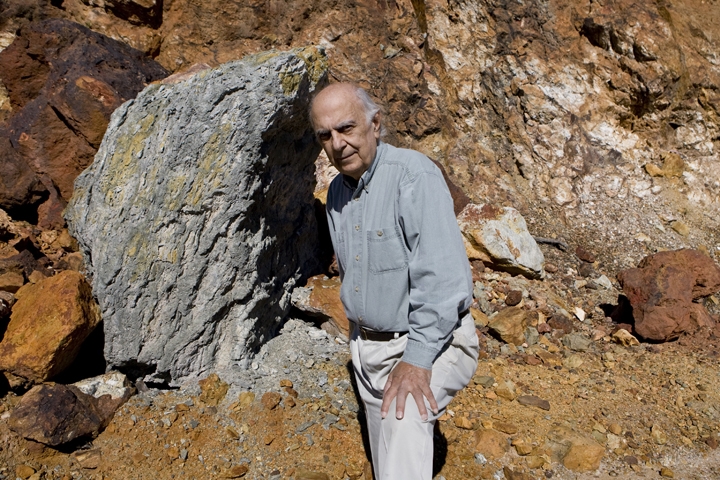
Mr. T.W. Arman; radix & vertex imperii; absolute Patent Title owner, Iron Mountain Mine & Agricultural College grantee